CHAPTER 7
Control of Gene Expression
Questions
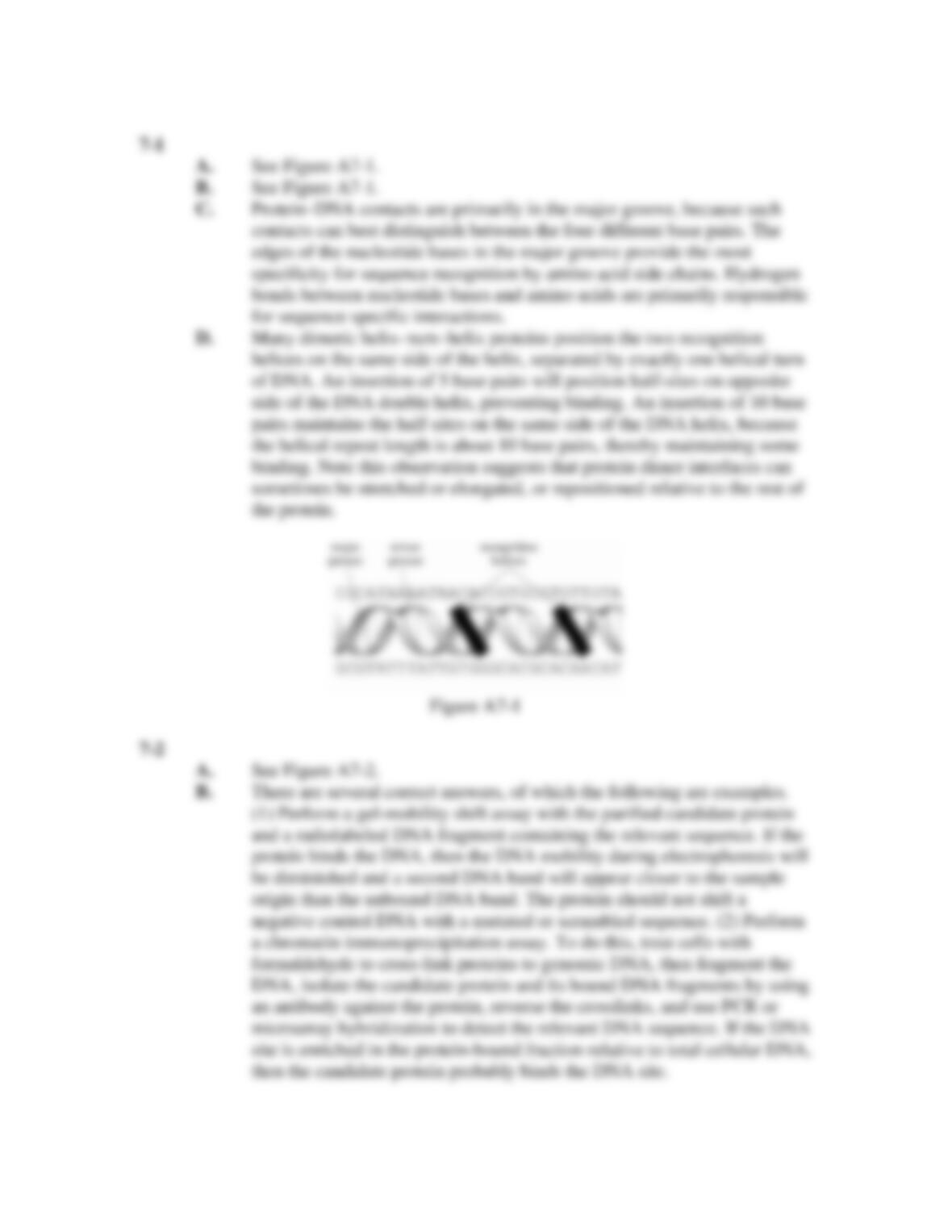
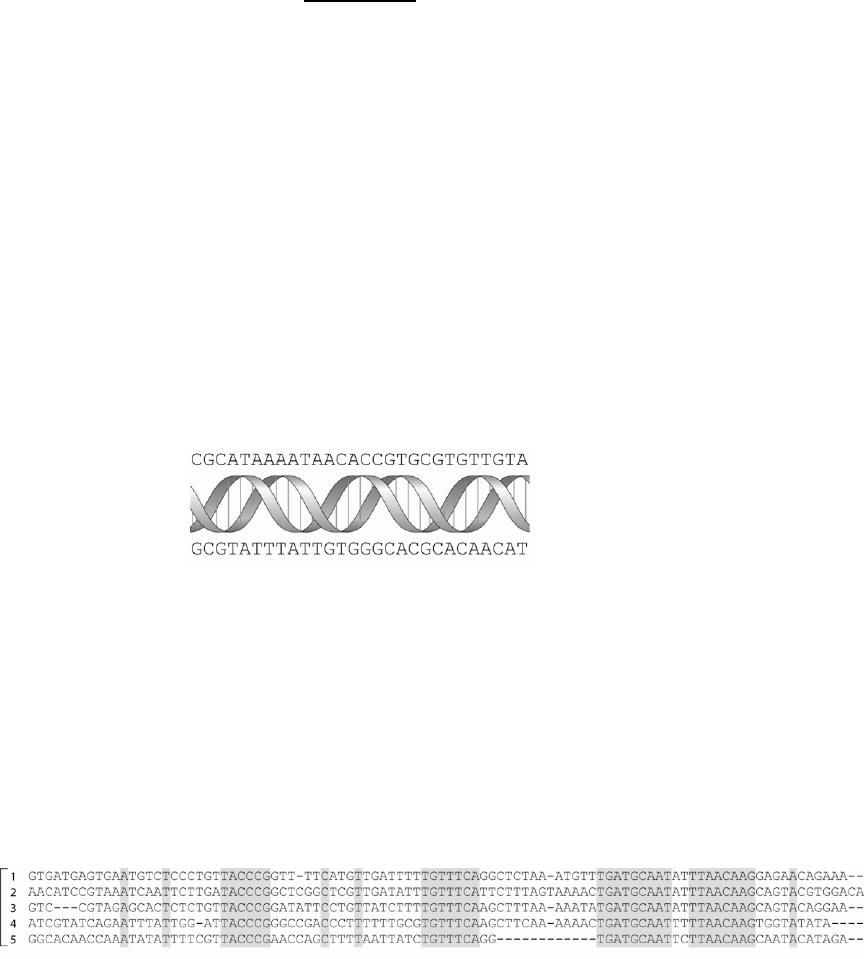
7-1 Figure Q7-1 shows a DNA double helix and its nucleotide sequence.
A. Indicate the major groove and the minor groove.
B. A homodimeric helix–turn–helix protein binds to a DNA fragment
containing this sequence. Its preferred half-site is AACAC. Show where
the two recognition helices in the protein contact the DNA.
C. Are protein–DNA contacts primarily in the major or the minor groove of
DNA? What parts of the nucleotides contact the amino acid side chains of
the protein to provide most sequence specificity? What kind of bond is
primarily responsible for specific protein–DNA interactions?
D. If 5 base pairs are inserted in the middle of a binding site for a dimeric
helix–turn–helix protein, binding is abolished. If 10 base pairs are
inserted, binding is sometimes preserved, albeit with lowered affinity.
Explain these observations.
Figure Q7-1
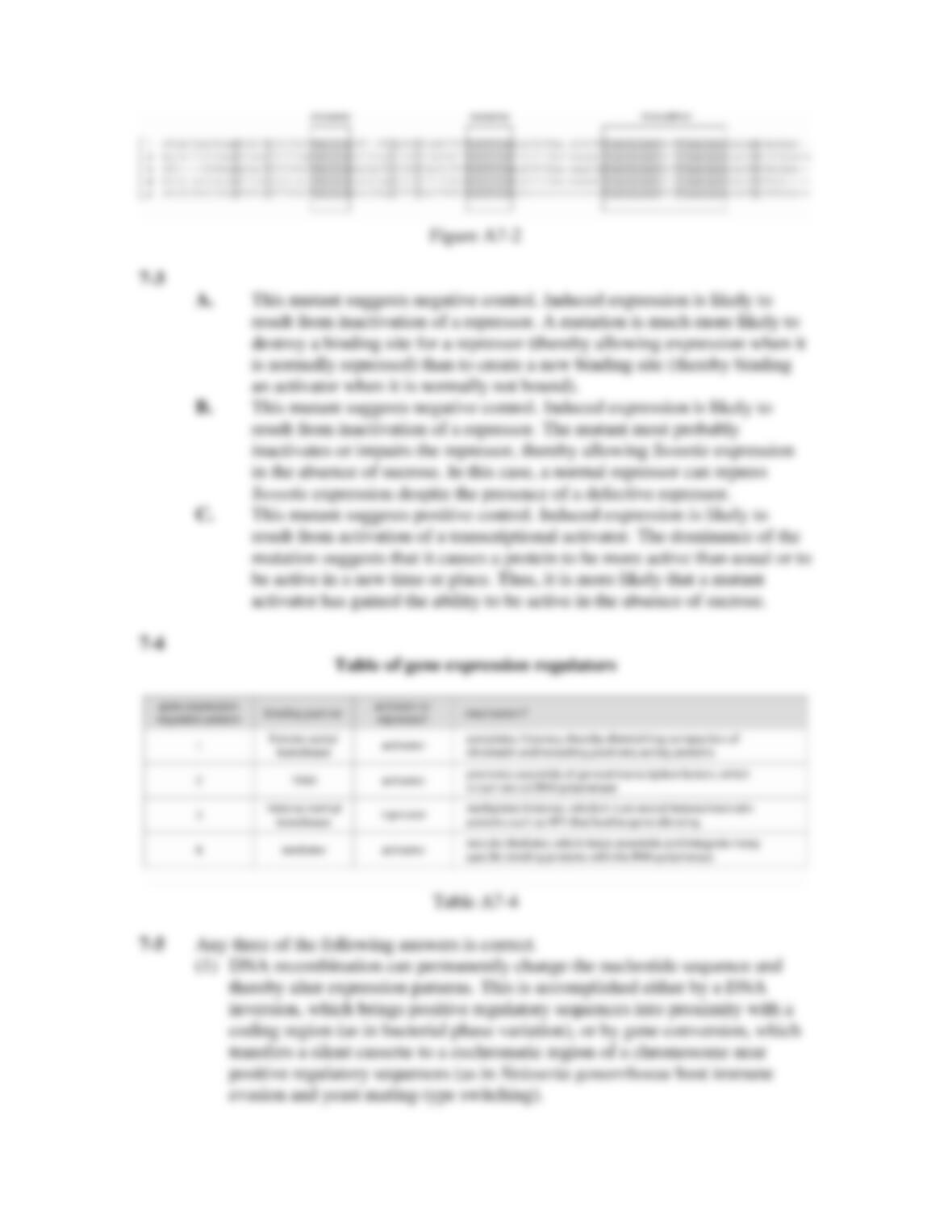
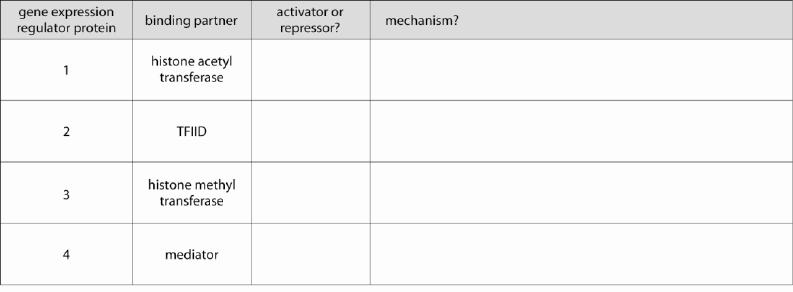
7-2 Figure Q7-2 shows an alignment of DNA sequences upstream of the same gene
from five closely related yeasts. Identical nucleotides are highlighted in gray.
A. Draw boxes around DNA sequences where transcriptional activators or
repressors probably bind. For each site, indicate whether the DNA-binding
protein is likely to be a monomer, a homodimer, or a heterodimer.
B. You suspect you know which DNA-binding protein recognizes the first
site in the sequence shown. Describe an experiment to determine whether
your hunch is correct.
Figure Q7-2
7-3 The Sweetie gene is not expressed during normal growth conditions, but is
expressed after treatment of cells with sucrose. In principle, the gene could be
turned on by production or activation of a transcriptional activator (positive
control) or by inactivation or depletion of a transcriptional repressor (negative
control). One way to distinguish between these alternatives is to isolate and
characterize mutants in which Sweetie is expressed in the absence of sucrose.
Three possible mutants are described below. Explain whether each mutant
supports positive or negative control.
A. A single base-pair change located 800 base pairs upstream (5’) of the
Sweetie coding region.
B. A mutation in a coding region distinct from Sweetie that, when present in
both copies of the chromosome in a diploid cell, causes expression of
Sweetie in the absence of sucrose. However, when a diploid cell has the
mutant gene on one chromosome and a normal copy on the other
chromosome, Sweetie is expressed normally. (This is a recessive
mutation.)
C. A mutation in a coding region distinct from Sweetie that causes expression
of Sweetie in the absence of sucrose, even when a diploid cell has one
normal copy of the gene and one mutant copy. (This is a dominant
mutation.)
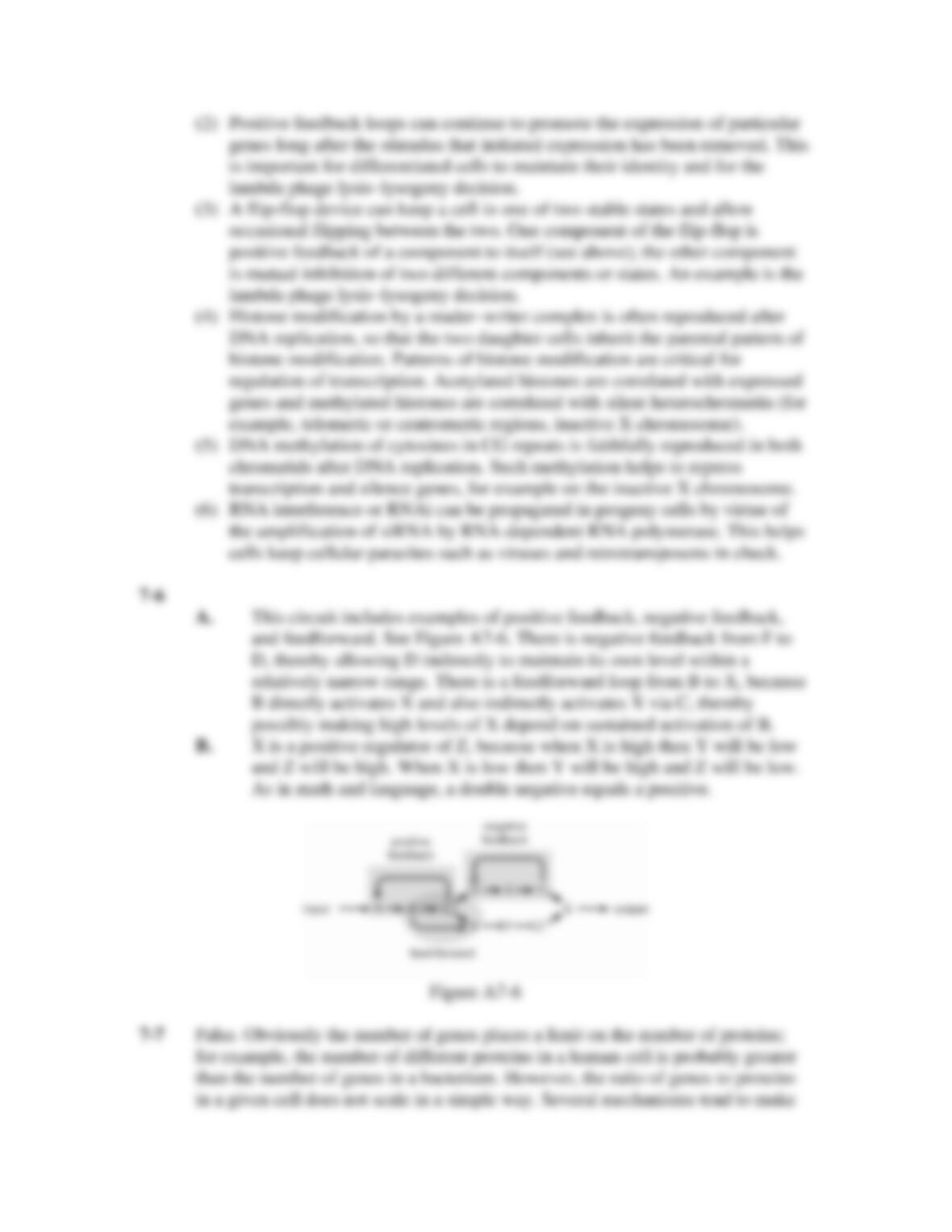
7-4 Protein–protein interactions for four hypothetical regulatory proteins are shown in
a table below. Each protein binds a specific DNA sequence and regulates gene
expression. Fill in the table, noting whether each regulator is likely to be an
activator or a repressor and suggesting the main mechanism by which it controls
gene expression.
Table of gene expression regulators
Table Q7-4
7-5 Several mechanisms enable heritable cellular memory, in which patterns of gene
regulation in a single cell are passed on to progeny cells. List three such
mechanisms, briefly describe how each works, and provide a biological instance
in which each is important.
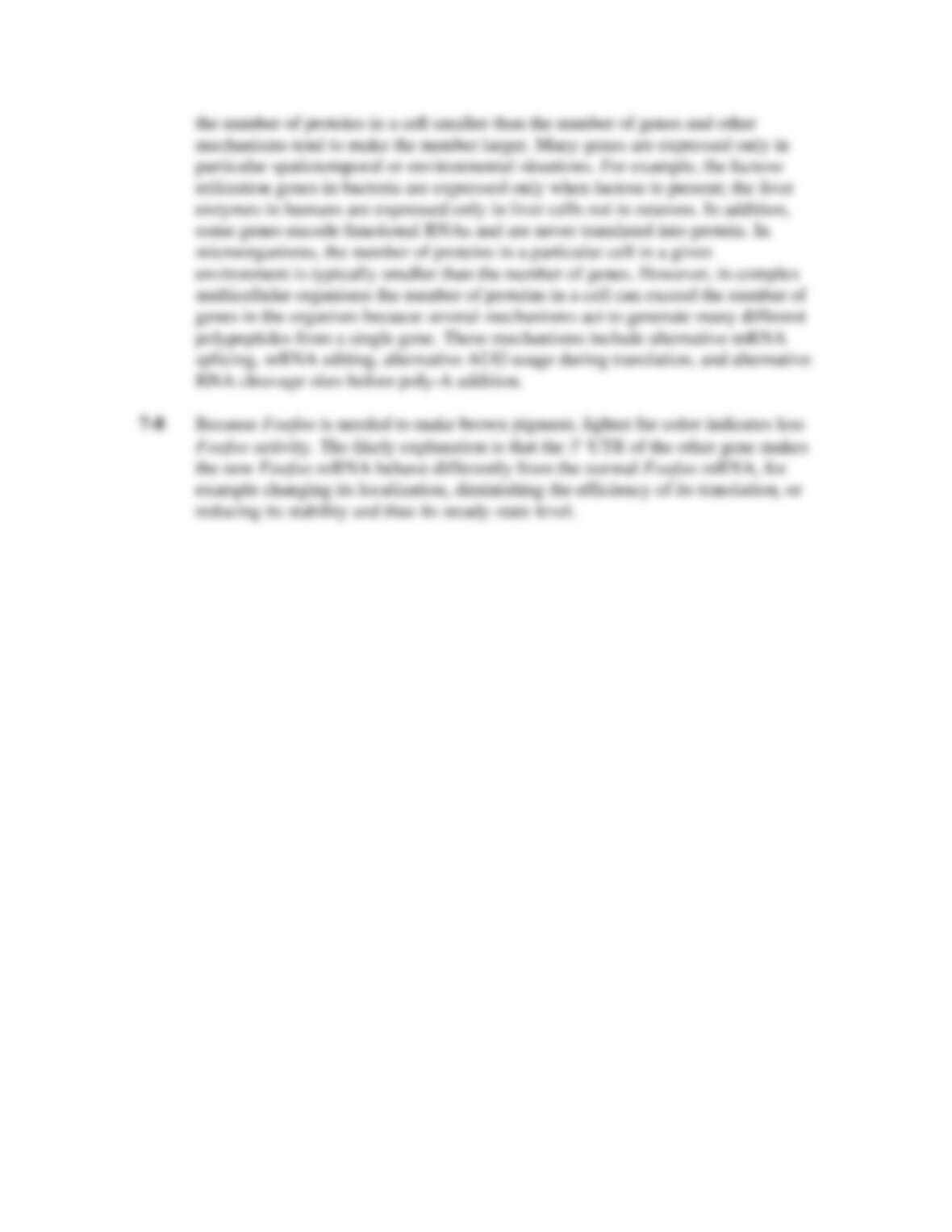
7-6 Figure Q7-6 illustrates the positive and negative interactions in a complex gene
regulatory circuit.
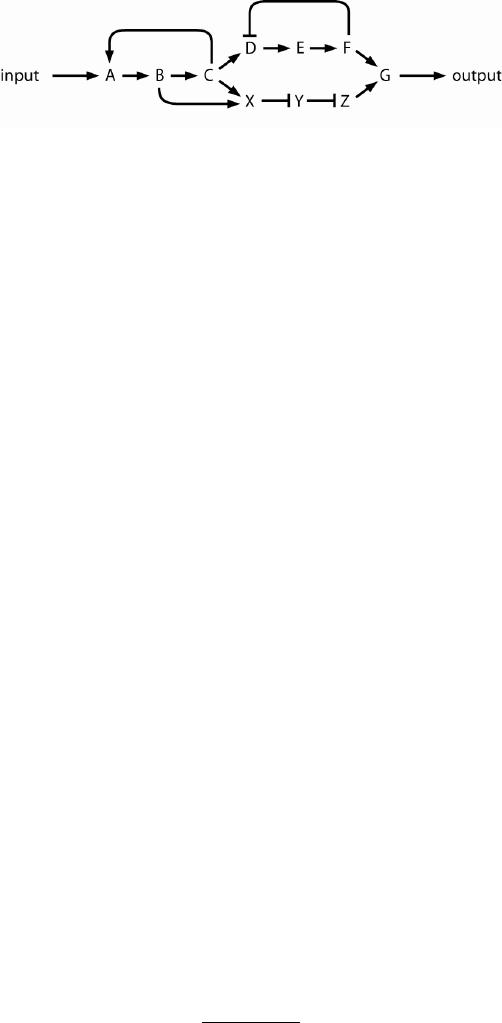
A. Does this circuit include examples of positive feedback, negative
feedback, or feedforward? If so, label and draw a box around the relevant
subcircuit. Briefly describe the components involved and the effect of the
subcircuit on the levels of activated components. (For example, there is
positive feedback from C to A, thereby allowing A to activate itself
indirectly.)
B. Is X a positive or negative regulator of Z?
Figure Q7-6
7-7 Is the following statement true or false? Explain your answer. “The number of
genes in an organism is a good indicator of the number of different proteins found
in a single cell from that organism.”
7-8 The Foofoo gene normally causes one breed of rabbits to have dark brown fur.
When Foofoo function is abolished, the rabbits are white. If you replace the 3
UTR of Foofoo with the 3 UTR from another gene, the resulting rabbits are light
brown. Describe three mechanisms that might cause this outcome.
Answers