58) Which of the following correctly describes the relationship between an enzyme and its
function?
A) kinase: addition of a tyrosine
B) phosphatase: removal of a phosphate group
C) glycogen phosphorylase: synthesis of glycogen
D) adenylyl cyclase: conversion of cAMP to AMP
59) Which of the following enzymes adds a phosphate group to target proteins?
A) kinase
B) phosphatase
C) glycogen phosphorylase
D) adenylyl cyclase
60) The primary function of phosphatases in signal transduction is to
A) transfer a phosphate group from a kinase to the next relay molecule in a series.
B) inactivate protein kinases to turn off signal transduction.
C) amplify signal transduction so it activates multiple relay molecules.
D) amplify the second messenger cAMP.
61) The primary function of kinases in signal transduction is to
A) inactivate relay molecule to turn off signal transduction.
B) regulate gene expression by serving as a transcription factor.
C) inactivate second messengers such as cAMP.
D) activate protein kinases or other relay molecules in a series.
62) In which of the following ways could signal transduction most probably be explored in
research to treat cancer?
A) removal of serine/threonine phosphate acceptors from transduction pathways in colon pre-
cancerous growths
B) increase in calcium ion uptake into the cytoplasm in order to modulate the effects of
environmental carcinogens
C) alteration of protein kinases in cell cycle regulation in order to slow cancer growth
D) stimulation of cAMP production in cancer cells
63) A drug designed to inhibit the response of cells to testosterone would almost certainly result
in which of the following?
A) lower cytoplasmic levels of cAMP
B) an increase in receptor tyrosine kinase activity
C) a decrease in transcriptional activity of certain genes
D) a decrease in G protein activity
64) At puberty, an adolescent female body changes in both structure and function of several
organ systems, primarily under the influence of changing concentrations of estrogens and other
steroid hormones. How can one hormone, such as estrogen, mediate so many effects?
A) Estrogen is produced in high concentrations by a large number of different cell types.
B) Estrogen binds to common receptors inside several cell types, and each cell responds in the
same way to its binding.
C) Estrogen does not affect cells that lack estrogen receptors in the cell membrane.
D) Estrogen binds to specific receptors inside many kinds of cells, each of which has different
responses to its binding.
65) In research on aging (both cellular aging and organismal aging), it has been found that aged
cells do not progress through the cell cycle as they had previously. Which of the following would
provide evidence that this is related to cell signaling?
A) decreased ATP production in aged cells
B) decreased hormone production in aged cells
C) decreased affinity of growth factor receptors for their respective ligands
D) decreased numbers of cytoplasmic ribosomes
66) Sutherland discovered that the signaling molecule epinephrine
A) increases concentrations of cyclic AMP in the cytoplasm.
B) causes lower blood glucose by binding to liver cells.
C) binds to a cytosolic receptor inside muscle cells.
D) interacts directly with glycogen phosphorylase.
67) Which of the following is the greatest advantage of having multiple steps in a transduction
pathway?
A) Many of the steps can be used in multiple pathways.
B) Having multiple steps in a pathway requires the least amount of ATP.
C) Having multiple steps provides for greater possible amplification of a signal.
D) Each step can be activated by several G proteins simultaneously.
68) The primary function of G proteins in signal transduction is
A) transducing the signal from an activated receptor to the next protein in the pathway.
B) binding extracellular signal molecules to activate the pathway.
C) converting ATP to cATP to amplify the signal.
D) phosphorylating relay molecules in the pathway.
5.2 Art Questions
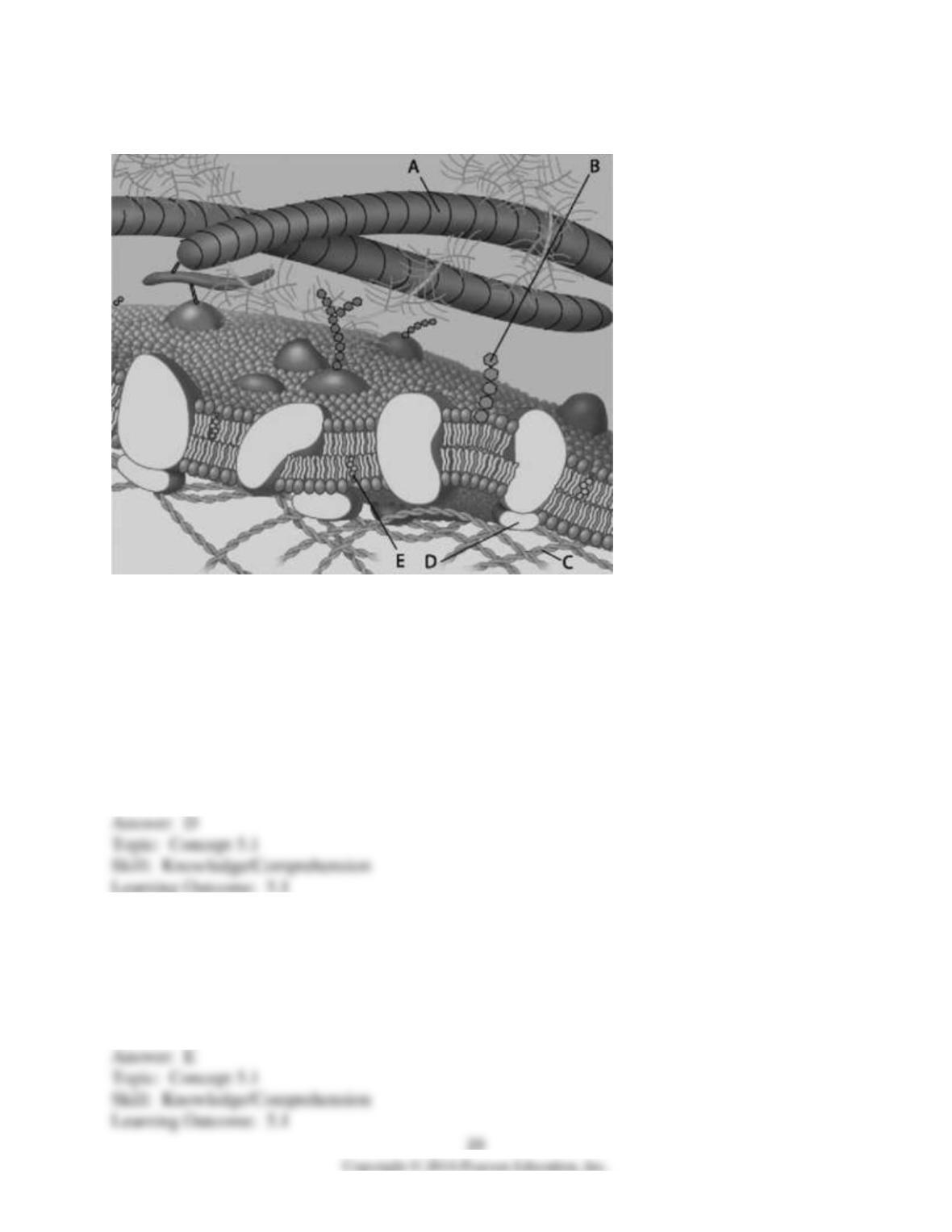
Figure 5.1
For the following questions, match the labeled component of the cell membrane in Figure 5.1
with its description.
1) Which component in the figure is a peripheral protein?
A) A
B) B
C) C
D) D
E) E
2) Which component in the figure is cholesterol?
A) A
B) B
C) C
D) D
E) E
3) Which component in the figure is a fiber of the extracellular matrix?
A) A
B) B
C) C
D) D
E) E
4) Which component in the figure is a microfilament of the cytoskeleton?
A) A
B) B
C) C
D) D
E) E
5) Which component in the figure is a glycolipid?
A) A
B) B
C) C
D) D
E) E
6) Which component in the figure helps membranes resist changes in fluidity at high and low
temperatures?
A) A
B) B
C) C
D) D
E) E
7) Which component in the figure plays an important role in cell-cell recognition?
A) A
B) B
C) C
D) D
E) E
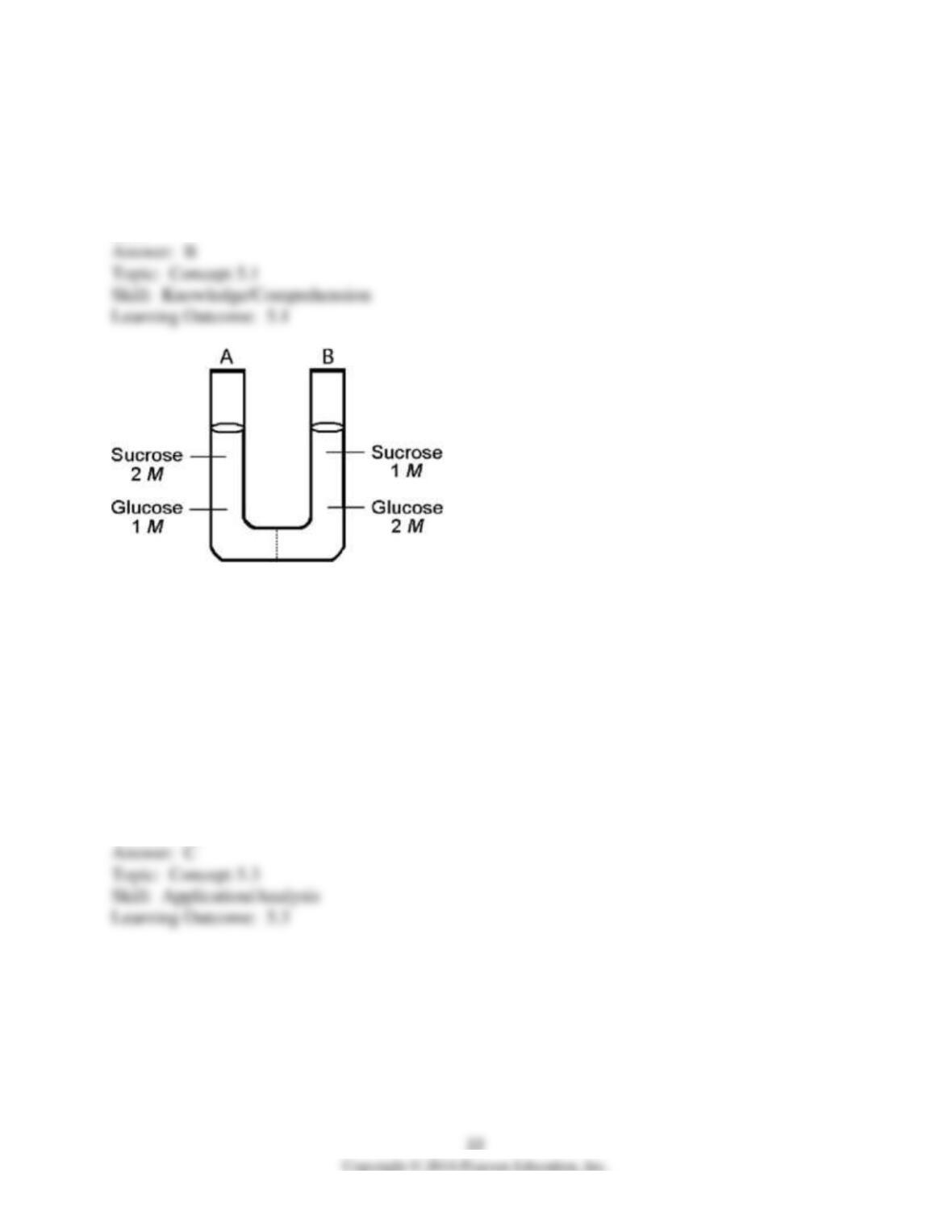
Figure 5.2
The solutions in the two arms of this U-tube (Figure 5.2) are separated by a membrane that is
permeable to water and glucose but not to sucrose. Side A is half-filled with a solution of 2 M
sucrose and 1 M glucose. Side B is half-filled with 1 M sucrose and 2 M glucose. Initially, the
liquid levels are equal. Refer to the figure to answer the following question(s).
8) Initially, in terms of tonicity in the figure, the solution in side A with respect to that in side B
is
A) hypotonic.
B) hypertonic.
C) isotonic.
D) saturated.
9) After the system depicted in the figure reaches equilibrium, what changes are observed?
A) The concentrations of glucose and sucrose are unchanged.
B) The water level is higher in side A than in side B.
C) The water level is unchanged.
D) The water level is higher in side B than in side A.
10) After the system depicted in the figure reaches equilibrium, what changes are observed with
respect to the concentrations of sugars?
A) The concentration of sucrose is equal in sides A and B and the concentrations of glucose are
unchanged.
B) The concentrations of glucose and sucrose are equal in sides A and B.
C) The concentration of glucose is equal in sides A and B and the concentrations of sucrose are
unchanged.
D) The water levels change, but the concentrations of glucose and sucrose in sides A and B are
unchanged.
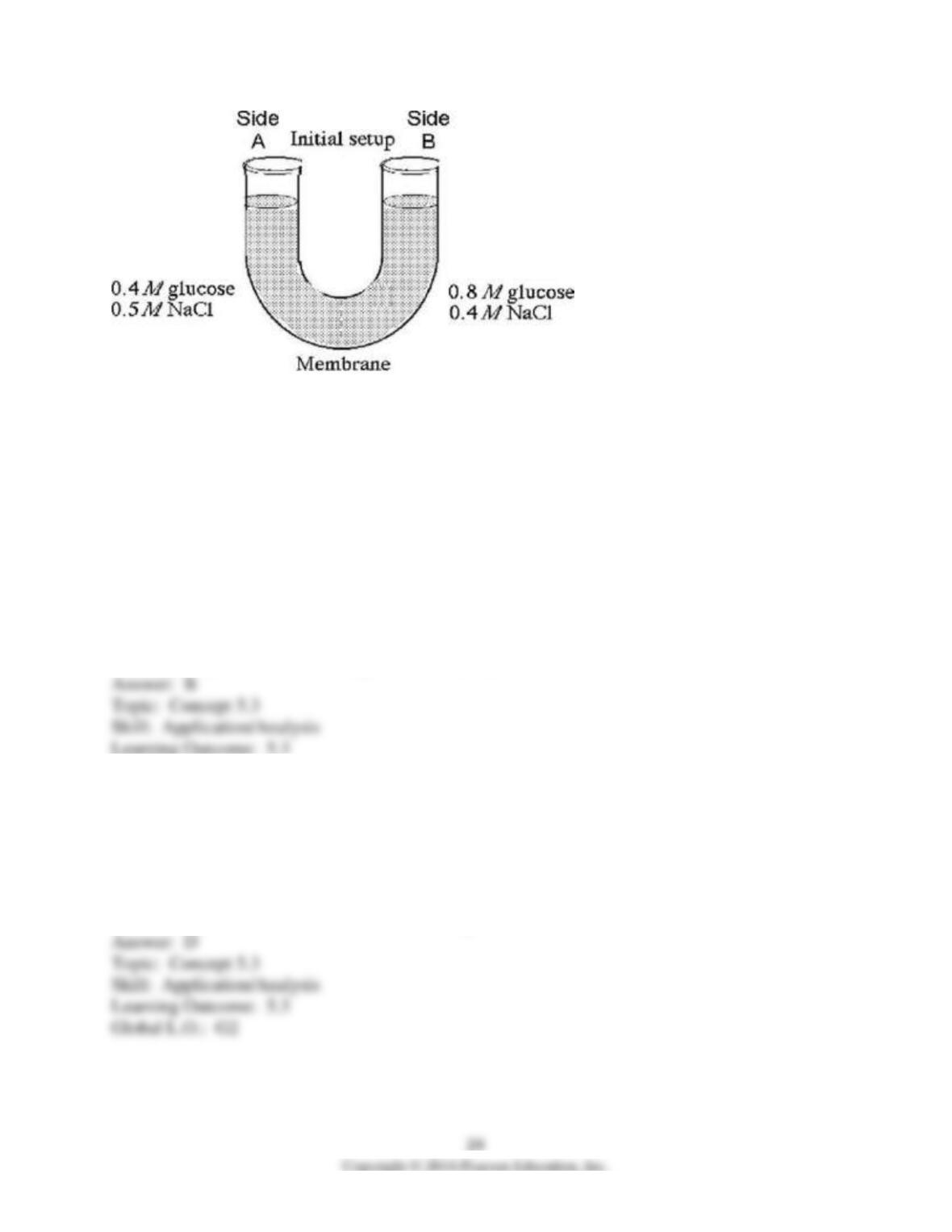
Figure 5.3
The solutions in the arms of a U-tube (Figure 5.3) are separated at the bottom of the tube by a
selectively permeable membrane. The membrane is permeable to sodium chloride but not to
glucose. Side A is filled with a solution of 0.4 M glucose and 0.5 M sodium chloride (NaCl), and
side B is filled with a solution containing 0.8 M glucose and 0.4 M sodium chloride. Initially, the
volume in both arms is the same. Refer to the figure to answer the following questions.
11) At the beginning of the experiment, side A in the figure
A) is hypertonic to side B.
B) is hypotonic to side B.
C) is isotonic to side B.
D) is hypertonic to side B with respect to glucose.
E) is hypotonic to side B with respect to sodium chloride.
12) If you examine side A in the figure after three days, you should find
A) a decrease in the concentration of NaCl and glucose and an increase in the water level.
B) a decrease in the concentration of NaCl, an increase in water level, and no change in the
concentration of glucose.
C) no net change in the system.
D) a decrease in the concentration of NaCl and a decrease in the water level.
E) no change in the concentration of NaCl and glucose and an increase in the water level.
13) If you examine side A in the figure after three days, the concentrations of glucose and NaCl
should be
A) 0.4 M glucose, 0.45 M NaCl.
B) 0.6 M glucose, 0.5 M NaCl.
C) 0.6 M glucose, 0.45 M NaCl.
D) 0.8 M glucose, 0.4 M NaCl.
E) 0.8 M glucose, 0.5 M NaCl.
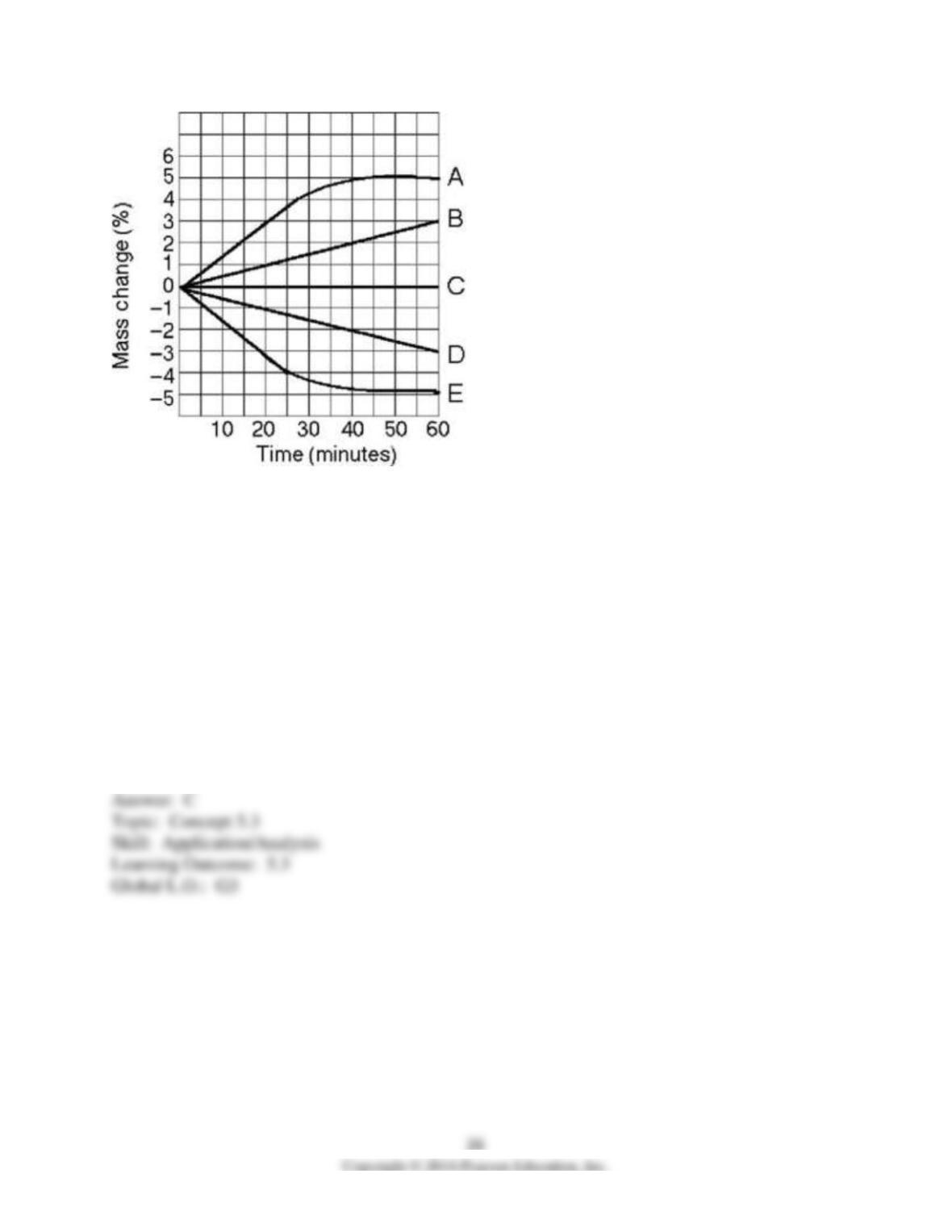
Figure 5.4
Five dialysis bags, constructed from a semipermeable membrane that is impermeable to sucrose,
were filled with various concentrations of sucrose and then placed in separate beakers containing
an initial concentration of 0.6 M sucrose solution. At 10-minute intervals, the bags were massed
(weighed) and the percent change in mass of each bag was graphed. Refer to Figure 5.4 to
answer the following question(s).
14) Which line in the graph represents the bag that contained a solution isotonic to the 0.6 M
solution at the beginning of the experiment?
A) A
B) B
C) C
D) D
E) E
15) Which line in the graph represents the bag with the highest initial concentration of sucrose?
A) A
B) B
C) C
D) D
E) E
16) Which line or lines in the graph in the figure represent(s) bags that contain a solution that is
hypertonic at 50 minutes?
A) A and B
B) B
C) C
D) D
E) D and E
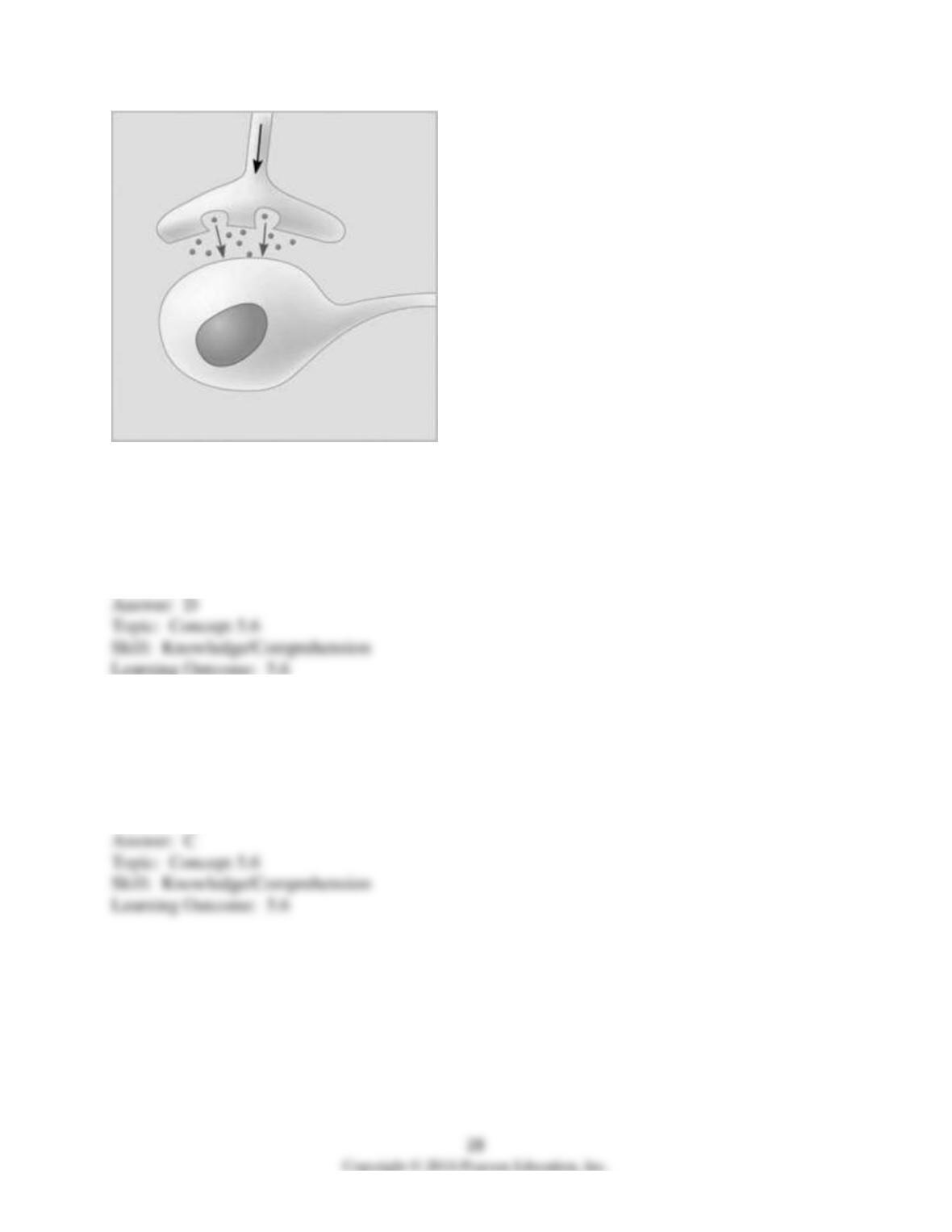
Figure 5.5
17) Which of the following types of signaling is represented in Figure 5.5?
A) autocrine
B) paracrine
C) hormonal
D) synaptic
18) In Figure 5.5, the dots in the space between the two structures represent which of the
following?
A) receptor molecules
B) signal transducers
C) neurotransmitters
D) hormones
5.3 Scenario Questions
1) Cystic fibrosis is a genetic disease in humans in which the CFTR protein, which functions as a
chloride ion channel, is missing or nonfunctional in cell membranes. The CFTR protein belongs
to what category of membrane proteins?
A) gap junctions
B) carrier proteins
C) electrogenic ion pumps
D) cotransporters
E) hydrophilic channels
2) A patient has had a serious accident and lost a lot of blood. In an attempt to replenish body
fluids, distilled water — equal to the volume of blood lost — is transferred directly into one of
his veins. What will be the most probable result of this transfusion?
A) It will have no unfavorable effect as long as the water is free of viruses and bacteria.
B) The patient’s red blood cells will shrivel up because the blood fluid has become hypotonic
compared to the cells.
C) The patient’s red blood cells will swell because the blood fluid has become hypotonic
compared to the cells.
D) The patient’s red blood cells will shrivel up because the blood fluid has become hypertonic
compared to the cells.
3) You are working on a team that is designing a new drug. In order for this drug to work, it must
enter the cytoplasm of specific target cells. Which of the following would be a factor that
determines whether the molecule selectively enters the target cells?
A) blood or tissue type of the patient
B) lack of charge on the drug molecule
C) similarity of the drug molecule to other molecules transported by the target cells
D) lipid composition of the target cells’ plasma membrane
4) A major group of G protein-coupled receptors contains seven transmembrane α helices. The
amino end of the protein lies at the exterior of the plasma membrane. Loops of amino acids
connect the helices either at the exterior face or on the cytosol face of the membrane. The loop
on the cytosol side between helices 5 and 6 is usually substantially longer than the others.
The coupled G protein most likely interacts with this receptor
A) at the NH3 end.
B) at the COO– end.
C) along the exterior face of the membrane.
D) at the loop between helices 5 and 6.
5) If an animal cell suddenly lost the ability to produce GTP, what might happen to its signaling
system?
A) It would use ATP instead of GTP to activate G proteins on the cytoplasmic side of the plasma
membrane.
B) It would use protein kinases in place of G proteins.
C) It would be able to carry out reception and transduction but would not be able to respond to a
signal.
D) It would not be able to activate G proteins on the cytoplasmic side of the plasma membrane.
5.4 End-of-Chapter Questions
1) In what way do the membranes of a eukaryotic cell vary?
A) Phospholipids are found only in certain membranes.
B) Certain proteins are unique to each kind of membrane.
C) Only certain membranes of the cell are selectively permeable.
D) Only certain membranes are constructed from amphipathic molecules.
2) Which of the following factors would tend to increase membrane fluidity?
A) a greater proportion of unsaturated phospholipids
B) a greater proportion of saturated phospholipids
C) a lower temperature
D) a relatively high protein content in the membrane
3) Phosphorylation cascades involving a series of protein kinases are useful for cellular signal
transduction because
A) they are species specific.
B) they always lead to the same cellular response.
C) they amplify the original signal manyfold.
D) they counter the harmful effects of phosphatases.
4) Lipid-soluble signaling molecules, such as aldosterone, cross the membranes of all cells but
affect only target cells because
A) only target cells retain the appropriate DNA segments.
B) intracellular receptors are present only in target cells.
C) only target cells have enzymes that break down aldosterone.
D) only in target cells is aldosterone able to initiate a phosphorylation cascade that turns genes
on.
5) Which of the following processes includes all the others?
A) osmosis
B) diffusion of a solute across a membrane
C) passive transport
D) transport of an ion down its electrochemical gradient
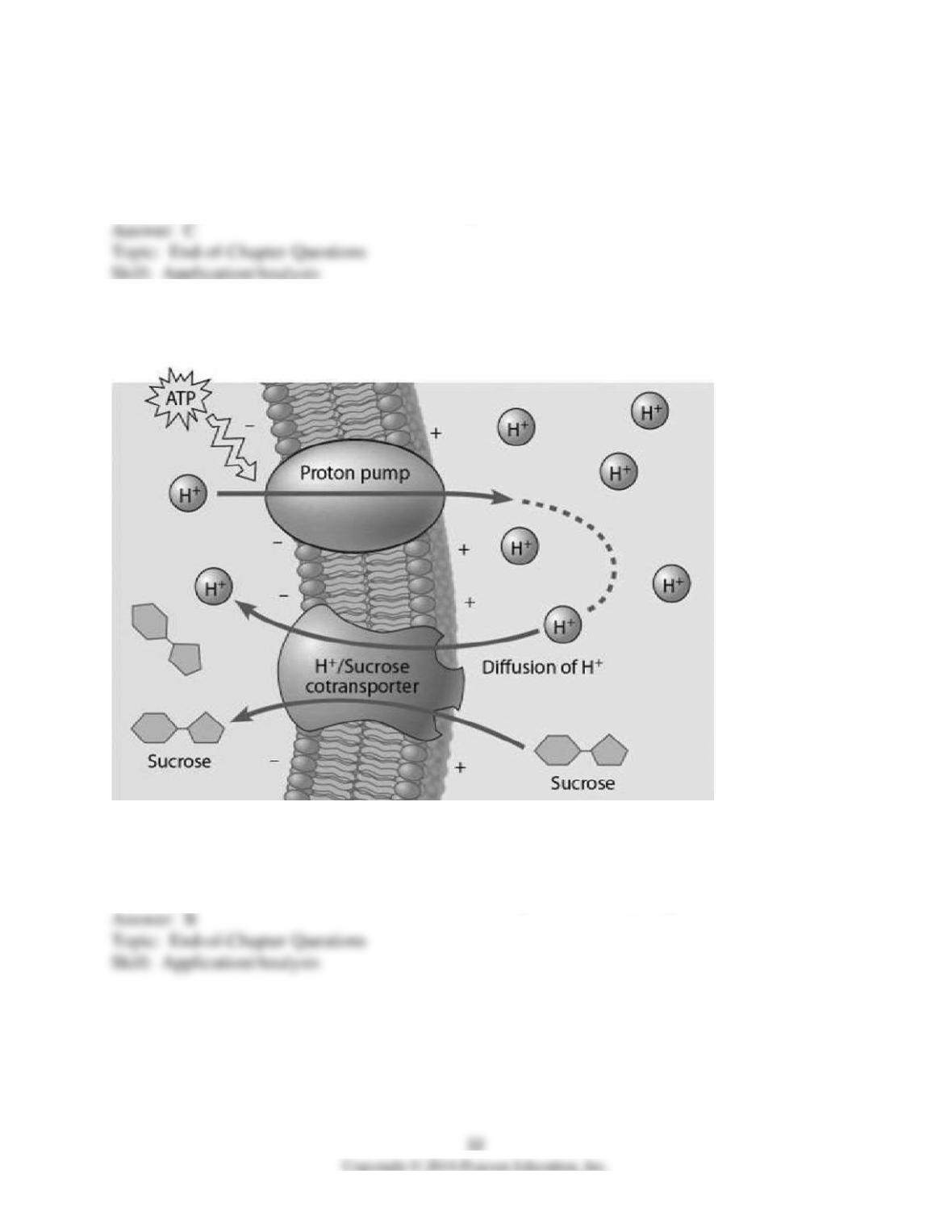
6) Based on the figure below, which of these experimental treatments would increase the rate of
sucrose transport into a plant cell?
A) decreasing extracellular sucrose concentration
B) decreasing extracellular pH
C) decreasing cytoplasmic pH
D) adding a substance that makes the membrane more permeable to hydrogen ions