Chapter 5—Plant Tissues and the Multicellular Plant Body Key
1. How many years does a perennial live?
2. Which of the following cell types is dead at maturity?
3. Which of the following cell types has the thickest cell wall?
4. Which of the following cell types can be used for photosynthesis?
5. The ground tissue system contains…
6. The xylem conducts…
7. The phloem conducts…
8. Which of the following pairs of cells function together?
9. Sieve-tube elements are found in the ____.
10. Which of the following cell types is NOT a part of phloem tissue?
11. The end walls of sieve-tube members are called ____.
12. What is the main function of the epidermis?
13. In which tissue would you find guard cells and stomata?
14. What is the main function of the cuticle?
15. The cuticle is largely made of ____.
16. Specialized cells surrounding the stomata are called ____.
17. The periderm…
18. The apical meristem is located…
19. The vascular cambium produces…
20. Primary growth takes place at…
21. Which of the following plants has a periderm?
22. Secondary growth increases the ____ of the plant.
23. What takes place at a meristem?
24. Growth is a complex process involving…
25. Annuals grow for many years.
26. The dermal system is continuous between the root, stem, and leaf.
27. Parenchyma cells are living, actively metabolizing cells.

28. Parenchyma, a simple tissue composed of parenchyma cells, may store starch grains.
29. A simple tissue system has one type of cell in it.
30. Sclerenchyma cells have strong, hard, extremely thick secondary walls.
31. The vascular tissue system consists of one complex tissue.
32. Vessel elements are the conducting cells of the phloem.
33. Gymnosperms and seedless vascular plants have both vessel elements and tracheids.
34. Vessel elements have larger holes in their end walls and can conduct water more efficiently than tracheids.
35. Companion cells are dead at functional maturity.
36. Stomata facilitate the diffusion of carbon dioxide into the leaf.
37. Root hairs increase the surface area of the root epidermis for more effective uptake of water and mineral
nutrients.

38. The cuticle prevents most water loss through the epidermis but allows carbon dioxide to diffuse through.
39. The vascular cambium is an example of a primary meristem.
40. Meristems are localized regions of growth in plants.
41. Name two organs of the shoot system of flowering plants: ____________________ and
____________________.
42. Woody or herbaceous plants that live for more than two years are called ____________________.
43. Plants that do not develop persistent woody parts above the ground are said to be ____________________.
44. A group of cells that forms a structural and functional unit is called a(n) ____________________.
45. ____________________ tissue has cells with unevenly thickened cell walls and provides flexible support in
plant parts such as young stems and flowers.
46. Which vascular tissue system is used for conducting water and dissolved minerals?
____________________

47. One type of xylem cell which is dead at maturity is ____________________.
48. ____________________ are conducting cells found in xylem that are long and tapering with many pits in
their walls.
49. Openings (pores) in the leaf epidermis are called ____________________.
50. A(n) ____________________ is a localized site for cell division in a plant.
51. Embryonic leaves that usually cover and protect the stem apical meristem are called
____________________.
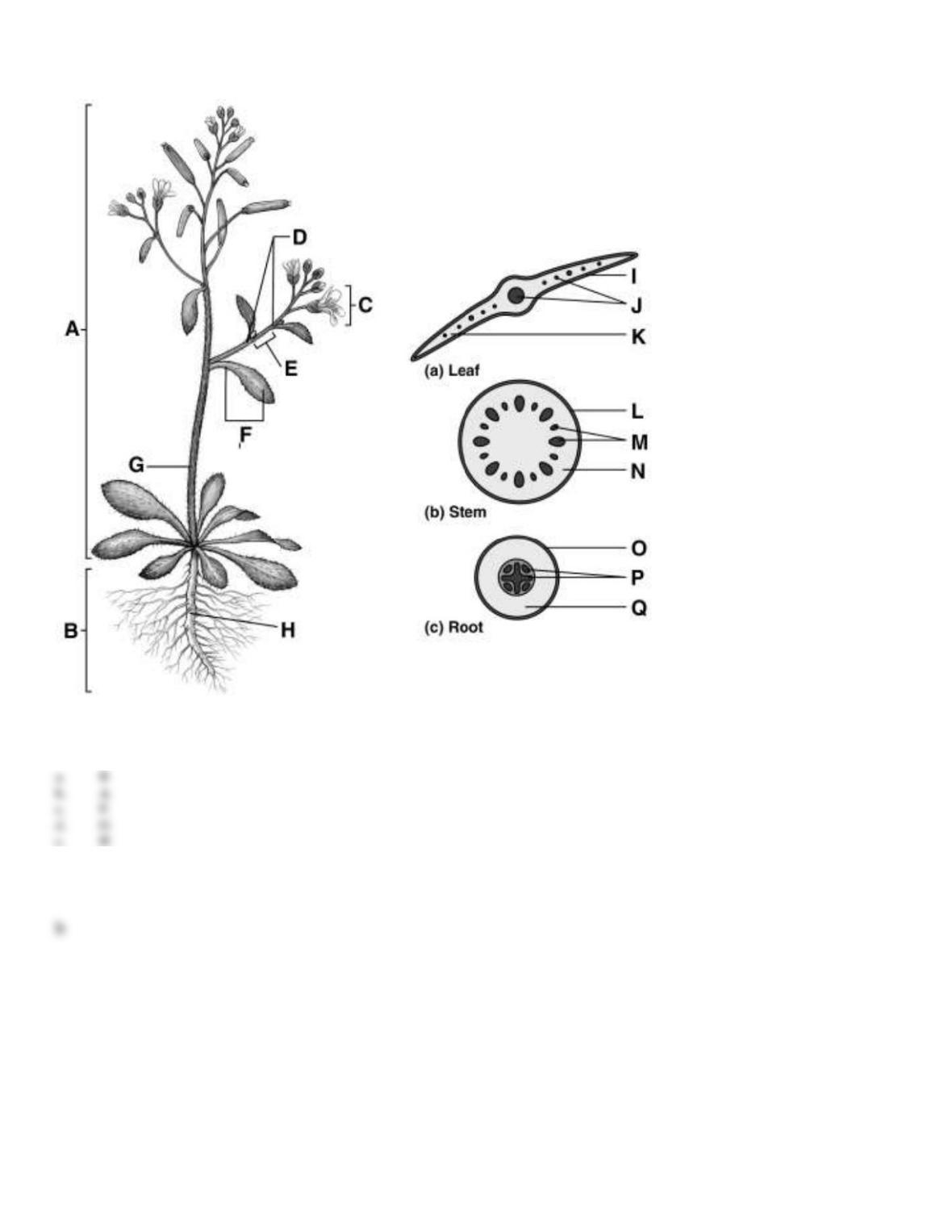
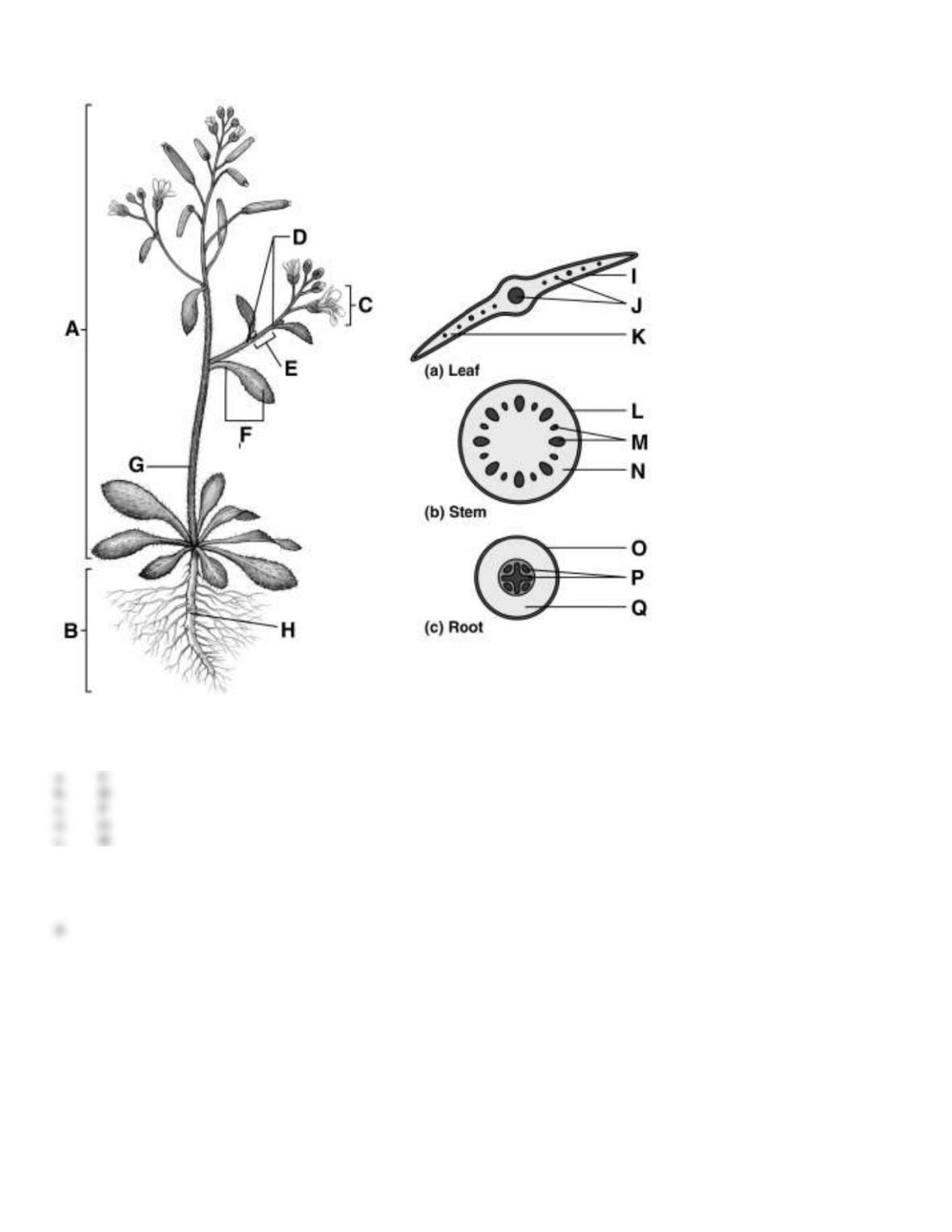
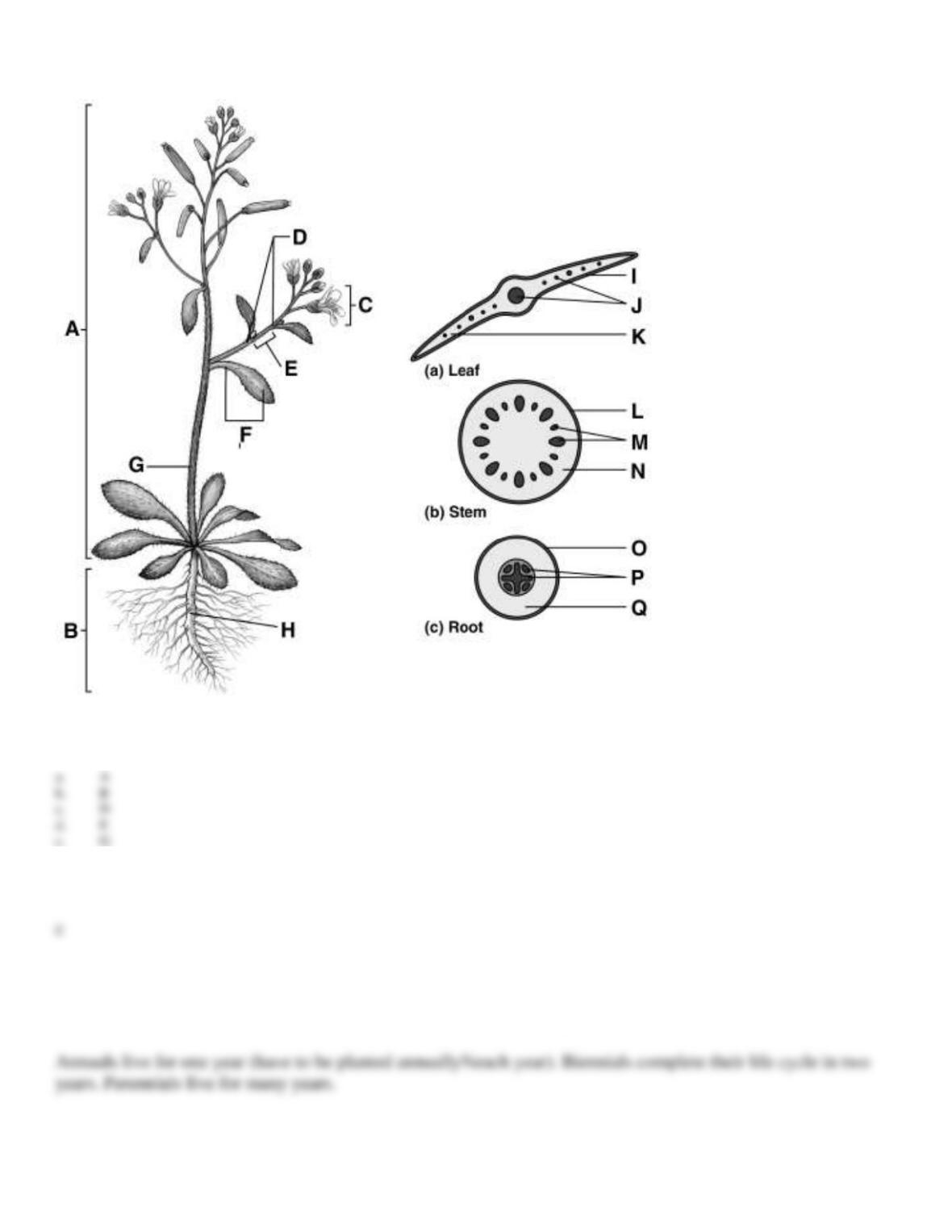
52. Figure 5-1
Refer to Exhibit 5-1. Which backer indicates the shoot system?
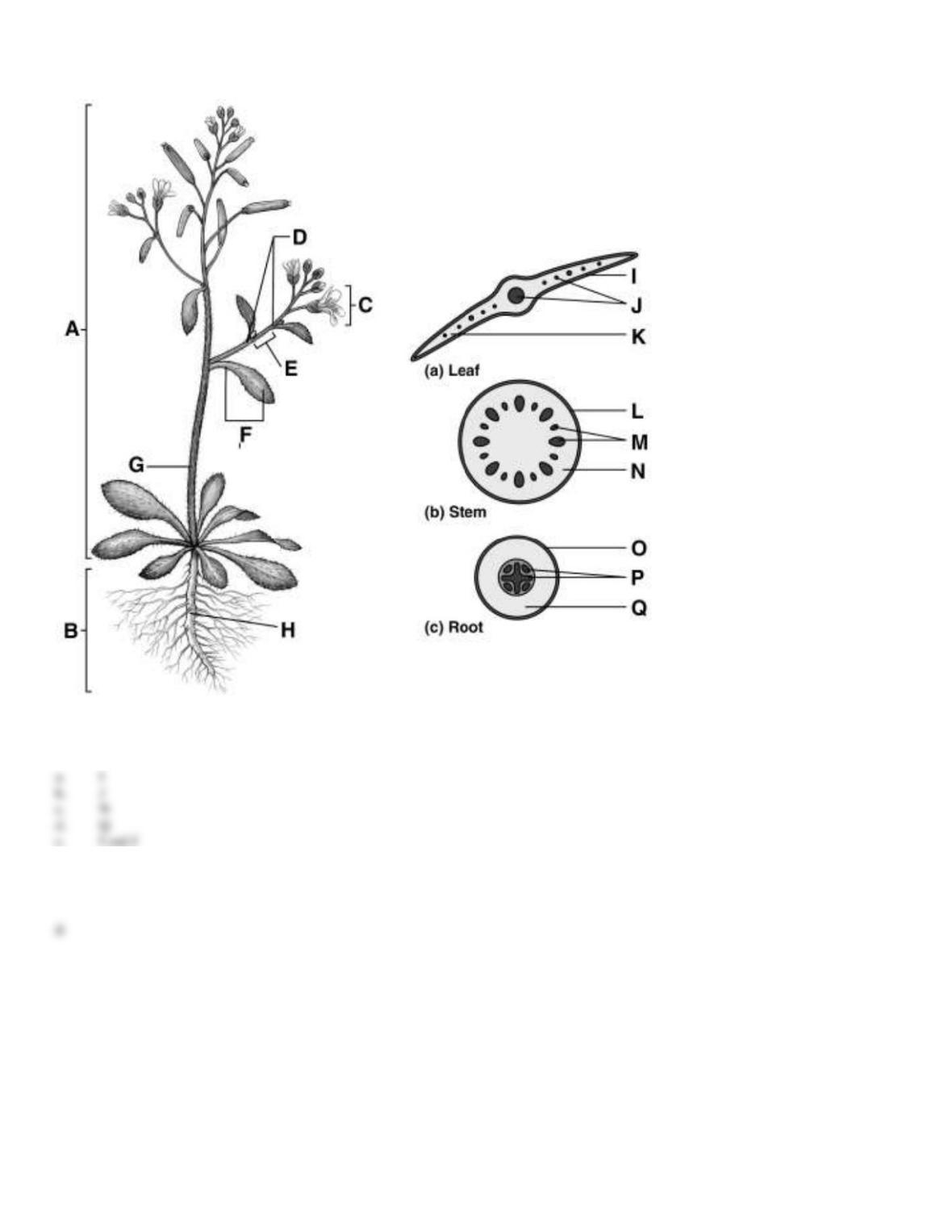
53. Figure 5-1
Refer to Exhibit 5-1. Which of the following tissues is a part the dermal tissue system?
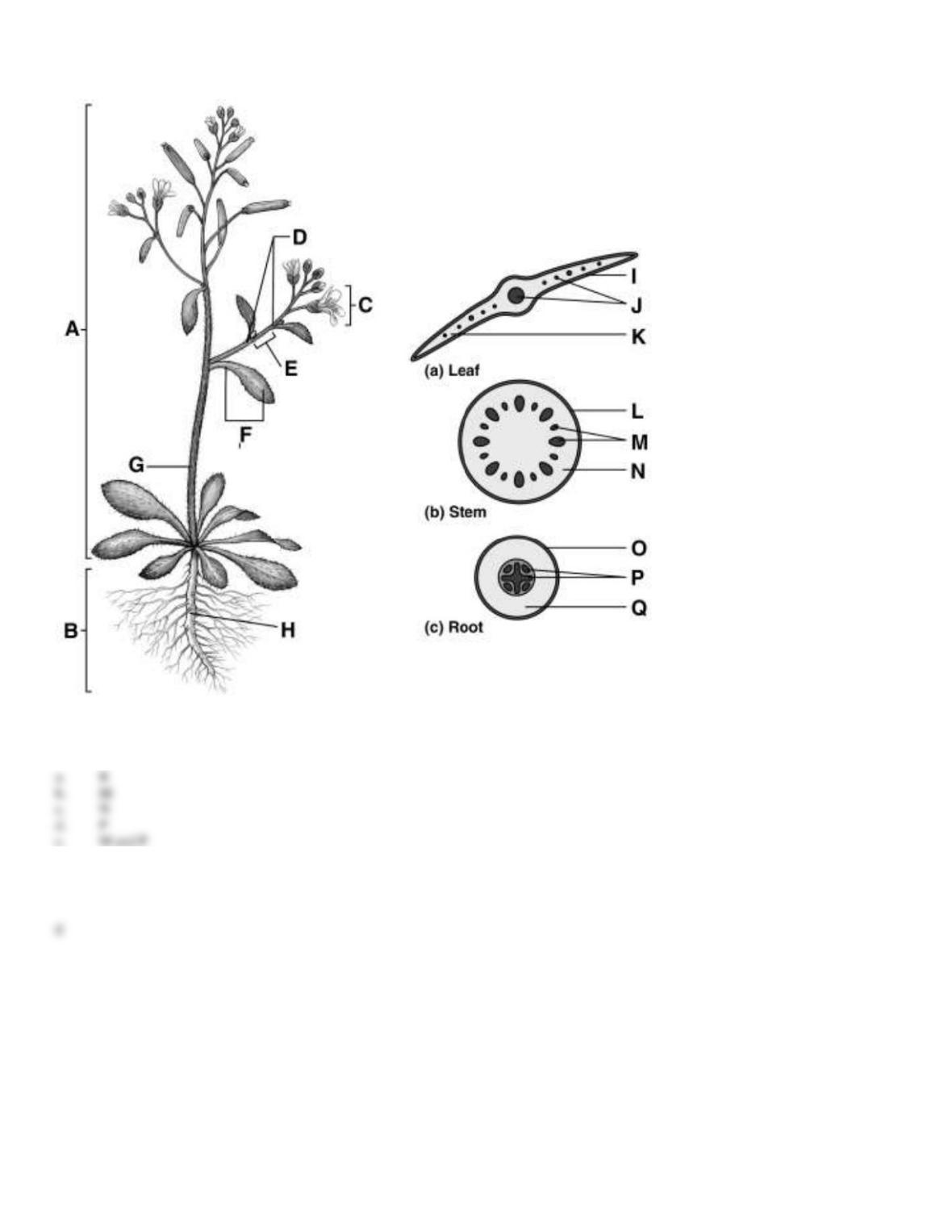
54. Figure 5-1
Refer to Exhibit 5-1. Which of the following tissues is part of the vascular system?
55. Figure 5-1
Refer to Exhibit 5-1. Which of these is NOT part of the vegetative plant body?
56. Figure 5-1
Refer to Exhibit 5-1. Which of these is a node?
57. Compare annuals, biennials, and perennials in terms of how long each lives.
58. List the three primary tissue systems and generally describe the tissues that they contain.
59. Describe the xylem and phloem tissues of the stem. Include the types of cells found in each tissue and their
functions.
60. The pattern of growth exhibited by plants and animals is very different. Discuss the primary difference
between them.
61. Complete this table listing the Tissue System, Cell Type and Cell Function of each tissue shown.