58) When antibodies bind antigens, the clumping of antigens results from
A) antibodies having at least two binding regions.
B) disulfide bridges between the antigens.
C) complement that makes the affected cells sticky.
D) bonds between class I and class II MHC molecules.
E) denaturation of the antibodies.
59) The primary function of humoral immunity is
A) to defend against fungi and protozoa.
B) to reject transplanted tissues.
C) to protect the body against cells that become cancerous.
D) to protect the body against extracellular pathogens.
E) to defend against bacteria and viruses that have already infected cells.
60) Naturally acquired passive immunity results from the
A) injection of vaccine.
B) ingestion of interferon.
C) placental transfer of antibodies.
D) absorption of pathogens through mucous membranes.
E) injection of antibodies.
61) In active immunity, but not passive immunity, there is
A) acquisition and activation of antibodies.
B) proliferation of lymphocytes in bone marrow.
C) the transfer of antibodies from the mother across the placenta.
D) the requirement for direct exposure to a living or simulated pathogen.
E) the requirement of secretion of cytokines from T cells.
62) An individual who has been bitten by a poisonous snake that has a fast-acting toxin would
likely benefit from
A) vaccination with a weakened form of the toxin.
B) injection of antibodies to the toxin.
C) injection of histamine.
D) injection of interferon.
63) A bone marrow transplant may not be appropriate from a given donor (Jane) to a given
recipient (Jane’s cousin Bob), even though Jane has previously given blood for one of Bob’s
needed transfusions, because
A) even though Jane’s blood type is a match to Bob’s, her MHC proteins may not be a match.
B) a blood type match is less stringent than a match required for transplant because blood is
more tolerant of change.
C) for each gene, there is only one blood allele but many tissue alleles.
D) Jane’s class II genes are not expressed in bone marrow.
E) Bob’s immune response has been made inadequate before he receives the transplant.
64) An immune response to a tissue graft will differ from an immune response to a bacterium
because
A) MHC molecules of the donor may stimulate rejection of the graft tissue, but bacteria lack
MHC molecules.
B) the tissue graft, unlike the bacterium, is isolated from the circulation and will not enter into an
immune response.
C) a response to the graft will involve B cells and a response to the bacterium will not.
D) a bacterium cannot escape the immune system by replicating inside normal body cells.
E) the graft will stimulate an autoimmune response in the recipient.

65) In the human disease known as lupus, there is an immune reaction against a patient’s own
DNA from broken or dying cells, which categorizes lupus as
A) an allergy.
B) an immunodeficiency.
C) an autoimmune disease.
D) an antigenic variation.
E) a cancer.
66) A patient who undergoes a high level of histamine release, dilation of blood vessels, and an
acute drop in blood pressure is likely suffering from
A) an autoimmune disease.
B) a typical allergy that can be treated by antihistamines.
C) an organ transplant, such as a skin graft.
D) the effect of exhaustion on the immune system.
E) anaphylactic shock immediately following exposure to an allergen.
67) An example of a pathogen that undergoes rapid changes resulting in antigenic variation is
A) the influenza virus, which expresses alternative envelope proteins.
B) the strep bacteria, which can be communicated from patient to patient with high efficiency.
C) human papillomavirus, which can remain latent for several years.
D) the causative agent of the autoimmune disease known as rheumatoid arthritis.
E) multiple sclerosis, which attacks the myelinated cells of the nervous system.

68) The ability of some viruses to remain inactive (latent) for a period of time is exemplified by
A) influenza, a particular strain of which returns every 10-20 years.
B) herpes simplex viruses (oral or genital), whose reproduction is triggered by physiological or
emotional stress in the host.
C) Kaposi’s sarcoma, which causes a skin cancer in people with AIDS, but rarely does so in
those not infected by HIV.
D) the virus that causes a form of the common cold, which recurs in patients many times in their
lives.
E) myasthenia gravis, an autoimmune disease that blocks muscle contraction from time to time.
69) Preventing the appearance of the symptoms of an allergy attack would be the likely result of
A) blocking the attachment of the IgE antibodies to the mast cells.
B) blocking the antigenic determinants of the IgM antibodies.
C) reducing the number of helper T cells in the body.
D) reducing the number of cytotoxic cells.
E) reducing the number of natural killer cells.
70) A patient complaining of watery, itchy eyes and sneezing after being given a flower bouquet
as a birthday gift should first be treated with
A) a vaccine.
B) complement.
C) antihistamines.
D) monoclonal antibodies.

71) What is the main reason that HIV usually cannot be completely eliminated by the body’s
immune system?
A) The virus infects B cells.
B) The virus does not trigger an innate immune response.
C) The virus has a high mutation rate.
D) The virus is too small.
72) Through the evolution of antigenic variation, pathogens are able to
A) change the epitopes they express to elude a secondary immune response.
B) change their genome to elude a secondary immune response.
C) change the types of RNAs they express to elude a secondary immune response.
D) change their size to elude a secondary immune response.
73) In which of the following persons would the risk of developing a viral-induced cancer (such
as Kaposi’s sarcoma) be highest?
A) a healthy adult male
B) a healthy infant female
C) an adult male with a weakened innate immune system
D) an adult female with a weakened adaptive immune system
74) Activation of helper T cells by an antigen will directly activate
A) B cells only.
B) cytotoxic T cells only.
C) memory helper T cells only.
D) B cells and cytotoxic T cells only.
E) cytotoxic T cells and memory helper cells only.

75) Which cell type is incorrectly matched with its function?
A) cytotoxic T cell–kills infected host cells
B) helper T cell–activates innate immune responses
C) plasma cell–produces antibodies
D) memory cell–gives rise to effector cells
76) There is a mutation in the gene for CD4 such that it cannot bind to class II MHC molecules.
What effect will this have on the adaptive immune response?
A) Histamine would not be produced at all.
B) Cytotoxic T cells would not be as effective as normal.
C) Antibodies would not be produced as readily.
D) Lymphocytes would not differentiate as quickly.
77) There is a mutation such that mast cells cannot produce and secrete histamine. Which of the
following outcomes is most likely to happen if an injury occurs?
A) Macrophages will not be able to secrete cytokines.
B) Neutrophils will not be attracted to the injury site.
C) Neutrophils will not be able to phagocytose pathogens at the injury site.
D) Macrophages will not be able to phagocytose pathogens at the injury site.
35.2 Art Questions
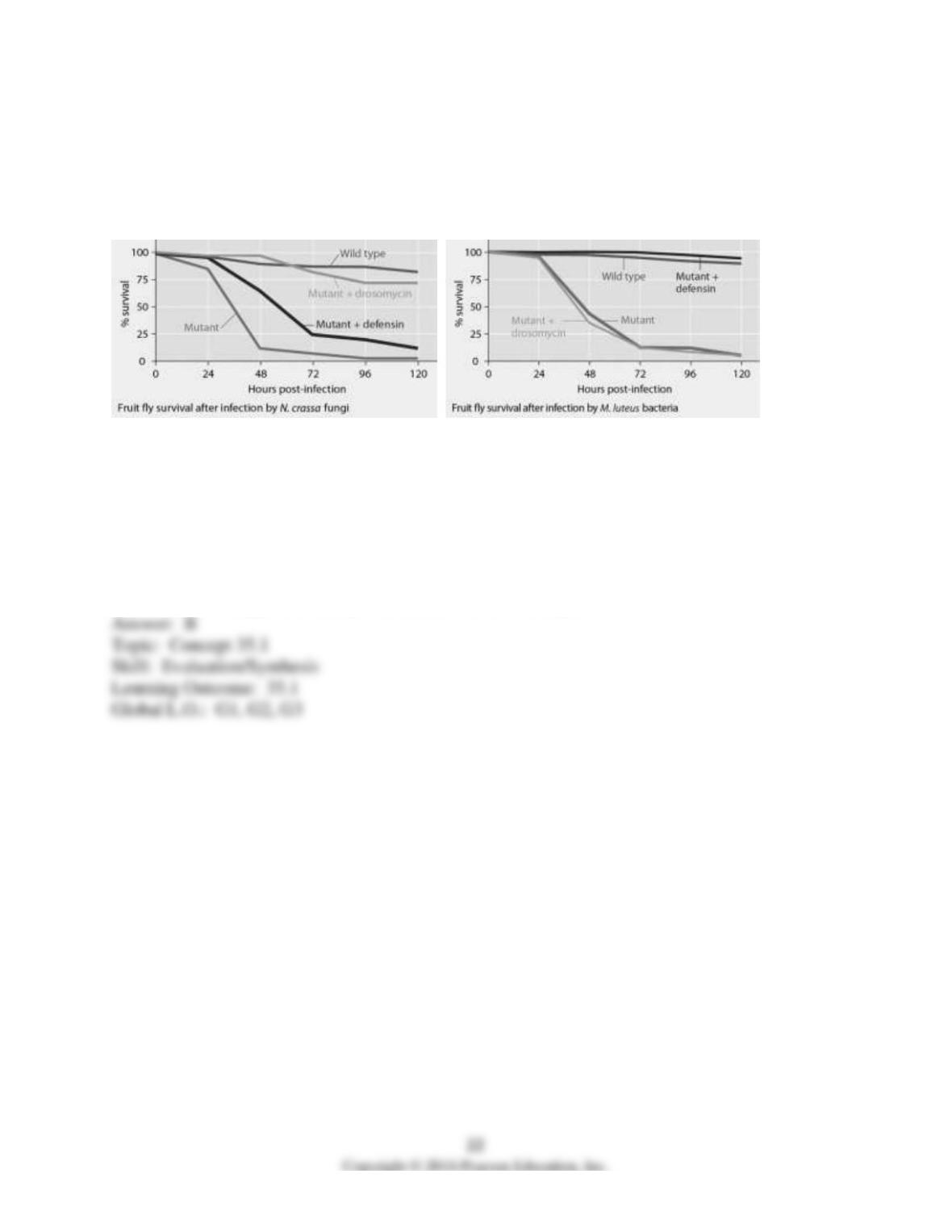
1) Mutant fruit flies that make only one antimicrobial peptide (defensin or drosomycin) were
tested for survival after infection with Neurospora crassa fungi or with Micrococcus luteus
bacteria, and the results are shown in Figures 35.1 and 35.2.
Figure 35.1 Figure 35.2
The results shown in the graphs in Figures 35.1 and 35.2 support the hypothesis that
A) adding the defensin gene to such mutants exacerbates fungal infections.
B) adding the drosomycin gene to such mutants protects them from bacterial infection.
C) wild-type flies with the full set of genes for antimicrobial peptides are highly susceptible to
these infective agents.
D) the presence of any single antimicrobial peptide protects against both infective agents.
E) even the wild-type flies rarely, if ever, survive for five days.
Please use the following information to answer the question(s) below.
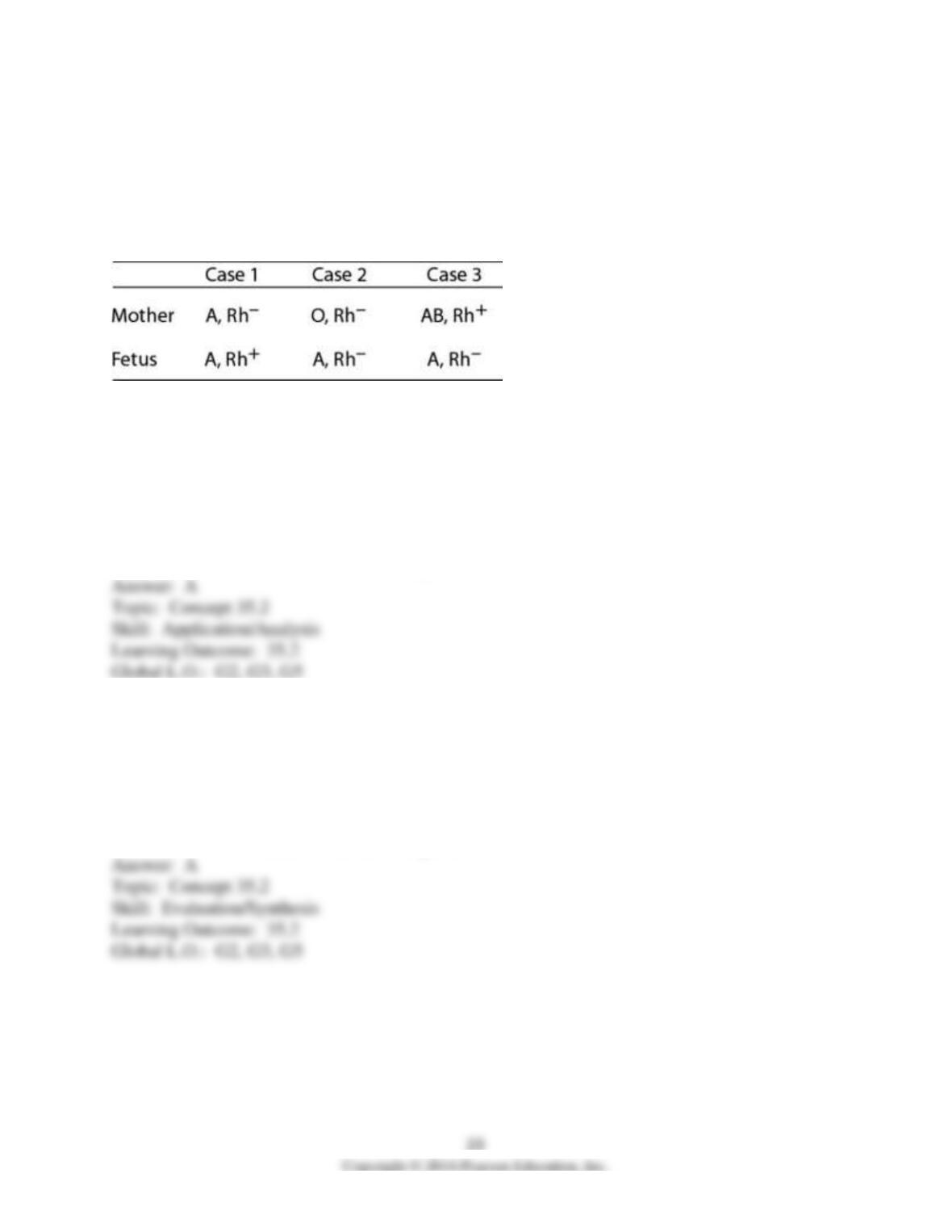
All cells have protein markers on their membranes, and the Rh antigen is found in the
membranes of red blood cells. If a person possesses the Rh antigen on his or her red blood cells,
it is indicated with a + sign. If a person does not possess the Rh antigen, it is indicated with a –
sign. A, B, and O refer to the ABO blood groups.
Figure 35.3
2) Study the table in Figure 35.3. The mother could exhibit an anti-Rh factor reaction to the
developing fetus in
A) case 1 only.
B) case 3 only.
C) cases 1 and 2 only.
D) cases 1, 2, and 3.
E) It cannot be determined from the data given.
3) Study the table in Figure 35.3. Giving the mother anti-Rh antibodies before delivering her
baby would be a wise precaution in
A) case 1 only.
B) case 3 only.
C) cases 1 and 2 only.
D) cases 1, 2, and 3.
E) It cannot be determined from the data given.
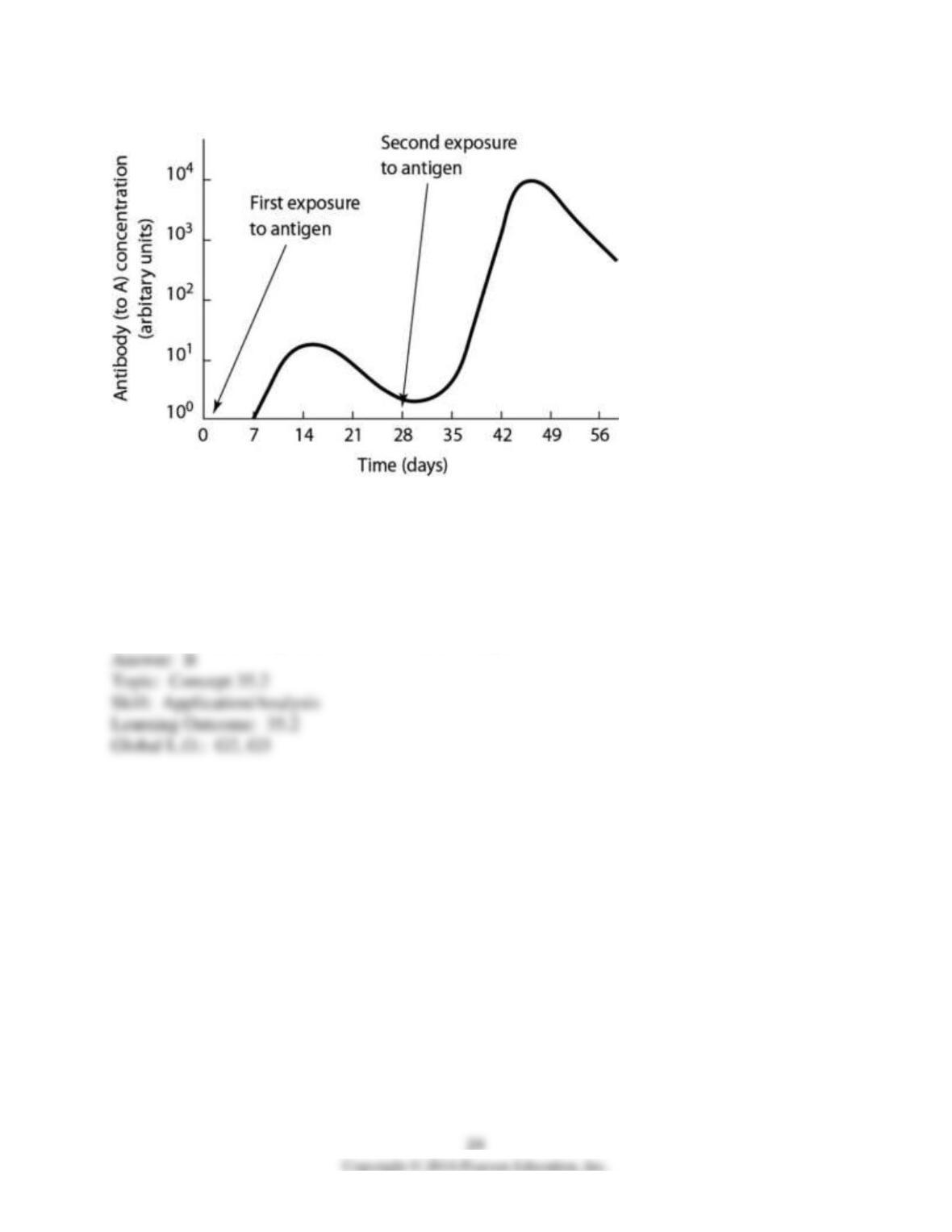
4)
Figure 35.4
According to the graph in Figure 35.4, B cells will first produce effector cells
A) between 0 and 7 days.
B) between 7 and 14 days.
C) between 28 and 35 days.
D) between 0 and 7 days and between 7 and 14 days.
E) between 0 and 7 days and between 28 and 35 days.
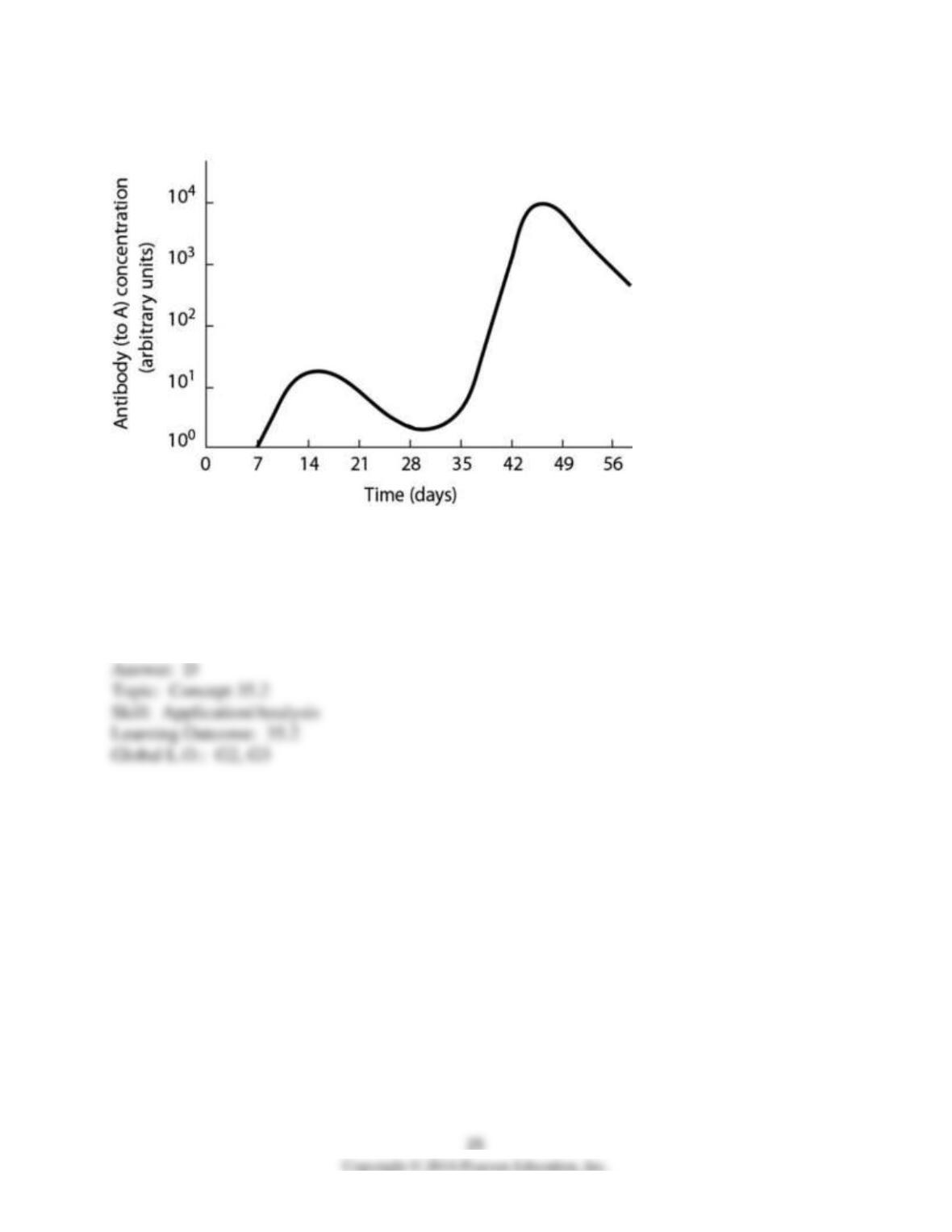
5) According to Figure 35.5, approximately when did a second exposure to antigen occur?
Figure 35.5
A) at 0 days
B) at 7 days.
C) at 14 days
D) at 28 days
E) at 49 days
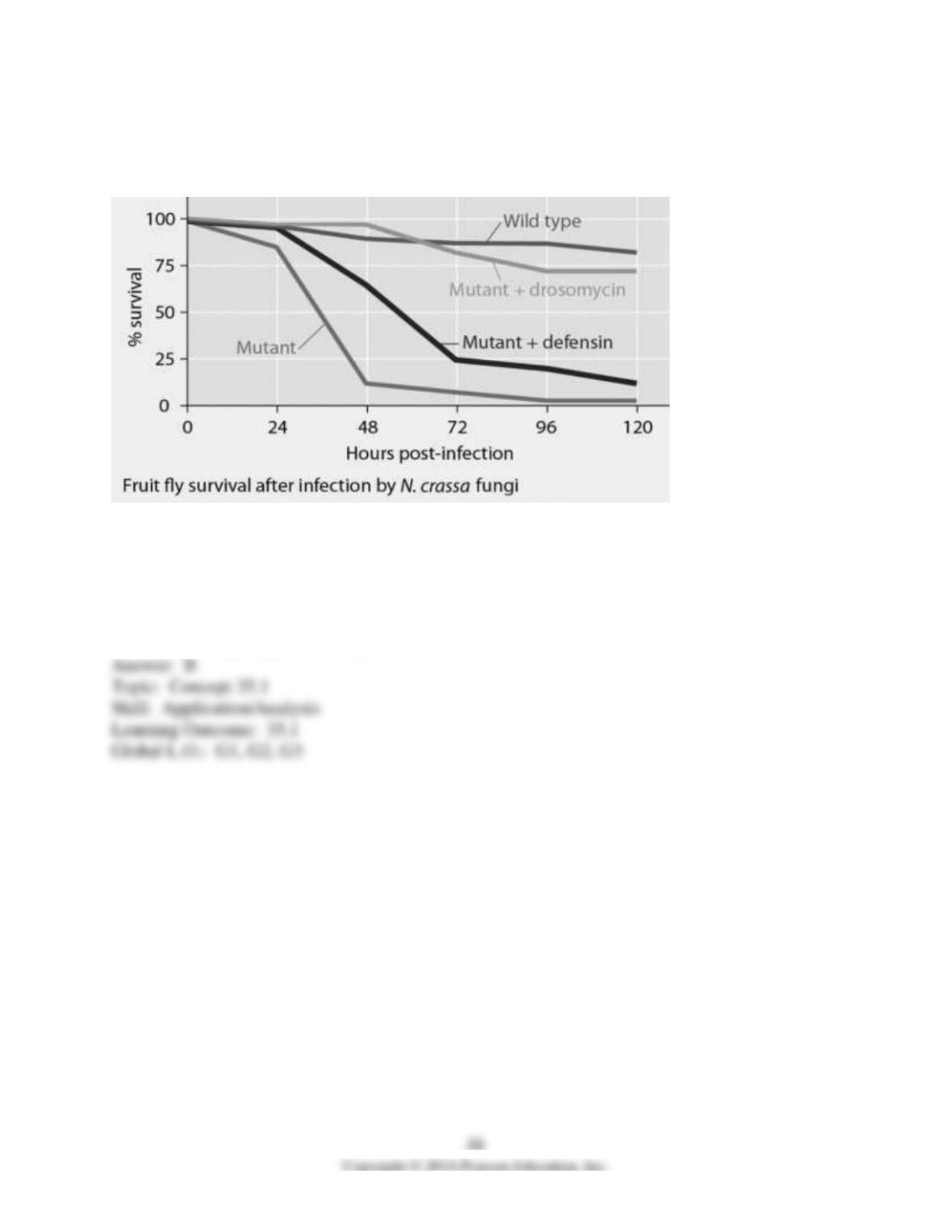
6) Mutant fruit flies that make only one antimicrobial peptide (defensin or drosomycin) were
tested for survival after infection with Neurospora crassa fungi and the results are shown in the
figure below. What statement about these data is true?
Figure 35.1
A) No wild-type fruit flies die after being infected by the fungi.
B) Drosomycin protects fruit flies from N. crassi infections to a higher degree than does
defensin.
C) Defensin is effective at preventing fruit fly infection by all fungal species.
D) After two days, approximately 65% of mutant + defensin fruit flies are dead.
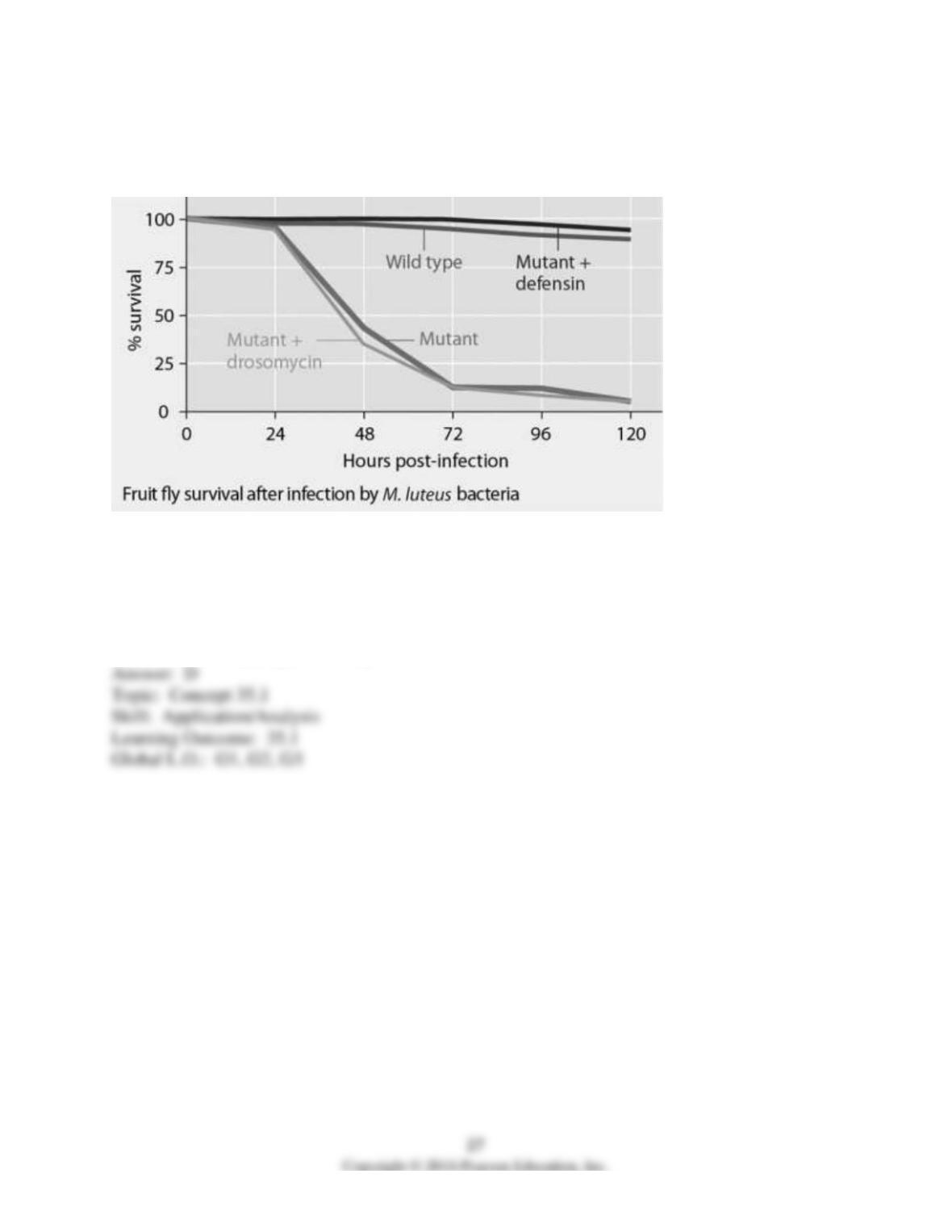
7) Mutant fruit flies that make only one antimicrobial peptide (defensin or drosomycin) were
tested for survival after infection with Micrococcus luteus bacteria and the results are shown in
the figure below. What statement about these data is true?
Figure 35.2
A) Drosomycin likely protects fruit flies by activating an adaptive immune response.
B) Drosomycin and defensin are equally effective at protecting fruit flies from the bacterial
infection.
C) Defensin likely protects fruit flies by activating an innate immune response.
D) After three days, approximately 90% of mutant fruit flies are dead.

35.3 Scenario Questions
Please use the following information to answer the question(s) below.
An otherwise healthy student in your class is infected with EBV, the virus that causes infectious
mononucleosis. The same student had been infected when she was a child, at which time she had
merely experienced a mild sore throat and swollen lymph nodes in her neck. This time, although
infected, she does not get sick.
1) Her immune system’s recognition of the second infection involves the
A) helper T cells.
B) memory B cells.
C) plasma cells.
D) cytotoxic T cells.
E) natural killer cells.
2) The EBV antigen fragments will be presented by the virus-infected cells along with
A) complement.
B) antibodies.
C) class I MHC molecules.
D) class II MHC molecules.
E) dendritic cells.
35.4 End-of-Chapter Questions
1) Which of these is not part of insect immunity?
A) antibacterial digestive enzymes
B) activation of natural killer cells
C) phagocytosis by hemocytes
D) production of antimicrobial peptides
2) An epitope associates with which part of an antigen receptor or antibody?
A) the tail
B) heavy-chain constant regions only
C) variable regions of a heavy chain and light chain combined
D) light-chain constant regions only
3) Which statement best describes the difference in responses of effector B cells (plasma cells)
and cytotoxic T cells?
A) B cells confer active immunity; cytotoxic T cells confer passive immunity.
B) B cells respond the first time a pathogen is present; cytotoxic T cells respond subsequent
times.
C) B cells secrete antibodies against a pathogen; cytotoxic T cells kill pathogen-infected host
cells.
D) B cells carry out the cell-mediated response; cytotoxic T cells carry out the humoral response.
4) Which of the following statements is not true?
A) An antibody has more than one antigen-binding site.
B) A lymphocyte has receptors for multiple different antigens.
C) An antigen can have different epitopes.
D) A liver cell makes one class of MHC molecule.

5) Which of the following should be the same in identical twins?
A) the set of antibodies produced
B) the set of MHC molecules produced
C) the set of T cell antigen receptors produced
D) the set of immune cells eliminated as self-reactive