Chapter 3—Plant Cells Key
1. Which of the following plastids contain chlorophyll?
2. Which of the following individuals was the first to use the term “cell”?
3. Which of the following would allow you to see the smallest surface features on an object?
4. Which of the following is NOT a part of the cell theory?
5. According to the cell theory, all cells arise from…
6. Which of the following would be found in a eukaryotic cell, but NOT in a prokaryotic cell?
7. Which of the following is a role played by biological membranes?
8. The nucleolus…
9. The endoplasmic reticulum…
10. This structure is the outermost boundary for the cell.
11. What part of the eukaryotic cell directs the metabolic activities of the cell?
12. The jelly-like interior of the nucleus is called the ____.
13. Ribosomes are made up of…
14. Chloroplasts are never found in…
15. Which structure converts to energy in food molecules into a form of energy that the cell can use?
16. Which structure has a very highly folded inner membrane?
17. The large, membrane-bounded sac used for storage within plant cells is called a ____.
18. Which of the following would NOT be found in the vacuole?
19. The general functions of the cytoskeleton are…
20. Cell walls are found in all but…
21. Which biomolecule would you find the most of in the plant cell wall?
22. Communication can take place between the cytoplasm of adjacent cells through…
23. A cell in a hypertonic solution…
24. The solution in a root cell is relatively ____ compared to the soil solution.
25. Which of the following means of moving things into or out of cells requires an expenditure of energy?
26. Animal cells have ____, but plant cells do not.
27. The light microscope is the only means we have of learning about cells.
28. The cell theory was first proposed by Hooke.
29. All cells have a plasma membrane.
30. Biological membranes contain large amounts of phospholipids.
32. The Golgi body is involved in the formation of the plant cell wall.
33. Microtubules are involved in cellular movements.
34. Cells are not capable of moving molecules and ions against concentration gradients that normally exist in
their environments.

35. Mitochondria have inner stacks of membranes called thylakoids.
36. Leucoplasts can synthesize chlorophyll and function as chloroplasts, if they are exposed to light.
37. Turgor pressure within plant cells keeps them stiff; without it the plant would wilt.
38. Active transport moves substances down their concentration gradient.
39. Facilitated transport requires an expenditure of energy.
40. The nucleus is surrounded by a single membrane.
41. The movement of water across a semi-permeable membrane is called ____________________.
42. The net movement of molecules of a substance down its concentration gradient is called
____________________.
43. ____________________ are colorless plastids that store starch, oils, or proteins.
44. Polar portions of molecules are said to be ____________________ because they are attracted to water.

45. Microtubules and microfilaments are components of the ____________________.
46. A(n) ____________________ is constructed of glycerol, two fatty acids, and a molecule containing a
phosphate group.
47. The ____________________ functions as a factory for processing and packaging proteins and
polysaccharides.
48. A cell containing a nucleus is said to be ____________________.
49. Small, membrane-bounded sacs containing cellular products that transport materials to the plasma
membrane are called ____________________.
50. The mass of jelly-like living material within cells is called ____________________.
51. Chloroplasts and ____________________ both contain small amounts of DNA and a few ribosomes.
52. The ____________________ contains red, yellow, and orange colors and is found in many flowers and ripe
fruits.
53. ____________________ are small cellular organdies responsible for manufacturing proteins.

54. Two solutions with equal solute concentrations are said to be ____________________.
55. Because biological membranes are ____________________, certain materials are permitted to enter the
cell, while others are prohibited.
56. In a solution of salt and water, salt is the ____________________.
57. Where in a plant cell are you likely to find waste products, malformed proteins, excess ions, and
water-soluble pigments stored? ____________________
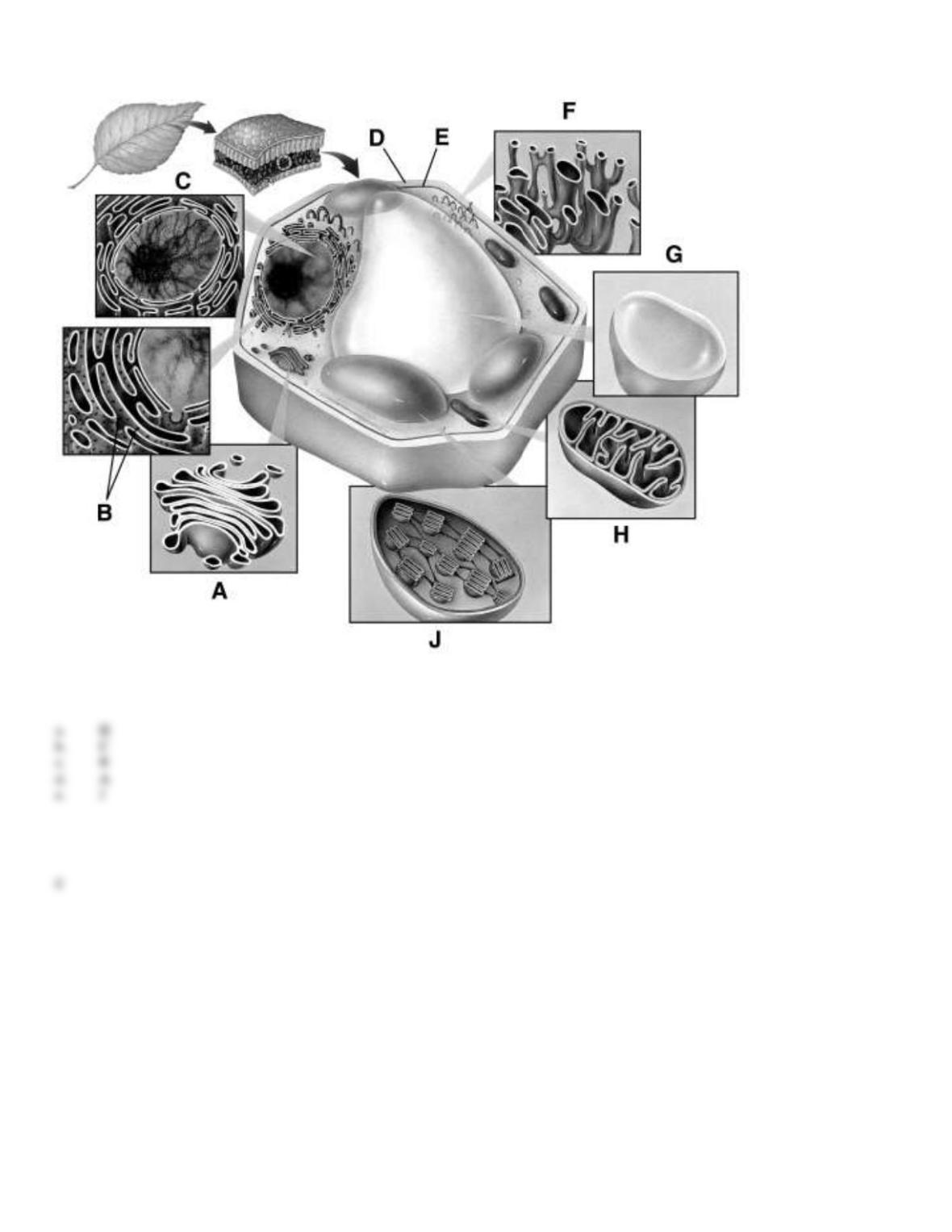
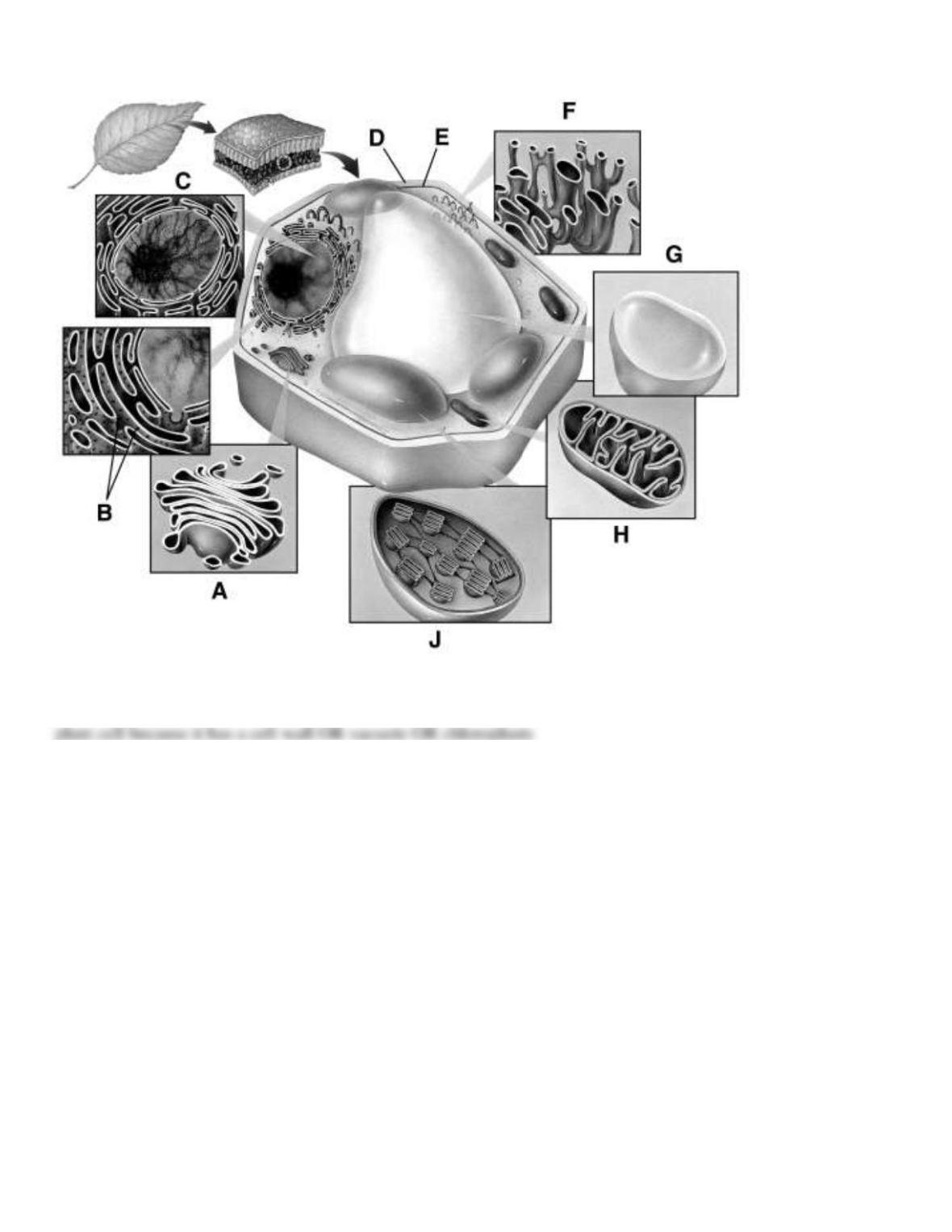
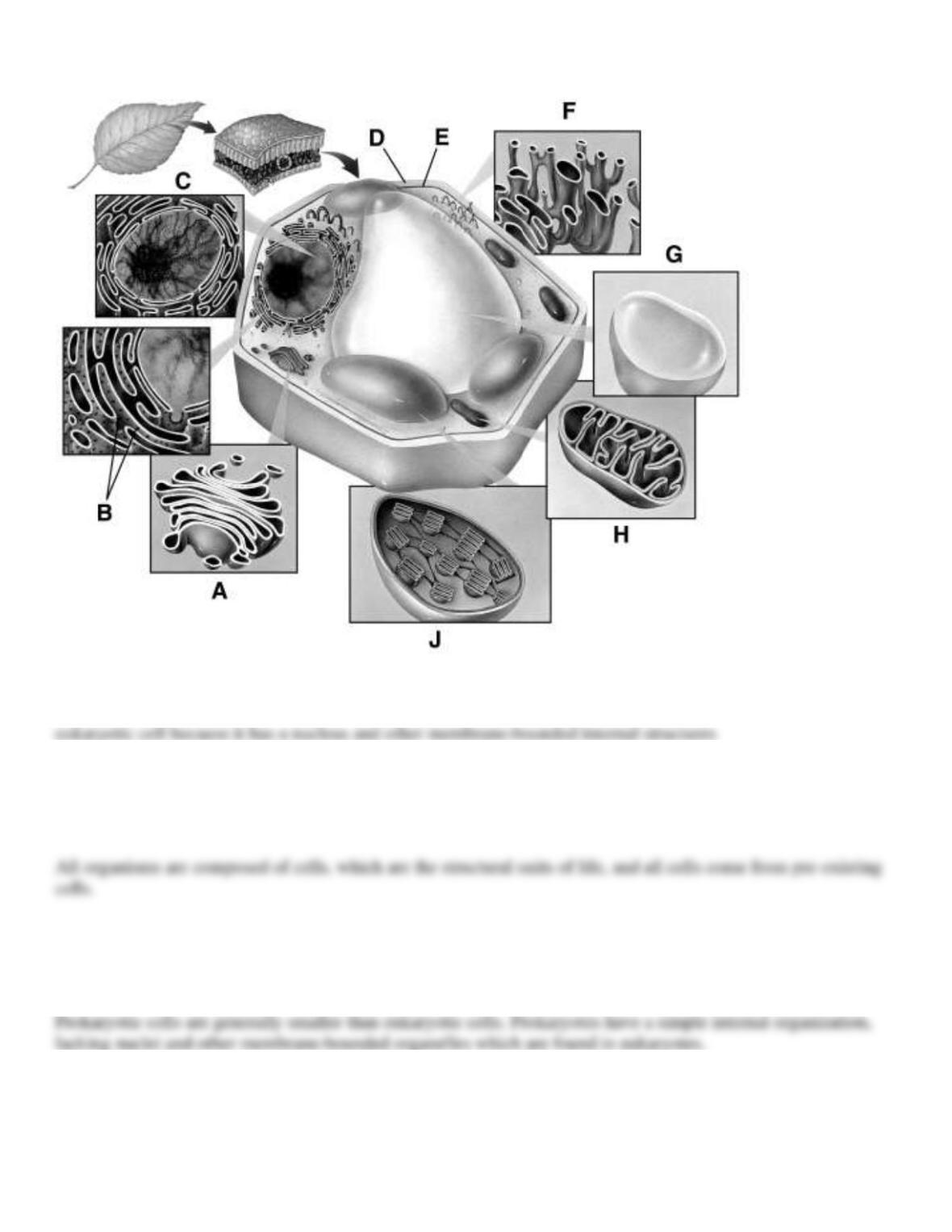
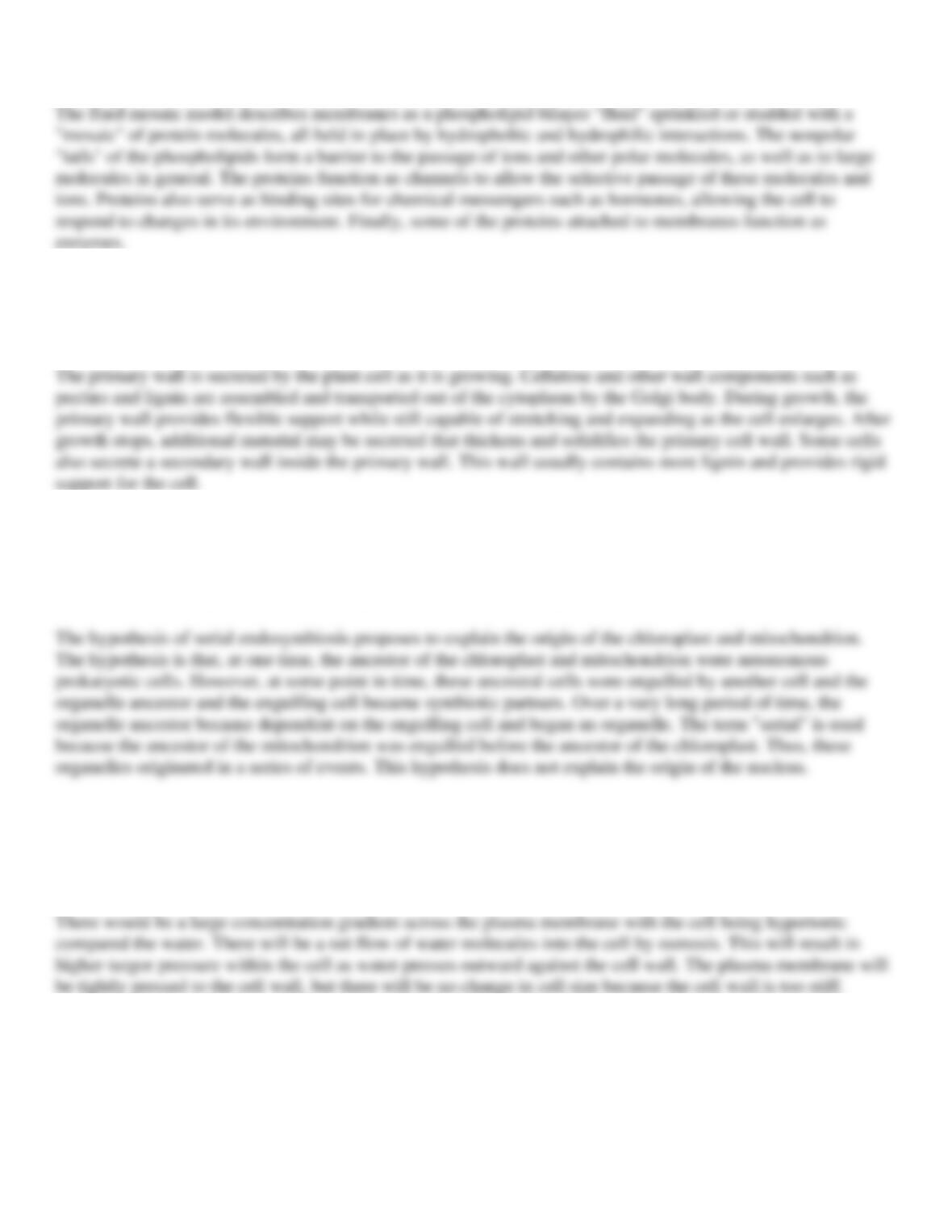
58. Figure 3-1
Refer to Figure 3-1. Which of these structures is used for synthesizing proteins?
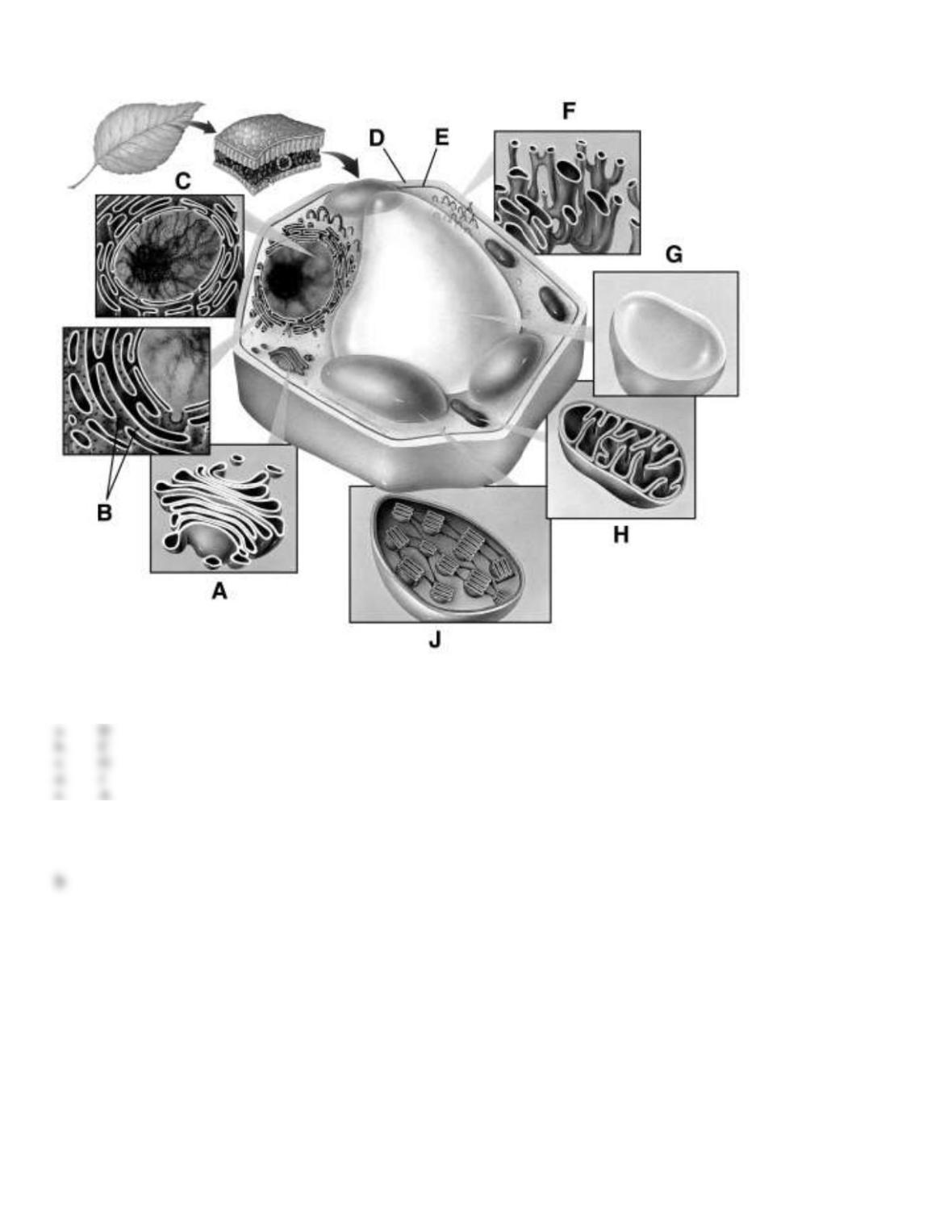
59. Figure 3-1
Refer to Figure 3-1. Which of these structures contains the genetic information?
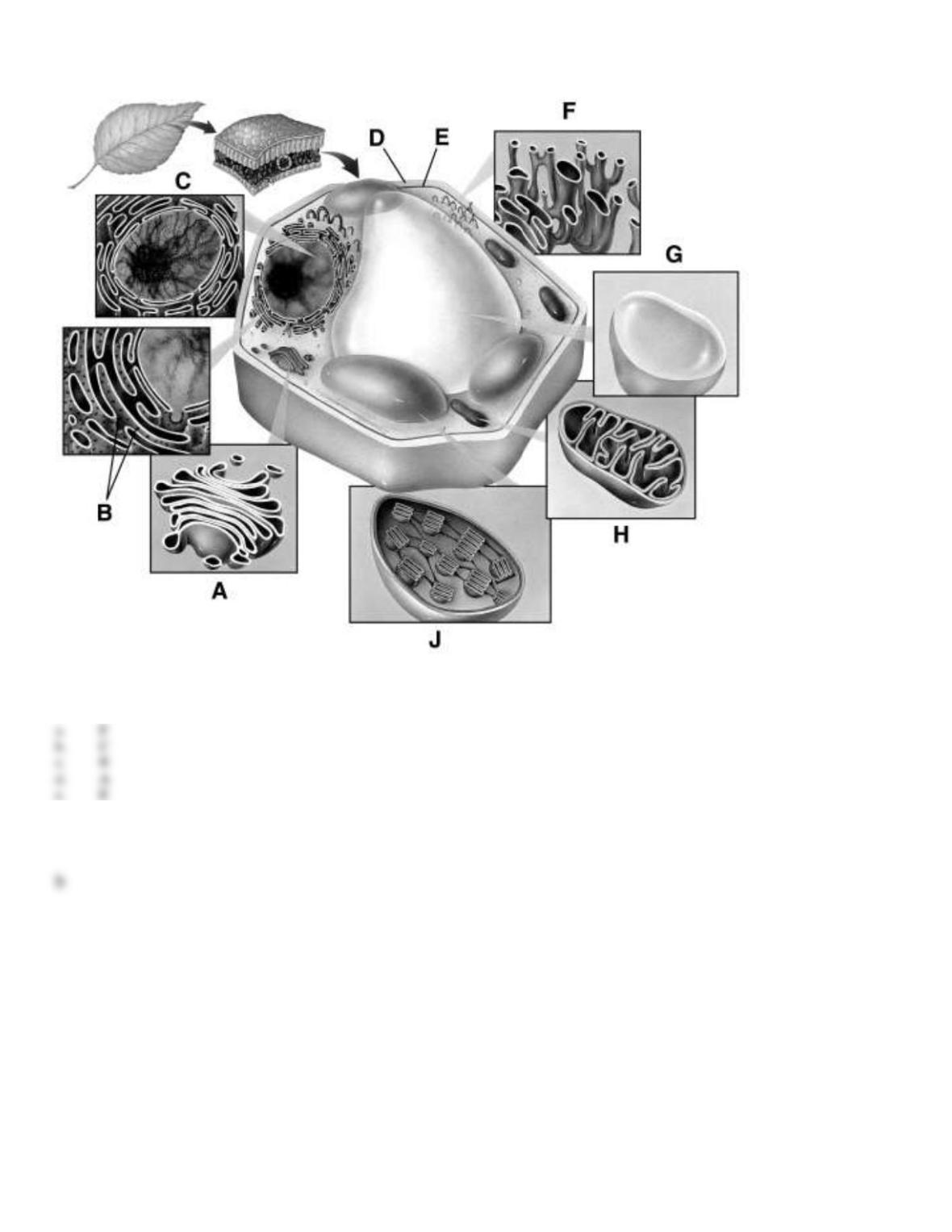
60. Figure 3-1
Refer to Figure 3-1. In which structure are ribosome subunits produced?
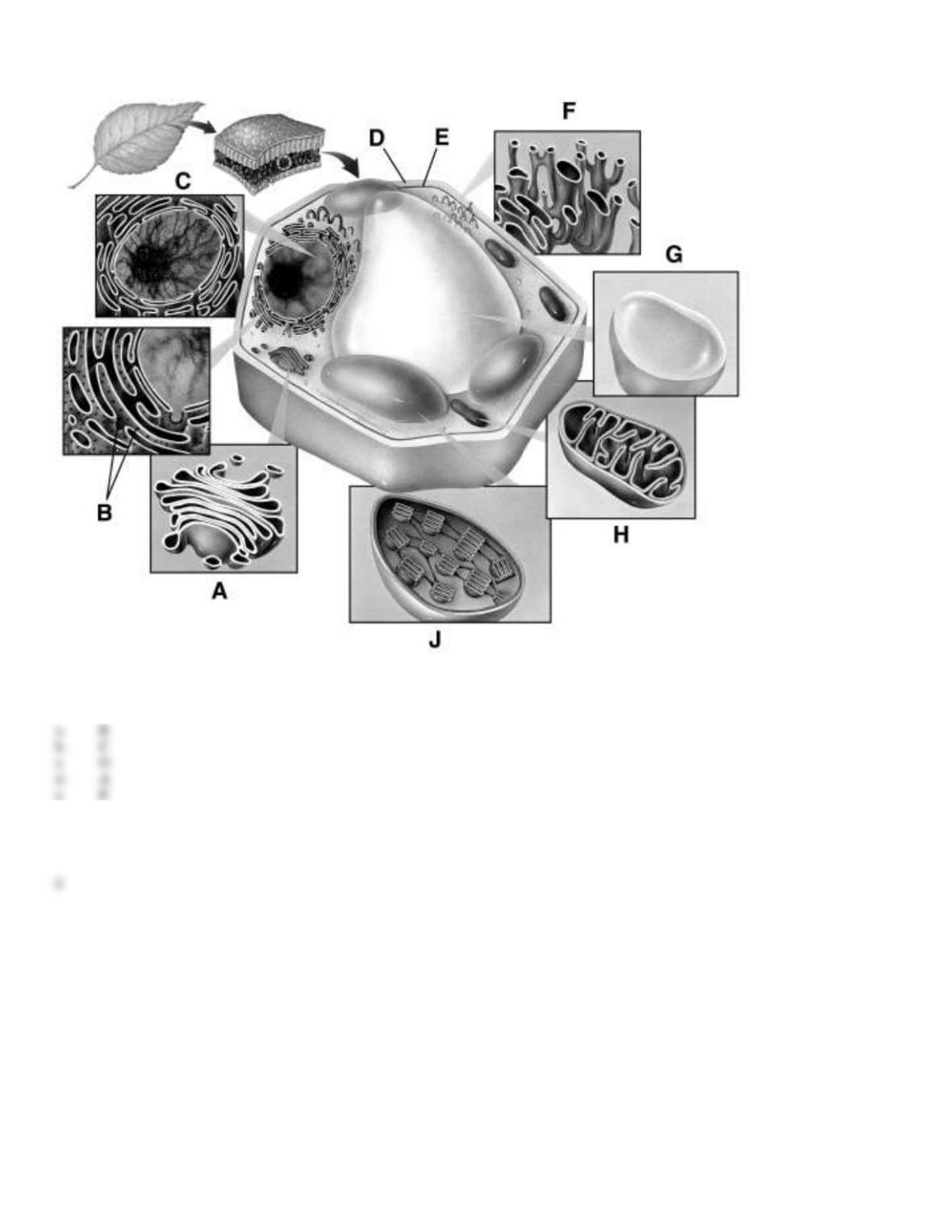
61. Figure 3-1
Refer to Figure 3-1. Which of these structures is full of water?
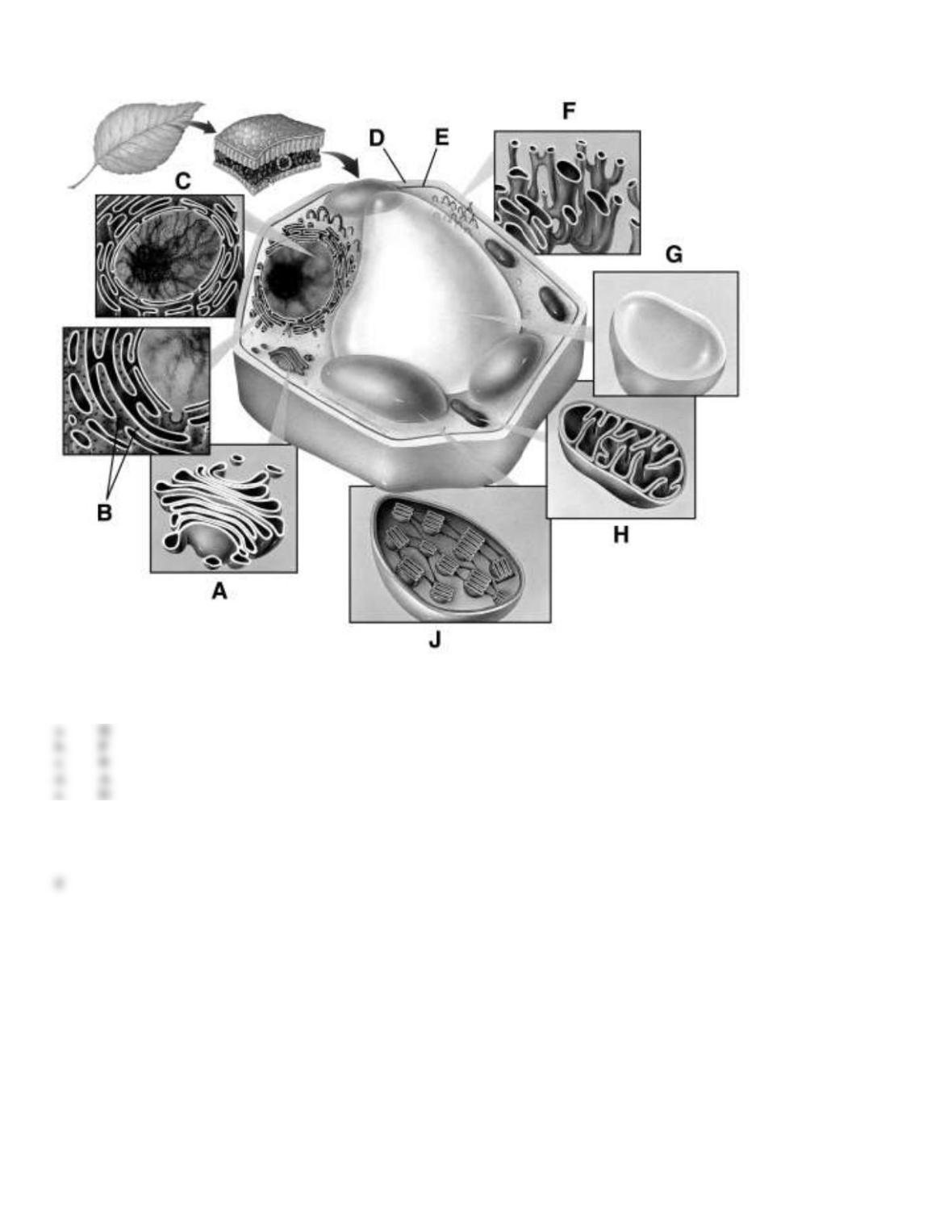
62. Figure 3-1
Refer to Figure 3-1. Which of these structures is the Golgi apparatus?
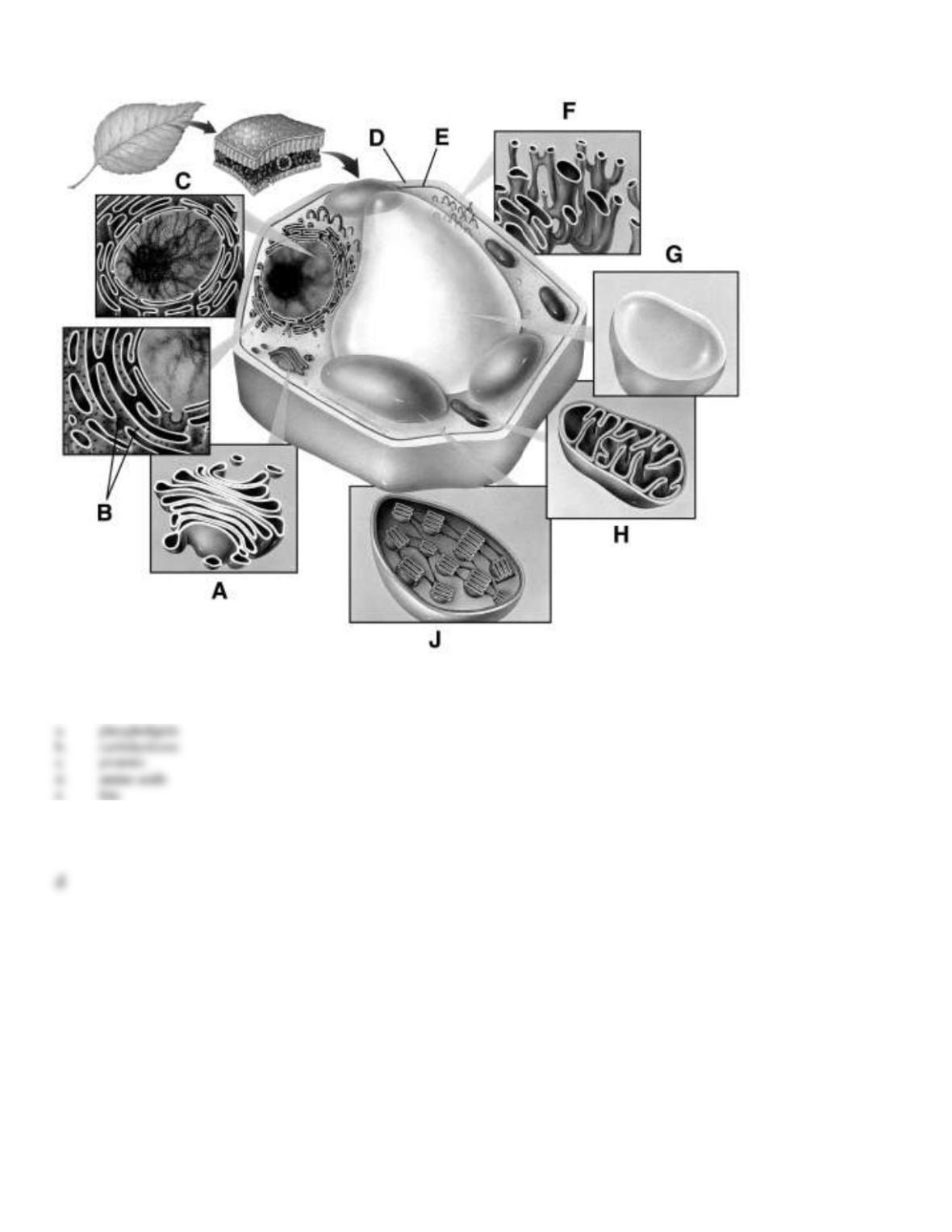
63. Figure 3-1
Refer to Figure 3-1. What is the primary biomolecule that makes up structure A?
64. Figure 3-1
Refer to Figure 3-1. Is this cell a plant or animal cell? How do you know?
65. Figure 3-1
Refer to Figure 3-1. Is this cell a prokaryotic or eukaryotic cell? How do you know?
66. State the cell theory.
67. How do prokaryotic cells and eukaryotic cells differ from each other?
68. Describe how the fluid-mosaic model of membrane structure accounts for membrane function.
69. Describe the formation of primary and secondary cell walls.
70. The hypothesis of serial endosymbiosis explains the origin of some the eukaryotic cell’s organelles. What is
the endosynbiont hypothesis and what organelles does it seek to explain?
71. Plant cells are full of molecules that are too large to be able to pass through the plasma membrane. If you
put a plant cell in pure water (with no solutes), what would happen and why?

72. Explain the physical processes in the development of turgor pressure in plant root cells.