42) Cytoplasmic membranes of ________ are composed of unbranched phospholipids.
A) bacteria
B) eukaryotes
C) archaea
D) prokaryotes
E) bacteria and eukaryotes
43) Which of the following contribute to the ability of archaea to survive in extreme
environments?
A) branched hydrocarbons with ether linkages
B) phospholipids with monounsaturated fatty acids
C) hopanoids
D) glycerols
E) both hopanoids and glycerols
44) ________ may have pili.
A) Eukaryotes
B) Archaea
C) Bacteria
D) Prokaryotes
E) Both eukaryotes and bacteria
45) Which of the following never have cell walls?
A) algae
B) animal cells
C) archaea
D) bacteria
E) fungi
46) Which of the following may have cell walls containing teichoic acids?
A) Gram-negative bacteria only
B) Gram-positive bacteria only
C) archaea
D) both Gram-positive and Gram-negative bacteria
E) all prokaryotes
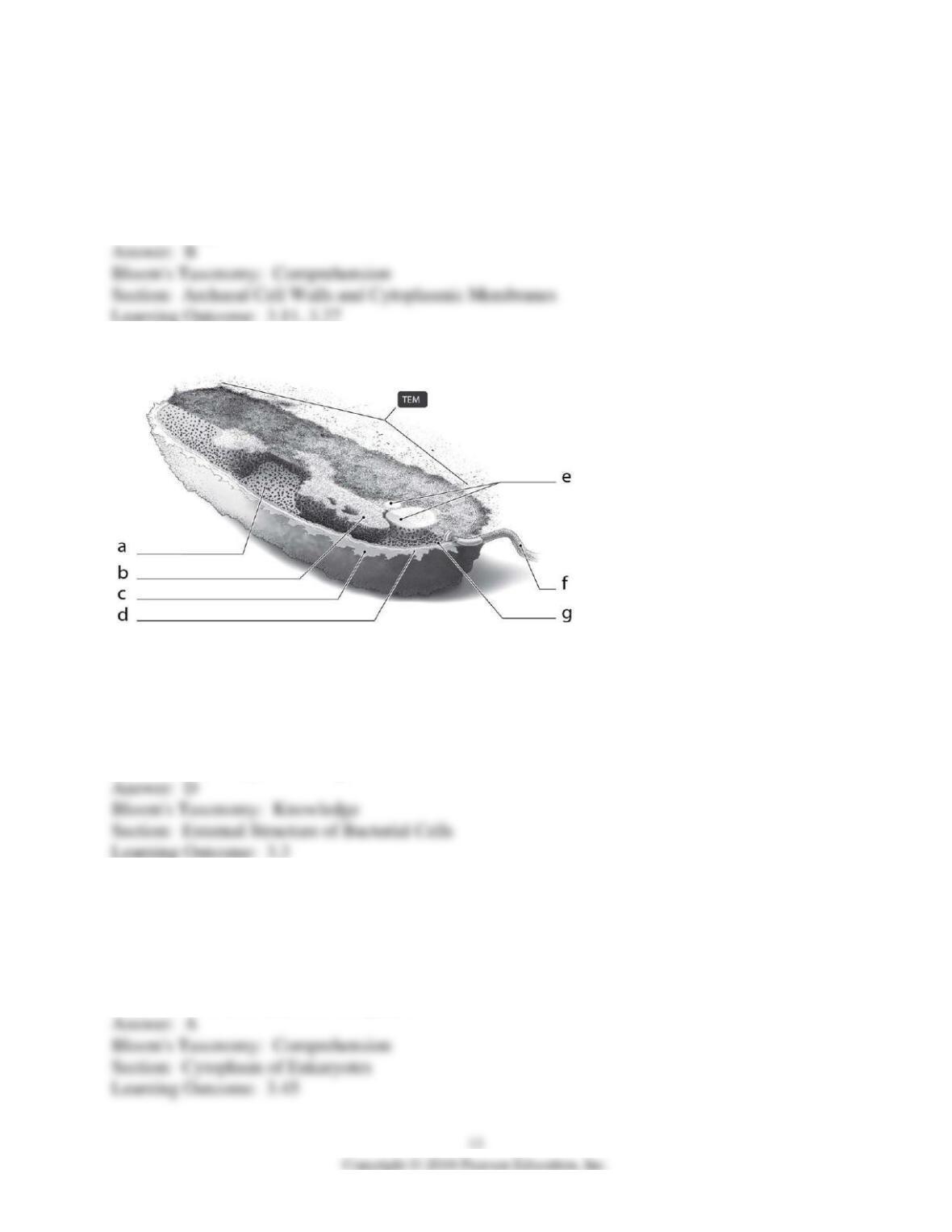
47)
What is the function of the cellular structure indicated by “c” in Figure 3.2?
A) provide shape only
B) attach to surfaces only
C) protect from dehydration only
D) attach to surfaces and protect from dehydration
E) serve as carbohydrate storage
48) The endosymbiotic theory does NOT provide an explanation for
A) the two membranes of the nuclear envelope.
B) the presence of ribosomes in mitochondria.
C) the presence of DNA in chloroplasts.
D) the cristae in mitochondria.
E) the double membrane of chloroplasts.
49) Which of the following prokaryotic cells contain an outer membrane?
A) Gram-negative bacteria only
B) Gram-positive bacteria only
C) both Gram-positive and Gram-negative bacteria
D) archaea
E) all prokaryotes
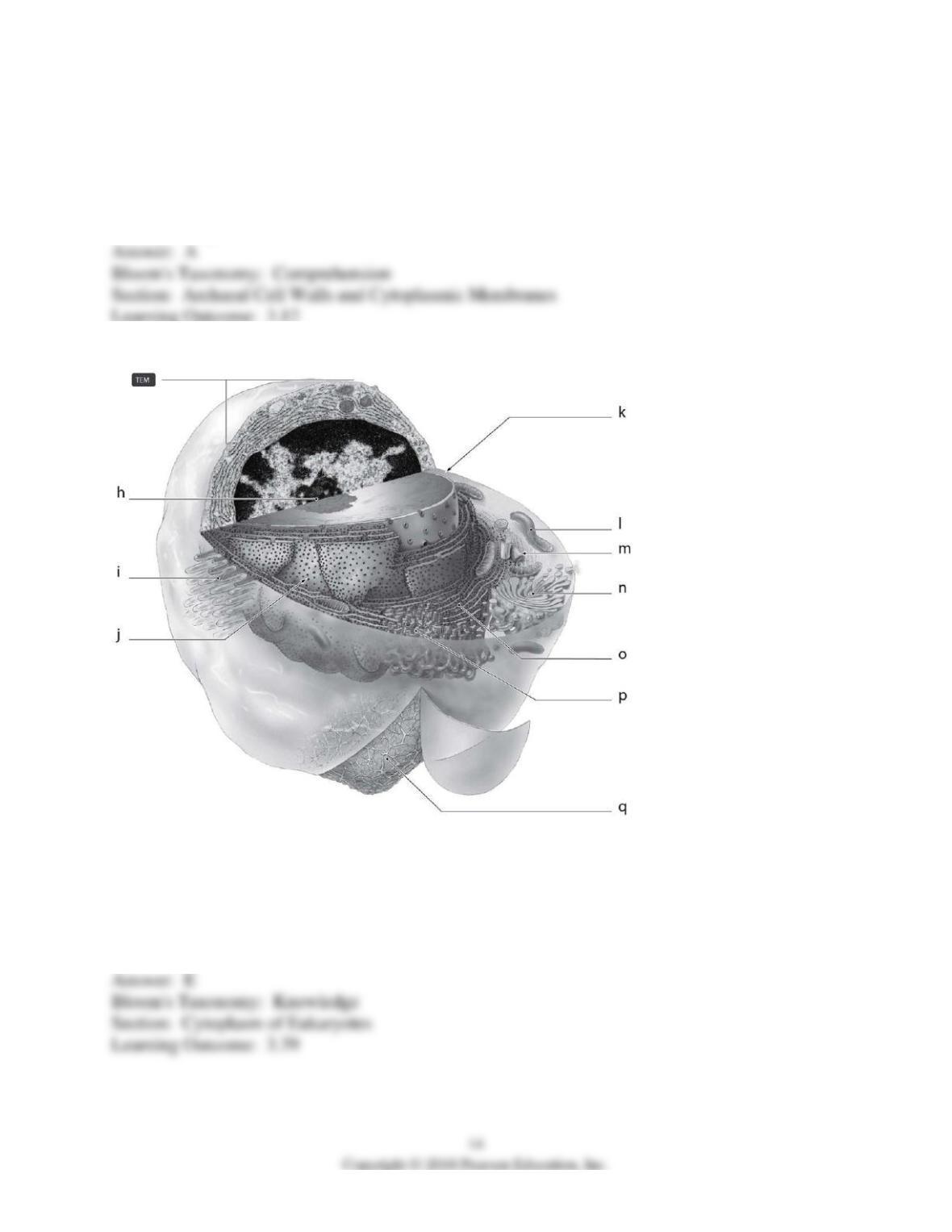
50)
What is the function of the cellular structure indicated by “m” in Figure 3.3?
A) ATP synthesis
B) protein synthesis
C) synthesis of lipids
D) packaging of materials for export
E) cell movement and mitosis
3.2 True/False Questions
1) Chloroplasts use light energy to produce ATP and carbohydrates.
2) Peroxisomes contain enzymes used to digest nutrients that have been brought into the cell
through phagocytosis.
3) Bacterial protein synthesis can begin before the reading of the gene is complete.
4) Archaea are similar to bacteria in having cytoplasmic membrane that are composed of
phospholipids and hopanoids.
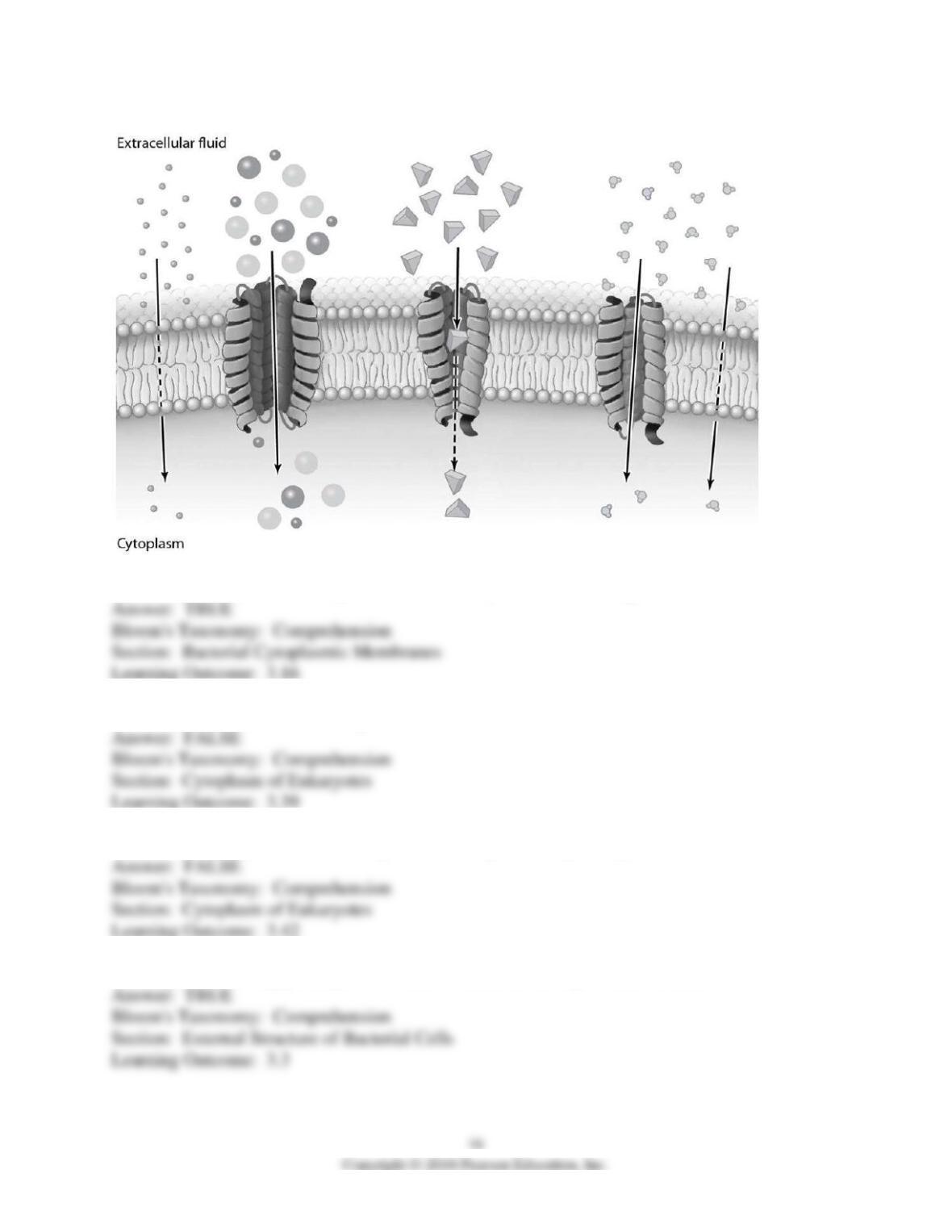
5)
The processes illustrated in Figure 3.4 are driven by electrochemical gradients.
6) Eukaryotic ribosomes are composed of 50S and 30S subunits.
7) Lysosomes result from the endocytosis of food particles by eukaryotic cells.
8) The presence of a glycocalyx contributes to bacteria’s ability to cause disease.
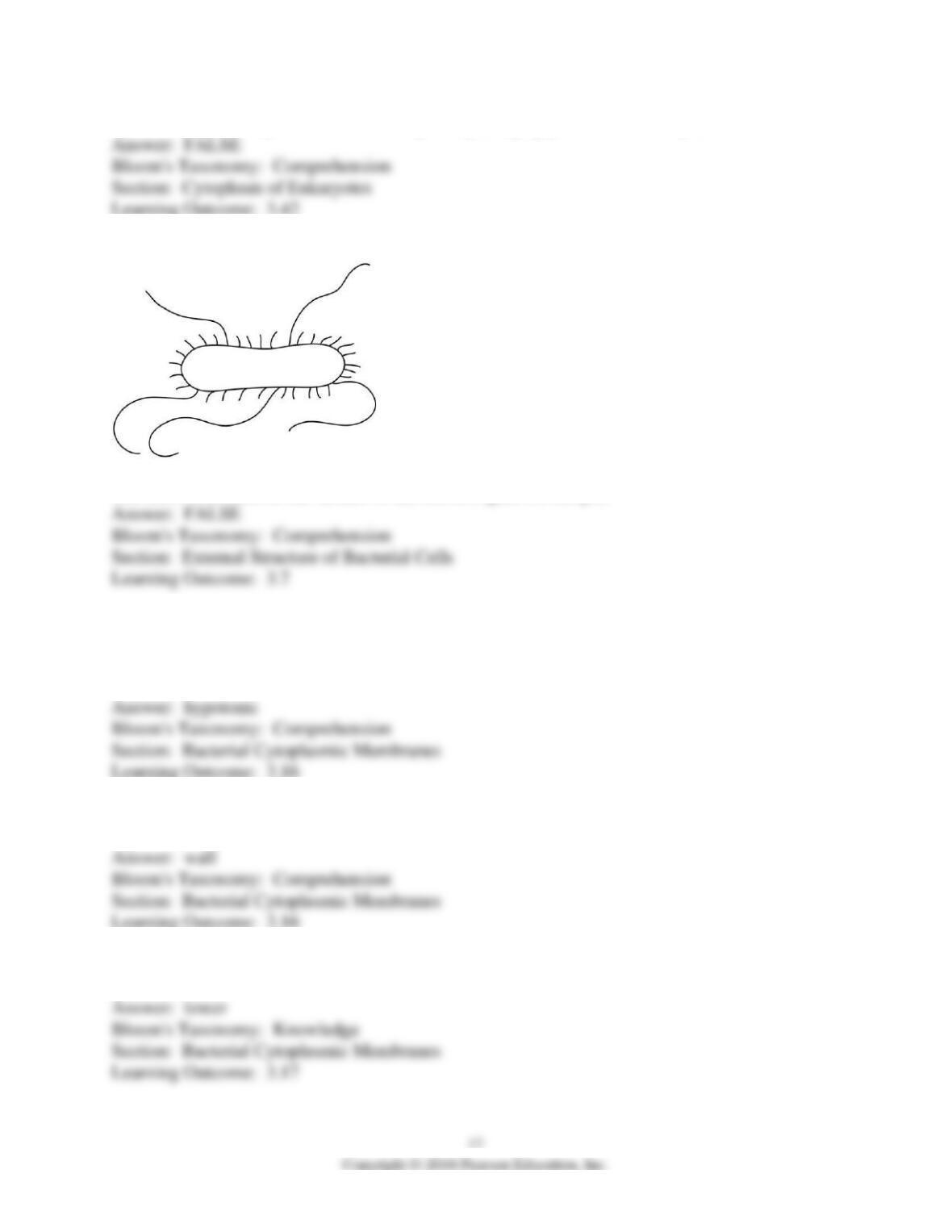
9) Chromatin is composed of DNA and special packaging proteins called hopanoids.
10)
The short structures on the surface of the cell in Figure 3.5 are pili.
3.3 Short Answer Questions
1) In a(n) (hypertonic/isotonic/hypotonic) solution, an animal cell can gain so much water that it
may burst.
2) The presence of a cell (wall/membrane) enables bacterial and plant cells to resist the effects of
hypotonic solutions.
3) A higher concentration of solutes corresponds to a (higher/lower) concentration of water in a
given solution.
4) A(n) (symport/antiport/uniport) is a carrier protein that transports two substances in the same
direction across a membrane.
5) The “run” in bacterial motility is the result of (clockwise/counterclockwise/whiplike) rotation
of the flagella.
6) The reserve deposits of starch or other compounds found in many prokaryotic cells are called
(vacuoles/inclusions/nucleoid).
7) Eukaryotic cells use a process known as (pinocytosis/phagocytosis/exocytosis) to obtain
liquids from their environment.
8) Fragments of (LPS/NAM/NAG) released from Gram-negative bacteria into the bloodstream
produce fever and shock.
9) The smooth endoplasmic reticulum is the site of (protein/lipid/carbohydrate) synthesis.
10) Fibrous structures with three “arms” some archaea use for attachment to surfaces are
(fimbriae/hami/pili).
11) A (capsule/slime layer/matrix) is a type of glycocalyx that is firmly attached to the cell.
12) The cell walls of eukaryotes are typically composed of
(carbohydrates/peptidoglycan/glycoproteins).
13) The semiliquid matrix of the nucleus is called the (cytoplasm/nucleoid/nucleoplasm).
14) A structural molecule found in eukaryotic cytoskeletons, flagella, cilia, and centrioles is
(flagellin/tubulin/fibrin).
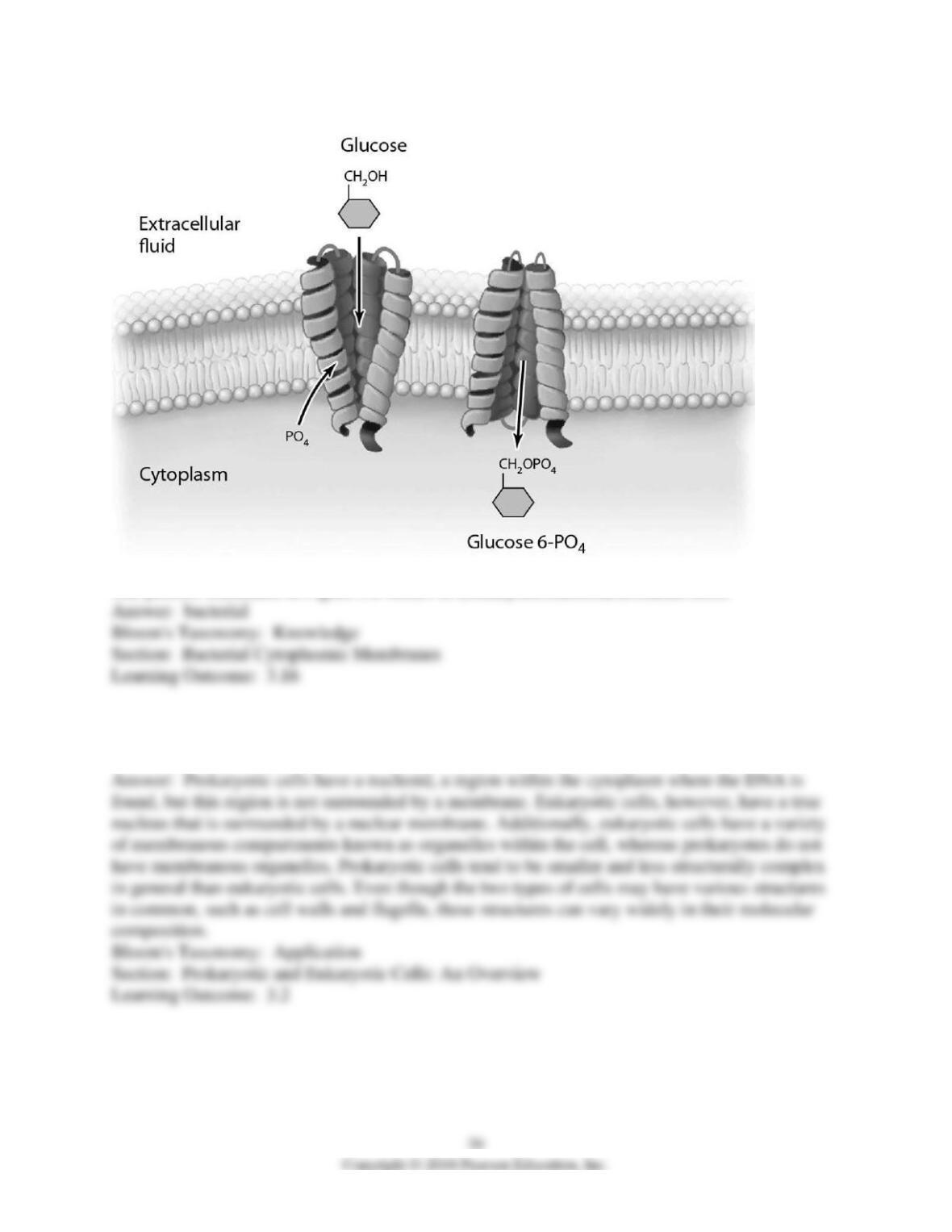
15)
The process illustrated in Figure 3.6 occurs in (eukaryotic/bacterial/archaeal) cells.
3.4 Essay Questions
1) Compare and contrast the characteristics of prokaryotic and eukaryotic cells.
2) Compare and contrast archaea and bacteria, with particular attention to the features that lead to
their placement in separate taxa.
3) Most antibacterial drugs disrupt or destroy bacterial cellular characteristics that are different
from those of eukaryotic cells or that may not even be present in eukaryotic cells, an idea termed
‘selective toxicity’. List and describe at least three cellular features of bacteria that could be
targeted to inhibit or kill a bacterial pathogen.
4) Both mitochondria and chloroplasts have inner membranes with much greater surface area
than their outer membranes. Discuss the contribution of the extensive inner membranes to the
roles of these organelles.
5) Describe how the structure of the bacterial cytoplasmic membrane relates to its function of
selective permeability.