61. In the current mass extinction, larger numbers of plant species are becoming extinct than in previous mass
extinctions.
62. An ecological “island” must be surrounded by water.
63. Biologists generally agree that global warming will not have a particularly severe impact on plants because
they are highly adaptable.
64. In situ conservation is considered a better solution than ex situ conservation in preserving biodiversity.
65. The most abundant greenhouse gas is nitrous oxide.
66. A(n) ____________________ is a large, relatively distinct terrestrial region characterized by a particular
combination of climate, soil, plants, and animals that is approximately the same regardless of where it occurs in
the world.
67. A layer of permanently frozen ground, usually under the top layer of soil, which varies in depth and
thickness is called ____________________.
68. Small, hard, leathery leaves that resist water loss are called ____________________.
69. Many plants of the ____________________ biome grow best in the months following a forest fire.
70. ____________________ refers to the condition in which the roots or leaves of a plant secrete toxic
substances that inhibit the growth of nearby plants.
71. Twisted, shrublike trees found at the treeline are called ____________________.
72. A low-precipitation area on the leeward side of a mountain range is called a(n) ____________________.
73. The biome usually dominated by a dense growth of drought-resistant evergreen shrubs, and may also
contain drought-resistant pine and scrub oak trees is ____________________.
74. ____________________ is the situation where certain plants secrete toxic substances from their roots or
leaves that inhibits the establishment of competing plants nearby.
75. A tropical grassland with widely scattered clumps of trees is called a(n) ____________________.
76. The evergreen forest biome with severe winters is called the ____________________.
77. The smallest population that has a high chance of enduring into the future is called the
____________________.
78. A species not found anywhere else in the world is called a(n) ____________________ species.
79. A relatively small area that contains large numbers of species and also is at high risk from human activities
is called a(n) ____________________.
80. When gases in the atmosphere trap heat and cause global warming, it is called the ____________________.
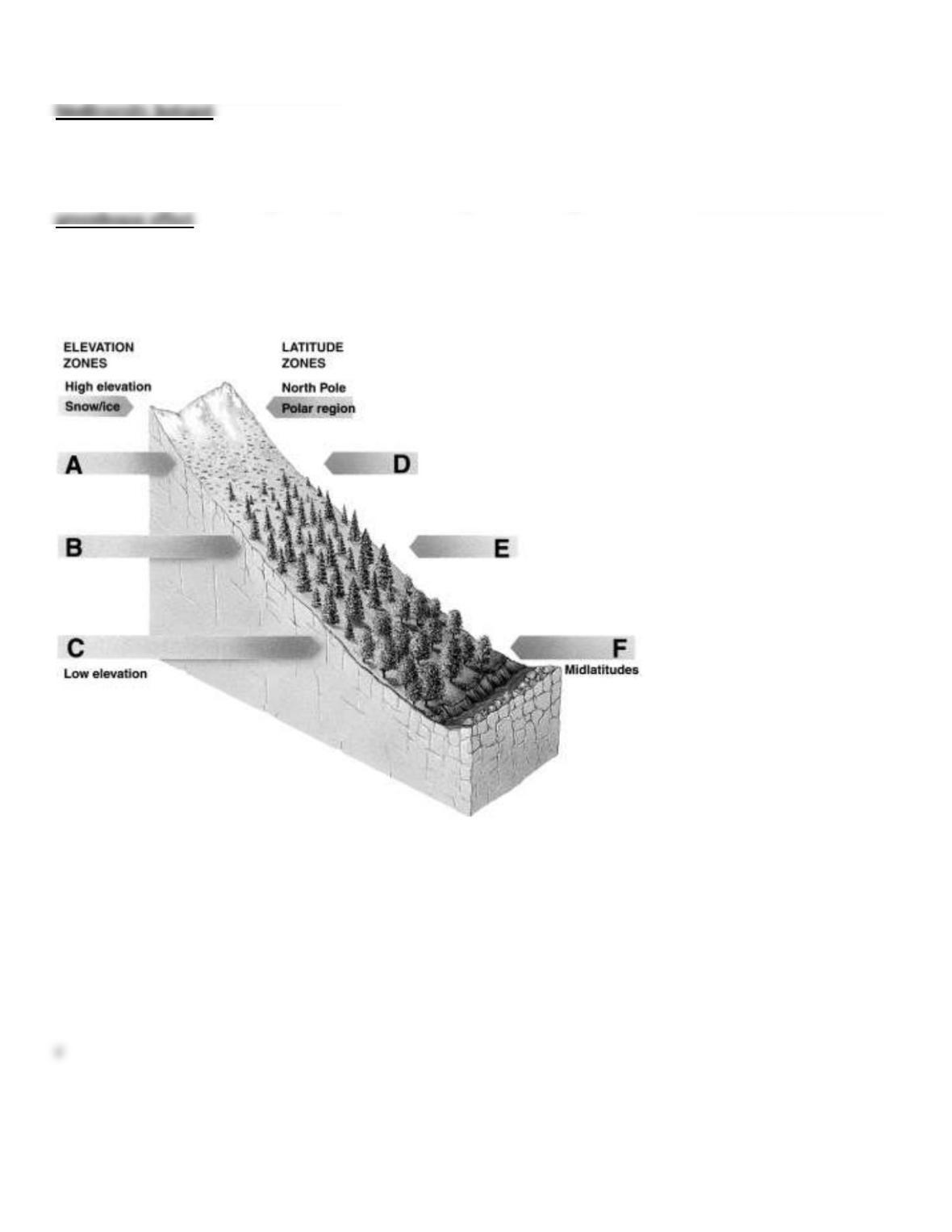
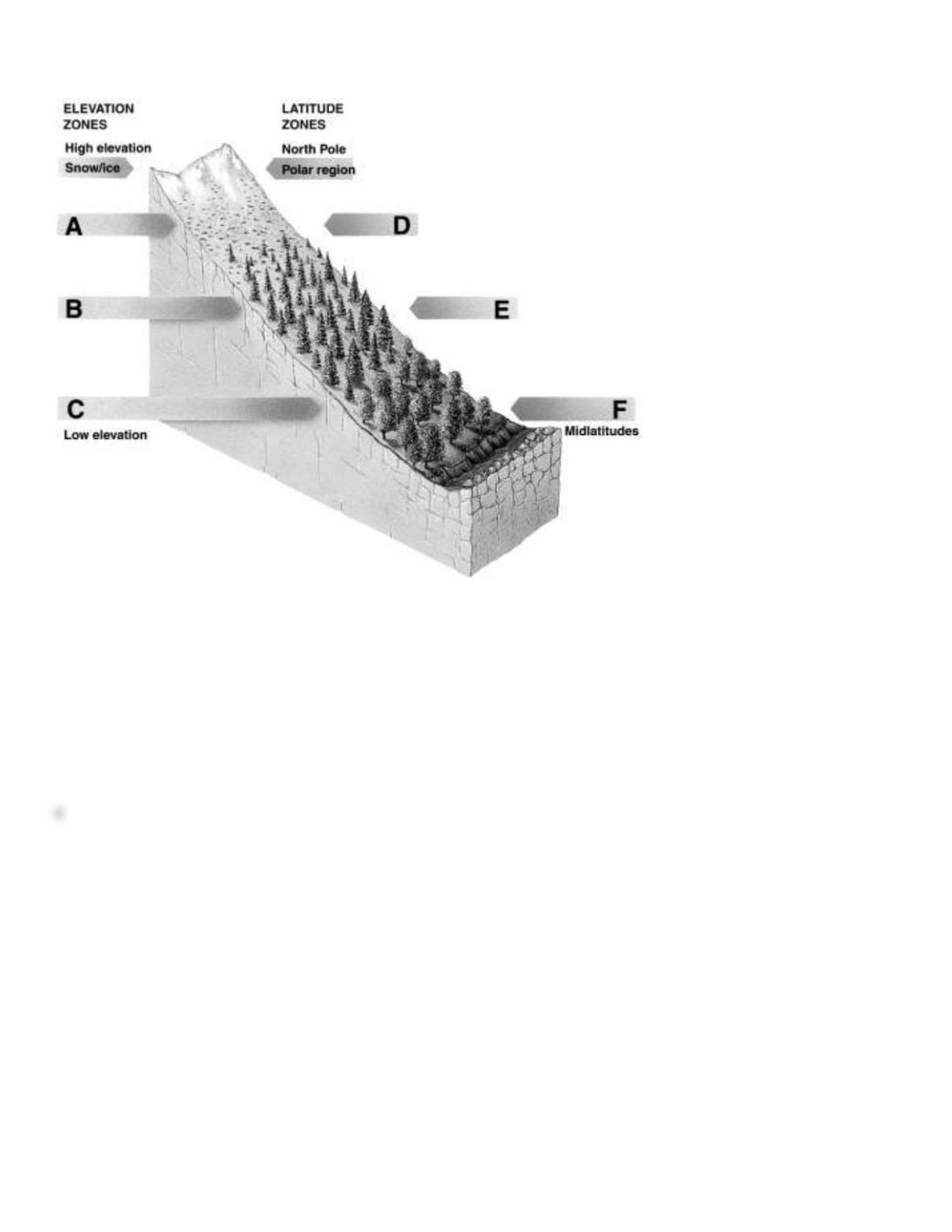
81. Figure 27-1
Refer to Figure 27-1. Which letter best indicates arctic tundra?
a.
A only
b.
B only
c.
D only
d.
E only
e.
both A and D
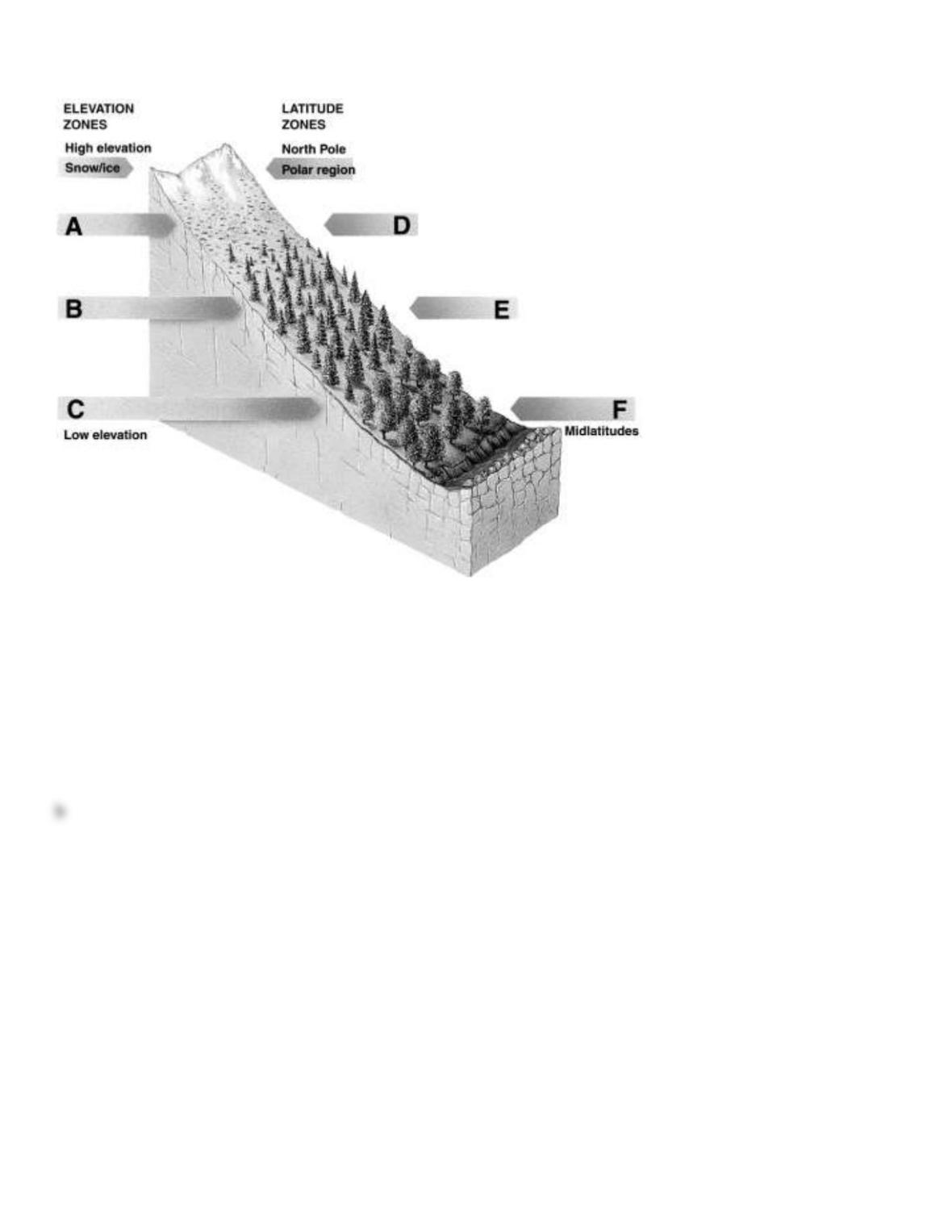
82. Figure 27-1
Refer to Figure 27-1. Which letter best indicates subalpine coniferous forest?
a.
A only
b.
B only
c.
D only
d.
E only
e.
both B and D
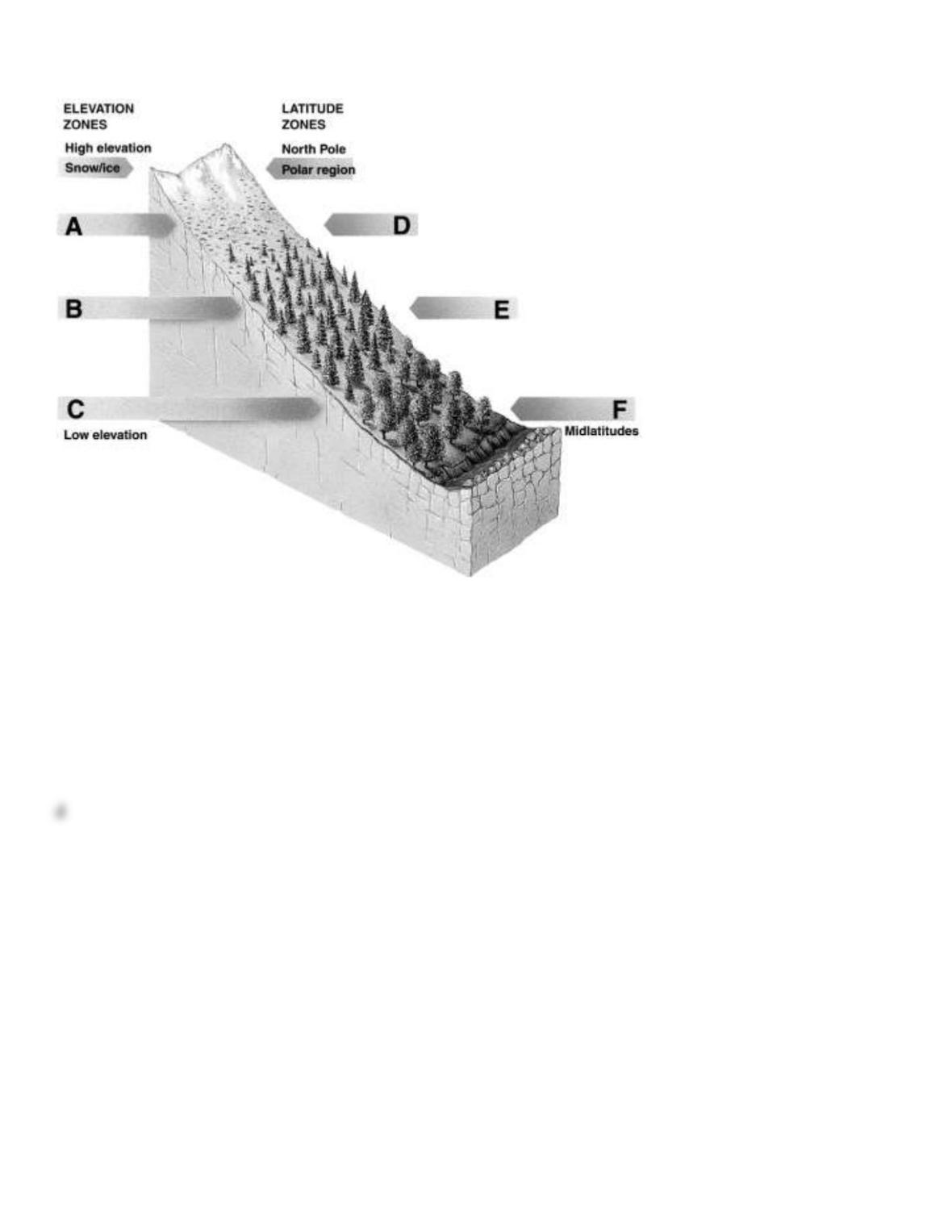
83. Figure 27-1
Refer to Figure 27-1. Which letter best indicates the boreal forest?
a.
A only
b.
B only
c.
D only
d.
E only
e.
both B and E
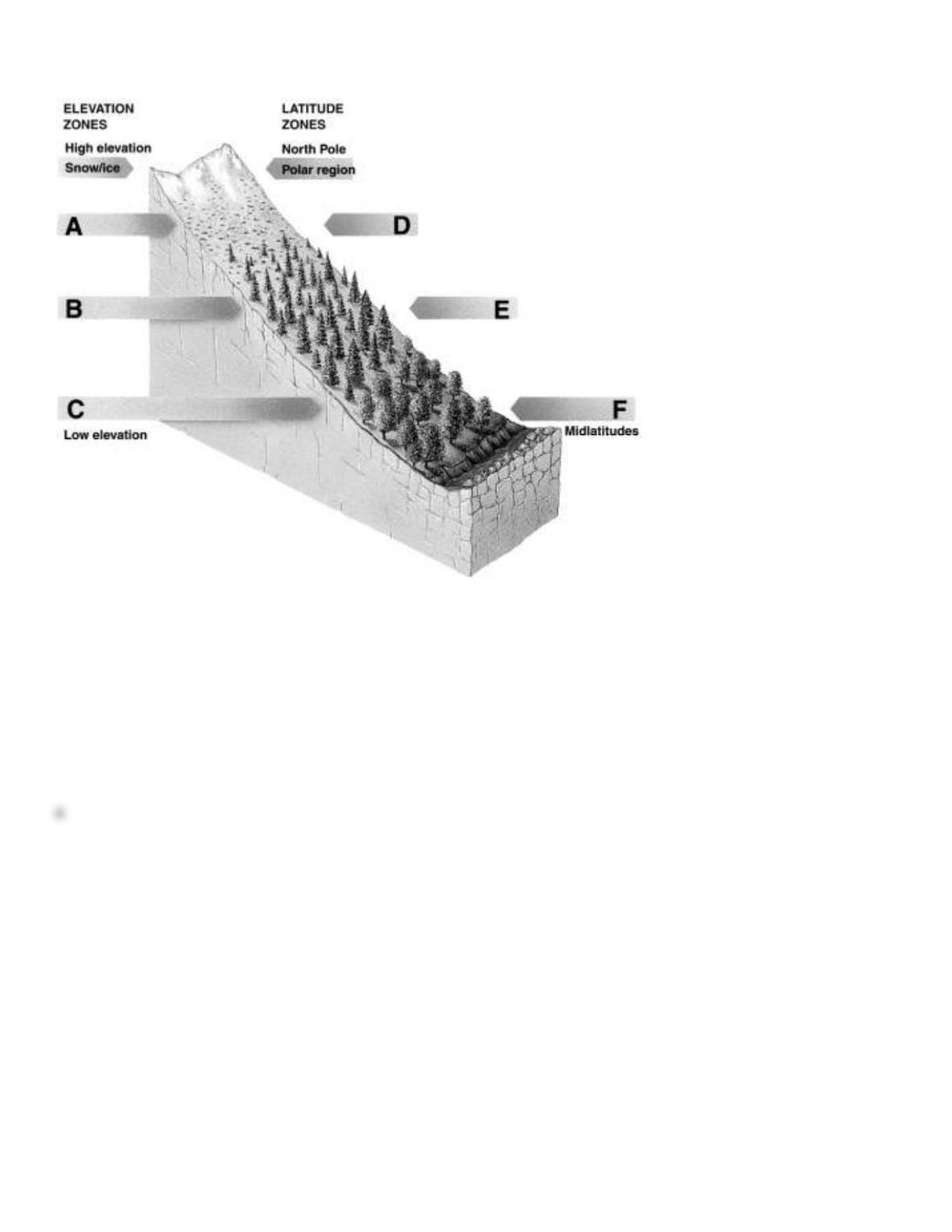
84. Figure 27-1
Refer to Figure 27-1. Krummholz is normally found between
a.
A and B
b.
D and E
c.
B and C
d.
E and F
e.
C and F
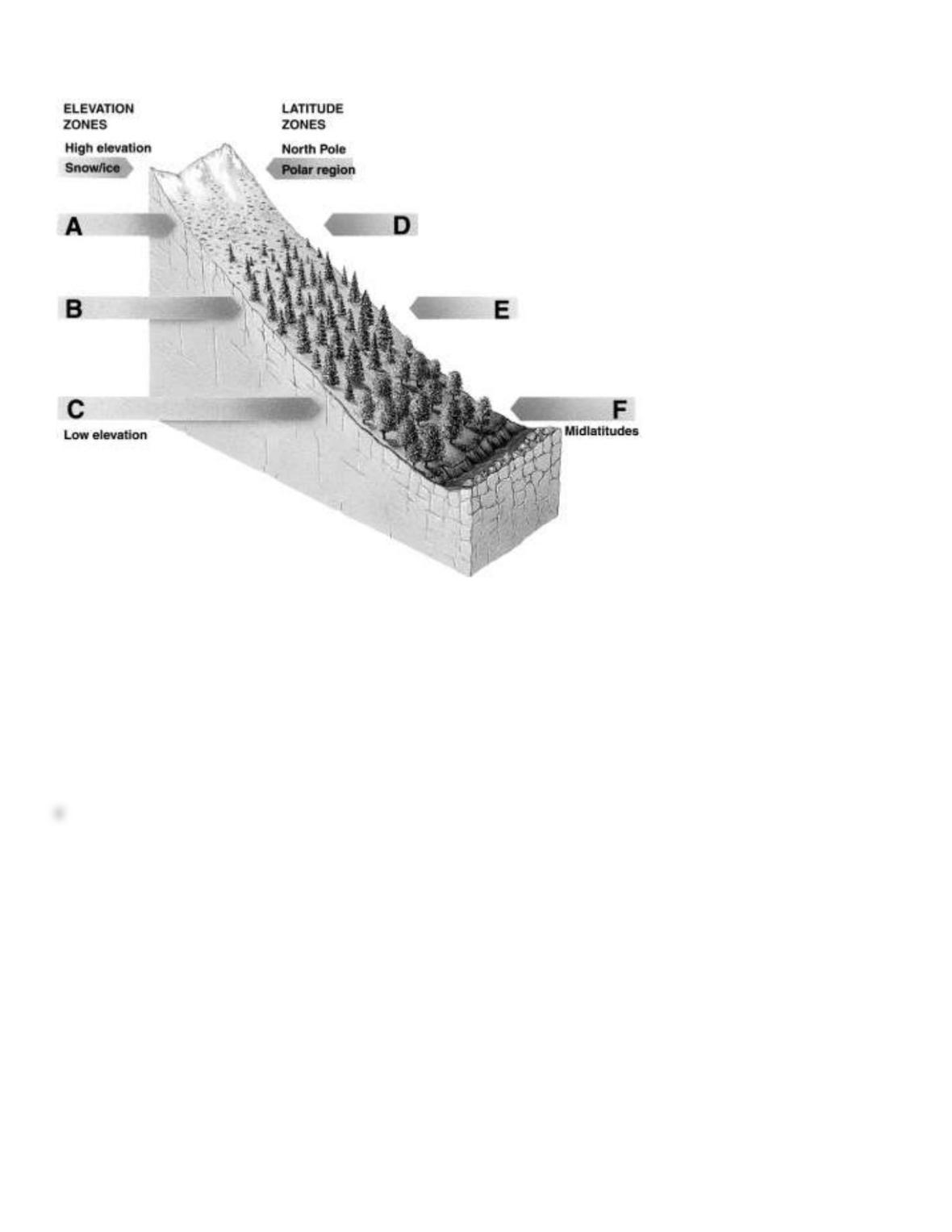
85. Figure 27-1
Refer to Figure 27-1. Permafrost is ALWAYS part of this biome.
a.
A only
b.
B only
c.
D only
d.
E only
e.
both A and D
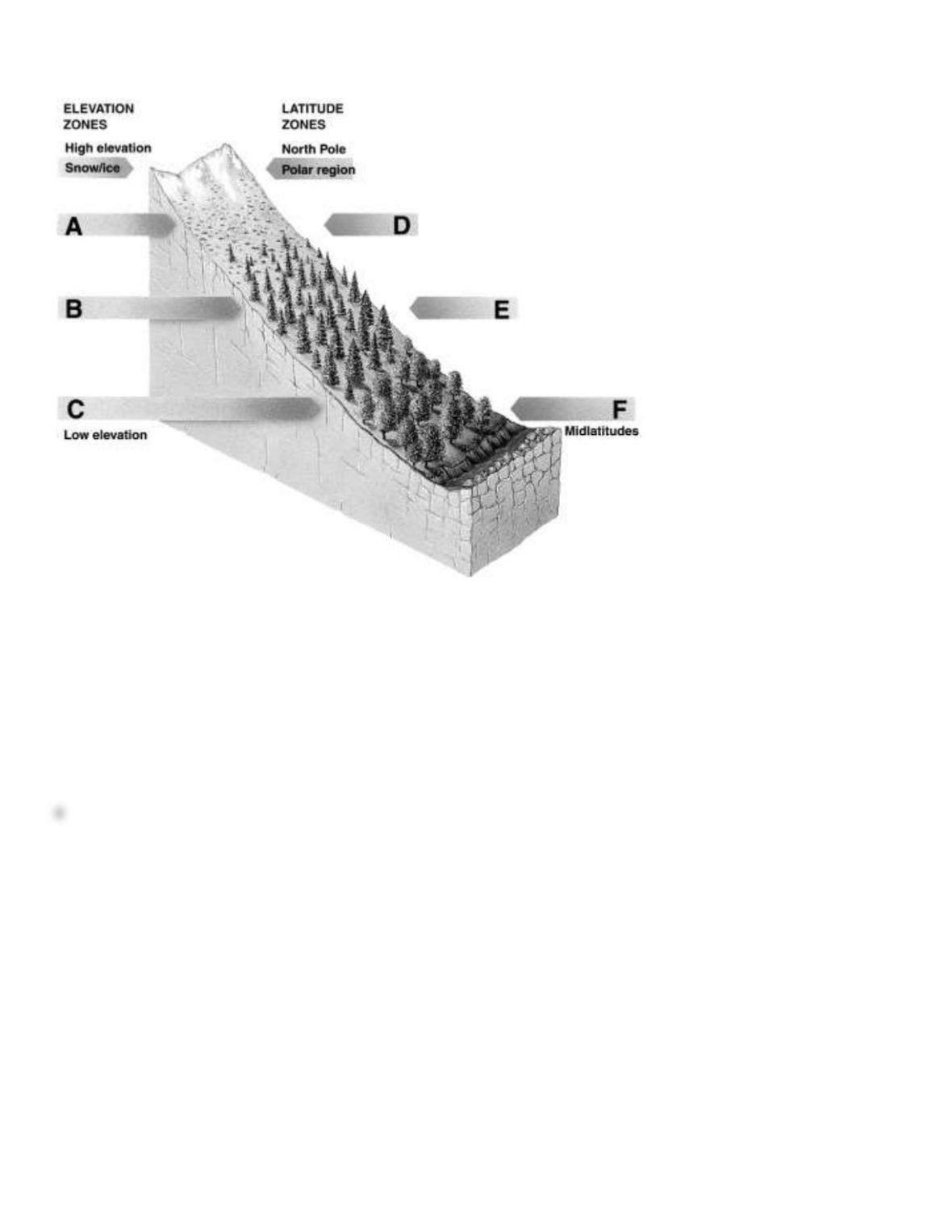
86. Figure 27-1
Refer to Figure 27-1. Which two zones consist mainly of trees that lose their leaves in winter?
a.
C and D
b.
A and B
c.
B and E
d.
E and F
e.
C and F
87. Figure 27-1
Refer to Figure 27-1. Which two zones consist mainly of evergreen trees?
a.
C and D
b.
A and B
c.
B and E
d.
E and F
e.
C and F
88. Figure 27-1
Refer to Figure 27-1. Lichens are most abundant in zones
a.
A and D
b.
A and B
c.
B and C
d.
E and F
e.
C and F
89. Why does a hiker, climbing from sea level at the foot of a tropical mountain to its summit, encounter
ecological zones similar to the biomes found across great distances from the equator to the poles?
90. What is meant by biodiversity, and why is declining biodiversity a problem?