
69. ____________________ dispersion usually results when seed dispersion is limited.
70. The maximum growth rate under ideal conditions is called the ____________________.
71. The S-shaped growth curve is indicative of ____________________.
72. Type ____________________ survivorship occurs in those species exhibiting the greatest mortality early in
life.
73. A population divided into several local populations is called a(n) ____________________.
74. Dead organic matter is called ____________________.
75. ____________________ are microbial heterotrophs that usually release simple inorganic molecules as
waste products.
76. An organism’s ____________________ is its role within an ecosystem, including all aspects of the physical,
chemical, and biological factors that it needs to survive.
77. ____________________ occurs between organisms when they both require the same resource, which is
usually in limited supply.

78. The intimate association between individuals of two species is called ____________________.
79. The type of symbiotic relationship where one symbiont benefits and the other neither benefits nor is harmed,
is ____________________.
80. The more or less orderly change of plant communities in an area over time is called
____________________.
81. Each level in a food chain is called a(n) ____________________
82. At the bottom or base of a pyramid of energy are the ____________________.
83. Coal and oil are examples of ____________________.
84. In general, the cycling of matter from the living world to the nonliving physical environment and back again
is called a(n) ____________________.
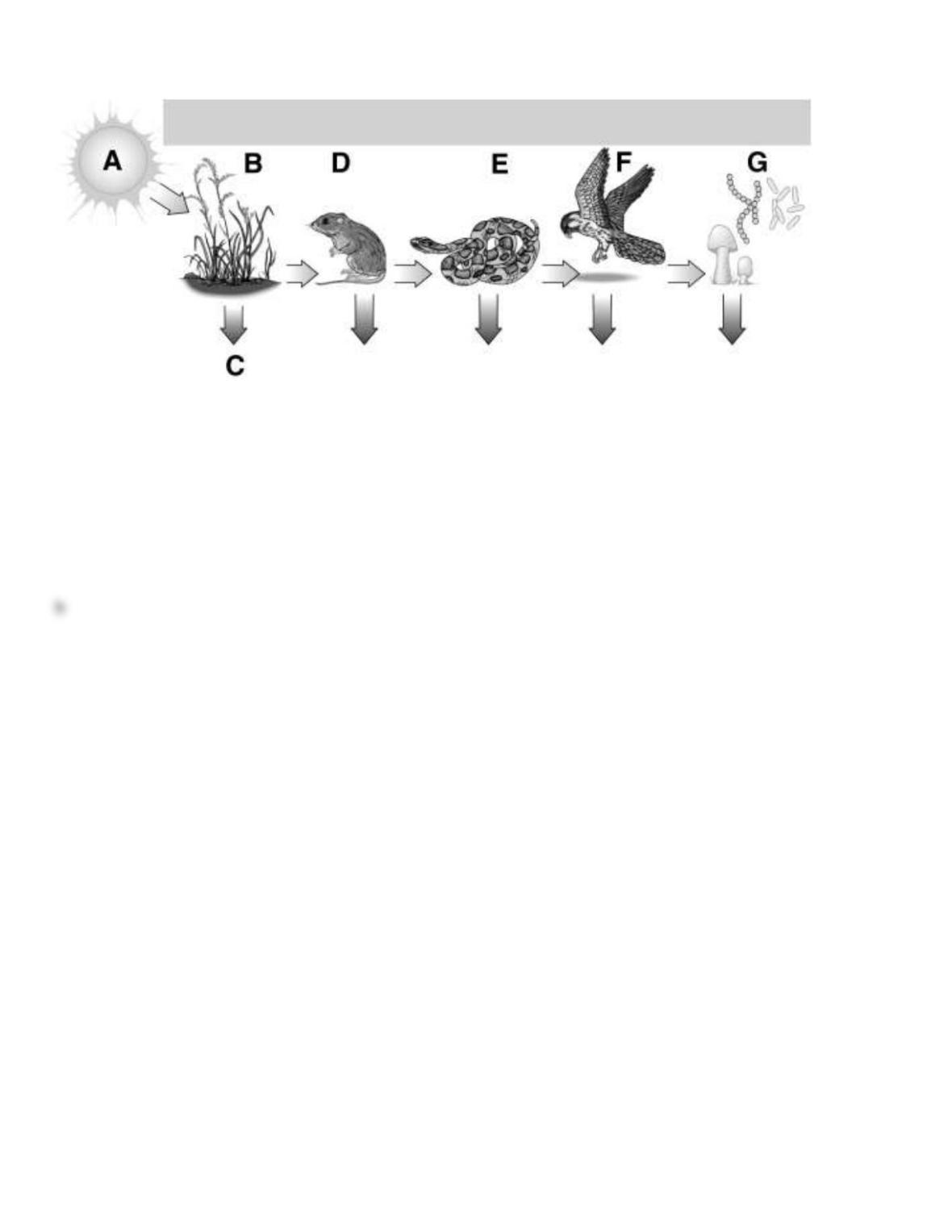
85. Figure 26-1
Refer to Figure 26-1. Which letter best indicates the first trophic level?
a.
A
b.
B
c.
C
d.
D
e.
G
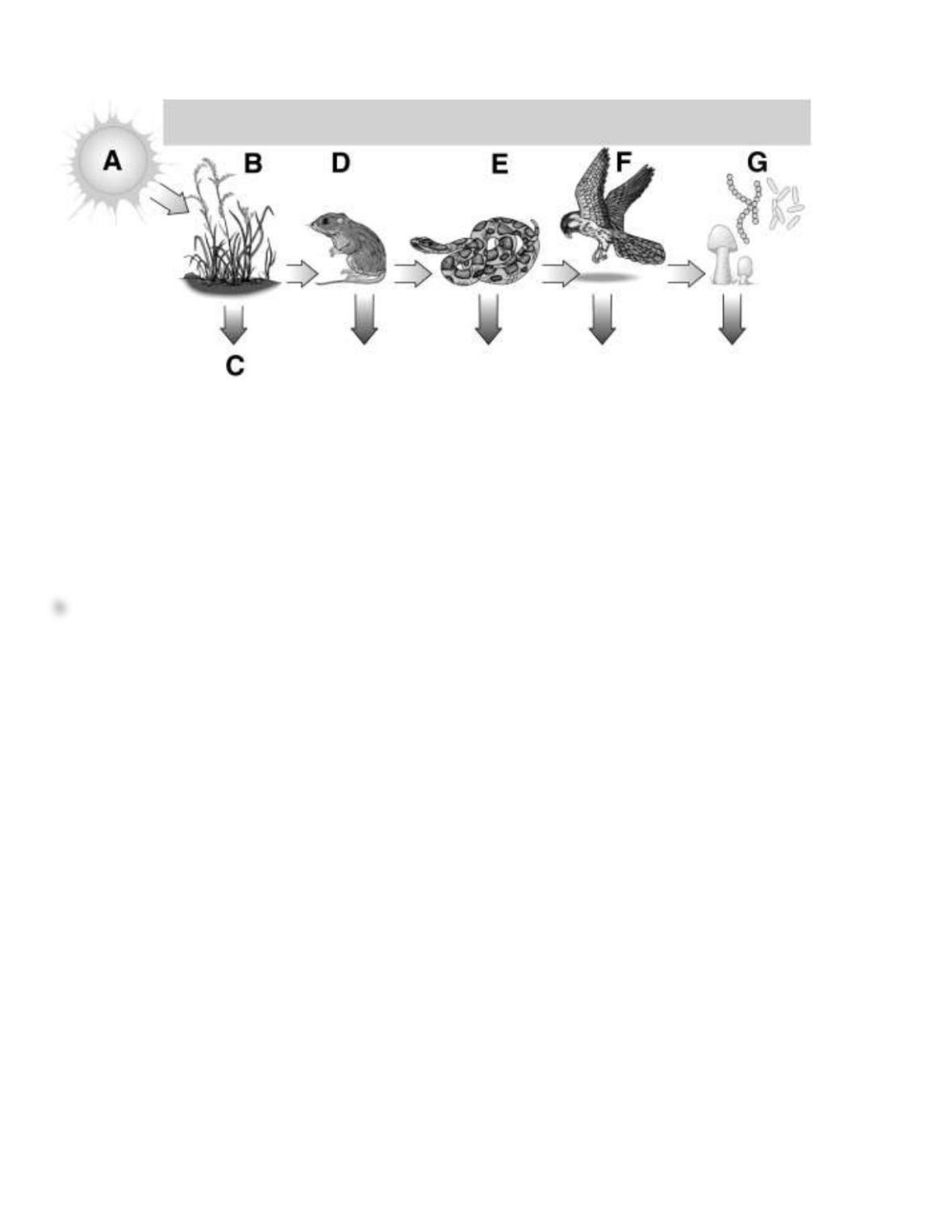
86. Figure 26-1
Refer to Figure 26-1. Which letter best indicates a primary consumer?
a.
B
b.
D
c.
E
d.
F
e.
G
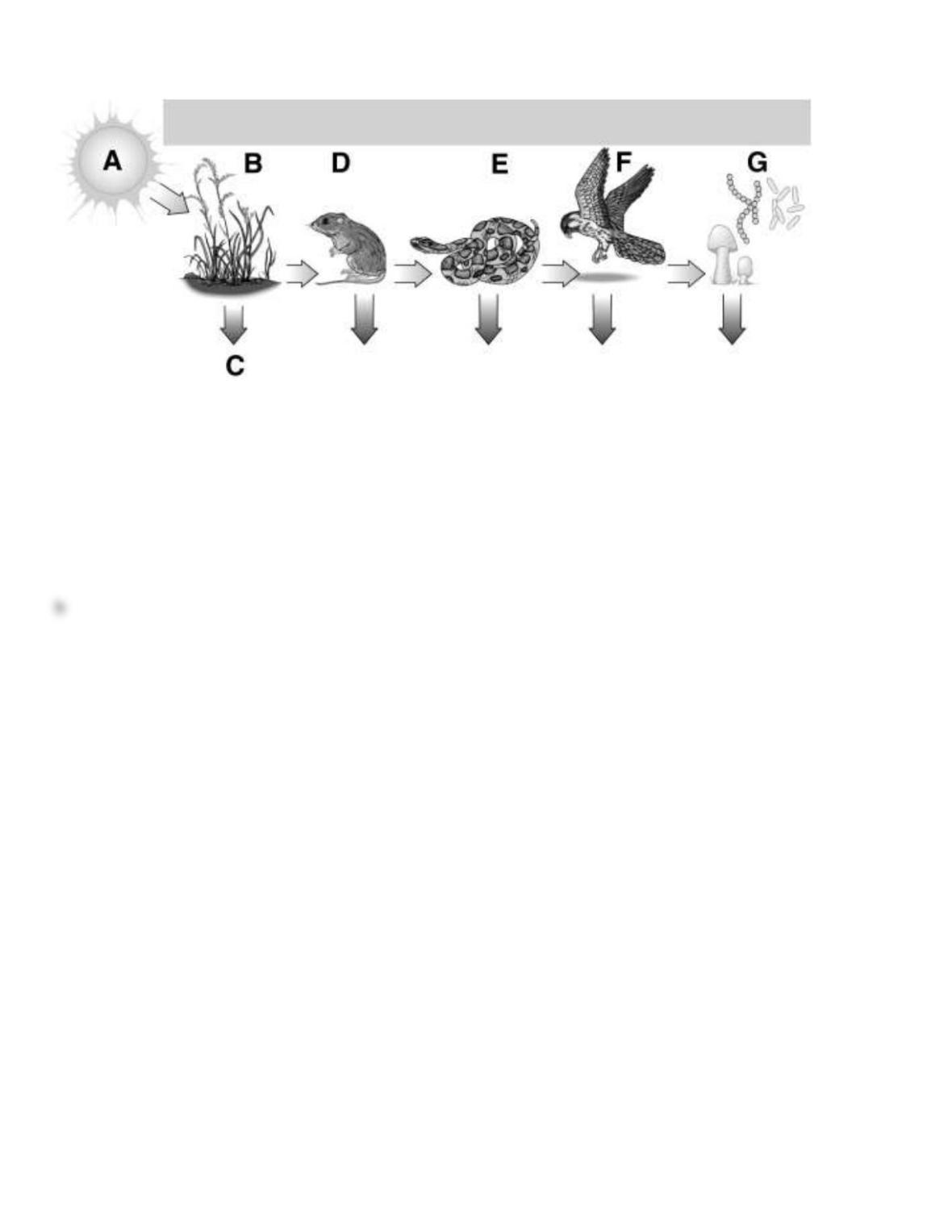
87. Figure 26-1
Refer to Figure 26-1. Which letter best indicates an herbivore?
a.
B
b.
D
c.
E
d.
F
e.
G
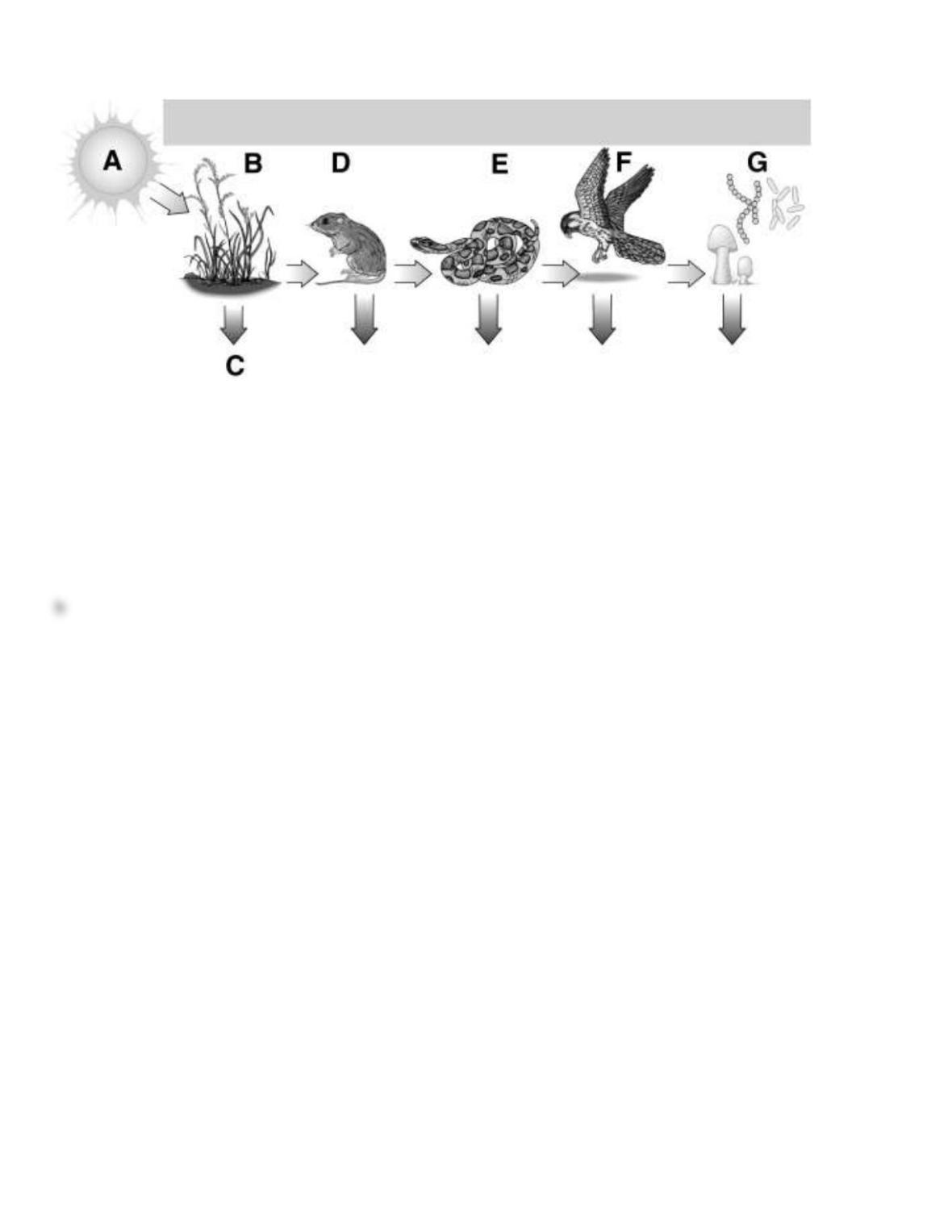
88. Figure 26-1
Refer to Figure 26-1. Which letter best indicates a producer?
a.
A
b.
B
c.
D
d.
E
e.
G
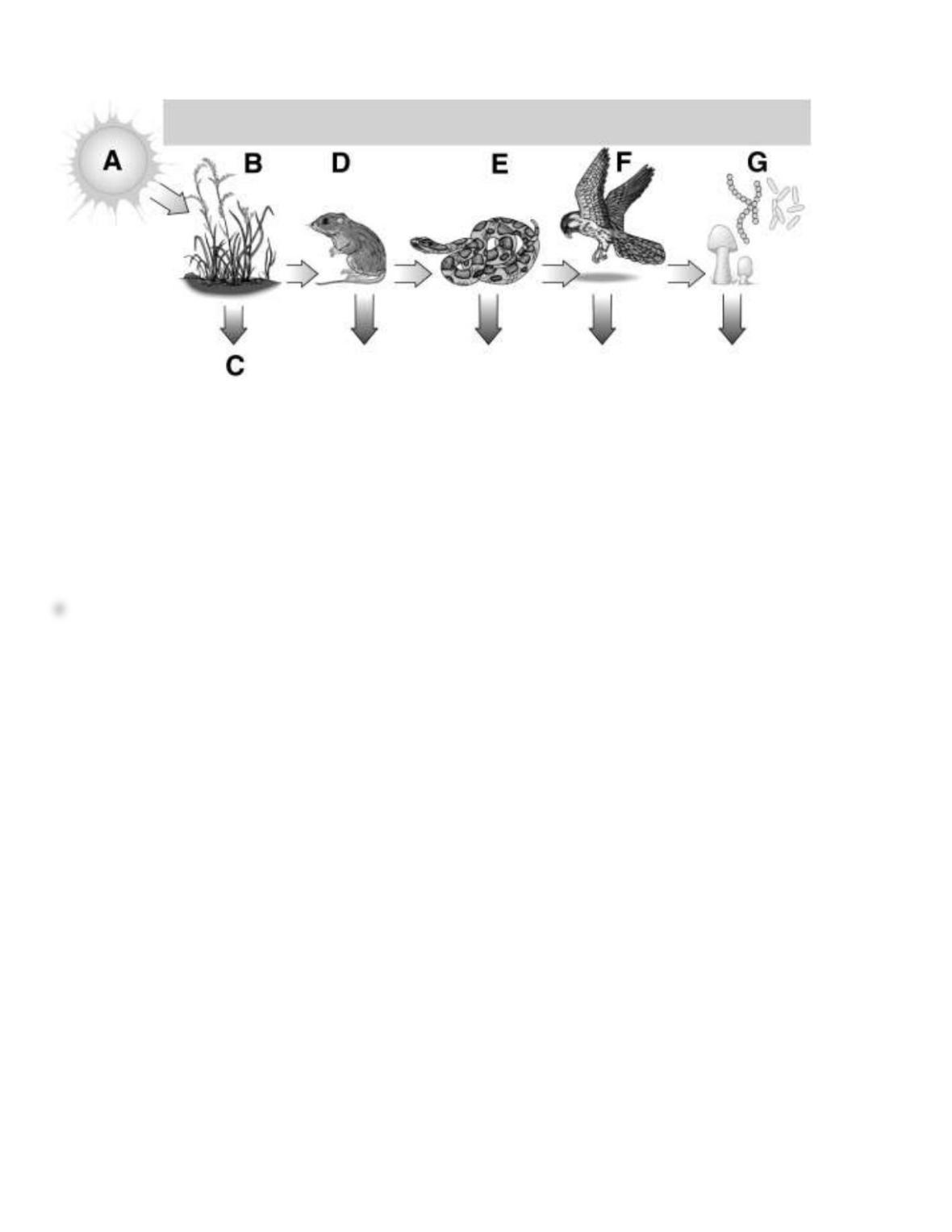
89. Figure 26-1
Refer to Figure 26-1. Which letter best indicates a decomposer?
a.
B
b.
D
c.
E
d.
F
e.
G
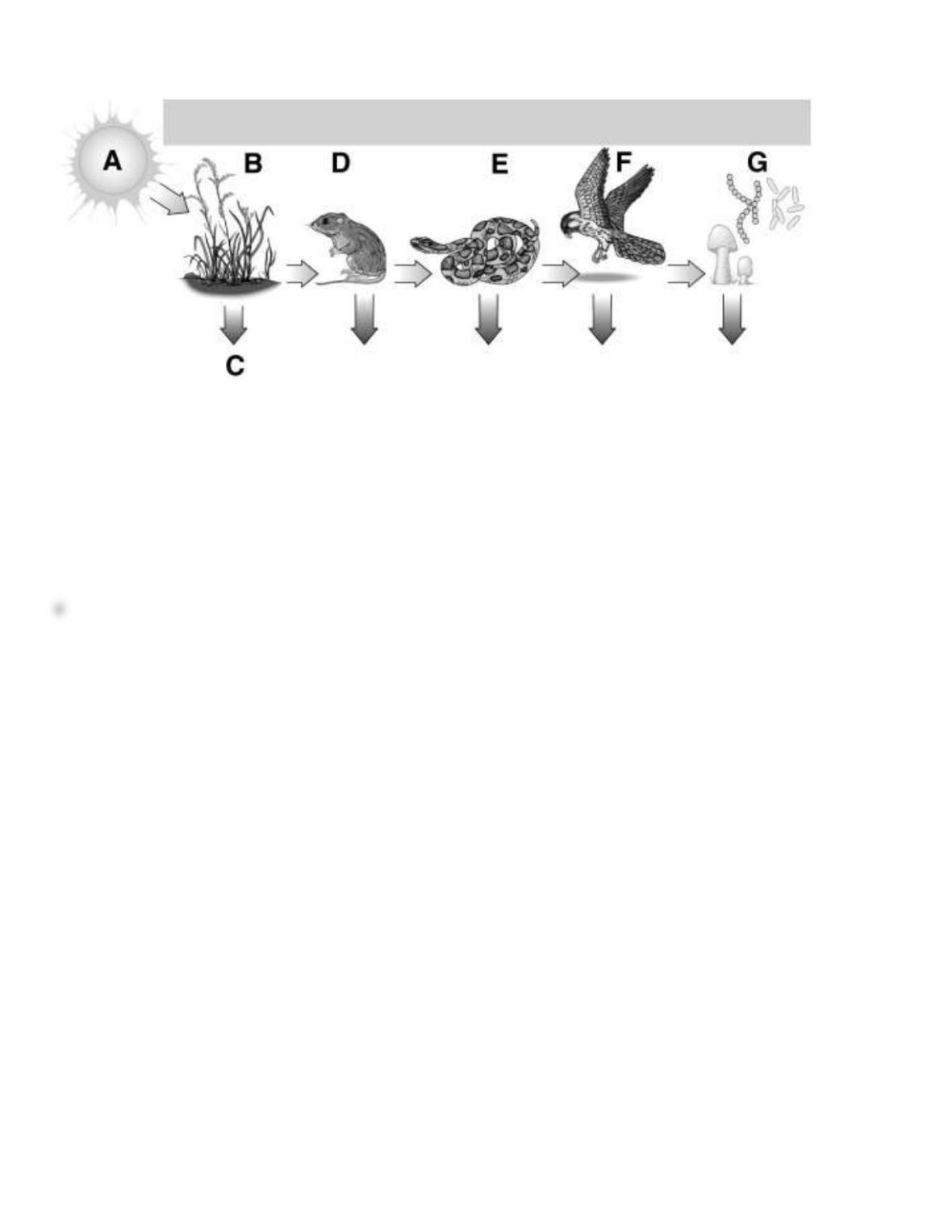
90. Figure 26-1
Refer to Figure 26-1. Which letter best indicates a carnivore?
a.
B
b.
D
c.
E
d.
both D and E
e.
both E and F
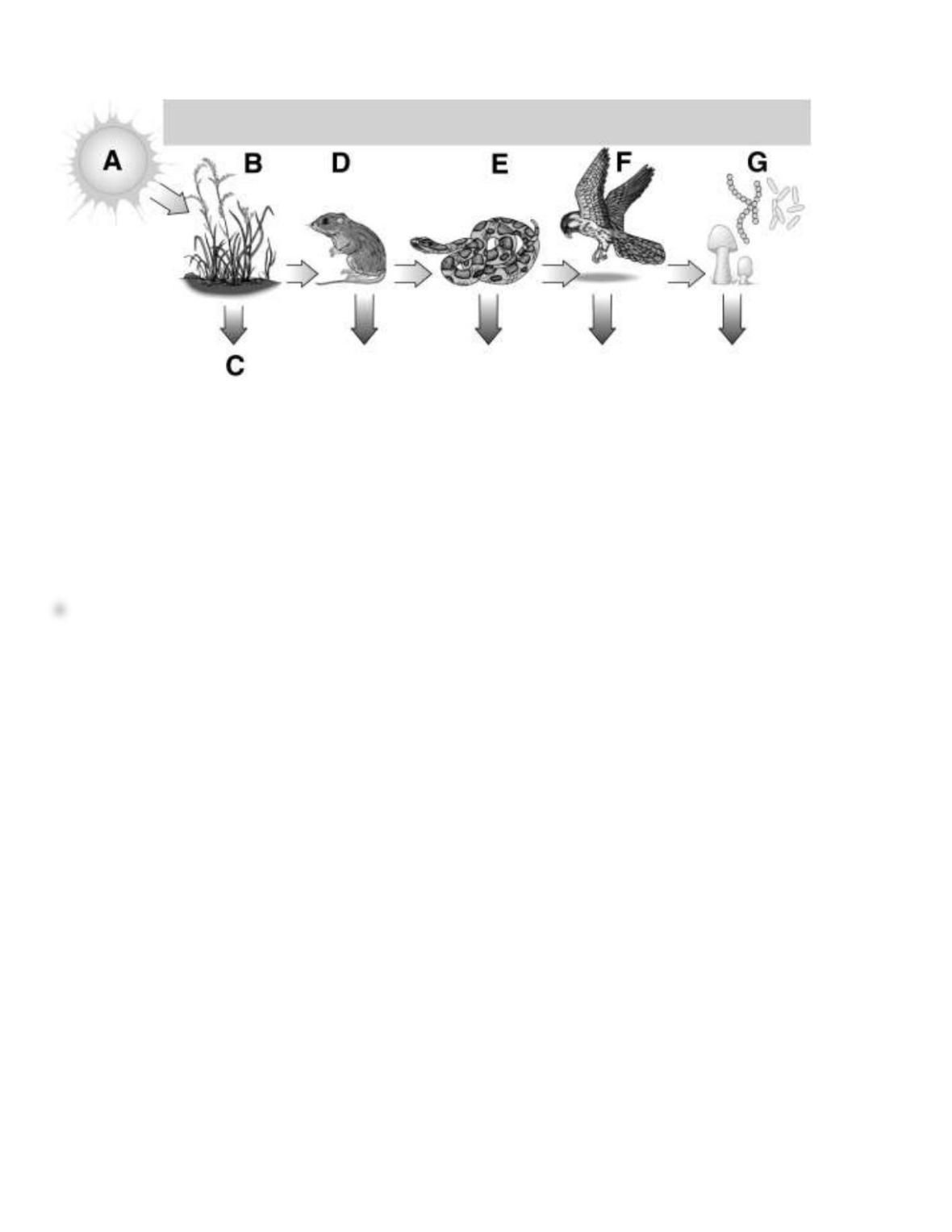
91. Figure 26-1
Refer to Figure 26-1. Which letter best indicates an organism at the base of a pyramid of energy?
a.
B
b.
D
c.
E
d.
F
e.
G
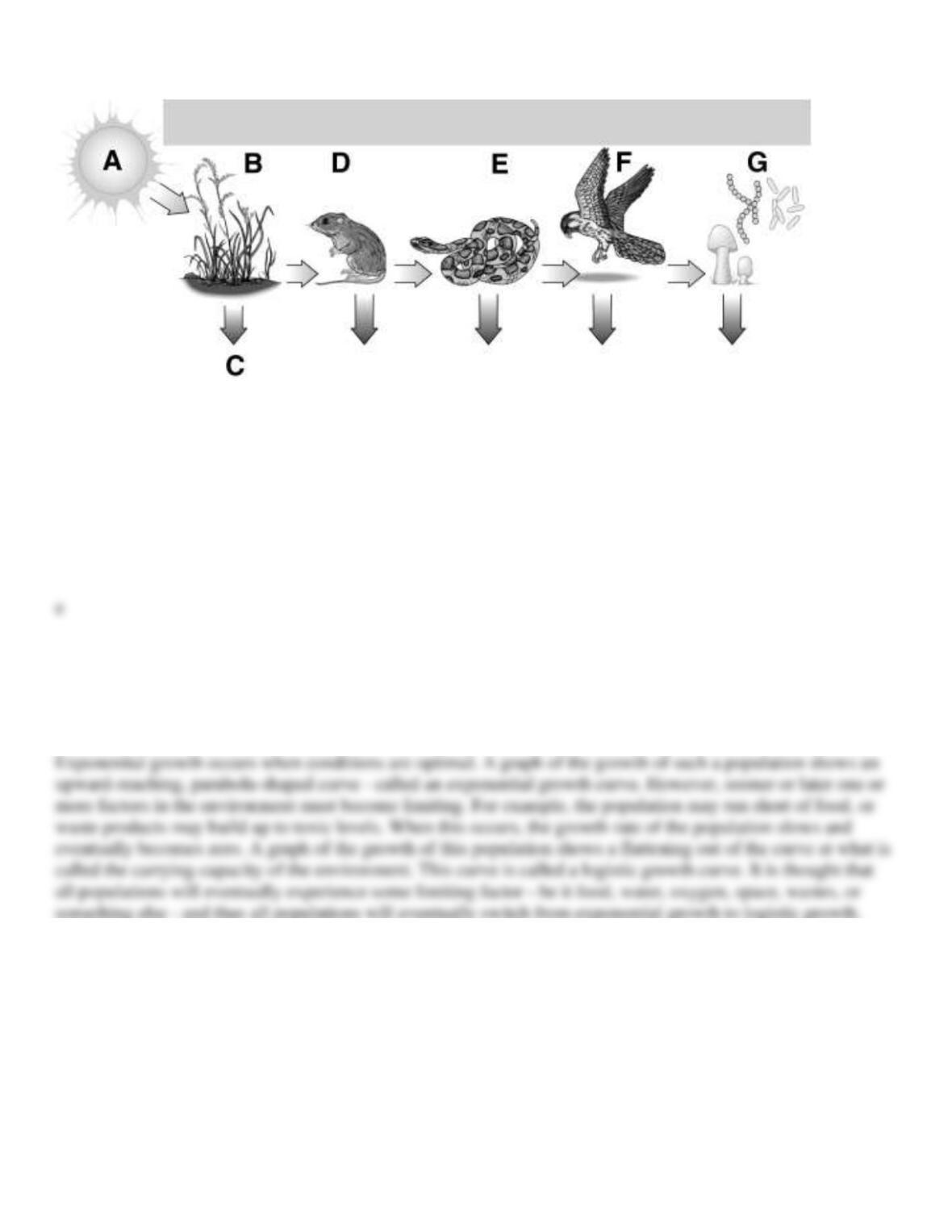
92. Figure 26-1
Refer to Figure 26-1. Which letters best indicates a heterotroph?
a.
B and D only
b.
D and E only
c.
E and F only
d.
F and G only
e.
D, E, F and G
93. What is the difference between exponential and logistic growth? Why is it thought that no population can
continue growing exponentially indefinitely?
94. What are the differences between the ways in which energy and matter move through ecosystems?
95. Explain the biological concept of niche, including physical and biological aspects.
96. What do ecological pyramids tell you about an ecosystem? Describe the three main types of ecological
pyramids.
97. What important kind of mutualism has evolved between plants and bacteria? Between plants and soil fungi?