
1
Campbell Essential Biology, 6e (Simon/Dickey/Hogan/Reece)
Chapter 26 Reproduction and Development
Chapter 26 Learning Outcomes
26.1 Unifying Concepts of Animal Reproduction
26.1. Relate the structures and functions necessary for sexual and asexual reproduction to the
advantages and disadvantages of each.
26.2 Human Reproduction
26.2. Compare the structures and functions of the female and male human reproductive
systems including the processes and products of oogenesis and spermatogenesis.
26.3. Relate cycling hormonal changes to physical changes in the female reproductive cycle.
26.3 Reproductive Health
26.4. Evaluate effectiveness of the most common methods of contraception as it relates to
mechanism of action.
26.5. Link major types of sexually transmitted diseases to the organisms that cause them, the
symptoms, and the advantages of being tested for them.
26.4 Human Development
26.6. Describe the events of fertilization including how the structure of sperm matches its
functions.
26.7. Describe stages of animal development including how cell division, cell migration, cell
signaling, and apoptosis influence the formation of the embryo.
26.8. Describe how the structures of umbilical cord, amnion, and placenta function in support
of the embryo.
26.9. Describe the developmental changes that occur in each of the three trimesters of
pregnancy and how maternal hormones affect the stages of birth, recovery, and lactation.
26.5 Reproductive Technologies
26.10. Describe how reproductive technologies can be used to treat infertility.
26 Biology and Society: New Ways of Making Babies
26 The Process of Science: Are Babies Conceived via In Vitro Fertilization as Healthy
as Babies Conceived Naturally?
26.11. Describe some of the legal and physical problems associated with modern reproductive
technologies.
26 Evolution Connection: The “Grandmother Hypothesis”
26.12. Explain how natural selection may have favored females who undergo menopause.
Global Learning Outcomes
1. Demonstrate an understanding of the principles of scientific inquiry.
2. Demonstrate the ability to think critically and employ critical-thinking skills.
3. Read and interpret models, graphs, and data.
4. Demonstrate the quantitative skills needed to succeed in biology.
5. Demonstrate an understanding of the impact of science on society.
6. Evaluate the credibility of scientific information from various sources.
7. Demonstrate the ability to make connections between concepts across biology.
8. Communicate effectively in writing.
9. Apply the scientific method to interpret information and draw conclusions.

26.1 Multiple Choice Questions
1) Which of the following is an aspect of asexual reproduction that is sometimes
disadvantageous?
A) It allows animals that do not move around to produce offspring without finding mates.
B) It allows an animal to produce many offspring quickly.
C) It saves the time and energy of gamete production.
D) It produces genetically uniform populations.
2) Asexual reproduction ________.
A) creates individuals with unique combinations of genes
B) generates enormous genetic variation
C) is an effective way for animals to expand their population quickly and exploit an available
environment
D) provides greater adaptability to changing environments
3) Which of the following is associated with sexual reproduction?
A) fission, only
B) fragmentation, only
C) budding, only
D) None of these are associated with sexual reproduction.
4) Hermaphrodites ________.
A) possess both male and female reproductive systems
B) have the gonads of one sex but the external appearance of the other
C) usually fertilize themselves
D) have abnormal reproductive systems

5) Reproductive systems with external fertilization are most common in ________.
A) populations with many more males than females
B) animals that are widely dispersed
C) aquatic animals
D) populations with many more females than males
6) What advantage is associated with human testes located in an external sac rather than in the
abdominal cavity?
A) a shorter distance that semen must travel during ejaculation
B) the testes can be kept at a constant temperature
C) the testes can be kept cooler than the body’s interior
D) the testes can enlarge at sexual maturity
7) Where in a woman’s reproductive tract does fertilization most often take place?
A) in the ovary
B) in the oviduct
C) in the follicle
D) in the uterus
8) What moves the human egg through the oviduct?
A) the beating of the egg’s cilia
B) rhythmic contractions of the oviduct
C) rhythmic contractions of the uterus
D) the beating of cilia in the oviduct

9) Where does the embryo normally implant?
A) in the oviduct
B) in the corpus luteum
C) in the follicle of the ovary
D) in the endometrium of the uterus
10) In a human female reproductive system, the ________.
A) hymen partly covers the cervical opening
B) vagina secretes hormones that help maintain the uterine lining
C) labia minora are a pair of thick, fatty ridges that protect the entire genital region
D) outer features are collectively called the vulva
11) Which one of the following statements is TRUE?
A) Meiosis in oogenesis produces four mature eggs from one primary oocyte.
B) Oogenesis begins during puberty.
C) Spermatogenesis in an individual begins before that individual is born.
D) Oogenesis in humans is completed after stimulation by sperm.
12) All of these are similarities between the male and female system EXCEPT one. Choose the
exception.
A) Both have erectile tissue that becomes engorged with blood during sexual excitement.
B) Both have paired gamete-producing organs.
C) Both have a urethra that carries both urine and gametes.
D) Both have a pair of tubes that can carry gametes.

13) Researchers have found a general relationship between testicular cancer and exercise.
Increased exercise is associated with a decrease in incidence of testicular cancer. However, a
positive relationship (increased incidence of testicular cancer) was found between testicular
cancer and riding bikes or horses. Several factors might be hypothesized to bring about this
result. All but one of the following statements are reasonable hypotheses that researchers might
follow to seek the cause for this relationship. Choose the exception.
A) Riding bikes or horses causes trauma to the testes.
B) The seat on bikes and the saddle on horses are made of material containing chemicals that
damage testicular cells.
C) Riding bikes or horses increases scrotal temperature, which damages testicular cells.
D) Mutations that lead to testicular cancer make men more likely to ride bikes or horses.
14) Researchers have found a general relationship between testicular cancer and exercise.
Increased exercise is associated with a decrease in incidence of testicular cancer. However, a
positive relationship (increased incidence of testicular cancer) was found between testicular
cancer and riding bikes or horses. Several factors might be hypothesized to bring about this
result. Which of these hypotheses is properly related to a prediction that arises from it?
A) Hypothesis: Riding bikes or horses causes trauma to the testes. Prediction: Bike or horse
riding will cause testes to shrink.
B) Hypothesis: The seat on bikes and the saddle on horses are made of material containing
chemicals that damage testicular cells. Prediction: Chemicals found in bike seats or horse saddles
damage testicular cells.
C) Hypothesis: Riding bikes or horses increases scrotal temperature, which damages testicular
cells. Prediction: Bike riders are more likely to wear briefs than boxers as their underwear of
choice.
D) Hypothesis: Mutations that lead to testicular cancer make men more likely to ride bikes or
horses. Prediction: Men who ride bikes or horses have a higher rate of mutations than nonriders.
15) Menstruation ________.
A) involves the breakdown of the endometrium
B) is stimulated by HCG
C) occurs after ovulation but prior to degeneration of the follicle
D) is triggered by an LH surge

16) In human females, the ovarian cycle begins when the ________.
A) levels of estrogen reach their maximum
B) hypothalamus stimulates the anterior pituitary to increase its output of FSH and LH
C) level of progesterone drops precipitously
D) levels of FSH and LH drop precipitously
17) What would happen if an embryo failed to secrete HCG?
A) The maternal elements of the placenta would fail to develop.
B) The fetal elements of the placenta would fail to develop.
C) Neural tube formation would not occur, and the embryo would not have a brain.
D) The embryo would be aborted.
18) Which one of the following statements is TRUE?
A) Natural family planning is one of the most reliable forms of birth control.
B) Morning-after pills are about 25% effective at preventing pregnancy.
C) Tubal ligation prevents ovulation.
D) A vasectomy involves removing a section of each vas deferens.
19) Which of the following types of pathogens cause sexually transmitted diseases that are
generally NOT curable?
A) bacteria
B) viruses
C) fungi
D) insects

20) Which one of the following STDs is NOT caused by a virus?
A) AIDS
B) chlamydia
C) genital warts
D) genital herpes
21) A sperm cell’s acrosome ________.
A) contains the sperm’s nucleus and is the part of the sperm that enters the egg during
fertilization
B) fuses with the plasma membrane of the egg cell
C) contains enzymes that are released when the sperm encounters an egg and dissolves a hole in
the jellylike matrix that surrounds the egg
D) contains the sperm’s mitochondria
22) Which one of the following is the earliest event in the process of fertilization?
A) Sperm contact the jelly coat around the egg.
B) The sperm head plasma membrane fuses with the egg plasma membrane.
C) Enzymes from the acrosome are released.
D) The sperm nucleus enters the cytoplasm of the egg.
23) Which of these events occurs first?
A) gastrulation
B) cleavage
C) implantation
D) formation of the placenta

24) Which of the following results from cleavage?
A) formation of the nervous system
B) formation of the notochord
C) formation of more cells
D) segmentation
25) The liver, pancreas, and lining of the digestive tract come from ________.
A) ectoderm
B) endoderm
C) mesoderm
D) endometrium
26) Gastrulation ________.
A) produces a solid ball of cells
B) changes the blastocyst into an embryo that has three tissue layers
C) changes the fertilized egg into a blastocyst
D) changes a gastrula into a blastocyst
27) Mesoderm gives rise to the ________.
A) heart and kidneys
B) brain and skin
C) nervous system and thyroid
D) liver and pancreas

28) Which one of the following is a result of programmed cell death?
A) formation of fingers in humans
B) gastrulation
C) formation of the notochord
D) formation of the brain
29) What is gestation?
A) conception
B) fertilization
C) development
D) pregnancy
30) The lifeline between the embryo and the placenta ________.
A) is derived from the yolk sac
B) is derived from the amnion
C) is called the “chorion”
D) is called the “umbilical cord”
31) When does the human embryo implant in the wall of the uterus?
A) within a few hours of fertilization
B) about a day after conception
C) about a week after conception
D) just after gastrulation

32) At about what point in gestation can an ultrasound exam determine the sex of the fetus?
A) about 4 weeks after fertilization
B) at the end of the first trimester
C) about 20 weeks after fertilization
D) at the end of the second trimester
33) At about what point in gestation does the fetal heartbeat become audible by stethoscope and
the fetus’s movements easily felt by the mother?
A) 15 weeks
B) 20 weeks
C) 25 weeks
D) 30 weeks
34) Which of the following processes dominates the third trimester of human development?
A) formation of internal organs
B) formation of external features such as arms and legs
C) growth
D) organ formation
35) Which of the following substances stimulates contractions in uterine smooth muscle during
labor?
A) progesterone
B) estrogen
C) oxytocin
D) prolactin

36) Which of the following correctly lists the three stages of labor, in the proper order?
A) dilation, expulsion, delivery of the placenta
B) dilation, crowning, expulsion
C) contractions, dilation, expulsion
D) contractions, dilation, crowning
37) Which of these is NOT a legal or physical disadvantage of current reproductive
technologies?
A) Babies born as a result of In Vitro Fertilization have significantly higher rates of autism.
B) Surgery is necessary to remove eggs for In Vitro Fertilization.
C) Hormone injections to promote ovulation may cause the birth of multiples.
D) It is sometimes unclear how current law applies to babies born through current reproductive
technologies.
38) The “grandmother hypothesis” suggests that natural selection may have favored a woman
________.
A) moving away from her children and grandchildren
B) focusing her energy on caring for her grandchildren, instead of producing more children
C) focusing her energy on the production of as many children as possible before reaching
menopause
D) helping her sisters produce more children
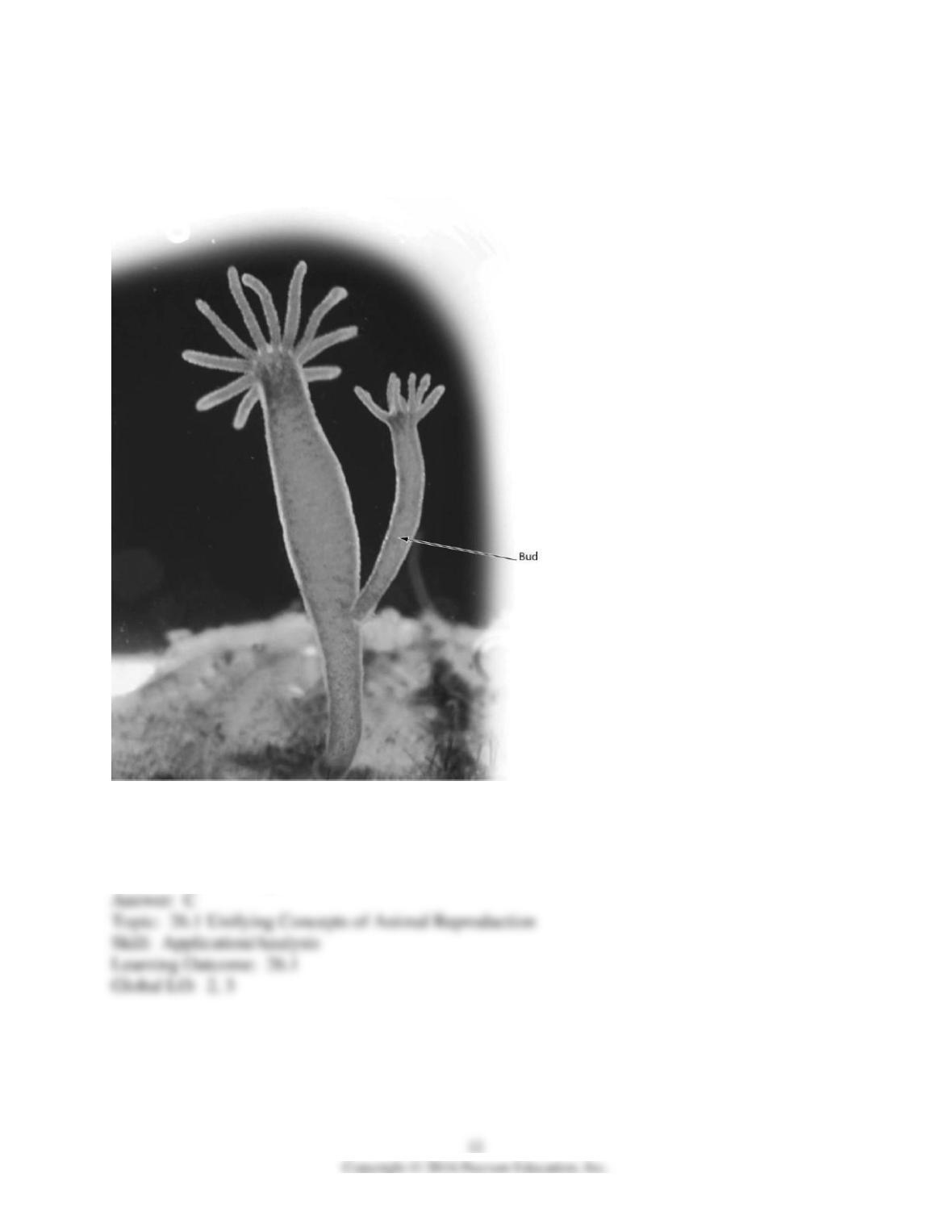
26.2 Art Questions
1) The animal in the accompanying figure illustrates ________.
A) fission
B) regeneration
C) asexual reproduction
D) growth of male reproductive structures
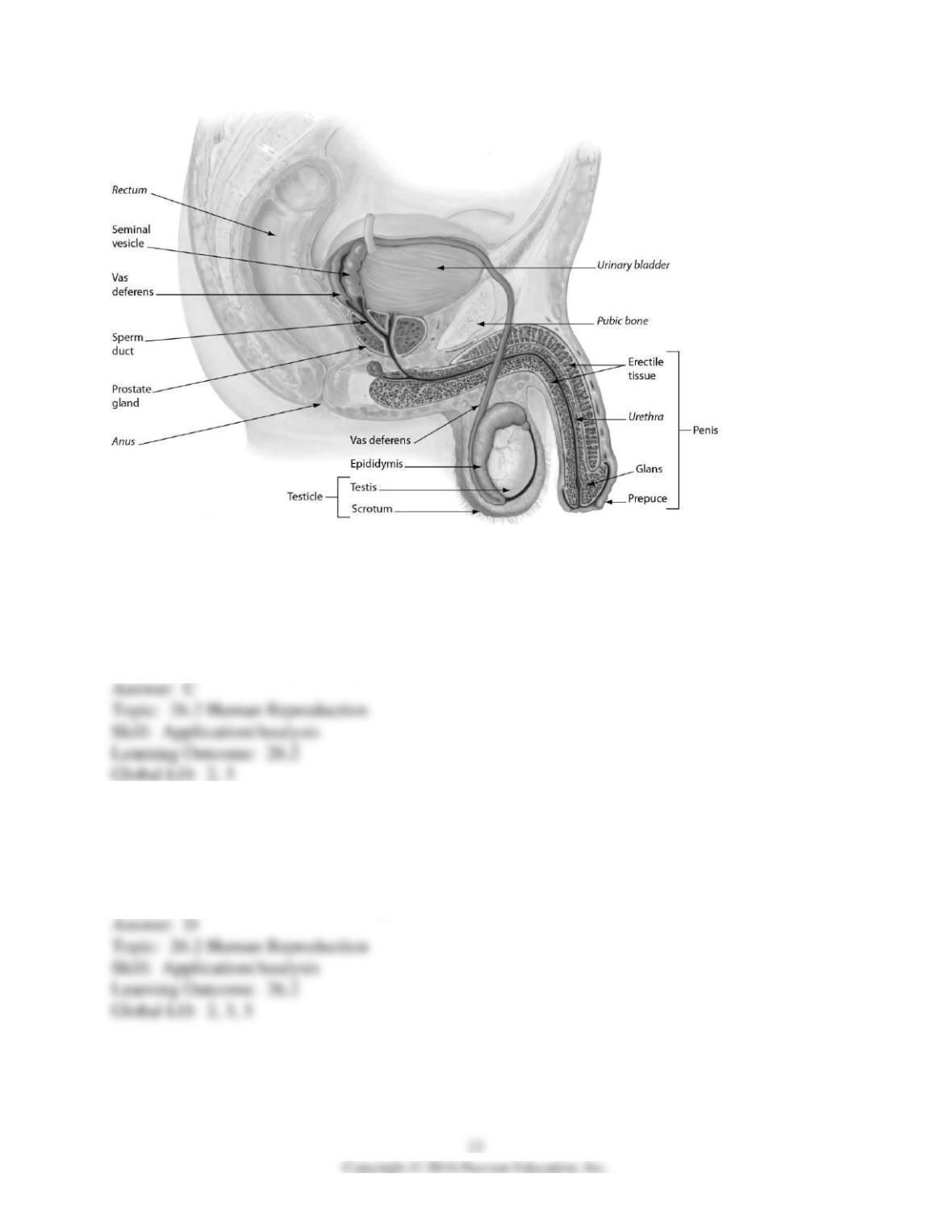
2) The figure shows male reproductive anatomy. In a human male reproductive system,
________.
A) sperm mature in the urethra
B) the vas deferens conducts sperm between the testis and epididymis
C) the sperm travel through the sperm duct before reaching the urethra during ejaculation
D) sperm mature in the prostate gland
3) According to the diagram above, after a vasectomy (within the scrotal sac), ________.
A) secretions from the prostate can no longer reach the urethra
B) secretions from the seminal vesicles can no longer reach the urethra
C) secretions from the sperm duct can no longer reach the urethra
D) sperm from the testes can no longer reach the urethra
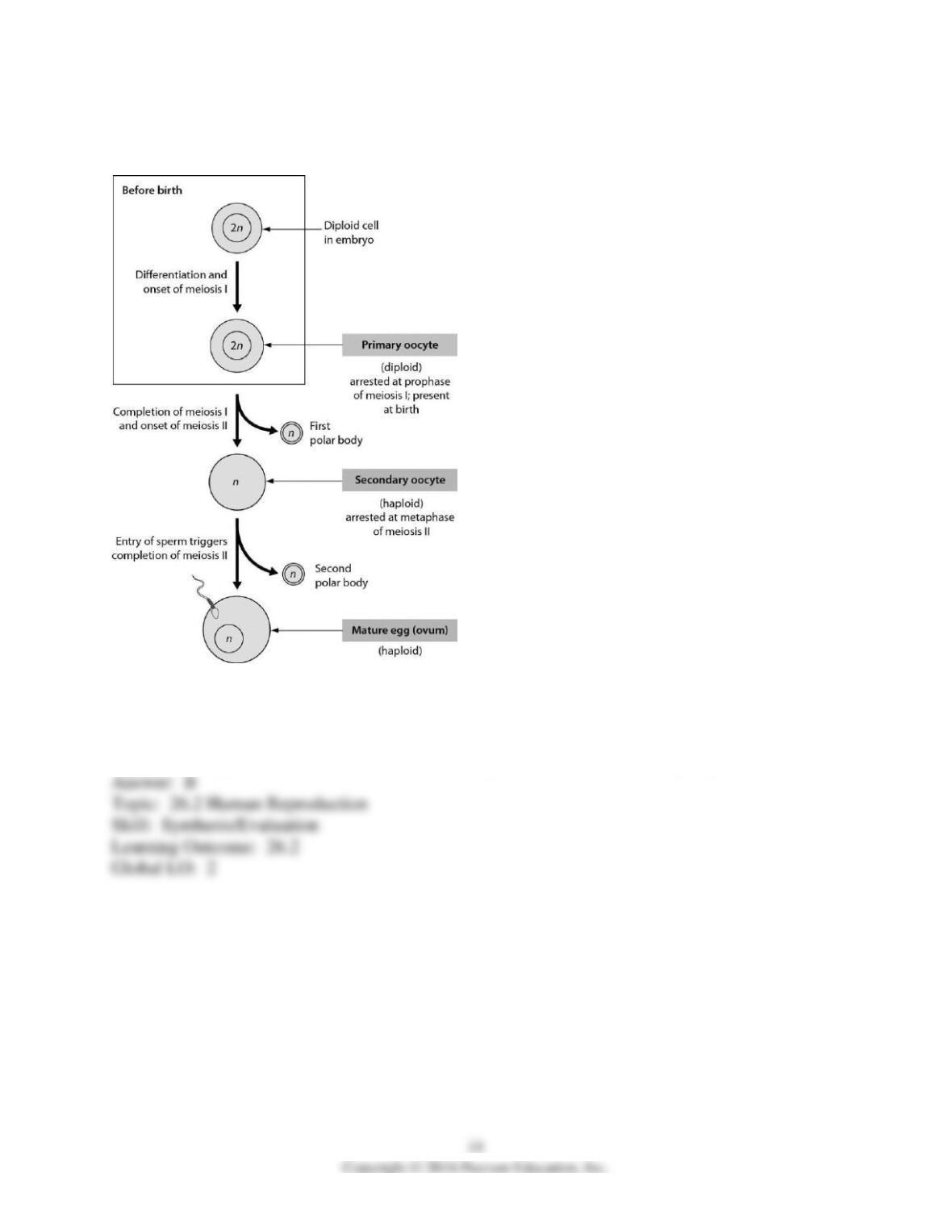
4) The figure shows oogenesis. What is the function of the polar bodies that are produced during
oogenesis? They are a mechanism that allows for ________.
A) the shedding of excess cytoplasm during the production of a haploid ovum
B) the shedding of excess genetic material during the production of a haploid ovum
C) the shedding of excess mitochondria during the production of a haploid ovum
D) streamlining of the ovum so as to facilitate the penetration of an ovum by a sperm
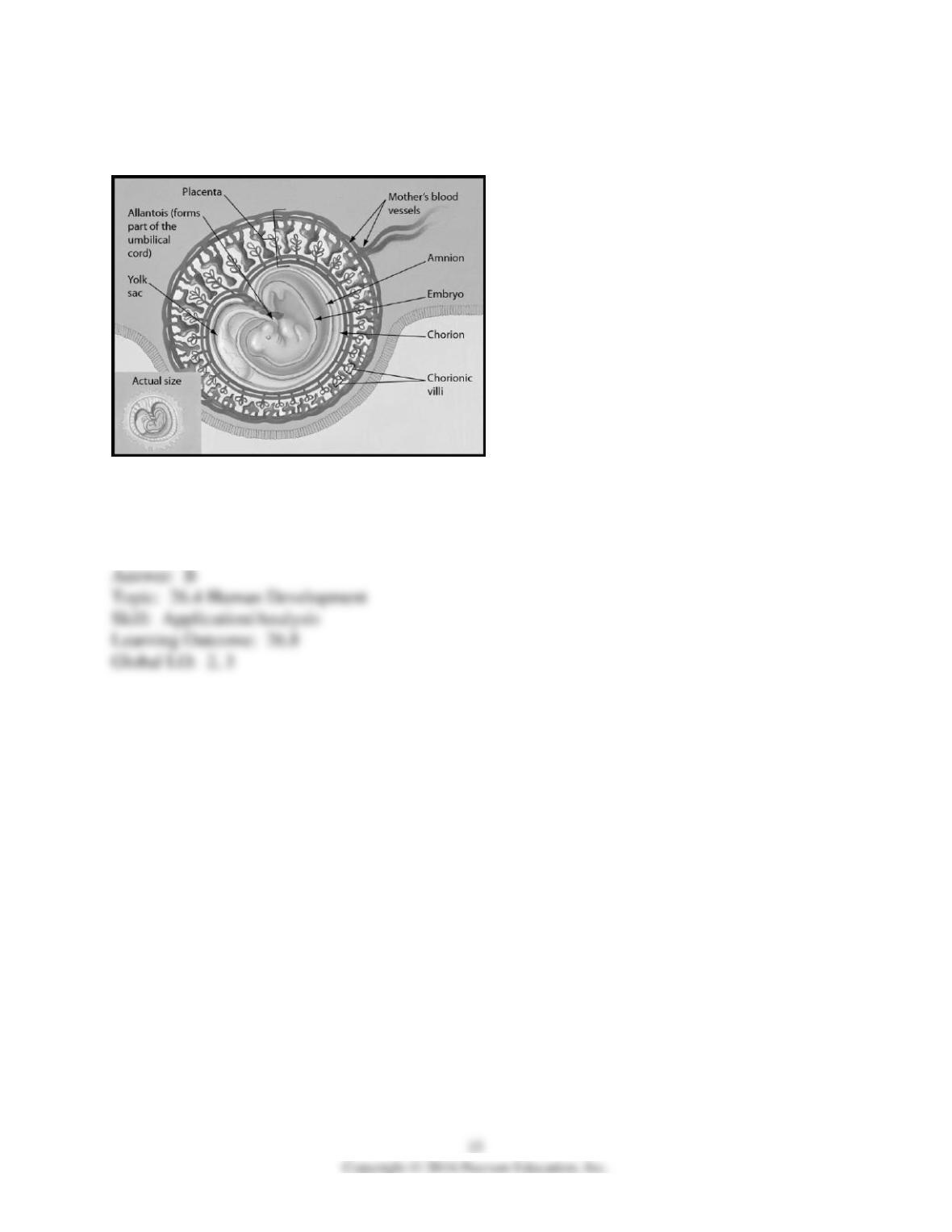
5) The figure shows a human embryo 31 days after conception. Which of the following
structures is part of the placenta?
A) embryo
B) chorion
C) amnion
D) yolk sac
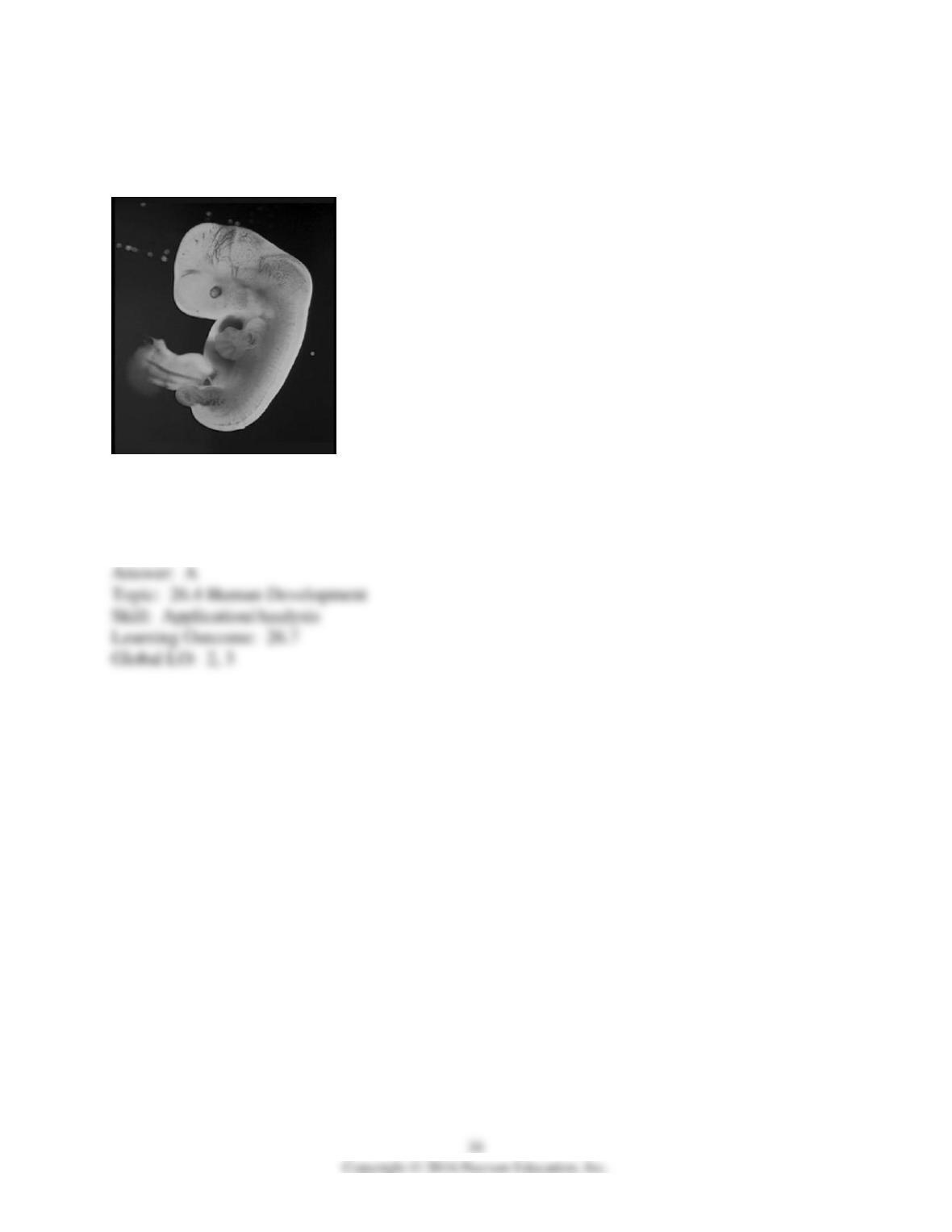
6) Examine the embryo in the following figure. The hands and feet of this embryo appear
paddle-like, with no distinct toes or fingers. What process is needed to define each of the toes
and fingers?
A) programmed cell death
B) neurulation
C) gastrulation
D) induction
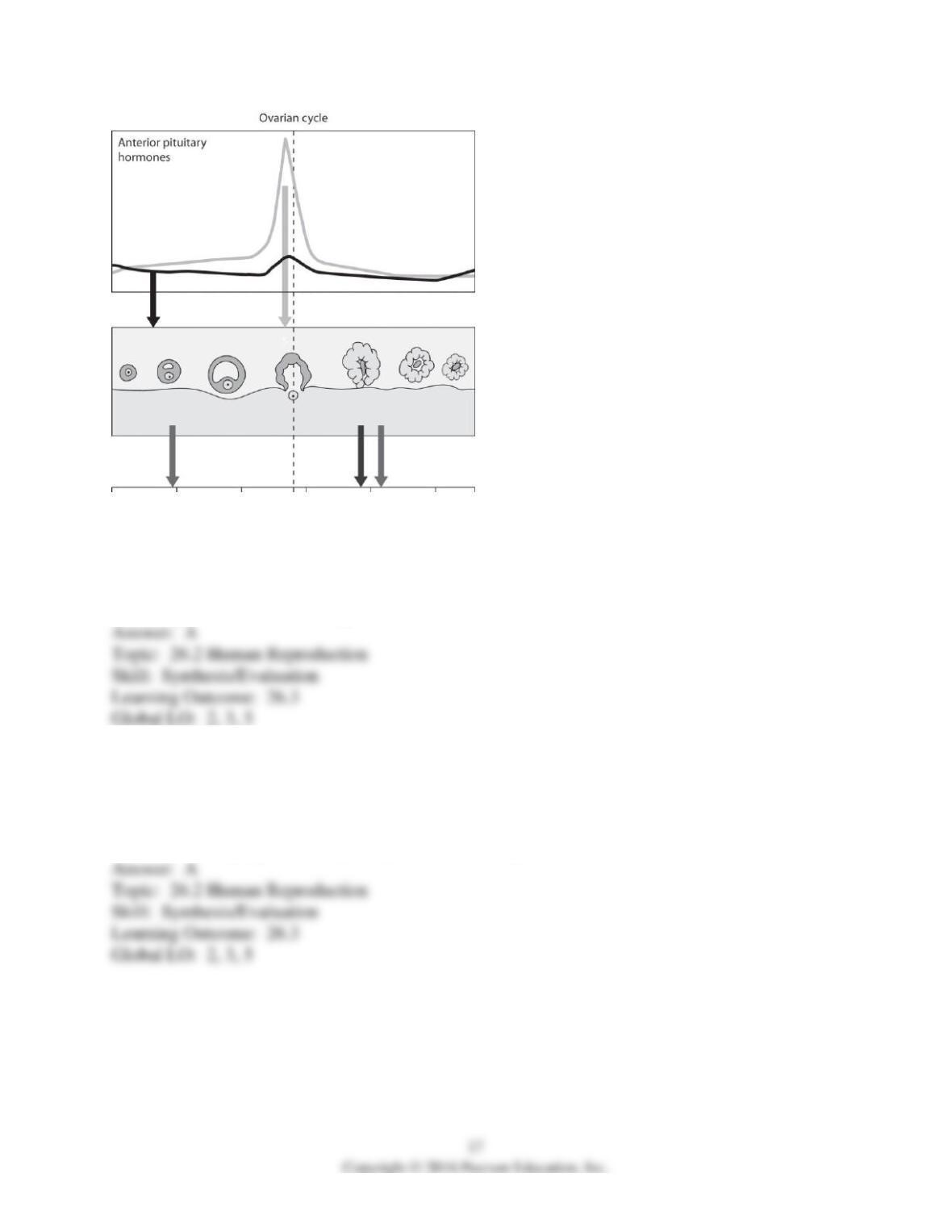
7) What does the ovarian cycle image above illustrate?
A) A rise in the level of luteinizing hormone brings about ovulation.
B) A rise in the level of estrogen brings about ovulation.
C) The endometrium is thinner during the first half of the cycle than during the latter half.
D) A corpus luteum is necessary for ovulation.
8) What does the ovarian cycle image above illustrate?
A) The peak of luteinizing hormone occurs slightly before mid-cycle.
B) Ovulation occurs well before mid-cycle.
C) The level of luteinizing hormone does not change much during the cycle.
D) The level of progesterone spikes just before mid-cycle.

26.3 Scenario Questions
Please read the following paragraph and then answer the following questions.
Birth control methods act at many points in the reproductive cycle. Some options, such as birth
control pills, are highly effective at preventing pregnancy. However, only a few commonly
available methods are effective at preventing the transmission of sexually transmitted disease
(STD). The Center for Disease Control estimates that each year about 10 million new STD
infections strike people ages 15 to 24.
1) Which of the following birth control methods provides the most effective protection against
pregnancy and sexually transmitted disease for sexually active people?
A) the pill
B) latex condoms
C) a diaphragm
D) the rhythm method
2) A diaphragm functions as a birth control device by ________.
A) preventing ovulation
B) preventing implantation of an embryo
C) stimulating the production of sperm-killing antibodies
D) preventing the movement of sperm into the uterus
3) A vasectomy ________.
A) prevents the production of sperm in the testes
B) prevents the production of semen
C) prevents the movement of sperm out of the testes
D) is an effective method to prevent the transmission of sexually transmitted disease

Please read the following paragraph and then answer the following questions.
Two researchers addressed the generally accepted idea that boxer shorts are better for male
fertility than briefs because they lower testicular temperature. They begin by saying, “Although
this idea is regarded as dogma by many in the lay community and the changing of underwear
type is a therapy frequently recommended by medical practitioners, there is a paucity of data
measuring scrotal temperature as a function of underwear type. (“Munkelwitz, Robert, and
Gilbert, Bruce R. “Are boxer shorts really better? A critical analysis of the role of underwear
type in male subfertility.” The Journal of Urology, 160.4 (1998): 1329—1333.)
4) What hypothesis are these authors testing?
A) Boxer shorts allow the scrotal sac to be more exposed to outside temperature than briefs do.
B) Boxer shorts fit more loosely than briefs.
C) Boxer shorts allow the scrotal sac to have a lower temperature than briefs do.
D) Men with impaired fertility are more likely to wear briefs than boxers.
5) Which of these describes the best experimental design to test the idea that scrotal temperature
is less with boxers than with briefs?
A) Take an equal number of men wearing boxers and men wearing briefs and have them go into
a clinic and have their scrotal temperatures measured.
B) Recruit a number of men of approximately the same age and have some put on boxers and
some put on briefs and then measure their scrotal temperatures.
C) Recruit a number of men of approximately the same age with half wearing boxers and half
wearing briefs. Have them spend time in a room of the same constant temperature and then
measure their scrotal temperatures.
D) Take the first 100 men who come into a fertility clinic, record who are wearing boxers and
who are wearing briefs, and then measure their scrotal temperatures.

6) The data below are average temperatures from an experiment with more than 100 men in
boxers and in briefs.
Boxers Briefs
Core Body temp 36.6 36.5
Surface skin temp 30.8 30.9
Scrotal skin temp 33.8 33.6
What conclusion can be drawn from these data?
A) Men who wore briefs were cooler overall than men who wore boxers.
B) The type of underwear men wear has no impact on fertility.
C) The generally held idea is confirmed that men who wear boxers have cooler scrotal
temperatures than those who wear briefs.
D) Scrotal temperature is not significantly decreased by wearing boxers rather than briefs.
7) What data besides core, skin, and scrotal temperatures would be good to gather to support or
reject the hypothesis that underwear type affects fertility?
A) the size and position of participants’ testes
B) the number and quality of sperm in wearers of each type of underwear
C) the ability of participants to maintain temperature in very cold or very warm conditions
D) the fertility of each man’s partner