
Microbiology with Diseases by Body System, 5e (Bauman)
Chapter 26 Microbial Ecology and Microbiomes
26.1 Multiple Choice Questions
1) Which of the following is the CORRECT sequence of microbial associations from smallest to
largest?
A) populations, guilds, communities, microhabitats, ecosystem
B) populations, communities, microhabitats, ecosystem, guilds
C) communities, microhabitats, ecosystem, guilds, populations
D) populations, communities, ecosystem, guilds, microhabitats
E) ecosystem, populations, communities, microhabitats, guilds
2) A microbiome is composed of
A) biospheres.
B) microhabitats.
C) ecosystems.
D) populations
E) sets of guilds.
3) A ________ is a single species in an environment.
A) microhabitat
B) population
C) colony
D) biome
E) guild

4) A guild is composed of
A) populations with similar metabolic activities.
B) microhabitats in a single location.
C) a single species.
D) microbiomes in a single zone.
E) ecosystems.
5) The greatest diversity of the human microbiome is found
A) on the skin.
B) in the mouth.
C) in the intestine.
D) in the urinary system.
E) in the respiratory system.
6) Which of the following is the best definition of antagonism?
A) competition for limited resources
B) cooperation in utilization of resources
C) microbes living in the same environment without harming each other
D) microbes producing products that interfere with the growth of others
E) competition and producing products that interfere with growth
7) What type(s) of microbial interactions take place in a microhabitat?
A) antagonism
B) cooperation
C) competition
D) antagonism and competition
E) a combination of antagonism, cooperation and competition

8) The use of microorganisms to clean a polluted environment is
A) bioremediation.
B) antagonism.
C) cooperation.
D) genetic engineering.
E) waste treatment.
9) In April 2010 an oil rig blowout resulted in a major crude oil spill in the Gulf of Mexico. How
was the majority of the crude oil cleaned out of the Gulf?
A) Humans collected the oil from the surface of the water and along the coastline.
B) Artificial bioremediation, crude-oil eating microbes were poured into the ocean.
C) Natural bioremediation by microbes already present in the ocean.
D) Both human collection of oil and artificial bioremediation.
E) The crude oil still has not been cleaned up.
10) What is the source of the acidic pH of some mine runoff?
A) Iron ores are reduced by exposure to the atmosphere.
B) Pyrite is oxidized by exposure to the atmosphere and microbes.
C) Iron ores contain sulfuric acid (H2SO4).
D) Sulfur-containing ores are reduced by exposure to oxygen.
E) Hydrogen gas trapped in ore reacts with the atmosphere to produce hydrochloric acid (HCl).
11) Which of the following statements concerning the phosphorus cycle in bacteria is TRUE?
A) The element cycles between different organic molecules.
B) It is the most important process for synthesizing proteins and nucleic acids.
C) The element alternates among several oxidative states.
D) The element changes from insoluble to soluble forms.
E) The element is converted to a gaseous state and is lost to the environment.
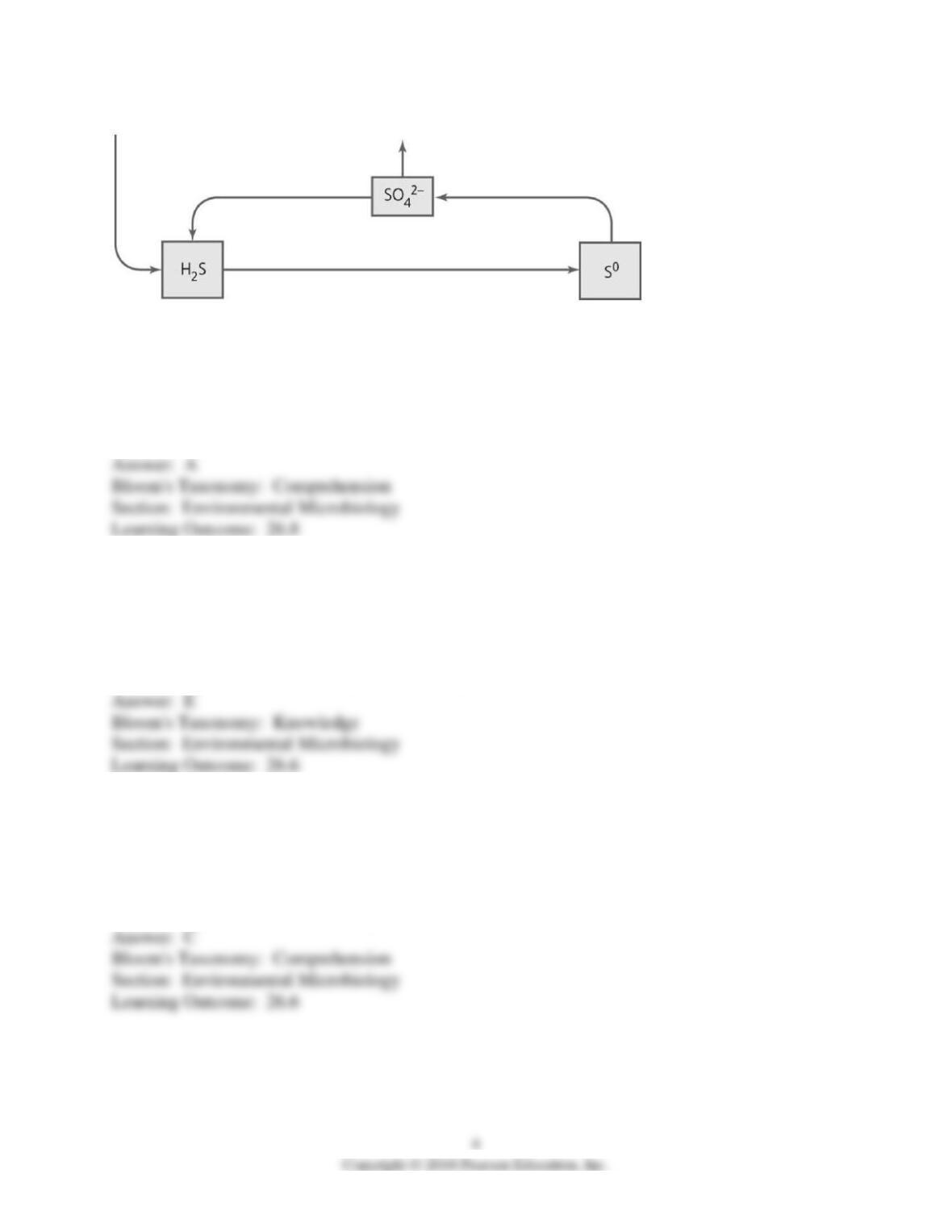
12)
What type of reactions take place in the portion of the sulfur cycle indicated in the figure?
A) oxidation-reduction
B) fermentation
C) dissimilation
D) denitrification
E) carbon fixation
13) Which of the following best describes the roles of microorganisms in the carbon cycle?
A) primary producers
B) heterotrophs
C) decomposers
D) heterotrophs and decomposers
E) primary producers, heterotrophs and decomposers
14) What is carbon fixation?
A) The conversion of dead organisms into fossil fuel.
B) The release of carbon dioxide by cellular respiration.
C) The conversion of carbon dioxide into organic molecules.
D) The storage of carbon compounds by heterotrophs.
E) The release of carbon dioxide by combustion.

15) The “greenhouse gas” methane is produced by
A) prokaryotes.
B) fungi.
C) algae.
D) animals.
E) both fungi and alga.
16) What is nitrogen fixation?
A) the conversion of nitrate (NO3–) into nucleic acids
B) the incorporation of ammonia (NH3) into amino acids
C) the release of ammonia (NH4–) from decomposing organic material
D) the conversion of atmospheric nitrogen (N2) into ammonia (NH3)
E) the conversion of ammonia (NH3) into ammonium ion (NH4+)
17) Which of the following is the conversion of ammonium ion+ into nitrogen gas (N2)?
A) assimilation
B) anammox
C) nitrogen fixation
D) nitrification
E) denitrification
18) Which form of sulfur can algae and plants use but not produce?
A) hydrogen sulfide (H2S)
B) elemental sulfur (S0)
C) sulfuric acid (H2SO4)
D) sulfate (SO42- )
E) both elemental sulfur and hydrogen sulfide

19) What nutrient most commonly contributes to eutrophication?
A) phosphorus
B) nitrite
C) sulfide
D) methane
E) iron oxides
20) Which of the following oxidize H2S to SO4-2, the form of sulfur animals use for their
metabolism?
A) Beggiatoa
B) Desulfovibrio
C) purple sulfur bacteria
D) both Beggiatoa and purple sulfur bacteria
E) both Beggiatoa and Desulfovibrio
21) Metal ions are useful to organisms in the ________ form.
A) soluble
B) reduced
C) insoluble
D) oxidized
E) oxidized and insoluble
22) Biomining takes advantage of prokaryotes ability to ________ metals.
A) reduce
B) reduce the solubility of
C) oxidize
D) directly solubilize
E) bioaccumulate

23) Where does the bulk of biogeochemical cycling occur?
A) in the air
B) in soil
C) in water
D) in the benthic zone
E) in both air and water
24) What pH conditions favor the growth of most bacteria?
A) pH 2
B) pH 5
C) pH 7
D) pH 9
E) Bacteria can grow at all ranges of pH.
25) Which of the following conditions will support the greatest diversity of microbes?
A) waterlogged with little mineral content
B) moderately moist soil with lots of organic compounds
C) alternating moist and dry with alkaline conditions
D) mostly dry soil with lots of organic compounds and acidic conditions
E) alternating moist and dry soil with high salt content
26) What microbes thrive in waterlogged soil?
A) anaerobes
B) obligate aerobes
C) halophiles
D) thermophiles
E) bacteria capable of forming endospores

27) Soil contaminated with bird droppings may contain ________ which can cause respiratory
disease in humans.
A) Agrobacterium tumifaciens
B) Clostridium tetani
C) Streptomyces scabies
D) Histoplasma capsulatum
E) Bacillus subtilis
28) Which of the following is a specific example of bioremediation?
A) the purification of water for drinking
B) the treatment of wastewater
C) the treatment of sludge
D) the degradation of crude oil spilled along the Alaska coastline
E) acid mine drainage
29) Anaerobic organisms reside in the ________ zone of a lake.
A) limentic
B) benthic
C) littoral
D) profundal
E) both the littoral and the profundal
30) The majority of the microbial carbon cycling activity will typically occur in
A) subsoil.
B) topsoil.
C) deep soil.
D) on the surface of the soil.
E) all depths of soil.

31) Photoautotrophs reside in the ________ zone(s) of marine environments.
A) abyssal
B) limnetic
C) littoral
D) both limnetic and littoral
E) abyssal, limnetic and littoral
32) Which aquatic zone in a lake will have the highest nutrient levels and therefore the densest
microbial populations?
A) the littoral zone
B) the limnetic zone
C) the profundal zone
D) the benthic zone
E) the sediment zone
33) Which of the following sets of characteristics describes the highest level of threat potential
from biological weapons?
A) a waterborne toxin that is easily introduced into public water supplies and does not replicate
in humans
B) a pathogen of livestock transmitted by contact with infected animals but not infected people
C) a human pathogen easily produced as an aerosol and transmissible by respiratory aerosols
D) a pathogen of wheat that could be delivered using crop dusters
E) a microbe that can be introduced into food during packaging and withstands refrigerator
temperatures but not typical cooking temperatures
34) Which of the following infectious diseases currently tops the list of bioterrorist threats?
A) anthrax
B) the plague
C) smallpox
D) botulism
E) cholera
35) Which of the following human diseases may result from exposure to soil containing the
microbe responsible?
A) blastomycosis
B) giardiasis
C) crown gall disease
D) cryptosporidiosis
E) saxitoxin poisoning
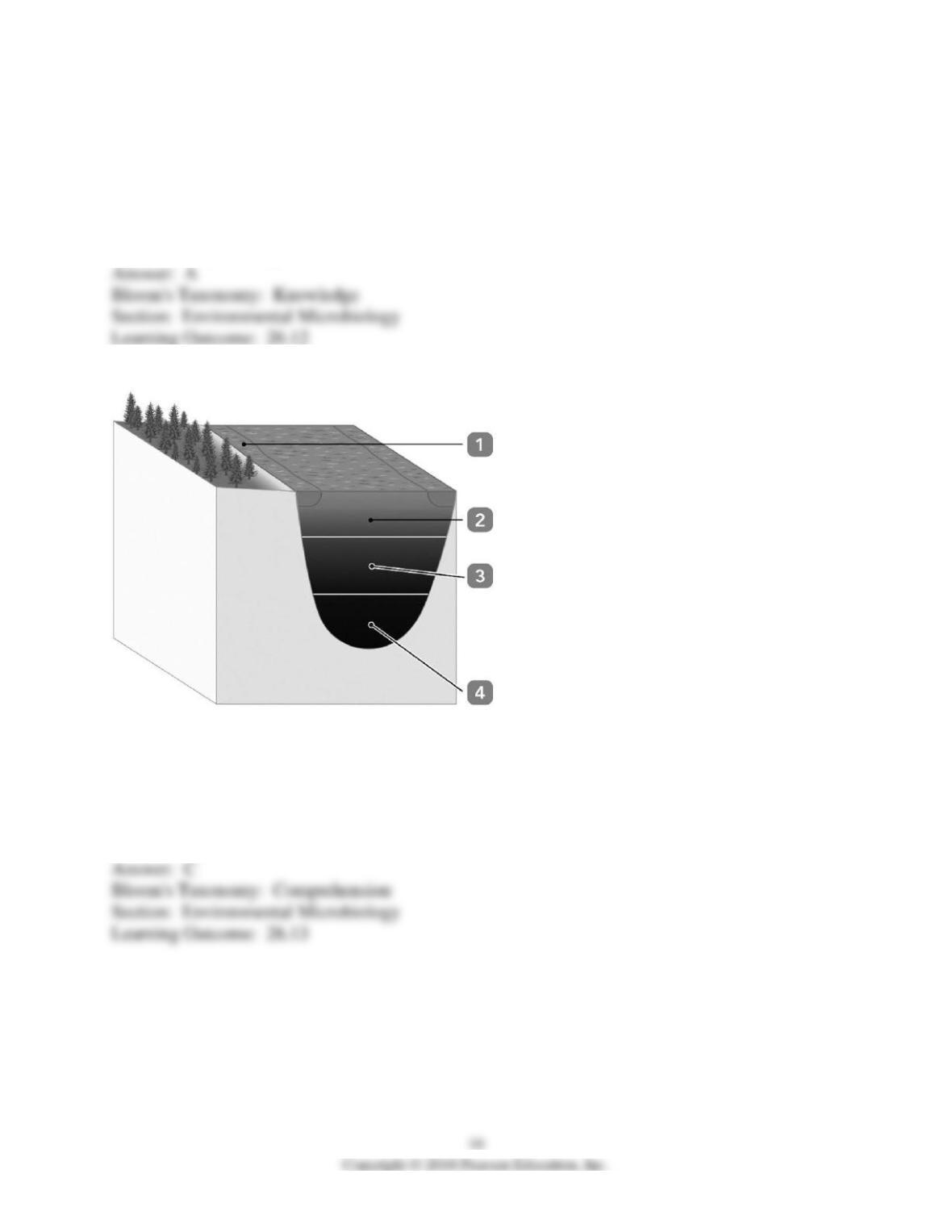
36)
Green and purple sulfur bacteria will carry out anaerobic photosynthesis primarily in
A) zone 1.
B) zone 2.
C) zone 3.
D) zone 4.
E) both zones 1 and 2.

37) Which of the following bacteria is a common soil contaminant that may cause disease in
humans and is a biological select agent?
A) Aspergillus oryzae
B) Bacillus anthracis
C) Cyanobacteria
D) Lactoccocus cremoris
E) Streptomyces scabies
38) Why are Category B select agents considered lower risk biological agents?
A) They are less dangerous pathogens than Category A.
B) They may be difficult to disperse.
C) They cause disease in animals but not humans.
D) They are less dangerous pathogens and are more difficult to disperse.
E) Their threat potential is unknown.
39) Which of the following disease agents has potential for both agroterrorism and bioterrorism?
A) smallpox
B) tularemia
C) plague
D) brucellosis
E) blight
40) Which potential biological select agent currently has no natural source?
A) anthrax
B) arenaviruses
C) tularemia
D) epidemic typhus
E) smallpox

41) Which of the following would be most effective in reducing the amount of CO2 in the
atmosphere?
A) cyanobacteria
B) anaerobic microbes
C) heterotrophic organisms
D) fungi
E) nitrogen fixers
42) Which of the following is a nitrogen-fixing bacterium that forms associations with the roots
of plants?
A) anaerobic Bacillus species
B) Clostridium species
C) Rhizobium species
D) Azotobacter species
E) cyanobacteria
43) When runoff containing excessive nutrients enters streams and lakes it can result in an
overgrowth of cyanobacteria and algae, a process known as
A) eutrophication.
B) oxidation.
C) fixation.
D) ammonification.
E) both ammonification and fixation.
26.2 True/False Questions
1) The interactions between microbes in a guild are constantly changing.

2) A microbiome typically is a single population of organisms.
3) Members of a guild are metabolically related to each other.
4) Acidic drainage from mine tailings is harmful to all life.
5) Only prokaryotes fix nitrogen.
6) Algae and protozoa in the soil are quite hardy, and therefore their abundance is not a useful
indicator of environmental pollution.
7) Bedrock does not contain microorganisms.
8) Bioremediation is the process of using organisms to clean up toxic, hazardous compounds by
degrading them to less harmful substances.
9) Without the activities of microorganisms, the functioning of Earth’s ecosystems would cease.
10) Most of the nitrogen in the environment is in the form of nitrogen gas, which is the form
used by most organisms.
26.3 Short Answer Questions
1) All the microbes in a community in one location constitute a(n)
(biosphere/ecosystem/microbiome).
2) A biofilm is an example of (antagonism/competition/cooperation) among microbes.
3) Organic compounds are degraded to produce methane by (Archaea/fungi/Pseudomonas).
4) Metals are cycled in the environment by microbes that (oxidize/reduce/solubilize) them.
5) Anaerobic oxidation of (methane/rubisco/plastics) produces carbon dioxide.
6) During decomposition of amino acids, the amino groups undergo
(ammonification/anammox/denitrification) and are converted to ammonia.
7) Cyanobacteria produce a cell type known as a (cyst/heterocyst/nodule) that protects
nitrogenase from the exposure to oxygen.
8) Some microbes can (dissimilate/oxidize/reduce) hydrogen sulfide to elemental sulfur.
9) Eutrophication is primarily a result of (agricultural/industrial/urban) runoff.
10) Exposure to soil contaminated with rodent excrement may result in respiratory infection with
(Coccidioides/Clostridium/Hantavirus).
11) Rivers typically lack a(n) (anaerobic/littoral/limnetic) zone.
12) A biological select agent spread by (aerosols/contact/ingestion) has a high threat level.
13) The anthrax attack of fall 2001 was accomplished by mailing the agent in ordinary
envelopes. This method of delivery took advantage of the ability of Bacillus anthracis to produce
(aerosols/endospores/spores).
14) When one microbe’s metabolic activities create favorable conditions for another
microorganism, this is referred to as (competition/cooperation/facilitation).
15) The organic material found in topsoil is called (humus/peat/compost).
26.4 Essay Questions
1) What are the levels of microbial associations in the environment? How do they relate to an
ecosystem?
2) Compare and contrast carbon fixation and nitrogen fixation.
3) How do soil conditions impact the cycling of nitrogen during decomposition?
4) Smallpox is considered a serious potential biological weapon, whereas anthrax has been
successfully used as one. Compare and contrast their potential with regard to the criteria for
assessing biological threats.
5) The dengue and Ebola viruses cause hemorrhagic fevers. Evaluate their threat levels as select
agents using the criteria in the textbook, and decide whether they pose significant risk as
biological weapons.