
1
Campbell Essential Biology, 6e (Simon/Dickey/Hogan/Reece)
Chapter 25 Hormones
Chapter 25 Learning Outcomes
25 Biology and Society: Should Steroids Be Allowed?
25.1. Compare the advantages and disadvantages of synthetic hormone use.
25.1 Hormones: An Overview
25.2. Compare ways that water-soluble and lipid-soluble hormones trigger changes in target
cells.
25.2 The Human Endocrine System
25.3. Describe different types and functions of vertebrate endocrine glands and the hormones
they produce.
25.4. Draw and describe the interrelationships between the hypothalamus and the anterior and
posterior pituitary glands including hormones that control each part of the system.
25.5. Explain how taking potassium iodide before or immediately after exposure to nuclear
fallout can prevent thyroid cancer.
25.6. Relate type 1 and type 2 diabetes to disruption of proper hormonal regulation of glucose
levels.
25.7. Explain how body posture can affect the balance of your stress hormones.
25.8. Relate endocrine disruptors to functioning of thyroid and sex hormones.
25 The Process of Science: Do ‘Roids Cause Rage?
25.9. compare the advantages and disadvantages of synthetic hormone use.
25 Evolution Connection: Steroids and Male Aggression
25.10. Compare the effects of androgens among several vertebrates.
Global Learning Outcomes
1. Demonstrate an understanding of the principles of scientific inquiry.
2. Demonstrate the ability to think critically and employ critical-thinking skills.
3. Read and interpret models, graphs, and data.
4. Demonstrate the quantitative skills needed to succeed in biology.
5. Demonstrate an understanding of the impact of science on society.
6. Evaluate the credibility of scientific information from various sources.
7. Demonstrate the ability to make connections between concepts across biology.
8. Communicate effectively in writing.
9. Apply the scientific method to interpret information and draw conclusions.
25.1 Multiple Choice Questions
1) Hormones are usually transported through ________ and affect only cells with ________.
A) ducts… specific receptors
B) intercellular junctions… cell junctions
C) blood vessels… specific receptors
D) blood vessels… cell junctions
2) If a cell is like a house, which one of the following is most similar to the way that a steroid
hormone works?
A) A postal worker leaves mail for you at your front door.
B) A visitor to your home knocks on your front door.
C) Radio signals are received by a stereo in your bedroom.
D) You walk outside of your home to get a better signal on your cell phone.
3) Hormones regulate ________.
A) growth, only
B) reproduction, only
C) metabolism, only
D) Growth, reproduction, and metabolism are regulated by hormones.
4) In general, hormones that bind to plasma membrane receptors ________.
A) are steroid hormones
B) bind to DNA and cause changes in transcription
C) cannot pass through cell membranes
D) are produced in the interstitial fluid
5) Generally, a cell that is affected by a particular steroid hormone would be expected to have
________.
A) DNA sites that interact with the hormone
B) a receptor inside the cell that binds the hormone
C) a cell-surface receptor that binds the hormone
D) enzymes that are activated or inactivated by the hormone’s second messenger
6) Steroid hormones ________.
A) begin their action outside the membrane
B) usually diffuse through the plasma membrane into target cells
C) bind to receptors in the plasma membrane
D) are water soluble
7) Steroid hormones ________.
A) usually trigger a signal transduction pathway when they bind to a membrane receptor
B) usually bind to mRNA in the cytoplasm to initiate transcription
C) usually bind to receptors in the cytoplasm or nucleus
D) usually bind to rRNA to prevent translation
8) Water-soluble hormones can cause different effects in different cells depending on the type of
cell and ________.
A) its signal transduction pathway
B) the particular organelle that is targeted
C) the binding of the hormone to either DNA or RNA
D) the type of ribosomes in the cell
9) Which of the following has both endocrine and nonendocrine functions?
A) pancreas
B) salivary gland
C) anterior pituitary gland
D) skeletal muscle
10) Which of the following is a nonsteroid hormone?
A) glucagon
B) a progestin
C) a glucocorticoid
D) androgen
11) Which of the following is part of the brain?
A) thymus
B) hypothalamus
C) adrenal cortex
D) thyroid
12) Which one of the following statements is TRUE?
A) The anterior pituitary is composed of nervous tissue.
B) The anterior pituitary and posterior pituitary work together to secrete the same hormones.
C) Inhibiting hormones make the anterior pituitary secrete hormones.
D) The pituitary secretes hormones that influence numerous body functions.
13) Follicle-stimulating hormone (FSH) is a hormone that ________.
A) helps to regulate the female menstrual cycle
B) stimulates general body growth
C) raises blood glucose levels
D) regulates hair growth and skin growth
14) Which of the following hormones is made by the hypothalamus and released by the posterior
pituitary?
A) estrogen
B) growth hormone
C) ADH
D) insulin
15) Which of these hormones acts in opposition to diuretics such as alcohol?
A) ADH
B) glucagon
C) HGH
D) FSH
16) Which of the following choices INCORRECTLY pairs an endocrine gland or hormone with
an aspect of metabolism that it regulates?
A) TSH–thyroid hormone
B) pancreas–blood glucose levels
C) prolactin–blood potassium levels
D) ovary–female sexual characteristics
17) Which of the following hormones affects the greatest variety of cell types?
A) prolactin
B) insulin
C) growth hormone
D) calcitonin
18) Eating very spicy food stimulates the release of ________.
A) endorphins
B) insulin
C) glucagon
D) calcitonin
19) One of your best friends loves to run long distances. You ask her what she enjoys about
running. In addition to good physical fitness, she tells you that after a run she feels extra happy.
You suspect that her joy might be related to increased production of ________ by the anterior
pituitary gland.
A) endorphins
B) releasing hormones
C) prolactin
D) adrenalin
20) Which gland requires the element iodine to produce its hormones?
A) thyroid
B) pineal
C) anterior pituitary
D) ovary
21) ________ can be a symptom of hypothyroidism.
A) Goiter
B) A low sperm count
C) Graves’ disease
D) Hyperactivity
22) Which of the following best describes the relationship of insulin to glucagon?
A) They work together to prepare the body to deal with stress.
B) Insulin stimulates the pancreas to secrete glucagon.
C) High levels of insulin inhibit pancreatic secretion of glucagon.
D) They are antagonistic hormones.
23) Which structure exerts primary control over the concentration of sugar in the blood?
A) liver
B) pituitary
C) pineal
D) pancreas
24) When the concentration of glucose in the blood rises following the digestion of a meal, what
is the hormonal response?
A) Increased amounts of both glucagon and insulin are released.
B) An increased amount of glucagon is released.
C) An increased amount of insulin is released.
D) Glucagon and insulin levels in the blood stay the same.
25) Which of the following hormones causes a rise in the concentration of glucose in the blood?
A) insulin
B) glucagon
C) melatonin
D) calcitonin
26) What is the metabolic abnormality that underlies the characteristic symptoms of diabetes
mellitus, such as frequent urination?
A) a failure of the kidney tubules to reabsorb enough glucose from the urine
B) a failure of the gastrointestinal epithelium to absorb enough glucose from food
C) an inability of the body’s cells to retain glucose they have absorbed from the blood
D) an inability of the body’s cells to absorb enough glucose from the blood
27) Which of the following is almost always associated with being overweight and underactive?
A) type 1 diabetes
B) type 2 diabetes
C) type 3 diabetes
D) hypoglycemia
28) Which of the following glands is located nearest the kidneys?
A) ovaries
B) pineal gland
C) thyroid gland
D) adrenal glands
29) Which of the following glands secretes hormones that enable the body to respond to stress?
A) pancreas
B) adrenal
C) pineal
D) parathyroid
30) Epinephrine ________.
A) decreases metabolic rate
B) decreases heart rate
C) increases absorption of glucose by the digestive tract
D) increases breathing rate
31) Which of the following is(are) mostly involved in a long-lasting response to stress?
A) mineralocorticoids
B) glucocorticoids
C) androgens
D) oxytocin
32) Which of the following hormones can make a person susceptible to infection when
administered for too long as a drug?
A) glucagon
B) growth hormone
C) glucocorticoids
D) antidiuretic hormone
33) Hyposecretion of ________ may inhibit your response to stress.
A) ACTH
B) insulin
C) HGH
D) prolactin
34) Estrogens stimulate the development of ________.
A) breasts
B) a low-pitched voice
C) sperm production
D) facial hair
35) Which of the following are sex hormones?
A) androgens, only
B) estrogens, only
C) progestins, only
D) All of these are sex hormones.
36) Which of the following is secreted by a sexually mature woman?
A) testosterone, only
B) estrogen, only
C) progestins, only
D) All of these are secreted by a sexually mature woman.
37) If body cells have too few receptors for insulin, ________.
A) the insulin level is likely to decrease
B) the blood glucose level may rise to abnormal levels
C) the liver will need to break down more glycogen
D) more glucagon will be needed
38) Nate is gaining weight, is often tired, and feels cold. His thyroid hormone level is high as is
the level of TSH. Nate also has a goiter. Which of these diagnoses is the most likely for Nate’s
condition?
A) defective thyroid hormone receptors in his body cells
B) insufficient iodine in his diet
C) defective receptors for thyroid hormone control by the anterior pituitary
D) too much iodine in the diet
39) Natalie is lethargic, has poor tolerance to cold, and the amount of thyroid hormone in her
body is low even though the level of TSH is high. Natalie has a goiter. Which of these diagnoses
is the most likely for Natalie’s condition?
A) defective thyroid hormone receptors in the body cells
B) insufficient iodine in the diet
C) defective receptors for thyroid hormone control by the anterior pituitary
D) too much iodine in the diet
40) Jenny is losing weight, has poor tolerance to heat, and has mood swings, high blood pressure,
and a rapid heart rate. She has very high levels of thyroid hormone, high levels of TSH, and a
goiter. Which of these diagnoses is the most likely for Jenny’s condition?
A) defective thyroid hormone receptors in the body cells
B) insufficient iodine in the diet
C) defective receptors for thyroid hormone control by the anterior pituitary
D) too much iodine in the diet
41) Which of these is generally considered a benefit of synthetic hormones?
A) effects on kidney and liver
B) cardiovascular effects
C) increased hostility
D) mimicking estrogen
42) Which of these is an example of the action of an endocrine disruptor?
A) BPA in bottles affects particular glands.
B) Feedback from estrogen inhibits FSH.
C) Lack of iodine prevents synthesis of adequate thyroid hormone.
D) Lowered levels of calcitonin causes increased bone density.

43) Many cases of pediatric thyroid cancer occurred after the 1986 Chernobyl nuclear accident in
Ukraine and the cause was traced to milk containing iodine-131. Which of these might be the
most effective method to prevent thyroid cancer increase following exposure to excessive
radiation?
A) Do not allow anyone to drink any milk.
B) Give dairy cows large doses of iodine.
C) Give humans large doses of iodine before exposure.
D) Give people large doses of iodine a few days following exposure.
44) Which of these behaviors is NOT associated with androgens?
A) body-slamming elephant seals
B) mating songs in frogs
C) territorial battles in fish
D) maturation of ovaries in bears
25.2 Art Questions
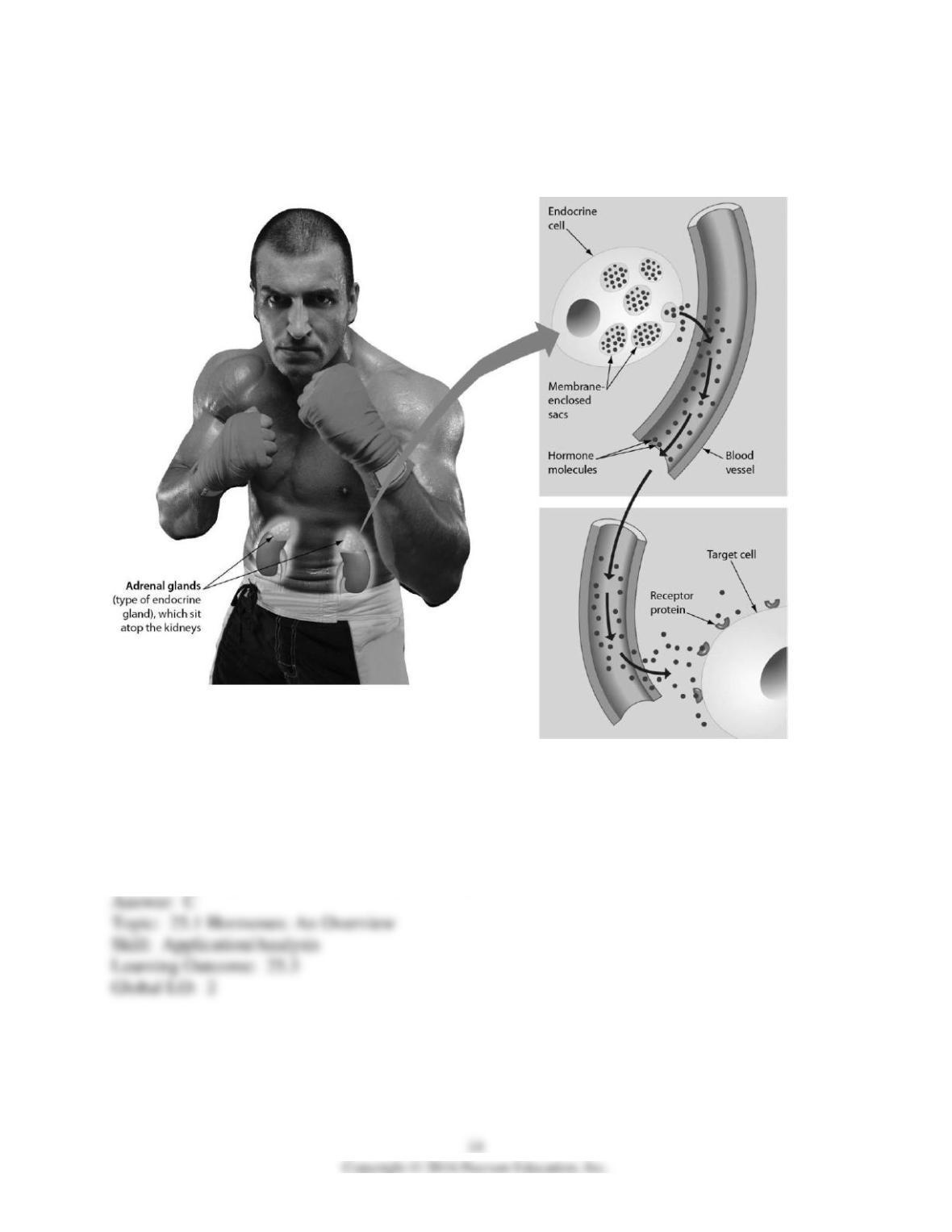
Please refer to the following art to answer the following questions.
1) What is special about the target cells that allows them to respond to the hormone? Only the
target cells ________.
A) are close enough to the blood vessels to respond
B) touch the blood vessels
C) have specific receptors to the hormone
D) located in organs next to the kidneys can respond
2) As this boxer is finishing his fight, which of these hormone is NOT likely to be elevated?
A) adrenalin
B) ADH
C) insulin
D) androgens
3) The hormone being released from the organs shown in the figure is likely to be ________.
A) adrenalin
B) growth
C) testosterone
D) calcitonin
4) If the boxer wanted to be more confident and less stressed as he entered the fight, a good
strategy would be to ________.
A) eat a large amount of carbohydrates to be sure glucose is properly regulated
B) assume a power pose for a period of time before the fight
C) drink milk to increase the amount of calcium in his blood
D) take iodide tablets to insure that sufficient thyroxin is produced
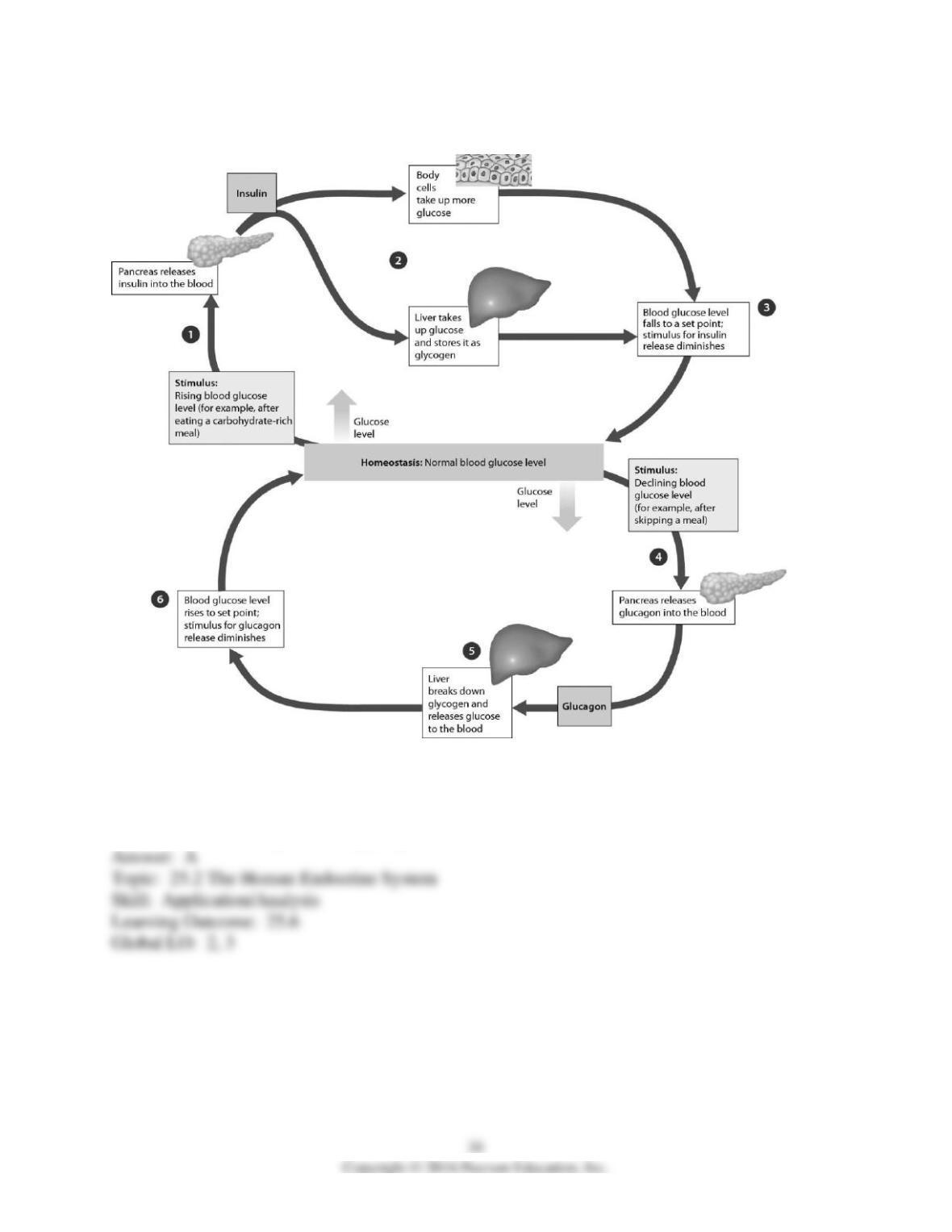
5) Examine the figure below. If blood glucose levels decline, ________.
A) the pancreas releases more glucagon, which causes glucose to be released into the blood
B) the pancreas releases more insulin, which causes glucose to be released into the blood
C) body cells take up more glucose
D) liver cells convert glucose to glycogen
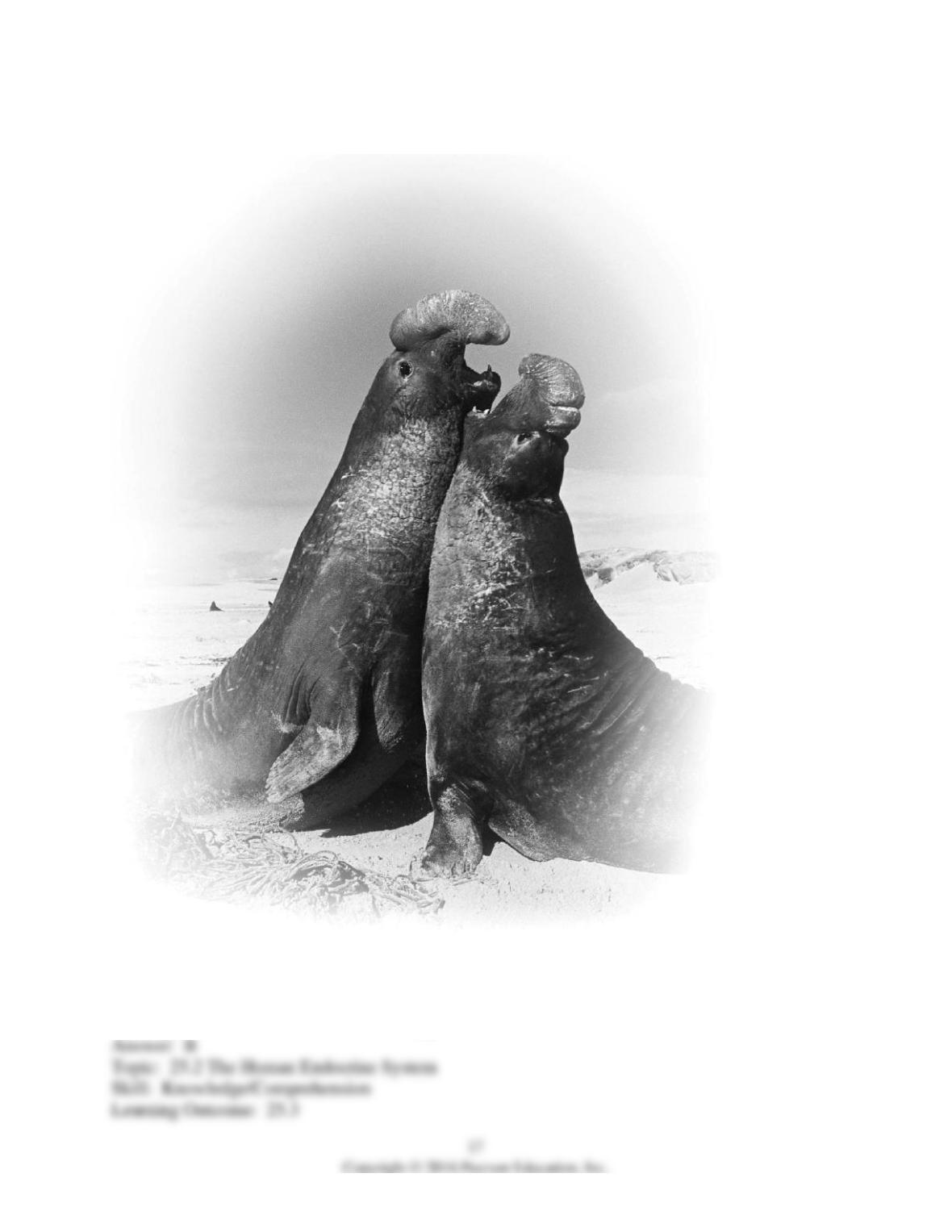
6) Examine the figure below. The behavior exhibited by these elephant seals is promoted by
________.
A) growth hormone, which has brought about full body size
B) testosterone, which has brought about sexual maturity
C) calcitonin, which has produced strong bones
D) antagonistic hormones, which cause aggression

25.3 Scenario Questions
Please read the following scenario to answer the following questions.
Osteoporosis is a disease characterized by loss of bone mass and an increased susceptibility to
bone fractures. It threatens more than half of all Americans over the age of 50. Women are about
four times more likely to suffer from the disease than men. Osteoporosis may progress
undetected until bones become so weak that they break during common activities. Prevention of
osteoporosis includes regular weight-bearing exercise, recommended intake of calcium and
vitamin D, and avoidance of smoking and excessive alcohol.
1) Astronauts returning from long periods in space often have very fragile bones. This is likely
related to ________.
A) overproduction of thyroid hormone
B) lack of gravity
C) diet lacking in calcium
D) excessive production of ADH
2) Calcium levels are regulated by antagonistic hormones. This is likely because ________.
A) calcium has to be produced by the body and that production must be regulated
B) bone formation occurs only during puberty when many other hormones are present, thus
careful regulation is necessary
C) both too much and too little calcium can have disastrous effects on the body, thus the levels
need tight regulation
D) calcium is needed to repair bone fractures, so antagonistic hormones make sure it is available
when needed