
40) Which of the following statements best explains why people with Hodgkin’s disease often
show signs of immunodeficiency?
A) The Hodgkin’s disease virus infects and destroys B cells.
B) Hodgkin’s disease involves the deposition of immune complexes in the kidneys.
C) Hodgkin’s disease is a type of cancer that affects lymphocytes.
D) Hodgkin’s disease occurs when an immune response elicited by streptococcal bacteria kills
normal heart cells as well.
41) Which of the following types of cells does HIV preferentially infect?
A) cytotoxic T cells
B) natural killer cells
C) helper T cells
D) phagocytic cells
42) Suppose that you encounter an antigen for the first time. What types of cells stored in your
lymph nodes can be activated in case you encounter the antigen again?
A) memory cells
B) effector cells
C) phagocytic cells
D) helper T cells
43) What did Jonas Salk’s polio vaccine experiment find?
A) Vaccines could be developed from bacteria.
B) Vaccines were safe only for the elderly.
C) Inactivated viruses can be used as vaccines.
D) Polio could not be prevented with a vaccine.

44) Jonas Salk’s polio vaccine trials of 1954 involved giving placebos to 201,229 children and
the polio vaccine to 200,745 children. Out of the placebo group, 142 children developed polio,
whereas 57 children from the vaccine group developed polio. Approximately how many more
times likely was a child to develop polio if he or she were NOT vaccinated?
A) thirty
B) ten
C) five
D) three
45) Why do some viruses mutate faster than others?
A) They are usually smaller.
B) They are usually larger.
C) They usually have RNA genomes.
D) They usually have DNA genomes.
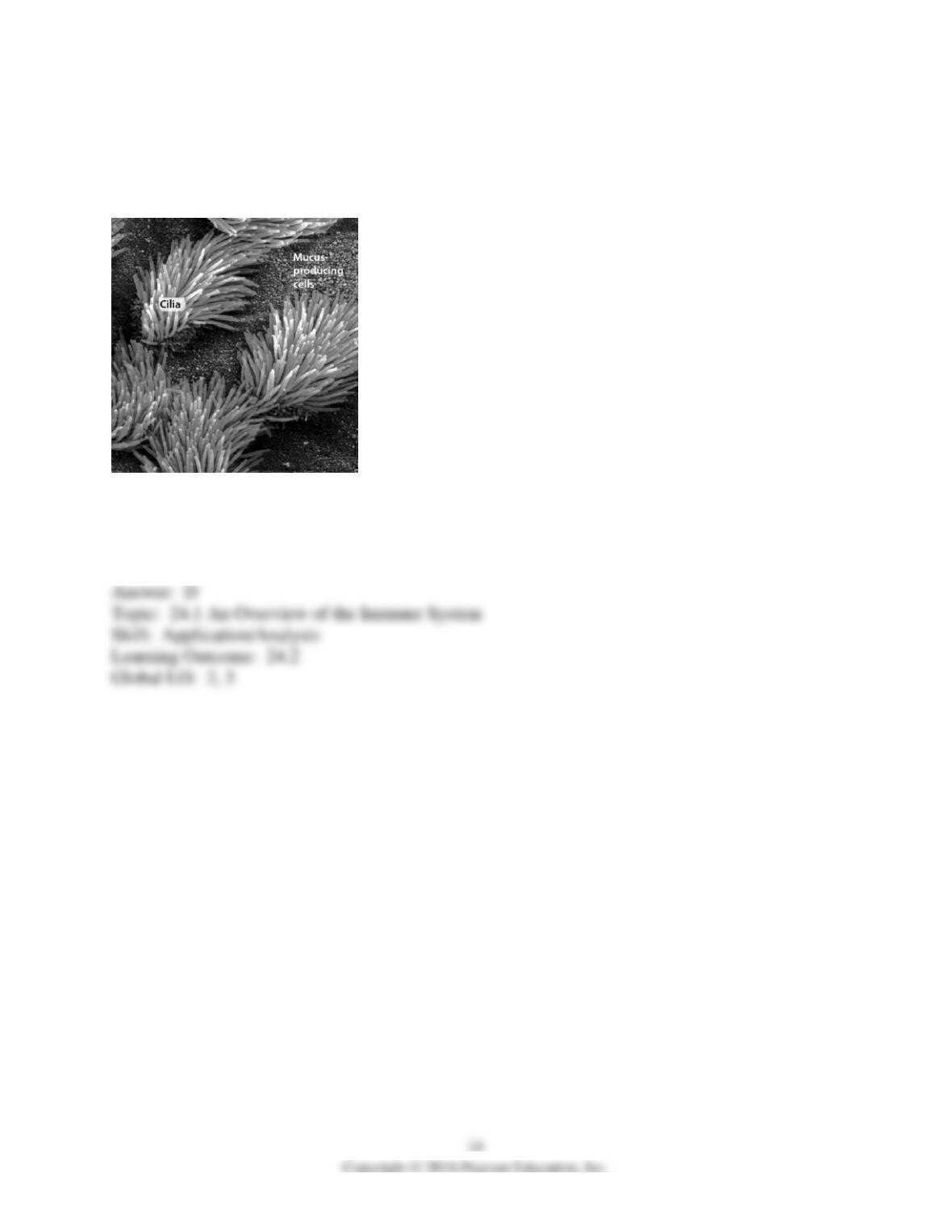
24.2 Art Questions
1) Examine the numerous long structures extending from the surface of some of the cells in the
following figure. Cells with these long structures could be found lining ________.
A) the digestive tract
B) arteries
C) veins
D) the trachea
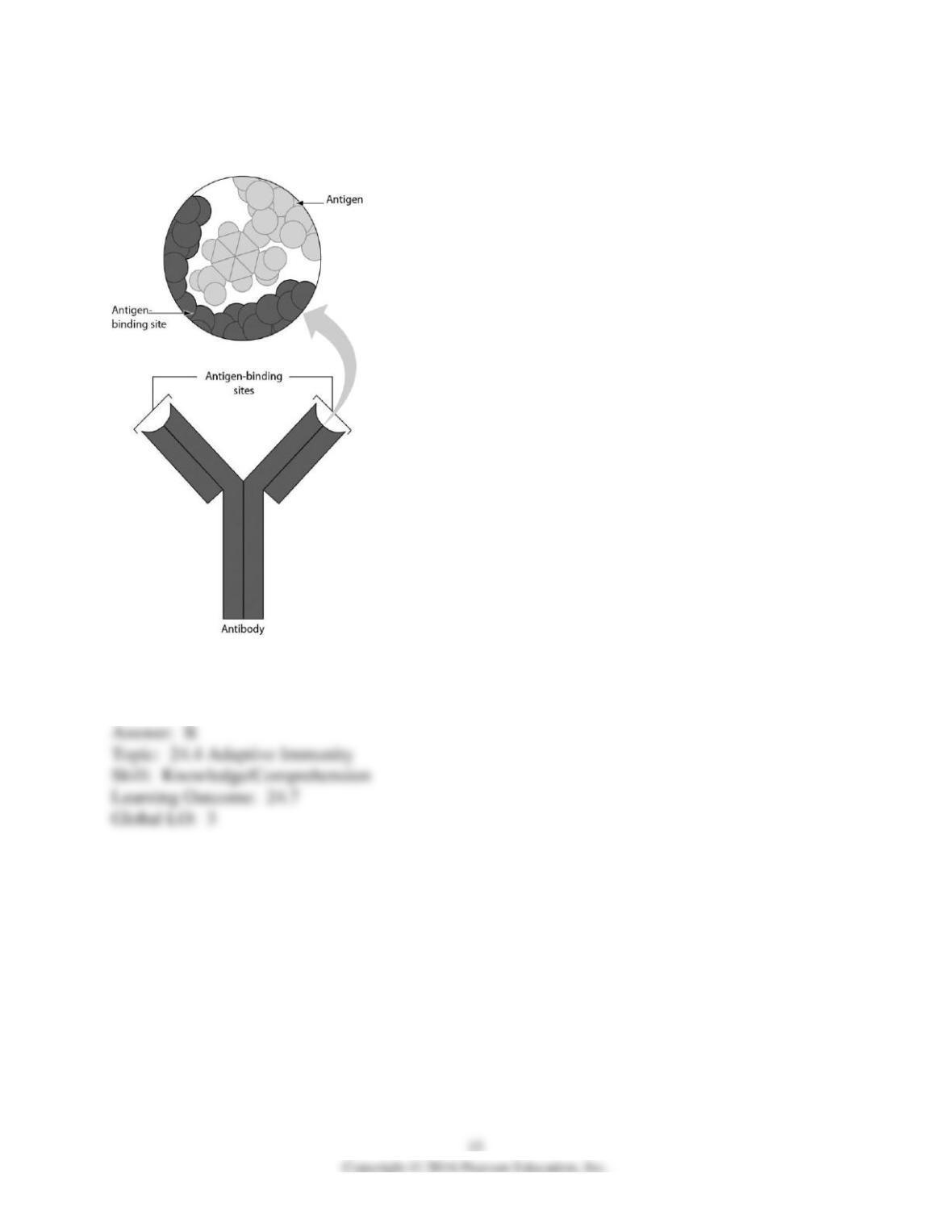
2) The figure below shows a Y-shaped antibody molecule. How many antigens can a single
antibody molecule bind?
A) one
B) two
C) three
D) four
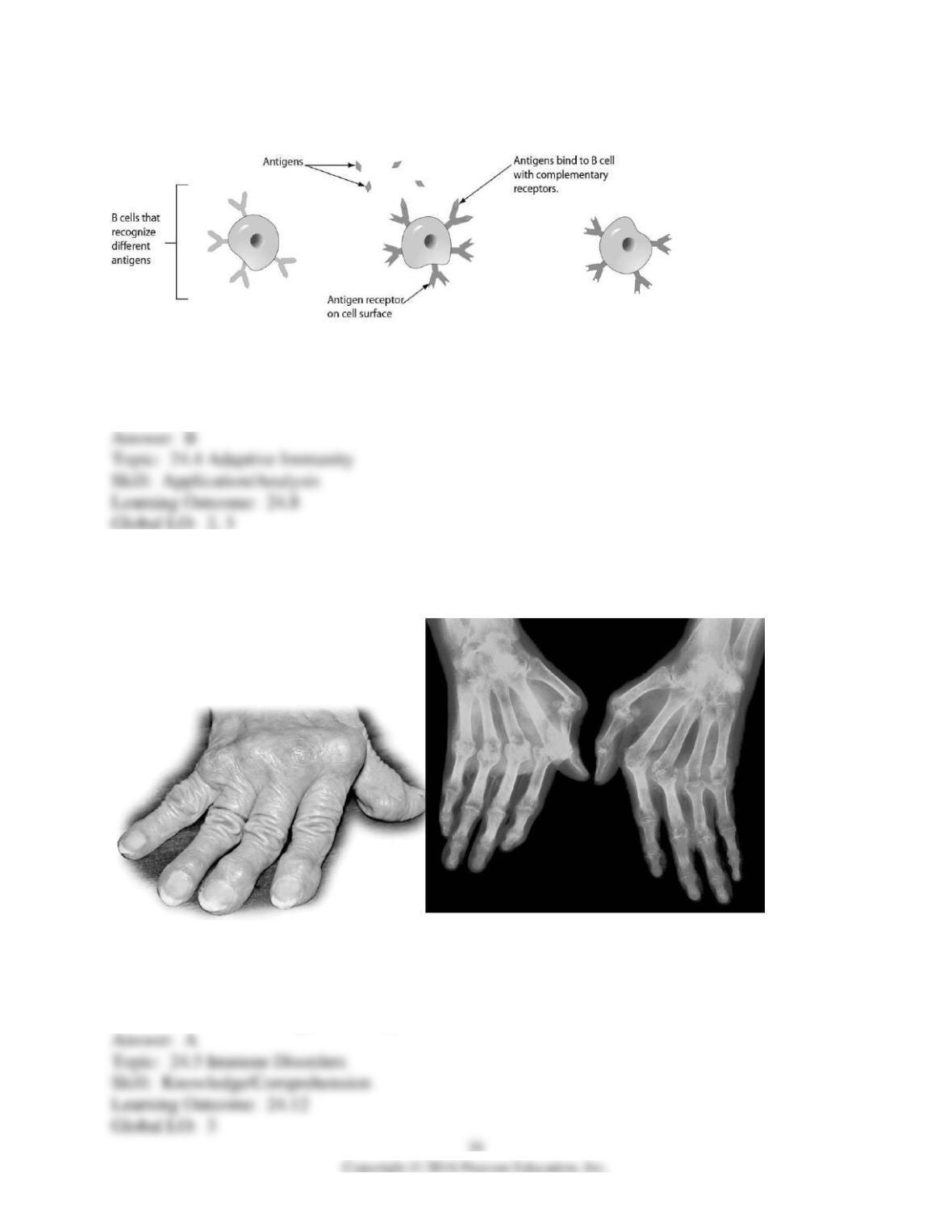
3) Three B cells are shown in the figure. Which of these B cells will begin to grow, divide, and
differentiate further?
A) only the B cell on the left
B) only the B cell in the middle
C) only the B cell on the right
D) all three B cells
4) Examine the photograph of the hand in the following figure. The person’s joints are severely
damaged because ________.
A) the immune system has damaged the cartilage and bone of the joints
B) a viral infection has attacked the cartilage of the fingers
C) cytotoxic T cells have destroyed the bone in the fingers
D) T cells have reacted against the myelin in the hand
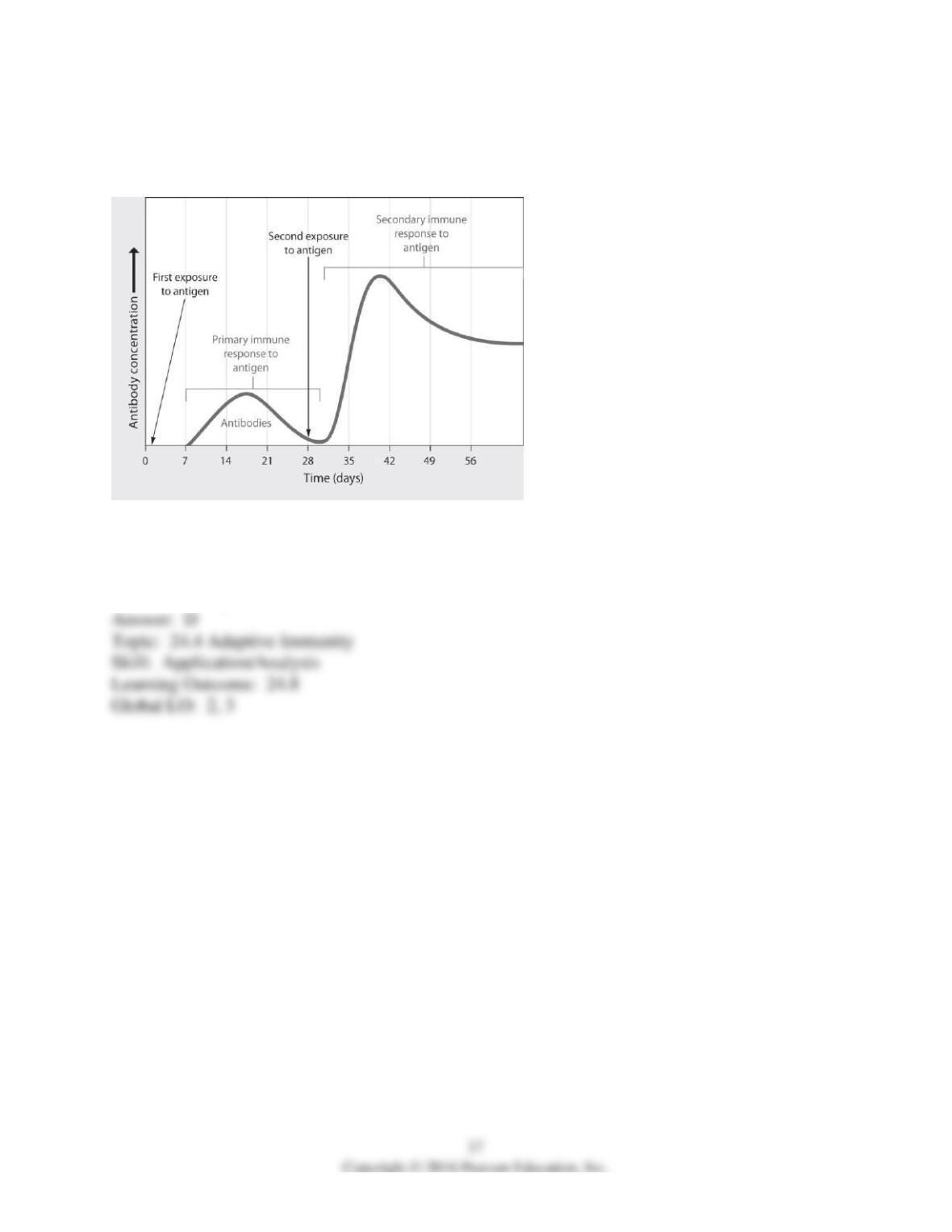
5) Suppose that the figure below shows the concentration of antibodies for an antigen produced
by Clostridium tetani, a bacterium that causes tetanus. What could trigger the increase in
antibody production marked by the arrow?
A) a decrease in antigen concentration
B) an increase in histamine production
C) an initial exposure to Pseudomonas aeruginosa, a bacterium that causes pneumonia
D) a second exposure to Clostridium tetani

24.3 Scenario Questions
Read the following scenario to answer the following questions.
Avian influenza is a viral infection that naturally occurs in wild birds with few damaging effects.
However, avian influenza is highly contagious and can quickly kill domesticated birds. Some
human influenza viruses are similar to the avian influenza. People infected with avian influenza
develop typical flu symptoms (fever, cough, muscle aches). However, symptoms may become
more severe and life-threatening. If avian influenza evolves into a form that is easily
transmissible from person to person, a global pandemic of widespread human death might occur.
1) One way to prevent a global pandemic of avian influenza would be to ________.
A) keep large doses of histamine available to treat anyone who shows signs of infection
B) treat any infected birds with large doses of antibiotics
C) develop a vaccine against the avian influenza virus
D) develop drugs that could effectively block anaphylactic shock
2) Which of the following cells would be active during an immune response to a viral infection?
A) natural killer cells, only
B) phagocytic cells, only
C) T cells, only
D) all of these cell types
3) Humans who are infected with avian influenza are likely to have elevated levels of ________.
A) defensive proteins
B) histamine
C) antihistamines
D) bacterial cells

4) Which of the following methods do you think would be the best way to test the effectiveness
of a vaccine against avian influenza that is intended for human use?
A) Give the vaccine to a single mouse that has the virus, and assess whether influenza symptoms
develop.
B) Give the vaccine to a group of mice that have the virus, and give a placebo to another group
of mice that have the virus. Assess whether influenza symptoms develop in either group.
C) Give the vaccine to a single human who has the virus, and assess whether influenza
symptoms develop.
D) Give the vaccine to a group of humans who have the virus, and give a placebo to another
group of humans who have the virus. Assess whether influenza symptoms develop in either
group.
Read the following scenario to answer the following questions.
In order for cytotoxic T cells to kill infected cells, they must bind to the self protein on the
surface of the infected cell. Other proteins on the surface of the cytotoxic T cells assist with this
binding process. One of these accessory proteins, CD8, has been implicated in many
immunodeficiency disorders, including AIDS. CD8 is required for cytotoxic T cells to function
normally.
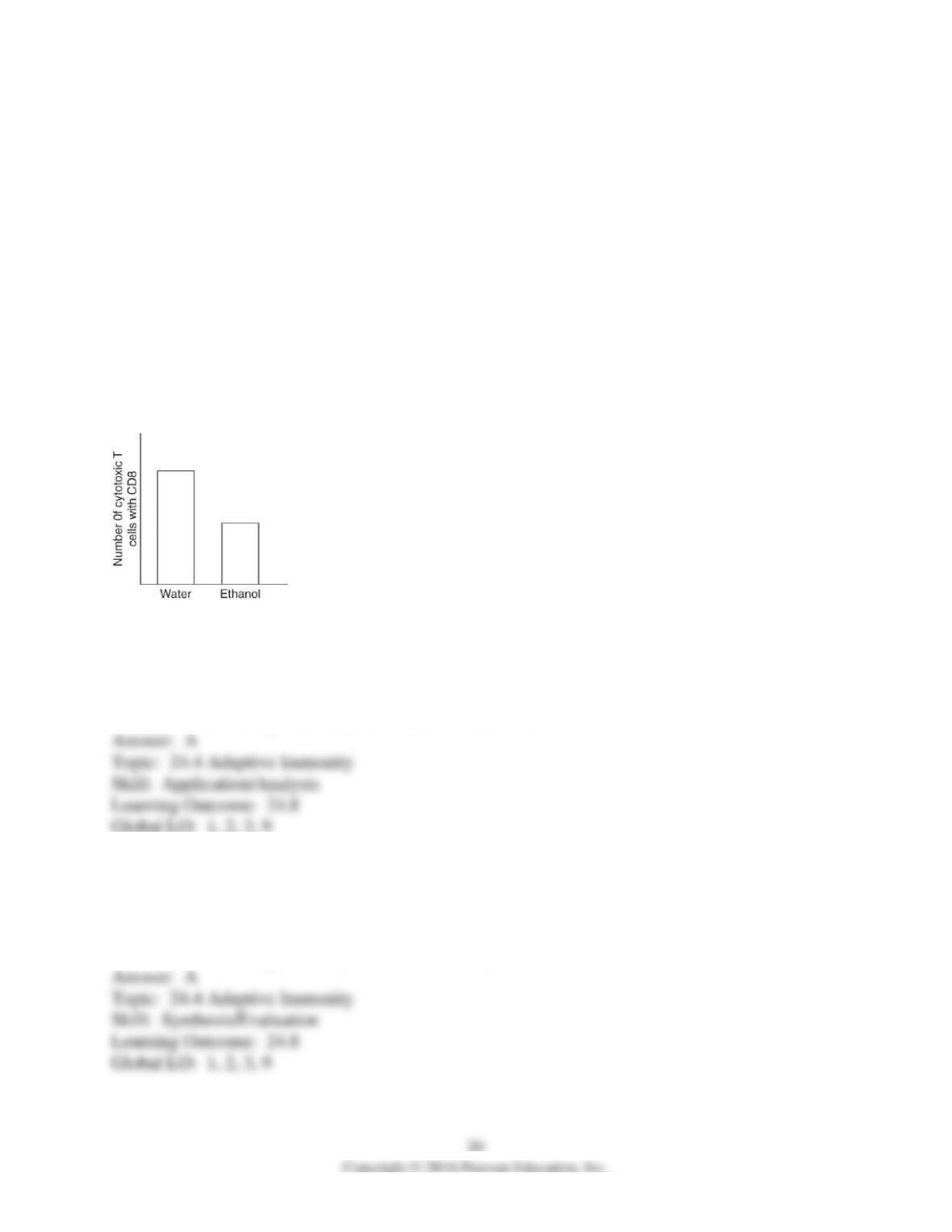
Chronic alcohol use is associated with increased rates of pulmonary bacterial and viral
infections. A recent study examined this association by investigating the effects of alcohol on the
immune system in mice. Mice were given either water or alcohol (ethanol) to drink and then
were infected with the influenza virus. The number of cytotoxic T cells that have the CD8
accessory protein was measured in both groups of mice. The data collected are shown in the
figure below.
5) Which group of mice has more functional cytotoxic T cells?
A) The mice that drank water.
B) The mice that drank alcohol.
C) Both groups of mice have similar amounts of functional cytotoxic T cells.
D) There is not enough information to make a conclusion.
6) Which group of mice would have a stronger cytotoxic C cell response?
A) The mice that drank water.
B) The mice that drank alcohol.
C) Both groups of mice would have the same responses.
D) There is not enough information to make a conclusion.

7) What other observation would suggest that alcohol consumption contributes to increased
bacterial and viral infections?
A) decreased histamine concentration in the mice that drank alcohol
B) increased histamine concentration in the mice that drank alcohol
C) increased numbers of B cells in the mice that drank alcohol
D) decreased numbers of B cells in the mice that drank alcohol