D)
Please use the following information to answer the question(s) below.
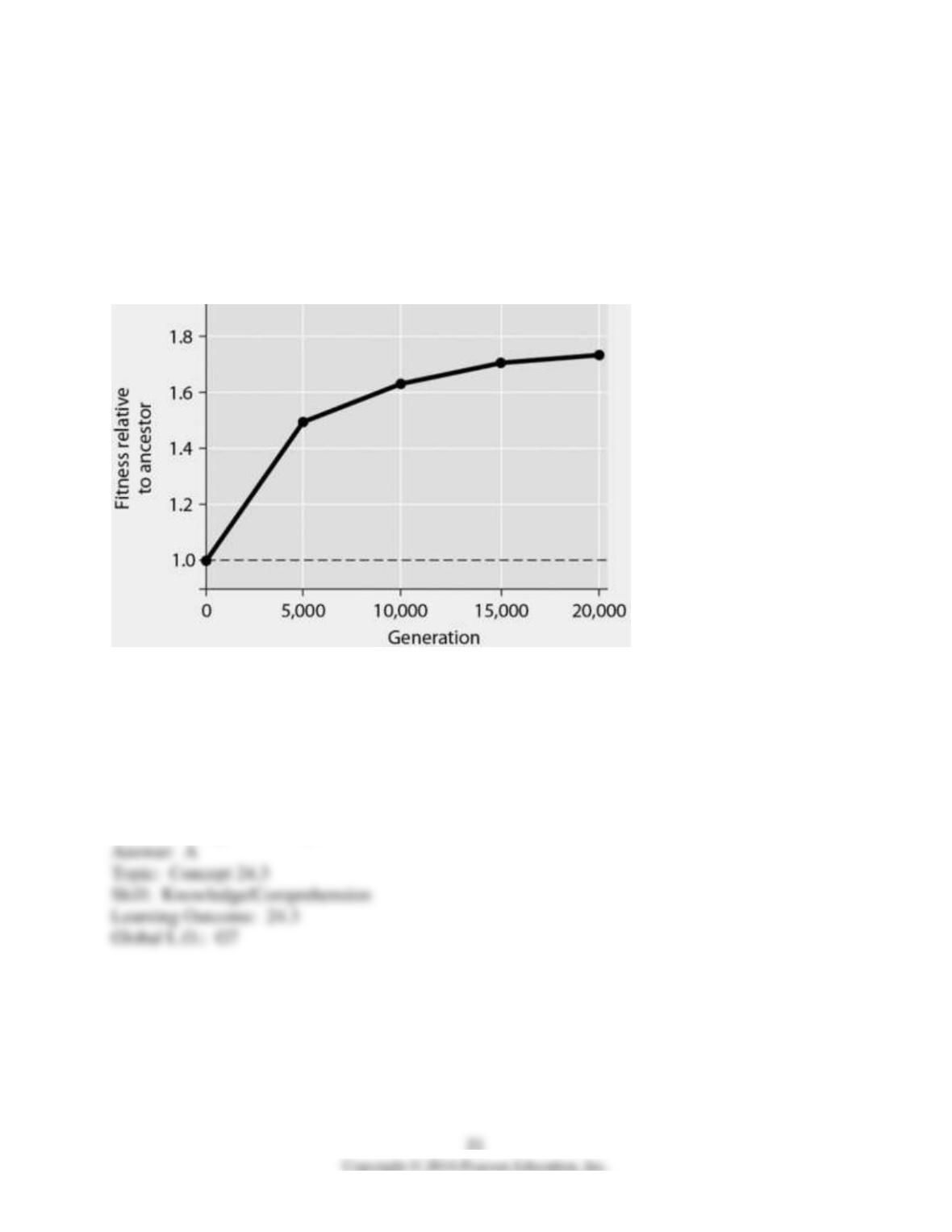
In Figure 24.1, data are presented from an eight-year experiment in which 12 populations of
Escherichia coli, each begun from a single cell, were grown in low-glucose conditions for
20,000 generations. Each culture was introduced to fresh growth medium every 24 hours.
Occasionally, samples were removed from the populations, and their fitness in low-glucose
conditions was tested against that of members sampled from the ancestral (common ancestor) E.
coli population.
Figure 24.1
2) If the vertical axis of Figure 24.1 refers to “Darwinian fitness,” then which of the following is
the most valid and accurate measure of fitness?
A) number of offspring or close kin that survive to reproductive age
B) amount of ATP generated per cell per unit time
C) average swimming speed of cells through the growth medium
D) amount of glucose synthesized per unit time
E) number of generations per unit time

3) If new genetic variation in the experimental populations arose solely by spontaneous
mutations, then the most effective process for subsequently increasing the number of individuals
that possess all of these beneficial mutations is
A) transduction.
B) binary fission.
C) conjugation.
D) transformation.
E) meiosis.
4) E. coli cells typically make most of their ATP by metabolizing glucose. Under the conditions
of this experiment, what should be true of E. coli’s generation time (especially early in the course
of the experiment, but less so later on)?
A) Generation time should be the same as in the typical environment.
B) Generation time should be faster than in the typical environment.
C) Generation time should be slower than in the typical environment.
D) It is theoretically impossible to make any predictions about generation time under these
conditions.
5) If the experimental population of E. coli lacks an F factor or F plasmid, and if bacteriophages
are excluded from the bacterial cultures, then which of these is means by which beneficial
mutations might be transmitted horizontally to other E. coli cells?
A) via sex pili
B) via transduction
C) via conjugation
D) via transformation
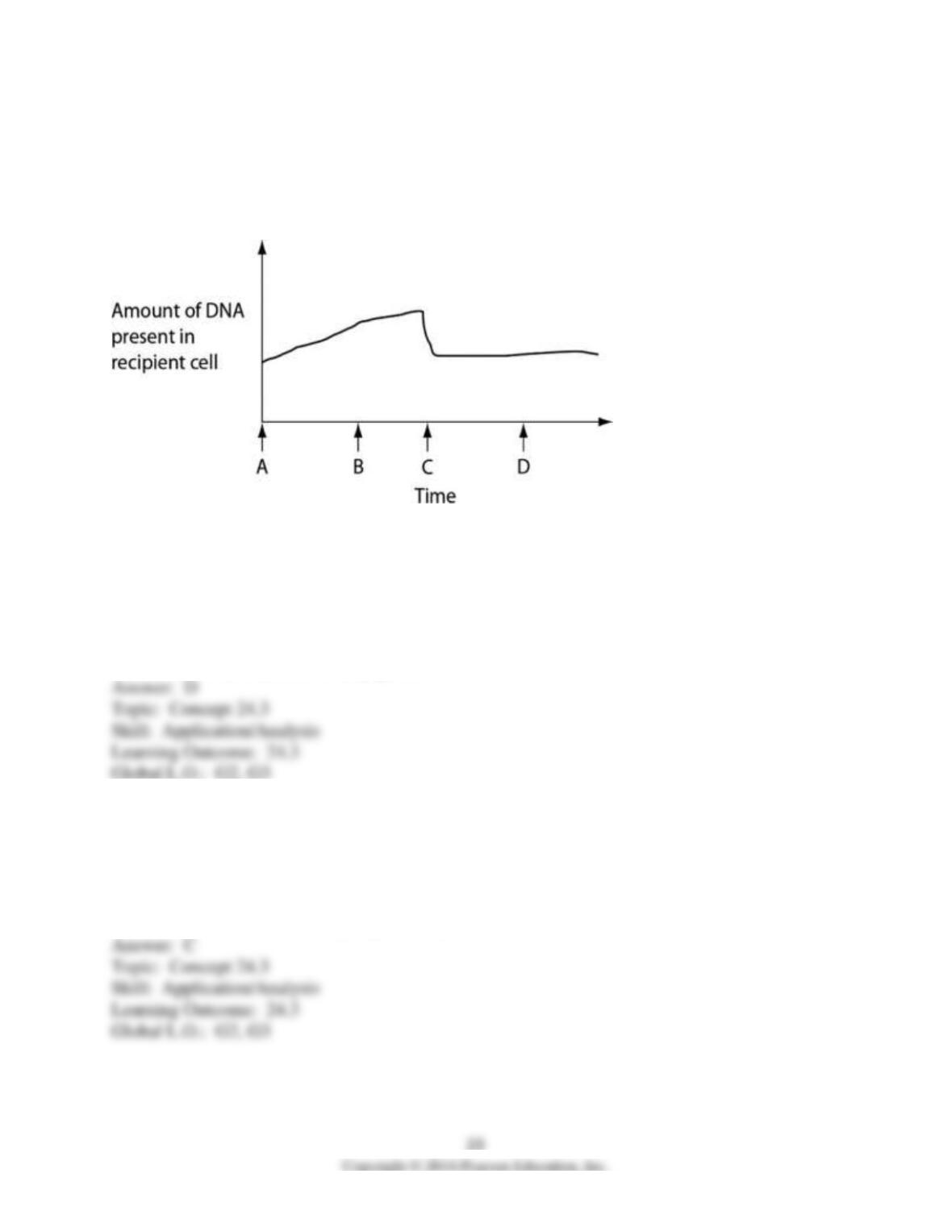
Figure 24.2 depicts changes to the amount of DNA present in a recipient cell that is engaged in
conjugation with an Hfr cell. Hfr cell DNA begins entering the recipient cell at time A. Assume
that reciprocal crossing over occurs (in other words, a fragment of the recipient’s chromosome is
exchanged for a homologous fragment from the Hfr cell’s DNA). Use Figure 24.2 to answer the
following question(s).
Figure 24.2
6) What is occurring at time C that is decreasing the DNA content?
A) crossing over
B) cytokinesis
C) meiosis
D) degradation of DNA that was not retained in the recipient’s chromosome
E) reversal of the direction of conjugation
7) How is the recipient cell different at time D than it was at time A?
A) It has a greater number of genes.
B) It has a greater mass of DNA.
C) It has a different sequence of base pairs.
D) It contains bacteriophage DNA.
E) Its membrane-bound DNA pumps are inactive.

8) Which two processes are responsible for the shape of the curve at time B?
1. transduction
2. entry of single-stranded Hfr DNA
3. rolling circle replication of single-stranded Hfr DNA
4. conjugation
A) 1 and 2
B) 1 and 3
C) 2 and 3
D) 2 and 4
E) 3 and 4
9) During which two times can the recipient accurately be described as “recombinant” due to the
sequence of events portrayed in Figure 24.2?
A) during times C and D
B) during times A and C
C) during times B and C
D) during times A and B
E) during times B and D
10) Which question arising from the results depicted in Figure 24.2 is most interesting from a
genetic perspective and has the greatest potential to increase our knowledge base?
A) If reciprocal crossing over could occur even if the piece of donated Hfr DNA is identical to
the homologous portion of the recipient’s chromosome, what prevents this from occurring?
B) What forces are generally responsible for disrupting the sex pilus?
C) How is it that a recipient cell does not necessarily become an Hfr cell as the result of
conjugation with an Hfr cell?
D) What makes a cell an Hfr cell?
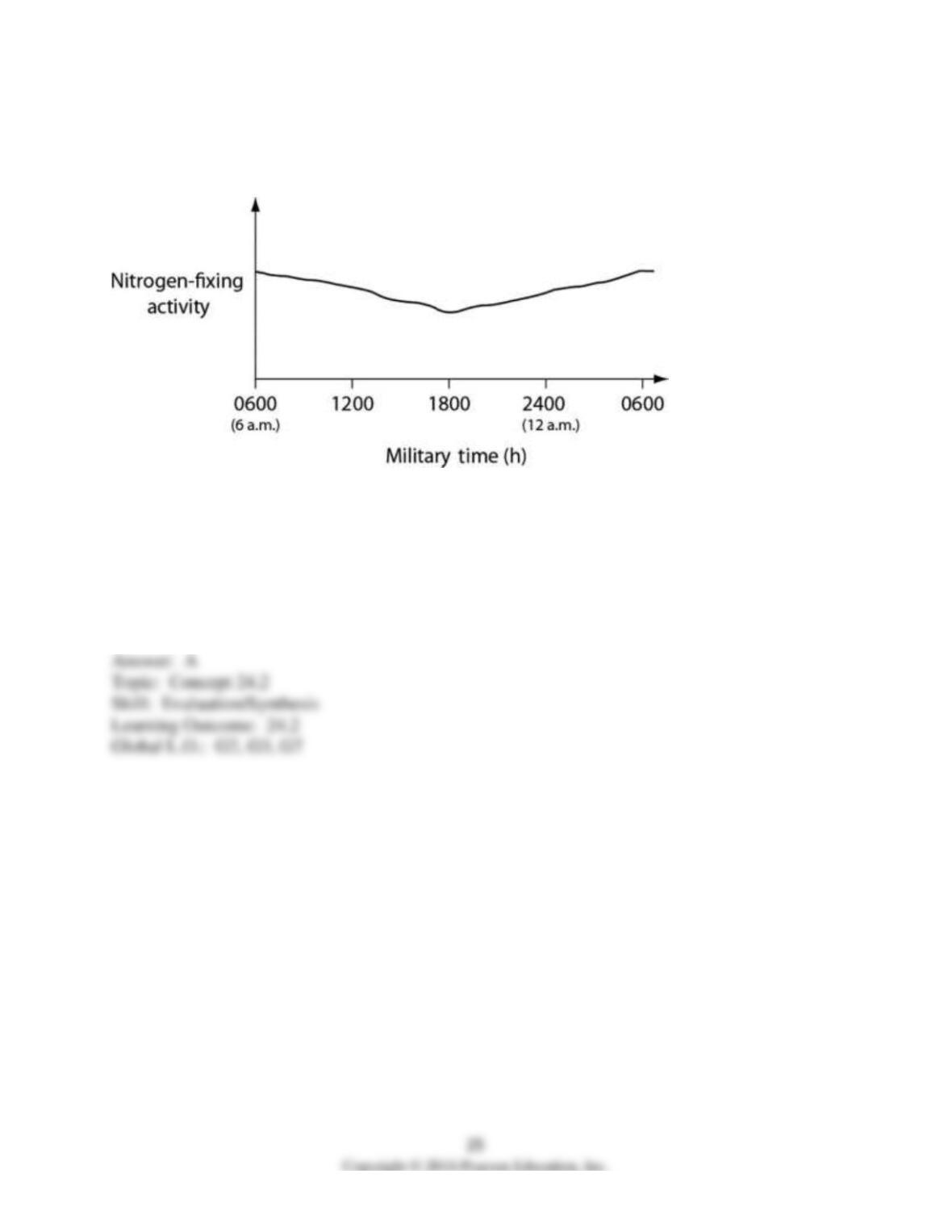
11) Data were collected from the heterocysts of a nitrogen-fixing cyanobacterium inhabiting
equatorial ponds. Study the following figure and choose the most likely explanation for the shape
of the curve.
Figure 24.3
A) Enough O2 enters heterocysts during hours of peak photosynthesis to have a somewhat-
inhibitory effect on nitrogen fixation.
B) Light-dependent reaction rates must be highest between 1800 hours and 0600 hours.
C) Atmospheric N2 levels increase at night because plants are no longer metabolizing this gas, so
they are not absorbing this gas through their stomata.
D) Heterocyst walls become less permeable to N2 influx during darkness.
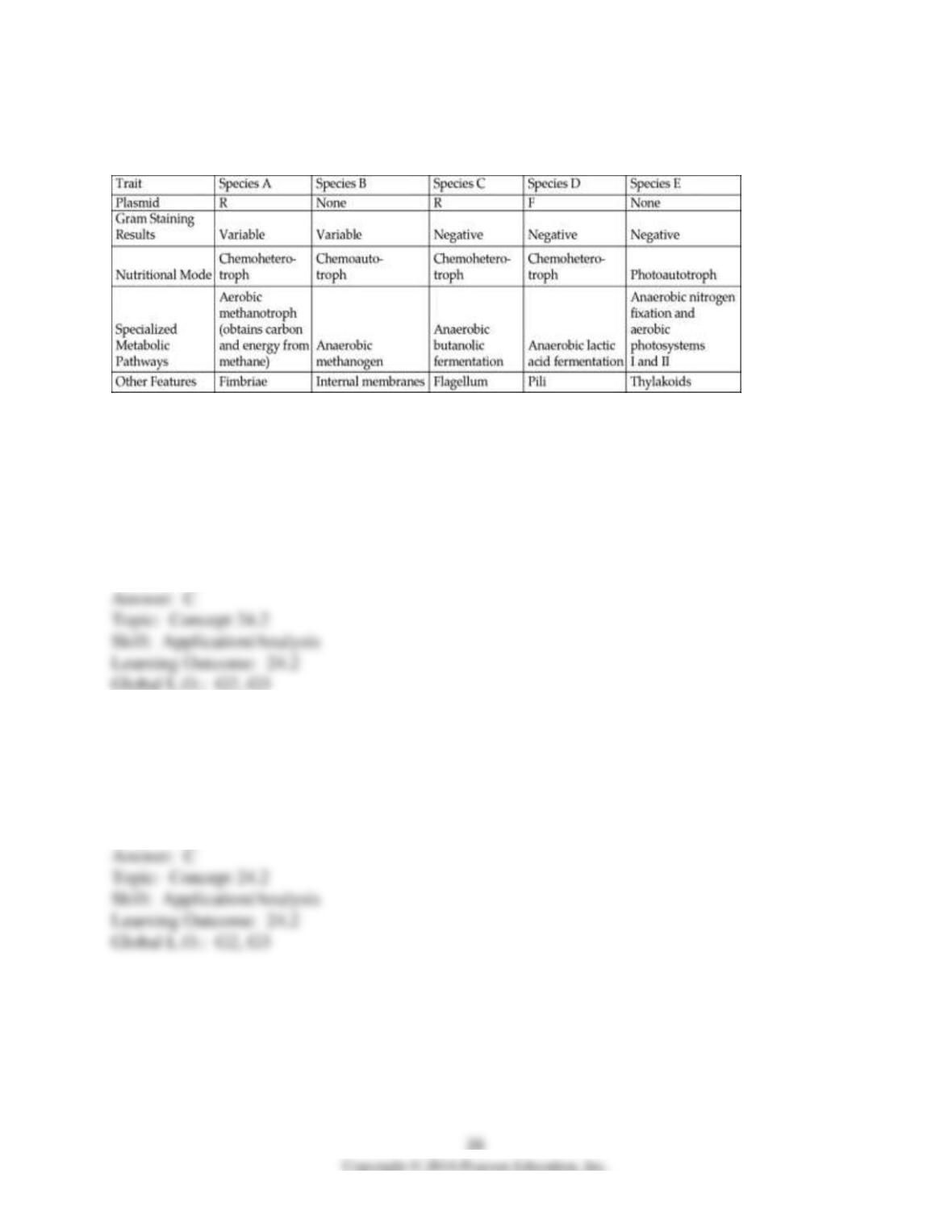
The table depicts characteristics of five prokaryotic species (A-E). Use the information in the
table to answer the following question(s).
Table 24.1
12) Which two species should have much more phospholipid, in the form of bilayers, in their
cytoplasm than most other bacteria?
A) species A and B
B) species A and C
C) species B and E
D) species C and D
E) species C and E
13) Which species should be able to respond most readily to taxes (plural of taxis)?
A) species A
B) species B
C) species C
D) species D
E) species E

14) How many of these species probably have a cell wall that partly consists of an outer
membrane of lipopolysaccharide?
A) only one species
B) two species
C) three species
D) four species
E) all five species
15) Species D is pathogenic if it gains access to the human intestine. Which other species, if it
coinhabited a human intestine along with species D, is most likely to result in a recombinant
species that is both pathogenic and resistant to some antibiotics?
A) species A
B) species B
C) species C
D) species D
E) species E
16) Which species is most self-sustaining in terms of obtaining nutrition in environments
containing little fixed nitrogen or carbon?
A) species A
B) species B
C) species C
D) species D
E) species E

17) Which two species might be expected to cooperate metabolically, perhaps forming a biofilm
wherein one species surrounds cells of the other species?
A) species A and B
B) species A and C
C) species B and E
D) species C and D
E) species C and E
18) Which species is most likely to be found both in sewage treatment plants and in the guts of
cattle?
A) species A
B) species B
C) species C
D) species D
E) species E
19) Which species is probably an important contributor of organic compounds such as sugars,
which are then passed up through aquatic food chains?
A) species A
B) species B
C) species C
D) species D
E) species E
29
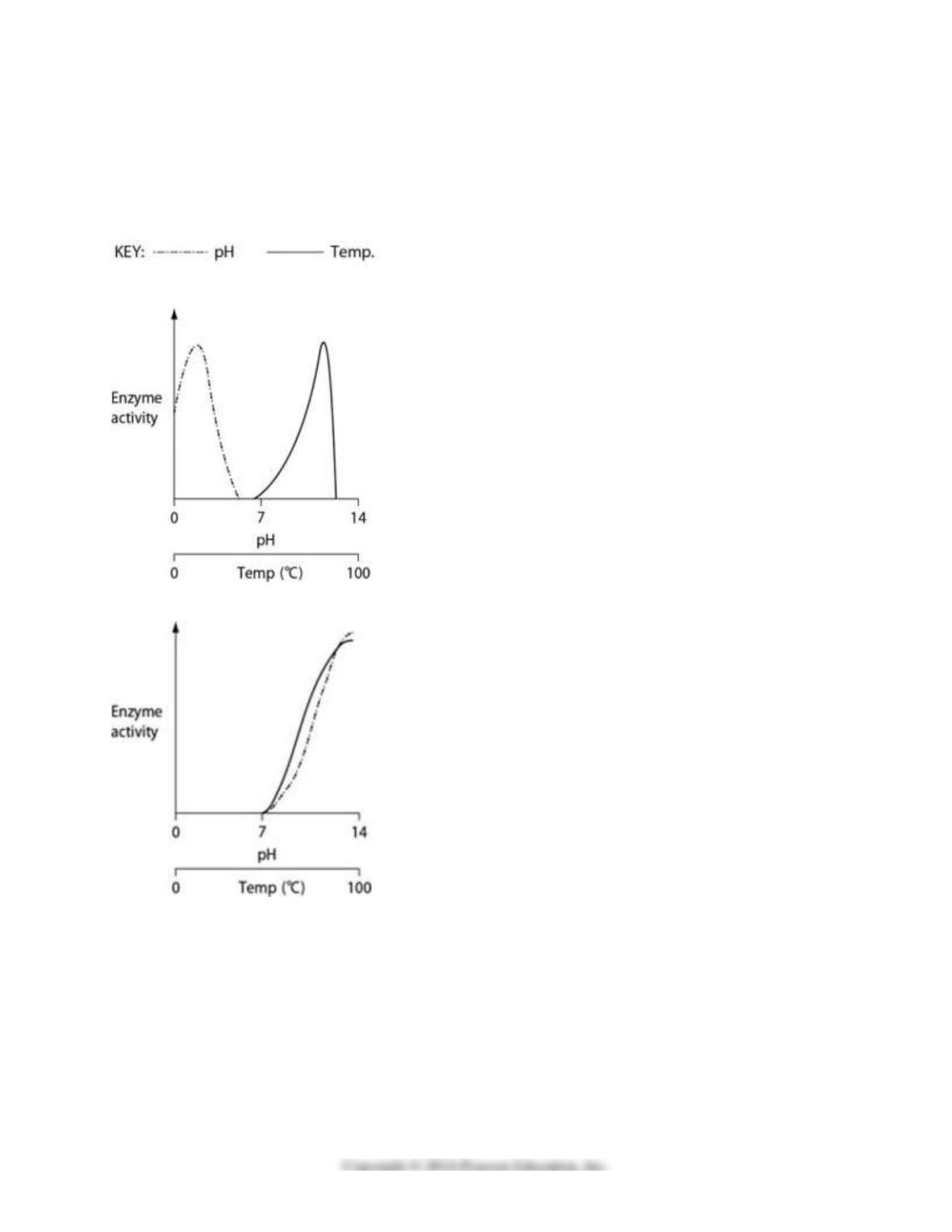
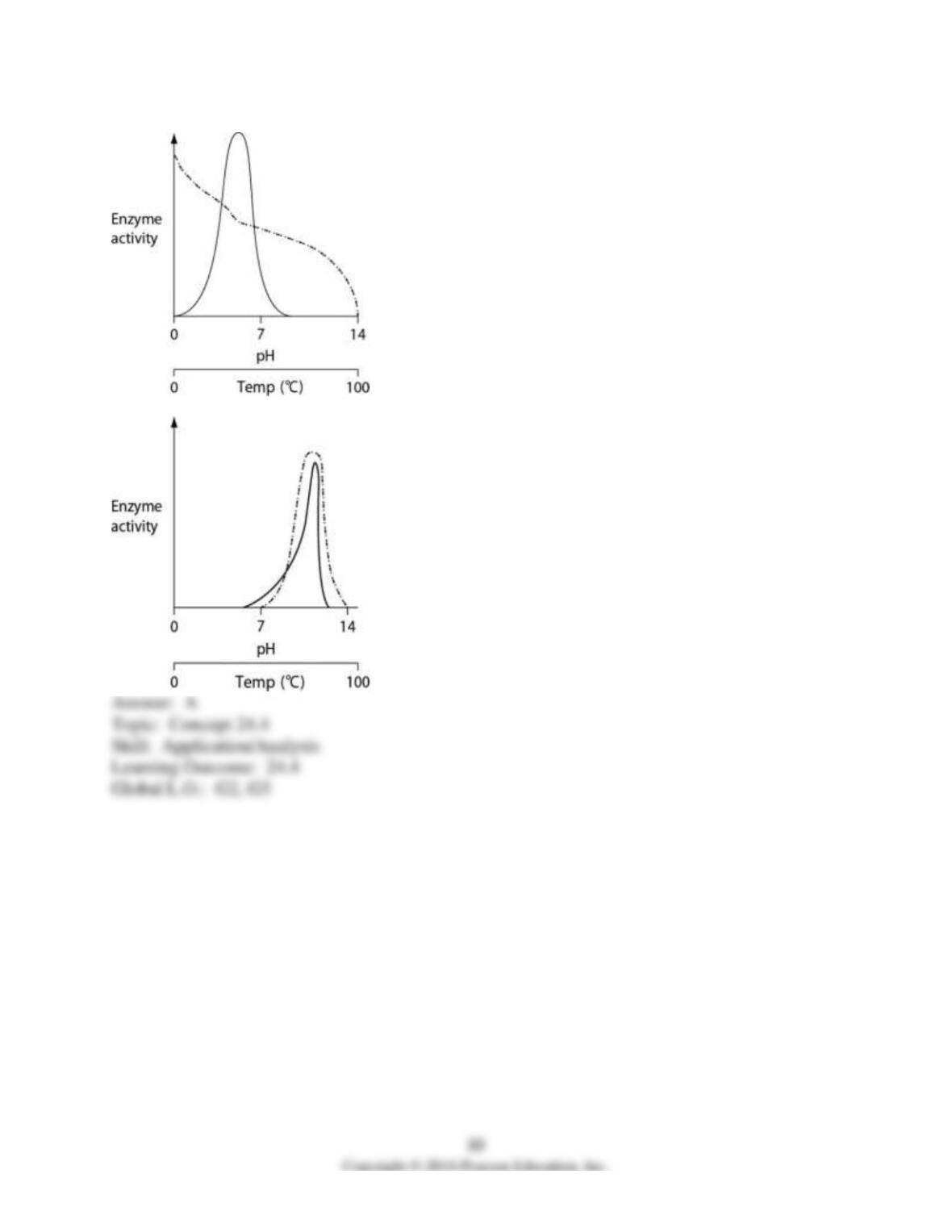
20) Thermoacidophiles are archaeans that are able to successfully live and reproduce in
environments that are acidic, have high sulfur content and temperatures, and have little organic
material. Consider the thermoacidophile Sulfolobus acidocaldarius. Which of the following
graphs most accurately depicts the expected temperature and pH profiles of its enzymes? (Note:
The horizontal axes of these graphs are double, with pH above and temperature below.)
A)
B)
C)
D)

24.3 Scenario Questions
The following question(s) are based on the observation that several dozen different proteins
comprise the prokaryotic flagellum and its attachment to the prokaryotic cell, producing a highly
complex structure.
1) If the complex protein assemblage of the prokaryotic flagellum arose by the same general
processes as those of the complex eyes of molluscs (such as squids and octopi), then
A) natural selection cannot account for the rise of the prokaryotic flagellum.
B) ancestral versions of this protein assemblage were either less functional or had different
functions than modern prokaryotic flagella.
C) scientists should accept the conclusion that neither eyes nor flagella could have arisen by
evolution.
2) Certain proteins of the complex motor that drives bacterial flagella are modified versions of
proteins that had previously belonged to plasma membrane pumps. This evidence supports the
claim that
A) some structures are so complex that natural selection cannot, and will not, explain their
origins.
B) the power of natural selection allows it to act in an almost predictive fashion, producing
organs that will be needed in future environments.
C) the motors of bacterial flagella were originally synthesized abiotically.
D) structures originally adapted for one purpose can take on new functions through descent with
modification.
E) bacteria that possess flagella must have lost the ability to pump certain chemicals across their
plasma membranes.

Please use the following information to answer the question(s) below.
A hypothetical bacterium swims among human intestinal contents until it finds a suitable
location on the intestinal lining. It adheres to the intestinal lining using a feature that also
protects it from bacteriophages and dehydration. Fecal matter from a human in whose intestine
this bacterium lives can spread the bacterium, even after being mixed with water and boiled. The
bacterium is not susceptible to the penicillin family of antibiotics. It contains no plasmids and
relatively little peptidoglycan.
3) This bacterium’s ability to survive in a human who is taking penicillin pills may be due to the
presence of which of the following?
1. penicillin-resistance genes
2. a gram-positive cell wall
3. a gram-negative cell wall
4. an endospore
A) 1 or 4
B) 1 or 3
C) 2 or 4
D) 3 or 4
4) Adherence to the intestinal lining by this bacterium is due to its possession of
A) fimbriae.
B) pili.
C) a capsule.
D) a flagellum.
E) a cell wall with an outer lipopolysaccharide membrane.

5) What should be true of the cell wall of this bacterium?
A) Its innermost layer is composed of a phospholipid bilayer.
B) After it has been subjected to Gram staining, the cell should remain purple.
C) It has an outer membrane of lipopolysaccharide.
D) It is mostly composed of a complex, cross-linked polysaccharide.
E) Two of the responses above are correct.
6) In which feature(s) should one be able to locate a complete chromosome of this bacterium?
1. nucleolus
2. pili
3. endospore
4. nucleoid
A) 4 only
B) 1 and 3
C) 2 and 3
D) 3 and 4
E) 2, 3, and 4
7) The cell also lacks F factors and F plasmids. Which mechanism(s) of genetic recombination
can possibly take place?
1. conjugation
2. transduction
3. transformation
A) 1 only
B) 2 only
C) 3 only
D) 2 and 3

8) This bacterium derives nutrition by digesting human intestinal contents (in other words, food).
Thus, this bacterium should be an
A) aerobic chemoheterotroph.
B) aerobic chemoautotroph.
C) anaerobic chemoheterotroph.
D) anaerobic chemoautotroph.
9) This bacterium derives nutrition by digesting human intestinal contents (in other words, food).
Humans lacking this bacterium have no measurable reproductive advantage or disadvantage
relative to humans who harbor this bacterium. Consequently, the bacterium can be properly
described as which of the following?
1. symbiont
2. endotoxin
3. mutualist
4. commensal
A) 4 only
B) 1 and 2
C) 1 and 4
D) 2 and 3
E) 2 and 4

Please use the following information to answer the question(s) below.
Nitrogenase, the enzyme that catalyzes nitrogen fixation, is inhibited whenever free O2 reaches a
critical concentration. Consequently, nitrogen fixation cannot occur in cells wherein
photosynthesis produces free O2. Consider the colonial aquatic cyanobacterium Anabaena,
whose heterocytes are described as having “a thickened cell wall that restricts entry of O2
produced by neighboring cells. Intracellular connections allow heterocysts to transport fixed
nitrogen to neighboring cells in exchange for carbohydrates.”
10) Given that the enzymes that catalyze nitrogen fixation are inhibited by oxygen, what are two
“strategies” that nitrogen-fixing prokaryotes might use to protect these enzymes from oxygen?
1. package them in membranes that are impermeable to all gases
2. be obligate anaerobes
3. be facultative aerobes
4. package these enzymes in specialized cells or compartments that inhibit oxygen entry
A) 1 and 4
B) 2 and 4
C) 2 and 3
D) 3 and 4

11) Which two of the following questions arise from a careful reading of this quotation and are
most important for understanding how N2 enters heterocysts and how O2 is kept out of
heterocysts?
1. If carbohydrates can enter the heterocysts from neighboring cells via the “intracellular
connections,” how is it that O2 doesn’t also enter via this route?
2. If the cell walls of Anabaena‘s photosynthetic cells are permeable to O2 and CO2, are they
also permeable to N2?
3. If the nuclei of the photosynthetic cells contain the genes that code for nitrogen fixation, how
can these cells fail to perform nitrogen fixation?
4. If the nuclei of the heterocysts contain the genes that code for photosynthesis, how can these
cells fail to perform photosynthesis?
5. If the cell walls of Anabaena‘s heterocysts are permeable to N2, how is it that N2 doesn’t
diffuse out of the heterocysts before it can be fixed?
6. If the thick cell walls of the heterocysts exclude entry of oxygen gas, how is it that they don’t
also exclude the entry of nitrogen gas?
A) 1 and 3
B) 1 and 6
C) 2 and 5
D) 3 and 4
E) 4 and 6
24.4 End-of-Chapter Questions
1) Which of the following steps has not yet been accomplished by scientists studying the origin
of life?
A) synthesis of small RNA polymers by ribozymes
B) abiotic synthesis of polypeptides
C) formation of molecular aggregates with selectively permeable membranes
D) formation of protocells that use DNA to direct the polymerization of amino acids
2) Fossilized stromatolites
A) more than 2.8 billion years old have not been discovered.
B) formed around deep-sea vents.
C) resemble structures formed by bacterial communities that are found today in some shallow
marine bays.
D) provide evidence that photosynthesis was occurring in the oceans by 2.5 billion years ago.
3) Genetic variation in bacterial populations cannot result from
A) meiosis.
B) transformation.
C) transduction.
D) mutation.
4) Photoautotrophs use
A) light as an energy source and methane as a carbon source.
B) light as an energy source and CO2 as a carbon source.
C) H2S as an energy source and CO2 as a carbon source.
D) CO2 as both an energy source and a carbon source.
5) Which of the following statements is not true?
A) Archaea and bacteria have different membrane lipids.
B) The cell walls of archaea lack peptidoglycan.
C) Only bacteria have histones associated with DNA.
D) Only some archaea use CO2 to oxidize H2, releasing methane.
6) Bacteria participate in many ecological interactions. Which role typically does not involve
symbiosis?
A) living as commensalists on the skin of humans
B) providing bioluminescence in fish
C) digesting food as mutualists in animal intestines
D) decomposing dead organisms and organic wastes
7) Plantlike photosynthesis that releases O2 occurs in
A) cyanobacteria.
B) chlamydias.
C) archaea.
D) chemoautotrophic bacteria.