
Campbell Biology in Focus, 2e (Urry)
Chapter 23 Broad Patterns of Evolution
23.1 Multiple-Choice Questions
1) If the half-life of carbon-14 is about 5,730 years, then a fossil that has 1/16th the normal
proportion of carbon-14 to carbon-12 should be about how many years old?
A) 1,400
B) 2,800
C) 11,200
D) 22,900
2) What is true of the fossil record of mammalian origins?
A) It is a good example of punctuated equilibrium.
B) It shows that mammals and birds evolved from the same kind of dinosaur.
C) It includes transitional forms with progressively specialized teeth.
D) It indicates that mammals and dinosaurs did not overlap in geologic time.
3) The first terrestrial organisms probably were considered which of the following?
1. burrowers
2. photosynthetic
3. multicellular
4. prokaryotes
5. eukaryotes
6. plants and their associated fungi
A) 2 and 4
B) 3 and 5
C) 1, 3, and 5
D) 2, 3, and 6
4) The evolution of mammals from early tetrapods
A) is well documented by a series of transitional fossils.
B) involves specialization in teeth.
C) involves changes in the temporal fenestra of the skull.
D) is an example of macroevolution.
5) Which of these planet substances is the richest source of fossils?
A) amber
B) sedimentary rock
C) mud
D) ice
6) Radiometric dating is based on the
A) decay of radioactive isotopes.
B) temperature and pressure of the environment.
C) amount of carbon-12 in an organism at time of death.
D) ratio of carbon-14 to carbon-12.
7) Which event stimulated the rapid development of eukaryotes?
A) extinction of some organisms
B) addition of oxygen to the atmosphere
C) origin of multicellular organisms
D) colonization of land
8) For purposes of differentiation, what is the unique feature of the jaw fossils of nonmammalian
tetrapods?
A) Lower jaw and upper jaws hinge between the same bones.
B) Lower jaw is composed of several bones.
C) There are three bones in the middle ear.
D) Teeth are differentiated for function.
9) Which group of tetrapods had the first examples of specialized teeth?
A) synapsids
B) therapsids
C) early cynodonts
D) later cynodonts
10) The major evolutionary episode corresponding most closely in time with the formation of
Pangaea was the
A) Cambrian explosion.
B) Permian extinctions.
C) Pleistocene ice ages.
D) Cretaceous extinctions.
11) Which effect of continental drift would allow scientists to track the history of life on the
planet?
A) alteration of habitat
B) climate change
C) allopatric speciation
D) change in distribution of extinct animals
12) Which of the following is a biological cause of extinctions?
A) habitat destruction
B) change in environment temperature
C) ocean anoxia
D) origin of new species
13) A difficulty in presenting evidence for a sixth mass extinction is
A) that tropical rain forests harbor many unknown species.
B) that species numbers are declining because of habitat loss.
C) introduction of new species.
D) increased global temperatures.
14) Adaptive radiation
A) reduces the size of prosperous ecological communities.
B) increases extinction rates.
C) allows new species to occupy different habitats.
D) observes trends in the fossil record.
15) Hox genes are a group of related genes
A) that control the body plan of an embryo.
B) that do not effect change in location.
C) that do not effect plant development.
D) that cause snakes to increase limb formation.
16) An organism has a relatively large number of Hox genes in its genome. Which of the
following is true of this organism?
A) These genes are fundamental and are expressed in all cells of the organism.
B) The organism must have multiple paired appendages along the length of its body.
C) The organism has the genetic potential to have a relatively complex anatomy.
D) Most of its Hox genes owe their existence to gene fusion events.
17) A change in the nucleotide sequence of a gene effects function of that gene
A) in cells that express that gene.
B) but is limited to a single cell type.
C) after gene duplication events.
D) resulting in paedomorphosis.
18) Bagworm moth caterpillars feed on evergreens and carry a silken case or bag around with
them in which they eventually pupate. Adult female bagworm moths are larval in appearance;
they lack the wings and other structures of the adult male and instead retain the appearance of a
caterpillar even though they are sexually mature and can lay eggs within the bag. This is a good
example of
A) allometric growth.
B) paedomorphosis.
C) sympatric speciation.
D) adaptive radiation.
19) The loss of ventral spines by modern freshwater sticklebacks is due to natural selection
operating on the phenotypic effects of Pitx1 gene
A) duplication (gain in number).
B) elimination (loss).
C) mutation (change).
D) silencing (loss of expression).
20) Larval flies (maggots) express the Ubx gene in all of their segments and thereby lack
appendages. If this same gene continued to be expressed throughout subsequent developmental
stages, except in the head region, and if the result was a fit, sexually mature organism that still
strongly resembled a maggot, this would be an example of
A) exaptation.
B) homochrony.
C) paedomorphosis.
D) adaptive radiation.
21) One explanation for the evolution of insect wings suggests that wings began as lateral
extensions of the body that were used as heat dissipaters for thermoregulation. When they had
become sufficiently large, these extensions became useful for gliding through the air, and
selection later refined them as flight-producing wings. If this hypothesis is correct, modern insect
wings could best be described as
A) adaptations.
B) mutations.
C) exaptations.
D) isolating mechanisms.
22) Many species of snakes lay eggs. However, in the forests of northern Minnesota where
growing seasons are short, only live-bearing snake species are present. This trend toward species
that perform live birth in a particular environment is an example of
A) natural selection.
B) sexual selection.
C) species selection.
D) goal direction in evolution.
23) In the 5 to 7 million years that the hominid lineage has been diverging from its common
ancestor with the great apes, dozens of hominid species have arisen, often with several species
coexisting in time and space. As recently as 30,000 years ago, Homo sapiens coexisted with
Homo neanderthalensis. Both species had large brains and advanced intellects. The fact that
these traits were common to both species is most easily explained by which of the following?
A) species selection
B) uniformitarianism
C) sexual selection
D) convergent evolution
24) The existence of evolutionary trends, such as increasing body sizes among horse species, is
evidence that
A) a larger volume-to-surface area ratio is beneficial to all mammals.
B) an unseen guiding force is at work.
C) evolution always tends toward increased complexity or increased size.
D) in particular environments, similar adaptations can be beneficial in more than one species.
25) Exaptations
A) imply that a structure evolves in anticipation of use.
B) evolve in one environment but are used for another function.
C) process new forms by modifying existing forms.
D) trend toward larger body size.
23.2 Art Questions
Please use the following information to answer the question(s) below.
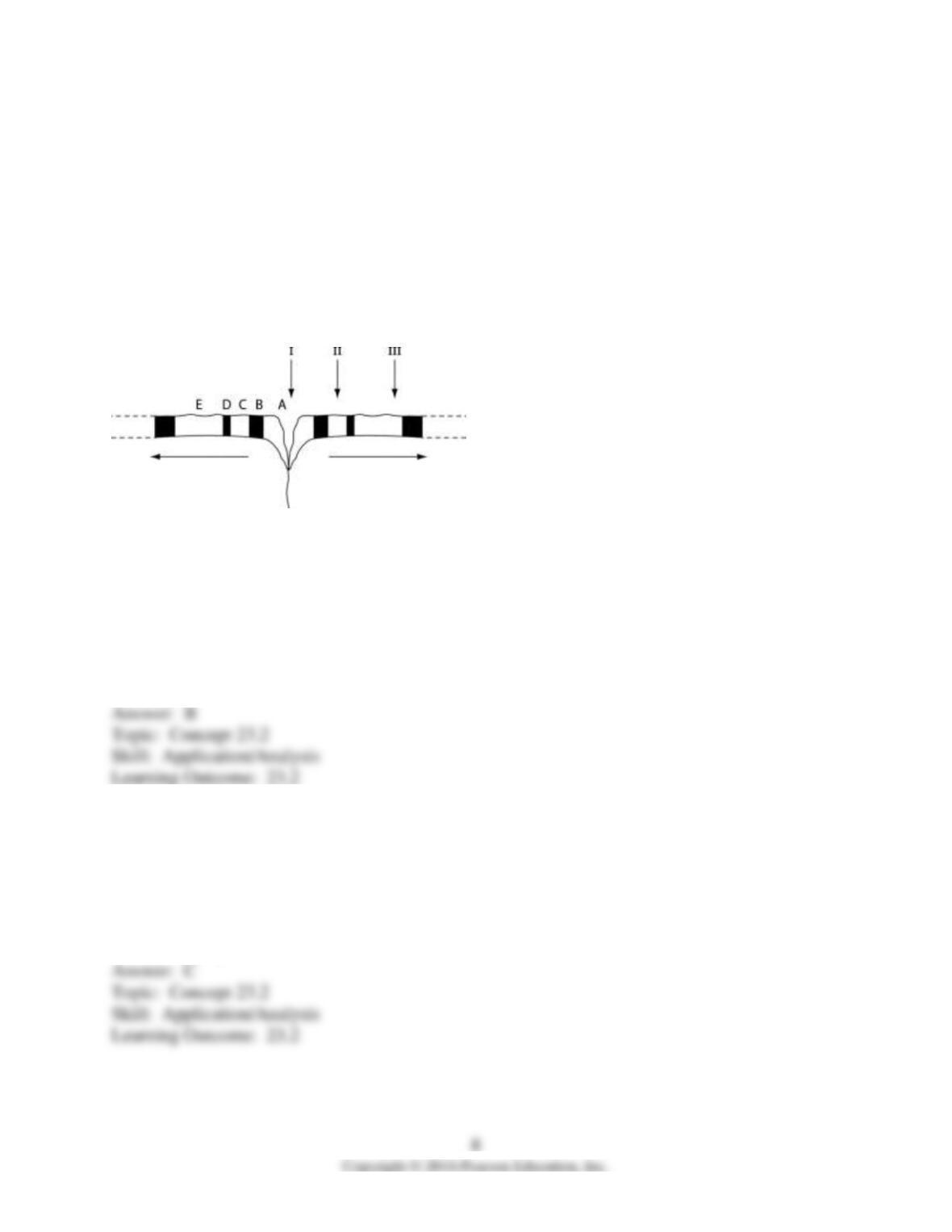
Figure 23.1 represents a cross section of the seafloor through a mid-ocean rift valley, with
alternating patches of black and white indicating seafloor with reversed magnetic polarities. At
the arrow labeled I (the rift valley), the igneous rock of the seafloor is so young that it can be
accurately dated using carbon-14 dating. At the arrow labeled III, however, the igneous rock is
about 1 million years old, and potassium-40 dating is typically used to date such rocks. Note:
The horizontal arrows indicate the direction of seafloor spreading, away from the rift valley.
Figure 23.1
1) If a particular marine organism is fossilized in the sediments immediately overlying the
igneous rock at the arrow labeled II, at which other location(s), labeled A-E, would a search be
most likely to find more fossils of this organism?
A) B only
B) C only
C) D only
D) B and C
2) Assuming that the rate of seafloor spreading was constant during the 1-million-year period
depicted in Figure 23.1, what should be the approximate age of marine fossils found in
undisturbed sedimentary rock immediately overlying the igneous rock at the arrow labeled II?
A) 10,000 years
B) 250,000 years
C) 500,000 years
D) 1,000,000 years
3)
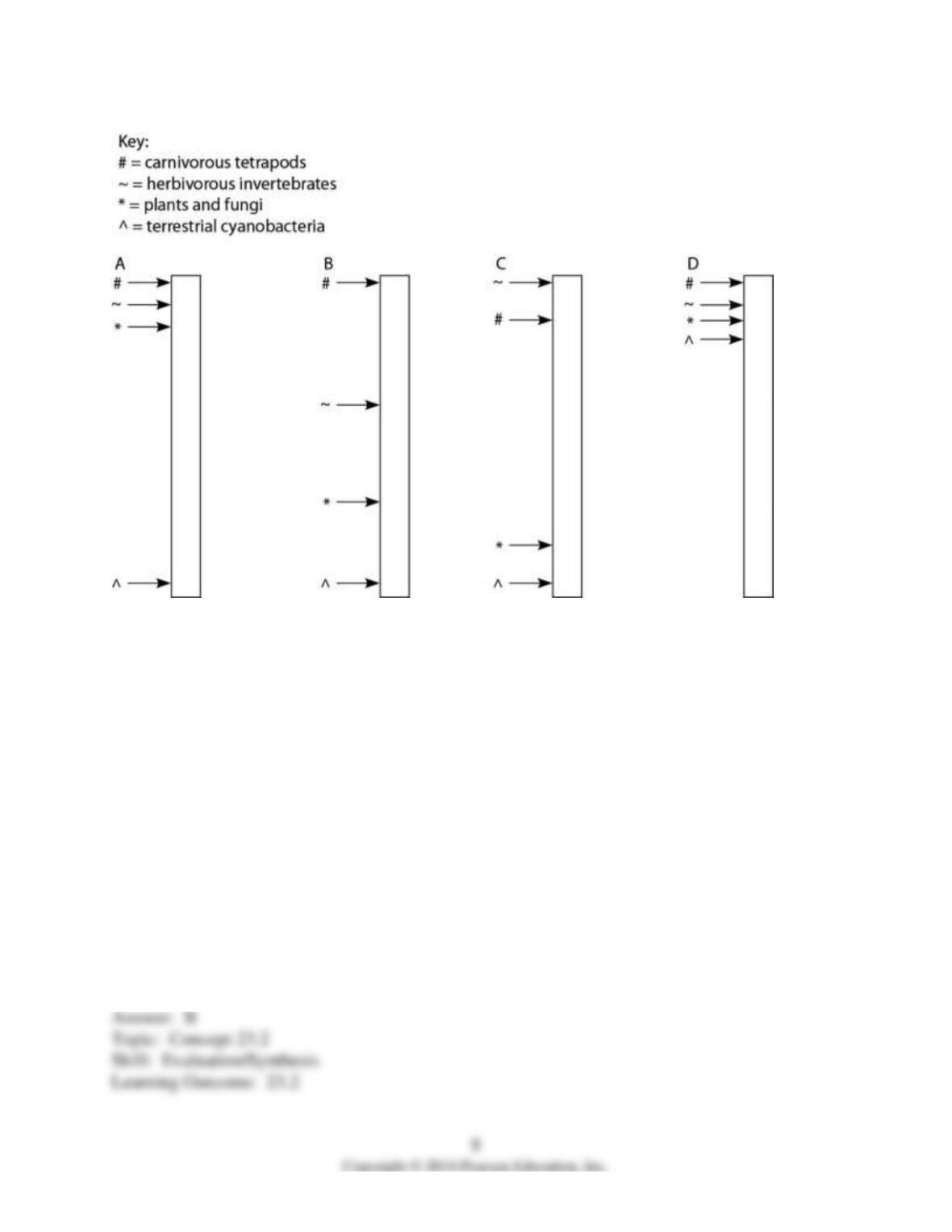
Figure 23.2
A sediment core is removed from the floor of an inland sea. The sea has been in existence, off
and on, throughout the entire time that terrestrial life has existed. Researchers wish to locate and
study the terrestrial organisms fossilized in this core. The core is illustrated in Figure 23.2 as a
vertical column, with the top of the column representing the most recent strata and the bottom
representing the time when land was first colonized by life. Assuming the existence of fossilized
markers for each of the following chemicals, what is the sequence in which they should be found
in this sediment core, working from ancient sediments to recent sediments?
1. chitin coupled with protein
2. chlorophyll
3. bone
4. cellulose
A) 2, 4, 3, 1
B) 2, 4, 1, 3
C) 4, 2, 1, 3
D) 4, 2, 3, 1
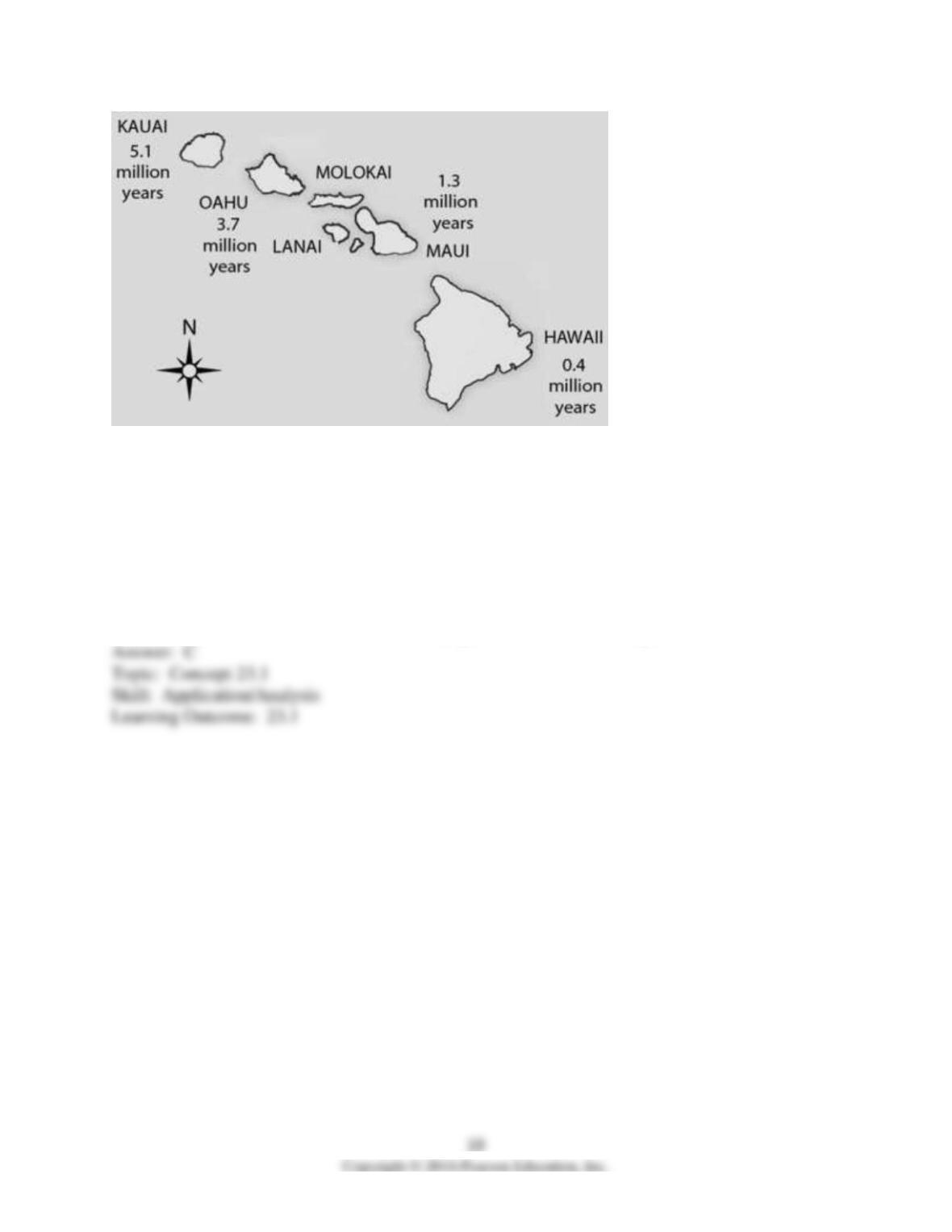
Figure 23.3
4) Hawaii is the most southeastern of the seven islands and is also closest to the seafloor
spreading center from which the Pacific plate originates, which lies about 5,600 km farther to the
southeast. Assuming equal sedimentation rates, what should be the location of the thickest
sediment layer and, thus, the area with the greatest diversity of fossils above the oceanic crust?
A) between the island of Hawaii and the seafloor spreading center
B) around the base of the island of Hawaii
C) around the base of Kauai, the oldest of the Hawaiian Islands
D) where the islands are most concentrated (highest number of islands per unit surface area)
5) According to the theory of seafloor spreading, oceanic islands, such as the Hawaiian Islands
depicted in Figure 23.3, form as oceanic crustal plates move over a stationary “hot spot” in the
mantle. Currently, the big island of Hawaii is thought to be over a hot spot, which is why it is the
only one of the seven islands that has active volcanoes. What should be true of the island of
Hawaii?
1. Scientists in search of ongoing speciation events are more likely to find them there than on the
other six islands.
2. Its species should be more closely related to those of nearer islands than to those of farther
islands.
3. It should have a rich fossil record of terrestrial organisms.
4. There is a good chance of finding endemic species on this island.
5. On average, it should have fewer species per unit surface area than the other six islands.
A) 1, 2, and 3
B) 1, 2, and 5
C) 1, 2, 3, and 4
D) 1, 2, 4, and 5
6) Upon being formed, oceanic islands, such as the Hawaiian Islands, should feature what
characteristic, leading to which phenomenon?
A) mass extinctions, leading to bottleneck effect
B) major evolutionary innovations, leading to rafting to nearby continents
C) a variety of empty ecological niches, leading to adaptive radiation
D) adaptive radiation, leading to founder effect
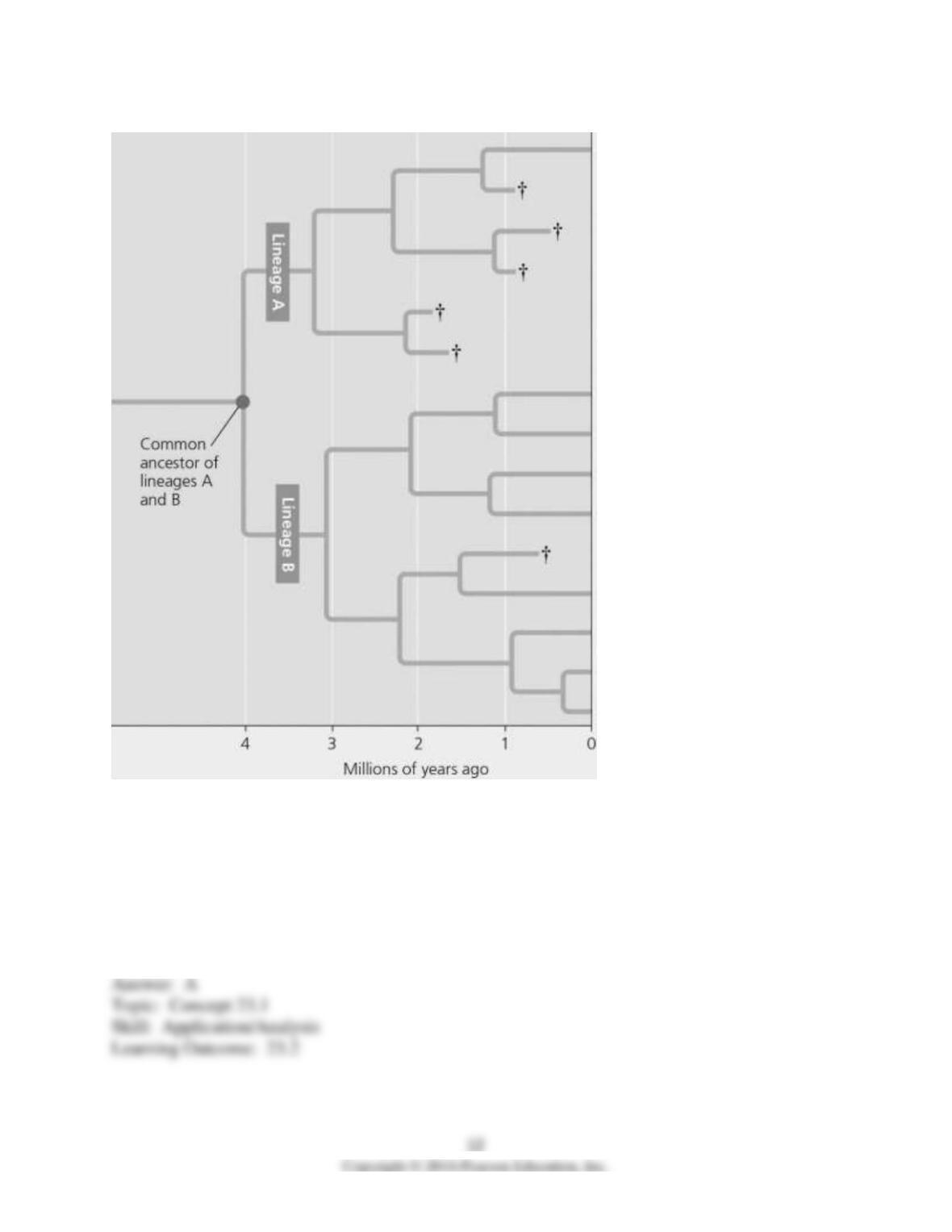
7)
Figure 23.4
This evolutionary tree shows the influence of speciation and extinction on the diversity of life.
After 2 million years lineage A had a(n) ________ rate of speciation and ________ extinction
rates compared to lineage B.
A) higher; lower
B) lower; higher
C) increased; decreased
D) improved; enhanced
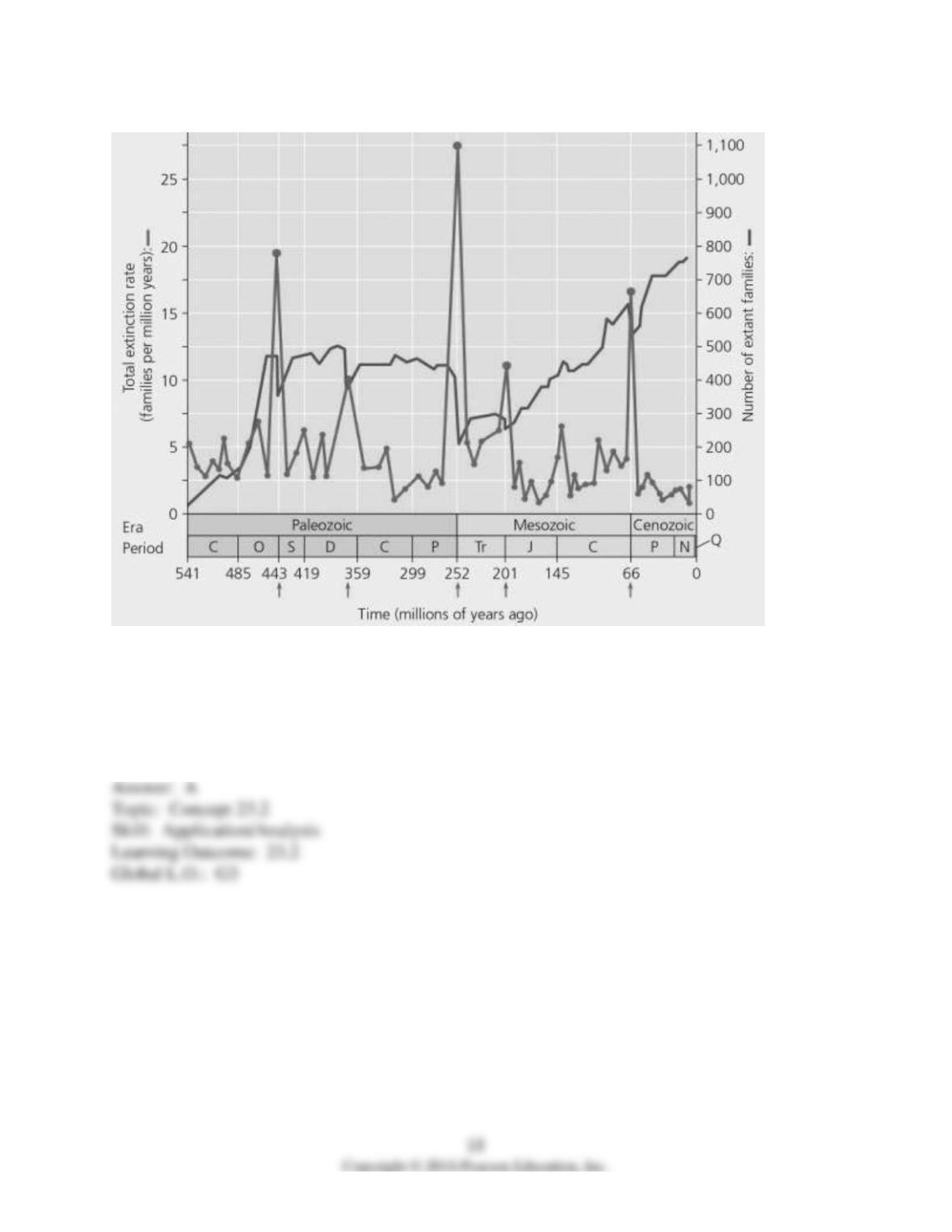
8)
Figure 23.5
Which period had the greatest rate of extinction?
A) Permian
B) Cretaceous
C) Devonian
D) Cambrian
23.3 Scenario Questions
The following question(s) refer to this hypothetical situation.
A female fly, full of fertilized eggs, is swept by high winds to an island far out to sea. She is the
first fly to arrive on this island and the only fly to arrive in this way. Thousands of years later,
her numerous offspring occupy the island, but none of them resembles her. There are, instead,
several species, each of which eats only a certain type of food. None of the species can fly, for
their flight wings are absent, and their balancing organs (in other words, halteres) are now used
in courtship displays. The male members of each species bear modified halteres that are unique
in appearance to their species. Females bear vestigial halteres. The ranges of all of the daughter
species overlap.
1) If these fly species lost the ability to fly independently of each other as a result of separate
mutation events in each lineage, then the flightless condition in these species could be an
example of
A) adaptive radiation.
B) species selection.
C) sexual selection.
D) allometric growth.
2) Which of these fly organs, as they exist in current fly populations, best fits the description of
an exaptation?
A) wings
B) balancing organs
C) mouthparts
D) thoraxes
E) walking appendages
Please use the following information to answer the question(s) below.
All animals with eyes or eyespots that have been studied so far share a gene in common. When
mutated, the gene Pax–6 causes lack of eyes in fruit flies, tiny eyes in mice, and missing irises
(and other eye parts) in humans. The sequence of Pax-6 in humans and mice is identical. There
are so few sequence differences with fruit fly Pax-6 that the human/mouse version can cause eye
formation in eyeless fruit flies, even though vertebrates and invertebrates last shared a common
ancestor more than 500 million years ago.
3) Fruit fly eyes are of the compound type, which is structurally very different from the camera–
type eyes of mammals. Even the camera-type eyes of molluscs, such as octopi, are structurally
quite different from those of mammals. Yet, fruit flies, octopi, and mammals possess very similar
versions of Pax-6. The fact that the same gene helps produce very different types of eyes is most
likely due to
A) the few differences in nucleotide sequence among the Pax-6 genes of these organisms.
B) variations in the number of Pax-6 genes among these organisms.
C) the independent evolution of this gene at many different times during animal evolution.
D) differences in the control of Pax-6 expression among these organisms.
4) Pax-6 usually causes the production of a type of light-receptor pigment. In vertebrate eyes,
though, a different gene (the rh gene family) is responsible for the light-receptor pigments of the
retina. The rh gene, like Pax-6, is ancient. In the marine ragworm, for example, the rh gene
causes production of c-opsin, which helps regulate the worm’s biological clock. Which of these
most likely accounts for vertebrate vision?
A) The Pax-6 gene mutated to become the rh gene among early mammals.
B) During vertebrate evolution, the rh gene for biological clock opsin was co-opted as a gene for
visual receptor pigments.
C) In animals more ancient than ragworms, the rh gene(s) coded for visual receptor pigments; in
lineages more recent than ragworms, rh has flip-flopped several times between producing
biological clock opsins and visual receptor pigments.
D) Pax-6 was lost from the mammalian genome and replaced by the rh gene much later.

5) The appearance of Pax-6 in all animals with eyes can be explained in multiple ways. Based on
the information given, which explanation is most likely?
A) Pax-6 in all of these animals is not homologous; it arose independently in many different
animal phyla due to intense selective pressure favoring vision.
B) The Pax-6 gene is really not one gene. It is many different genes that, over evolutionary time
and due to convergence, have come to have a similar nucleotide sequence and function.
C) The Pax-6 gene was an innovation of an ancestral animal of the early Cambrian period.
Animals with eyes or eyespots are descendants of this ancestor.
D) The perfectly designed Pax-6 gene appeared instantaneously in all animals created to have
eyes or eyespots.
6) An improved method of radiometric dating, which filtered out contaminants, showed that
most Neanderthal bones in Europe are older than suggested by earlier dating. This new dating
suggests that Neanderthals’ time on the planet did not overlap with modern humans. Radiocarbon
dating depends on measuring the radioactive isotopes of carbon-14.
Which of the following statements supports the null hypothesis that modern humans and
Neanderthals did not occupy the same sites at the same time?
A) The Neanderthal fossils were older than originally dated because very little carbon-14
remained in filtered specimens.
B) Small amounts of contaminating carbon-14 can make a sample seem much older.
C) The amount of carbon in an organism’s body increases after death.
D) Re-dating Neanderthal sites across Europe shows evidence for extensive interbreeding
between Neanderthals and modern humans.
7) Scientists, looking at the range of beak shapes and sizes across different finch species,
observed that the thicker beak expressed a gene known as BMP4 early in development. To verify
that the BMP4 gene itself could trigger the growth of bigger beaks, researchers increased the
production of BMP4 in the developing beaks of chicken embryos. Which of the following results
would explain why BMP4-treated chicks began growing wider, taller beaks?
A) Change to the genome induces radical changes in form.
B) New genes arise every time a new species arises.
C) Development cannot change morphology.
D) BMP4 is a homeotic gene.
23.4 End-of-Chapter Questions
1) Which factor most likely caused animals and plants in India to differ greatly from species in
nearby Southeast Asia?
A) The species became separated by convergent evolution.
B) The climates of the two regions are similar.
C) India is in the process of separating from the rest of Asia.
D) India was a separate continent until 45 million years ago.
2) Adaptive radiations can be a direct consequence of four of the following five factors. Select
the exception.
A) vacant ecological niches
B) genetic drift
C) colonization of an isolated region that contains suitable habitat and few competitor species
D) evolutionary innovation
3) A researcher discovers a fossil of what appears to be one of the oldest-known multicellular
organisms. The researcher could estimate the age of this fossil based on
A) the amount of uranium-238 in the fossil.
B) the amount of carbon-14 in the fossil.
C) the amount of uranium-238 in volcanic layers surrounding the fossil.
D) the amount of carbon-14 in volcanic layers surrounding the fossil.
4) A genetic change that caused a certain Hox gene to be expressed along the tip of a vertebrate
limb bud instead of farther back helped make possible the evolution of the tetrapod limb. This
type of change is illustrative of
A) the influence of environment on development.
B) paedomorphosis.
C) a change in a developmental gene or in its regulation that altered the spatial organization of
body parts.
D) heterochrony.

5) A swim bladder is a gas-filled sac that helps fish maintain buoyancy. The evolution of the
swim bladder from the air-breathing organ (a simple lung) of an ancestral fish is an example of
A) exaptation.
B) changes in Hox gene expression.
C) paedomorphosis.
D) adaptive radiation.