40) Anorexia and bulimia ________.
A) occur when the body does not receive enough vitamin C
B) occur when there is a protein-deficient diet
C) occur mainly in affluent countries where thinness is idealized
D) occur when a person does not obtain all the essential amino acids
41) Modern humans possess the same craving for ________ and ________ as our ancestors,
despite the obesity these cravings can cause today.
A) fat … sugar
B) sugar … salt
C) protein … vitamin C
D) iron; iodine
22.2 Art Questions
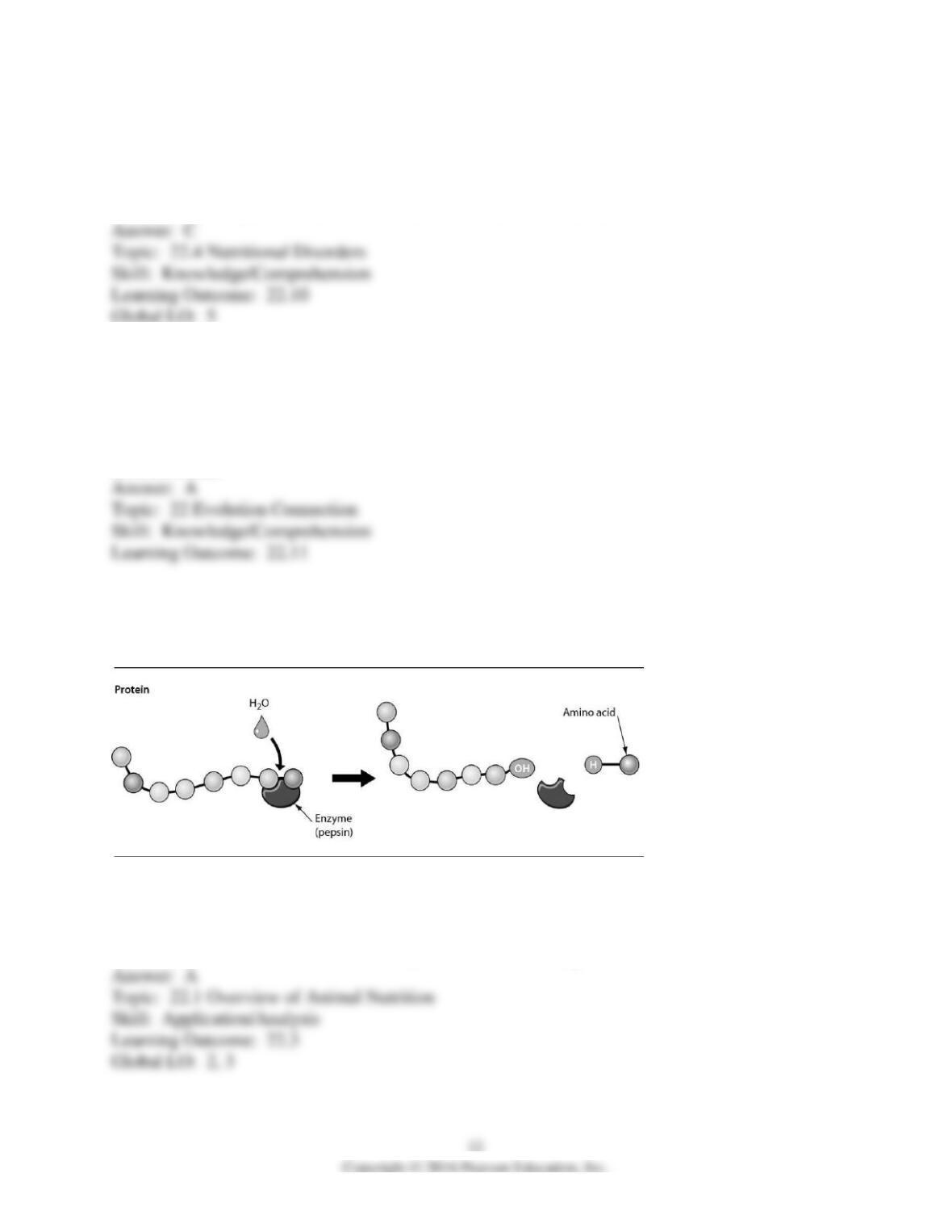
1) The figure below shows ________.
A) the chemical digestion of a protein
B) the building of a protein by the enzyme pepsin
C) the mechanical digestion of a protein
D) the addition of a water molecule to add an amino acid to a protein
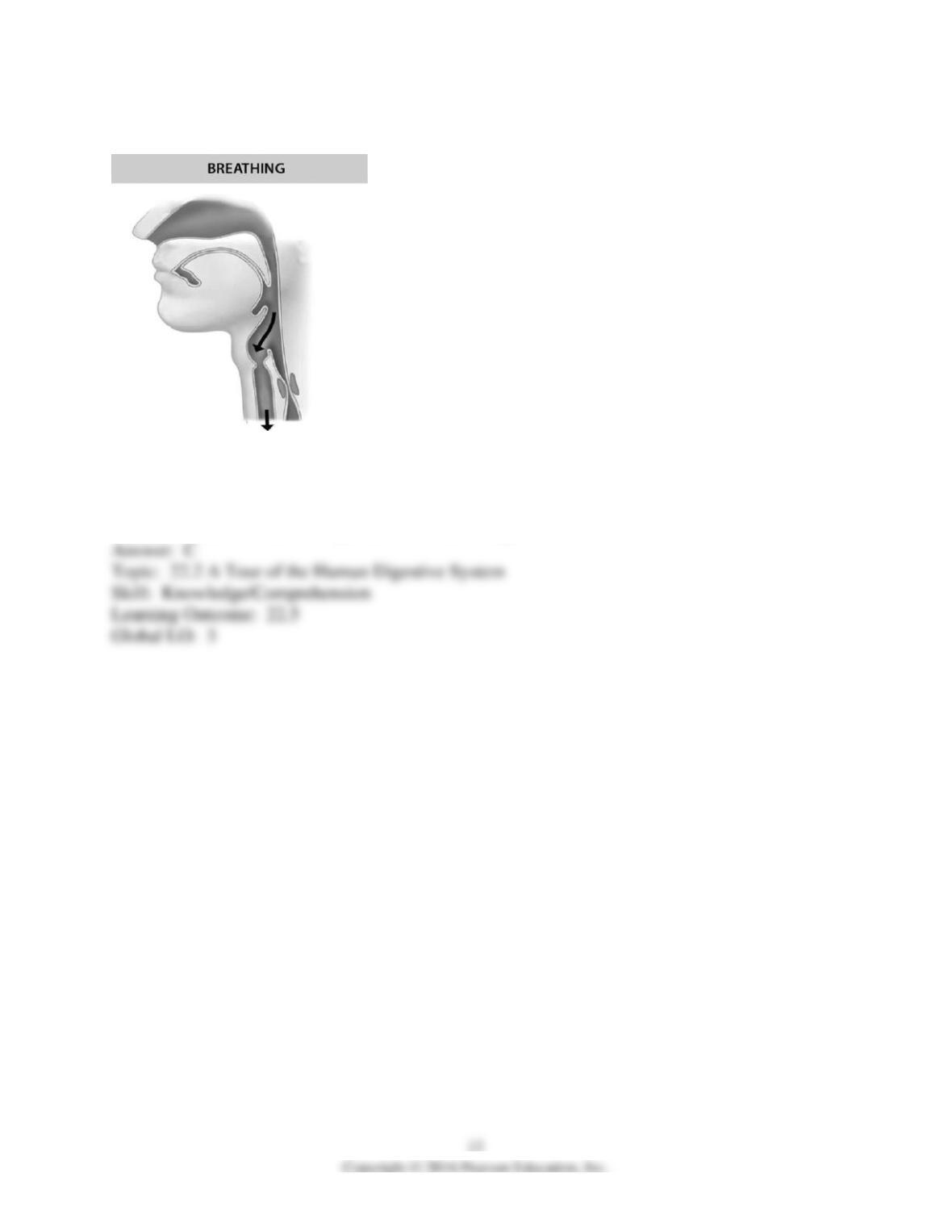
2) The figure below shows that ________.
A) peristalsis moves food down the esophagus
B) air cannot get into the trachea when the epiglottis closes the trachea
C) the trachea is open when you are not swallowing
D) the trachea is closed when you are not swallowing
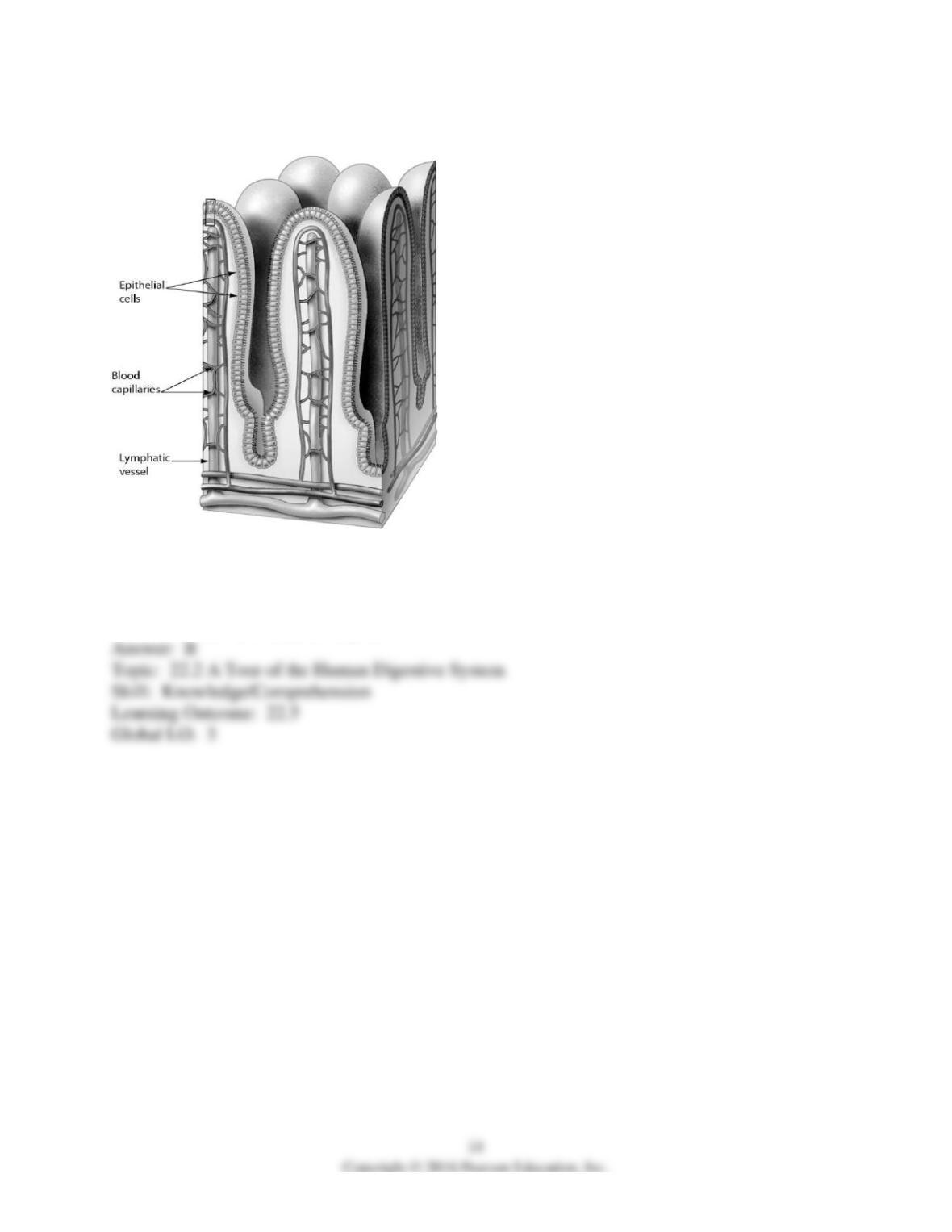
3) The function of the structure shown below is ________.
A) to digest proteins
B) to absorb nutrients into the body
C) to aid in mechanical digestion of food
D) to break fats into smaller droplets
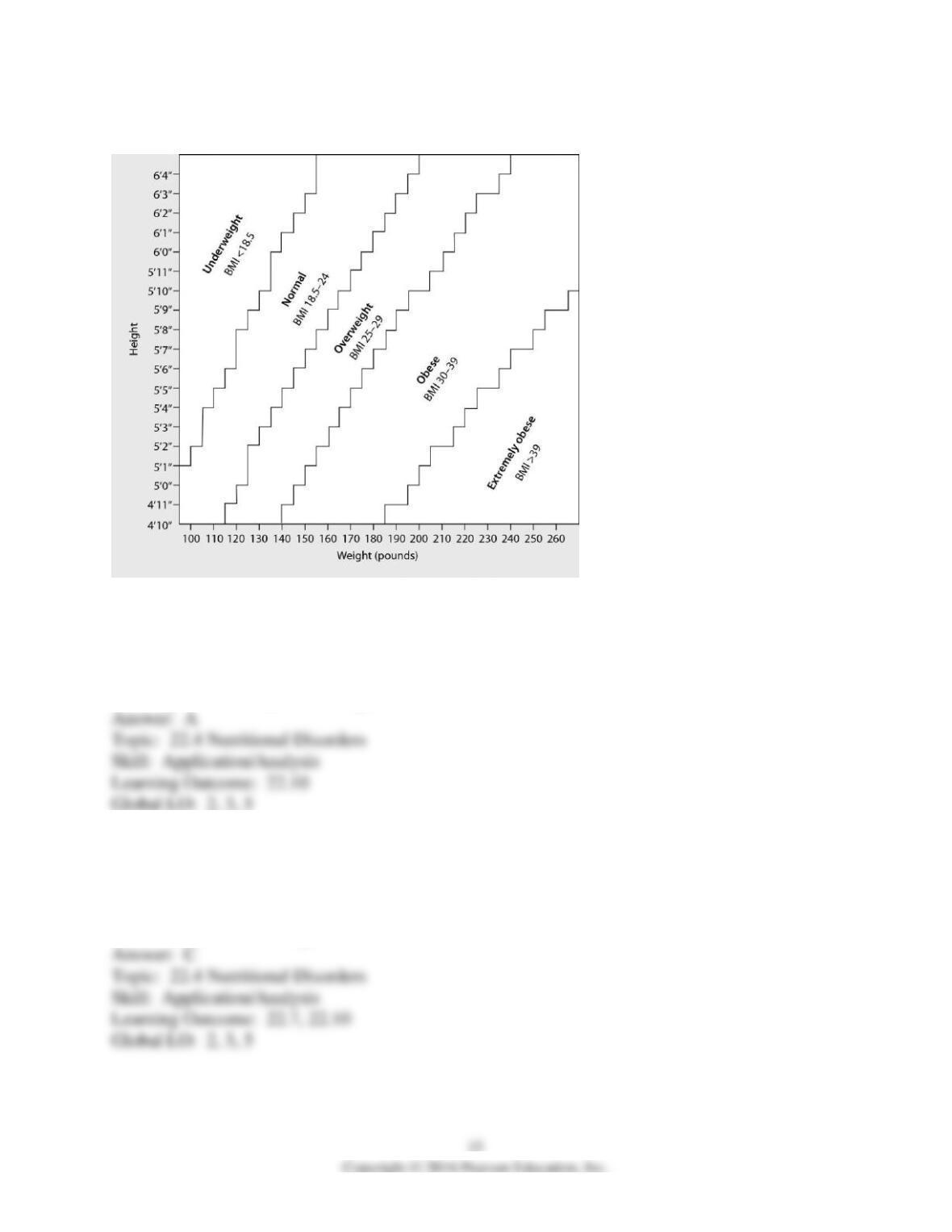
Please refer to the following art to answer the following questions.
4) A person with a BMI of 27 would be described as ________.
A) overweight
B) normal weight
C) underweight
D) It depends on the person’s height.
5) Which of the following people is shifting from an unhealthy category to a healthy category?
A) A 120 lb, 5’5″ male loses 15 lbs.
B) A 160 lb, 5’10” female loses 5 lbs.
C) A 180 lb, 5’10” male loses 20 lbs.
D) A 130 lb, 5’0″ female gains 10 lbs.
6) Regarding the amount of energy consumed versus used, what would you recommend to a
person who has a BMI of 27 to change to a normal BMI?
A) Take in more calories by eating than are burned by physical activity.
B) Burn more calories by physical activity than are taken in by eating.
C) Take in the same amount of calories by eating compared to that which is burned by physical
activity.
D) Weight gain is not related to the amount of calories taken in compared to that burned by
physical activity.
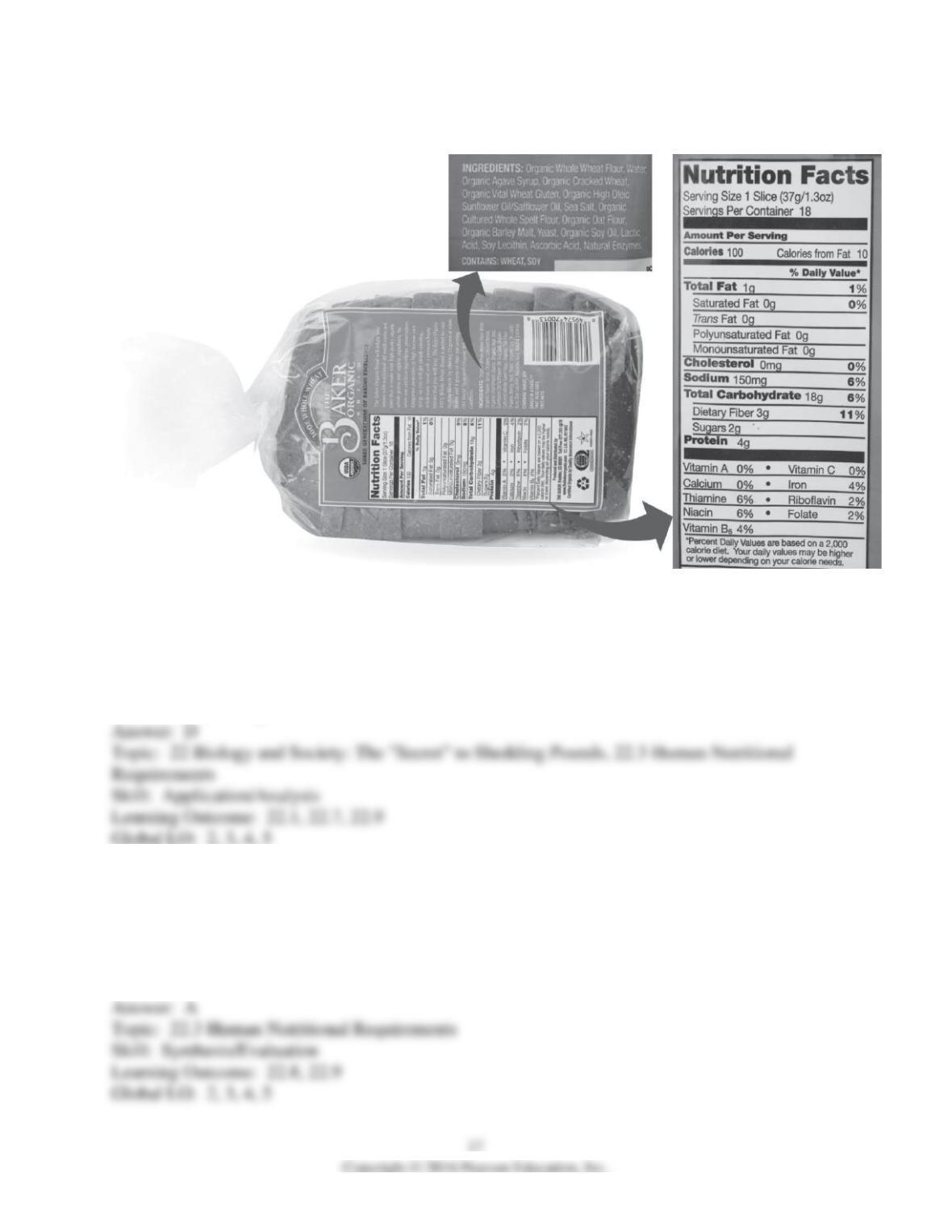
Examine the FDA label for the loaf of Baker Organic Bread and answer the following questions.
7) A person who is trying to lose weight eats four servings of bread. Which of the following
activities would burn more total Calories than is consumed in those four servings?
A) an hour of leisurely biking (<10 mph), 292 Calories
B) an hour of canoeing, 256 Calories
C) an hour of resistance (weight) training, 365 Calories
D) an hour of hiking, 438 Calories
8) How many servings of bread would an average person have to eat in order to get the FDA
Daily Value of the water-soluble vitamin needed for reducing the risk of birth defects?
A) 50
B) 25
C) 17
D) Bread does not contain this vitamin.
9) How many loaves of bread would an average person need to eat in order to get the FDA Daily
Value of the vitamin needed to prevent photophobia?
A) 0.9
B) 1.4
C) 2.8
D) Bread does not contain this vitamin
10) Which of the following ingredients of the bread pictured would prevent beriberi?
A) ascorbic acid
B) sea salt
C) sunflower oil
D) whole wheat (whole grain) flour
22.3 Scenario Questions
Use the following information to answer the following questions.
Several years ago, scientists discovered a mutation in zebrafish larvae that prevented the
absorption of lipids from dietary fat. Larvae carrying this mutation died shortly after they
hatched because all cells need fat to carry out their normal functions. More recent studies have
determined that the mutation leading to this disorder occurs in a single gene on chromosome 10.
When a normal gene is inserted into embryos carrying the mutation, these fish are able to process
fats normally when they hatch. To discover more about the gene’s function, researchers
examined and compared cells from normal and mutant fish larvae under a microscope. A major
difference was noticed in the intestinal cells. The Golgi apparatus in the intestinal cells of mutant
larvae is much larger than those of normal larvae. As the Golgi apparatus processes fats and
proteins, the lipids become trapped, resulting in the abnormally large size of the organelle.
1) Assuming that the digestive system of zebrafish works like that of a human, what substance
do zebrafish need to make fats more easily digested by enzymes?
A) chyme
B) bile
C) lipase
D) pepsin
2) Assuming that the digestive system of zebrafish works like that of a human, which portion of
the digestive tract is specialized for absorption of the nutrients?
A) stomach
B) small intestine
C) large intestine
D) pharynx
Use the following information to answer the following questions.
There are many diseases of the digestive system. Sjögren’s syndrome is an autoimmune disease
that destroys tear ducts and salivary glands. In megaesophagus, peristalsis fails to occur properly
and the esophagus is enlarged. In achlorhydria (also called “hypochlorhydria”) production of
gastric acid is absent or low. When a person has diverticulitis, feces are trapped in small pouches
of the large intestine, and cause infection. Infected portions of the large intestine can swell and
block the large intestine. In exocrine pancreatic insufficiency, there is a progressive loss of
pancreatic cells that make digestive enzymes. In gallstone cholestasis, bile cannot flow from the
liver to the duodenum.
3) Difficulty swallowing could indicate ________.
A) Sjögren’s syndrome
B) megaesophagus
C) diverticulitis
D) gallstone cholestasis
4) A protein deficiency in the blood could indicate ________.
A) megaesophagus
B) achlorhydria
C) Sjögren’s syndrome
D) diverticulitis
5) Regurgitation of food could indicate ________.
A) Sjögren’s syndrome
B) achlorhydria
C) megaesophagus
D) celiac disease
6) Exocrine pancreatic insufficiency would show symptoms most similar to______.
A) Sjögren’s syndrome
B) megaesophagus
C) diverticulitis
D) celiac disease