Microbiology with Diseases by Body System, 5e (Bauman)
Chapter 22 Microbial Diseases of the Respiratory System
22.1 Multiple Choice Questions
1)
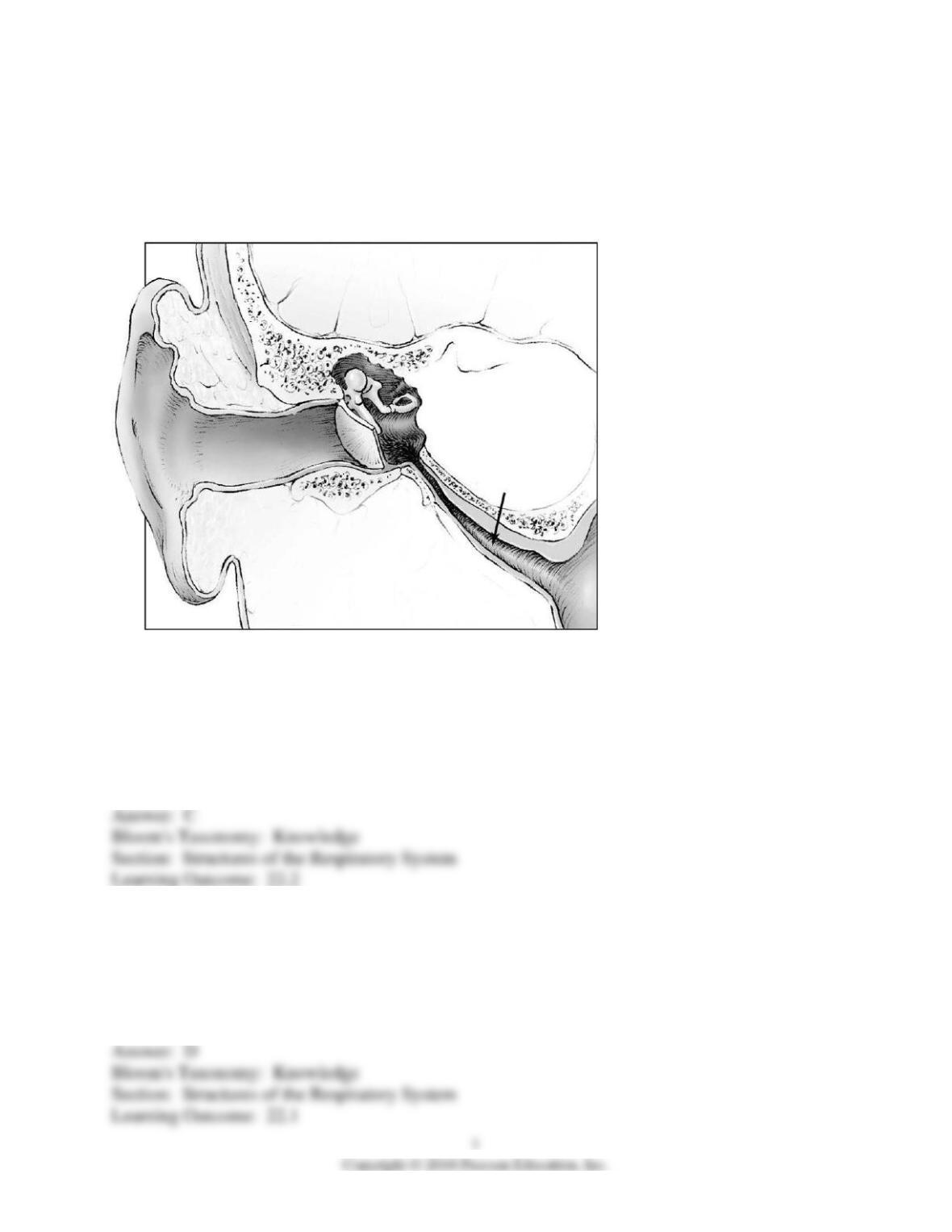
The structure indicated by the arrow connects the middle ear to what part of the respiratory
system?
A) nasal cavity
B) larynx
C) pharynx
D) sinuses
E) trachea
2) Which of the following is part of the upper respiratory system?
A) larynx
B) trachea
C) bronchi
D) pharynx
E) alveoli

3) Which of the following is an opportunistic pathogen commonly present in the nasal cavity as a
member of the microbiota?
A) Staphylococcus aureus
B) Bordetella pertussis
C) Legionella pneumophilia
D) Pneumocystis jiroveci
E) Veillonella species
4) Inflammation of the pharynx with pus-filled abscesses and swollen tonsils is known as
A) diphtheria.
B) otitis media.
C) croup.
D) RSV.
E) streptococcal pharyngitis (“strep throat”).
5) The designation “group A,” used to help classify Streptococcus pyogenes, refers to this
bacterium’s
A) Lancefield antigen.
B) hemolysis pattern.
C) M protein.
D) type of streptokinase produced.
E) disease associations.
6) Group A streptococci produce ________ which breaks down blood clots, allowing the bacteria
to spread.
A) M proteins
B) a hyaluronic acid capsule
C) C5a peptidase
D) streptokinase
E) pyrogenic toxins

7) Which of the following Streptococcus pyogenes virulence factors kills leukocytes and
erythrocytes?
A) streptolysins
B) pyrogenic toxins
C) streptokinases
D) the hyaluronic acid capsule
E) C5a peptidase
8) Pathogenic streptococci of the upper respiratory tract (such as Streptococcus pyogenes) are
distinguished from non-pathogenic streptococci by
A) alpha hemolytic activity.
B) beta hemolytic activity.
C) no hemolytic activity.
D) the absence of a capsule.
E) the presence of a lysogenic phage.
9) Diphtheria toxin kills cells by interfering with which of the following processes?
A) complement function
B) nucleic acid synthesis
C) cytoplasmic membrane function
D) protein synthesis
E) adenylate cyclase activity
10) Which of the following statements is TRUE concerning diphtheria?
A) No effective vaccine is available to prevent infection.
B) A diffuse rash is the major sign of diphtheria.
C) The signs and symptoms of the disease are directly caused by a bacterial toxin.
D) The pseudomembrane is easily removed by surgery.
E) A microscopic exam of bacterial samples is sufficient for conclusive diagnosis.

11) Which of the following statements is TRUE regarding the common cold?
A) Only coronaviruses cause the common cold.
B) The viruses can infect both the upper and lower respiratory tracts.
C) Cold viruses reproduce most effectively at 37°C.
D) Cold viruses are frequently spread by contaminated fomites.
E) The immune system cannot develop an effective response to cold viruses.
12) What is the primary determinant of virulence in Streptococcus pneumoniae?
A) the presence of a particular Lancefield antigen
B) the production of pneumolysin
C) the presence of a polysaccharide capsule
D) the ability to lyse red blood cells
E) strain-specific teichoic acids in its cell wall
13) The majority of cases of pneumonia are caused by
A) Mycoplasma pneumoniae.
B) Klebsiella pneumoniae.
C) Haemophilus influenzae.
D) Streptococcus pneumoniae.
E) Chlamydophila pneumoniae.
14) A pneumonia caused by Gram-positive diplococci is known as
A) primary atypical pneumonia.
B) pleurisy.
C) pneumocystic pneumonia.
D) pneumonic plague.
E) pneumococcal pneumonia.

15) Ornithosis, a disease of birds that can be transmitted to humans, is caused by
A) Yersinia pestis.
B) Klebsiella pneumoniae.
C) Chlamydophila psittaci.
D) Mycoplasma pneumoniae.
E) Chlamydophila pneumoniae.
16) The microbe which causes primary atypical pneumonia is
A) Bordetella pertussis.
B) MERS.
C) Chlamydophila pneumoniae.
D) Mycoplasma pneumoniae.
E) SARS.
17) Neutrophils are inhibited from gathering at the site of infection by Mycobacterium
tuberculosis by what virulence factor of the pathogen?
A) mycolic acid
B) cord factor
C) kinase
D) the capsule
E) hemolysin
18) Which of the following statements is TRUE regarding tuberculosis?
A) It occurs only in the lungs.
B) Several hundred cells are required for infection.
C) It remains viable in dried aerosol droplets for up to eight months.
D) Only virulent strains of Mycobacterium tuberculosis produce mycolic acid.
E) The immune system is not affected by the infection.

19) Strains of Mycobacterium tuberculosis called MDR are resistant to
A) levofloxacin.
B) isoniazid.
C) rifampin.
D) isoniazid and rifampin.
E) levofloxacin, isoniazid and rifampin.
20) Bordetella pertussis produces
A) dermonecrotic toxin.
B) adenylate cyclase toxin.
C) pyrogenic toxin.
D) dermonecrotic and adenylate cyclase toxins.
E) dermonecrotic, adenylate cyclase, and pyrogenic toxins.
21) The DTaP vaccine protects against which of the following respiratory diseases?
A) pneumonia
B) pertussis
C) anthrax
D) the common cold
E) tuberculosis
22) Inhalation anthrax is frequently fatal even with antibiotic therapy because
A) Bacillus anthracis is resistant to a wide range of antibiotics.
B) it is transmitted as endospores.
C) the anthrax toxin triggers necrosis and severe edema of the lungs.
D) the bacteria are enclosed within a biofilm that antibiotics cannot penetrate.
E) the dying cells release lipid A, triggering a severe inflammatory response.

23) What distinguishes influenza from the common cold?
A) Fever
B) Pharyngitis
C) Cough
D) Malaise
E) Nasal congestion
24) A recently retired man appears at his doctor’s office complaining of difficulty breathing,
body aches and fatigue. He is also running a high fever and has a dry cough. He reports having
just returned from a trip to the Middle East where he visited several historical sites. Test results
are negative for a rapid test for influenza A. No bacteria are visible in a microscopic exam of his
sputum. Which of the following is a likely explanation?
A) inhalation anthrax
B) pertussis
C) valley fever
D) coronavirus respiratory syndrome
E) primary atypical pneumonia
25) Even though mycoplasmas pass through filters that normally trap bacteria, they are known to
be bacteria, not viruses, because they
A) contain both DNA and RNA.
B) synthesize peptidoglycan.
C) divide by binary fission.
D) contain both DNA and RNA and divide by binary fission.
E) synthesize peptidoglycan and divide by snapping division.

26) Which of the following statements is TRUE regarding infection with Mycoplasma
pneumoniae?
A) It is extremely difficult to treat.
B) The causative agent attaches to ciliated cells in the respiratory tract.
C) The causative agent is a fast-growing Gram-positive bacillus.
D) It causes disease which is usually severe enough to require hospitalization.
E) It is diagnosed by the appearance of typical “fried-egg” colonies on agar.
27) The disease known as “Croup” is often a result of infection with which of the following?
A) hantavirus
B) influenzavirus
C) Bordetella pertussis
D) Mycoplasma pneumoniae
E) respiratory syncytial virus
28) Which of the following factors is primarily responsible for the ability of Mycobacterium
tuberculosis to survive long periods of time in dried droplets of respiratory aerosols?
A) production of cord factor
B) pyrogenic toxin
C) formation of tubercles
D) the presence of LPS in the outer membrane
E) the presence of mycolic acid in the cell wall
29) Limiting exposure to rodents and their waste is an important means of preventing
A) coccidioidomycosis.
B) Hantavirus pulmonary syndrome.
C) histoplasmosis.
D) bronchiolitis.
E) inhalational anthrax.

30) Blastomycosis results from
A) inhalation of spherules.
B) inhalation of respiratory droplets.
C) inhalation of fungal spores.
D) contact with fomites.
E) contact with infected sputum.
31) Dust storms in arid regions of the Southwestern U.S. may lead to outbreaks of
A) blastomycosis.
B) histoplasmosis.
C) Pneumocystis pneumonia.
D) Hantavirus pulmonary syndrome.
E) coccidioidomycosis.
32) Exposure to large accumulations of bird dropping may result in which of the following
mycoses?
A) Pneumocystis pneumonia
B) blastomycosis
C) coccidioidomycosis
D) histoplasmosis
E) valley fever
33) Which of the following diseases is almost diagnostic for AIDS?
A) blastomycosis
B) coccidioidomycosis
C) Pneumocystis pneumonia
D) histoplasmosis
E) Hantavirus pulmonary syndrome

34) Why are nearly all AIDS patients at risk of developing Pneumocystis pneumonia?
A) Pneumocystis jiroveci is becoming a wide-spread contaminant in health care environments.
B) Pneumocystis jiroveci is commonly found in a wide variety of soils.
C) The pathogen is easily transmitted from infected persons to others.
D) Pneumocystis jiroveci is a common member of the respiratory microbiome in humans and
opportunistic pathogen.
E) Pneumocystis jiroveci is zoonotic in a wide range of vertebrates and exposure is unavoidable.
35) A new vaccine for the upcoming flu season is developed from an influenza isolate designated
A/Shanghai/2/2013(H7N9). This nomenclature means the isolate is
A) a type A with antigens HA 7 and NA 9 isolated in Shanghai in February 2013.
B) a type A with 7 HA antigens and 9 NA antigens isolated in Shanghai in February 2013.
C) the second type A strain with HA 7 and NA 9 antigens isolated in Shanghai in 2013.
D) a type B strain with antigens HA 7 and NA 9, first isolated in February 2013.
E) a hybrid of 2 type As combining 7 HA and 9 NA antigens, created in February 2013.
36) A nursing student develops a positive reaction to the tuberculin skin test. A history reveals
possible exposure to patients with tuberculosis. A sputum sample is acid-fast negative. When
asked for vaccination records, the student reports that childhood vaccination records were lost
when the family emigrated from a Southeast Asian country. What is the best explanation for the
test results?
A) The student has been infected with Mycobacterium tuberculosis.
B) The student has been exposed to Mycobacterium tuberculosis.
C) The student is not infected.
D) The student has been exposed to Mycobacterium tuberculosis or was vaccinated with BCG
vaccine.
E) No conclusion is possible with the information provided.

37) Which of the following is a common cause of otitis media?
A) Chlamydophila pneumoniae
B) Mycobacterium tuberculosis
C) Blastomyces dermatitidis
D) Streptococcus pneumoniae
E) Pneumocystis jiroveci
38) Legionella pneumophila is an opportunistic pathogen that
A) is part of the microbiome of the lower respiratory system.
B) is part of the microbiota of the nasal cavity which occasionally invades the lungs.
C) survives in the environment as an intracellular parasite of a protozoan.
D) is capable of forming endospores.
E) is a disease of birds transmissible to humans.
39) A young man who works on a ranch and lives in the log bunkhouse experiences sudden fever
with muscle aches. A few days later he begins to cough and have difficulty breathing, and goes
to an urgent care clinic. His blood pressure is low. A blood sample reveals a low platelet count.
A Gram stain of a sputum sample shows only a few small bacteria present. Which of the
following is the most likely infecting agent?
A) Bacillus anthracis
B) Hantavirus
C) Histoplasma capsulatum
D) influenza
E) Mycoplasma pneumonia

40) A woman who breeds parrots develops a fever and cough, and begins to have difficulty
breathing. Small Gram-negative bacteria are detected inside cells of a sputum sample. Which of
the following diseases is she likely to have contracted?
A) histoplasmosis
B) influenza
C) primary atypical pneumonia
D) ornithosis
E) inhalation anthrax
1) Staphylococcus aureus is part of the upper respiratory microbiome.
2) Haemophilus influenzae is a common cause of sinus infections.
3) Pneumocystis jiroveci infects only immunocompromised patients.
4) The “common cold” is so common because there of the large number of viruses that cause it.
5) Hantavirus pulmonary syndrome can be transmitted from person-to-person and from rodents
to humans.

6) Pleurisy is the accumulation of pus in the lungs.
7) Klebsiella pneumoniae is a leading cause of HAP infections.
8) Macrophages effectively phagocytize and kill Mycobacterium tuberculosis.
9) Cold viruses are prevented from infecting most areas of the body because these areas are
either too warm or too acidic.
10) Otitis media is more common in adults than children because of differences in the anatomy
of the head.
1) A key diagnostic sign of diphtheria is the presence of the
(pseudomembrane/pharyngitis/rash/tubercle).
2) Otitis media is a bacterial infection of the (ear/pharynx/sinuses).
3) The smallest free-living microbes are (mycobacteria/mycoplasmas/Chlamydophila).
4) Recent outbreaks of multidrug-resistant HAP are primarily caused by members of the genus
(Bordetella/ Klebsiella/Mycobacteria), Gram-negative opportunists.
5) Exposure to soil with decaying plant material may result in pus-filled lesions characteristic of
(coccidioidomycosis/blastomycosis/histoplasmosis).
6)
The structure indicated by the letter “A” is the (pharynx/larynx/epiglottis).
7) Some of the signs of scarlet fever (scarlatina) are due to the production of
(pertussis/pneumolysin/pyrogenic) toxin.

8) Elongation factor, a protein required for eukaryotic (transcription/translation/expression), is
the cellular target of the toxin produced by Corynebacterium diphtheriae.
9) The attachment protein for almost all rhinoviruses is (BCG/ICAM-1/IgA). (Be sure your
answer is in uppercase letters.)
10) A type of pneumonia in which the alveoli and bronchioles become filled with pus is
(emphysema/empyema/pleurisy).
11) The mycoplasmas have been successively classified as viruses, Gram-negative bacteria, and
Gram-positive bacteria largely due to the lack of cell (membranes/walls/RNA) in their structure.
12) When Mycobacterium tuberculosis spreads to sites such as the bone marrow and spleen it
results in (disseminated/secondary/reactivated) tuberculosis.
13) Strains of Mycobacterium tuberculosis designated as (BCG/MDR/XDR) strains are resistant
in vitro to three or more antitubercular drugs in addition to isoniazid and rifampin. (Be sure to
use uppercase letters in your answer.)

14) A major change in the surface glycoproteins of influenza A, which occurs every 10 years on
average, is called (antigenic/genetic/protein) shift.
15) Inflammation of the trachea and bronchi, commonly called (croup/pertussis/pneumonia), is
frequently caused by paramyxoviruses.
22.4 Essay Questions
1) Why is immunity to the common cold so difficult to develop, either naturally or through
vaccines?

2) Explain the necessity of producing a new vaccine for each year’s flu season.
3) Compare and contrast pneumococcal and mycoplasmal pneumonia.
4) Numerous bacteria can cause pneumoniae in the elderly or immunocompromised. The most
common ones were covered in the section “Bacterial Diseases of the Lower Respiratory System.”
Devise a set of laboratory tests that could be used to distinguish between these bacteria in a
clinical laboratory. Have as your goal the minimum number of tests necessary. (Hints: Try to
make a dichotomous key to start. You may also need to recall material from previous chapters.)
5) Describe the pathogenesis of tuberculosis, paying special attention to the characteristics of
Mycobacterium tuberculosis that make it so pathogenic.