
56. Aflatoxins are produced by certain species of
57. Cell walls of chitin is more resistant than cellulose to breakdown by microorganisms.
58. Although most fungi are heterotrophs, there are a few that are autotrophs.
59. Yeasts reproduce asexually by budding.
60. A dikaryotic hypha is one in which two genetically distinct nuclei have fused.
61. Most of the members of the phylum Deuteromycota have now been reassigned to other groups.
62. Fungi are classified according to the characteristics of their sexual spores and fruiting bodies.
63. The secondary mycelium of a basidiomycete has monokaryotic cells with haploid nuclei.
64. Sexual reproduction in many fungi can occur only between hyphae of a plus (+) strain and a minus (-)
strain.

65. Zygospores can survive unfavorable environmental conditions.
66. Ascospores are produced on conidiophores.
67. In the ascomycetes, two hyphae fuse forming dikaryotic hyphae.
68. Ascospores are n + n.
69. Basidiospores develop on the outside of the basidium.
70. Because many are producers, fungi play an important role in ecosystems.
71. The lichen symbiosis may be one of controlled parasitism.
72. A reduction in lichen growth has been used as an indicator of air pollution.
73. Most fungi are parasites.
74. Fungi are responsible for most of the major crop diseases.

75. In most fungi, a chemical component of the cell wall is ____________________, which is also found in the
exoskeletons of insects.
76. The aggregation of hyphae that form the fungal “body” is called a(n) ____________________.
77. Cross walls in fungal hyphae are called ____________________.
78. A(n) ____________________ is a filamentous fungus.
79. A(n) ____________________ hypha contains two genetically distinct nuclei.
80. ____________________ are the sexual reproductive spores of the zygomycetes.
81. A(n) ____________________is an enlarged, club-shaped hyphal cell which produces basidiospores.
82. The mushroom is more properly called a(n) ____________________.
83. Some fungi are important in the ecosystem as ____________________, breaking down organic matter and
recycling nutrients.
84. Mutualistic relationships between fungi and the roots of plants are called ____________________

85. Crustose, foliose, and fruticose are terms for the three different growth forms of ____________________
86. A lichen that grows erect and shrublike has a growth form called ____________________.
87. Some lichens release specialized dispersal units called ____________________.
88. Special hyphal branches that penetrate host cells are called ____________________.
89. The poisonous compounds produced by fungi are collectively called ____________________.
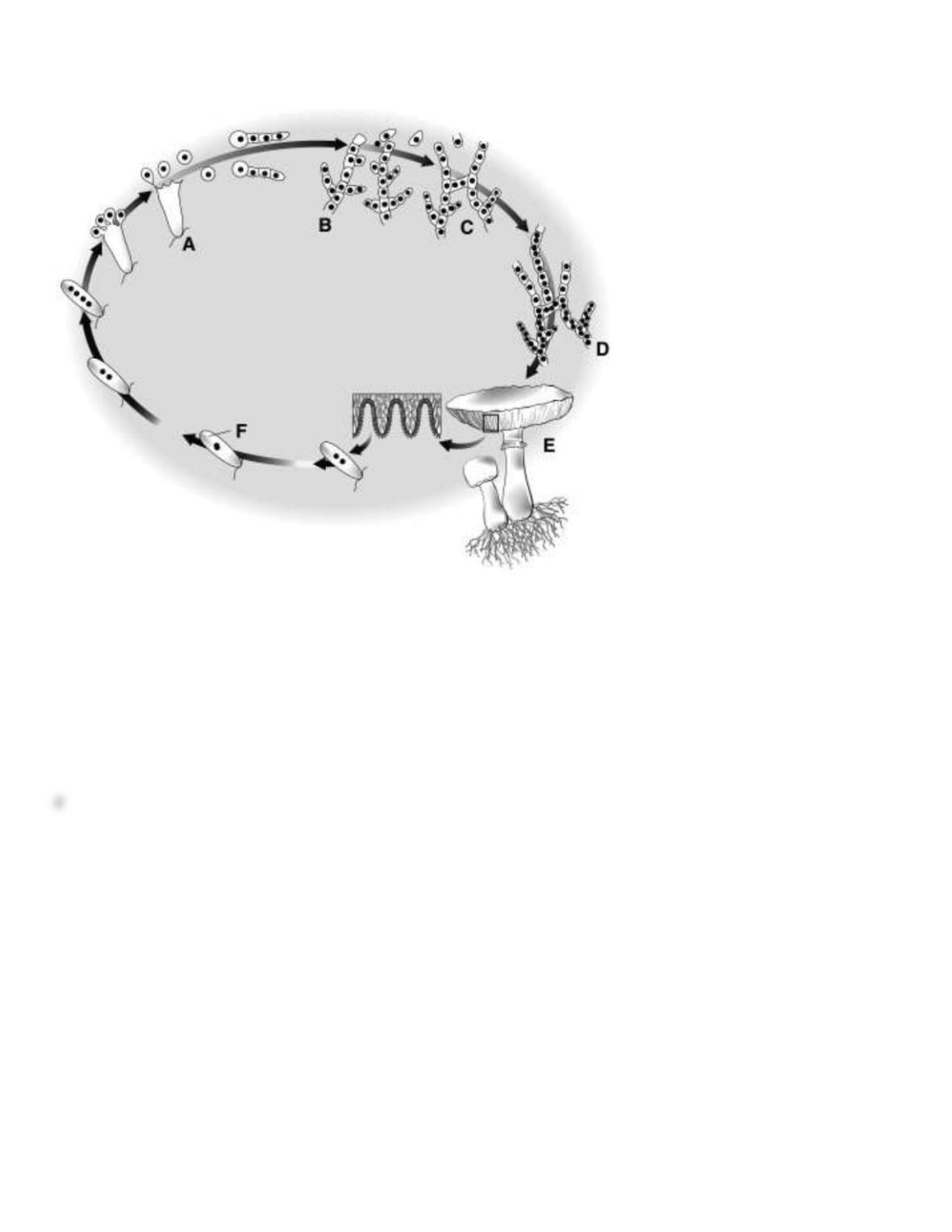
90. Figure 21-1
Refer to Figure 21-1. Which indicates a diploid cell or structure?
a.
B
b.
C
c.
D
d.
E
e.
F
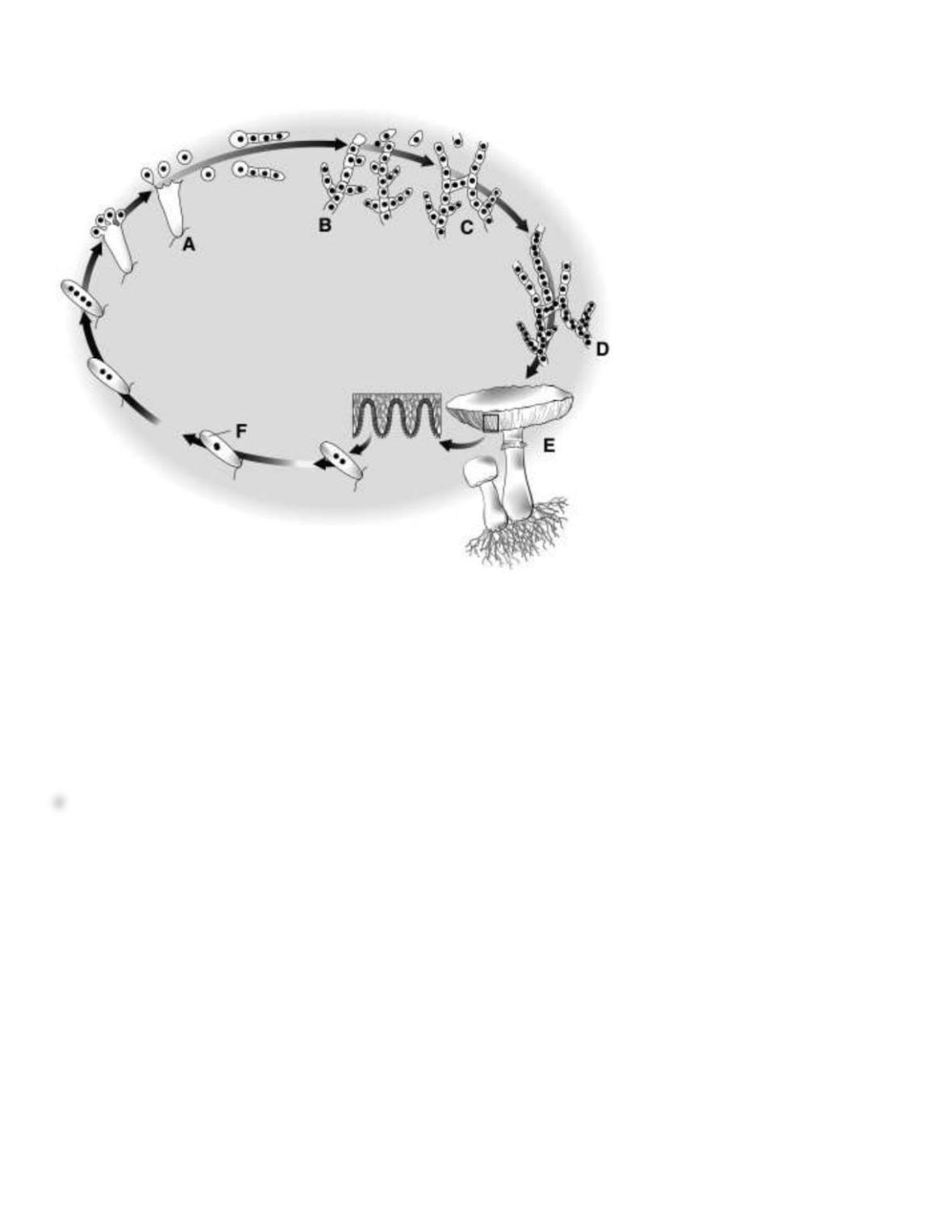
91. Figure 21-1
Refer to Figure 21-1. Which indicates a basidocarp?
a.
A
b.
B
c.
C
d.
D
e.
E
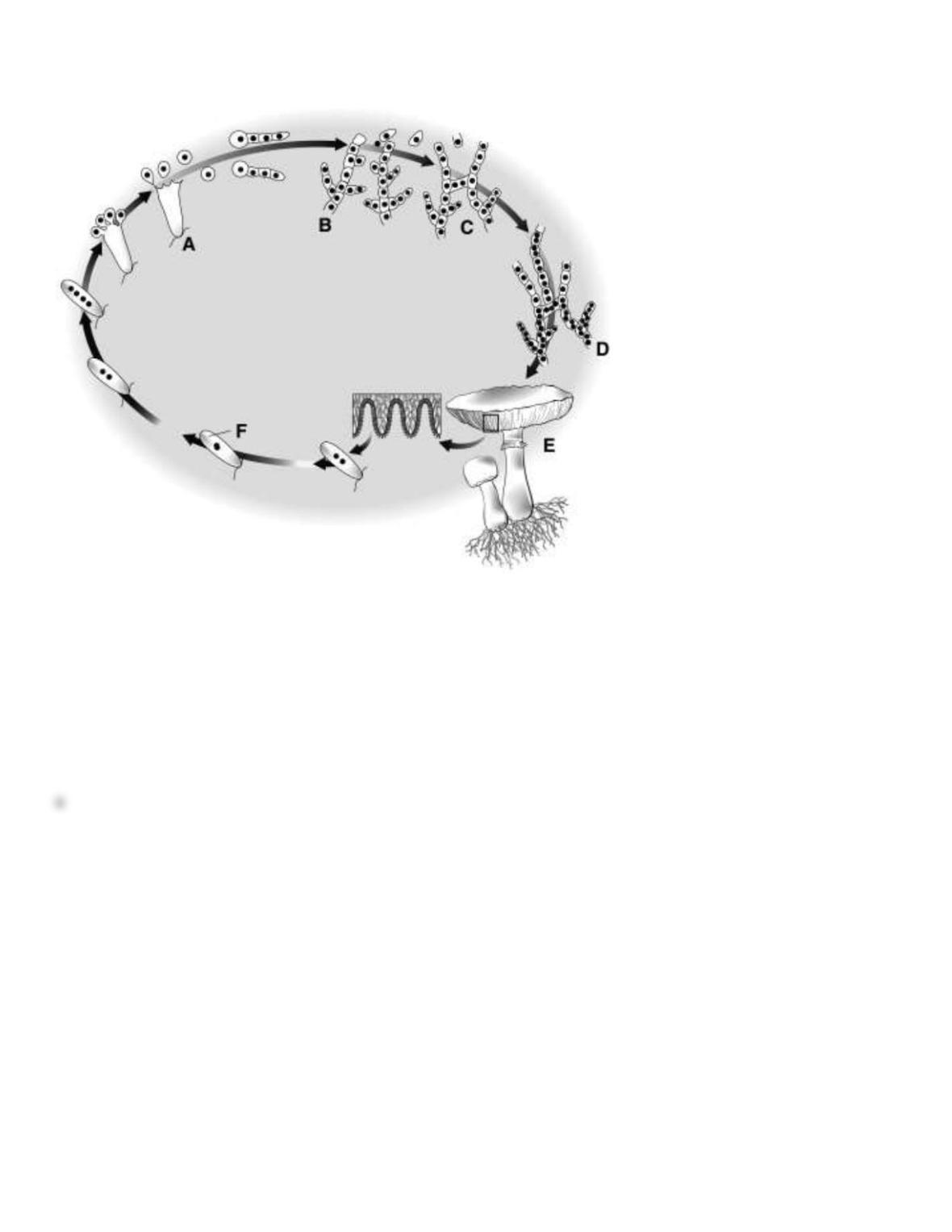
92. Figure 21-1
Refer to Figure 21-1. Which indicates a basidium?
a.
A
b.
B
c.
C
d.
D
e.
E
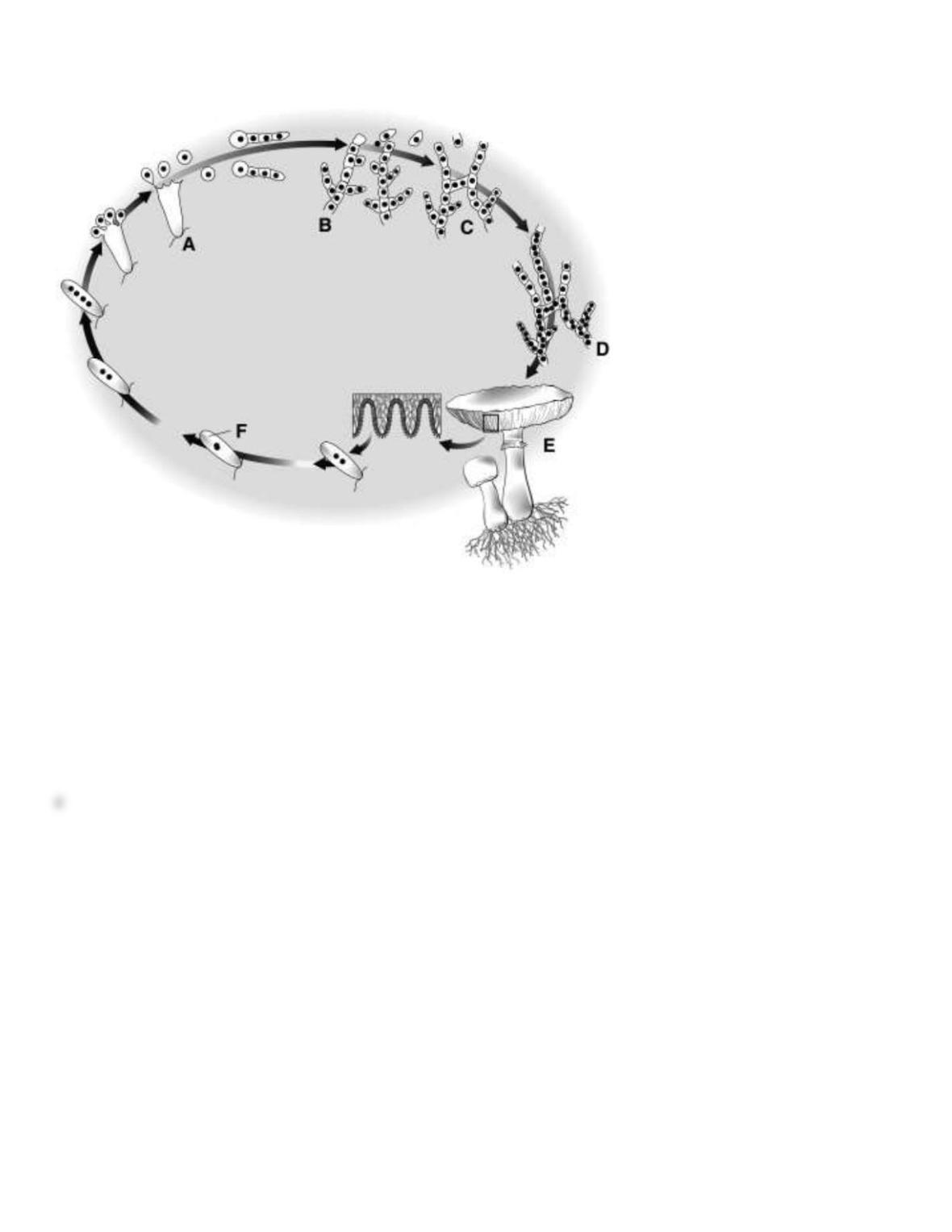
93. Figure 21-1
Refer to Figure 21-1. Which best indicates plasmogamy?
a.
A
b.
B
c.
C
d.
D
e.
E
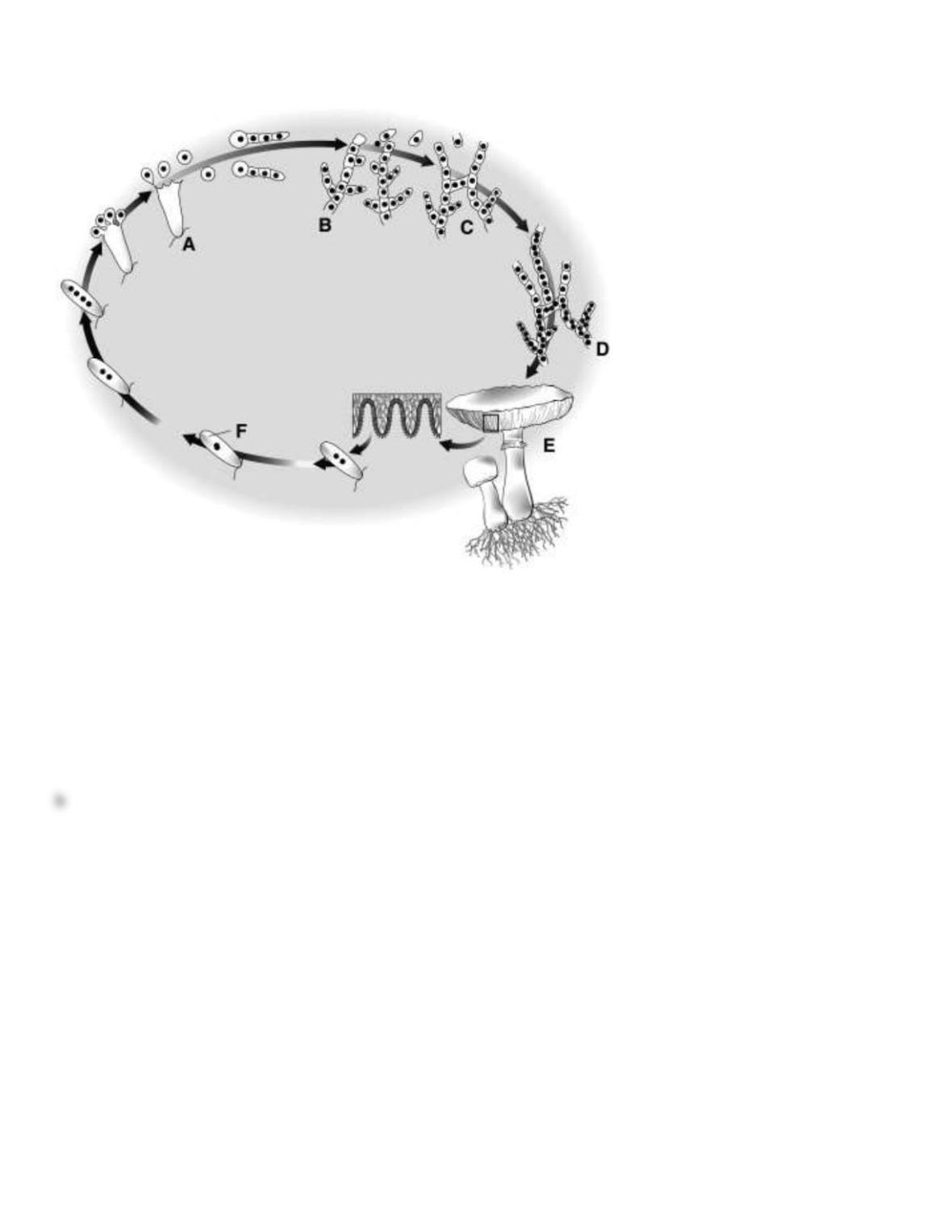
94. Figure 21-1
Refer to Figure 21-1. Which indicates a primary mycelium?
a.
A
b.
B
c.
D
d.
E
e.
F
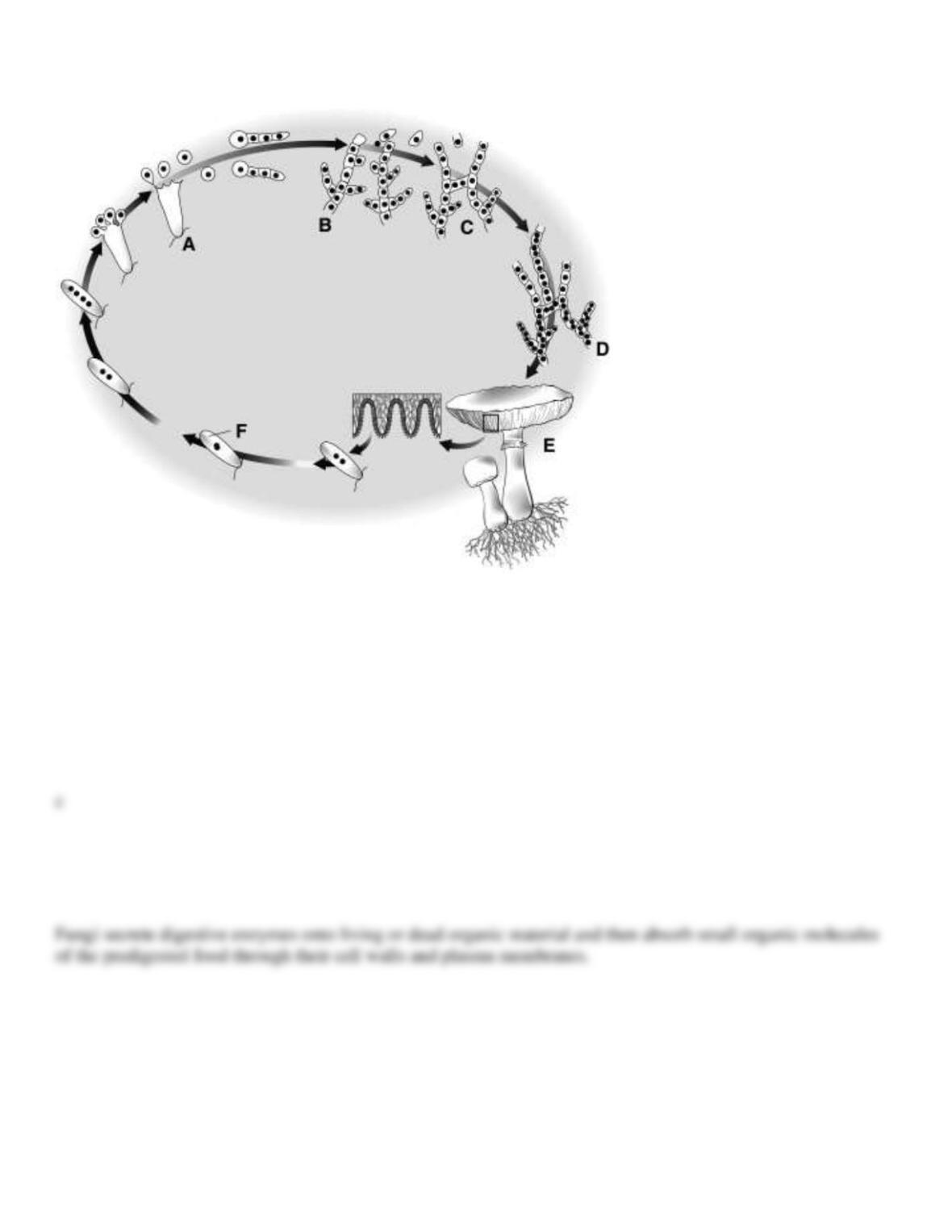
95. Figure 21-1
Refer to Figure 21-1. Which indicates a dikaryotic structure?
a.
Both A and B
b.
Both B and C
c.
Both D and E
d.
Both E and F
e.
Both B and D
96. Describe how fungi obtain their “food.”
97. Briefly describe the sequence of events that occurs from the time that a fungal spore lands on an overripe
preach until new spores are produced.
98. Describe the types of damage that certain fungi cause to cultivated plants, including crops. Give three
examples.