285 Chapter 20—Oceans in Jeopardy
Chapter 20—Oceans in Jeopardy
MULTIPLE CHOICE
1. Ocean pollution includes all except
a.
toxins.
b.
heavy metals.
c.
dissolved oxygen.
d.
oil.
e.
PCBs.
2. Ocean dumping began
a.
early in human history.
b.
with the development of Middle Age cities.
c.
with the Industrial Age.
d.
in the early part of the 19th century.
e.
in the 1960’s.
3. Ocean dumping of trash is an example of society doing all except
a.
abusing the ocean.
b.
finding short-term profits in waste disposal.
c.
finding a viable solution to trash.
d.
having an “out of sight, out of mind” mentality.
4. Throughout this century, the military has
a.
recycled all of its trucks and jeeps.
b.
processed chemicals prior to ocean dumping.
c.
discarded unwanted materials into the ocean.
d.
removed all unwanted materials to the land for processing.
5. Future dumping of radioactive waste by U.S.-based organizations into the ocean requires:
a.
a permit by the Department of Commerce.
b.
approval by the President of the United States.
c.
an environmental impact statement and approval by both houses of Congress.
d.
approval by the EPA.
e.
approval by the Department of Energy.

6. The largest volumetric component of trash collected on beaches will likely be:
a.
metal.
b.
plastic.
c.
medical waste.
d.
glass.
e.
cigarette butts.
7. Over ____% of the U.S. population lives within 50 miles of a coastline.
a.
10
b.
25
c.
40
d.
50
e.
70
8. The biggest problem facing coastal habitats is not dumping but:
a.
overfishing.
b.
river runoff.
c.
development.
d.
offshore oil spills.
e.
nuclear power plant leakage.
9. A toxic organic compound is:
a.
chromium.
b.
polychlorinated biphenyls.
c.
trash.
d.
oil.
e.
zinc.
10. The following is not a heavy metal toxin:
a.
DDT.
b.
mercury.
c.
lead.
d.
zinc.
e.
copper.
11. Animals that are likely to be severely affected by DDT include:
a.
pelicans.
b.
jellyfish.
c.
anchovies.
d.
mussels.
e.
copepods..

12. DDT was used in the U.S. in the ____ industry.
a.
plastics
b.
agricultural
c.
paint
d.
manufacturing
e.
weapons.
13. Species diversity of plankton in the North Atlantic has been reduced by
a.
global warming.
b.
oil spills.
c.
toxic compounds.
d.
solar flares.
e.
alteration of surface currents.
14. The reported effects of toxins on marine zooplankton include
a.
increased sinking rate.
b.
faster growth.
c.
tumors.
d.
altered growth and development.
e.
increase in photosynthetic rates.
15. Reported toxins’ effects on marine phytoplankton include all of the following except
a.
increased sinking rate.
b.
inhibited photosynthesis.
c.
reduced growth.
d.
reduced cell division.
e.
tumors.
16. Toxins can lead to:
a.
increased harvestable metals in the ocean.
b.
reduction in anaerobes in the sediment.
c.
reduction in primary production.
d.
increase in primary production.
e.
increase in individual size and growth rates.
17. Greenhouse gases are associated with all except:
a.
global warming.
b.
coral bleaching.
c.
cooling of Arctic waters.
d.
sea level rise.
e.
melting of glaciers.

18. When seawater rises more than 10 mm per year, symbiotic zoxoanthellae will
a.
increase due to the warm water.
b.
be reduced without sufficient sunlight.
c.
be reduced by the increased pressure.
d.
increase due to the input of nutrients.
e.
increase due to increased water pressure.
19. Pollution in the coastal area has led to
a.
sea level rise.
b.
an increase in upwelling.
c.
a decrease in economic and recreational value.
d.
a decrease in upwelling.
e.
increases in fishery landings.
20. Most coastal pollution comes from
a.
oil spills from ships.
b.
dumping of trash.
c.
military disposal.
d.
runoff from urban and agricultural lands.
e.
nuclear power plants.
21. Algal blooms result when unusually high amounts of nutrients enter the sea from:
a.
runoff from land.
b.
leaching from marine sediments.
c.
direct intentional dumping.
d.
input from wind.
e.
shipboard disposal at sea.
22. Sewage pollution is especially problematic in coastal areas
a.
that are sparsely populated.
b.
after drought.
c.
after prolonged rains.
d.
having fast moving currents.
23. Treated sewage released into the ocean adds large amounts of ____ into the water.
a.
bacteria
b.
DDT
c.
PCBs
d.
chlorine
e.
zinc

24. What type of organism can concentrate microbes?
a.
Grazers
b.
Filter feeders
c.
Secondary consumers
d.
Tertiary consumers
e.
Scavengers
25. Health officials measure ____ to evaluate if disease agents are present.
a.
byssal thread density
b.
changes in species composition
c.
coliform bacteria
d.
the oyster index
e.
water density
26. Eutrophication occurs when
a.
species diversity increases.
b.
coliform bacteria counts go up.
c.
nutrient levels decline.
d.
nutrient levels increase.
e.
sea surface temperature decreases.
27. In waters of low nutrients, eutrophication can lead to
a.
increased production.
b.
reduced production.
c.
decreased phytoplankton growth.
d.
reduction in species diversity.
e.
increased water clarity.
28. Outbreaks of the dinoflagellates Pfesteria has been attributed to:
a.
septic tank overflows.
b.
agricultural runoff.
c.
oil pollution.
d.
carbon emissions.
e.
urban runoff.
29. Sewage treatment is a way to prevent raw sewage causing
a.
oil spills.
b.
oligotrophy.
c.
eutrophication.
d.
global warming.
e.
coastal erosion.

30. The process whereby toxins are actively taken up by an organism is called:
a.
additive affect.
b.
bioaccumulation.
c.
trophic dynamics.
d.
predator-prey relationships.
e.
adsorption onto seston.
31. The increase in the concentration of toxicants up the food chain is called:
a.
bioaccumulation.
b.
biological magnification.
c.
detoxification.
d.
organic magnification.
e.
none of the above.
32. It is estimated that ____ tons of plastic enter the ocean annually.
a.
500
b.
500 thousand
c.
1 million
d.
10 million
e.
100 million
33. Discarded or lost drift nets will have a large impact on:
a.
schooling fishes.
b.
marine mammals.
c.
benthic invertebrates.
d.
zooplankton.
e.
both a and b
34. Discarded plastic nets (known as ghost nets) and cargo straps are responsible
a.
for the accumulation of debris.
b.
for the death of up to 300,000 fur seals annually.
c.
for reduction of lobster.
d.
for catches of shellfish.
e.
for supporting a viable fishery.
35. Lost traps to collect shellfish have a large impact on
a.
marine mammals.
b.
marine birds.
c.
marine turtles.
d.
lobster and crabs.
e.
plankton.

36. Plastics can best be described as being:
a.
persistent.
b.
biodegradable.
c.
harmless to marine animals.
d.
found only in areas where they are dumped.
e.
recyclable.
37. Plastic pollution is considered by many scientists to be:
a.
a minor nuisance.
b.
biodegradable.
c.
of lesser importance than oil or toxins.
d.
of equal importance to oil and toxins.
e.
a problem best left for the next generation to deal with.
38. Straight-chain oils are called:
a.
aliphatic hydrocarbons.
b.
aromatic hydrocarbons.
c.
mixed hydrocarbons.
d.
ethyl oils.
e.
aromatic oils.
39. The largest oil spill in the United States was:
a.
near Santa Barbara.
b.
at Valdez, Alaska.
c.
at the Deepwater Horizon rig.
d.
on the Hudson river, New York.
e.
in San Francisco Bay.
40. Toxic oil compounds’ effects on the invertebrates include(s):
a.
tainted flesh moving up the food chain.
b.
all invertebrates are tolerant of oil pollution.
c.
acting like a narcotic.
d.
both a and c
41. Which of the following is the greatest effect of oil on marine mammals and birds?
a.
It is toxic to these animals.
b.
It clogs their feeding structures.
c.
It causes them to lose their insulation, leading to death by hypothermia.
d.
It kills their food source.
e.
It suffocates them.
42. The community effect of oil pollution is
a.
increased biomass.
b.
reduced diversity.
c.
longer food chains.
d.
increased trophic complexity.
e.
greater stability.
43. All of the following are currently used to clean up oil spills except:
a.
booms.
b.
naturally occurring bacteria.
c.
genetically engineered bacteria.
d.
straw.
e.
skimmers.
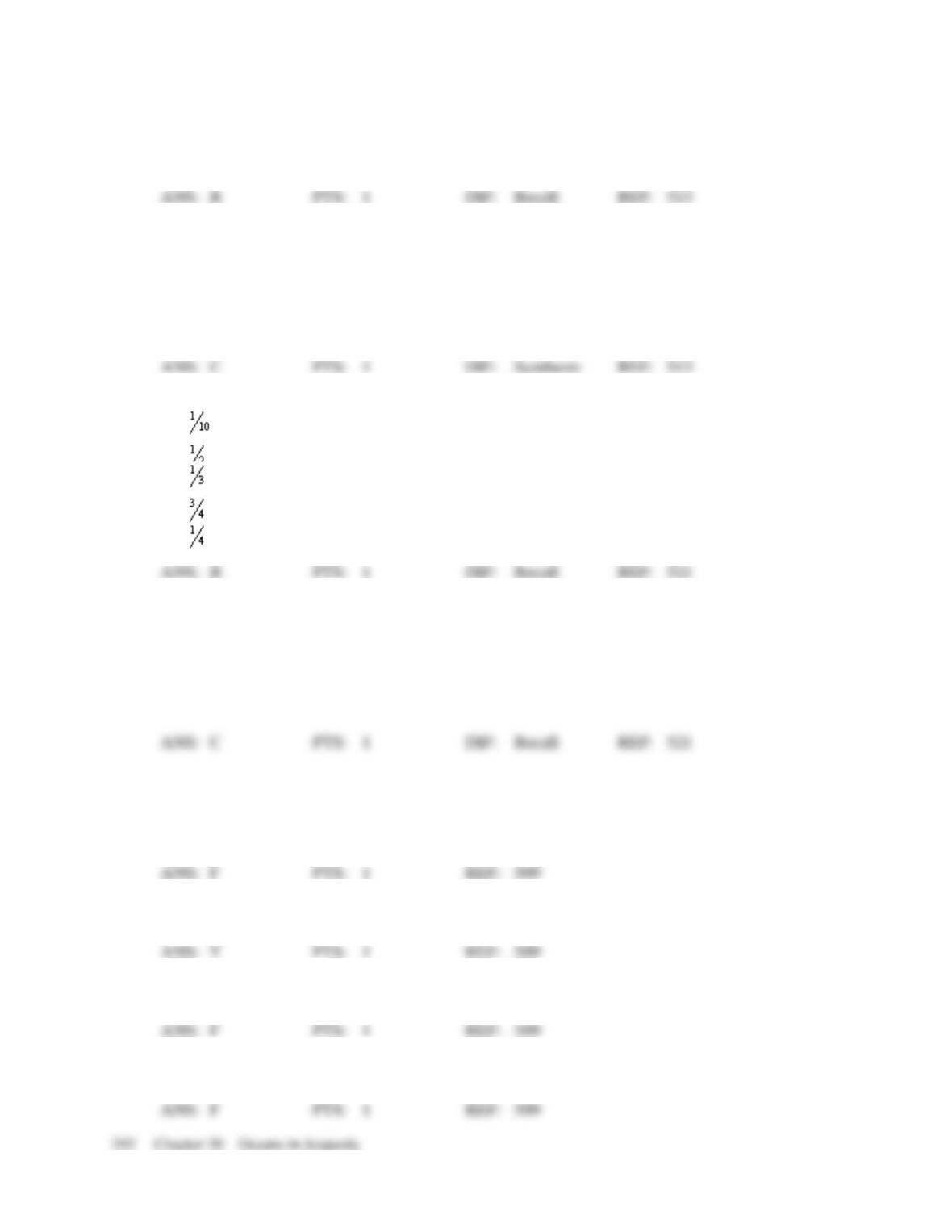
44. In the U.S. over ____ of the coastal wetland habitats have been destroyed.
a.
b.
c.
d.
e.
45. A big obstacle preventing the protection of coastal wetlands is:
a.
lack of laws protecting wetlands.
b.
lack of interested groups.
c.
politically-motivated decisions to change the definitions of wetlands.
d.
lack of scientific understanding about the ecosystems.
e.
none of the above.
TRUE/FALSE
46. PCBs are considered heavy metals.
47. DDT and PCBs are no longer legally used anywhere in the U.S.
48. DDT breaks down in the environment fairly quickly.
49. Lead pollution has been on the rise since the 1970s.
293 Chapter 20—Oceans in Jeopardy
50. The trophic levels that are most seriously harmed by biomagnified pollutants are the lower grazers and
producers.
51. When a pollutant interferes with photosynthesis of phytoplankton it indirectly affects higher trophic
levels.
52. The heavier components of oil evaporate fairly quickly.
53. Introduction of nonnative marine species often occurs through release of ballast water in ports of call.
MATCHING
Match the words with the most closely associated term.
a.
chlorinated toxin
b.
heavy metal
c.
garbage
54. Organic wastes
55. PCB
56. Mercury
Match the environmental problem with its cause
a.
DDT
b.
agriculture runoff
c.
plastic wastes
d.
range extension of species
57. Eutrophication
58. Animal entanglement/death
59. Biomagnification
60. Climate change

Match the words with the most closely associated term.
a.
polychlorinated biphenyls
b.
benzene and other ring-shaped molecules
c.
heptane and other straight-chain molecules
d.
coliforms
61. Aromatic hydrocarbons
62. Aliphatic hydrocarbons
63. PCBs
64. Microorganisms
Match the percent with its most closely associated pollution source based on ICC volunteer efforts.
a.
35.8
b.
6.3
c.
52
65. Shoreline and Recreational Activity
66. Smoking Related
67. Ocean/Waterway
Match the pollution source category with a common activity.
a.
Fishing nets, buoys, and traps
b.
Building materials
c.
Food and beverage containers
d.
Condoms and tampons
68. Shoreline and recreational activity
69. Ocean and waterway activities
70. Dumping-related activities
71. Medical waste
Match the words with the most closely associated result.
a.
land runoff
b.
jetties, breakwaters
c.
draining and filling
72. Wetland destruction
73. Coastal erosion
74. Coastal pollution

Match the possible solution with the problem.
a.
prevention and treatment of urban run-off
b.
treatment of sewage
c.
phasing out production of single-use plastic items
75. Marine animal death by entanglement/starvation
76. Eutrophication
77. Oil pollution
Match the words with the most closely associated effect.
a.
DDT
b.
ocean rising
c.
ocean warming
78. Potential death of zooxanthellae and coral from low light levels
79. Thinning of seabirds’ eggshells
80. Loss of zooxanthellae from reef-building corals
Match the words with the most closely associated organism.
a.
presence indicates sewage pollution
b.
concentrate hepatitis viruses
c.
mercury poisoning, DDT and PCBs
81. Filter feeders
82. Biological magnification
83. Coliforms
Match the effects of oil pollution with the most closely associated organism.
a.
causes hypothermia
b.
toxins in oil act as a narcotic
c.
colonizes vacated areas on rocky shores
84. Seaweeds
85. Otters and sea birds
86. Mollusks
ESSAY
87. Briefly describe the kinds of trash, amount of trash, and economic impact of dumping trash in the
ocean, using Florida as an example.
88. What are the problems associated with dumping radioactive waste in subduction zones of the deep
sea?
89. How is it that DDT and PCB pollution continue today even though these pollutants have been banned
in the U.S. for many years?
90. Briefly describe how toxic materials like DDT that have low concentrations in the water column affect
organisms at distant locations.
91. In Long Beach, CA, recent proposals have suggested removing the breakwall that has protected the
Los Angeles/Long Beach harbor for nearly half a century. This has been suggested as a way of
returning the Long Beach coastline to its natural pre-breakwall state. Can you suggest any reasons why
this may not be such a good idea?
92. Why are toxins more concentrated in sediments than in the overlying water column?
93. What are some ways of reducing plastic pollution in the ocean?
94. Why is marine transportation of oil a big problem for the environment?
95. Recent outbreaks of the dangerous dinoflagellate Pfisteria in the waters off North Carolina have been
linked to hog farming inland of the coast. What is the connection between the two?
96. Describe at least 3 effects of oil spills on marine organisms and the marine environment.
97. What are 2 reasons why tropical environments are potentially less vulnerable to the effects of oil
pollution than higher latitude areas?