Chapter 20—Kingdom Protista Key
1. The kingdom Protista
2. Which of the following statements concerning members of the kingdom is FALSE?
3. The three major groups in kingdom Protista are
4. Protist locomotion is by
5. Members of kingdom Protista are diverse in
6. Molecular and ultrastructural data indicate that all of the following – except one – are part of a monophyletic
group. Which does not belong to that group?
7. Euglenoids
8. ____ possess a flexible covering, called a pellicle, rather than a rigid wall.
9. Euglenoid pigments include both
10. Euglenoids store their energy reserves as
11. Interlocking cellulose plates are found in ____.
12. Which phylum am I? One of my two flagella is wrapped like a belt around a transverse groove, and the
other flagella is located in a longitudinal groove.
13. Dinoflagellate pigments include
14. Dinoflagellates store their energy reserves as ____.
15. Endosymbiotic dinoflagellates called ____live in the bodies of marine invertebrates.
16. Dinoflagellate cell division is unique because
17. Red tides are caused by population explosions of
18. Both ____ and ____are important producers in marine ecosystems.
19. Water molds are composed of coenocytic threadlike filaments called
20. Which phylum am I? I produce biflagellate zoospores each of which can develop into a mycelium.
21. Late blight of potatoes is caused by a species of
22. Diatoms belong to the phylum
23. Diatom pigments include ____.
24. Diatoms store their energy reserves as
25. Who am I? I am have either radial or bilateral symmetry, and I have a two-part shell impregnated with
silica.
26. The phylum Chrysophyta contains the
27. Which phylum am I? I have a golden or golden brown color and compose a significant portion of the
nonoplankton.
28. The brown alga Laminaria has a supporting base called a ____, which attaches the organism to rocks in the
intertidal zone.
29. The pigments found in brown algae include both
30. Brown algae live in ____ ecosystems.
31. The brown algae store their energy reserves as
32. The kelps belong to the phylum
33. Members of the ____ contain algin in their cell walls.
34. The red algae are primarily ____ organisms.
35. The pigments found in red algae include ____ and ____.
36. What phylum am I? I contain agar and carrageenan.
37. Members of the ____ store energy as floridean starch.
38. The pigments found in green algae include both
39. The green algae store
40. The algae include plant-like protists possessing chlorophylls. Three groups of algae are the brown, red and
green algae. The only kind of chlorophyll possessed by all three is
41. Green algae are probably ancestral
42. Asexual reproduction in green algae occurs by
43. In oogamous sexual reproduction, the gametes are
44. In the process of ____, the genetic material of one algal cell passes into and fuses with the genetic material
of a recipient cell.
45. The ____ are important producers in freshwater habitats.
46. Spore bearing structures found in plasmodial slime molds are called
47. Plasmodial slime molds produce haploid reproductive cells called ____.
48. Which phylum am I? I produce a plasmodium.
49. Which phylum am I? I produce a pseudoplasmodium.
50. In the cellular slime molds, when individual amoebas run out of food what happens next?
51. In isogamous sexual reproduction, the gametes are
52. The kingdom Protista is a natural grouping of organisms because they are mostly unicellular and the
multicellular forms do not have complex tissues.
53. Some protists switch back and forth from being heterotrophic to being autotrophic.
54. Most biologists think the kingdom Protista is a monophyletic group.
55. Euglenoids are both plant-like and animal-like.
56. Red tides are caused by certain dinoflagellages.
57. Water molds superficially resemble fungi.
58. Diatoms have flagella for locomotion.
59. Certain kinds of brown algae called “kelps” form extensive underwater “forests” that provide food and
habitats for many marine organisms.

60. Agar and nori are produced by members of the phylum Phaeophyta.
61. Red algae have no commercial uses.
62. Green algae form gametes in unicellular gametangia.
63. Green algae are primarily marine organisms.
64. The plasmodium produced by a plasmodial slime mold consists of a wall-less amoeba-like mass containing
many nuclei.
65. Cellular slime molds reproduce asexually when individual cells aggregate into a pseudoplasmodium or
“slug” that eventually produces spores.
66. Organisms that are multinucleate are said to be ____________________.
67. The floating organisms, mostly microscopic in size, that are the base of the food web in aquatic ecosystems
are collectively called ____________________.
68. Some protists form ____________________ of loosely connected groups of cells.

69. Most protists reproduce sexually by a process called ____________________.
70. The presence of large numbers of ____________________ in freshwater ponds indicates probable organic
pollution.
71. Dinoflagellates have two ____________________ for locomotion.
72. Diatoms have an outer wall or shell impregnated with ____________________.
73. Accumulations of dead diatoms which settled to the ocean floor eons ago, were transformed to sedimentary
rock, and eventually uplifted by geological processes, are now mined as ____________________.
74. Like fungi, the body form of the water molds is the ____________________.
75. The ____________________ algae store energy reserves as floridean starch, a polysaccharide similar to
glycogen.
76. A flagellated spore is called a(n) ____________________.
77. Reproductive organs in which gametes are produced are called ____________________.
78. ____________________ reproduction involves the union of two gametes that differ in size and/or motility.
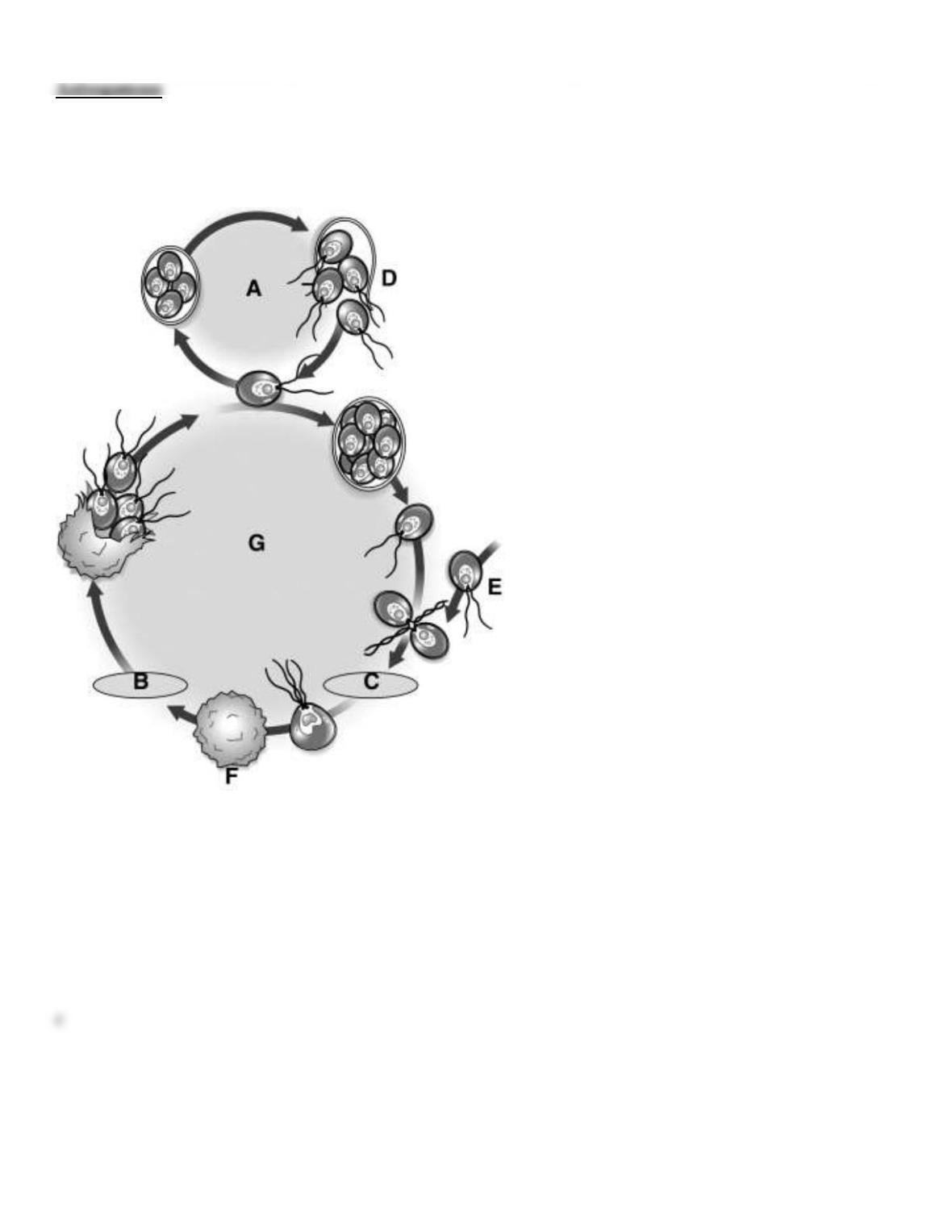
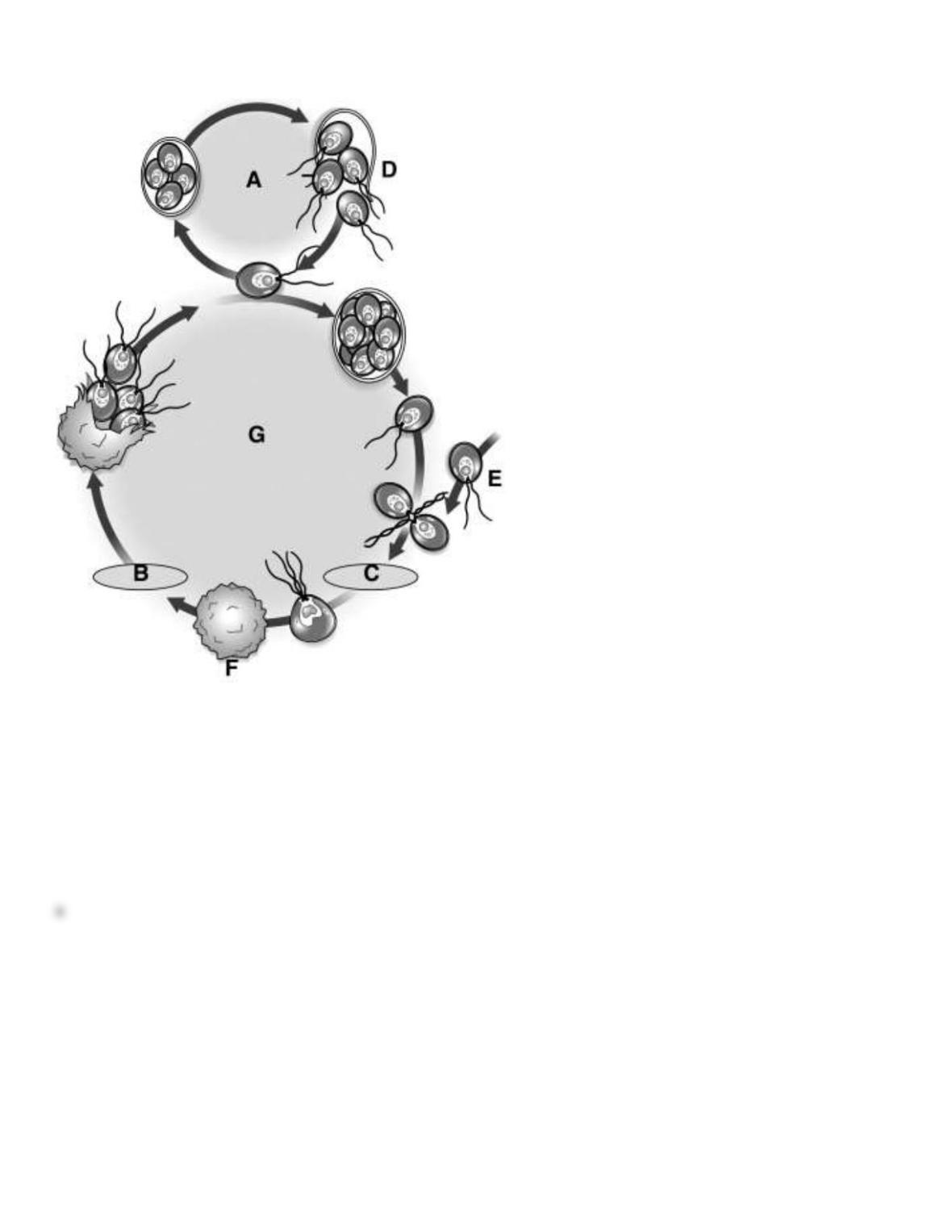
79. Figure 20-1
Refer to Figure 20-1. Which letter best indicates the process of syngamy?
a.
A
b.
B
c.
C
d.
D
e.
F
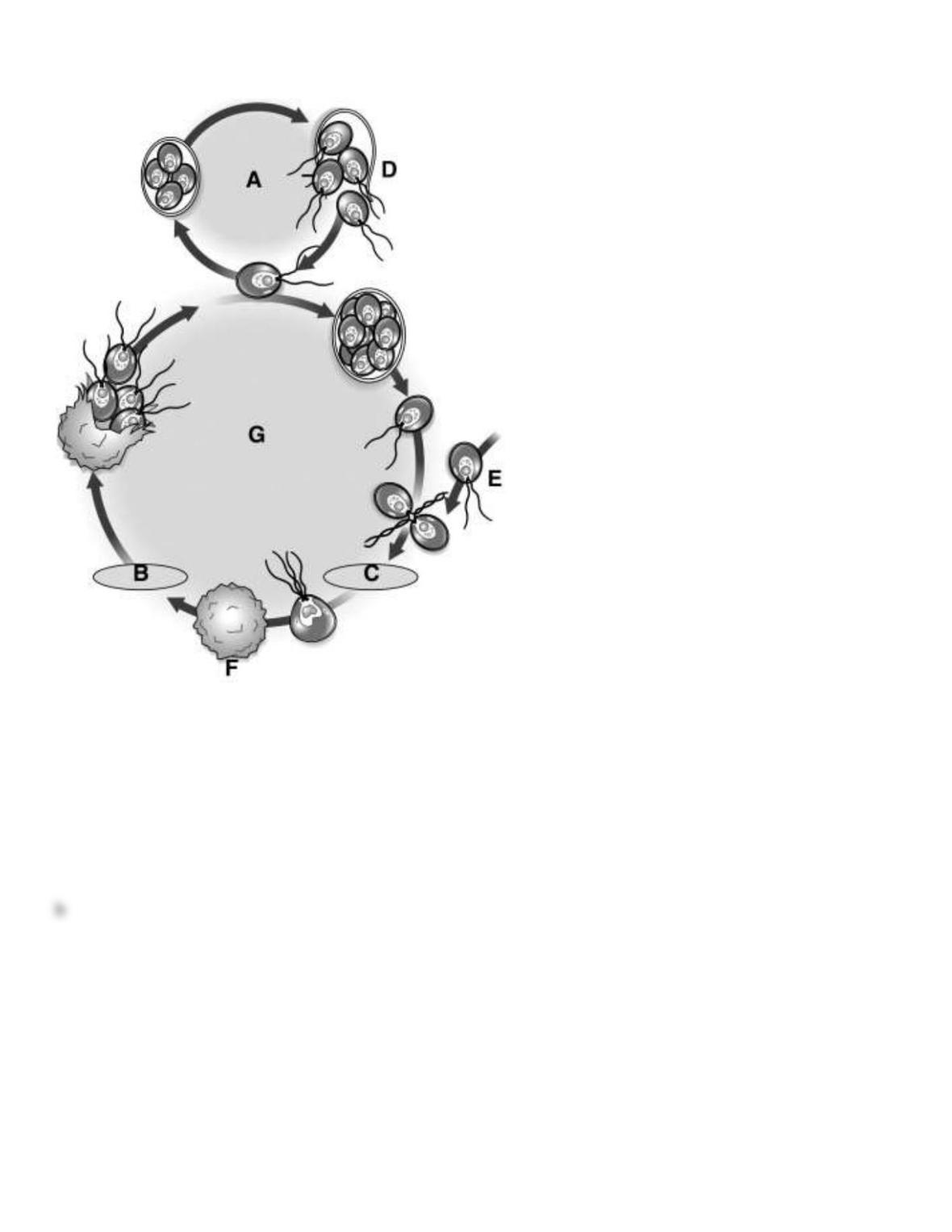
80. Figure 20-1
Refer to Figure 20-1. Which letter best indicates a zoospore?
a.
D only
b.
E only
c.
F only
d.
both D and E
e.
both E and F
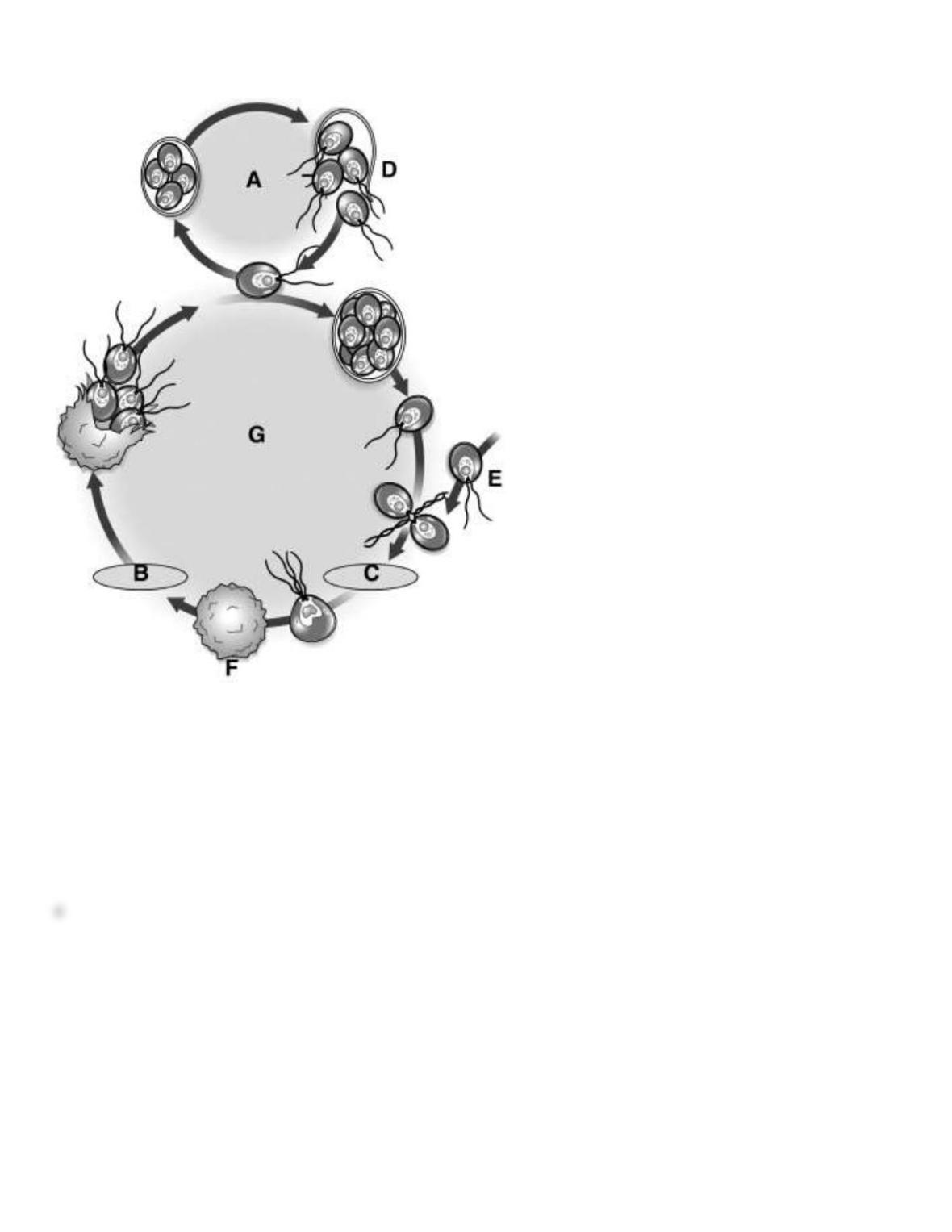
81. Figure 20-1
Refer to Figure 20-1. Which letter best indicates the process of meiosis?
a.
A
b.
B
c.
C
d.
D
e.
F
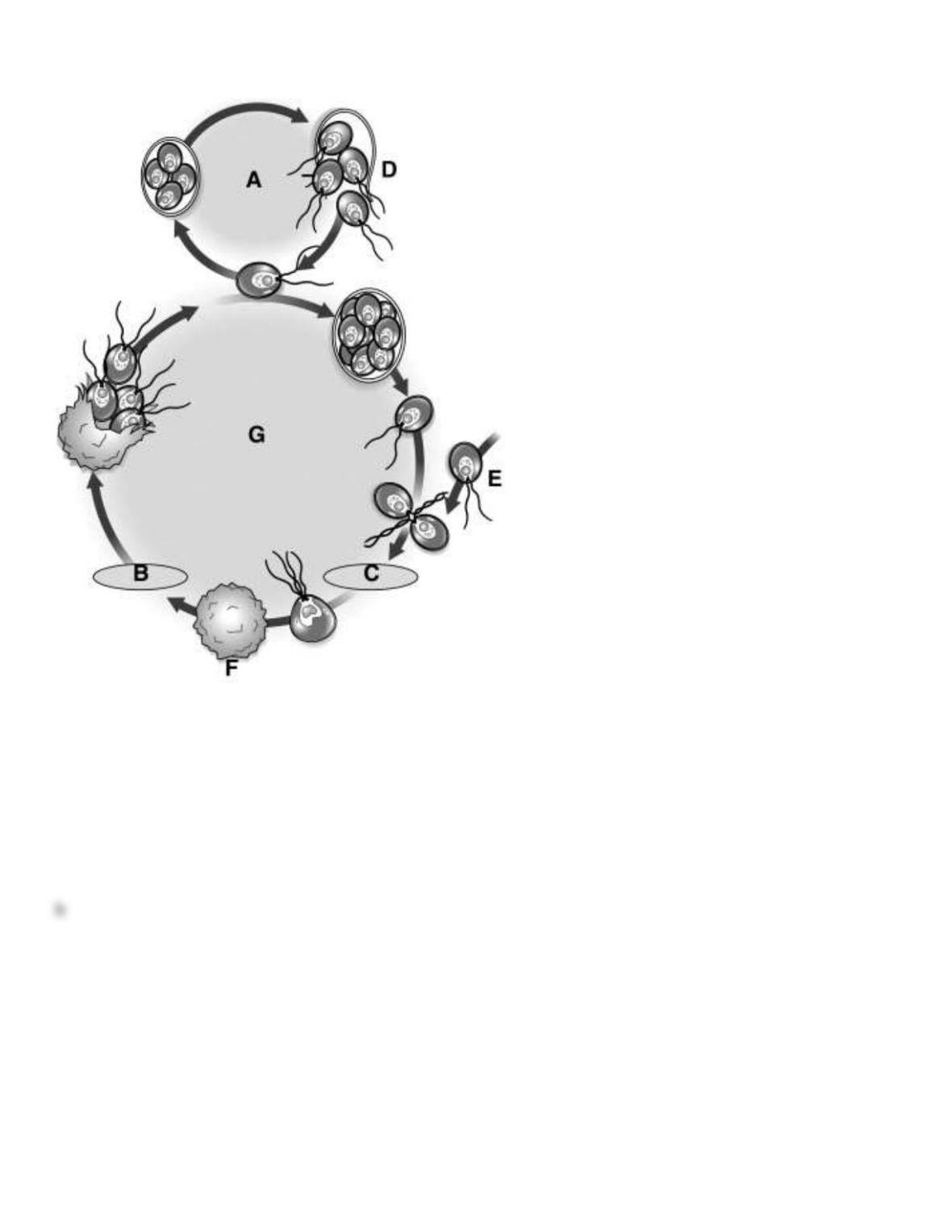
82. Figure 20-1
Refer to Figure 20-1. Which letter best indicates a diploid cell?
a.
D only
b.
E only
c.
F only
d.
both D and E
e.
both E and F
83. Figure 20-1
Refer to Figure 20-1. Which letter best indicates a gemete?
a.
D only
b.
E only
c.
F only
d.
both D and E
e.
both E and F
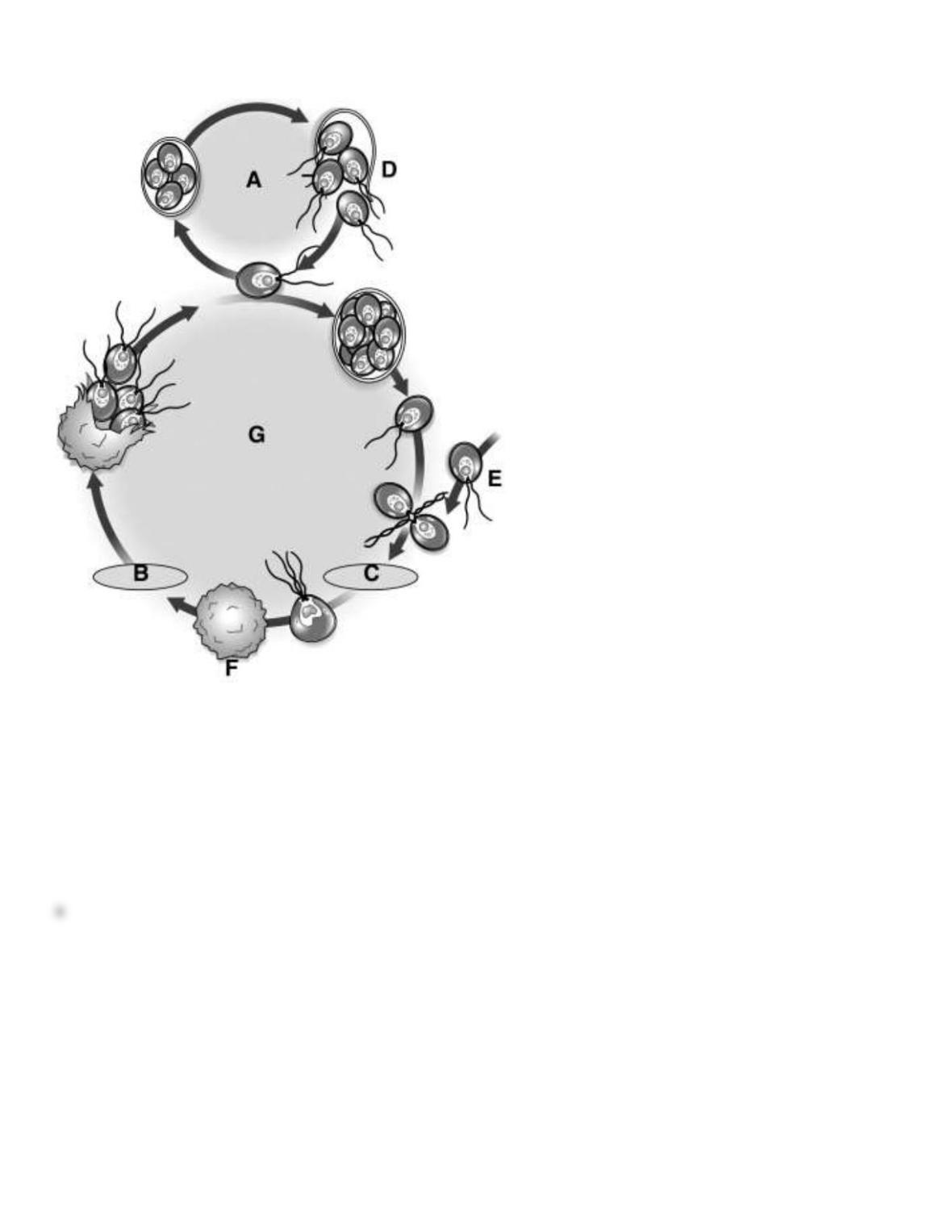
84. Figure 20-1
Refer to Figure 20-1. Which letter best indicates a cell in the asexual cycle?
a.
D only
b.
E only
c.
F only
d.
both E and F
e.
D, E and F
85. Describe asexual cell division in diatoms. What triggers sexual reproduction?
86. What features do the green algae (phylum Chlorophyta) have in common with plants?
87. How does the multicellular nature of the red and the brown algae differ from that in plants?