Microbiology: An Introduction, 13e (Tortora et al.)
Chapter 2 Chemical Principles
2.1 Multiple-Choice Questions
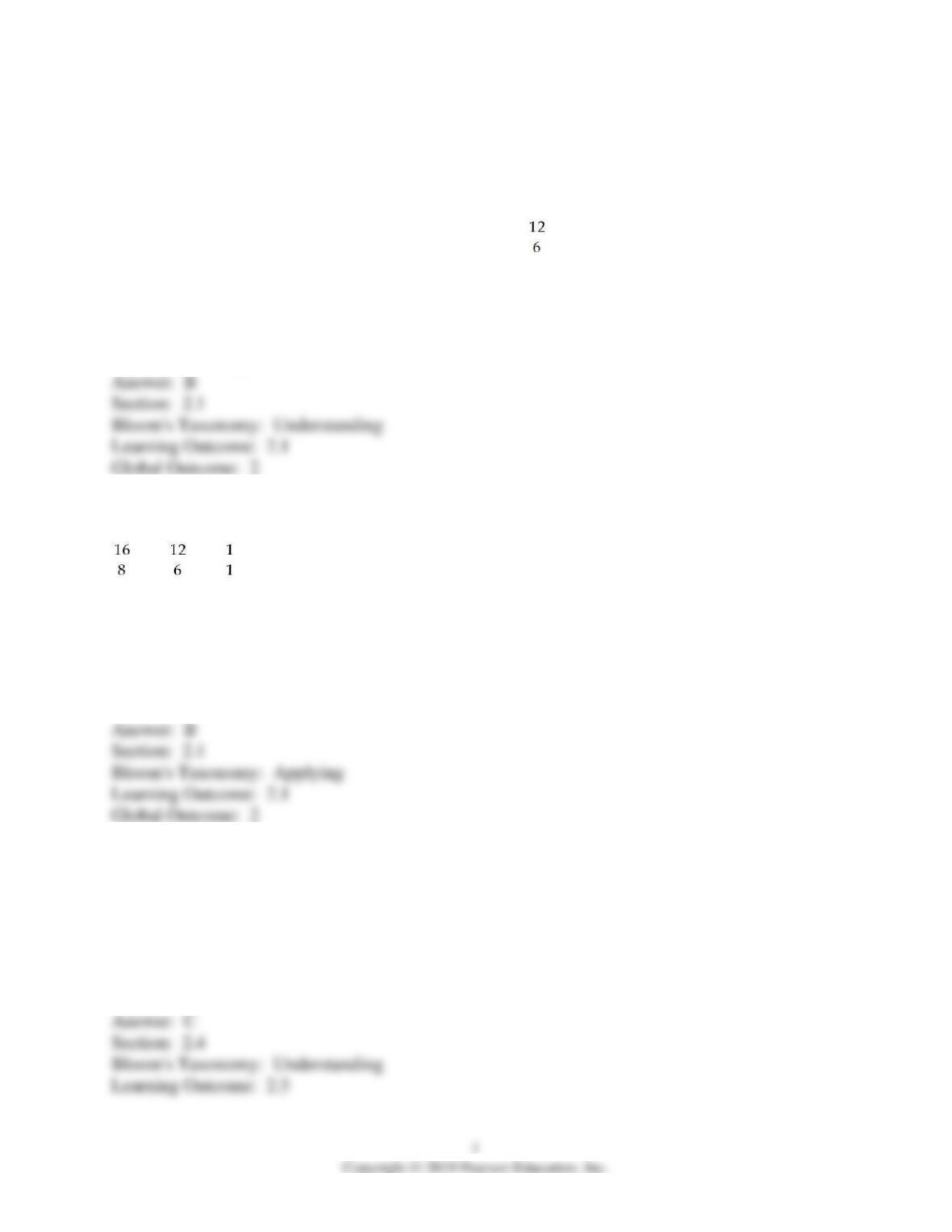
1) Which of the following statements about the atom is C FALSE?
A) It has 6 protons in its nucleus.
B) It has 12 neutrons in its nucleus.
C) It has 6 electrons orbiting the nucleus.
D) Its atomic number is 6.
E) Its atomic weight is 12.
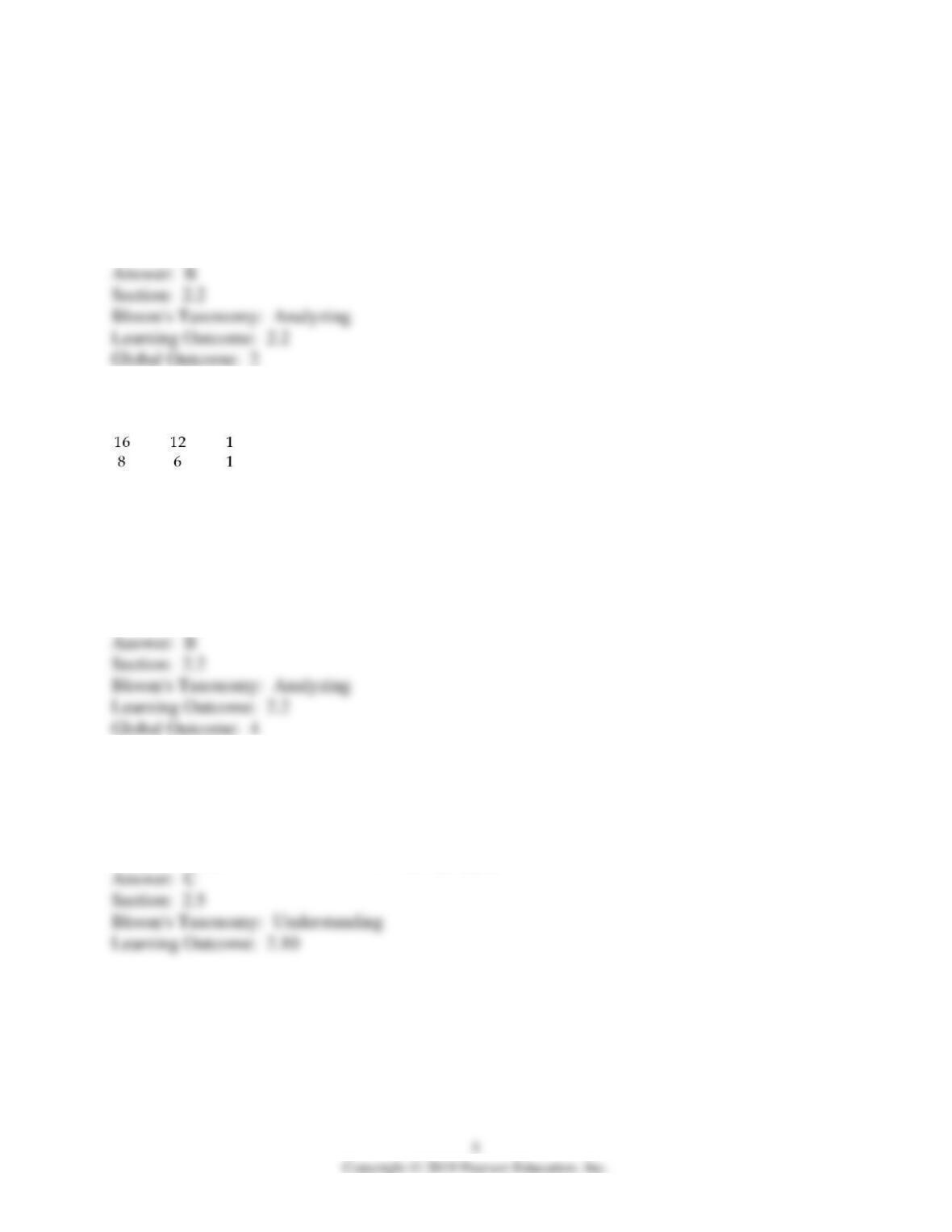
2) Table 2.1
O C H
Using the information in Table 2.1, calculate the molecular weight of ethanol, C2H5OH.
A) 96
B) 46
C) 34
D) 33
E) The answer cannot be determined.
3) Antacids neutralize acid by the following reaction. Identify the salt in the following equation:
Mg(OH)2 + 2HCl → MgCl2 + H2O
A) Mg(OH)2
B) HCl
C) MgCl2
D) H2O
E) None of the answers is correct.
4) Which of the following statements is FALSE?
A) Salts readily dissolve in water.
B) Water molecules are formed by hydrolysis.
C) Water freezes from the top down.
D) Water is formed as a part of a dehydration synthesis reaction.
E) Water is a polar molecule.
5) Which of the following is the type of bond holding K+ and I– ions in KI?
A) ionic bond
B) covalent bond
C) hydrogen bond
6) Which of the following is the type of bond between molecules of water in a beaker of water?
A) ionic bond
B) covalent bond
C) hydrogen bond
7) What is the type of bond holding hydrogen and oxygen atoms together in a single H2O
molecule?
A) ionic bond
B) covalent bond
C) hydrogen bond
3
8) Identify the following reaction: Glucose + Fructose → Sucrose + Water
A) dehydration synthesis reaction
B) hydrolysis reaction
C) exchange reaction
D) reversible reaction
E) ionic reaction
9) Identify the following reaction: Lactose + H2O → Glucose + Galactose
A) dehydration synthesis reaction
B) hydrolysis reaction
C) exchange reaction
D) reversible reaction
E) ionic reaction
10) Identify the following reaction: HCl + NaHCO3 → NaCl + H2CO3
A) dehydration synthesis reaction
B) hydrolysis reaction
C) exchange reaction
D) reversible reaction
E) ionic reaction
11) Identify the following reaction: NH4OH ⇌ NH3 + H2O
A) dehydration synthesis reaction
B) hydrolysis reaction
C) exchange reaction
D) reversible reaction
E) ionic reaction
12) Which type of molecule contains the alcohol glycerol?
A) carbohydrate
B) phospholipids
C) DNA
D) protein
13) Which type of molecule is composed of (CH2O) units?
A) carbohydrate
B) lipid
C) nucleic acid
D) protein
14) Which type of molecule contains –NH2 (amino) groups?
A) carbohydrate
B) triglycerides
C) nucleic acid
D) protein
15) Which type of molecule NEVER contains a phosphate group?
A) triglycerides
B) phospholipid
C) nucleic acid
D) ATP
16) Based upon the valence numbers of the elements magnesium (2) and hydrogen (1), predict
how many covalent bonds would form between these atoms to achieve the full complement of
electrons in their outermost energy shells.
A) one
B) two
C) three
D) four
17) Table 2.1
O C H
Using the information in Table 2.1, calculate the number of moles in 92 grams of ethanol,
C2H5OH.
A) 1
B) 2
C) 3
D) 4
E) The answer cannot be determined.
18) Which of the following statements regarding protein structure is FALSE?
A) The primary structure is formed by covalent bonding between amino acid subunits.
B) Secondary structures are formed only from hydrogen bonds.
C) Tertiary structures are formed only from covalent bonds.
D) Quaternary structures involved multiple polypeptides.
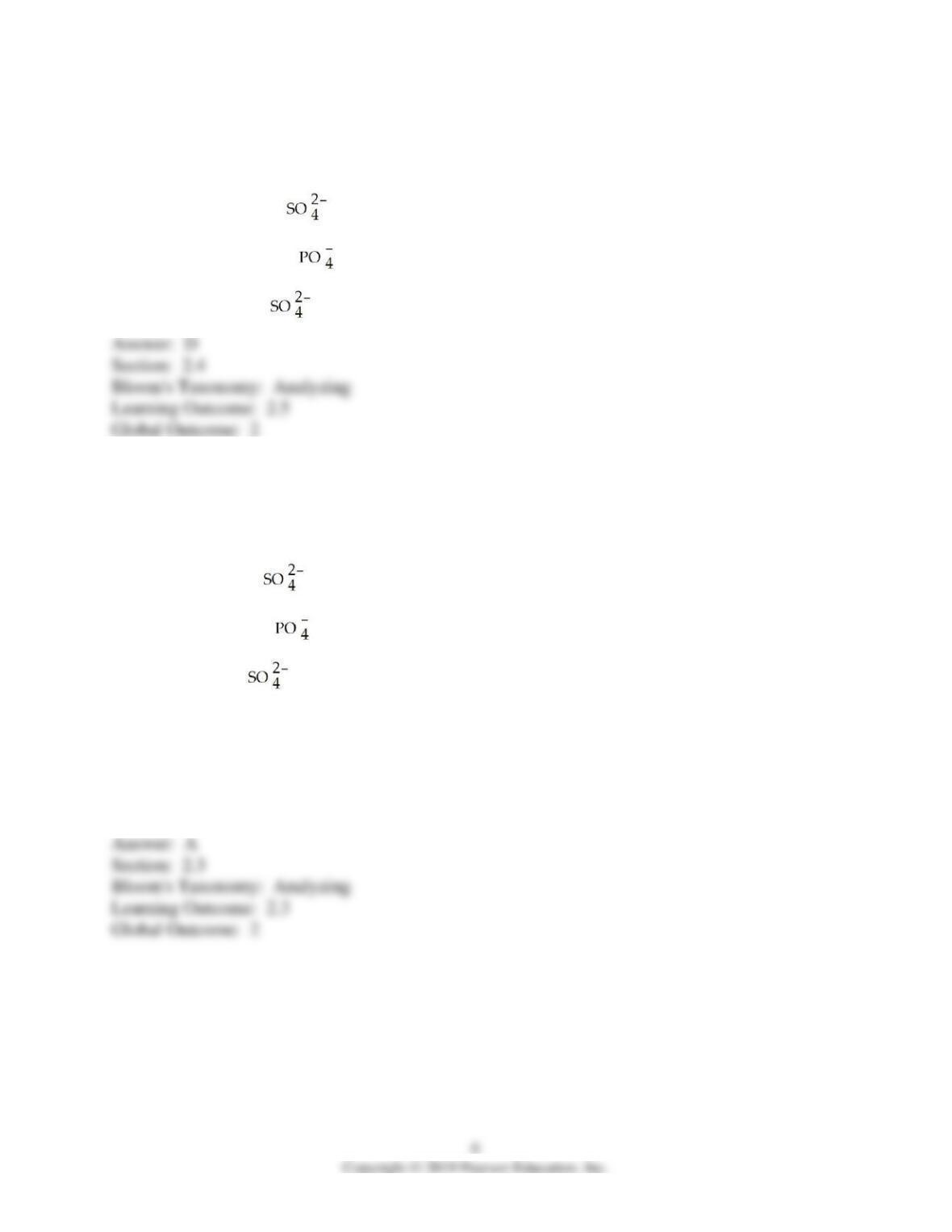
19) Which of the following pairs is mismatched?
A) NaOH ⇌ Na+ + OH– is a base
B) HF ⇌ H+ + F– is an acid
C) MgSO4 ⇌ Mg2+ + is a salt
D) KH2PO4 ⇌ K+ + H2 is an acid
E) H2SO4 ⇌ 2H+ + is an acid
20) Table 2.2
NaOH ⇌ Na+ + OH– is a base
HF ⇌ H+ + F– is an acid
MgSO4 ⇌ Mg2+ + is a salt
KH2PO4 ⇌ K+ + H2 is an acid
H2SO4 ⇌ 2H+ + is an acid
Which of the following statements about the reactions in Table 2.2 is FALSE?
A) They are exchange reactions.
B) They are ionization reactions.
C) They occur when the reactants are dissolved in water.
D) They are dissociation reactions.
E) They are reversible reactions.
21) What is the type of weak bond between the hydrogen of one molecule and the nitrogen of
another molecule, where the two don’t actively share an electron?
A) ionic bond
B) covalent bond
C) hydrogen bond
D) disulfide bond
E) hydrophobic bond
22) What is the type of strong chemical bond between carbon, hydrogen, and oxygen atoms in a
single organic molecule?
A) ionic bond
B) covalent bond
C) hydrogen bond
23) What is the type of bond between ions in salt?
A) ionic bond
B) covalent bond
C) hydrogen bond
24) A scientist wants to perform a test that will indicate whether a nucleic acid sample is
composed of either RNA or DNA. Testing for the presence of which of the following is most
appropriate in this situation?
A) phosphate
B) nitrogen
C) guanine
D) uracil
E) thymine
25) Structurally, ATP is most like which type of molecule?
A) carbohydrate
B) lipid
C) protein
D) nucleic acid
26) What do genes consist of?
A) carbohydrates
B) lipids
C) proteins
D) nucleic acids
27) Which molecule is composed of a chain of amino acids?
A) carbohydrate
B) lipid
C) protein
D) nucleic acid
28) Which are the primary molecules making up plasma membranes in cells?
A) carbohydrates
B) lipids
C) proteins
D) nucleic acids
29) The antimicrobial drug imidazole inhibits sterol synthesis. This would most likely interfere
with
A) bacterial cell walls.
B) fungal cell walls.
C) eukaryotic plasma membranes.
D) prokaryotic plasma membranes.
E) genes.
Figure 2.1
30) In Figure 2.1, which is an alcohol?
A) a
B) b
C) c
D) d
E) e
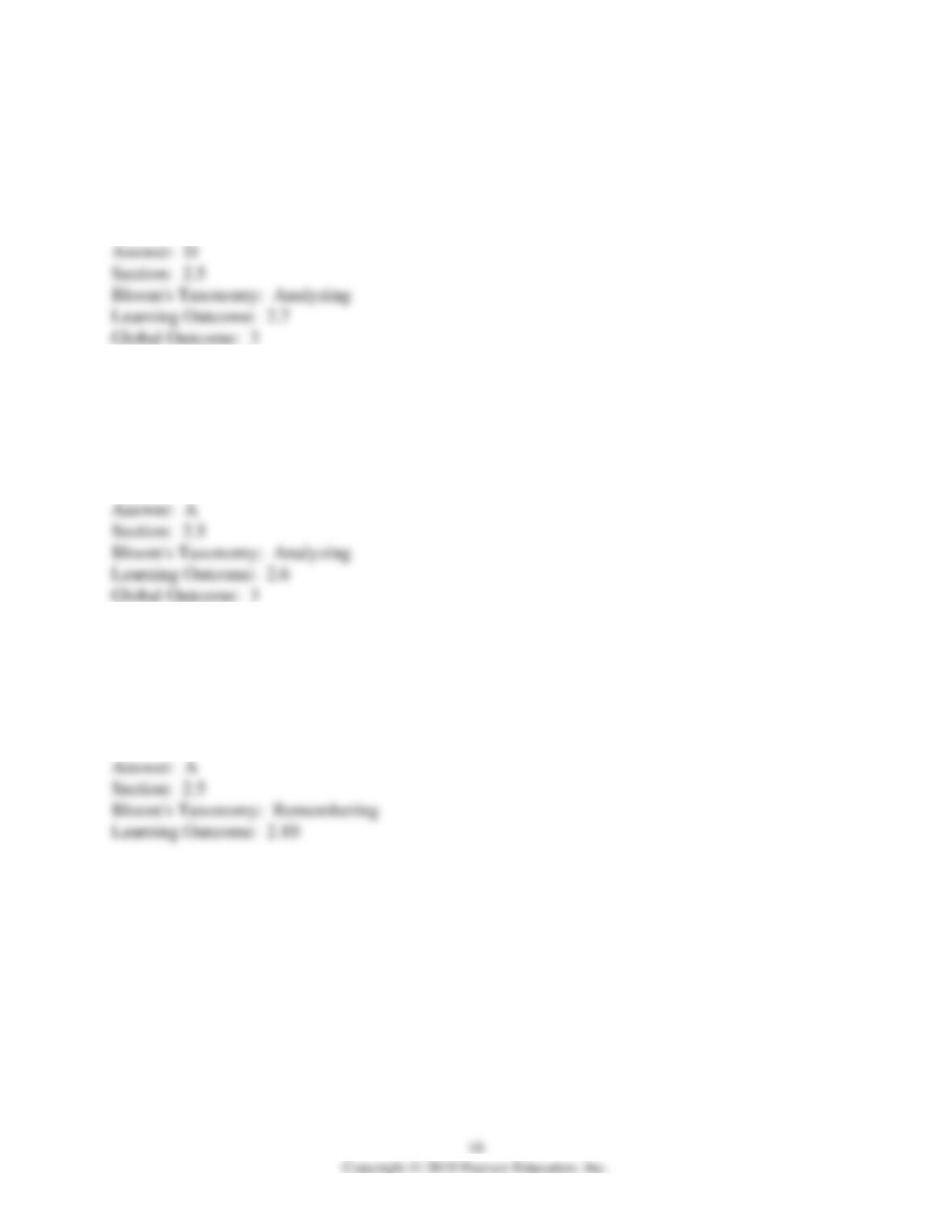
31) Which compound in Figure 2.1 is an ester?
A) a
B) b
C) c
D) d
E) e
32) Which compound in Figure 2.1 is an organic acid?
A) a
B) b
C) c
D) d
E) e
33) Most amino acids found in cells demonstrate what type of chirality?
A) L-isomers
B) D-isomers
C) C-isomers
D) B-isomers
E) A-isomers
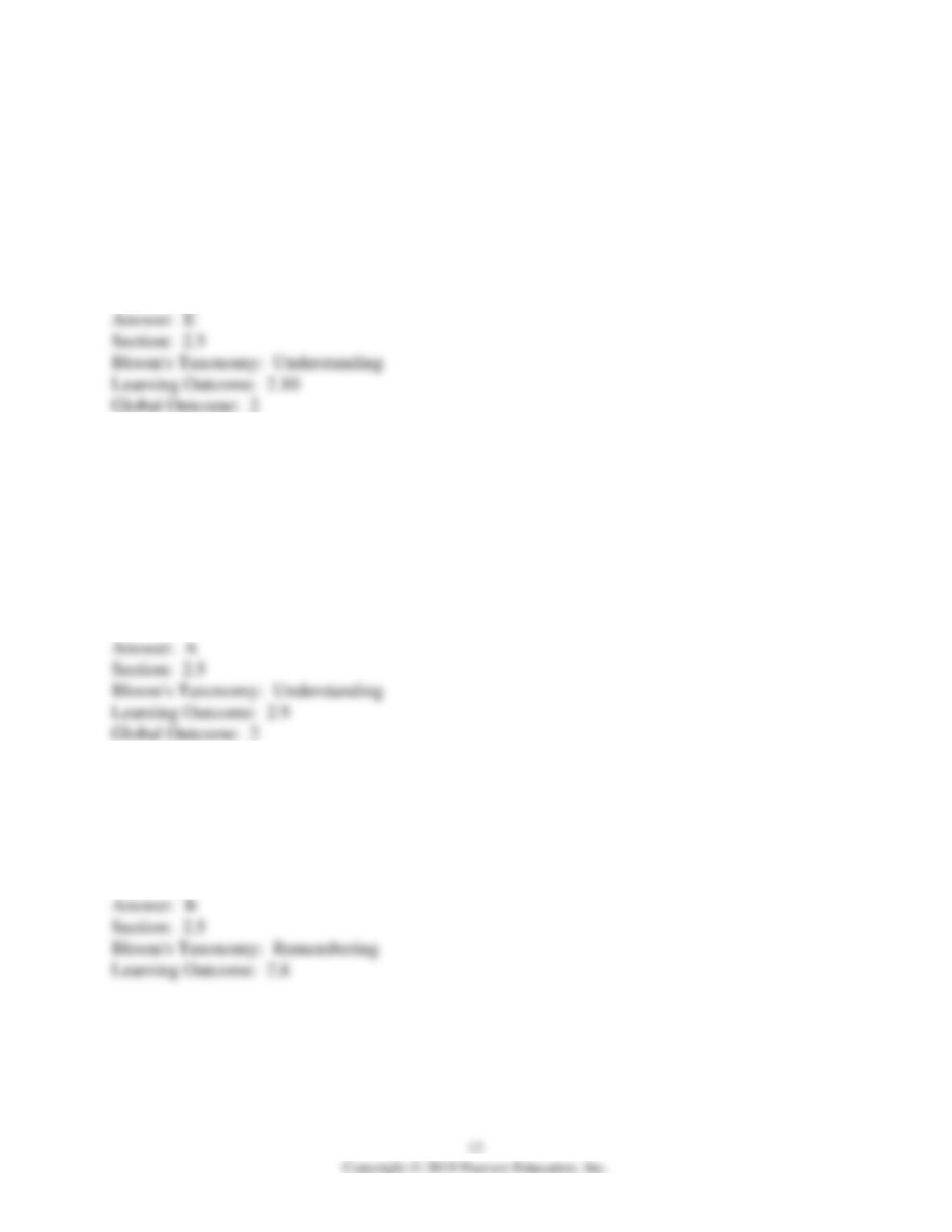
34) Figure 2.3
What kind of bond is at the arrow in Figure 2.3?
A) disulfide bridge
B) double covalent bond
C) hydrogen bond
D) ionic bond
E) peptide bond
35) An E. coli culture that has been growing at 37°C is moved to 25°C. Which of the following
changes must be made in its plasma membrane to help it cope with the decrease in temperature?
A) The number of phosphate groups must increase.
B) The viscosity must increase.
C) The number of saturated chains must increase.
D) The number of unsaturated chains must increase.
E) No changes are necessary.
36) Radioisotopes are frequently used to label molecules in a cell. The fate of atoms and
molecules in a cell can then be followed. Assume Saccharomyces cerevisiae is grown in a
nutrient medium containing the radioisotope 35S. After a 48-hour incubation, the 35S would
most likely be found in the S. cerevisiae’s
A) carbohydrates.
B) nucleic acids.
C) water.
D) lipids.
E) proteins.
37) Radioisotopes are frequently used to label molecules in a cell. The fate of atoms and
molecules in a cell can then be followed. Assume Saccharomyces cerevisiae is grown in a
nutrient medium containing the radioisotope 32P. After a 48-hour incubation, the majority of the
32P would be found in the S. cerevisiae’s
A) plasma membrane.
B) cell wall.
C) water.
D) proteins.
E) carbohydrates.
38) Starch, dextran, glycogen, and cellulose are polymers of
A) amino acids.
B) glucose.
C) fatty acids.
D) nucleic acids.
E) acids.
39) Which of the following is a base?
A) C2H5OCOOH → H+ + C2H5OCOO–
B) C2H5OH
C) NaOH → Na+ + OH–
D) H2O → H+ + OH–
E) H2CO
40) Two glucose molecules are combined by a dehydration synthesis reaction to make a maltose
molecule. What is the chemical formula for maltose?
A) C3H6O3
B) C6H12O6
C) C12H24O12
D) C12H22O11
E) C12H23O10
41) If an amino acid contained a large hydrocarbon (a group of multiple carbons and hydrogens
linked together) as its side group, in which of the following categories could it be appropriately
designated?
A) hydrophilic
B) polar
C) nonpolar
D) basic
E) acidic

42) Identify the two functional groups that interact to form a peptide bond.
A) amino group and carboxyl group
B) carboxyl group and ester group
C) amino group and ester group
D) ester group and hydroxyl group
E) hydroxyl group and amino group
43) A dehydration synthesis reaction between glucose (C6H12O6) and fructose (C6H12O6)
produces a molecule of sucrose (C12H22O11). Why don’t the two individual molecular formulae
add up to the same number of atoms in the sucrose product?
A) Oxygen must be burned/consumed during the reaction.
B) In a dehydration reaction, a water molecule (H2O) is removed from the final molecule
formed.
C) In a dehydration reaction, a water molecule (H2O) is added to the final molecule formed.
D) Hydrogen must be burned/consumed during the reaction.
44) In terms of similarities, which two molecules would be isomers of each other?
A) glucose and sucrose
B) glucose and maltose
C) sucrose and fructose
D) fructose and glucose
45) Subtle differences exist in the plasma membrane molecules of the organisms in the three
Domains. _______ functional groups are found in the plasma membrane molecules of bacteria
and eukarya, while ________ functional groups are found in the plasma membrane molecules of
archaea.
A) amino; carboxyl
B) ether; ester
C) ester; ether
D) ketone; aldehyde
E) aldehyde; ketone
46) What is the main/most important factor that differentiates methanol, ethanol, and isopropanol
from each other?
A) the specific location of the hydroxyl functional group
B) the number of carbon atoms in the molecule
C) the number of hydrogen atoms in each molecule
D) the location of the carboxyl functional group
E) the number of hydroxyl functional groups present
47) A friend tells you that he recently read an article claiming that you need to work to restore
the alkalinity of your blood to remain healthy. Why is this impossible and impractical (and
unhealthy even if you could make it happen)?
A) The normal pH of human blood is in the acidic range, so making it alkaline would kill you.
B) Blood is usually around the neutral (pH 7) range, not the alkaline range, in healthy human
beings.
C) Blood contains buffers that prevent the pH from changing too drastically, so trying to forcibly
alter blood pH wouldn’t work effectively.
D) The normal pH of human blood is already in the alkaline range, so it isn’t necessary to
“restore” it to that point.
E) Blood is usually around the neutral (pH 7) range, not the alkaline range, in healthy human
beings AND blood contains buffers that prevent the pH from changing too drastically, so trying
to forcibly alter blood pH wouldn’t work effectively.
48) Which one of the following microbes would grow best at pH 1-3.5?
A) Cyanobacteria in ocean water
B) Propionibacterium acnes bacteria on human skin
C) Acidithiobacillus ferrooxidans in the runoff from a copper mine
49) You put a spoonful of table salt, NaCl, into a glass of water and it dissolves. You repeat this
test, but drop the spoonful of salt into a glass of vegetable oil instead. What happens, and why?
A) The salt doesn’t dissolve because oil is nonpolar, and couldn’t dissociate the ionic bond
between the Na+ and Cl– ions.
B) The salt dissolves in the oil just the same as it did in the water.
C) The salt dissolves in the oil, but takes much longer to do so because oil molecules move more
slowly than water, slowing the dissolution process down.
D) The salt doesn’t dissolve because oil is polar, and only nonpolar solvents would cause the
dissociation of the Na+ and Cl– ions in the table salt.
50) Which one of the following would be the most difficult covalent bond to break in a chemical
reaction?
A) Na+ and Cl– in NaCl
B) two oxygen atoms in a molecule of O2
C) two nitrogen atoms in a molecule of N2
D) two hydrogen atoms in a molecule of H2
2.2 True/False Questions
1) Elements only achieve the full complement of electrons in outermost energy shells by
donating away or sharing electrons.
2) Covalent bonds are always shared equally.
3) Individual covalent bonds are stronger than individual ionic bonds.
4) All chemical reactions are, in theory, reversible.
5) The formation of ADP from ATP can be defined as a hydrolytic reaction.
6) The density of liquid water is greater than the density of ice.
7) A basic solution is expected to contain more hydrogen ions than hydroxyl ions.
8) All forms of life function optimally at a pH of 7.
9) Water has recently been discovered to be lying just underneath the soil on Mars. This means it
is possible life as we know it may also exist (or may once have existed) on Mars.
10) Carbon dioxide is an organic molecule.

2.3 Essay Questions
1) Describe how the properties of phospholipids make these molecules well suited for plasma
membranes.
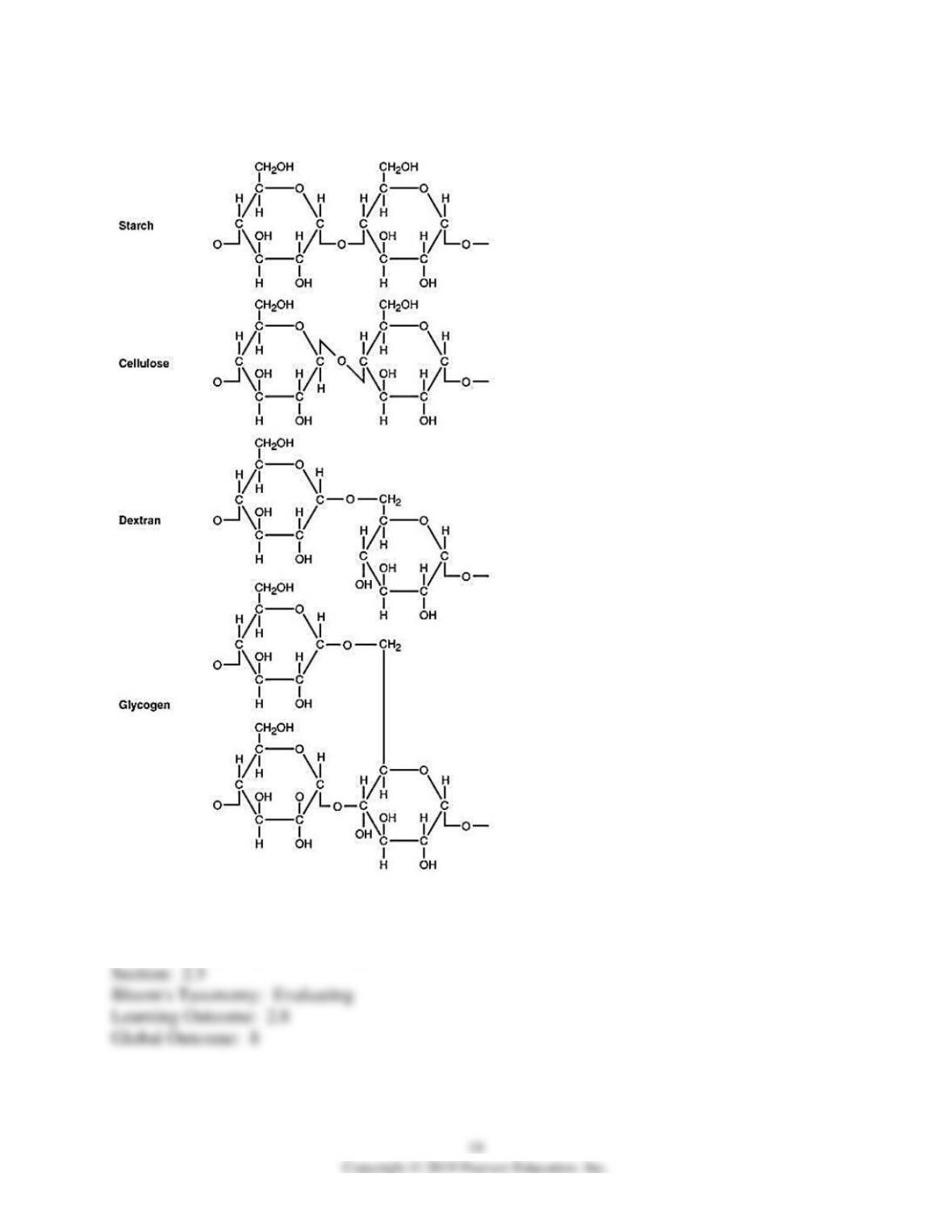
2) Figure 2.5
Use Figure 2.5 to answer the following. Starch, cellulose, dextran, and glycogen are
polysaccharides. How are they similar? To what are their different properties due? Why can’t an
enzyme that hydrolyzes starch degrade cellulose?
3) Compare a molecule of a nucleotide to ATP. Could a cell simply insert ATP into DNA
without altering it? Explain.
4) A scientist claims that when a protein is denatured, it can be expected that its secondary
structure will more likely be retained when compared to all other levels of protein structure
structures. Do you agree? Explain.
5) Water has recently been found just beneath the soil on Mars, but in frozen form. What does
this mean for both the prospect of finding life on Mars in some form, but also for the possibility
of humans to survive on/colonize the surface of Mars?