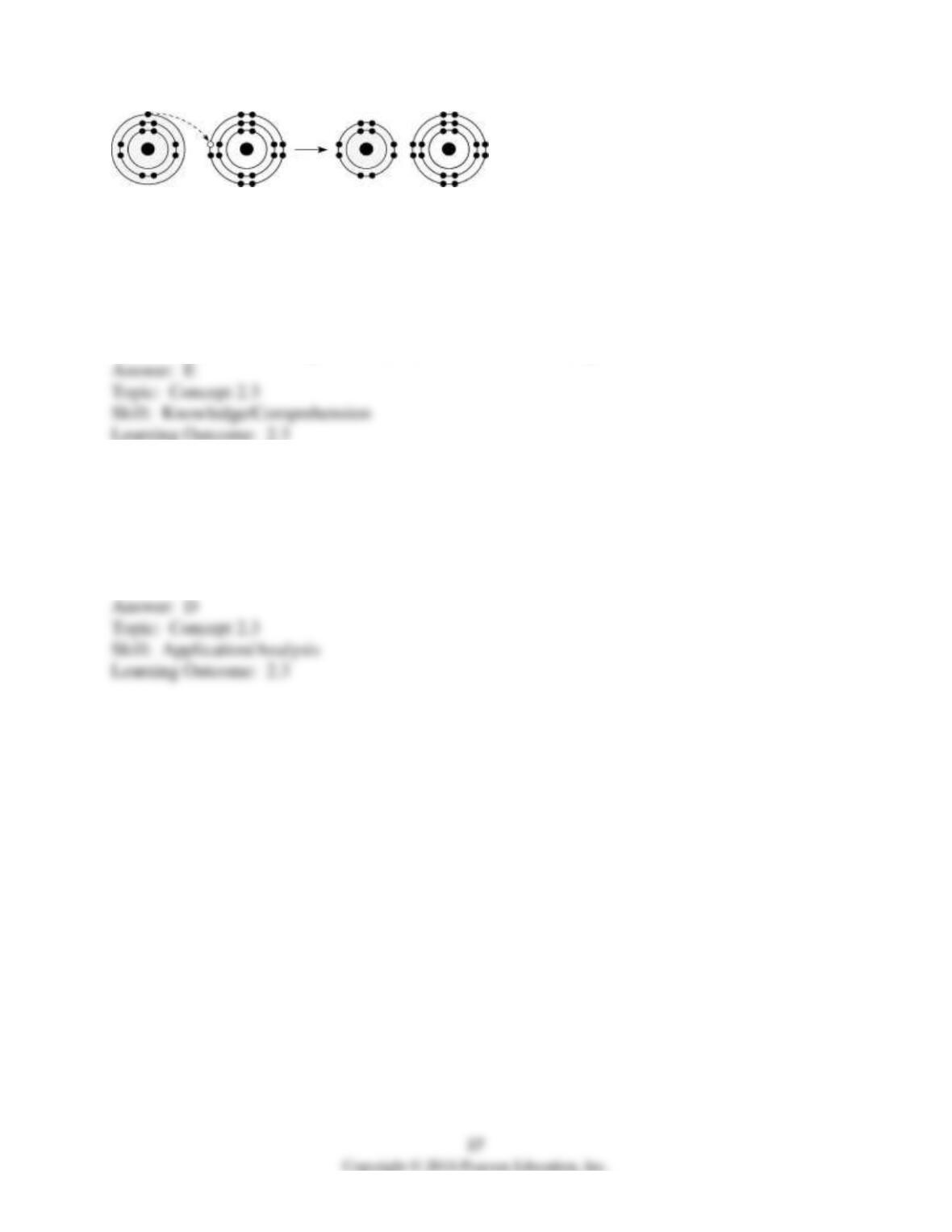
Figure 2.6
15) What results from the chemical reaction illustrated in Figure 2.6?
A) a cation with a net charge of +1
B) a cation with a net charge of -1
C) an anion with a net charge of +1
D) an anion with a net charge of -1
E) a cation with a net charge of +1 and an anion with a net charge of -1
16) What is the atomic number of the cation formed in the reaction illustrated in Figure 2.6?
A) 1
B) 8
C) 10
D) 11
E) 16
38
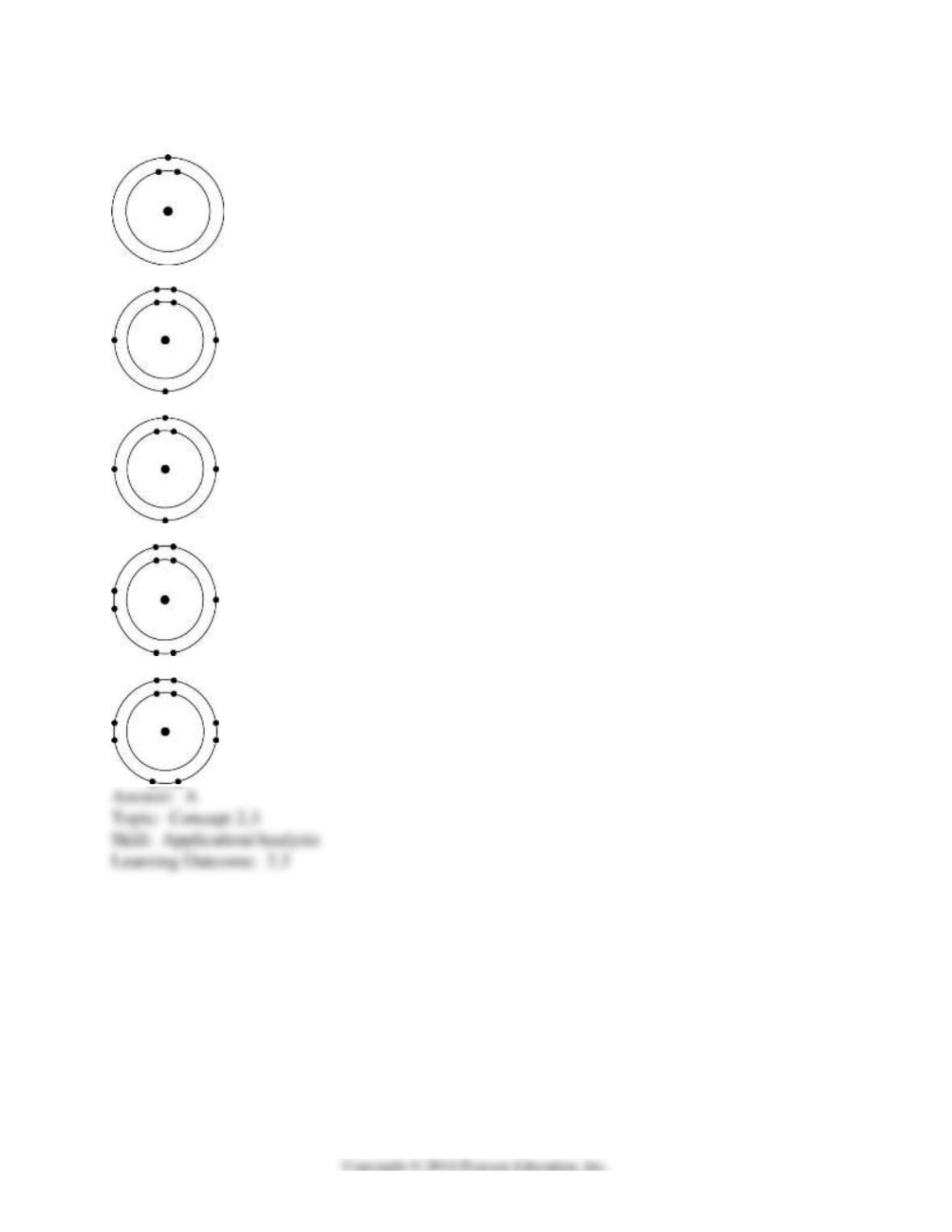
17) Which of the atoms shown would be most likely to form a cation with a charge of +1?
A)
B)
C)
D)
E)
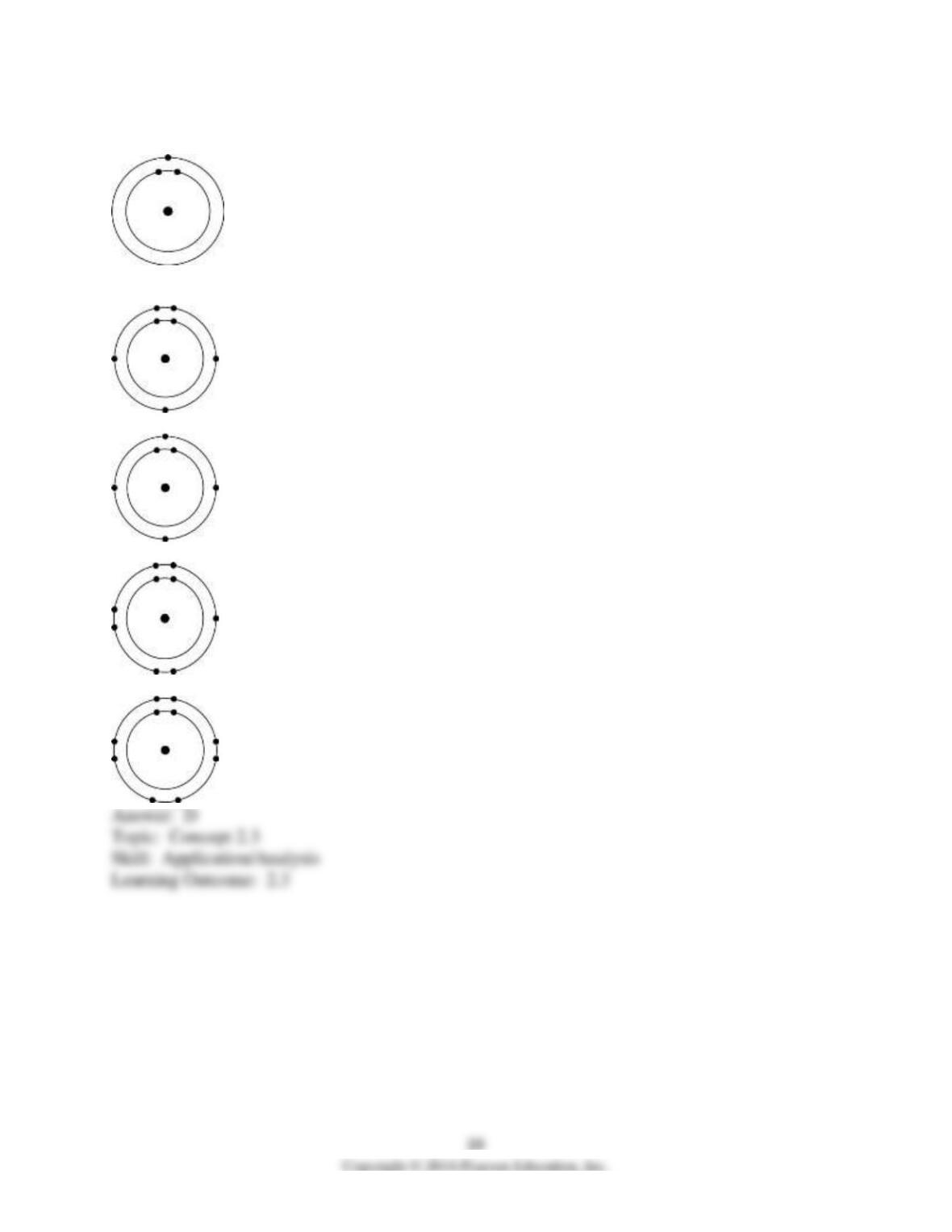
18) Which of the atoms shown would be most likely to form an anion with a charge of –1?
A)
B)
C)
D)
E)
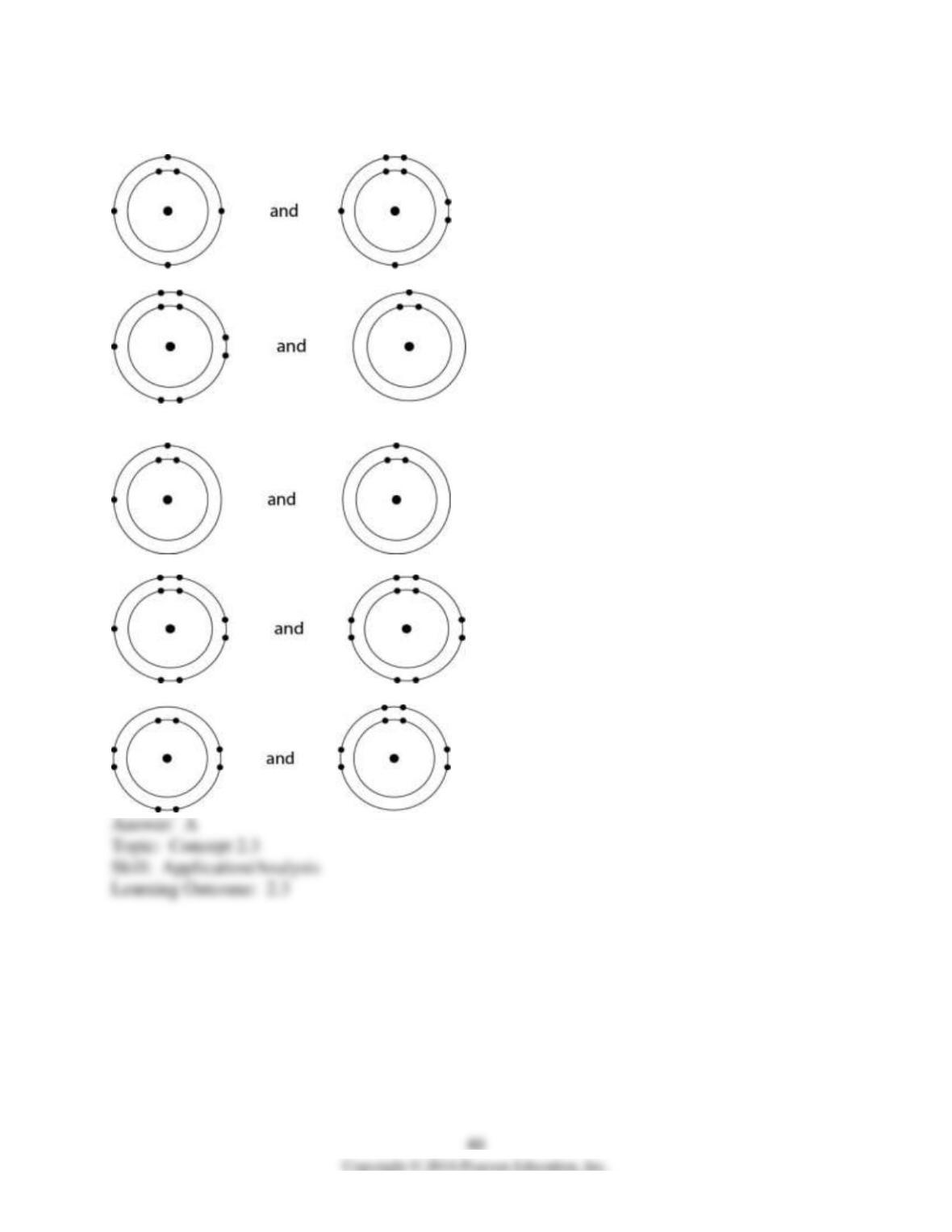
19) Which of the following pairs of atoms would be most likely to form a polar covalent bond?
A)
B)
C)
D)
E)
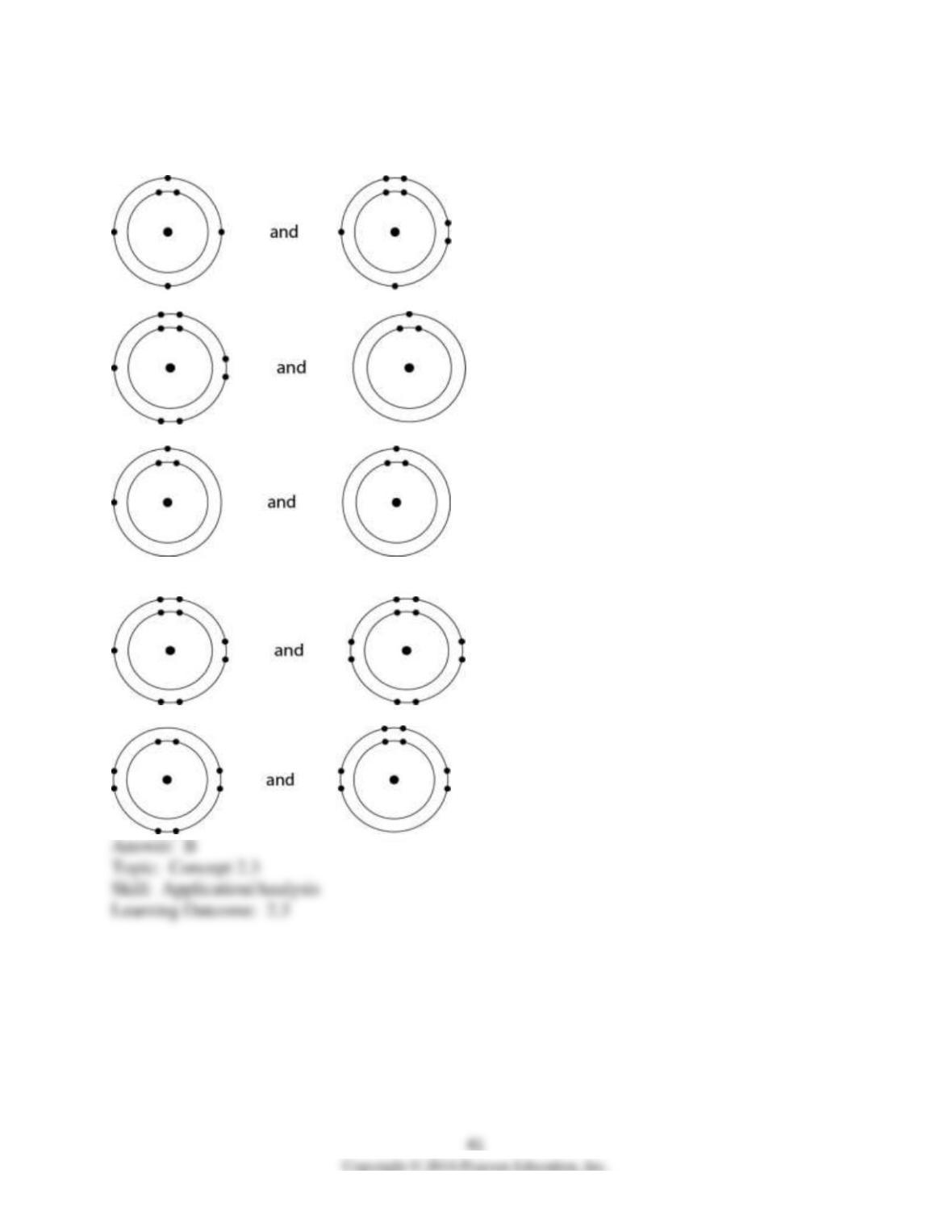
20) Which of the following pairs of atoms would be most likely to form ions and thus an ionic
bond?
A)
B)
C)
D)
E)
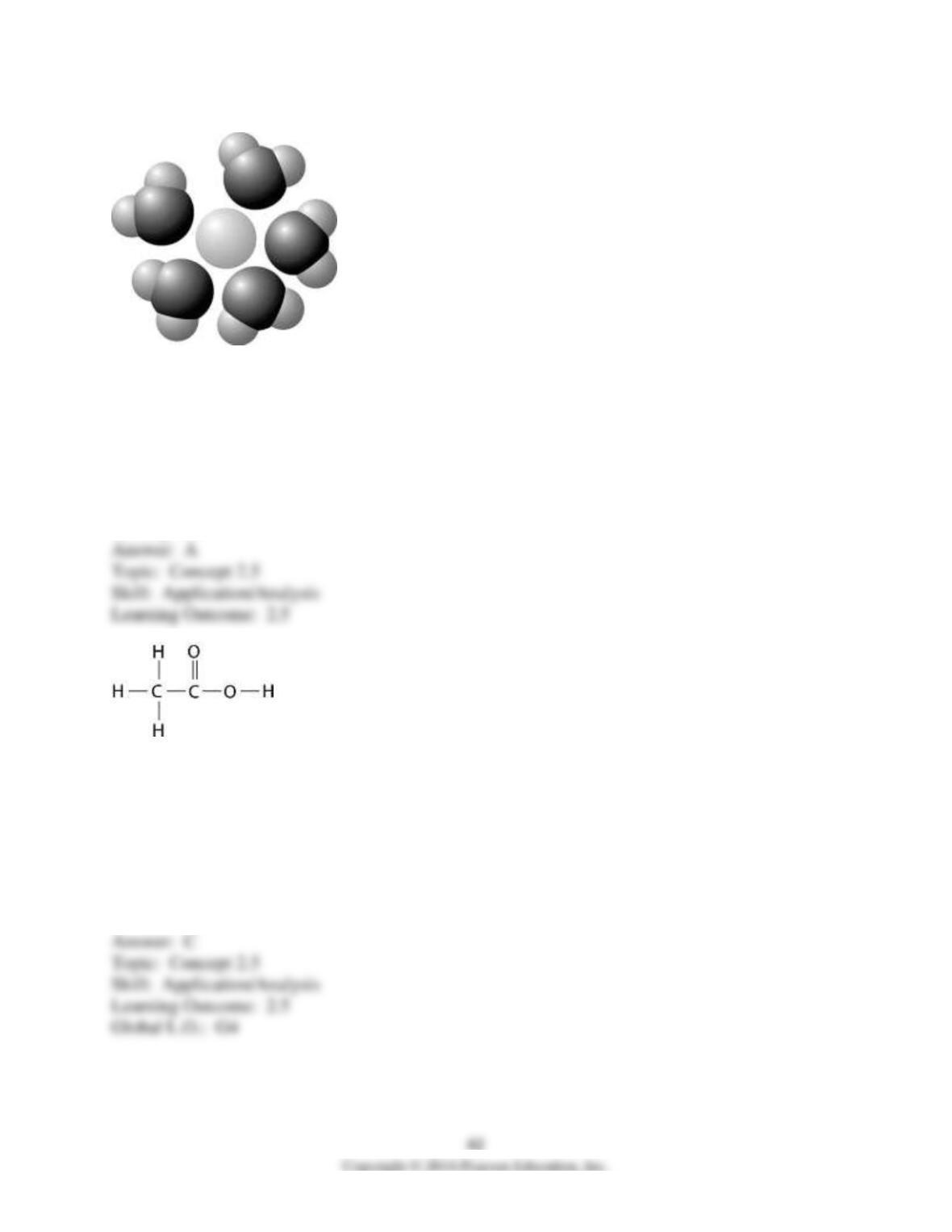
21)
Figure 2.7
Based on your knowledge of the polarity of water molecules, the solute molecule depicted in
Figure 2.7 is most likely
A) positively charged.
B) negatively charged.
C) without charge.
D) hydrophobic.
E) nonpolar.
Figure 2.8
22) How many grams would be equal to 1 mol of the compound shown in Figure 2.8?
(carbon = 12, oxygen = 16, hydrogen = 1)
A) 29
B) 30
C) 60
D) 150
E) 342
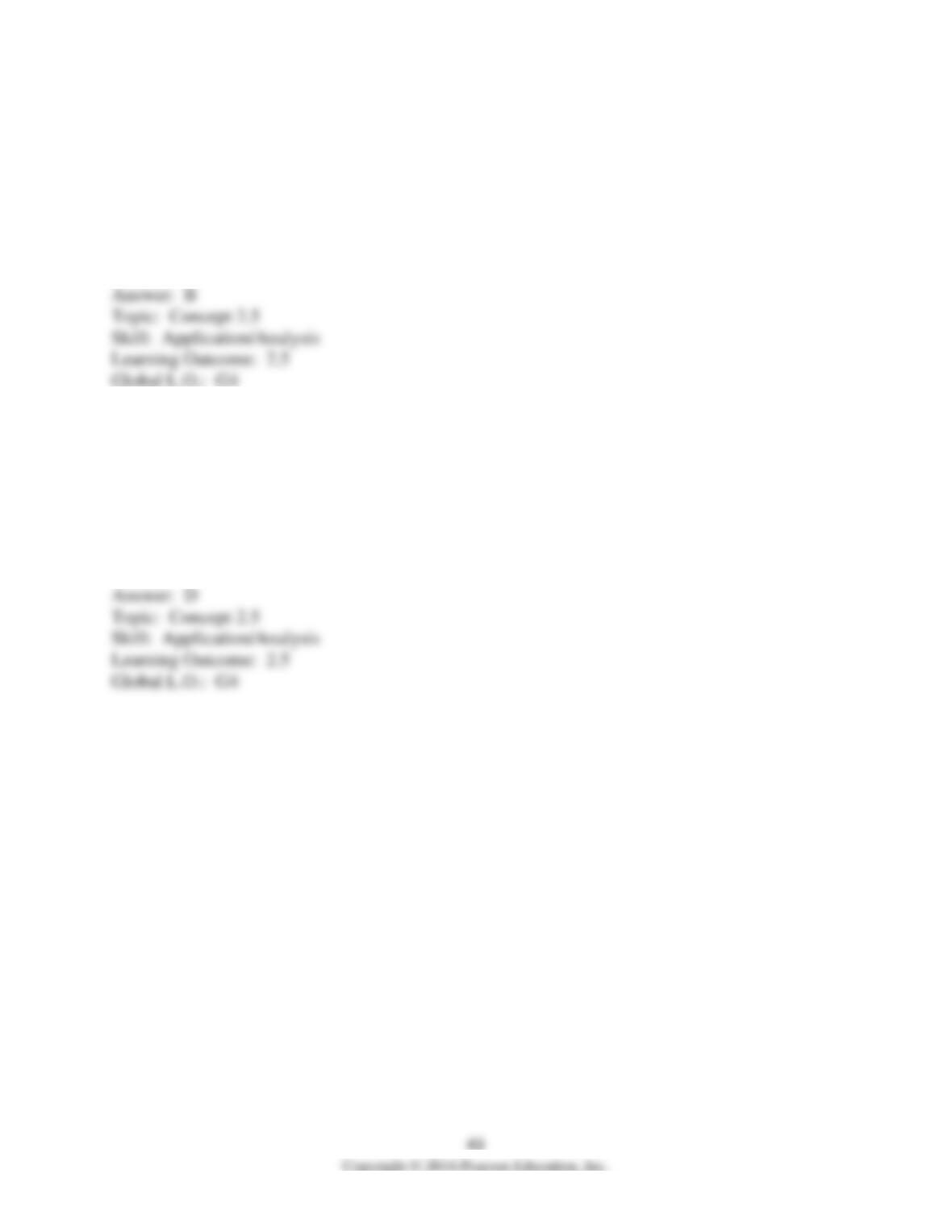
23) How many grams of the compound in Figure 2.8 would be required to make 1 L of a 0.5 M
solution?
(carbon = 12, oxygen = 16, hydrogen = 1)
A) 29
B) 30
C) 60
D) 150
E) 342
24) How many grams of the compound in Figure 2.8 would be required to make 2.5 L of a 1 M
solution?
(carbon = 12, oxygen = 16, hydrogen = 1)
A) 29
B) 30
C) 60
D) 150
E) 342
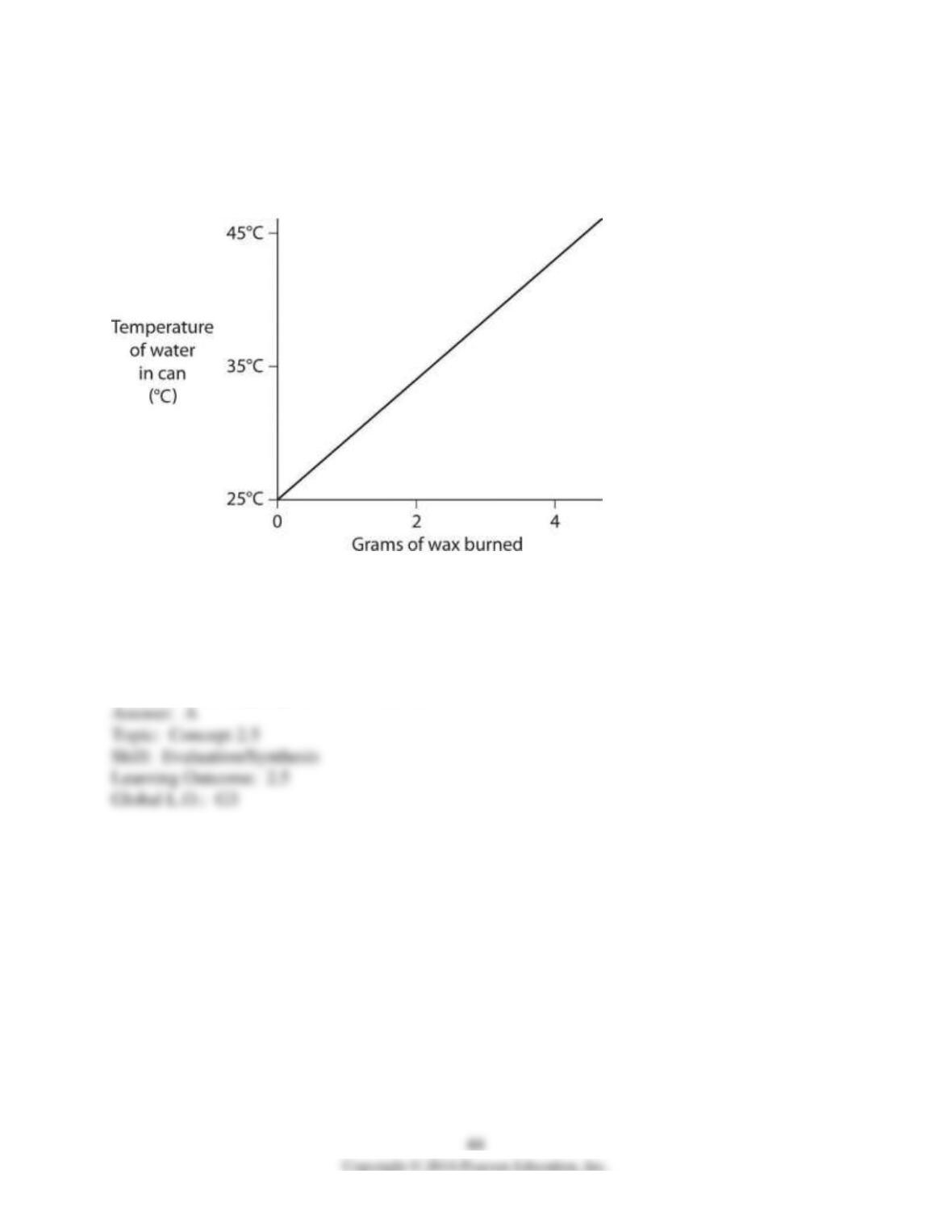
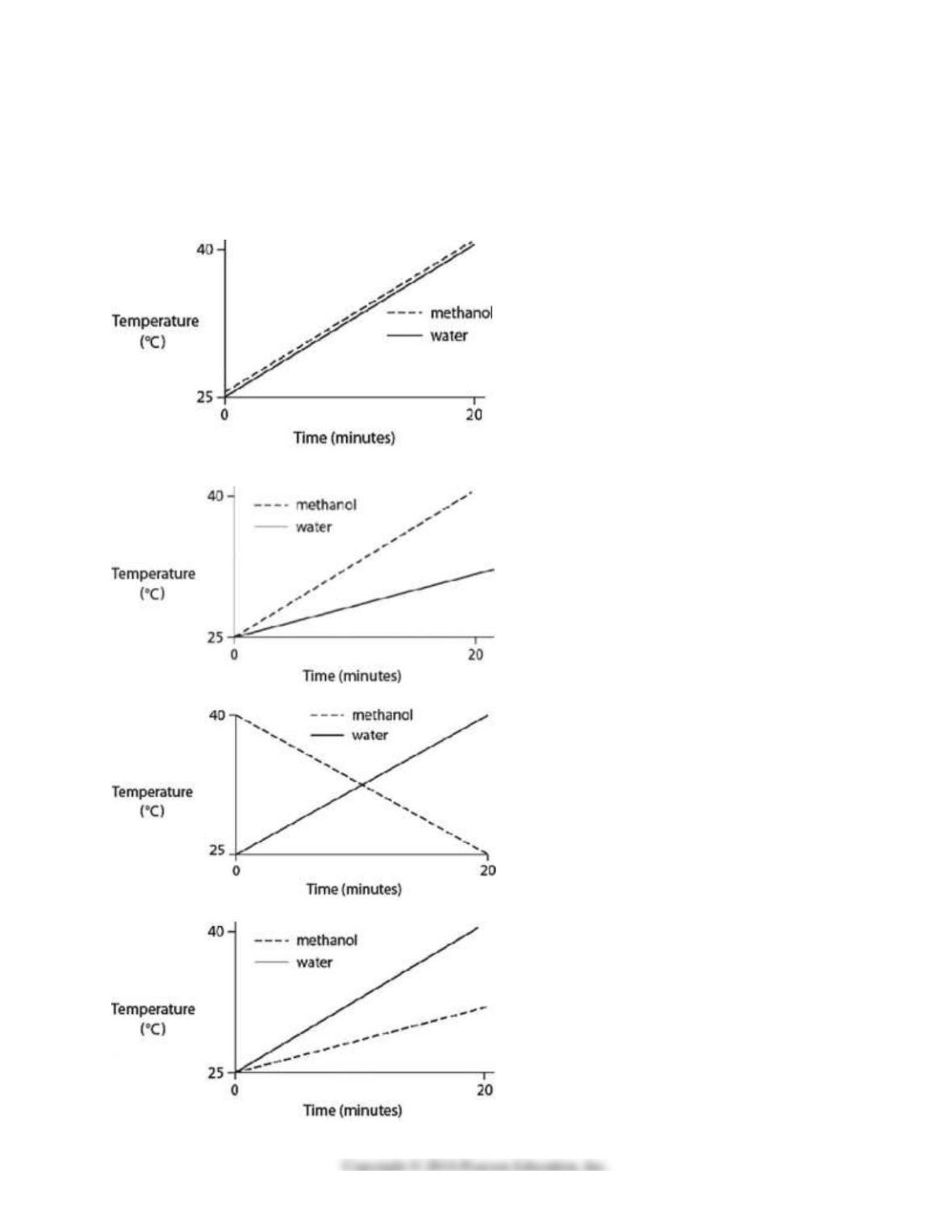
25) A small birthday candle is weighed. It is then lighted and placed beneath a metal can
containing 100 mL of water. Careful records are kept as the temperature of the water rises. Data
from this experiment are shown on the graph. What amount of heat energy is released in the
burning of candle wax? (Note that 1 liter of pure water has a mass of 1 kg.)
Figure 2.9
A) 0.5 kilocalorie per gram of wax burned
B) 5 kilocalories per gram of wax burned
C) 10 kilocalories per gram of wax burned
D) 20 kilocalories per gram of wax burned
E) 50 kilocalories per gram of wax burned
45
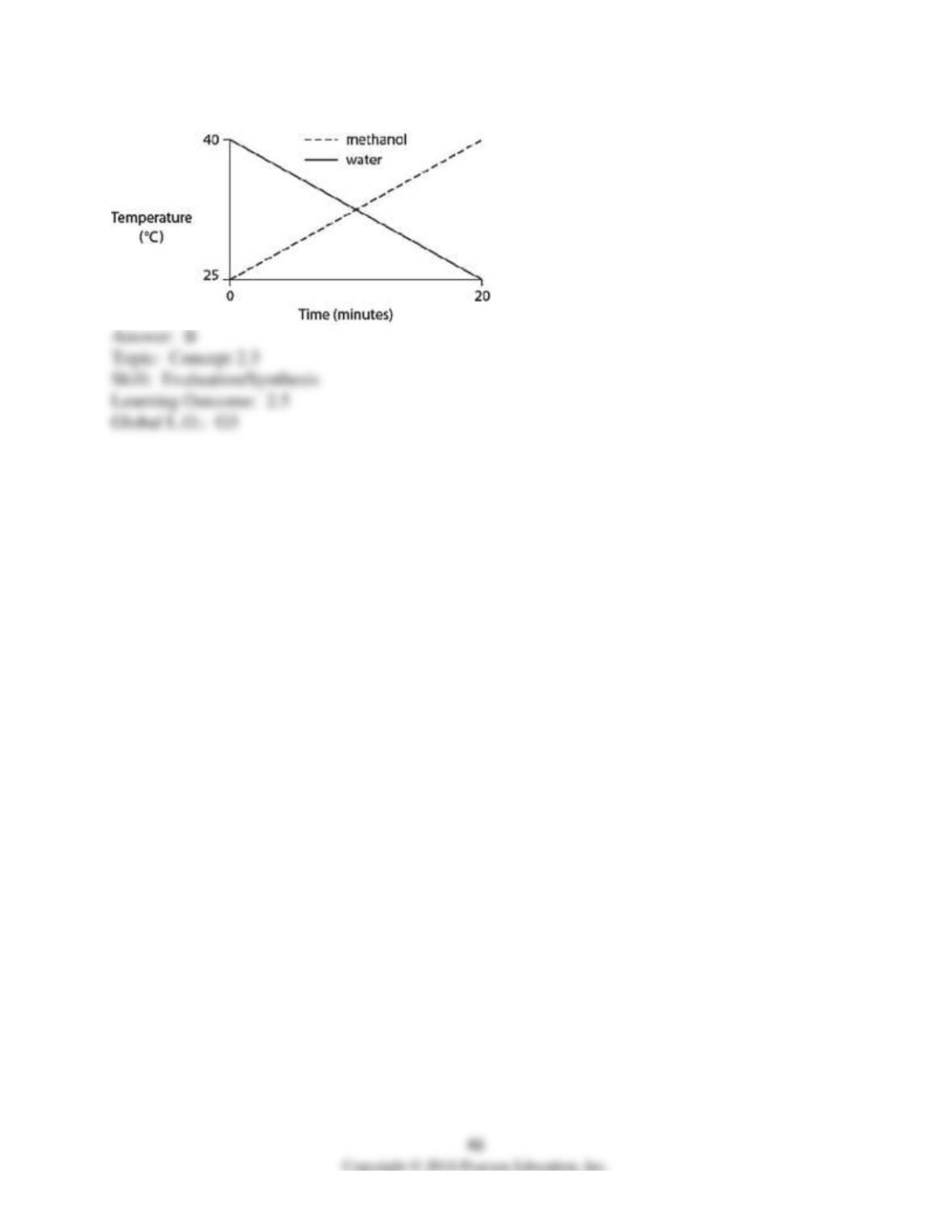
26) Identical heat lamps are arranged to shine on identical containers of water and methanol
(wood alcohol) so that each liquid absorbs the same amount of energy minute by minute. The
covalent bonds of methanol molecules are nonpolar, so there are no hydrogen bonds among
methanol molecules. Which of the following graphs correctly describes what will happen to the
temperature of the water and the methanol?
A)
B)
C)
D)
E)
47
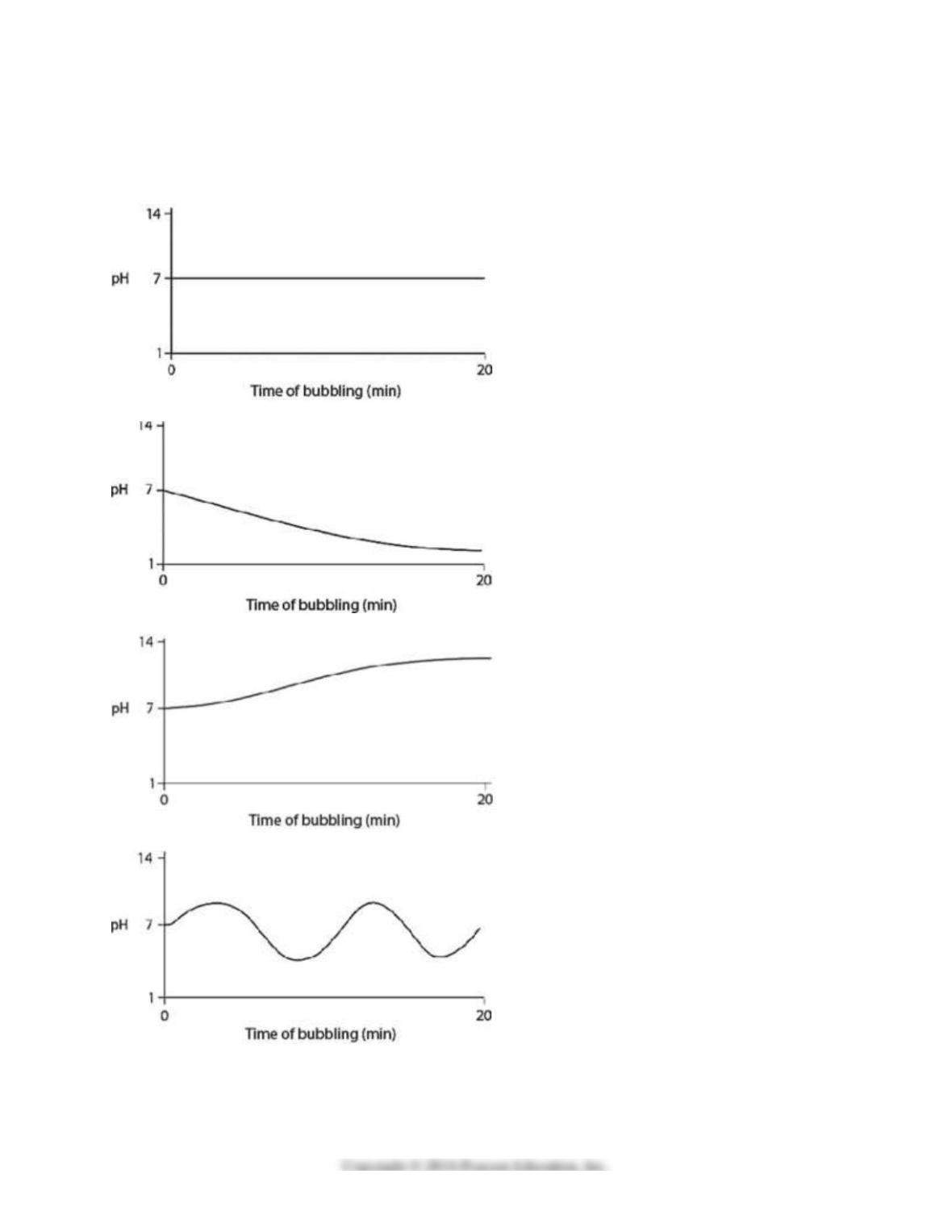
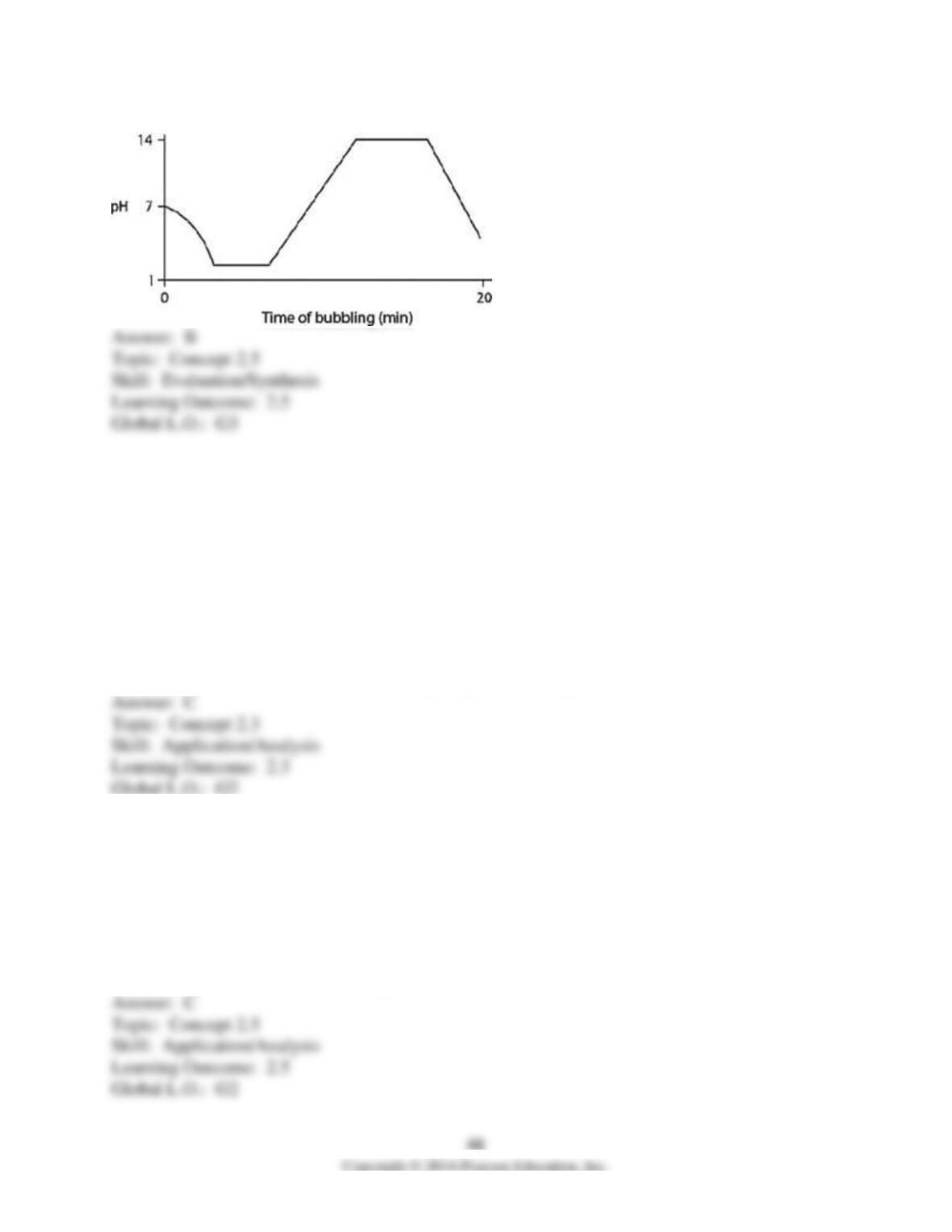
27) Carbon dioxide (CO2) is readily soluble in water, according to the equation CO2 + H2O ↔
H2CO3. Carbonic acid (H2CO3) is a weak acid. If CO2 is bubbled into a beaker containing pure,
freshly distilled water, which of the following graphs correctly describes the results?
A)
B)
C)
D)
E)
2.3 Scenario Questions
1) A group of molecular biologists is trying to synthesize a new artificial compound to mimic the
effects of a known hormone that influences sexual behavior. The biologists have turned to you
for advice. Which of the following compounds is most likely to mimic the effects of the
hormone?
A) a compound with the same number of carbon atoms as the hormone
B) a compound with the same molecular mass (measured in daltons) as the hormone
C) a compound with the same three-dimensional shape as part of the hormone
D) a compound with the same number of valence electrons as the hormone
E) a compound with the same number of hydrogen and nitrogen atoms as the hormone
2) You have two beakers. One contains pure water; the other contains pure methanol (wood
alcohol). The covalent bonds of methanol molecules are nonpolar, so there are no hydrogen
bonds among methanol molecules. You pour crystals of table salt (NaCl) into each beaker.
Predict what will happen.
A) Equal amounts of NaCl crystals will dissolve in both water and methanol.
B) NaCl crystals will not dissolve in either water or methanol.
C) NaCl crystals will dissolve readily in water but will not dissolve in methanol.
D) NaCl crystals will dissolve readily in methanol but will not dissolve in water.
3) You have two beakers. One contains a solution of HCl at pH = 1.0. The other contains a
solution of NaOH at pH = 13. Into a third beaker, you slowly and cautiously pour 20 mL of the
HCl and 20 mL of the NaOH. After complete stirring, the pH of the mixture will be
A) 2.0.
B) 12.0.
C) 7.0.
D) 5.0.
E) 9.0.
2.4 End-of-Chapter Questions
1) The reactivity of an atom arises from
A) the average distance of the outermost electron shell from the nucleus.
B) the existence of unpaired electrons in the valence shell.
C) the sum of the potential energies of all the electron shells.
D) the potential energy of the valence shell.
2) Which of the following statements correctly describes any chemical reaction that has reached
equilibrium?
A) The concentrations of products and reactants are equal.
B) The reaction is now irreversible.
C) Both forward and reverse reactions have halted.
D) The rates of the forward and reverse reactions are equal.
3) Many mammals control their body temperature by sweating. Which property of water is most
directly responsible for the ability of sweat to lower body temperature?
A) water’s change in density when it condenses
B) water’s ability to dissolve molecules in the air
C) the release of heat by the formation of hydrogen bonds
D) the absorption of heat by the breaking of hydrogen bonds
4) We can be sure that a mole of table sugar and a mole of vitamin C are equal in their
A) mass.
B) volume.
C) number of atoms.
D) number of molecules.
5) Measurements show that the pH of a particular lake is 4.0. What is the hydrogen ion
concentration of the lake?
A) 4.0 M
B) 10−4 M
C) 104 M
D) 10−10 M
6) The atomic number of sulfur is 16. Sulfur combines with hydrogen by covalent bonding to
form a compound, hydrogen sulfide. Based on the number of valence electrons in a sulfur atom,
predict the molecular formula of the compound.
A) HS
B) HS2
C) H2S
D) H3S2
7) What coefficients must be placed in the following blanks so that all atoms are accounted for in
the products?
C6H12O6 → ________ C2H6O + ________ CO2
A) 1; 2
B) 3; 1
C) 1; 3
D) 2; 2
8) A slice of pizza has 500 kcal. If we could burn the pizza and use all the heat to warm a 50-L
container of cold water, what would be the approximate increase in the temperature of the water?
(Note: A liter of cold water weighs about 1 kg.)
A) 50°C
B) 5°C
C) 1°C
D) 10°C