
63. Some endospores are so durable that they can survive more than an hour of boiling or centuries of freezing.
64. Cyanobacteria photosynthesize in the same way algae and plants do.
65. Some obligate anaerobes are poisoned by oxygen.
66. Prokaryotes exchange genetic material by the process of binary fission.
67. Archaebacteria and eukaryotes share genes that are not found in eubacteria.
68. Bacteria can be divided into three groups based on the Gram staining procedure.
70. Viruses contain either ____________________ or ____________________, but not both.
71. Viruses that infect bacteria are called ____________________.
72. In the ____________________, a virus kills a cell by lysing it.

73. Viral DNA in the lysogenic state is called a(n) ____________________.
74. A virus in the lysogenic state may exhibit new properties in a process called ____________________.
75. The enzyme that catalyzes the synthesis of DNA from RNA is called ____________________.
76. The human immunodeficiency virus is a(n) ____________________.
77. Most plant diseases caused by viruses are spread among plants by ____________________.
78. A virus spreads throughout the plant by passing through cytoplasmic connections called
____________________.
79. A strand of RNA called a(n) ____________________ causes many plant diseases.
80. Some species of prokaryotes are covered by a(n) ____________________, or slime layer.
81. The cell walls of bacteria contain ____________________, which is not found in eukaryotes nor in
archaebacteria.

82. Small DNA loops, called ____________________ may be present in prokaryotic cells in addition to the
bacterial chromosome.
83. Some prokaryotes have hundreds of straight, hairlike appendages known as ____________________.
84. Durable resting structures called ____________________ are produced by many bacteria when
environmental conditions become unfavorable.
85. Most prokaryotes are ____________________, and must obtain organic molecules from other organisms.
86. Autotrophic prokaryotes that are not photosynthetic are ____________________.
87. Prokaryotes that can use oxygen for cellular respiration if it is available but will respire anaerobically when
oxygen is absent are called ____________________.
88. When a virus transfers genetic material from one prokaryote to another, the process is called
____________________.
89. One group of archaebacteria, the ____________________, live in extremely salty conditions.
90. Rod-shaped prokaryotes are called ____________________.
91. The ____________________ are the wall-less bacteria.
92. Many important pathogens of both plants and animals, including humans, are ____________________
eubacteria.
93. Prokaryotes are used to clean up hazardous wastes in a process called ____________________.
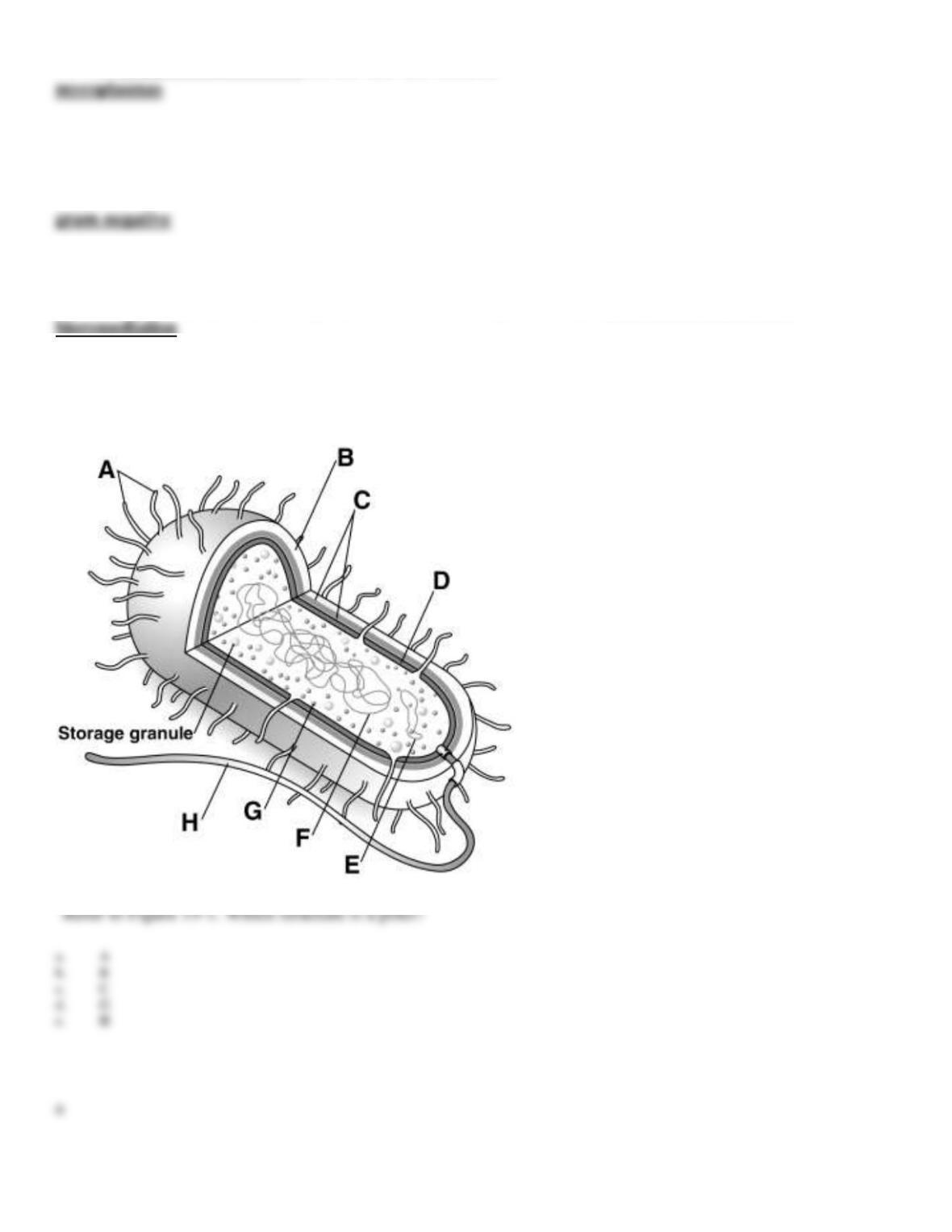
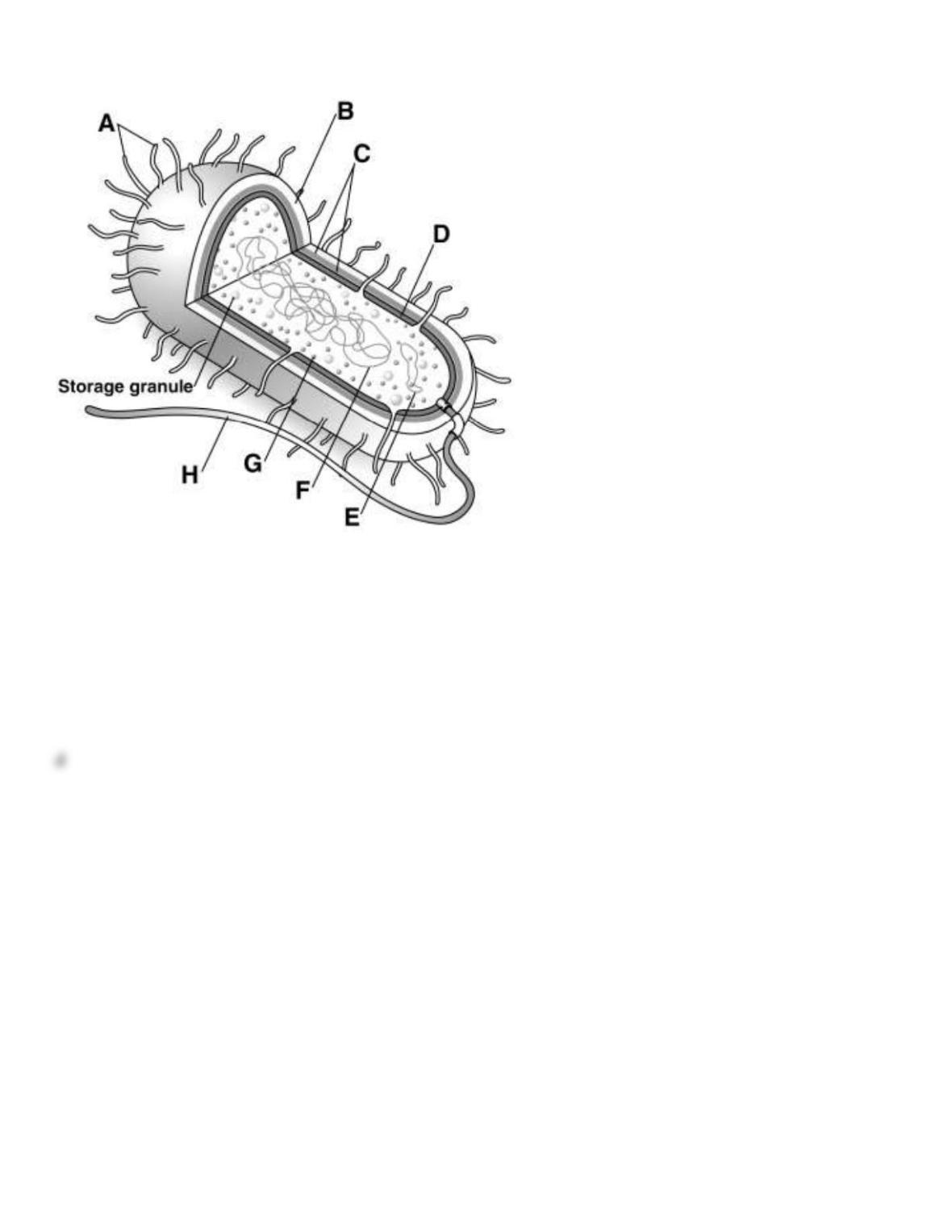
94. Figure 19-1
Refer to Figure 19-1. Which structure is a pilus?
a.
A
b.
B
c.
C
d.
G
e.
H
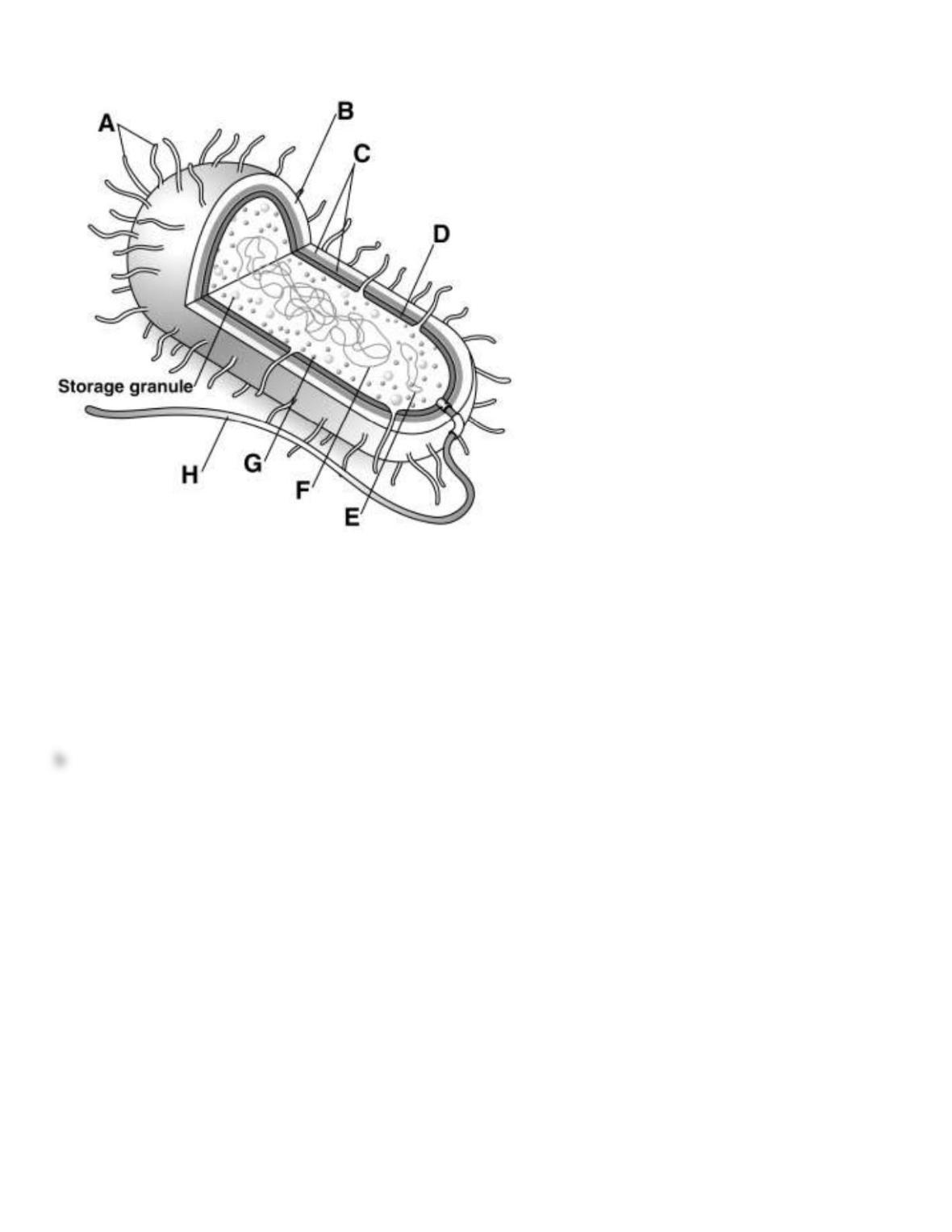
95. Figure 19-1
Refer to Figure 19-1. Which structure is a plasmid?
a.
D
b.
E
c.
F
d.
G
e.
H
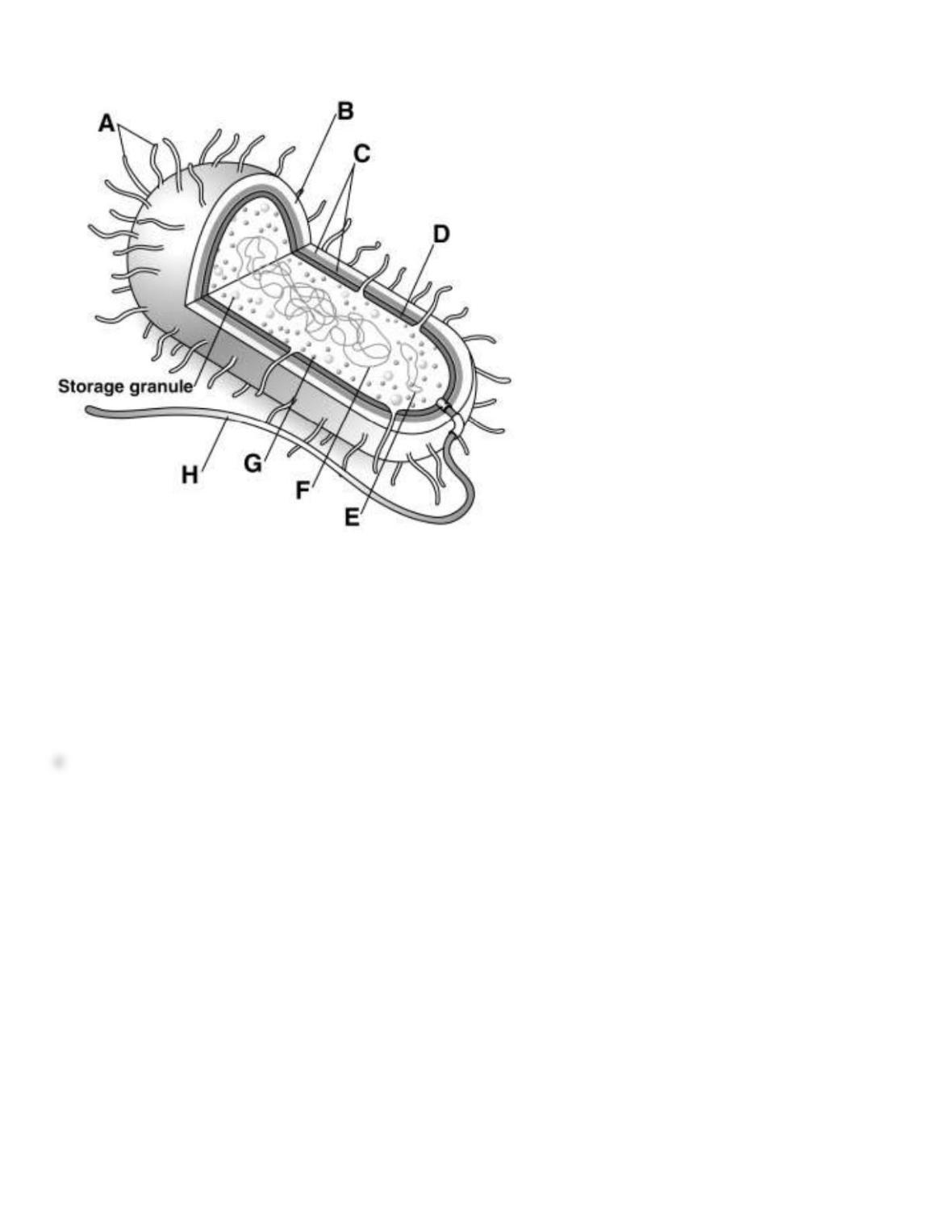
96. Figure 19-1
Refer to Figure 19-1. Which contains DNA?
a.
A and B
b.
A and E
c.
E and F
d.
E and G
e.
F and G
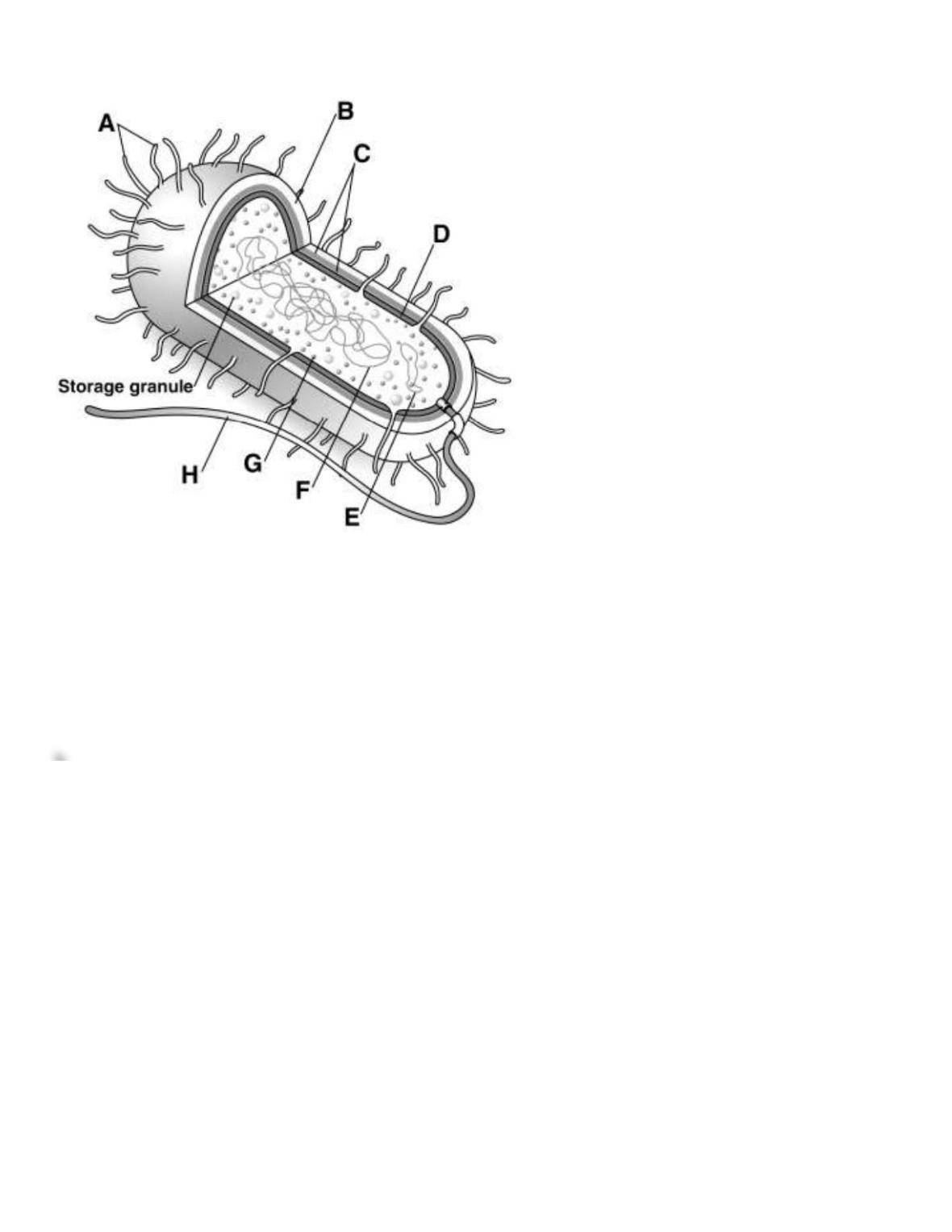
97. Figure 19-1
Refer to Figure 19-1. Which structure is the capsule?
a.
A
b.
B
c.
C
d.
D
e.
H
b
98. Figure 19-1
Refer to Figure 19-1. Which structure is the plasma membrane?
a.
A
b.
B
c.
C
d.
D
e.
G
99. Figure 19-1
Refer to Figure 19-1. Which structure would most likely contain peptidoglycan?
a.
A
b.
B
c.
C
d.
D
e.
F
100. Suppose you were debating the question, “Are viruses alive?” Provide the reasoning used by both debating
teams.
101. Under ideal conditions, some bacteria can divide every 20 to 30 minutes. What factors check this
population explosion?
102. What is bioremediation and how are bacteria involved?