40) Which anthropoids are most closely related to humans?
A) orangutans
B) chimpanzees
C) gorillas
D) gibbons
41) Which of these human characteristics is hypothesized to have evolved first?
A) enlarged brain
B) erect posture
C) language
D) loss of body hair
42) The first hominid to spread beyond Africa was ________.
A) “Lucy”
B) Australopithecus afarensis
C) Homo erectus
D) Homo neanderthalensis
43) Where did humans first appear?
A) South America
B) Africa
C) Asia
D) Europe
44) Which of the following is one way in which scientists can test hypotheses about events that
occurred in the distant past?
A) by dissecting current animal specimens
B) by analyzing fossils recovered from the Earth
C) by visiting local libraries to research the events
D) by interviewing current scientists and researchers
45) The process of biological evolution often allows humans to survive consistent environmental
stresses that occur across multiple generations. As humans colonized Earth’s diverse
environments, they encountered hot, dry areas and decided to settle. What trait likely offered an
advantage in this environment?
A) the ability to produce sweat to cool their bodies
B) the ability to shiver to create body heat
C) the ability to squint eyes to block out bright light
D) the ability to dig deep holes to find groundwater
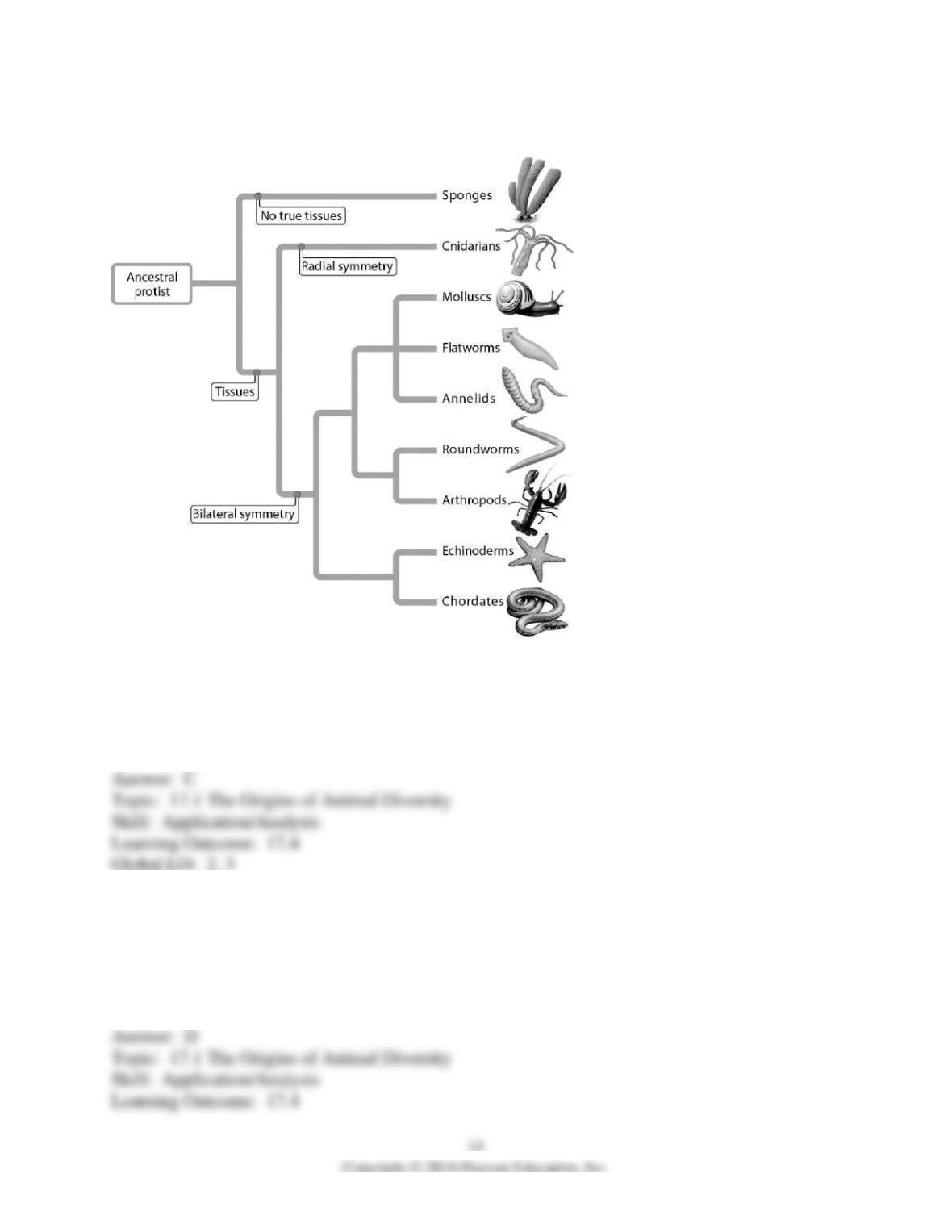
17.2 Art Questions
1) Annelids are most closely related to ________.
A) chordates
B) arthropods
C) molluscs
D) echinoderms
2) According to the figure, which organism group demonstrates the most advanced body plan in
reference to presence of tissue and symmetry?
A) sponges
B) cnidarians
C) ancestral protists
D) arthropods
3) All organisms with bilateral symmetry also have ________.
A) hard skeletons
B) bilateral adults
C) sense organs
D) an anterior head
4) Flatworms are similar to cnidarians in that both ________.
A) are chordates
B) have true tissues
C) lack a gastrovascular cavity
D) exhibit bilateral symmetry
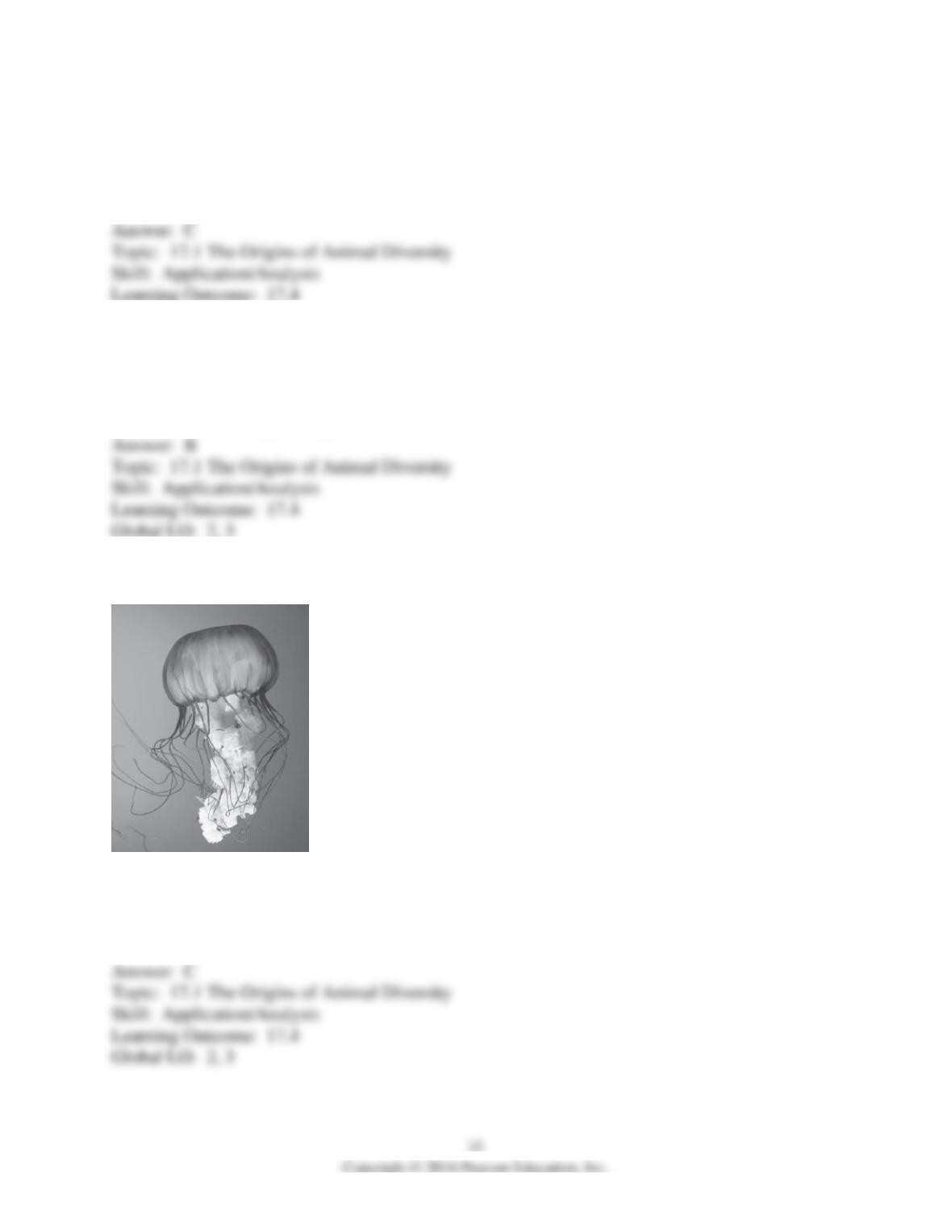
5) What type of symmetry does this organism exhibit?
A) asymmetrical
B) binomial
C) radial
D) bilateral
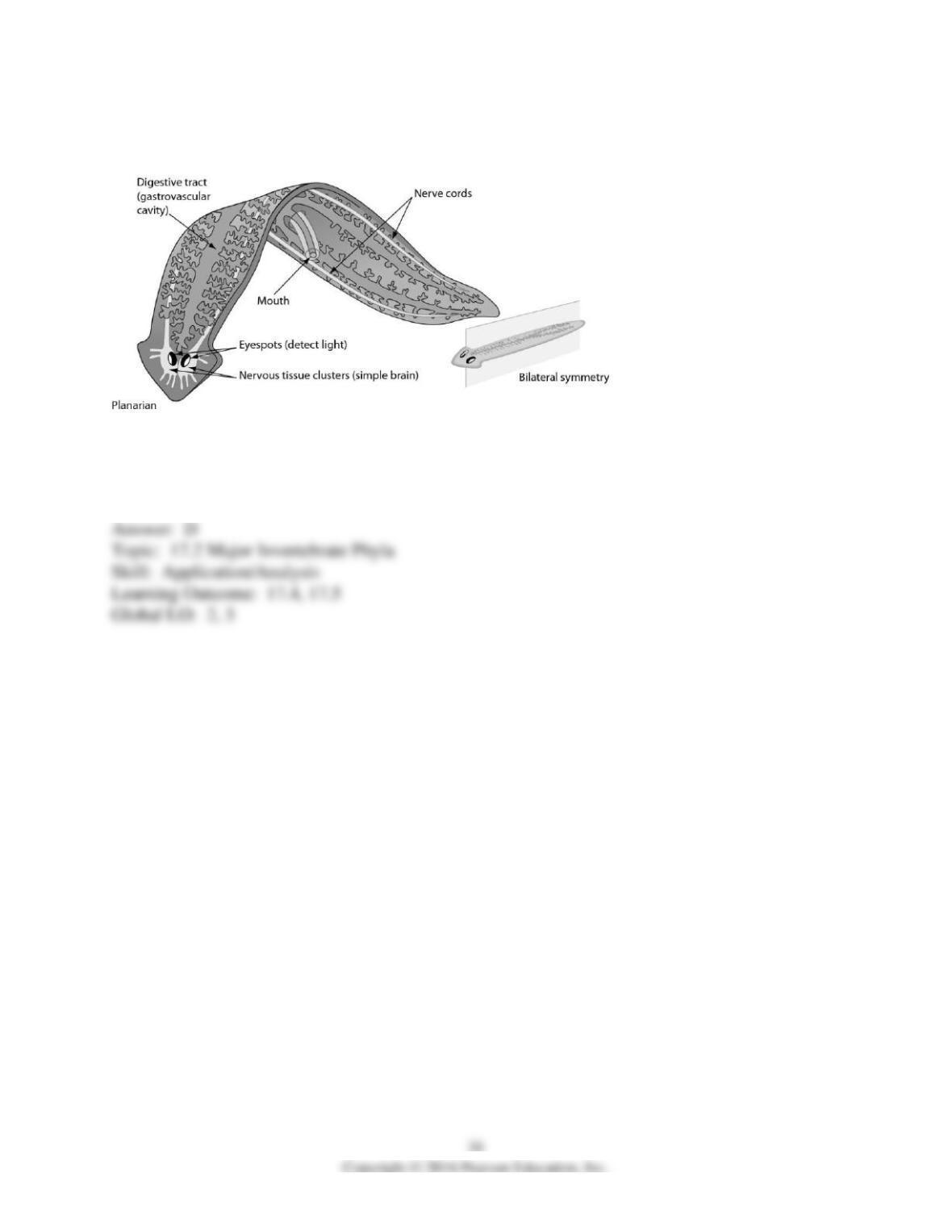
6) The figure below shows a simple worm. Bilateral symmetry and a highly branched
gastrovascular cavity all suggest that the worm is a(n) ________.
A) annelid
B) mollusk
C) chordate
D) flatworm
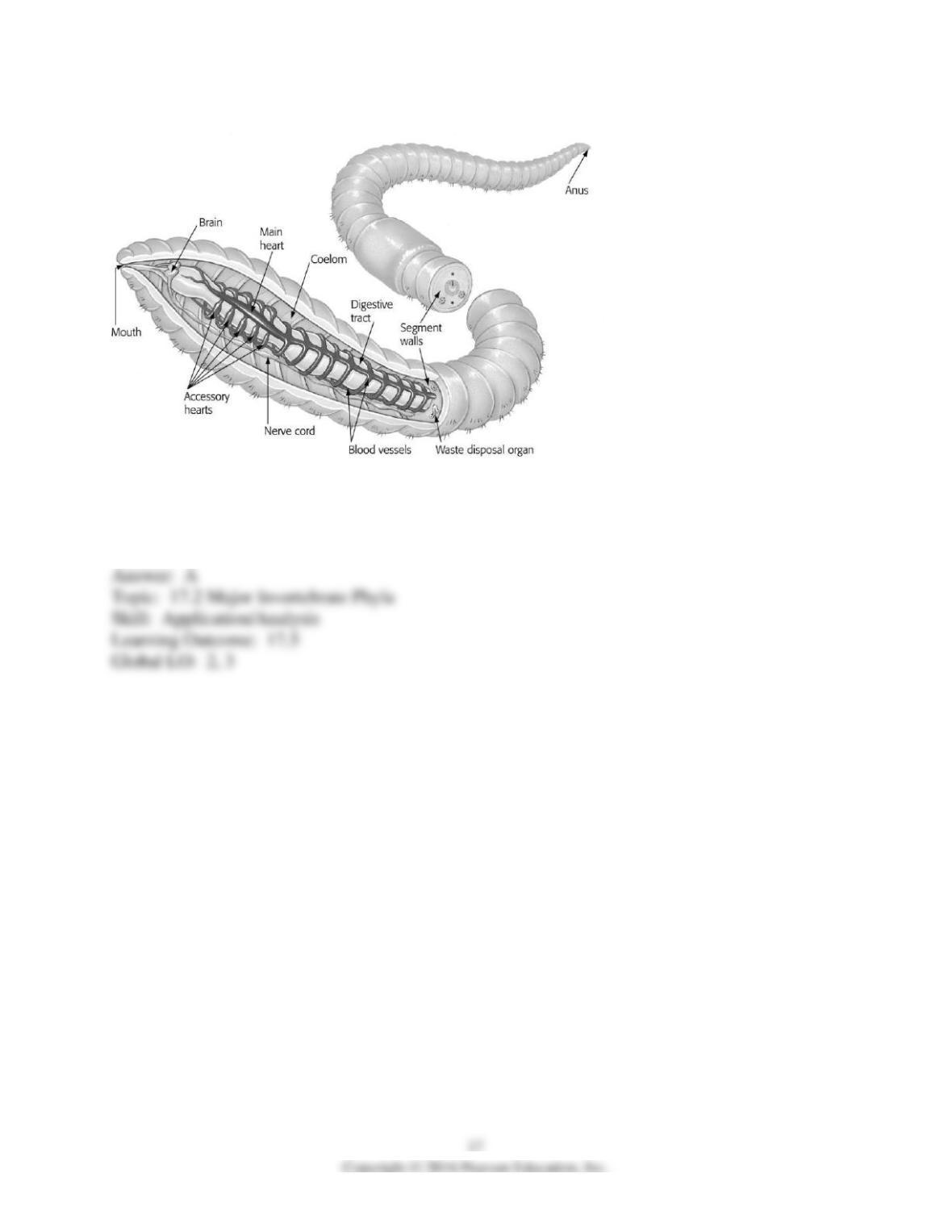
7) The segmented body of the worm below suggests that it is a(n) ________.
A) annelid
B) arthropod
C) snake
D) roundworm
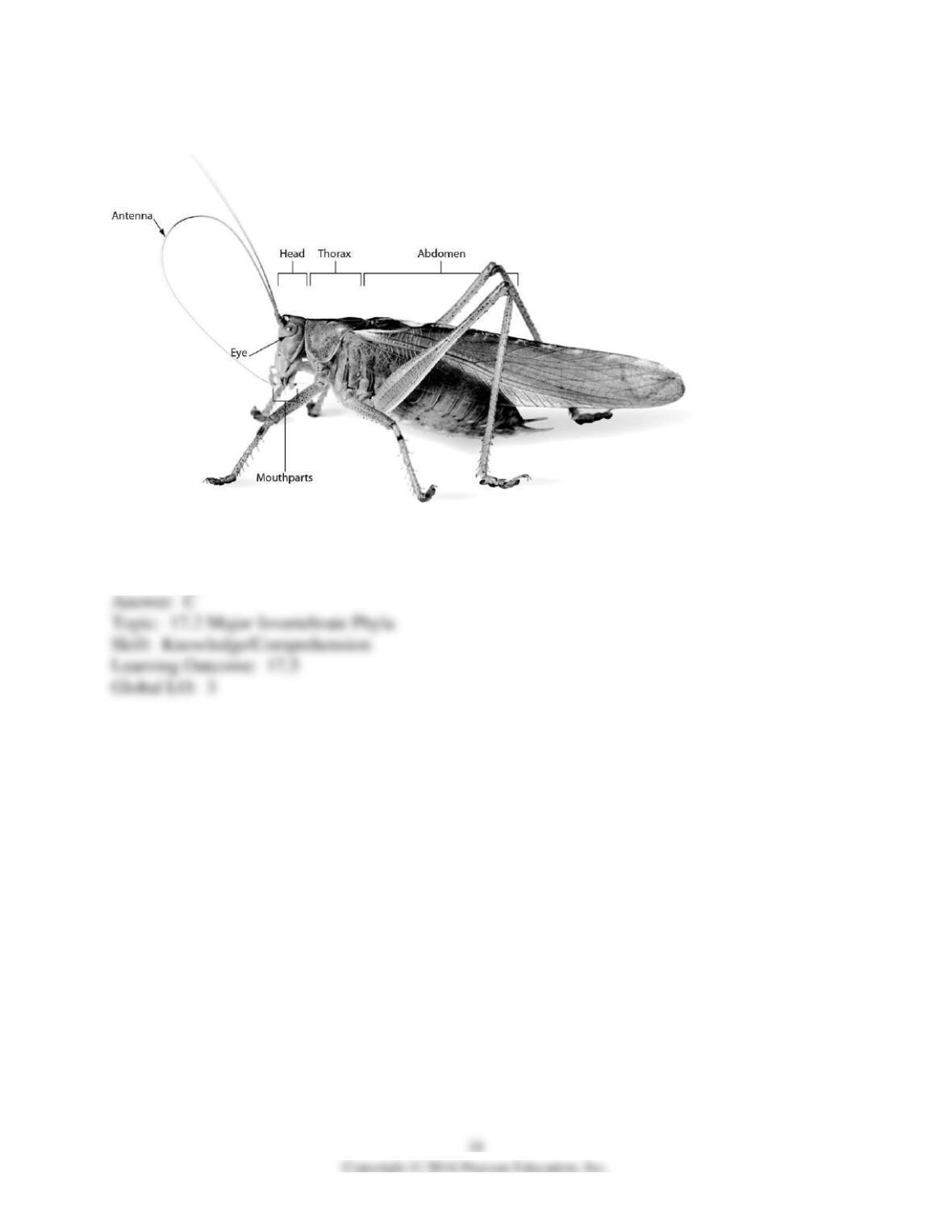
8) Insects, such as the grasshopper shown below, have ________.
A) eight legs
B) a two-part body: head and abdomen
C) a three-part body: head, thorax, and abdomen
D) no wings
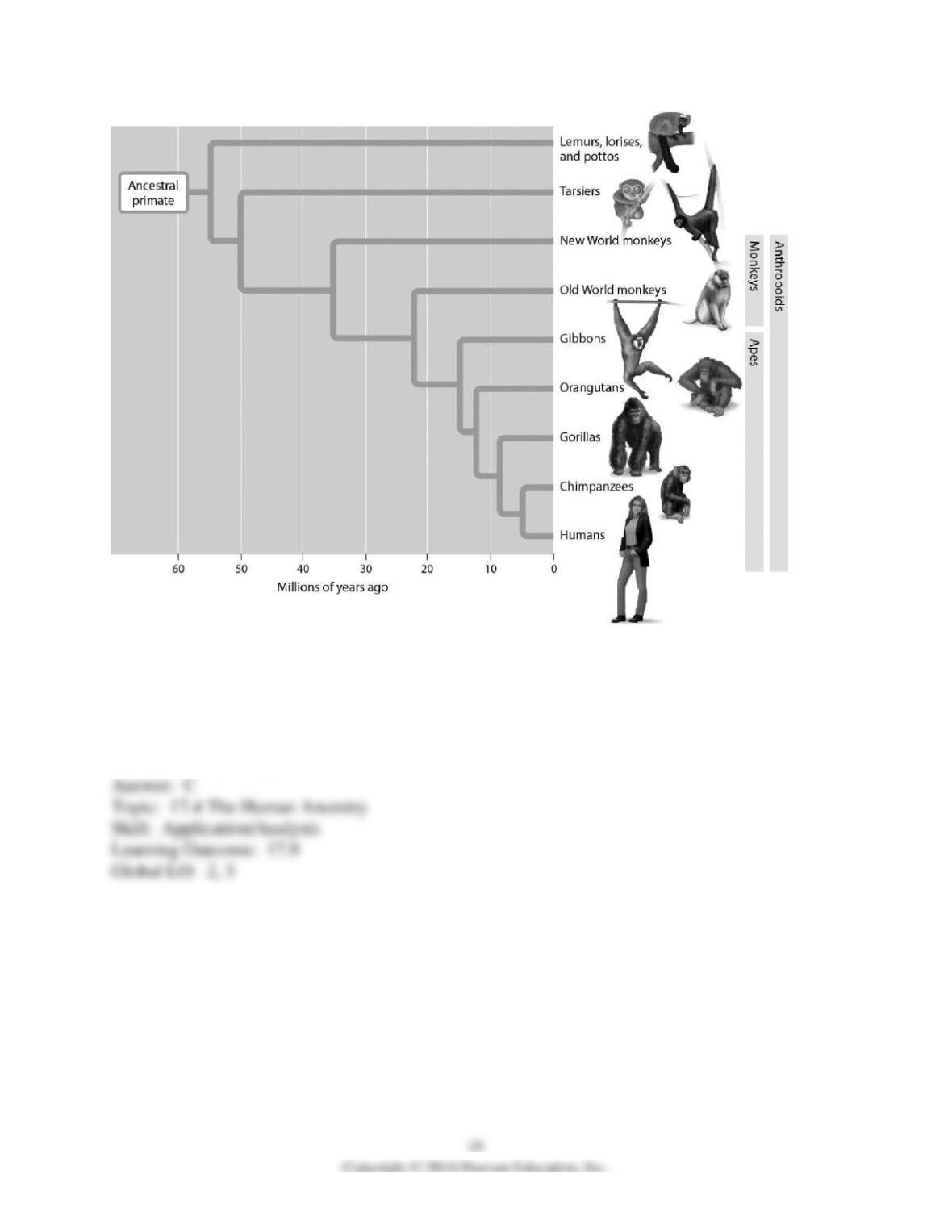
9) According to this evolutionary tree, approximately how many years ago did humans and
orangutans share a common ancestor?
A) 1 million years ago
B) 7 million years ago
C) 12 million years ago
D) 20 million years ago
10) According to this evolutionary tree, how would you characterize a new anthropoid specimen
discovered and estimated to be approximately 42 million years old?
A) one that could be a New World monkey or an Old World monkey
B) one that is likely a species of lemur
C) one that is likely a species of tarsier
D) one that evolved from a new ancestral primate
17.3 Scenario Questions
Read the following scenario to answer the following questions.
Birds are a widespread group of animals with approximately 10,000 different species found
throughout the world today. Because they are relatively easy to find and so visually appealing,
they have been studied more thoroughly than many other groups of animals. They are also
valuable biological indicators because many species live in different habitats during different
times of the year and cover long migration routes. According to the World Conservation Union,
extinction threatens over 1,200 bird species today, and at least 179 are critically endangered.
Some of the most endangered species include the Tahiti monarch, with only 10 pairs remaining,
and the Bali starling, with only 12 wild individuals left. In Hawaii, the last captive po’ouli died in
2005, and the last two known to be alive in the wild have not been seen since 2003—2004.
Common birds are also disappearing. In North America, red-winged blackbird populations
declined by at least 1 percent each year between 1980 and 1999. These examples can serve as a
warning. Habitat loss through destruction, degradation, and fragmentation are serious problems
that affect 86 percent of threatened birds and are exacerbated by unsustainable forestry practices
and intensifying agriculture. All of this shows that conservation of habitats is critical if many of
the world’s bird species are going to be saved from extinction in the near future.
1) What is a feature of birds that makes them valuable as biological indicators?
A) Many migrate long distances.
B) Many are brightly colored.
C) There are over 10,000 different species of birds.
D) Birdwatching is a popular hobby.
2) What is the greatest threat to birds today?
A) pollution
B) poaching
C) habitat loss
D) the illegal pet trade
3) Approximately what percent of bird species are threatened with extinction today?
A) 5%
B) 12%
C) 25%
D) 45%