Chapter 15—Genetic Frontiers Key
1. The genetic manipulation of strains of plants to get desired traits, used by humans for thousands of years, is
called ____.
2. Genetic engineering differs from selective breeding in that
3. The process by which new strains of organisms are obtained by the addition of genes from different species is
called ____.
4. In recombinant DNA technology, restriction enzymes are used to
5. One function of restriction enzymes is to
6. DNA cut by a restriction enzyme
7. The function of DNA ligase is to
8. Agents used to transfer DNA from one organism into another are called
9. The most common vector in recombinant DNA technology comes from
10. A plasmid is a(n)
11. To identify the plasmid that contains the gene of interest, all plasmids must be ____, so that there will be
millions of copies to work with.
12. Which of the following statements concerning plasmids is FALSE?
13. When bacteria are treated with heat and calcium,
14. A cluster of genetically identical bacteria which resulted from division of a single cell is called a ____.
15. A genetic probe would be used to
16. A genetic probe is a radioactively labeled
17. In order to prepare a genetic probe for the gene that codes for nitrogenase, it is important to know the amino
acid sequence of nitrogenase in order for the ____ to be prepared.
18. By definition, a clone of cells
19. Which of the following statements concerning Agrobacterium tumefaciens is FALSE?
20. The gene gun is used
21. Which of the following is used to introduce genes into cells by making their plasma membranes more
permeable?
22. The first plant to have its genome sequenced was
23. The function of an expressed sequence tag (EST) is to help
24. In RNA interference, a short piece of RNA is used to
25. In the discipline of ____, powerful computers are used store, retrieve, and compare DNA sequences.
26. Which of the following fields studies all the proteins encoded by an organism’s genome?
27. The science of ____ is involved with customizing a particular drug for a particular patient.
28. DNA microarrays are used to
29. One advantage of using genetically engineered insulin produced by E. coli rather than insulin produced by
animals is that the genetically engineered insulin
30. An plant that has had one or more genes inserted from a different species is called ____.
31. The main advantage of using Bt corn is its
32. ____ has been genetically engineered to contain high quantities of b-carotene.
33. Genetic engineers are currently working to
34. Which of the following statements concerning the safety of DNA technology is FALSE?
35. Genetic recombination never occurs in nature.

36. Genetic engineering makes it possible to transfer genes between two organisms that cannot interbreed.
37. Restriction enzymes recognize a specific DNA sequence of four to six base pairs.
38. Plasmids are not usually replicated and distributed to daughter cells.
39. Desired genes can be spliced into plasmids.
40. A bacterium containing a recombinant plasmid with a gene for resistance to antibiotics will not survive
when cultured on a medium that contains that antibiotic.
41. A genetic probe consists of a protein containing a specific chain of amino acids.
42. The plasmid in the crown gall bacterium is the most widely used vector for transferring genes into plants.
43. A new technique to introduce recombinant DNA into cells is a gene gun.
44. Antibiotics are used to isolate the bacteria that have taken up the genetically altered plasmids.
45. The recombined bacteria will not express the gene of interest unless the gene is associated with a set of
regulatory genes that “turn it on.”

46. The most widely used vector for introducing genes into plants is the gene gun.
47. The crown gall bacterium only infects monocots such as corn and wheat.
48. Tissue culture techniques have been developed for all plants.
49. Tissue culture must be used to regenerate a whole plant from a genetically transformed cell.
50. Many DNA sequences in a plant cell do not code for proteins.
51. Vaccines for human diseases can be produced by certain animals and certain bacteria, but not by plants.
52. DNA fingerprinting can be used to track tainted foods.
53. In the broad sense, the use of organisms to produce products that benefit humanity is known as
____________________.
54. The single-stranded stub that extends from the end of each fragment of DNA cut by a restriction enzyme is
called a(n) ____________________.
55. The enzyme that can join, or splice, sticky ends in DNA is ____________________.

56. A(n) ____________________ is used to carry the gene from one organism into the cells of another.
57. The small ring-shaped piece of DNA often found in bacteria, separate from the bacterial chromosome, is
called a(n) ____________________.
58. A bacterium that has taken in a recombinant plasmid is said to be ____________________.
59. A radioactively labeled segment of RNA or single-stranded DNA that is complementary to the target gene is
a(n) ____________________.
60. A plasmid that contains a foreign gene is called a(n) ____________________ plasmid.
61. The crown gall bacterium is named ____________________.
62. Some important plant genes are located in the DNA of the ____________________ instead of the nucleus.
63. The study of the entire DNA sequence of an organism is called ____________________.
64. The technology using ____________________ involves placing microdots containing hundreds of
single-stranded DNA molecules on a glass slide or chip and then exposing them to DNA labeled with
fluorescently-labeled dyes.

65. The technique for analyzing DNA that is unique to an individual is called ____________________.
66. Organisms containing genes from other organisms are called ____________________.
67. Transgenic corn, soybean, and cotton crops are examples of ____________________ crops.
68. The European corn borer is controlled in the United States by using genetically modified corn that contains
the ____________________ gene.
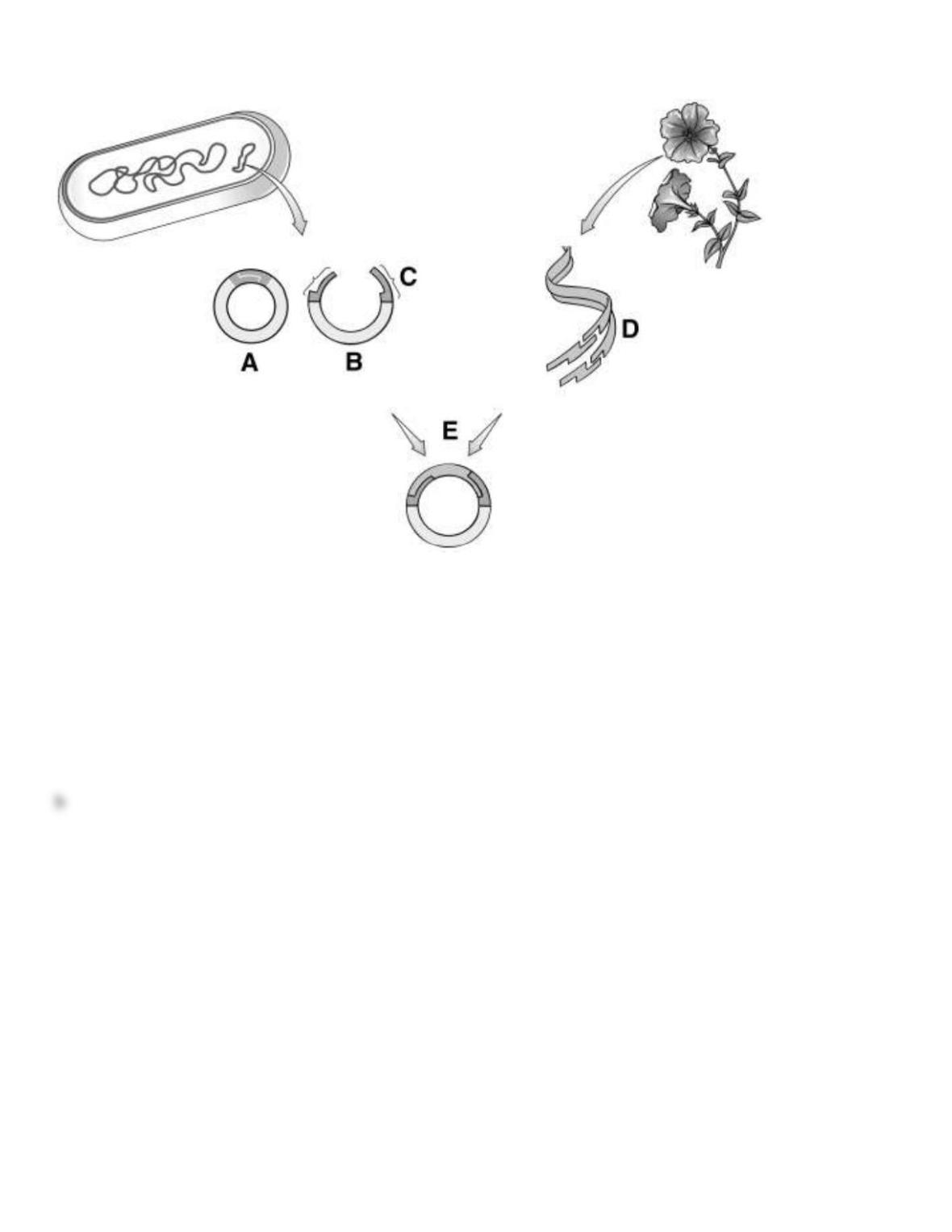
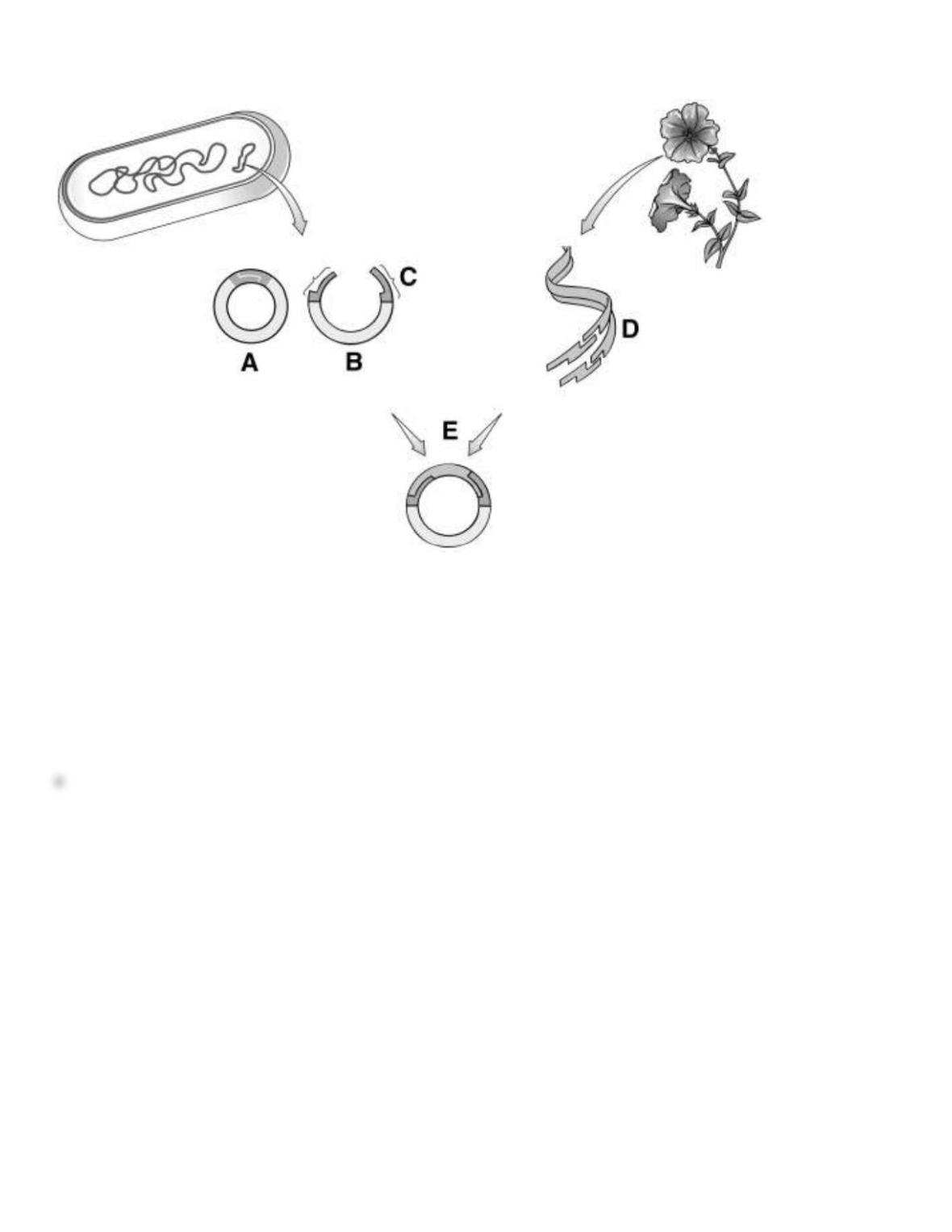
69. Figure 15-1
Refer to Figure 15-1. Which of the following is used to convert the structure labeled A to the structure labeled
B?
a.
nitrogenase
b.
restriction enzyme
c.
Agrobacterium tumefaciens
d.
an expressed sequence tag
e.
DNA ligase
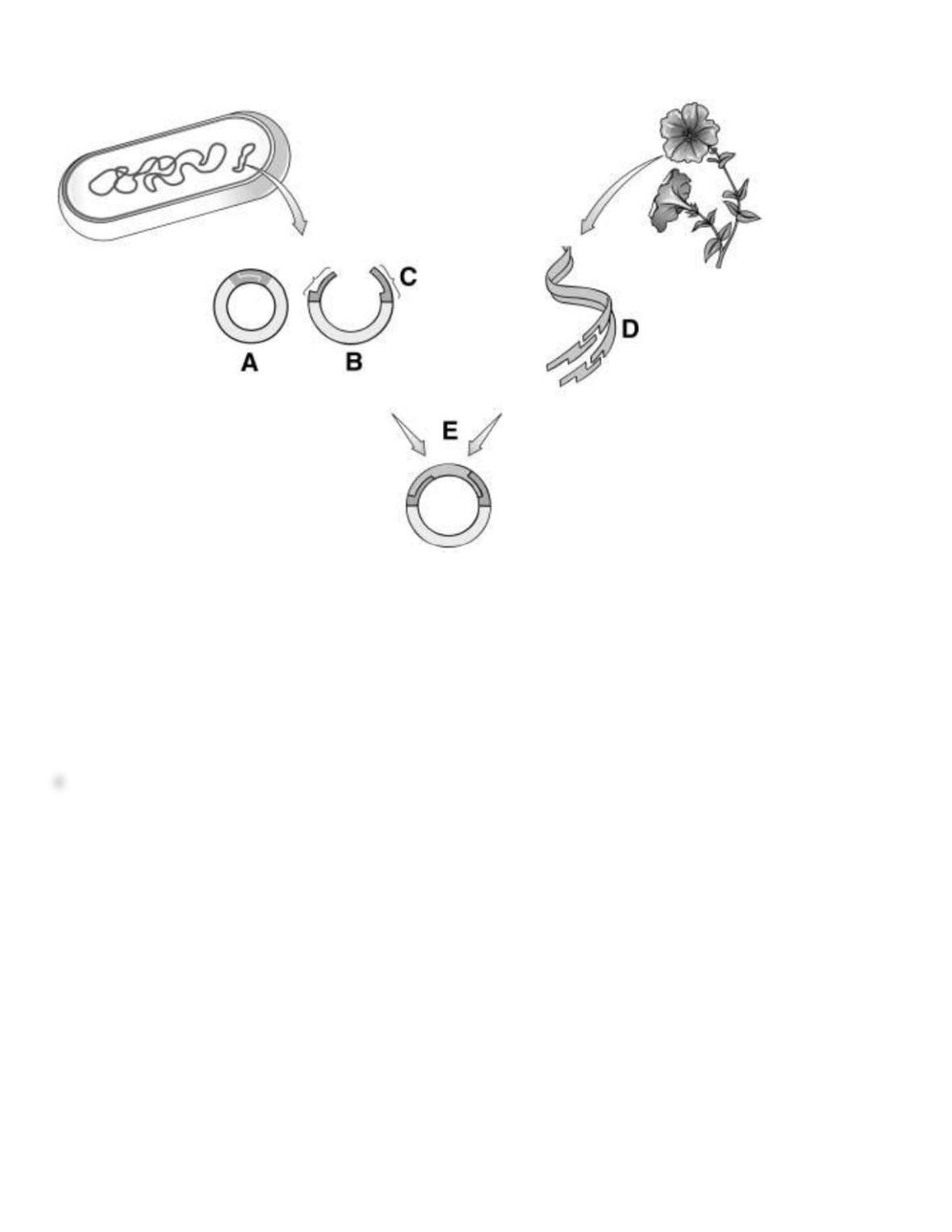
70. Figure 15-1
Refer to Figure 15-1. Which of the following is used in the process denoted by the arrows labeled E?
a.
nitrogenase
b.
restriction enzyme
c.
Agrobacterium tumefaciens
d.
an expressed sequence tag
e.
DNA ligase
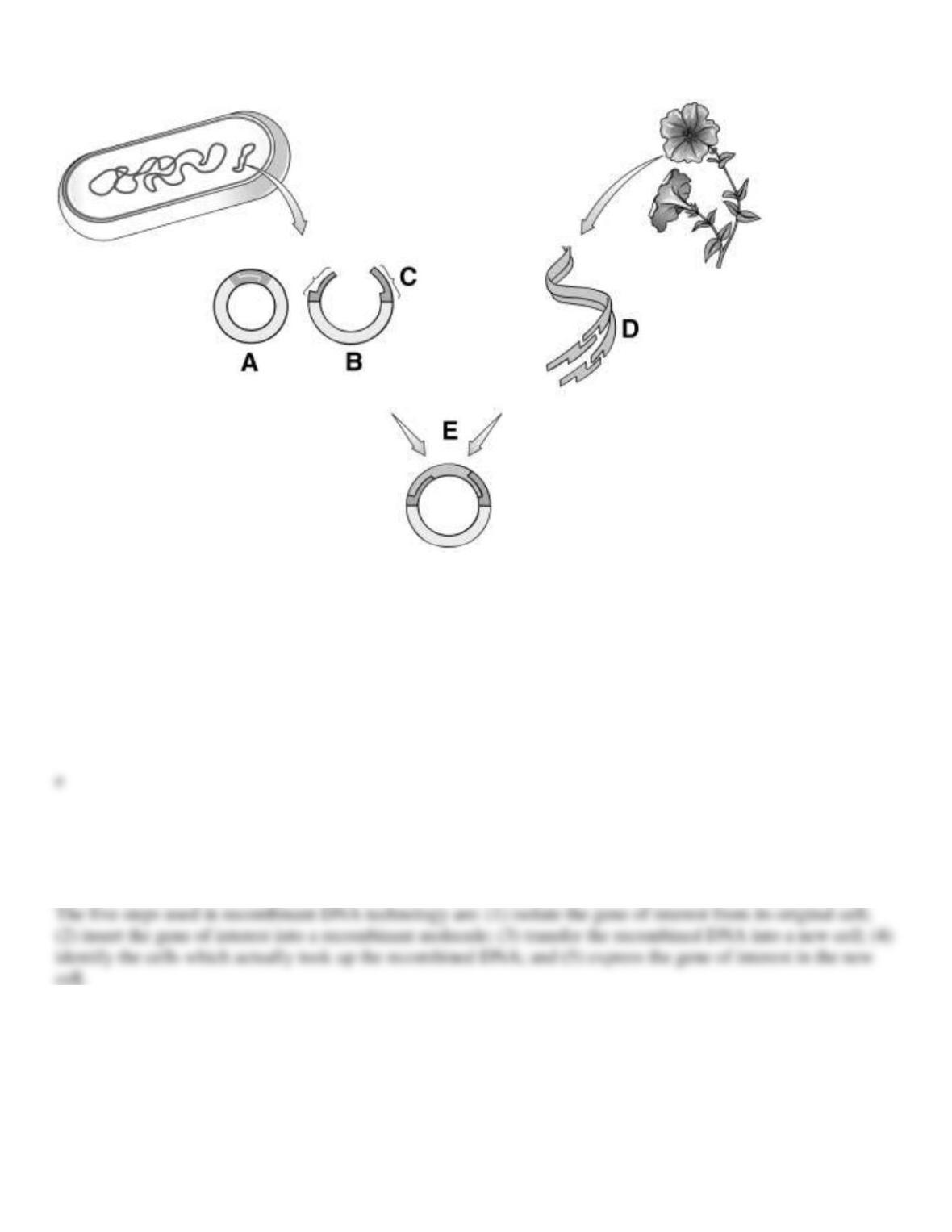
71. Figure 15-1
Refer to Figure 15-1. Which of the following best shows a sticky end?
a.
A
b.
B
c.
C
d.
D
e.
E
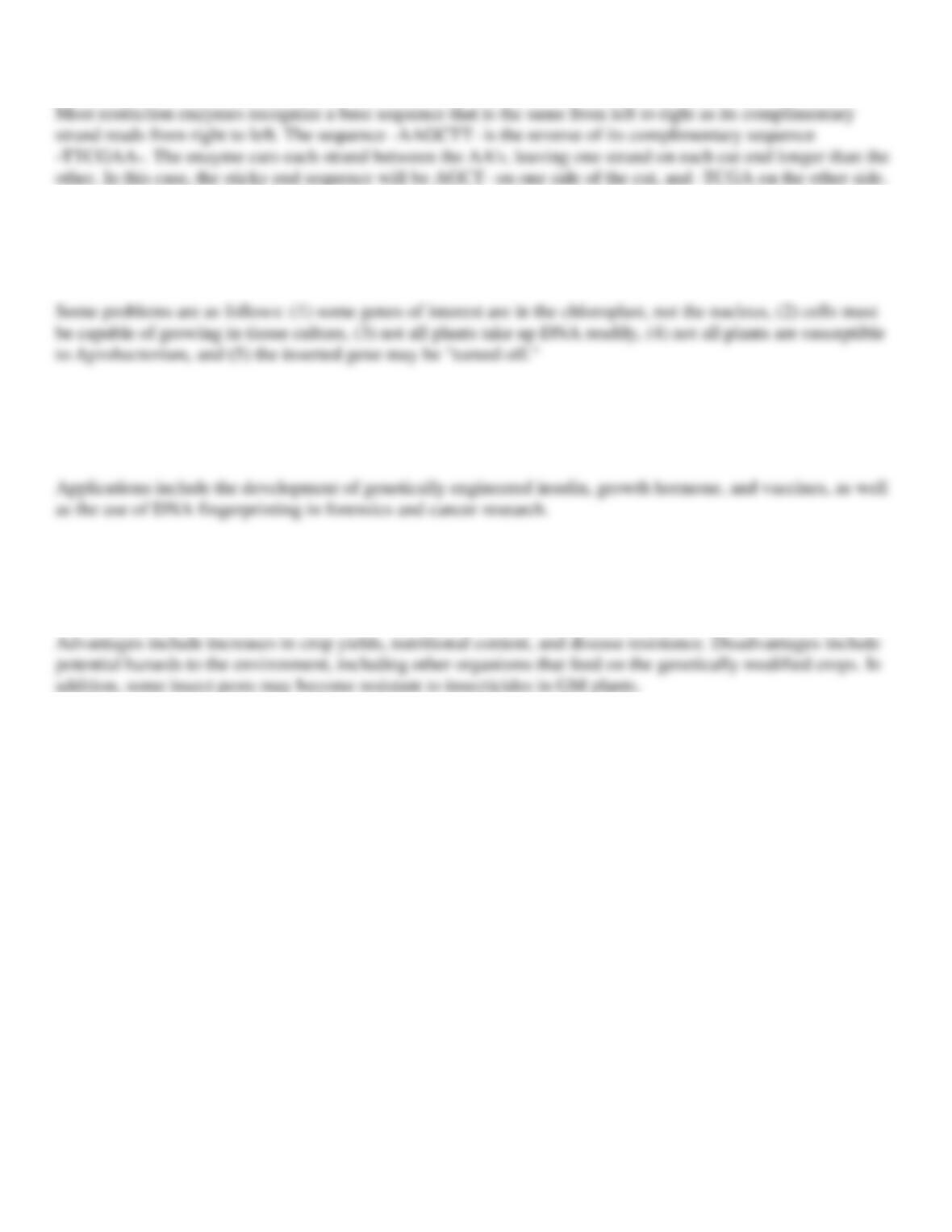
72. Figure 15-1
Refer to Figure 15-1. Which best shows a recombinant DNA molecule?
a.
A
b.
B
c.
C
d.
D
e.
E
73. List and briefly describe the five steps used in recombinant DNA technology.
74. Describe how a restriction enzyme can cut a base sequence so that a sticky end is produced.
75. List some of the problems encountered when attempting to insert a new gene into a plant.
76. Discuss some of the applications of recombinant DNA technology in medicine.
77. Discuss the advantages and disadvantages of using genetically modified (GM) crops.