
1
Campbell Essential Biology, 6e (Simon/Dickey/Hogan/Reece)
Chapter 15 The Evolution of Microbial Life
Learning Outcomes
15.1 Describe how microbial communities affect health.
15.2 Identify the sequence and timing of the major events in the evolution of early life, ending with the
evolution of humans.
15.3 Distinguish between the four stages of the hypothesis for the origin of life on Earth, and explain
how natural selection would have affected the first pre-cells.
15.4 Describe the relative abundance of prokaryotes on Earth and how they can affect humans and
ecosystems.
15.5 Describe the structure, function, and reproduction of prokaryotes.
15.6 Compare the types of nutritional diversity used by prokaryotes.
15.7 Explain how prokaryotes promote chemical recycling.
15.8 Compare bacteria and archaea including the various environments in which they are found.
15.9 Describe the ways that bacteria cause disease and have been used as biological weapons.
15.10 Describe how scientists investigated the impact of microbiota on body composition.
15. 11 Compare the four main categories of protists, grouped by lifestyle, including how the different
groups impact our lives.
15.12 Explain how Streptococcus mutans contributes to tooth decay and the adaptations that gave S.
mutans an advantage over other species.
Global Learning Outcomes
1. Demonstrate an understanding of the principles of scientific inquiry.
2. Demonstrate the ability to think critically and employ critical thinking skills.
3. Read and interpret models, graphs, and data.
4. Demonstrate the quantitative skills needed to succeed in biology.
5. Demonstrate an understanding of the impact of science on society.
6. Evaluate the credibility of scientific information from various sources.
7. Demonstrate the ability to make connections between concepts across biology.
8. Communicate effectively in writing.
9. Apply the scientific method to interpret information and draw conclusions.

15.1 Multiple Choice Questions
1) Scientists hypothesize that disrupting our ________ communities may increase our
susceptibility to infectious diseases, predispose us to certain cancers, and contribute to conditions
such as asthma and other allergies, irritable bowel syndrome, Crohn’s disease, and autism.
A) microbial
B) exotoxin
C) protist
D) pathogen
2) Eukaryotes arose about ________ years after the first prokaryotes.
A) 3.0 million
B) 1.7 billion
C) 3.5 billion
D) 4.0 billion
3) Large amounts of oxygen gas appeared in Earth’s atmosphere about ________ years ago.
A) 200 million
B) 1.7 billion
C) 2.7 billion
D) 4.5 billion
4) Animal life underwent its greatest diversification during the ________, which began about
________ million years ago.
A) Paleozoic era… 290
B) Paleozoic era… 540
C) Mesozoic era… 363
D) Mesozoic era… 245
5) The first organisms to colonize land were
A) plants, protists, and insects
B) plants, fungi, and insects
C) bacteria, plants, and fungi
D) protists, bacteria, and fungi
6) Land was first colonized about ________ years ago.
A) 100 million
B) 500 million
C) 1.7 billion
D) 2.5 billion
7) Based on fossil evidence, eukaryotes evolved about ________ years ago.
A) 500,000
B) 1 billion
C) 1.8 billion
D) 3.5 billion
8) All of the following are true EXCEPT one. Choose the exception.
A) The great diversification of animals occurred during the Cambrian explosion.
B) For most of biological history, life was confined to aquatic habitats.
C) The evolution of multicellularity took place after the origin of the eukaryotes.
D) The first organisms to colonize land were animals.
9) The absence of ________ in the primitive atmosphere was essential to the origin of life on
Earth.
A) N2
B) CO2
C) CH4
D) O2
10) What was the first stage of the process that led to the abiotic origin of life?
A) synthesis of monomers, such as amino acids and nucleotides
B) origin of self-replicating molecules
C) synthesis of polymers, such as proteins and nucleic acids
D) formation of pre-cells
11) Whose experiments demonstrated that, given the conditions on the primitive Earth,
biological monomers could arise spontaneously?
A) Miller and Urey
B) Darwin and Linnaeus
C) Watson and Crick
D) Wallace and Darwin
12) Under what abiotic conditions can monomers spontaneously form polymers?
A) in the presence of oxygen gas
B) when ribozymes are present to catalyze the reaction
C) when a collection of organic molecules with a cell membrane are isolated
D) when water evaporates from a hot surface
13) Why is RNA thought to have been the first genetic material?
A) RNA is structurally simpler than DNA.
B) RNA has been found on meteorites.
C) RNA is capable of self-replication
D) Primitive organisms, such as some viruses, have RNA as their genetic material.
14) RNAs that can act as enzymes are called ________.
A) ribozymes
B) ATPs
C) lysosomes
D) prokaryotes
15) Variation among pre-cells was due to ________.
A) genetic drift
B) natural selection
C) the bottleneck effect
D) mutation
16) Which prokaryotic group is most closely related to eukaryotes?
A) Bacteria
B) Protista
C) Archaea
D) Bacteria and Archaea are equally closely related.

17) The prokaryotic group that tends to inhabit extreme environments belongs to ________.
A) Protista
B) Archaea
C) Euglena
D) Bacteria
18) Which of the following prokaryotes aid digestion in cattle, deer, and other animals that
obtain nutrition from cellulose?
A) halophiles
B) dinoflagellates
C) methanogens
D) cocci
19) Spherical bacteria that occur in clusters are ________.
A) streptococci
B) bacilli
C) spirochetes
D) staphylococci
20) Bacilli are ________ prokaryotes.
A) spherical
B) comma-shaped
C) rod-shaped
D) spiral

21) Which of the following would likely be the most difficult to kill if you were you to can your
own food?
A) streptococci
B) endospores
C) biofilms
D) staphylococci
22) Prokaryotes reproduce by means of ________.
A) mitosis
B) binary fission
C) budding
D) meiosis
23) Under ideal conditions, prokaryotes are capable of reproducing at a(n) ________ rate.
A) negative
B) exponential
C) infinite
D) variable
24) Trichomonas vaginalis is a protozoan that feeds on white blood cells and bacteria living on
the cells lining the female human vagina, thereby creating a common sexually transmitted
disease often known as “trich.” The feeding mechanism of this protozoan makes it a ________.
A) parasite
B) autotroph
C) producer
D) mixotroph

25) All organisms that photosynthesize fit into which nutritional category?
A) mixotroph
B) heterotrophs
C) autotrophs
D) parasites
26) Which of the following include the two classes of poisons produced by pathogenic bacteria?
A) exotoxins and endotoxins
B) chemoautotrophs and chemoheterotrophs
C) protozoans and fungi
D) bacilli and cocci
27) Food poisoning from Salmonella occurs because of ________.
A) an exotoxin secreted by Salmonella bacteria
B) an endotoxin produced by Salmonella bacteria
C) easy transmission between people living in close contact
D) extremophile conditions
28) In the soil, some ________ help to decompose dead organisms and other waste materials,
returning vital chemical elements such as nitrogen to the environment.
A) slime molds
B) animals
C) protozoans
D) prokaryotes

29) ________ is an example of bioremediation.
A) Cyanobacteria converting atmospheric nitrogen to a form that plants can use
B) The use of an autoclave to kill endospores
C) The use of prokaryotes to treat sewage
D) A dinoflagellate bloom causing massive fish kills
30) In Yellowstone National Park, hot springs can reach temperatures of 205°F (96°C). Despite
these high temperatures, Aquifex bacteria flourish. How might you classify Aquifex bacteria?
A) slime molds
B) extremophiles
C) amoebas
D) algae
31) Approximately 10—15% of insect species harbor bacteria that make needed nutrients
available to the insects. How might you classify these bacteria?
A) phytoplankton
B) extremophiles
C) exotoxins
D) endosymbionts

32) Recent scientific studies of the impact of microbiota on the amount of fat versus lean body
mass (i.e., body composition) are described in your text. How do those studies illustrate the
importance of microbiota communities in our bodies?
A) If transferred to lean humans, intestinal microbiota of obese humans will cause obesity.
B) If transferred to obese humans, intestinal microbiota in lean humans will cause exaggerated
obesity.
C) The studies suggest that mice are an unreliable model organism to use for studies of human
intestinal microbiota and obesity.
D) The studies suggest that intestinal microbiota may be involved in regulating our digestive
processes.
33) Eukaryotes that are not fungi, animals, or plants are classified in a “catch-all” category called
________.
A) archaea
B) bacteria
C) seaweeds
D) protists
34) According to the theory of endosymbiosis, which organelles evolved from small prokaryotes
that established residence within other, larger prokaryotes?
A) vacuoles and lysosomes
B) Golgi apparatus and endoplasmic reticulum
C) centrioles and ribosomes
D) mitochondria and chloroplasts
35) Flagellates, amoebas, apicomplexans, and ciliates are all what type of protist?
A) slime molds
B) protozoans
C) dinoflagellates
D) seaweeds

36) You discover a unicellular organism that moves by what appear to be pseudopodia. You
conclude that this organism is ________.
A) either a type of amoeba or a type of slime mold
B) a type of bacterium
C) a type of alga
D) either a type of ciliate or a type of apicomplexan
37) Which protozoan group consists solely of parasitic forms?
A) apicomplexans
B) ciliates
C) flagellates
D) amoebas
38) ________ include cells that can function either independently or as a single unit.
A) Dinoflagellates
B) Forams
C) Seaweeds
D) Cellular slime molds
39) Which of the following are most closely related to plants?
A) brown algae
B) red algae
C) slime molds
D) green algae

40) ________ are responsible for toxic red tides.
A) Plasmodial slime molds
B) Dinoflagellates
C) Red algae
D) Diatoms
41) A photoautotrophic unicellular organism with a shell made of silica is most likely a(n)
________.
A) apicomplexan
B) foram
C) dinoflagellate
D) diatom
42) Which of the following is a colonial form of green algae?
A) Volvox
B) Giardia
C) Paramecium
D) Plasmodium
43) What accounts for the similarity between seaweeds and plants?
A) Plants are the ancestors of seaweeds.
B) convergent evolution
C) evolutionary fitness
D) Seaweeds are aquatic plants.

44) Endosymbiosis explains the origin of the ________ of eukaryotes.
A) chloroplasts and mitochondria
B) endomembrane system
C) nuclear envelope
D) membrane-bound organelles
45) Which of the following is a plausible reason for why it may be difficult to treat infections
that arise from tooth decay?
A) Biofilm bacteria that cause tooth decay begin to produce endospores as a means to deter
effects of antibiotics.
B) Binary fission in biofilm bacteria that cause tooth decay begins to decrease as the biofilm
community becomes more complex, thereby producing fewer bacterial cells for antibiotics to
penetrate.
C) As the biofilm that causes tooth decay becomes larger, its structure makes it difficult for
antibiotics to break through bacterial cell walls.
D) Bacteria of the biofilm that cause tooth decay form a symbiotic relationship with the
antibiotics and therefore diminish antibiotic effectiveness.
15.2 Art Questions
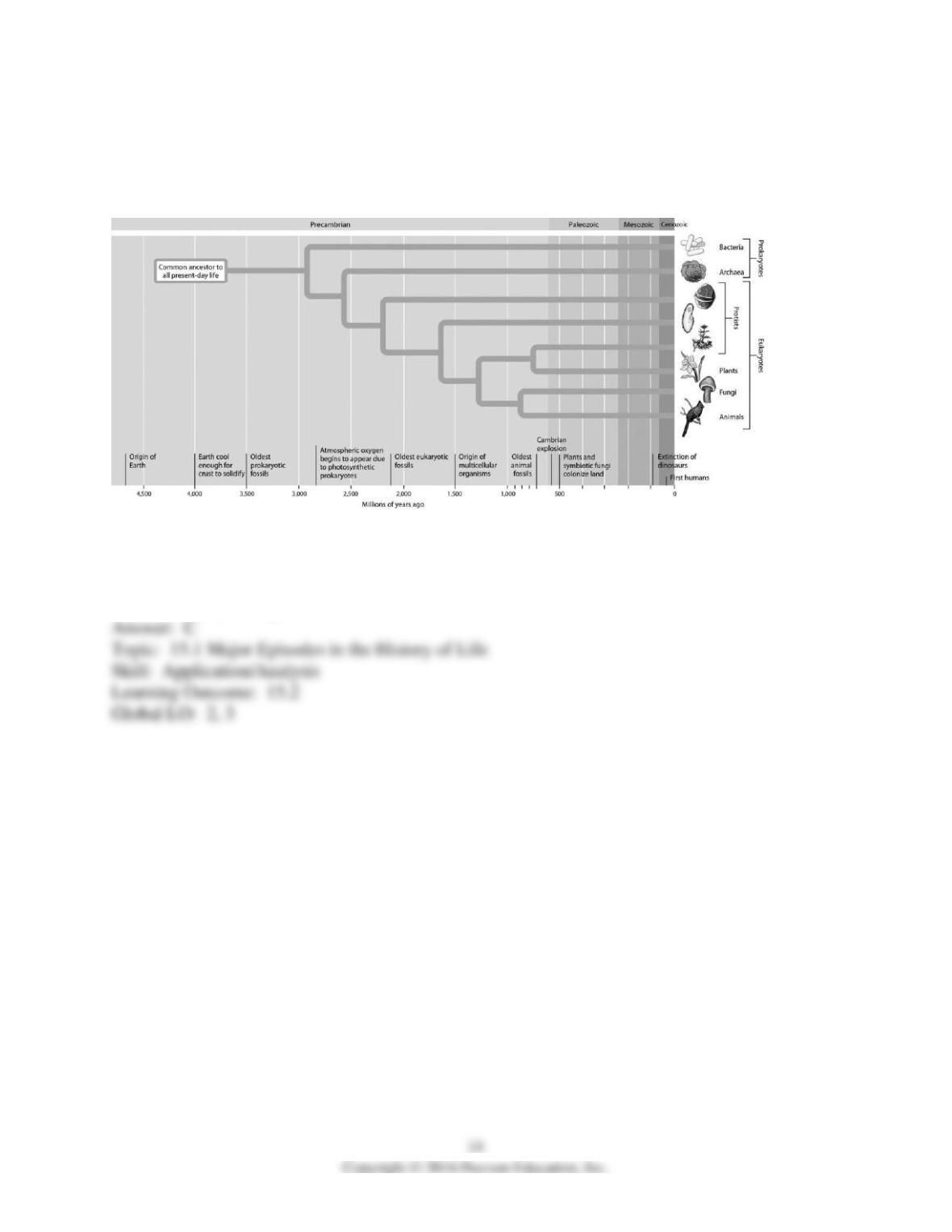
1) According to this evolutionary tree, the archaea and eukaryotes last shared a common ancestor
________.
A) 1.0 billion years ago
B) 1.75 billion years ago
C) 2.5 billion years ago
D) 3.5 billion years ago
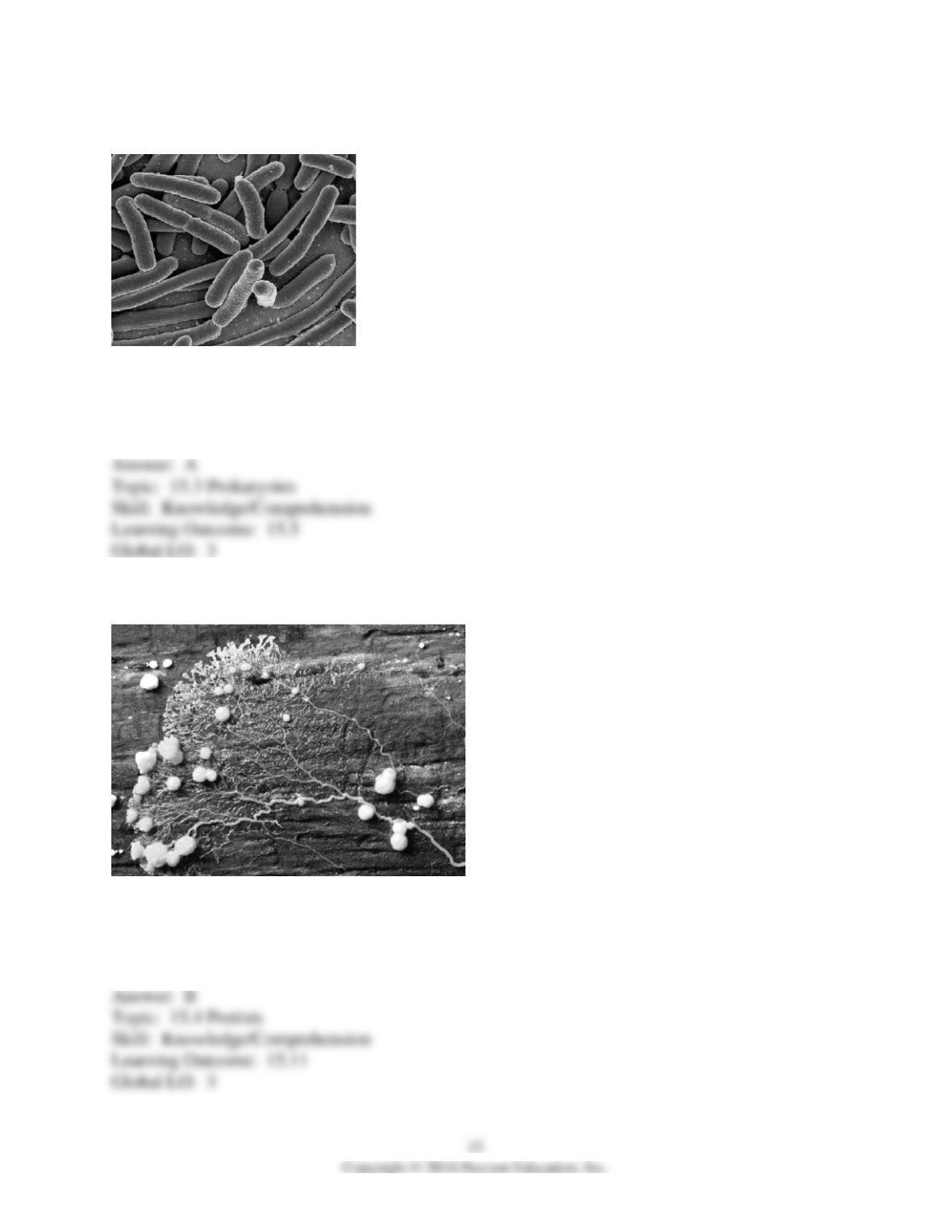
2) What kind of prokaryotes are these?
A) bacilli
B) spirochetes
C) cocci
D) ciliates
3) What kind of protist is this?
A) ciliate
B) plasmodial slime mold
C) flagellate
D) foram
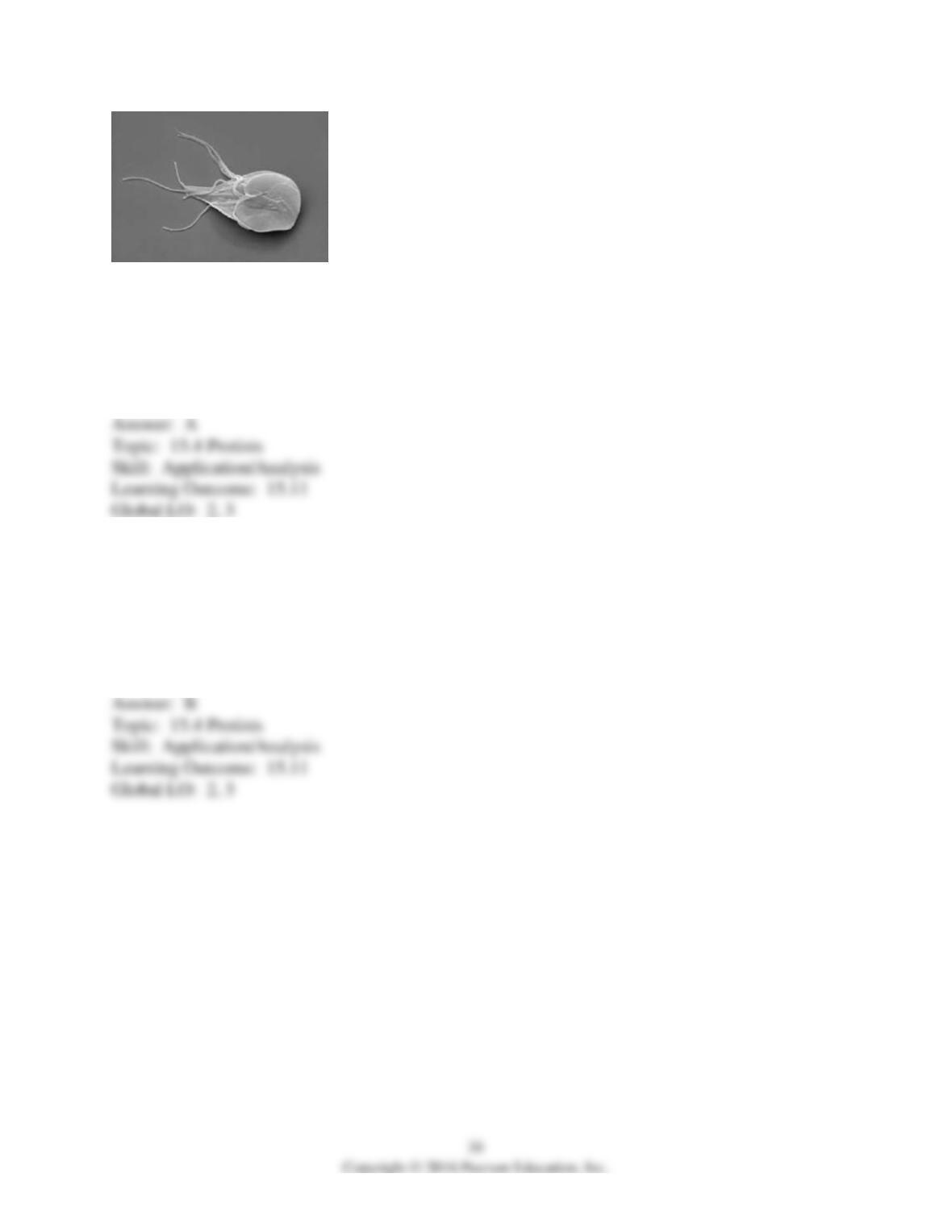
4) In the image above, the aquatic organism moves using flagella. It is parasitic and can colonate
and reproduce in the human intestine. What type of organism could this be?
A) a protozoan
B) a slime mold
C) phytoplankton
D) seaweed
5) If you were to view this organism with the right microscope you could see that the entire stalk
is covered with smaller hairs than the ones on the opening. What might be the function of these
smaller hairs on the stalk?
A) camouflage
B) movement
C) aerobic respiration
D) spore production

15.3 Scenario Questions
Read the following scenario to answer the following question(s).
Malaria is a disease caused by parasitic protists in the genus Plasmodium. The parasite is
transmitted to humans by female Anopheles mosquitoes. The Plasmodium parasite feeds on
human red blood cells, eventually destroying them. Humans infected with malaria can exhibit
many symptoms. Depending on the severity of the infection, these can range from fever, chills,
sweating, and headaches to anemia and kidney failure. Ultimately, malaria can result in death.
However, if time and money permit, once a person is infected, they can be treated with different
antimalarial drugs. Two commonly used drugs are artemisinin and quinine. In addition, one way
to prevent the spread of malaria is to apply pesticides to treat areas with Anopheles mosquitoes.
The National Malaria Eradication Program began work in 1947 with the goal of eliminating
malaria from the southern United States. In 1947, 15,000 cases of malaria were reported
nationwide. By 1950, only 2,000 cases were reported, and by 1951, malaria was considered
eradicated from the United States. Today, the disease is most common in Africa and South
America, two continents that are highly impoverished. About one million people die from
malaria every year, many of them children. In Africa, it is estimated that one in every five
childhood deaths is due to malaria.
1) If an area infested with female Anopheles mosquitoes is treated with pesticides, and these
mosquitos live, continue to breed, and continue to spread malaria, what can we conclude?
A) Alleles that are resistant to the pesticides are being selected for, so female Anopheles
mosquitoes may continue to infect humans.
B) Malaria is not actually caused by the Plasmodium parasite.
C) Male Anopheles mosquitoes are also carriers of the Plasmodium parasite.
D) The people are becoming resistant to the pesticide.
2) Plasmodium illustrate feeding characteristics of a(n) ________.
A) slime mold
B) ciliate
C) apicomplexan
D) algae

3) Suppose production of the pesticides used to treat malaria is halted because the Environmental
Protection Agency (EPA) has found that they are causing too much environmental damage to
warrant its continued use. In turn, this drives up the prices of artemisinin and quinine since they
are now in higher demand. How might this affect those that live in South America and Africa?
A) They will likely experience a decrease in the number of male Anopheles mosquitoes.
B) They will likely experience an increase in the number of male Anopheles mosquitoes.
C) They will likely experience a decrease in the number of malaria cases
D) They will likely experience an increase in the number of malaria cases.
4) A vector is an organism that transfers a pathogen to a host. In the case of malaria, the vector(s)
is (are) ________.
A) humans only
B) humans and Anopheles mosquitoes
C) Anopheles mosquitoes only
D) humans, Plasmodium, and Anopheles mosquitoes

Read the following scenario to answer the following question(s).
Endotoxins are commonly found in the air, both inside and outside our homes. These “air
endotoxins” can come from sources that include house dust mites, agricultural and industrial
dust, and dust from indoor pets. Air endotoxins are typically found in low amounts, but
production of them can increase dramatically under specific environmental conditions such as
dampness, mold, and sewage. Many scientific studies have been conducted investigating possible
links between indoor endotoxin levels and asthma, chronic bronchitis, and other upper
respiratory diseases. Interestingly, some studies have found positive correlations between indoor
endotoxin exposure and severity of some of these diseases while other studies have suggested
that some air endotoxin exposure can actually decrease the risk of developing asthma in children.
Additionally, data suggests that industrial workers who are exposed to endotoxins in the air can
develop irreversible lung damage.
In 2005, Hurricane Katrina devastated the eastern coastline of the United States. The state of
Louisiana, and in particular the city of New Orleans, experienced tragic loss of human life and
homes due to the failure of the levee system. Intense flooding destroyed homes and created
severe exposure to wet, moldy surfaces. At that time there were no regulations in existence on
the amount of exposure that individuals should have to air endotoxins. Scientists from the
Natural Resources Defense Council who wanted to determine if endotoxin levels had risen in
New Orleans, conducted tests across 12 outdoor areas, 9 of which had been significantly flooded
while the other 3 were less affected. Two indoor areas were also sampled for endotoxin levels.
No significant differences were found in endotoxin levels between the flooded and non-flooded
areas or between the indoor and outdoor areas. However, a limited number of samples were
collected, and they were taken after a recent dry spell. Endotoxin levels at all sites were found to
be higher than national average levels but were lower than levels typically associated with long-
term changes in lung function.
5) What is a potential benefit of testing indoor and outdoor sites as well as sites with heavy
flooding and light flooding?
A) There is no benefit associated with testing in multiple sites.
B) Testing multiple sites takes less time and requires less equipment.
C) Testing multiple sites allows for fewer scientists to be exposed to the air endotoxins.
D) The data collected would allow scientists to compare endotoxin levels under multiple
conditions.

6) What is an implication of the fact that tests were conducted after a period of dry weather?
A) Dry weather creates harsher sampling conditions for scientists.
B) If more periods of rainfall occur after the testing, bacteria that secrete endotoxins may
increase, thereby increasing endotoxin levels.
C) Dry weather increases the amount of carbon available for the endotoxin bacteria to use for
organic compound production.
D) The endotoxin bacteria are better able to be used for bioremediation efforts in dry weather
than in wet weather.
7) What addition to methodology would be most beneficial to the study?
A) pre-flood data to compare to post-flood data in order to better compare endotoxin levels
B) a greater number of scientists conducting tests so that different testing methods can be used at
each site
C) tests conducted on soil endotoxins to compare to air endotoxin levels
D) tests conducted on bacterial exotoxins in New York City
8) What is a logical conclusion to draw from this study?
A) Workers that come to these areas to help rebuild do not need to be concerned with indoor air
endotoxin levels.
B) Workers that come to these areas where there was flooding damage should be advised to wear
protective respiratory gear.
C) Workers that come to these areas to help rebuild do not need to be concerned with outdoor air
endotoxin levels.
D) Workers that come to these areas to help rebuild buildings can assume that they will develop
an irreversible lung infection.