
Chapter 12—Mitosis, Meiosis, and Life Cycles Key
1. In the life cycle of a cell, chromosome replication occurs during
2. What is the relationship in the genetic information of a homologous pair of chromosomes?
3. Arabidopsis is a flowering plant that has 5 pairs of chromosomes. What is the haploid number of
chromosomes for Arabidopsis?
4. What is the diploid number of chromosomes for Arabidopsis?

5. As a diploid Arabidopsis cell enters mitosis, how many chromatids will the cell have?
6. When an Arabidopsis cell (that started as a diploid cell) finishes mitosis how many chromosomes will be in
each daughter cell?
7. When an Arabidopsis cell (that started as a diploid cell) finishes meiosis how many chromosomes will be in
each daughter cell?
8. What occurs during the G1 period of interphase?
9. When during the cell cycle are the chromosomes duplicated?

10. Cytokinesis specifically refers to
11. Spindle fibers are made of
12. The number of chromatids in a duplicated chromosome is
13. What is the name of the structure that holds the chromatids together?
14. In mitosis, the chromosomes first become visible during

15. In mitosis, the centromeres split and the chromosomes move to opposite poles of the cell during
16. In mitosis, the nuclear envelope disappears and the spindle forms during
17. In mitosis, the chromosomes become aligned at the midplane of the cell during
18. In mitosis, the chromosomes revert to chromatin, the spindle disappears, and the nuclear envelopes re-form
during
19. In plant cells, cytokinesis is accomplished by
20. Sexual reproduction consists of two processes: ____, which reduces the chromosome set to the haploid
number, and ____ which restores the diploid number of chromosomes.
21. In animals, meiosis is the type of cell division that produces the
22. In plants, meiosis is the type of cell division that produces the
23. In plants, meiosis occurs in
24. In plants, mitosis occurs in

25. Gametes are usually
26. In meiosis, the homologous chromosomes pair up and synapsis occurs during
27. In meiosis, sister chromatids are separated during
28. In meiosis, homologous chromosomes are aligned by pairs at the midplane of the cell during
29. In meiosis, homologous chromosomes are separated during

30. Crossing over results in
31. The gametophyte produces reproductive cells called
32. Gametophytes are
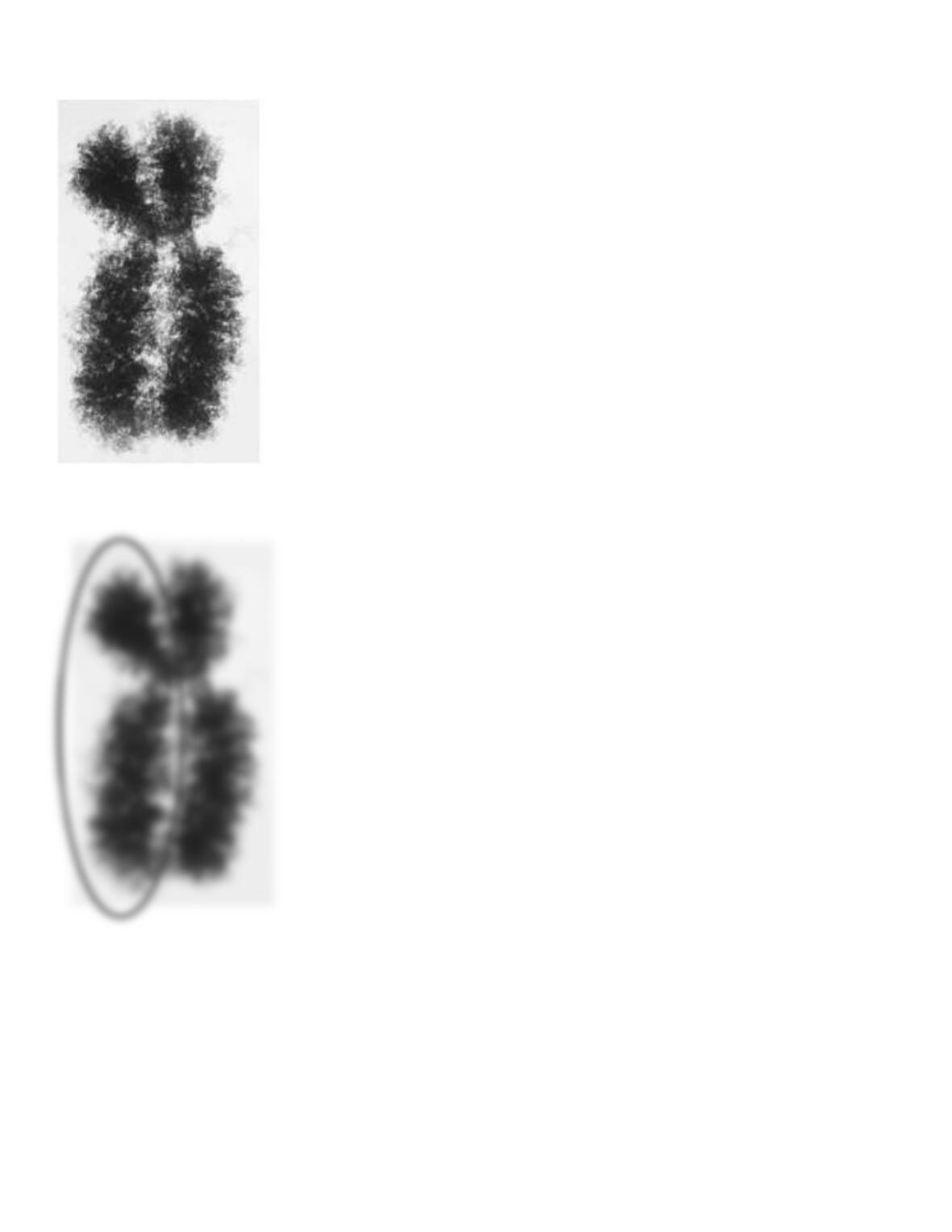
33. Figure 12-1
Refer to Figure 12-1. Draw a circle around one sister chromatid.
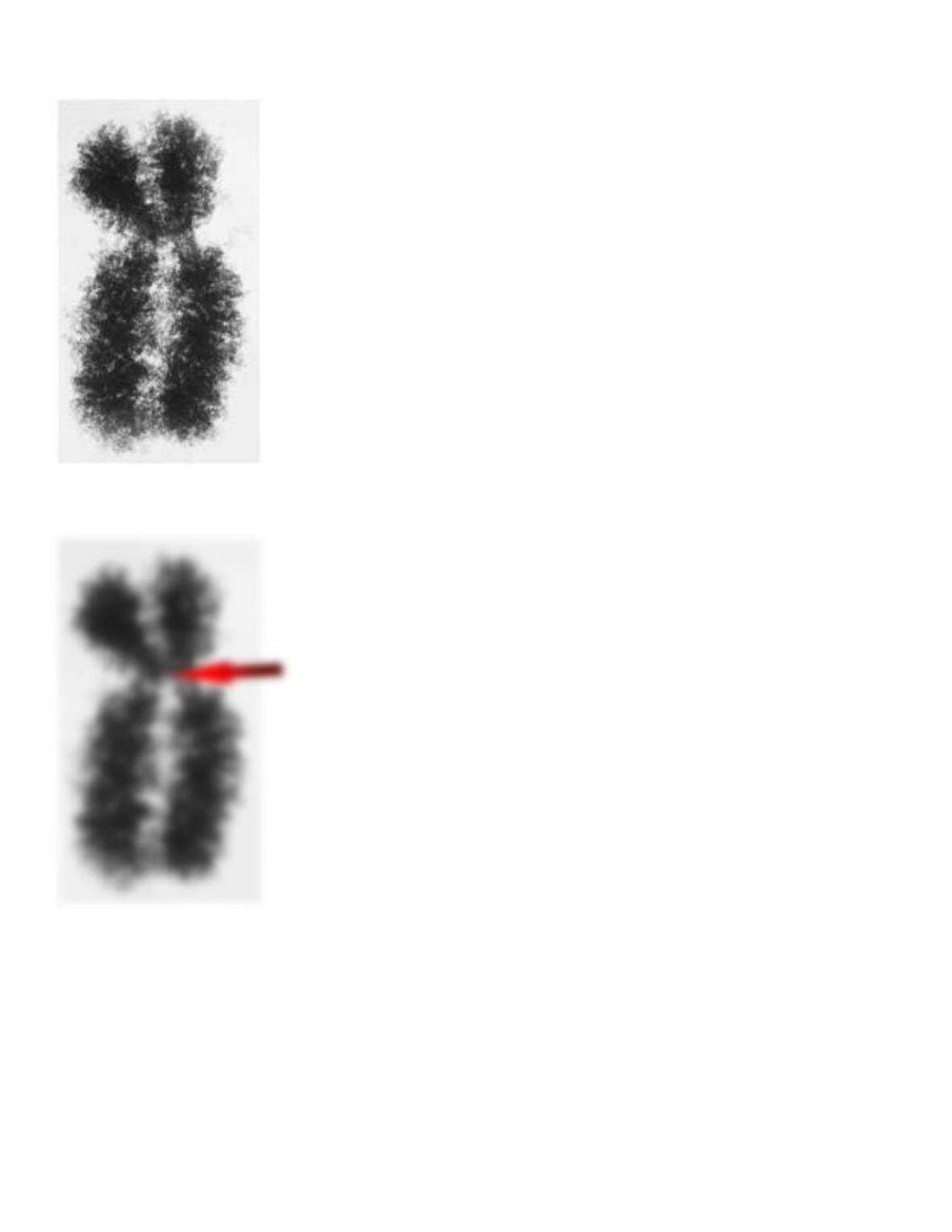
34. Figure 12-1
Refer to Figure 12-1. Draw an arrow pointing to the centromere.
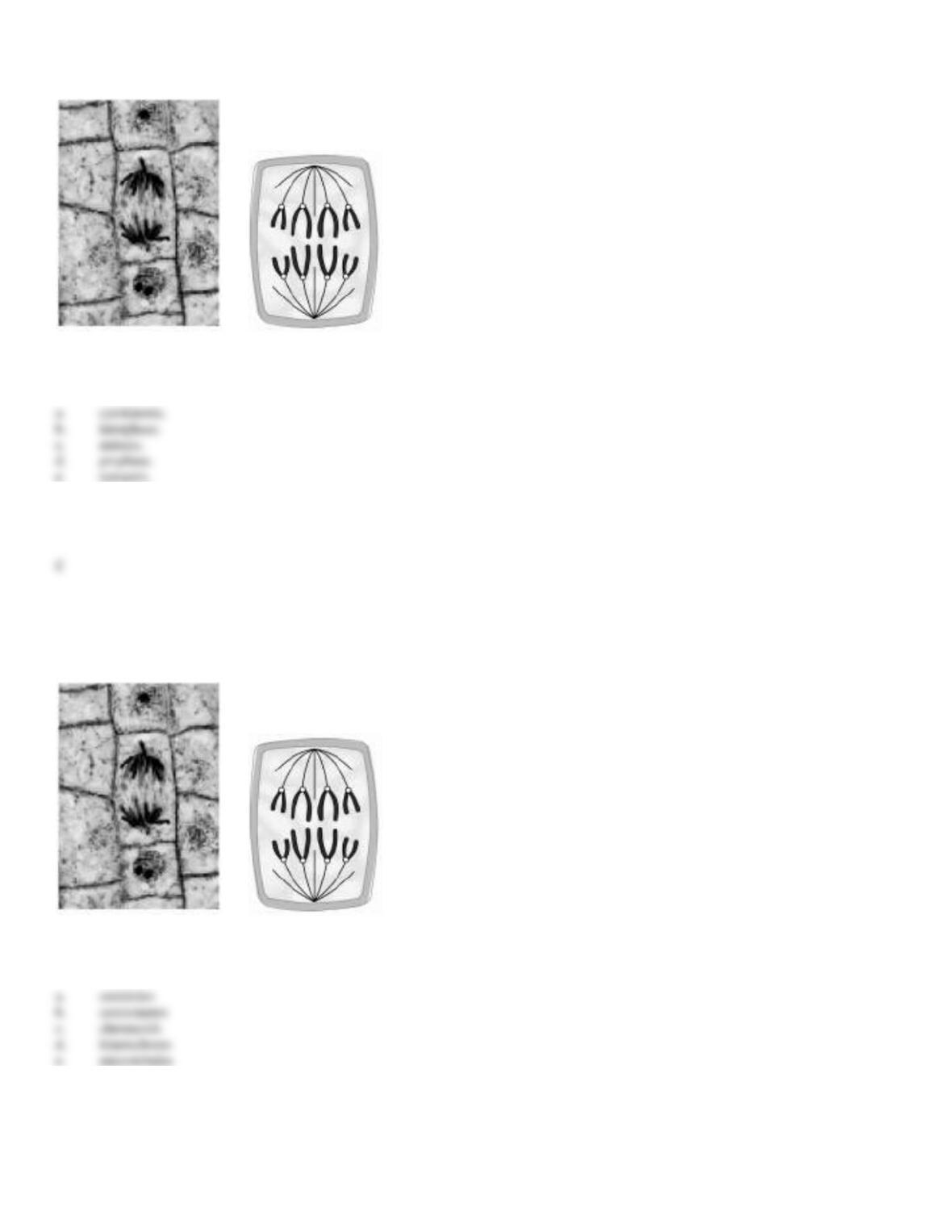
35. Figure 12-2
Refer to Figure 12-2. Which stage of the cell cycle is this cell in
36. Figure 12-2
Refer to Figure 12-2. What are the arrows pointing to?
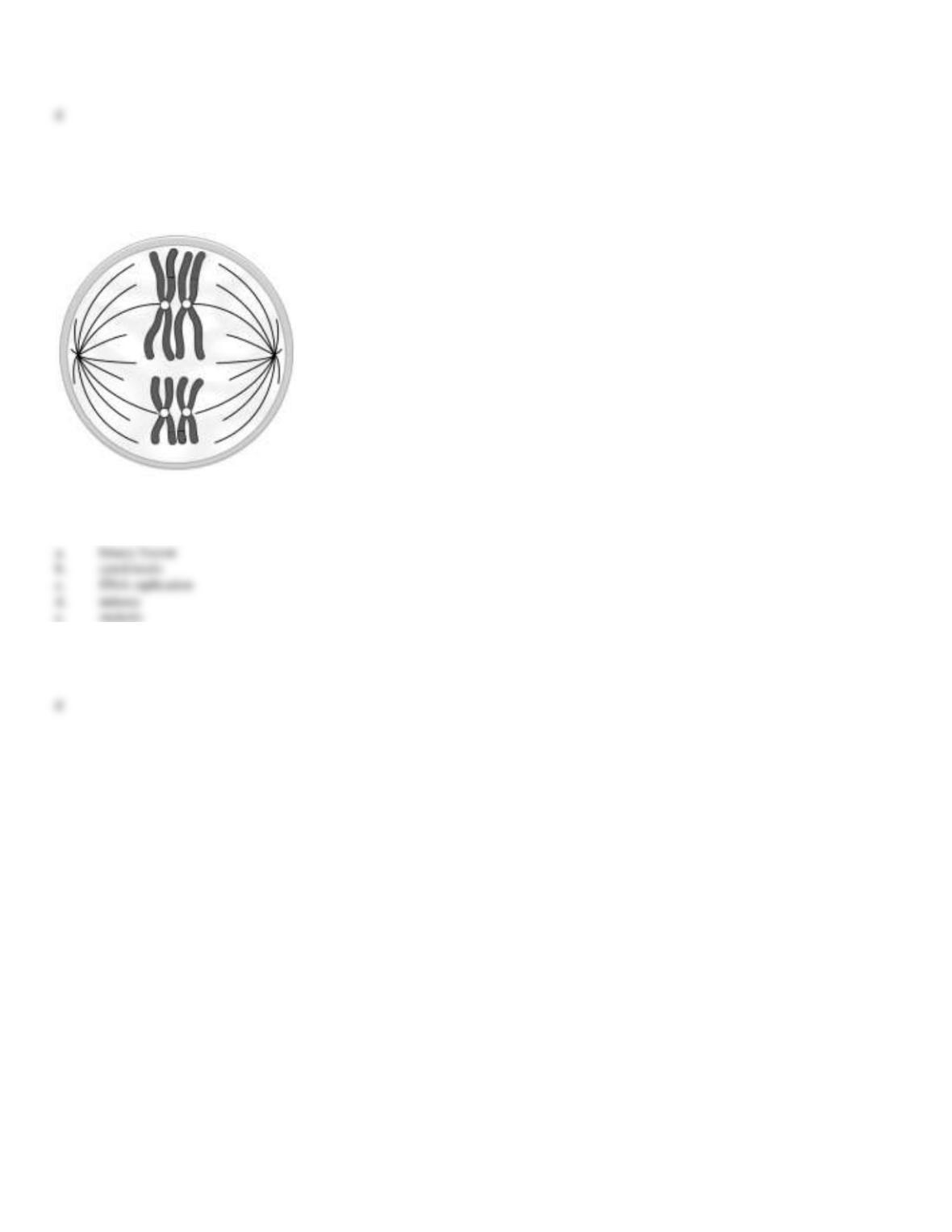
37. Figure 12-3
Refer to Figure 12-3. What is going on in this cell?
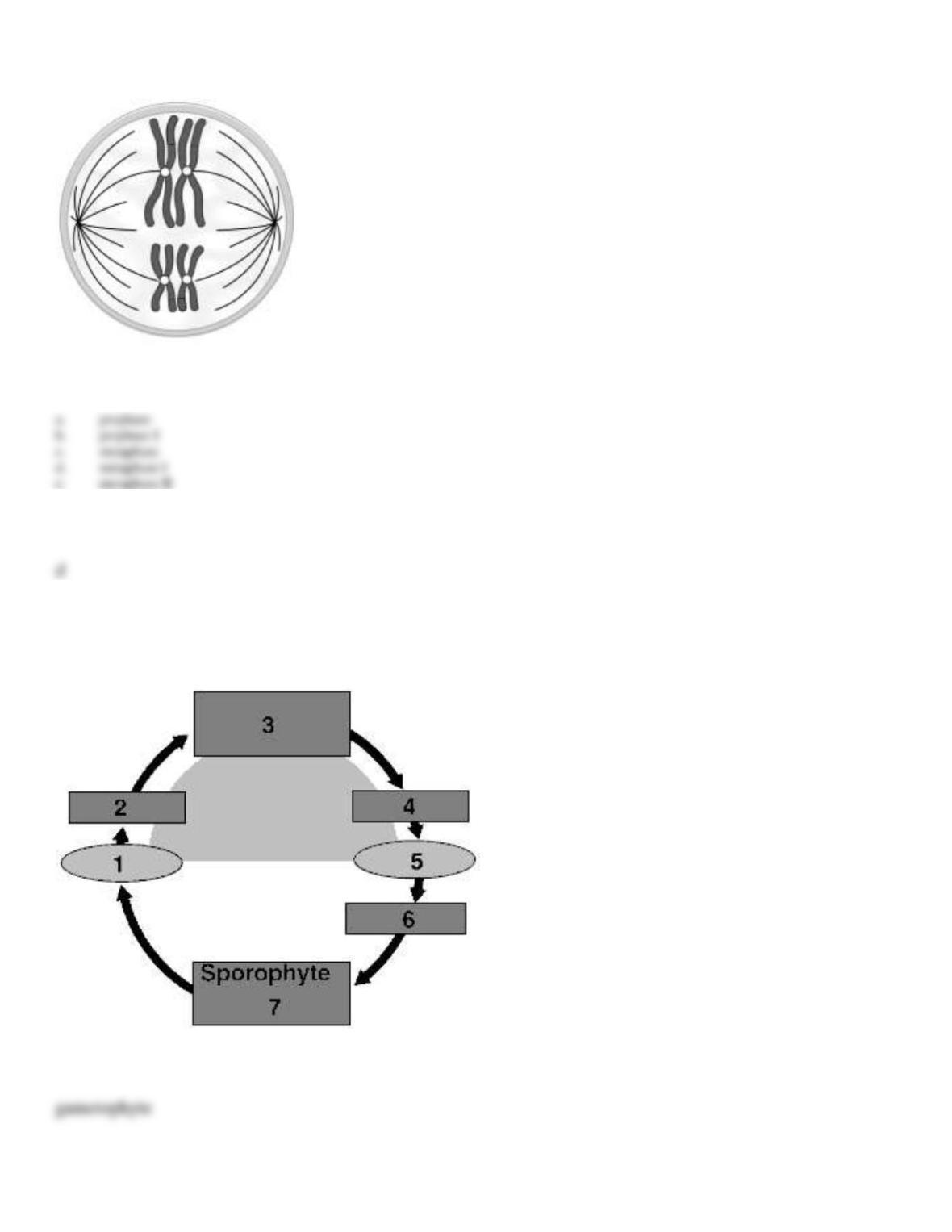
38. Figure 12-3
Refer to Figure 12-3. What particular stage is illustrated here?
39. Figure 12-4
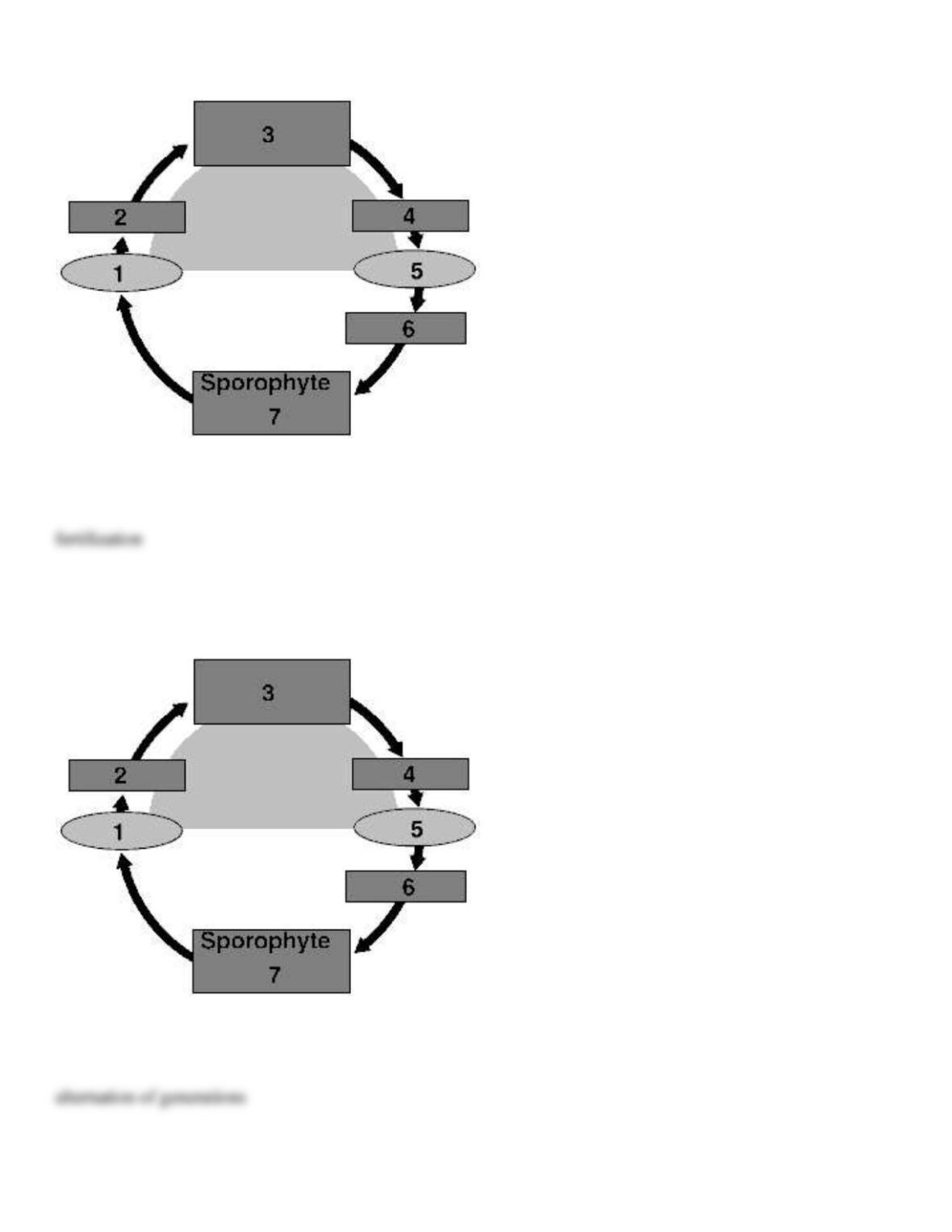
Refer to Figure 12-4. If Box 7 is the sporophyte, what term goes in Box 3? ____________
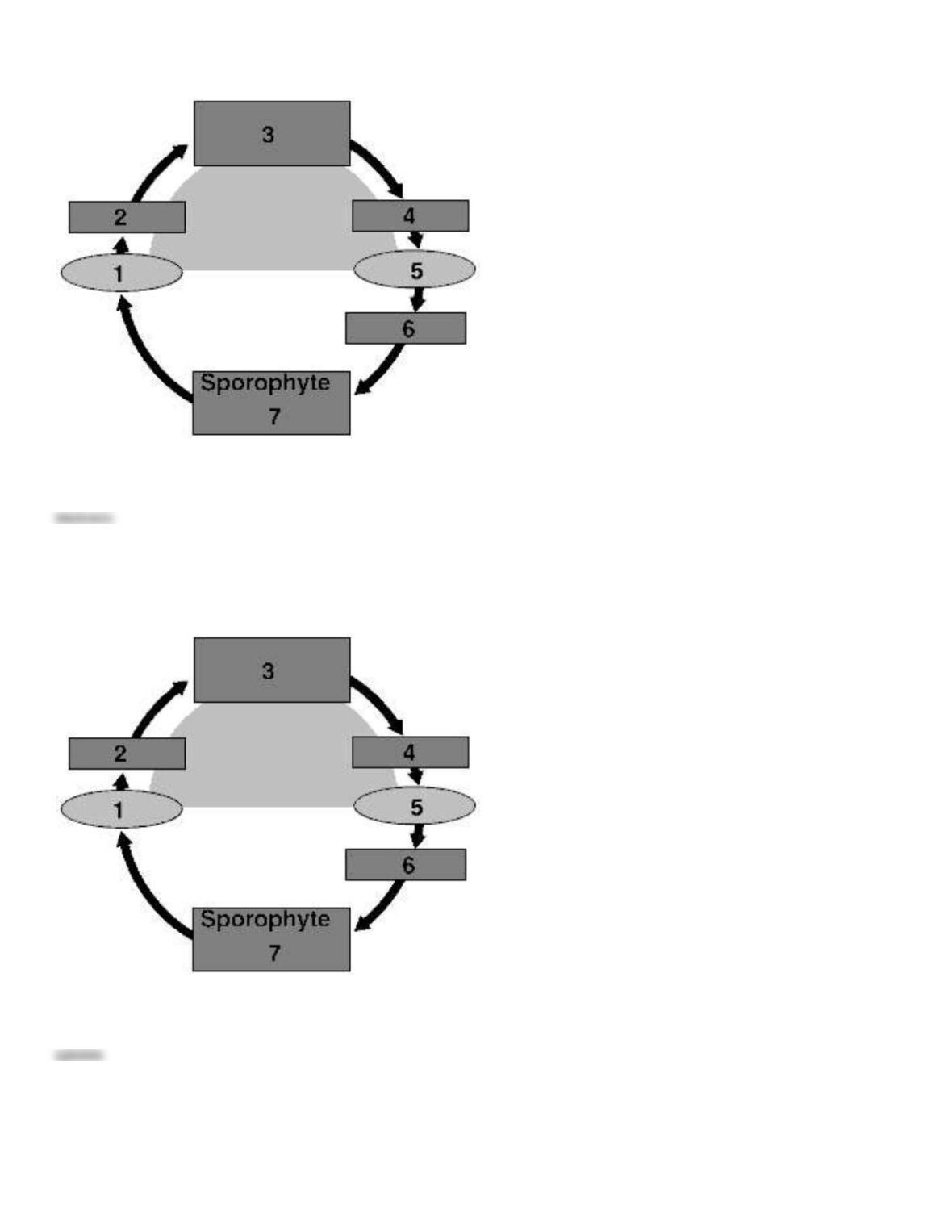
40. Figure 12-4
Refer to Figure 12-4. What process is going on in Oval 1? ___________
41. Figure 12-4
Refer to Figure 12-4. What is the product of the process in Oval 1 (shown as Box 2)? __________
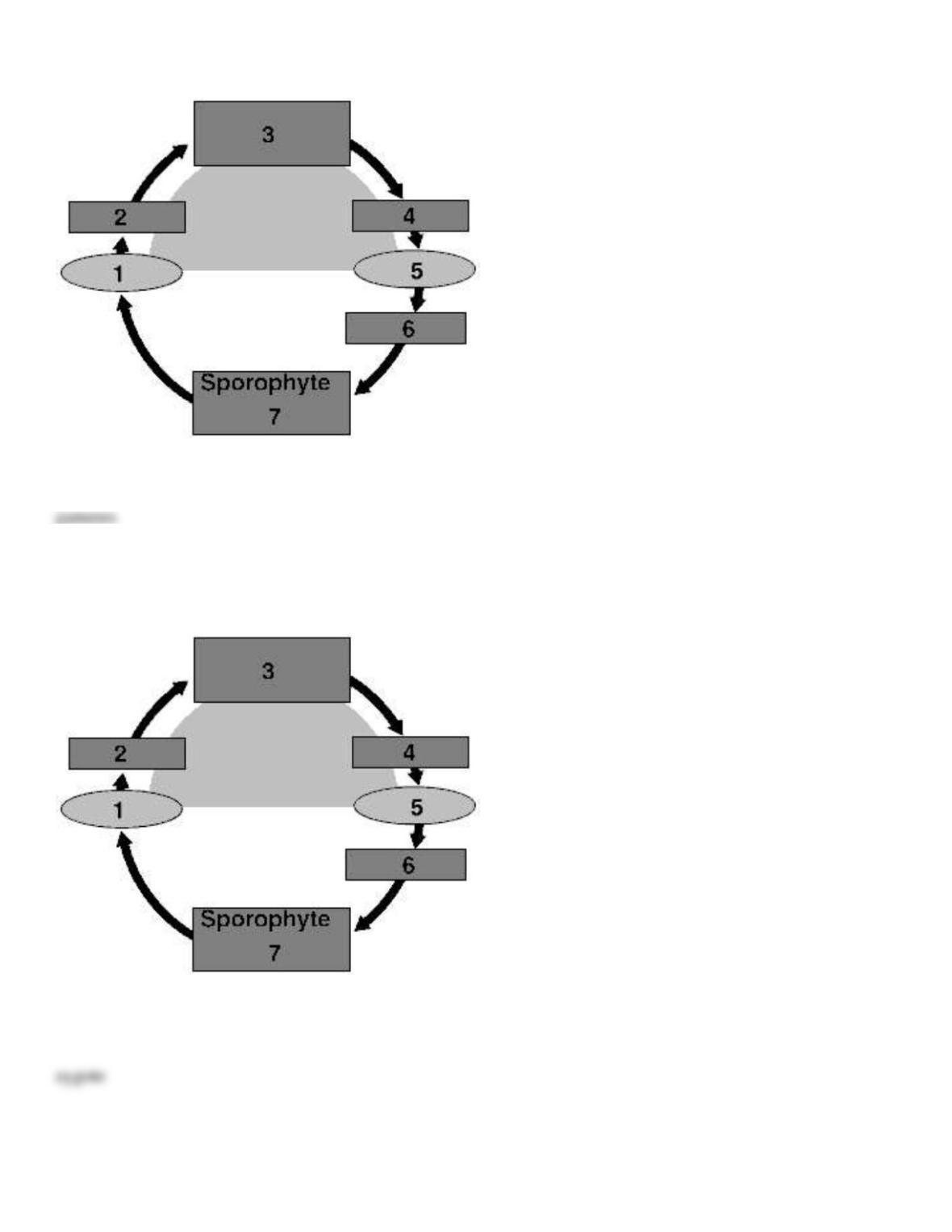
42. Figure 12-4
Refer to Figure 12-4. What cells are produced by Box 3 (shown as Box 4)? ___________
43. Figure 12-4
Refer to Figure 12-4. When two of Box 4 interact, Box 6 is formed. Box 6 will become the sporophyte. What
is Box 6? __________
44. Figure 12-4
Refer to Figure 12-4. What is the name of the process (Oval 5) that occurs when two of Box 4 interact?
__________
45. Figure 12-4
Refer to Figure 12-4. All of the event in this picture illustrate the life of a plant. This is known as
_____________.

46. In somatic cells that are capable of dividing, the cell cycle is the period from the beginning of one division
to the beginning of the next division.
47. Only gametes can undergo meiosis.
48. DNA replication occurs in interphase.
49. The nucleolus disappears during prophase.
50. Anaphase is the final stage of mitosis.
51. The spindle is composed of tiny fibers called microfilaments.
52. The Golgi body produces vesicles containing materials to construct new membranes and walls for each
daughter cell.
53. In plant cells, mitosis can take place in any cell.
54. Zygotes result from the union of two spores.
55. Each gamete has two sets of chromosomes.

56. Diploid cells are produced from haploid cells during meiosis.
57. Crossing over occurs during prophase of mitosis and meiosis.
58. Meiosis results in four cells.
59. Some of the genetic variation that is seen in gametes is the result of crossing over.
60. Each daughter cell produced in meiosis has only one member of each homologous pair.
61. Cells of the sporophyte body are diploid.
62. Unlike animals, plants have a gametophyte generation in which the plant has all diploid cells.
63. The general term for a cell or an organism having two sets of chromosomes is ____________________.
64. The ____________________ is the constricted region of the chromosome where the chromatids are
attached to each other.
65. The condition in which cells have two sets of chromosomes is called ____________________.

66. The name given to chromosome duplicates is ____________________.
67. Before cell division can occur, the chromosomes ____________________ in order to ease the process of
chromosome movement.
68. The structure that pulls chromatids apart is the ____________________.
69. The spindle is composed of ____________________ which are tiny protein fibers.
70. The development of the ____________________ indicates that cytokinesis is taking place in plant cells.
71. If cytokinesis failed to occur, the result would be a cell with two ____________________.
72. In plant cells, cytokinesis is accomplished by building a(n) ____________________ between the two new
nuclei.
73. A fertilized egg is called a(n) ____________________.
74. In plants, meiosis does not give rise to the gametes directly, instead meiosis produces
____________________.

75. The close side-by-side pairing of homologous chromosomes early in meiosis is called
____________________.
76. In plants, the diploid stage is called a(n) ____________________.
77. Gametophytes produce their reproductive cells through ____________________.
78. Sporophytes produce ____________________ by meiosis.
79. During ____________________ there is a transition from: a diploid plant to a haploid plant and back to a
diploid plant.
80. What function does the spindle perform?
81. Why is meiosis necessary in sexually reproducing organisms?
82. Describe alternation of generations in plants.

83. State 3 ways the mitosis and meiosis are different.