
1
Campbell Essential Biology, 6e (Simon/Dickey/Hogan/Reece)
Chapter 11 How Genes Are Controlled
Chapter 11 Objectives
11 Biology and Society: Tobacco’s Smoking Gun
11.1. Describe the evidence that strongly suggests that cigarette smoking causes lung cancer.
11.1 How and Why Genes Are Regulated
11.2. Explain how gene regulation leads to cells with many different properties.
11.3. Explain how the lac operon works, and compare it to the mechanism of operons that
control amino acid synthesis in bacteria.
11.4. Explain how transcription is regulated in eukaryotes, and compare transcriptional
regulation in eukaryotes and prokaryotes.
11.5. Describe the significance of cell signaling and homeotic genes in multicellular organisms.
11.6. Explain how DNA microarrays help scientists visualize gene expression.
11.2 Cloning Plants and Animals
11.7. Explain how and why plants are cloned.
11.8. Explain how nuclear transplantation can be used to clone animals, and describe
advantages and challenges of reproductive cloning of animals.
11.9. Compare the advantages and disadvantages of embryonic stem cells and adult stem cells
in the replacement of tissues in adults.
11.3 The Genetic Basis of Cancer
11.10. Explain how mutations in proto-oncogenes and tumor suppressor genes can lead to
cancer.
11.11. Evaluate how personal habits and individual choices can affect a person’s risk of
developing cancers.
11 Evolution Connection: The Evolution of Cancer in the Body
11.12. Explain how populations of cancer cells evolve.
Global Learning Outcomes
1. Demonstrate an understanding of the principles of scientific inquiry.
2. Demonstrate the ability to think critically and employ critical-thinking skills.
3. Read and interpret models, graphs, and data.
4. Demonstrate the quantitative skills needed to succeed in biology.
5. Demonstrate an understanding of the impact of science on society.
6. Evaluate the credibility of scientific information from various sources.
7. Demonstrate the ability to make connections between concepts across biology.
8. Communicate effectively in writing.
9. Apply the scientific method to interpret information and draw conclusions.
11.1 Multiple Choice Questions
1) What happened when researchers added BPDE, a component of tobacco smoke, to human
lung cells in a laboratory experiment?
A) The cells behaved normally.
B) The cells shrank in size.
C) The cells developed mutations in their p53 genes.
D) The cells required less energy to grow.
2) The process by which genotype becomes expressed as phenotype is ________.
A) gene regulation
B) transcription
C) gene expression
D) translation
3) In bacteria, what name is given to a cluster of genes with related functions, along with their
DNA control sequences?
A) operon
B) operator
C) promoter
D) exon
4) Bacterial RNA polymerase binds to the ________.
A) operator
B) proto-oncogene
C) regulatory gene
D) promoter
5) In prokaryotes, the production of a single RNA transcript for a group of related genes is under
the control of ________.
A) an operon
B) enhancers
C) a signal transduction pathway
D) transcription factors
6) In an operon, the ________ acts as an on/off switch.
A) operator
B) promoter
C) activator
D) repressor
7) Which of the following turns off transcription by binding to the operator?
A) RNA polymerase
B) repressor
C) promoter
D) lactose
8) Repressors act by blocking the binding of ________ to the operator.
A) promoters
B) DNA polymerase
C) the operon
D) RNA polymerase
9) What would you assume if you found RNA transcripts of lactose-utilizing genes within E.
coli?
A) Lactose has bound to the lac operon activator.
B) Lactose is present in the cell.
C) The lac operon activator protein is present in the cell.
D) The lac operon repressor protein is absent in the cell.
10) While examining a human cell that functions normally, you determine that it has 45
functional chromosomes and one chromosome that is almost completely inactive. You
immediately decide that it is very likely that this cell ________.
A) came from a normal human female
B) is lacking a chromosome
C) is a gamete
D) will become cancerous if one or two more genes are mutated
11) What is the first level of control of eukaryotic gene transcription?
A) RNA splicing
B) attachment of RNA polymerase to the promoter
C) DNA packing and unpacking
D) the binding and unbinding of transcription factors to enhancer sequences
12) Male tortoiseshell cats ________.
A) do not have an X chromosome
B) have orange and black patches of fur that reflect the pattern of X chromosome inactivation
C) are usually XYY individuals
D) are likely to be exceedingly rare and very likely to be sterile since normal male cats are XY
13) Which of these plays a role in the regulation of transcription in both prokaryotic and
eukaryotic cells?
A) RNA splicing
B) attachment of RNA polymerase to the promoter
C) transcription factors
D) gene operons
14) In eukaryotic cells, repressor proteins inhibit transcription by binding to ________.
A) silencers
B) enhancers
C) promoters
D) operons
15) Introns are ________.
A) noncoding DNA sequences
B) DNA sequences to which activators bind
C) expressed DNA sequences
D) the product of RNA splicing
16) Which of these is a type of posttranscriptional regulation of gene expression?
A) inactivation of tRNA
B) alteration of DNA nucleotide sequences
C) breakdown of proteins
D) binding of transcription factors to enhancers
17) What would enable a single RNA transcript to be translated into different polypeptides?
A) The RNA transcript can be spliced more than one way.
B) The coded polypeptide may be modified in more than one way.
C) The length of the RNA transcript tail can vary.
D) Two different genes can produce the same RNA transcript, which will then be translated
differently.
18) In a eukaryotic cell an abnormal protein is binding to the promoter for a gene. Which of the
following processes will likely occur in this scenario?
A) Transcription factors will bind to enhancers.
B) Transcription factors will bind to the promoter.
C) The gene will be expressed normally.
D) RNA polymerase will bind to the promoter.
19) Cells communicate with one another via ________.
A) cascades of gene activation
B) the diffusion of RNA transcripts through adhesion junctions
C) signal transduction pathways
D) RNA splicing
20) The “master control genes” that regulate other genes and determine what body parts will
develop in which locations are called ________.
A) enhancers
B) homeotic genes
C) oncogenes
D) operons
21) Which of these is most likely to cause the development of a six-legged frog?
A) mutation of homeotic genes
B) binding of repressors to operons
C) a mutation in DNA polymerase that affects all cells
D) conversion of a proto-oncogene to an oncogene
22) Homeotic genes ________.
A) have very different sequences in plant cells as compared to animal cells
B) are an example of convergent evolution
C) are evidence of the common ancestry of eukaryotic organisms
D) regulate gene expression in both prokaryotic and eukaryotic cells
23) Which of these techniques could tell you how gene expression differs between individuals
with and without cystic fibrosis?
A) therapeutic cloning
B) DNA microarray
C) reproductive cloning
D) karyotyping
24) How is it that the cells in different body tissues are able to perform different functions?
A) The cells exhibit different patterns of gene expression.
B) Different chromosomes have been inactivated in different cells.
C) The cells contain different genes.
D) The mutations that have accumulated in the cells of the different tissues control functions.
25) Why can mature plants be cloned to produce genetically identical copies?
A) Mature plant cells contain only a fraction of the genes found in an adult plant.
B) Plants have evolved over time to suit the need of human agriculture.
C) Mature plant cells can develop into all the specialized cells of an adult plant.
D) Scientists have engineered all plants to have this ability.
26) Which of the following is NOT a possible use of reproductive cloning?
A) the production of genetically identical mice and rats for experimentation
B) the production of organs in large farm animals for transplant into humans
C) restocking populations of extinct animals such as the wooly mammoth
D) creating stocks of stem cells for human therapeutic use
27) What is a difference between embryonic and adult stem cells?
A) The use of embryonic stem cells raises fewer ethical issues than the use of adult stem cells.
B) Embryonic stem cells are undifferentiated; adult stem cells are partially differentiated.
C) It is easier to obtain embryonic stem cells.
D) Adult stem cells are easier to grow in culture.
28) What name is given to a gene that causes cancer?
A) repressor
B) promoter
C) homeotic gene
D) oncogene
29) Many proto-oncogenes regulate ________.
A) cell growth
B) cell cloning
C) cell division
D) cell repair
30) Inheritance of certain genes increases the risk of getting certain cancers; thus, it can be said
that ________.
A) these cancers are inherited as a dominant trait
B) mutations that occur in somatic cells can be passed from parent to offspring
C) predisposition to these cancers is inherited
D) lifestyle will have little impact on cancer risk for these individuals
31) Data suggest that the normal version of BRCA1 functions as a(n) ________.
A) oncogene
B) tumor-suppressor gene
C) proto-oncogene
D) silencer
32) When referring to cell division, oncogenes are most like ________ while tumor suppressor
genes are most like ________.
A) the brakes on a car… the gas pedal on a car
B) the gas pedal on a car… the brakes on a car
C) the steering wheel on a car… the gas pedal on a car
D) the brakes on a car… the steering wheel on a car

33) If you were working for a pharmaceutical company trying to develop anticancer drugs, what
biological process would be the best target to investigate?
A) meiosis
B) mitosis
C) cellular respiration
D) glycolysis
34) Which risk factor is associated with cancer of the colon and rectum?
A) tobacco
B) viruses
C) UV radiation
D) dietary fat
35) ________ is(are) responsible for more cancers than any other carcinogen.
A) Asbestos
B) UV radiation
C) Tobacco
D) X-rays
36) More people die of ________ cancer than of any other cancer.
A) lung
B) skin
C) pancreatic
D) breast

37) Which of these lifestyle choices will increase cancer risk?
A) jogging
B) spending less time in the sun
C) a diet low in plant fiber
D) quitting smoking
38) Which of the following is NOT an example of how tumors evolve?
A) Tumor cells can spread throughout the body.
B) Tumor cells show genetic variability.
C) Tumor cells grow uncontrollably.
D) Tumor cells pass on mutations when they divide.
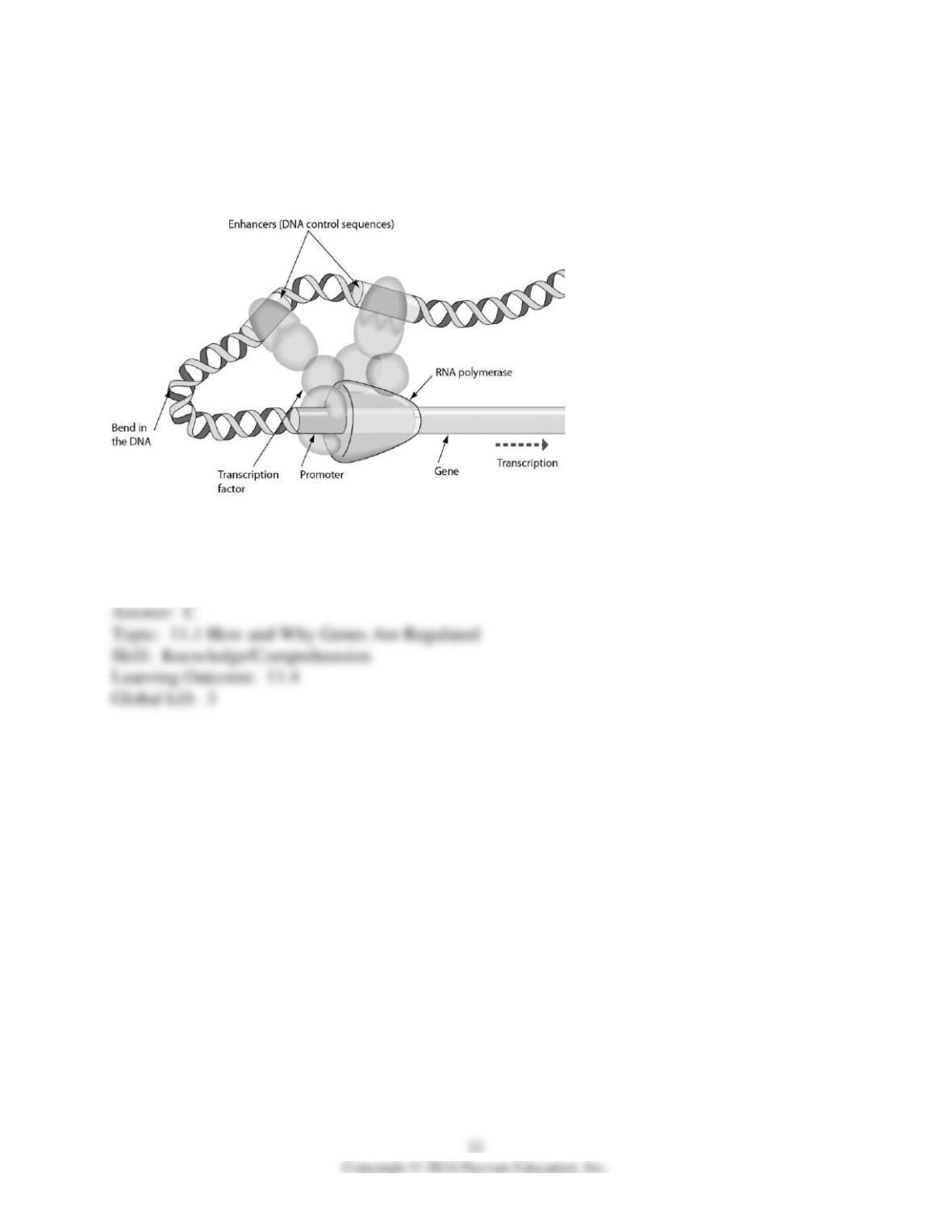
11.2 Art Questions
1) Examine the figure below. The initiation of transcription requires that enhancers bind to
________.
A) DNA
B) the promoter
C) transcription factors
D) RNA polymerase
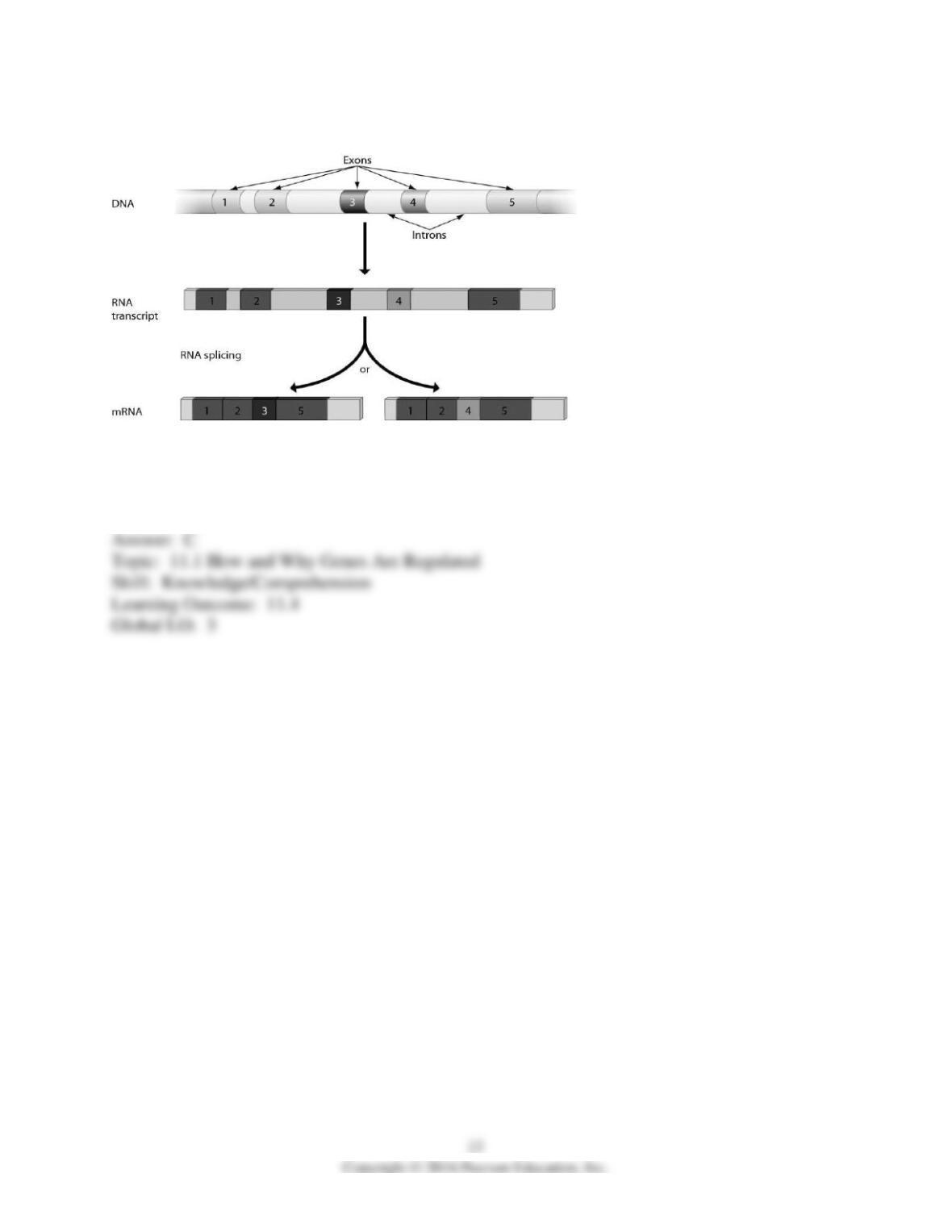
2) The figure below illustrates ________.
A) transcription factors
B) activators
C) alternative RNA splicing
D) protein activation
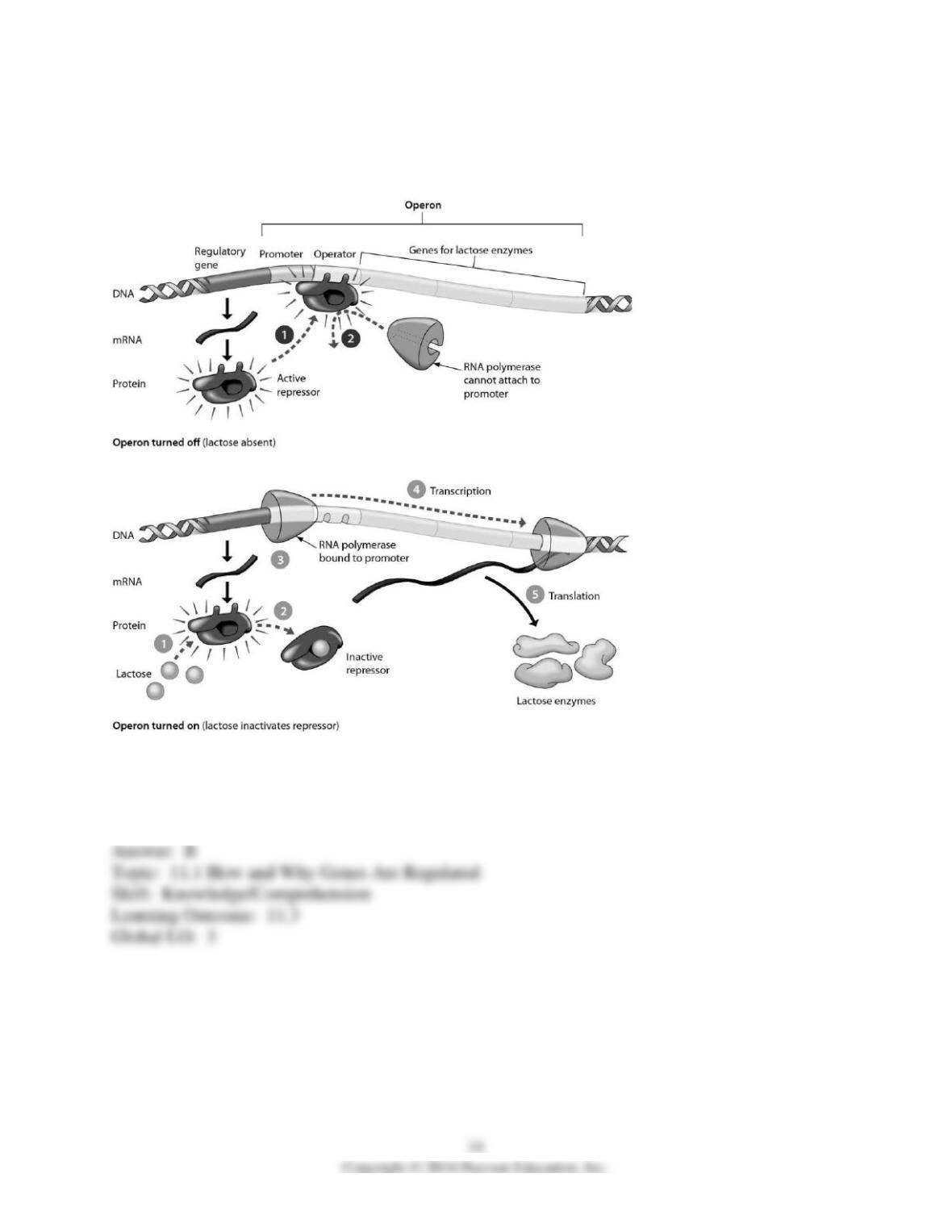
3) The lac operon is shown in the accompanying figure. Answer the following question after
reviewing the figure. The lac operon is usually in the ________ position and is activated by
________.
A) on… the repressor
B) off… lactose
C) off… the repressor
D) on… the promoter
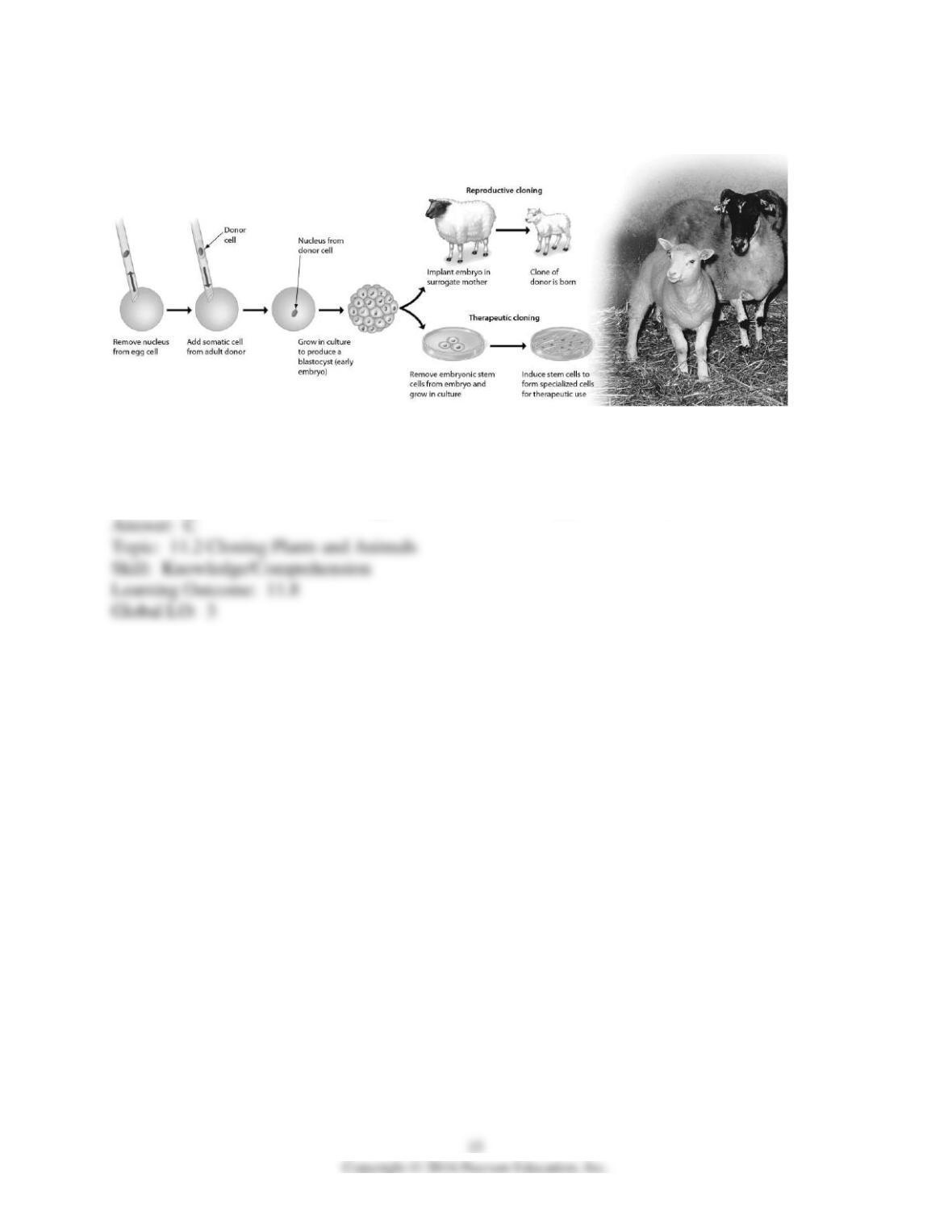
4) Consider the following figure, which outlines cloning by nuclear transplantation. Why does
the clone NOT resemble the surrogate mother?
A) The sperm came from a male donor, who would also pass some of his traits to the clone.
B) The embryonic cells are adversely influenced by the surrogate.
C) The DNA for the clone comes from the genetic donor, not the surrogate.
D) The nuclear material from the egg would influence the appearance of the clone.
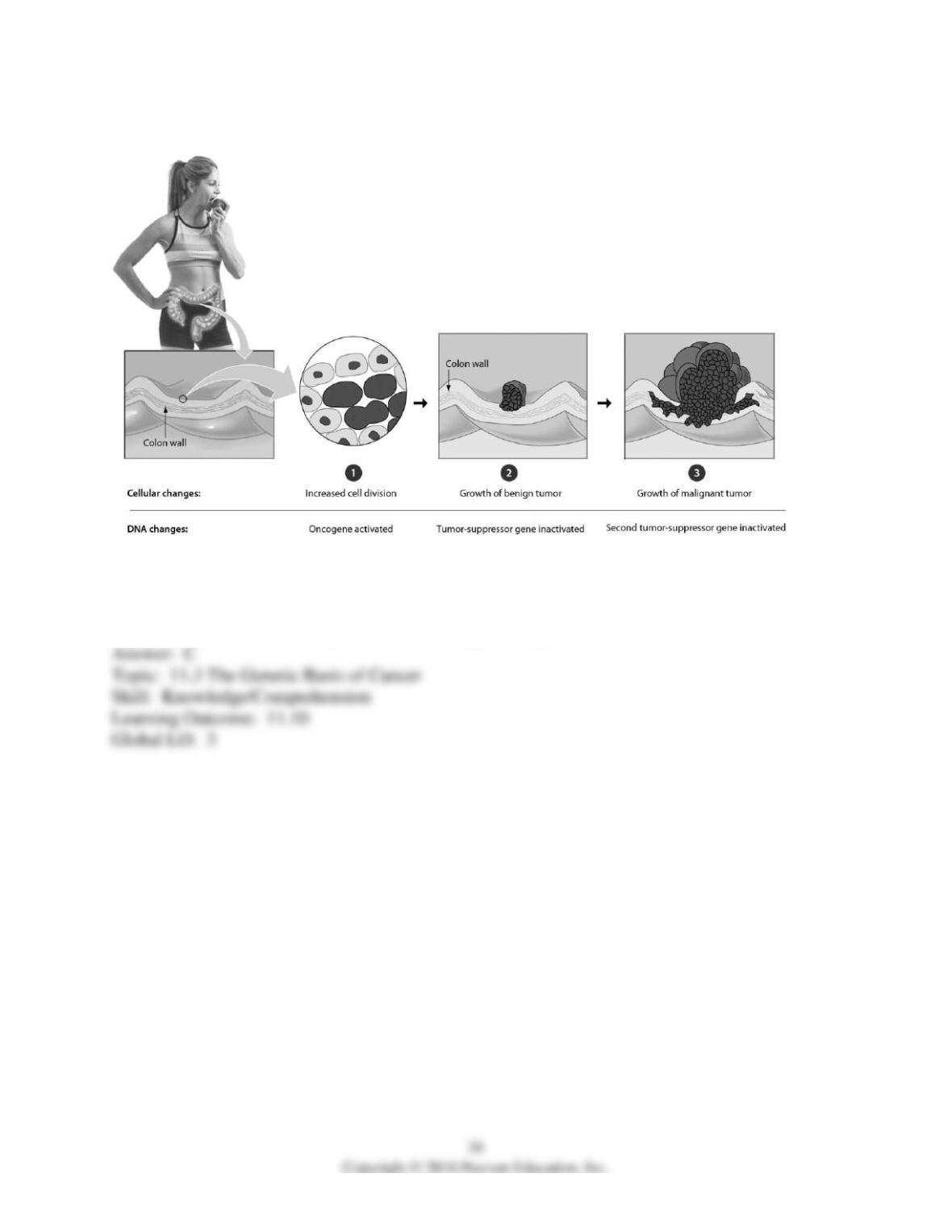
5) Examine the figure below. In a typical colon cancer, the first step is ________.
A) the inactivation of a tumor-suppressor gene
B) the mutation of a tumor-suppressor gene, producing an oncogene
C) the mutation of a proto-oncogene, producing an oncogene
D) the conversion of an oncogene to a tumor-suppressor gene

11.3 Scenario Questions
Please read the paragraph below to answer the following questions.
Jim has become particularly interested in the genetic basis of cancer and has spent considerable
time reading published papers about oncogenes. He learned that as early as 1972 researchers
suggested that mutations in proto-oncogenes caused by carcinogens can convert the proto-
oncogenes to oncogenes. He asked you to answer a couple of questions about this because he did
not have a sufficient biology background.
1) Jim learned that some cancer cells produce more growth-stimulating proteins than others.
What would you give him as a plausible explanation?
A) Tumor suppressor genes may have been activated in these cells.
B) Proto-oncogenes may have mutated to become oncogenes in these cells.
C) Mutations in homeotic genes may be responsible.
D) This may result from vitamin C and vitamin E deficiencies.
2) Jim learned that viruses can sometimes cause cancer and wants to know why. You tell him
that ________.
A) a human cell can acquire a tumor-suppressor gene from a virus
B) a human cell can acquire a proto-oncogene from a virus
C) a human cell can acquire an oncogene from a virus
D) some viruses are passed from mother to child and cause “inherited” cancers
3) Jim came across an advertisement for an herbal supplement that claimed to cure lung cancer
by targeting precancerous cells in the lungs. If this claim were true, which of the following is a
possible mechanism by which it may act?
A) The supplement would increase mutation rates in proto-oncogenes.
B) The supplement would inhibit the production of tumor suppressor proteins.
C) The supplement would stimulate translation of growth factors
D) The supplement would restrict the transcription of oncogenes.

Please read the paragraph below to answer the following questions.
You conducted a series of experiments to test whether the expression of hexokinase, an
important enzyme involved in glycolysis, varies under different conditions. In the first
experiment, you measured the production of hexokinase mRNA in cells at three different
temperatures: 37°C, 25°C, and 10°C. Your results showed that the mRNA levels for hexokinase
were 5× and 20× lower at 25°C and 10°C than at 37°C, respectively. Based on these results, you
are going to conduct further experiments to attempt to answer your research question.
4) What can you conclude from these results?
A) Unpacking of the hexokinase gene occurs only at 37°C.
B) Transcription of the hexokinase gene occurs less frequently at lower temperatures.
C) The levels of hexokinase protein are not affected by temperature.
D) Translation of the hexokinase gene occurs more frequently at higher temperatures.
5) What would be the best experiment to do next to determine if complete hexokinase gene
expression is temperature dependent?
A) Measure the amount of hexokinase mRNA in cells at different temperatures.
B) Measure the rate of transcription of the hexokinase gene in cells at different temperatures.
C) Measure the amount of mRNA that is broken down in cells at different temperatures.
D) Measure the amount of hexokinase protein in cells at different temperatures.

6) DNA microarrays can be used to determine relative levels of gene expression between
samples. DNA microarrays are usually interpreted by color: green means higher mRNA levels,
yellow means equal levels, and red means lower levels. If you ran the samples from the
temperature experiment on a DNA microarray using the 25°C experiment as a baseline, what
results do you predict you would obtain?
A) The samples from the 37°C experiment would be green and the samples from the 10°C would
be red.
B) The samples from the 37°C experiment would be red and the samples from the 10°C would
be green.
C) The samples from the 37°C experiment would be green and the samples from the 10°C would
be yellow.
D) The samples from the 37°C experiment would be yellow and the samples from the 10°C
would be red.