Chapter 10—Mineral Nutrition and Transport in Plants Key
1. The gradual breakdown of rock in the formation of soil is known as
2. Weathering processes include
3. The function(s) of soil is/are to
4. The mineral particles of soil are classed by size as
5. Very sandy soils are not desirable because
6. Soils with large proportions of clay are not desirable because
7. Where are most of the minerals held within the soil?
8. In order for plant roots to get minerals from the soil, the roots secrete ____ to cause the minerals to be
released from the soil particles.
9. Dead leaves and branches, animal droppings, and the remains of dead animals and microorganisms are all
part of a soil’s
10. Organic matter
11. Humus is
12. The function(s) of a mulch is/are to
13. Soil bacteria and fungi are beneficial because
14. Pore spaces
15. Which of the following statements is TRUE?
16. Soil gases
17. The pH of soil is an important consideration for gardeners because
18. The technique of growing plants in soilless, aerated water solutions is called
19. Why are macronutrients so named?
20. Calcium is
21. The function of boron is
22. Magnesium is
23. Potassium is
24. Organic fertilizers
25. Inorganic fertilizers
26. The effect of transpiration is to
27. Water evaporates from the surface of mesophyll cells in the leaf and diffuses out through the ____ into the
atmosphere.
28. Through which of these cells is water transported?
29. Water is able to move through the plant as an unbroken column of water because of water’s attraction to
other water molecules. This property of water is known as
30. The transport of water throughout the xylem relies on the evaporation of water from the leaves known as
31. Guttation is due to
32. The concentration of minerals in the xylem is higher than the concentration in the soil; thus, the plant is
doing work to concentrate the minerals. This concentration is the result of
33. In the phloem, sugars always move from
34. High pressure is generated in the leaves by
35. What is the primary sugar transported in the xylem?

36. A gradient in the ____ concentration in phloem explains phloem function.
37. What insect do botanists use to study phloem transport?
38. Clay particles attract and bind mineral ions through the interaction of electrical charges.
39. The best agricultural soils have a mixture of sand, silt, and clay.
40. The larger the soil particle size, the more ions that can be held by the soil.
41. Nitrogen is a gas that is present in the air, but not present in the soil.
42. Loam is an ideal agricultural soil.
43. Soil bacteria and fungi are pests and are harmful to plants.

44. Ants that live in soil are beneficial because they aerate the soil and contribute to the increase of organic
matter.
45. Over-watered soil can become leached (depleted) of plant nutrients.
46. pH is relatively unimportant in soil chemistry; good soils may have a pH ranging from 3.0 to 9.0.
47. An acidic soil is less able to bind cations (positive ions).
48. Bacteria and fungi are important to the soil because the return nutrients to the soil.
49. Hydroponics is a useful scientific tool but has no economic applications.
50. Essential elements are those elements that are supplied to the plant by the soil.
51. Agriculture has no impact on nutrient cycling in an ecosystem.
52. Water has both cohesive and adhesive properties that allow it to be pulled to the top of a plant.
53. Translocation is evaporative water loss from the leaf surface.

54. A “source” is where sugar is removed from the phloem.
55. The pressure-flow hypothesis involves the active transport of sugar across cell membranes.
56. The smallest of the three sizes of soil mineral particles is ____________________.
57. A natural mixture that improves soil fertility and structure, ____________________ is made from garden,
kitchen, and other household wastes such as shredded newspaper and sawdust.
58. The ____________________ is a familiar soil organism that tunnels through and “eats” soil, deposits
castings, aerates the soil, and redistributes organic matter and minerals.
59. The chemical notation for relative degree of acidity or alkalinity of a soil is ____________________.
60. The ____________________ of the soil affects the soil’s ability to attract minerals to the surfaces of the soil
particles.
61. About ____________________% of the volume of soil is occupied by pore space.
62. The mineral nutrient that is an important constituent of proteins and vitamins is ____________________.

63. Potassium, calcium, phosphorus, and sulfur are examples of ____________________.
64. Essential nutrients that are needed by the plant in only tiny quantities are ____________________.
65. The term for whatever is in shortest supply for plant growth is ____________________.
66. The cultivation of plants in aerated mineral solutions (without soil) is known as ____________________.
67. The specific plant tissue that conducts water and dissolved mineral nutrients is ____________________.
68. The conducting cells of the xylem are ____________________.
69. The evaporative water loss from the aerial parts of a plant is called ____________________.
70. The ____________________ model describes the mechanical processes that account for the movement of
water up the stems of plants.
71. Water is able to move through the plant as an unbroken column of water because of water’s attraction to
other water molecules. This property of water is known as ____________________.

72. The transport of water throughout the xylem relies on the evaporation of water from the leaves known as
____________________.
73. The conducting cells of the phloem are ____________________.
74. The movement of dissolved sugars in the phloem is called ____________________.
75. In the pressure-flow hypothesis, a pressure ____________________ exists between the source and the sink.
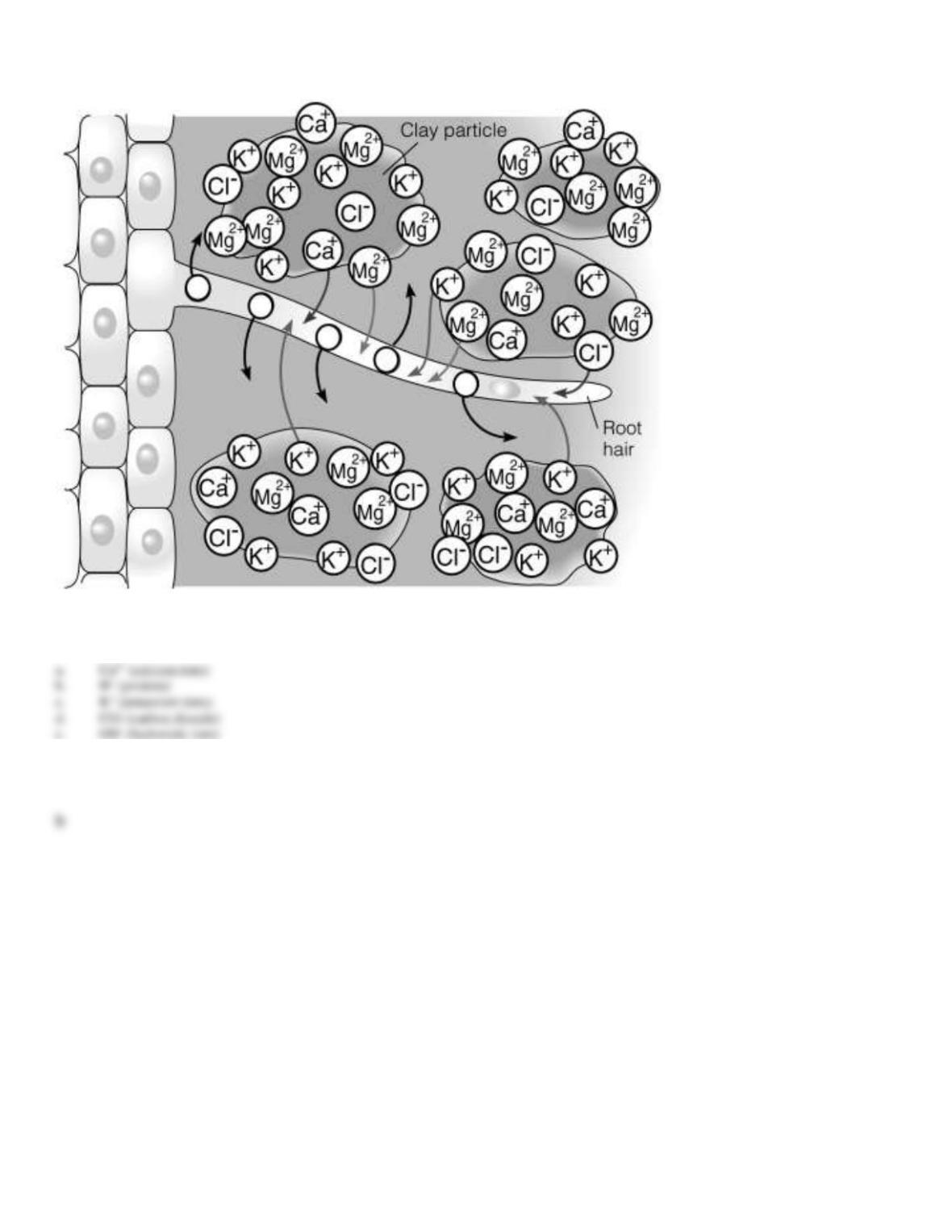
76. Figure 10-1
Refer to Figure 10-1. What ions are released from the root?
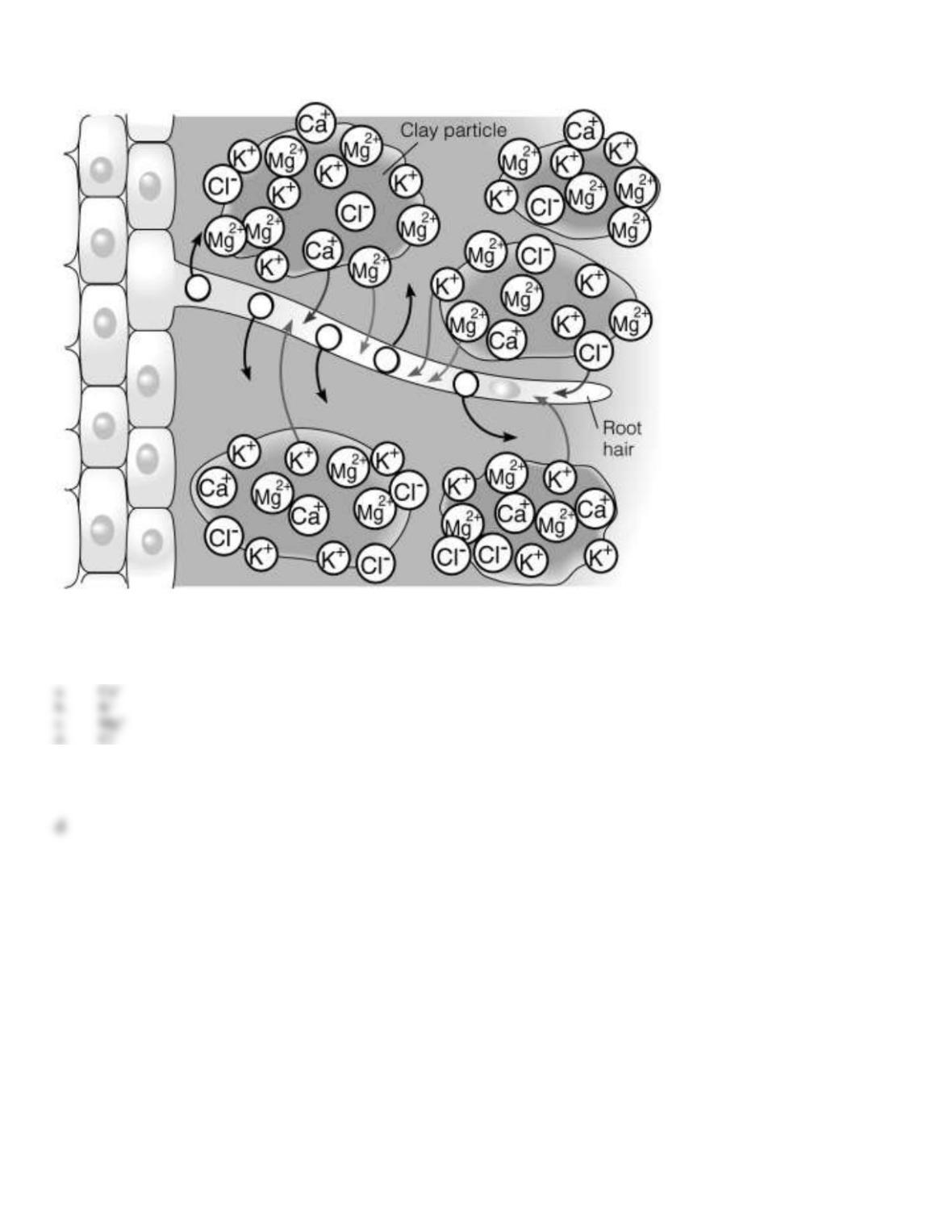
77. Figure 10-1
Refer to Figure 10-1. The soil particles in the figure show one ion that does not belong bound to a soil particle.
Which one is it?
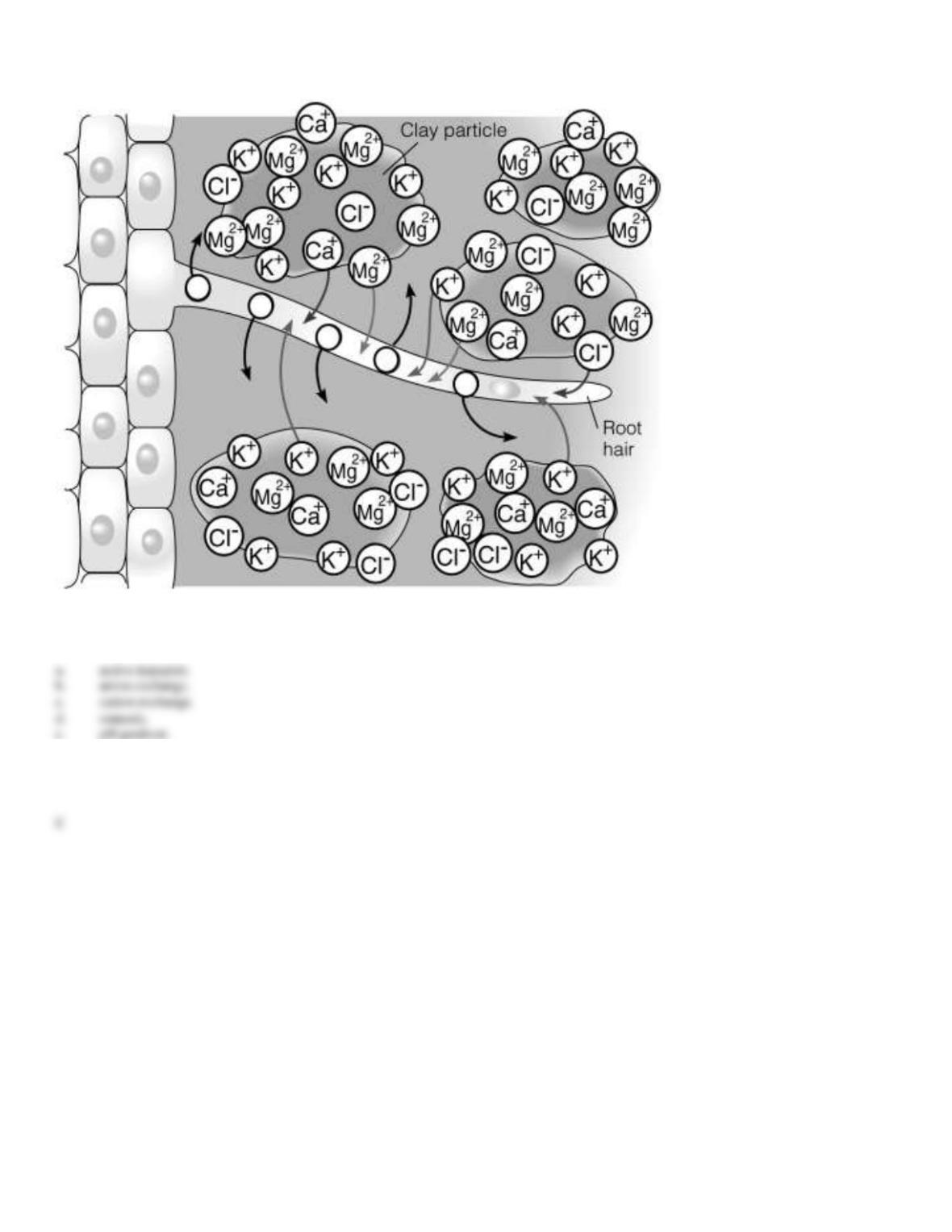
78. Figure 10-1
Refer to Figure 10-1. The trading of ions from the root for ions from the soil is know as
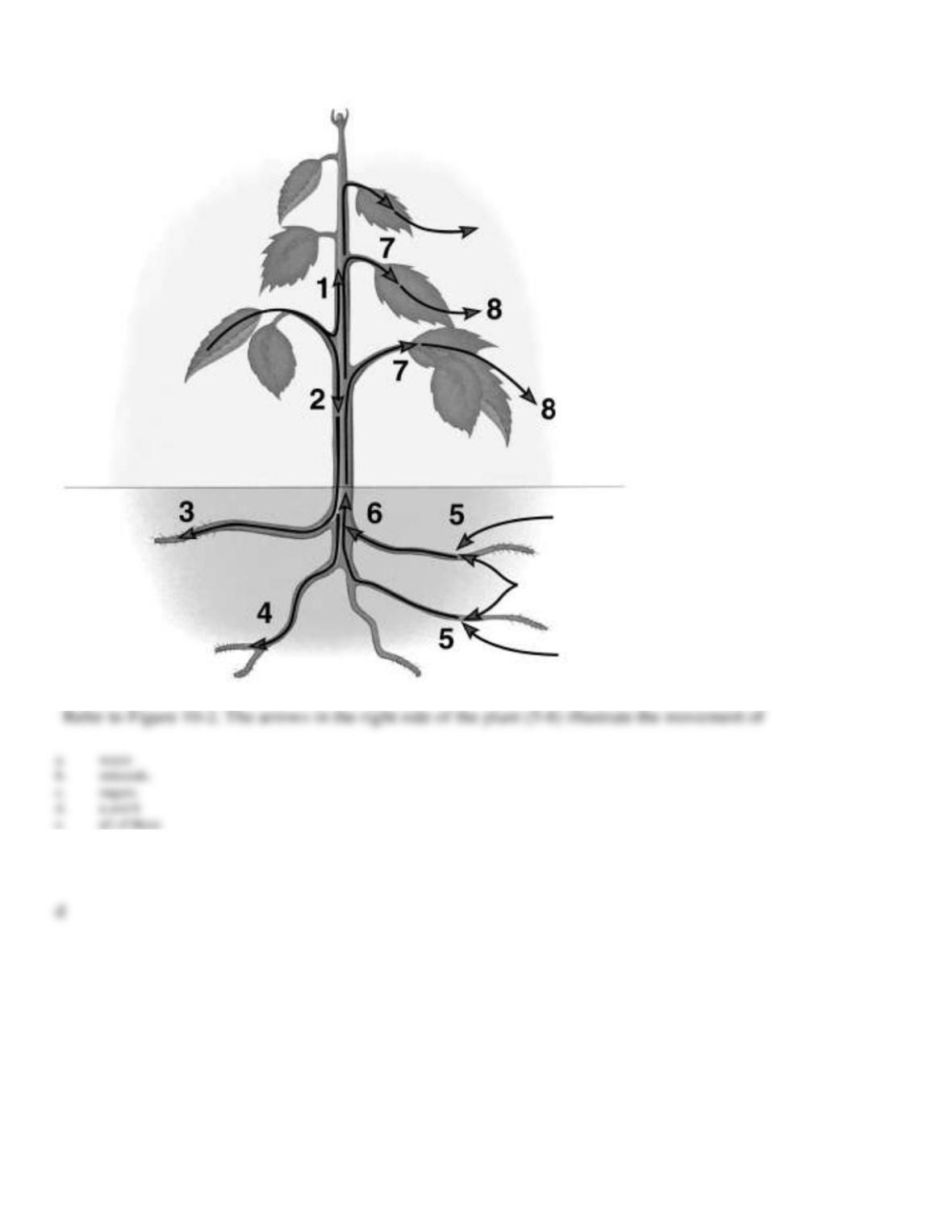
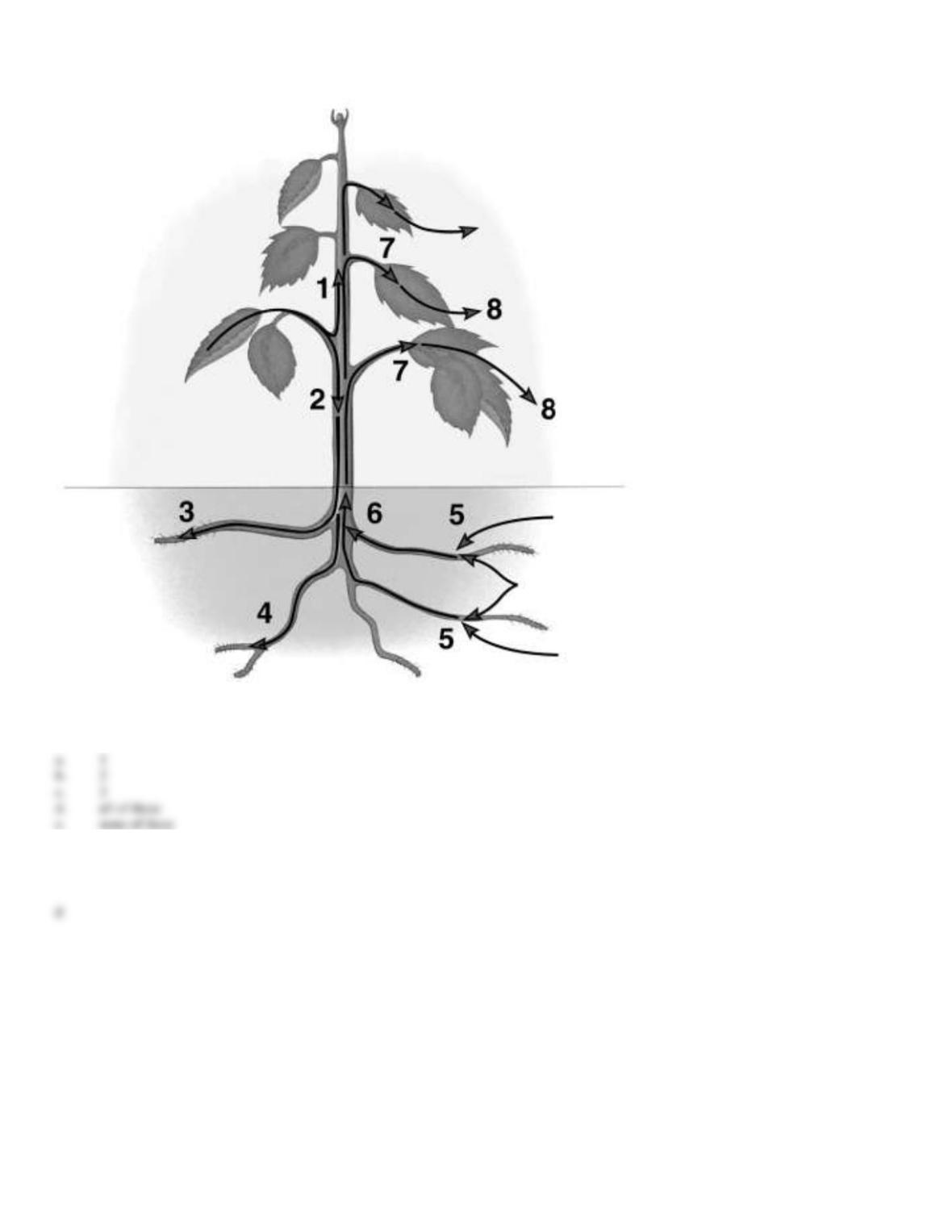
79. Figure 10-2
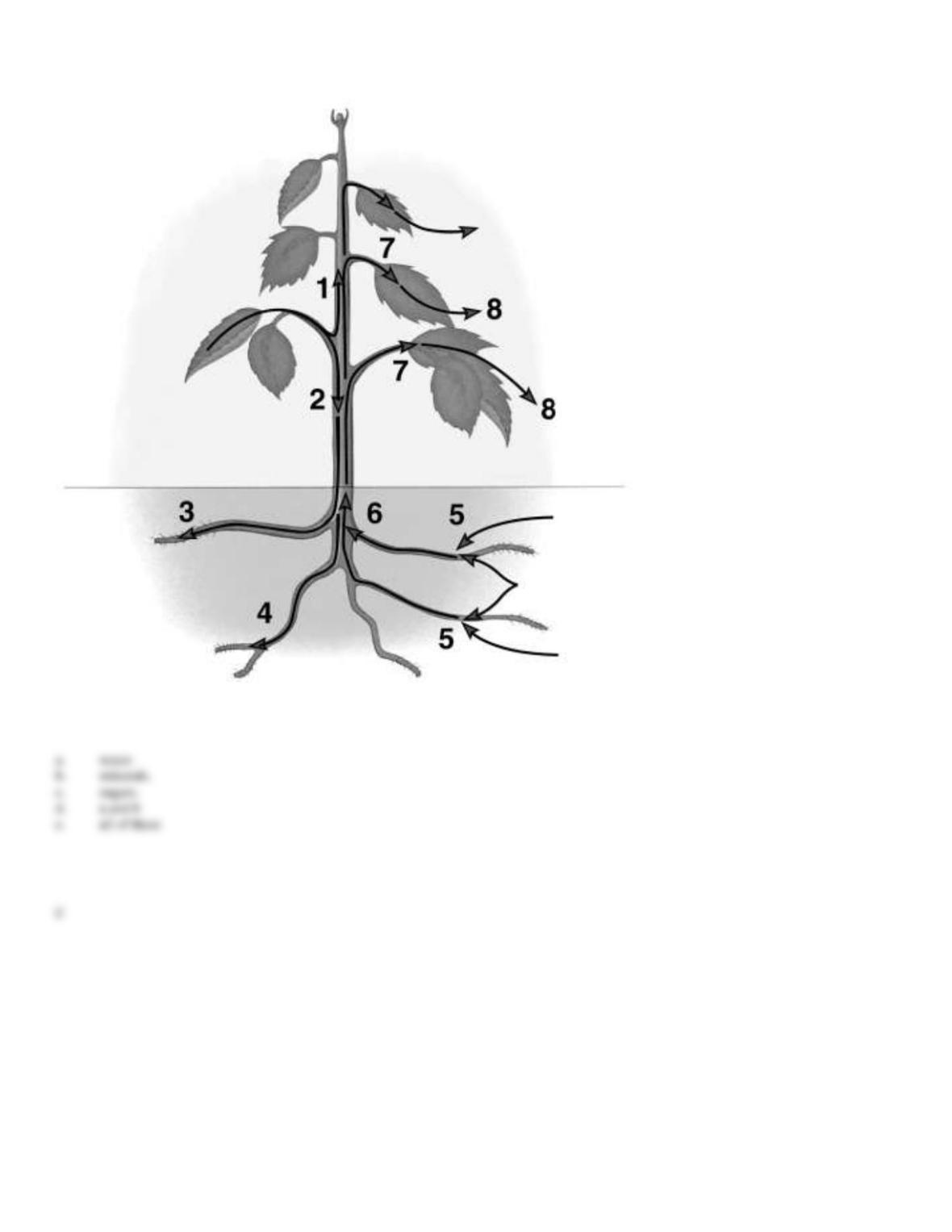
80. Figure 10-2
Refer to Figure 10-2. The arrows on the left side of the plant (1-4) illustrate the movement of
81. Figure 10-2
Refer to Figure 10-2. Which of the following arrows is incorrectly drawn?
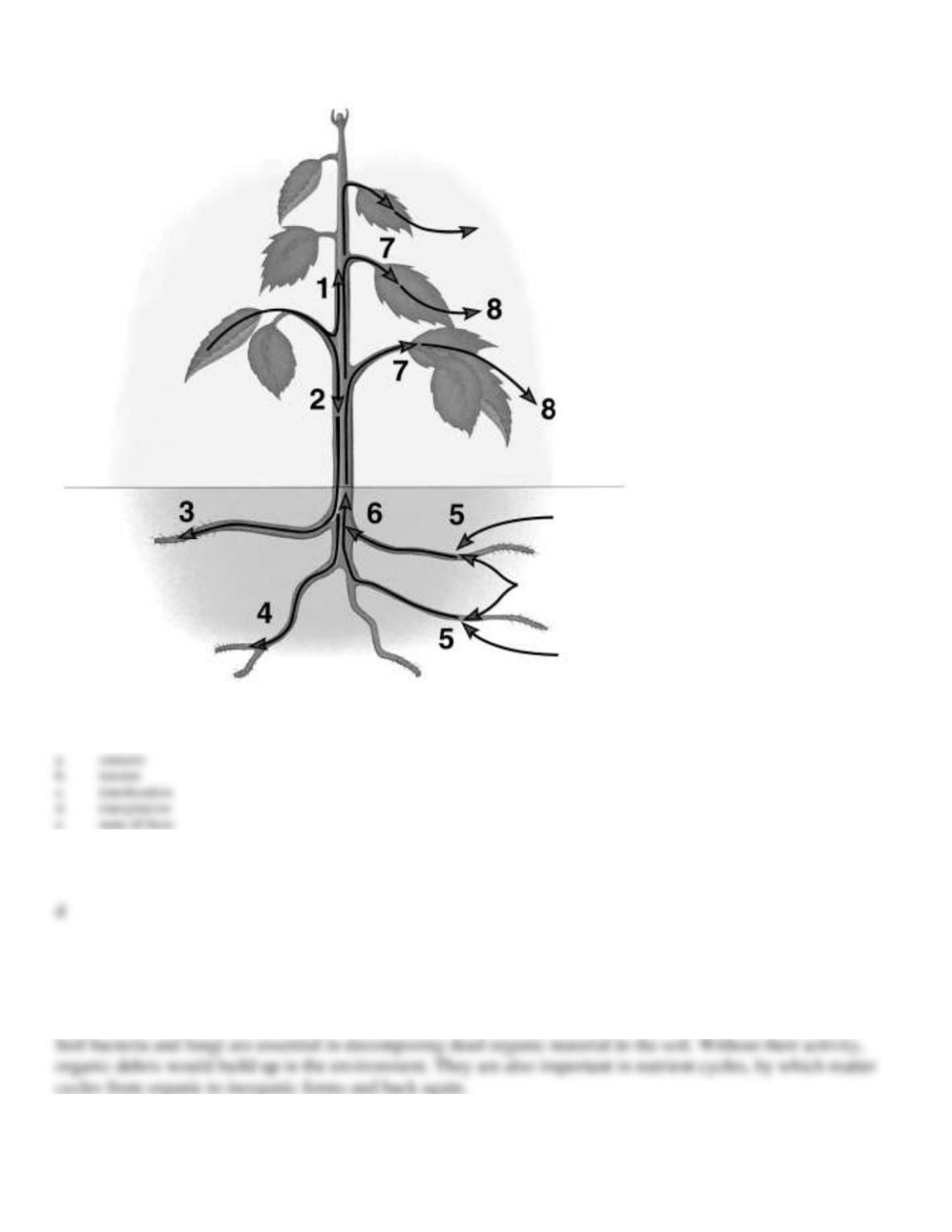
82. Figure 10-2
Refer to Figure 10-2. Arrow 8 represents
83. Why are bacteria and fungi important in healthy soils? Give 2 reasons.
84. What are the nineteen essential mineral nutrients plants need? Of these, which nine are the macronutrients?
85. List at least six types of organisms you might find in a typical soil.
86. Discuss the pros and cons of using organic and inorganic fertilizers?
87. Transpiration is both bad news and good news for the plant. Why is transpiration harmful to the plant? Why
is transpiration beneficial to the plant?