
1
Campbell Essential Biology, 6e (Simon/Dickey/Hogan/Reece)
Chapter 10 The Structure and Function of DNA
Chapter 10 Learning Outcomes
10 Biology and Society: The First 21st-Century Pandemic
10.1. Explain how the H1N1 virus evolved, the global response, and the dangers of influenza
viruses over the past 100 years.
10.1 DNA: Structure and Replication
10.2. Describe and compare the chemical compositions and structures of DNA and RNA.
10.3. Explain the process of DNA replication.
10.2 Information Flow: From DNA to RNA to Protein
10.4. Explain how the language of DNA directs the production of polypeptides.
10.5. Describe the steps of transcription and the processing of RNA before it leaves the
nucleus.
10.6. Describe the steps of translation.
10.7. Distinguish between insertion, deletion, and substitution mutations, and explain how
mutations can be harmful or beneficial to organisms.
10.3 Viruses and Other Noncellular Infectious Agents
10.8. Compare the lytic and lysogenic cycles of bacteriophages.
10.9. Compare the life cycles of RNA and DNA viruses, and describe the spread, symptoms,
and prevention of viral diseases in plants and animals.
10.10. Describe the reproductive cycle of retroviruses such as HIV and the mechanisms by
which AZT and protease inhibitors limit AIDS.
10.11. Distinguish between viroids and prions, and explain how they cause disease.
10 Evolution Connection: Emerging Viruses
10.12. Describe the processes that contribute to the emergence of viral disease.
Global Learning Outcomes
1. Demonstrate an understanding of the principles of scientific inquiry.
2. Demonstrate the ability to think critically and employ critical-thinking skills.
3. Read and interpret models, graphs, and data.
4. Demonstrate the quantitative skills needed to succeed in biology.
5. Demonstrate an understanding of the impact of science on society.
6. Evaluate the credibility of scientific information from various sources.
7. Demonstrate the ability to make connections between concepts across biology.
8. Communicate effectively in writing.
9. Apply the scientific method to interpret information and draw conclusions.
10.1 Multiple Choice Questions
1) What was a surprising feature about the deadly nature of the 2009 H1N1 influenza virus?
A) H1N1 affected the elderly.
B) H1N1 affected healthy young people.
C) H1N1 affected birds.
D) H1N1 affected pigs.
2) DNA and RNA are polymers composed of ________ monomers.
A) nucleotide
B) carbohydrate
C) fatty acid
D) amino acid
3) The backbone of DNA consists of ________.
A) nitrogenous bases
B) a repeating sugar-nucleotide-sugar-nucleotide pattern
C) a repeating sugar-phosphate-sugar-phosphate pattern
D) paired nucleotides
4) Thymine and cytosine differ from adenine and guanine in that ________.
A) thymine and cytosine are single-ring structures, whereas adenine and guanine are double-ring
structures
B) thymine and cytosine are only found in DNA, whereas adenine and guanine are found in both
DNA and RNA
C) thymine and cytosine are only found in DNA, whereas adenine and guanine are only found in
RNA
D) thymine and cytosine are larger nitrogenous bases
5) RNA contains the nitrogenous base ________ instead of ________, which is found only in
DNA.
A) a deoxyribose sugar… a ribose sugar
B) uracil… thymine
C) uracil… guanine
D) thymine… uracil
6) If adenine makes up 20% of the bases in a DNA double helix, what percent of the bases is
guanine?
A) 60%
B) 40%
C) 20%
D) 30%
7) In a DNA double helix, adenine pairs with ________ and guanine pairs with ________.
A) cytosine… thymine
B) guanine… adenine
C) thymine… cytosine
D) uracil… cytosine
8) If one strand of a DNA double helix has the sequence GTCCAT, what is the sequence of the
other strand?
A) ACTTGC
B) TGAACG
C) CAGGTA
D) CAGGUA
9) Evidence for the spiral nature of DNA came from ________.
A) X-ray crystallography studies
B) studies of disease-causing bacteria
C) base rule studies
D) bacteriophage studies
10) What type of chemical bond joins the bases of complementary DNA strands?
A) ionic
B) covalent
C) hydrophilic
D) hydrogen
11) After replication, ________.
A) each new DNA double helix consists of two old strands
B) each new DNA double helix consists of one old strand and one new strand
C) each new DNA double helix consists of two new strands
D) one new DNA double helix consists of two old strands and the other new DNA double helix
consists of two new strands
12) DNA replication ________.
A) is a slow process that results in virtually no errors
B) requires DNA polymerase and RNA polymerase
C) is a very fast process that results in numerous errors
D) requires the cooperation of over a dozen enzymes and other proteins
13) What name is given to the collection of traits exhibited by an organism?
A) genome
B) genotype
C) phenotype
D) genetic code
14) How many amino acids are common to all living systems?
A) 10
B) 20
C) 30
D) 100
15) How many nucleotides make up a codon?
A) two
B) three
C) four
D) five
16) The shared genetic code of all life on Earth is evidence that ________.
A) the genetic code arose relatively late in the history of life on Earth
B) DNA replication is error-free
C) all life shares a common ancestry
D) bacterial cells arose earlier than eukaryotic cells
17) Transcription is the ________.
A) manufacture of a strand of RNA complementary to a strand of DNA
B) manufacture of two new DNA double helices that are identical to an old DNA double helix
C) modification of a strand of RNA prior to the manufacture of a protein
D) manufacture of a protein based on information carried by RNA
18) If a strand of DNA has the sequence AAGCTC, transcription will result in a(n) ________.
A) single RNA strand with the sequence TTCGAG
B) DNA double helix with the sequence AAGCTC for one strand and TTCGAG for the
complementary strand
C) single RNA strand with the sequence UUCGAG
D) RNA double helix with the sequence UUCGAG for one strand and AAGCUC for the
complimentary strand
19) Which of the following enzymes is responsible for RNA synthesis?
A) DNA polymerase
B) ribosome
C) reverse transcriptase
D) RNA polymerase
20) The region of DNA where RNA synthesis begins is the ________.
A) start codon
B) promoter
C) stop codon
D) terminator
21) The CORRECT sequence of events occurring during transcription is ________.
A) splicing, capping, tailing
B) initiation, elongation, termination
C) tailing, capping, splicing
D) elongation, initiation, termination
22) The absence of a terminator in transcription will result in ________.
A) the creation of a virus
B) a strand of mRNA that lacks its cap and tail
C) the production of a longer RNA molecule
D) the production of a shorter RNA molecule
23) What protects mRNA from attack by cellular enzymes?
A) RNA splicing
B) the removal of exons
C) the lack of RNA-digesting enzymes in the cytoplasm
D) a cap and tail
24) The expressed (coding) regions of eukaryotic genes are called ________.
A) caps
B) promoters
C) exons
D) introns
25) Translation converts the information stored in ________ to ________.
A) DNA… RNA
B) RNA… a polypeptide
C) DNA… a polypeptide
D) RNA… DNA
26) The RNA that is translated into a polypeptide is ________ RNA.
A) viral
B) ribosomal
C) transfer
D) messenger
27) The DNA codon AGT codes for an amino acid carried by a tRNA with the anticodon
________.
A) TCU
B) AGU
C) TCA
D) AGT
28) Where is translation accomplished?
A) lysosomes
B) smooth endoplasmic reticulum
C) ribosomes
D) nucleoli
29) During translation, what is the CORRECT order of events that occur as an amino acid is
added?
A) codon recognition, peptide bond formation, translocation
B) translocation, codon recognition, termination
C) initiation, codon recognition, termination
D) peptide bond formation, translocation, codon recognition
30) Peptide bonds form between ________.
A) amino acids
B) an mRNA codon and a tRNA anticodon
C) a tRNA and the amino acid it is carrying
D) an mRNA transcript and the small ribosomal subunit
31) Scientific research companies sell kits that allow researchers to produce proteins in test tubes
via a process known as “in vitro translation.” Which one of following components is NOT
needed in these kits?
A) amino acids
B) transfer RNA
C) DNA
D) ribosomes
32) A mutation within a gene that will insert a premature stop codon in mRNA would ________.
A) result in a longer polypeptide chain
B) result in a shortened polypeptide chain
C) change the location at which transcription of the next gene begins
D) have the same effect as deleting a single nucleotide in the gene
33) What is the smallest number of nucleotides that must be added or subtracted to change the
triplet grouping of the genetic message?
A) one
B) two
C) three
D) four
34) What is the ultimate source of all diversity?
A) natural selection
B) sexual recombination
C) meiosis
D) mutation
35) Mad cow disease is caused by
A) a retrovirus similar to HIV.
B) an enveloped virus.
C) small circular RNA molecules called viroids.
D) infectious proteins called prions.
36) How can bacteriophage DNA be spread from cell to cell without causing cell death?
A) by altering the way a cell splices its RNA
B) via a lytic cycle
C) via a lysogenic cycle
D) by changing the length of its DNA molecules
37) As an experiment, you infect bacteria with an unknown virus to see how the bacteriophage
affects the bacteria. After a few days, you notice that the bacterial population is growing
normally and that the cells appear healthy. Assuming that the infection occurred, what can you
conclude from your observations?
A) The virus is a bacteriophage that is reproducing the lytic cycle.
B) The virus is a retrovirus that is reproducing the lytic cycle.
C) The virus is a bacteriophage that is reproducing the lysogenic cycle.
D) The virus is a retrovirus that is reproducing the lysogenic cycle.
38) Plant viruses ________.
A) often use RNA, rather than DNA, as their genetic material
B) benefit plants, rather than causing disease
C) cause diseases that can be easily cured
D) do not exist, as viruses attack only animals
39) A(n) ________ is to bacteria as a ________ is to animal cells.
A) retrovirus… virus
B) phage… prophage
C) prophage… provirus
D) RNA virus… DNA virus
40) HIV (human immunodeficiency virus) must use its own ________ to reproduce.
A) DNA polymerase
B) reverse transcriptase
C) RNA polymerase
D) tRNA
41) Which of the following would NOT likely develop as an emerging virus?
A) a virus harmful to humans that changes very slowly over time
B) A virus that is normally harmless to humans undergoes rapid mutations.
C) a virus that begins to infect people in New York City, a popular tourist destination
D) a virus that affects primarily rabbits mutates and infects humans
10.2 Art Questions
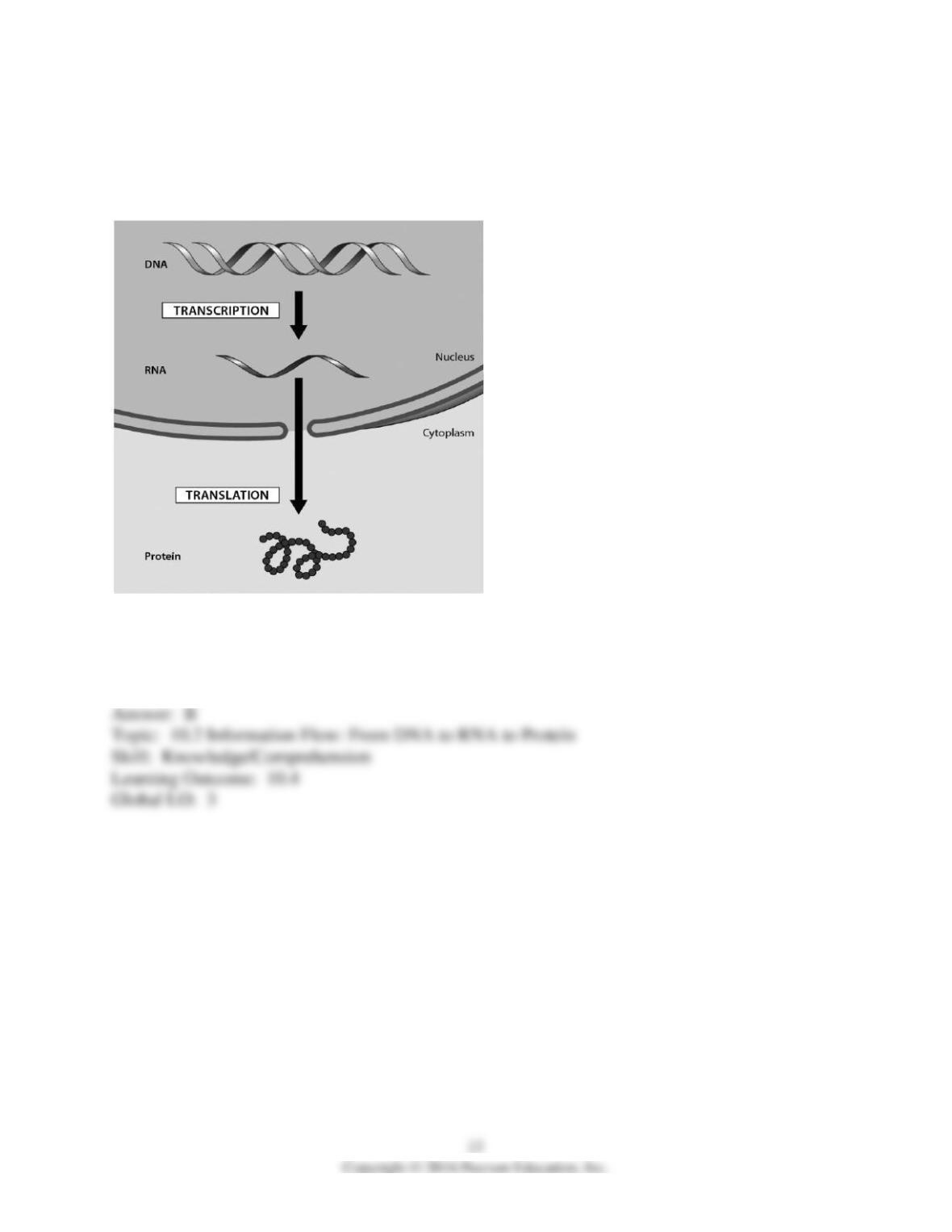
1) The figure below shows the flow of genetic information in a eukaryotic cell. The transfer of
information from DNA into an RNA molecule is known as ________.
A) DNA replication
B) transcription
C) polypeptide
D) translation
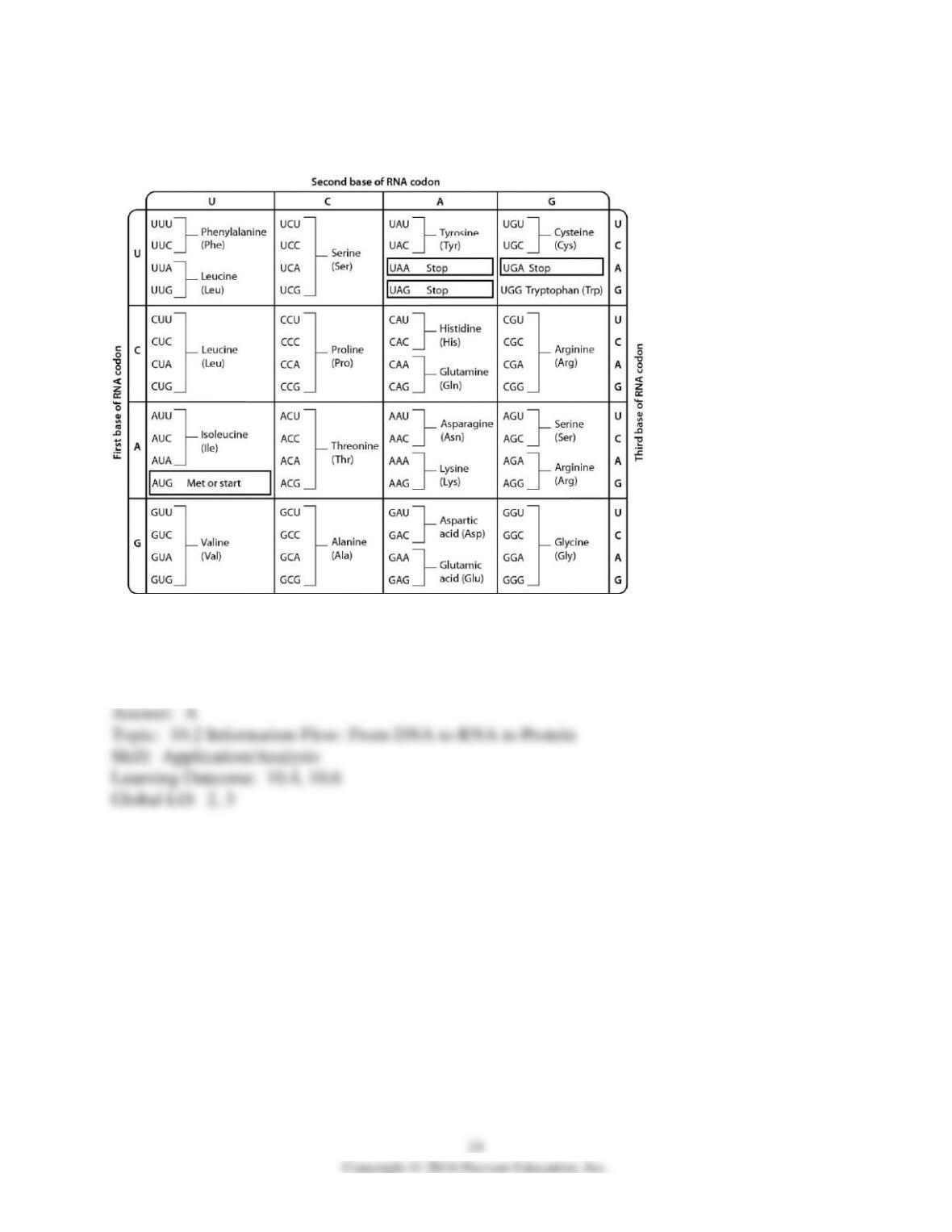
2) Examine the genetic code table shown below. The codon AGC codes for the amino acid
________.
A) serine
B) arginine
C) threonine
D) alanine
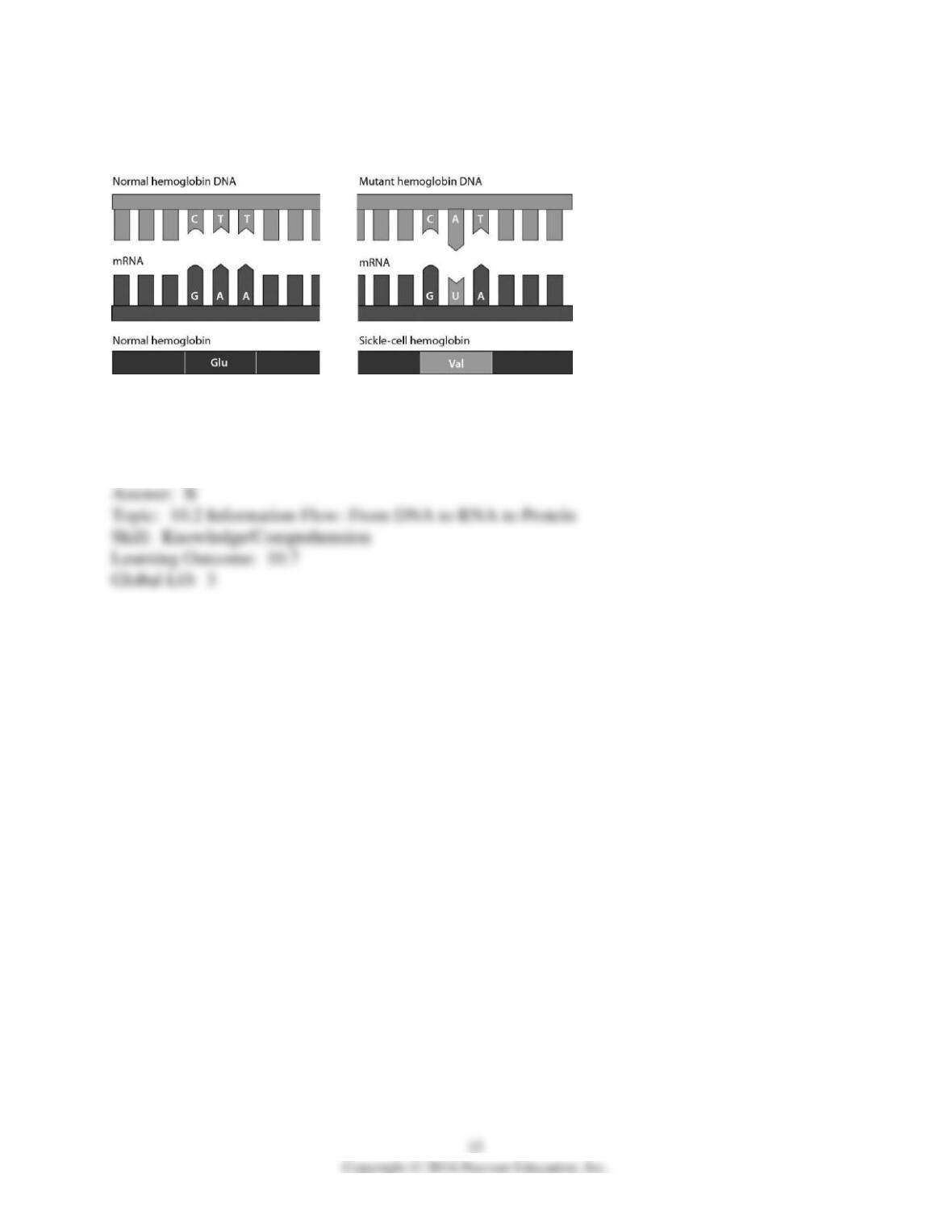
3) Consider the following figure. It illustrates that a single amino acid substitution in the
hemoglobin gene ________.
A) always involves adenine and uracil
B) may alter a protein so that it no longer functions properly
C) is a silent mutation
D) causes a nonsense mutation
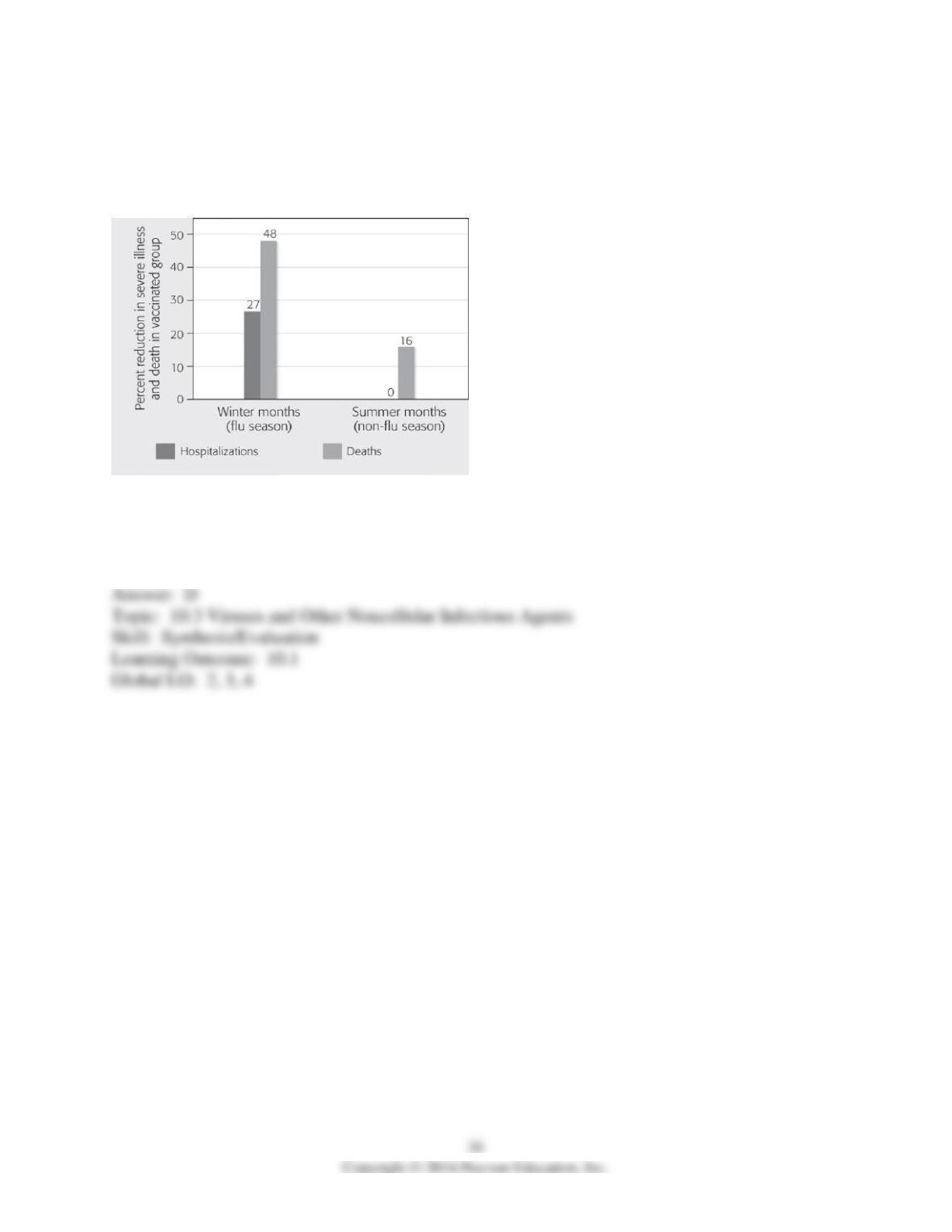
4) Flu vaccines have been demonstrated to protect the elderly, as shown in the figure below.
Assume there is a sample of 100 elderly people that normally would be hospitalized in winter.
How many of them would you predict would still be hospitalized in the winter if all 100 of them
received the flu vaccine?
A) 27
B) 48
C) 52
D) 73
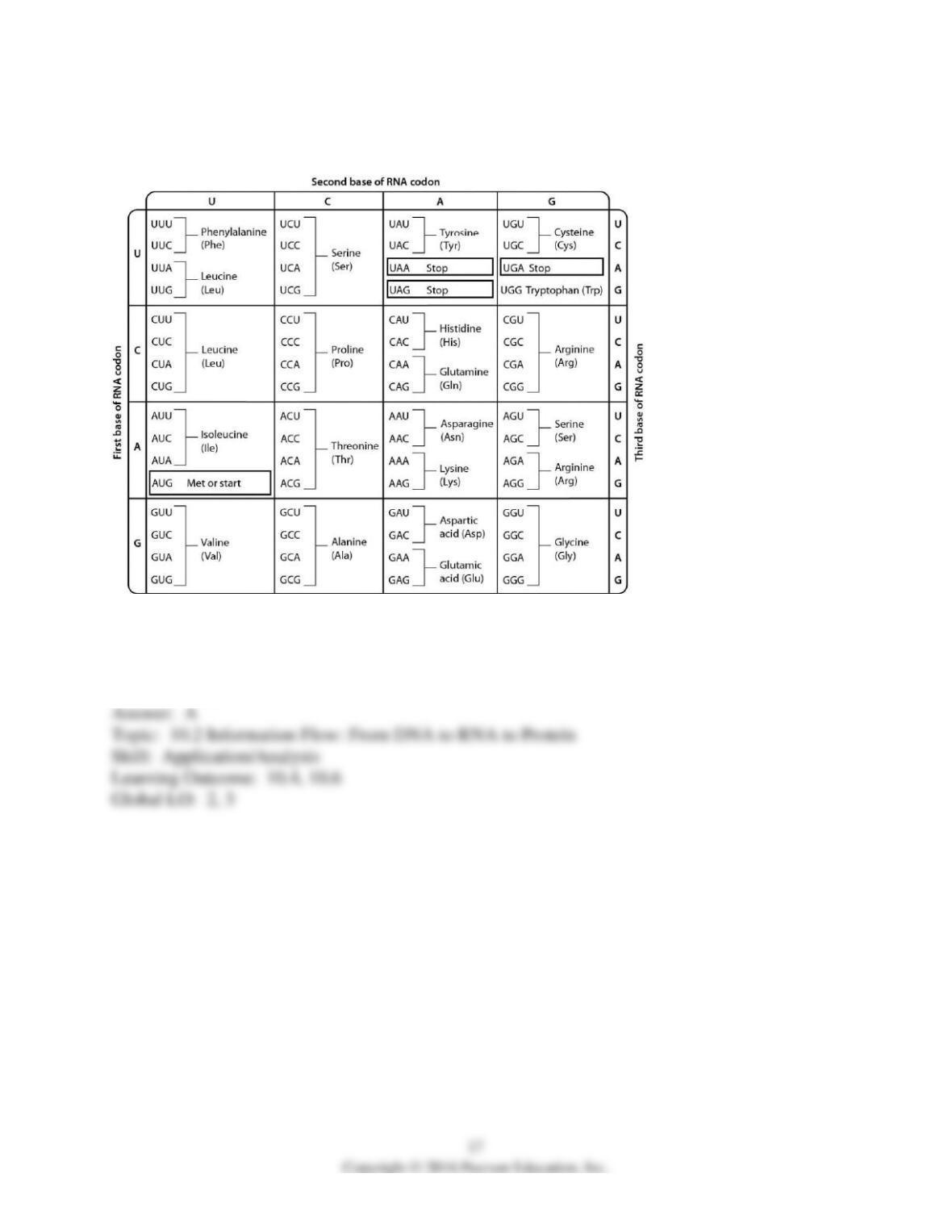
5) An mRNA is expressed that begins with the sequence AUGCCAGGCGUC. Using the genetic
code below, determine what peptide will be translated from this mRNA.
A) Met — Pro — Gly — Val
B) Met — Gly — Pro — Val
C) Pro — Met — Val — Gly
D) Val — Gly — Pro — Met
10.3 Scenario Questions
Please read the following scenario to answer the following questions
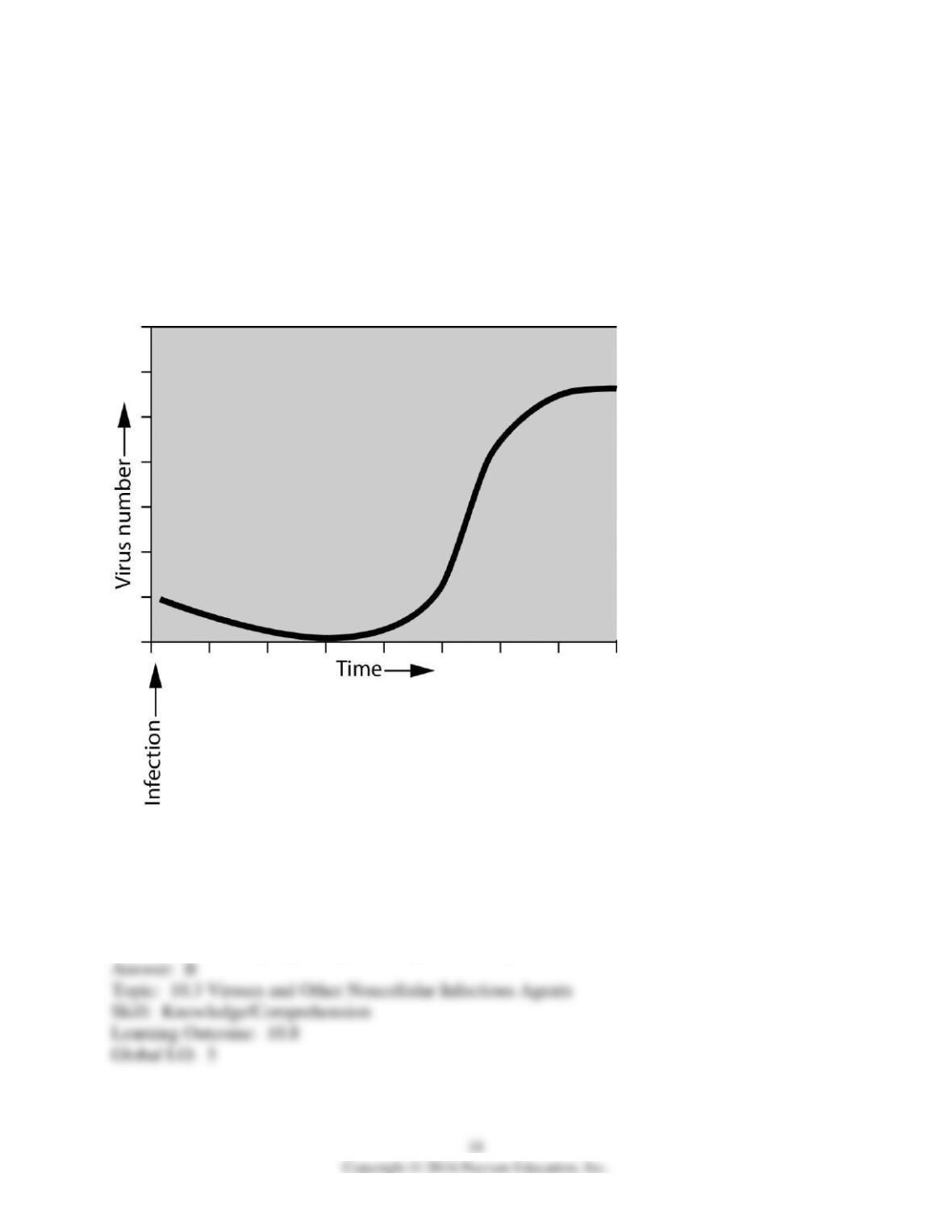
If you were asked to study the pattern of bacterial growth (increase in numbers over time) during
an infection, you would find that numbers of bacteria increase exponentially up to a certain
point. Assume that you have been asked to interpret the growth of bacteriophages. You infect the
host bacteria and measure the increase of phages over a defined period of time. You plot the
results and get the graph shown here.
1) The first thing you notice is that there is no immediate increase in viruses following infection.
This is because ________.
A) it takes the virus time to adapt to the host
B) although the virus has infected the host, it takes time to complete the lytic cycle
C) the host is immune to the virus
D) the virus is in a lysogenic cycle throughout the experiment
2) Once viruses are detected, the number of viruses increases rapidly. This is because ________.
A) lysogeny produces large numbers of bacteriophages
B) DNA viruses reproduce more rapidly than RNA viruses
C) the host cell speeds the release process
D) the viruses lyse the hosts to release mature viruses quickly in a short amount of time
3) At what point on the graph are the viruses increasing in number the fastest?
A) A
B) B
C) C
D) D
4) Assume that you want to take a sample of viruses so that you could use them to infect the
most bacteria. At what point on the graph should you take your sample from if you want to
achieve this goal?
A) A
B) B
C) C
D) D
Please read the following scenario to answer the following questions.
While working with cultured mouse cells, a researcher unknowingly treated the cells with a
mutagen that causes the deletion or insertion of individual nucleotides in DNA. Subsequently,
the researcher isolated and cultured a single cell from this group and noticed that the progeny of
this cell were not producing a certain protein and that this affected their survival.
5) The mutation that resulted from the accident was probably ________.
A) an amino acid substitution
B) one that changed the triplet grouping of the genetic message
C) an error in translation
D) a loss in regulation of gene expression
6) The mutation would be most harmful to the cells if it resulted in ________.
A) a single nucleotide insertion near the start of the coding sequence
B) a single nucleotide deletion near the end of the coding sequence
C) a single nucleotide in the middle of an intron
D) deletion of a triplet near the middle of the gene
7) The researcher isolated a different single cell and determined that it was producing a certain
protein. However, the protein was much shorter than it should have been. What kind of mutation
likely occurred in this protein?
A) one that introduced a silent mutation
B) one that substituted amino acids
C) one that introduced a premature stop codon
D) one that deleted an entire amino acid