Microbiology with Diseases by Body System, 5e (Bauman)
Chapter 10 Controlling Microbial Growth in the Body: Antimicrobial Drugs
10.1 Multiple Choice Questions
1) Who proposed the concept of chemotherapy, that compounds might selectively kill pathogens
without harming people?
A) Gerhard Domagk
B) Alexander Fleming
C) Paul Ehrlich
D) Selman Waksman
E) Joseph Lister
2) An antimicrobial that inhibits bacterial cell wall synthesis will result in which of the
following?
A) Bacterial cells become more susceptible to osmotic pressure.
B) Bacteria cannot attach to their hosts.
C) Cytoplasmic membrane proteins lose their function.
D) The sterols in the bacterial cell wall become nonfunctional.
E) No change in bacterial cell activity.
3) Beta-lactam antibiotics such as penicillins, have an effect on which of the following types of
cells?
A) animal cells
B) bacterial cells
C) fungal cells
D) virus-infected cells
E) both animal and fungal cells
4) Which of the following is a primary advantage of semisynthetic drugs?
A) They are less stable and consequently have fewer side effects.
B) They work faster.
C) They are more effective than the unmodified natural antibiotics.
D) They must be administered intravenously.
E) They are not readily absorbed.
5) Which of the following drugs specifically targets cell walls that contain mycolic acid?
A) vancomycin
B) penicillin
C) methicillin
D) isoniazid
E) bacitracin
6) The topical drug ________ inhibits protein synthesis in Gram positive bacteria by preventing
loading of isoleucine onto tRNA.
A) Amphotericin B
B) Bacitracin
C) Ciprofloxacin
D) Mupirocin
E) Tetracycline
7) Which of the following is NOT a target of drugs that inhibit protein synthesis?
A) the shape of the 30S ribosomal subunit
B) interference with alanine-alanine bridges
C) the enzymatic site of the 50S ribosomal subunit
D) movement of the ribosome from one codon to the next
E) the tRNA docking site
8)
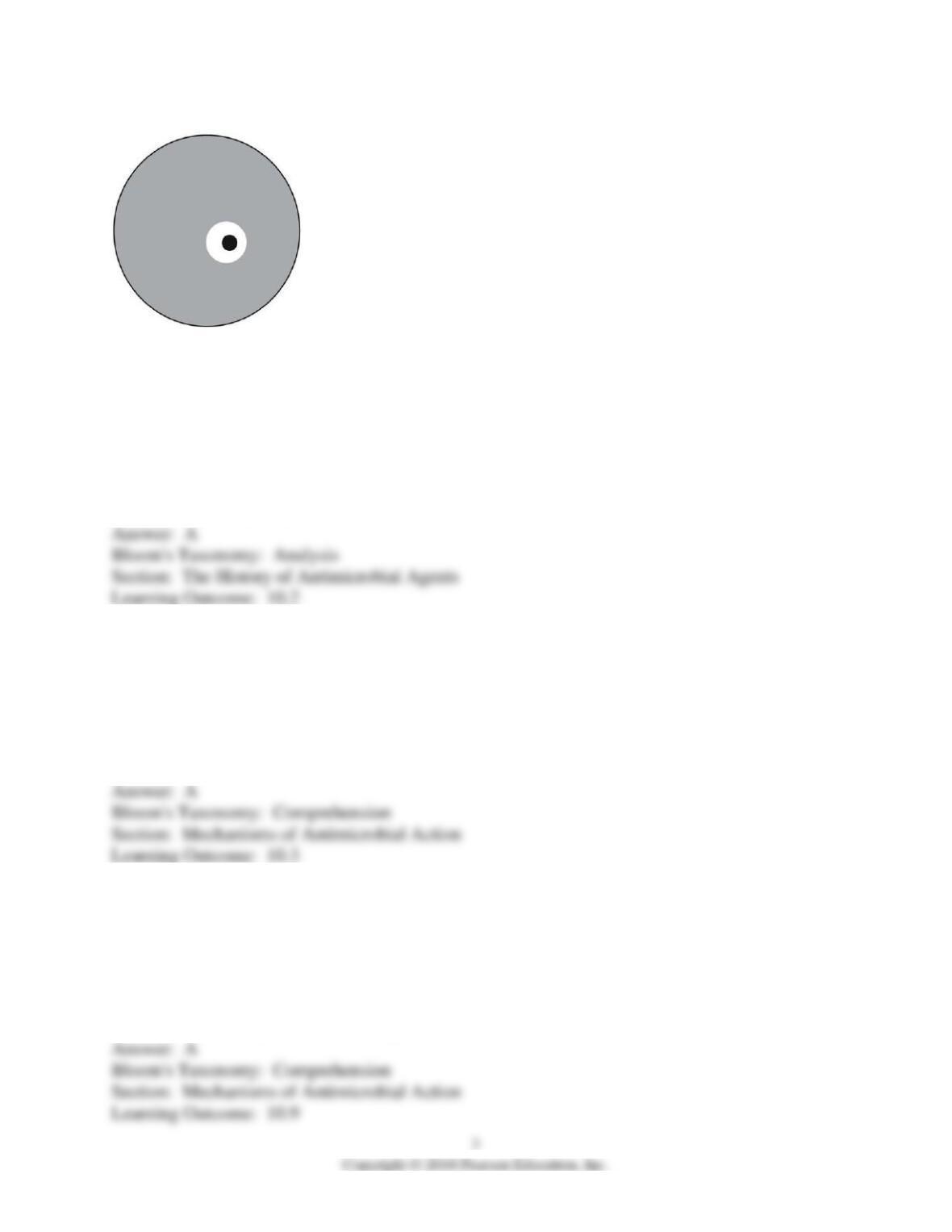
Figure 10.1 represents a Petri plate. The gray area is where bacteria A is growing, the black area
is where bacteria B is growing. The white area is a zone where neither organism is growing.
What is the best interpretation of what is observed on the plate?
A) Bacteria B is producing an antibiotic that inhibits the growth of bacteria A.
B) Bacteria A produces a compound that inhibits the growth of bacteria B.
C) Bacteria A grows faster than bacteria B.
D) Bacterial colony B has depleted the nutrients in the area around the colony.
E) No conclusion can be made from this information.
9) Amoxicillin is very effective for treating infections with Gram-positive bacteria but rarely
causes side effects in humans. This is an example of
A) selective toxicity.
B) narrow spectrum of action.
C) a broad-spectrum antimicrobial.
D) antibiotic resistance.
E) altruism.
10) The first antimicrobial widely available for treatment of bacterial infections was a synthetic
compound which
A) was an antimetabolic analog.
B) was a nucleotide analog.
C) was an attachment antagonist.
D) disrupted cytoplasmic membranes.
E) interfered with bacterial cell wall synthesis.
11) The drug metronidazole is effective on both bacteria and some protozoa. It can therefore be
described as a ________ drug.
A) narrow spectrum
B) broad spectrum
C) full spectrum
D) general spectrum
E) specific spectrum
12) Which of the following groups of drugs can become incorporated into the bones and teeth of
a fetus?
A) beta-lactams
B) aminoglycosides
C) quinolones
D) tetracyclines
E) sulfonamides
13) Which of the following can result when antibiotic therapy disrupts the normal microbiota?
A) anaphylactic shock
B) black hairy tongue
C) pseudomembranous colitis
D) thrush
E) both pseudomembranous colitis and thrush
14) A compound is extracted from a microbial culture and is modified in the laboratory for use
as an oral medication. This product would be a(n)
A) antibiotic.
B) analog.
C) semisynthetic antimicrobial.
D) synthetic antimicrobial.
E) probiotic.
15) Some bacteria are resistant to erythromycin as a result of mutation of their ribosomal RNA.
What type of resistance does this represent?
A) alteration of the target of the drug
B) inactivation of the drug
C) change in the permeability of the drug
D) overproduction of an enzyme in a key metabolic pathway
E) removal of the drug via a pump
16) Bacillus licheniformis secretes a compound that inhibits the growth of other Gram-positive
bacteria. This is an example of a(n)
A) analog.
B) antibiotic.
C) chemotherapeutic.
D) porin.
E) toxin.
17) Most drugs that inhibit the synthesis of the cell wall act by
A) preventing the cross-linkage of NAM subunits.
B) blocking the secretion of cell wall molecules from the cytoplasm.
C) preventing the formation of alanine-alanine bridges.
D) disrupting the formation of the mycolic acid layer of the cell wall.
E) preventing the formation of β-lactamases.
18) Most broad-spectrum antibiotics act by
A) inhibiting the synthesis of the cell wall.
B) inhibiting protein synthesis.
C) inhibiting nucleic acid synthesis.
D) inhibiting metabolic pathways.
E) disrupting the cytoplasmic membrane.
19) Which of the following antifungals works by binding to ergosterol in membranes?
A) fluconazole
B) turbinafine
C) amphotericin B
D) nystatin
E) both amphotericin B and nystatin
20) A drug is structurally similar to PABA and inhibits folic acid synthesis. It is most likely a(n)
A) nucleic acid analog.
B) penicillin.
C) tetracycline.
D) azole.
E) sulfonamide.
21) Which of the following steps in the folic acid synthesis pathway is specifically inhibited by
sulfonamides?
A) the conversion of tetrahydrofolic acid to PABA
B) the conversion of PABA to dihydrofolic acid
C) the conversion of dihydrofolic acid to tetrahydrofolic acid
D) the conversion of PABA to tetrahydrofolic acid
E) the conversion of dihydrofolic acid to PABA
22) Which of the following drugs inhibits nucleic acid synthesis specifically in most bacteria?
A) fluoroquinolones
B) actinomycin
C) rifampin
D) tetracycline
E) 5-fluorocytosine
23) The cooperative activity of drugs such as beta-lactam antibiotics and clavulanic acid, a β–
lactamase inhibitor, is known as
A) cross resistance.
B) antimetabolism.
C) synergism.
D) selective toxicity.
E) chemotherapy.
24) Some bacteria are resistant to antimicrobials due to the activity of ________, which removes
many of them.
A) plasmids
B) porins
C) efflux pumps
D) lipopolysaccharides
E) ribosomes
25) It is inappropriate to prescribe antibacterial agents to treat colds or flu because
A) the microbes involved can develop resistance rapidly.
B) these diseases are transmitted by endospores, which are difficult to kill.
C) these diseases exhibit cross resistance.
D) these diseases are caused by viruses.
E) these diseases can act synergistically with each other.
26) Who discovered the first antimicrobial widely available to the general public?
A) Domagk
B) Ehrlich
C) Fleming
D) Waksman
E) Ehrlich and Waksman
27) Which of the following statements is TRUE of selective toxicity?
A) Selective toxicity takes advantage of structural similarities between host and pathogen.
B) To be effective, an antimicrobial agent must be more toxic to the patient than the pathogen.
C) Selective toxicity takes advantage of differences in metabolic rates of the host and pathogen.
D) Selective toxicity damages only pathogenic bacteria and not beneficial bacteria.
E) Selective toxicity takes advantage of structural and/or metabolic differences between host and
pathogen.
28) Antimicrobials that block protein synthesis by binding to the mRNA are
A) aminoglycosides.
B) antisense nucleic acids.
C) macrolides.
D) beta-lactams.
E) nucleic acid analogs.
29) Which of the following tests does NOT provide information on the lowest concentration of
drug effective on a pathogen?
A) Etest
B) diffusion susceptibility test
C) broth dilution test
D) both the Etest and diffusion susceptibility test
E) MBC test
30) The therapeutic range of an antimicrobial is the
A) ratio of the dose a patient can tolerate to the effective dose.
B) range of microorganisms the antimicrobial effects.
C) range of concentrations at which the antimicrobial is both effective and non-toxic.
D) ratio of the concentration of antimicrobial in the blood to the oral dose.
E) length of time the medication persists in the body after a single dose.
31) Which of the following interferes with cell wall synthesis by blocking alanine bridge
formation?
A) beta-lactams
B) cycloserine
C) bacitracin
D) vancomycin
E) both cycloserine and vancomycin
32) Antimicrobials known as “attachment antagonists” are particularly useful for preventing
A) bacterial protein synthesis.
B) cell membrane synthesis.
C) virus infection.
D) nucleic acid synthesis.
E) biofilm formation.
33) The broth dilution test can provide information for determining
A) the molecular target of an antibiotic.
B) the MIC (minimum inhibitor concentration).
C) the rate of diffusion of an antibiotic.
D) the MBC (minimum bactericidal concentration), with an additional step.
E) both the MIC and the MBC (with an additional step).
34) Infection of the ________ would be the hardest to treat with antimicrobial drugs.
A) heart
B) kidneys
C) liver
D) brain
E) colon
35) Disruption of the normal microbiota can result in infections caused by which of the
following microbes?
A) Mycobacterium
B) Candida albicans
C) Clostridium difficile
D) Streptococcus
E) both Candida albicans and Clostridium difficile
36) The antifungals known as polyenes interact with ________, a lipid unique to fungus
membranes.
A) cholesterol
B) ergosterol
C) mycolic acid
D) phospholipid
E) glycolic acid
37) How does resistance to drugs spread in bacterial populations?
A) Exposure to drugs causes mutations in bacterial genes.
B) Horizontal gene transfer between bacteria spreads R (resistance) plasmids.
C) Genetic recombination during sexual reproduction.
D) Exposure to drugs induces immunity.
E) Exposure to drugs alters gene expression in bacteria.
38) The mechanism of action of the antibiotic vancomycin is
A) inhibition of protein synthesis.
B) inhibition of cell wall synthesis.
C) inhibition of nucleic acid synthesis.
D) inhibition of a metabolic pathway.
E) disruption of cytoplasmic membranes.
39) The tetracyclines interfere with
A) protein synthesis.
B) cell wall synthesis.
C) cell membrane component synthesis.
D) nucleic acid synthesis.
E) folic acid synthesis.
40) Pentamidine is an example of an antimicrobial
A) used to treat bacterial infections.
B) effective against helminths.
C) used to treat viral infections.
D) effective against eukaryotes, especially protozoa.
E) used to treat both bacterial and fungal infections.
41) The mechanism of action of ciprofloxacin is
A) inhibition of protein synthesis.
B) inhibition of cell wall synthesis.
C) inhibition of nucleic acid synthesis.
D) inhibition of a metabolic pathway.
E) disruption of cytoplasmic membranes.
42) Methicillin is an example of the beta-lactam class of drugs that
A) disrupts cytoplasmic membranes.
B) inhibits cell wall synthesis.
C) inhibits nucleic acid synthesis.
D) inhibits metabolic pathways.
E) inhibits protein synthesis.
43) AZT and Valaciclovir are antiviral nucleoside analogs that interfere with
A) protein synthesis.
B) cell wall synthesis.
C) cell membrane component synthesis.
D) nucleic acid synthesis.
E) viral attachment.
44) The antimicrobial polymyxin
A) inhibits protein synthesis.
B) inhibits nucleic acid synthesis.
C) blocks a metabolic pathway.
D) disrupts cytoplasmic membranes.
E) inhibits cell wall synthesis.
45) Drug-resistant populations of microbes arise when
A) exposure to drugs selectively kills sensitive cells, allowing overgrowth of resistant cells.
B) exposure to drugs causes mutations that produce resistance.
C) resistant cells become numerous in a population due to their greater vigor.
D) the patient becomes immune to the drug.
E) synergy between medications occurs.
10.2 True/False Questions
1) Paul Erhlich discovered the first antibiotic.
2) Antisense nucleic acids interfere with protein synthesis.
3) Nucleic acid analog drugs have no effect on human cell replication function.
4) Because all cells engage in protein synthesis, there are few antimicrobial drugs that selectively
inhibit this process.
5) Biofilms contribute to the spread of resistance to antimicrobials.
6) Some bacterial cells are resistant to a variety of antimicrobials because they actively pump the
drugs out of the cell.
7) The outer membrane of Gram-negative bacteria enables many antimicrobial drugs to enter the
cell more easily.
8) If a subculture of an MIC test grows in an MBC test, the concentration of the drug was
bactericidal.
9) There are relatively few antifungal medications available compared to antibacterial drugs.
10) Organs that are commonly affected by drug toxicity include the kidneys and the liver.
Learning Outcome: 10.17
10.3 Short Answer Questions
1) Any drug that acts against a disease is called a(n) (analog/antibiotic/chemotherapeutic) agent.
2) Selective (action/toxicity/treatment) means that a given antimicrobial agent is more toxic to a
pathogen than to the host being treated.
3) Nucleotide or nucleoside (acids/analogs/antisense) are antimicrobial agents that mimic the
chemical structure of DNA building blocks.
4) A microbe resistant to a variety of different antimicrobials is said to have
(cross/drug/multiple) resistance.
5) Secondary infections that result from the killing of some of the normal microbiota are called
(antagonism/superinfections/resistance).
6) Competition between beneficial microbes and potential pathogens is called microbial
(antagonisms/synergy/toxicity).
7) A (bacteriocidial/bacteriostatic/minimum) concentration of a drug is one at which microbes
survive but are not able to grow and reproduce.
8) The ratio of a medication’s dose that can be tolerated to its effective dose is the therapeutic
(MIC/index/range) of the medication.
9) Some bacteria develop resistance to groups of drugs because the drugs are all structurally
similar to each other; this is a phenomenon known as (cross/multiple/synergistic) resistance.
10) Semisynthetic drugs developed to combat resistance are often called (analog/second
generation/synergist) drugs.
11) Drugs known as beta-lactams interfere with bacterial (DNA/folic acid/cell wall) synthesis.
12) External infections can be treated by (intramuscular/surface/topical) administration, in which
a drug is applied directly to the site of infection.
13) The abbreviation (MBC/MIC/MID) stands for the smallest amount of a drug that will inhibit
the growth and reproduction of a pathogen. (Be sure to use all capital letters.)
14) Antiviral medications frequently block unique (proteins/enzymes/molecules) to prevent
production of a new virus.
15) Medications which block viral entry into cells include (adhesin/analog/attachment)
antagonists.
10.4 Essay Questions
1) Why can microbial resistance to antibiotics and other drugs be considered a primarily genetic
phenomenon?
2) Discuss the cellular factors that might make a drug’s spectrum of action narrow rather than
broad.
3) Explain the concept of selective toxicity.
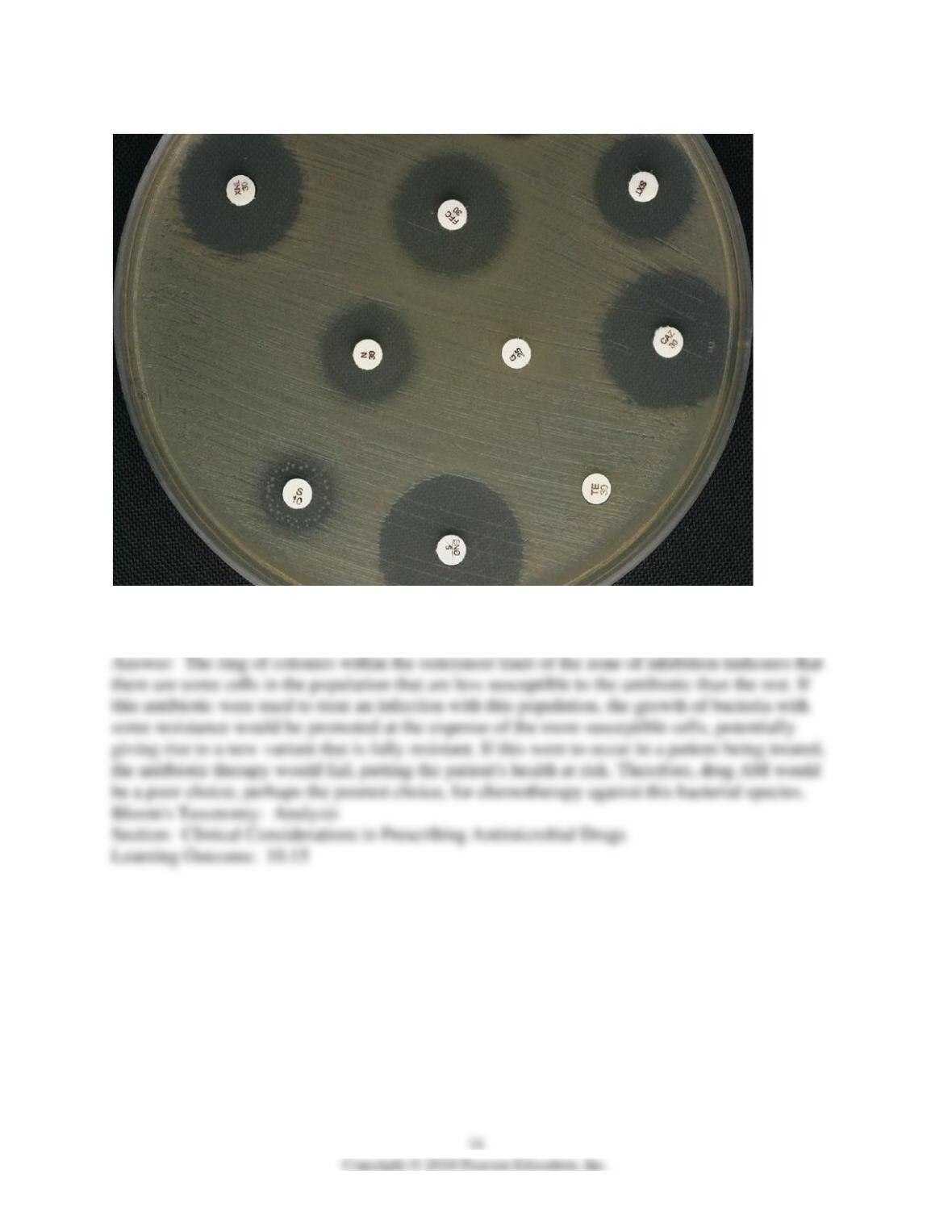
4)
Examine the diffusion susceptibility plate results shown in Figure 10.2. Propose an explanation
for the appearance of the zone around the S/10 disk, and discuss the implications for therapeutic
use of this antibiotic for the pathogen tested.
5) A newly discovered prokaryote produces a compound with promising antimicrobial effects.
Devise a set of tests to determine whether the antimicrobial is broad or narrow spectrum and
bactericidal or bacteriostatic.