39) In Texas, a man showed up at a medical facility claiming that he felt drunk when he had not
ingested any alcohol. Indeed his blood alcohol measured 0.37, many times the legal limit.
Although he was a home brewer, he claimed that this intoxication had been happening often
without his drinking any alcohol. Which of these hypotheses and actions might be most useful in
diagnosing this problem?
A) His home brew concoctions have created a type of alcohol that lasts a long time. Have him
refrain from home brewing for a week and recheck his blood alcohol.
B) He might have recently had a round of antibiotics that killed the bacteria that usually live in
his gut and allowed a yeast species to overgrow. Put him on probiotics and a low carb diet for a
week and recheck his blood alcohol.
C) The fumes from the alcohol that he is using as a cleaning solution might be getting into his
bloodstream. Ask him if he is using alcohol externally.
D) Maybe he feels drunk because he has been eating mushrooms that have sprouted during this
very wet weather. Check him for fungal toxins.
40) Several students were talking about which came first in the history of the Earth. Which
student has the best understanding of what happened?
A) Photosynthetic producers must have come first to provide food for other organisms.
B) Anaerobic bacteria must have come first because there was no carbon dioxide in the
atmosphere.
C) Photosynthetic producers must have come first to provide oxygen for other organisms.
D) Anaerobic organisms must have come first because there was no oxygen in the atmosphere.
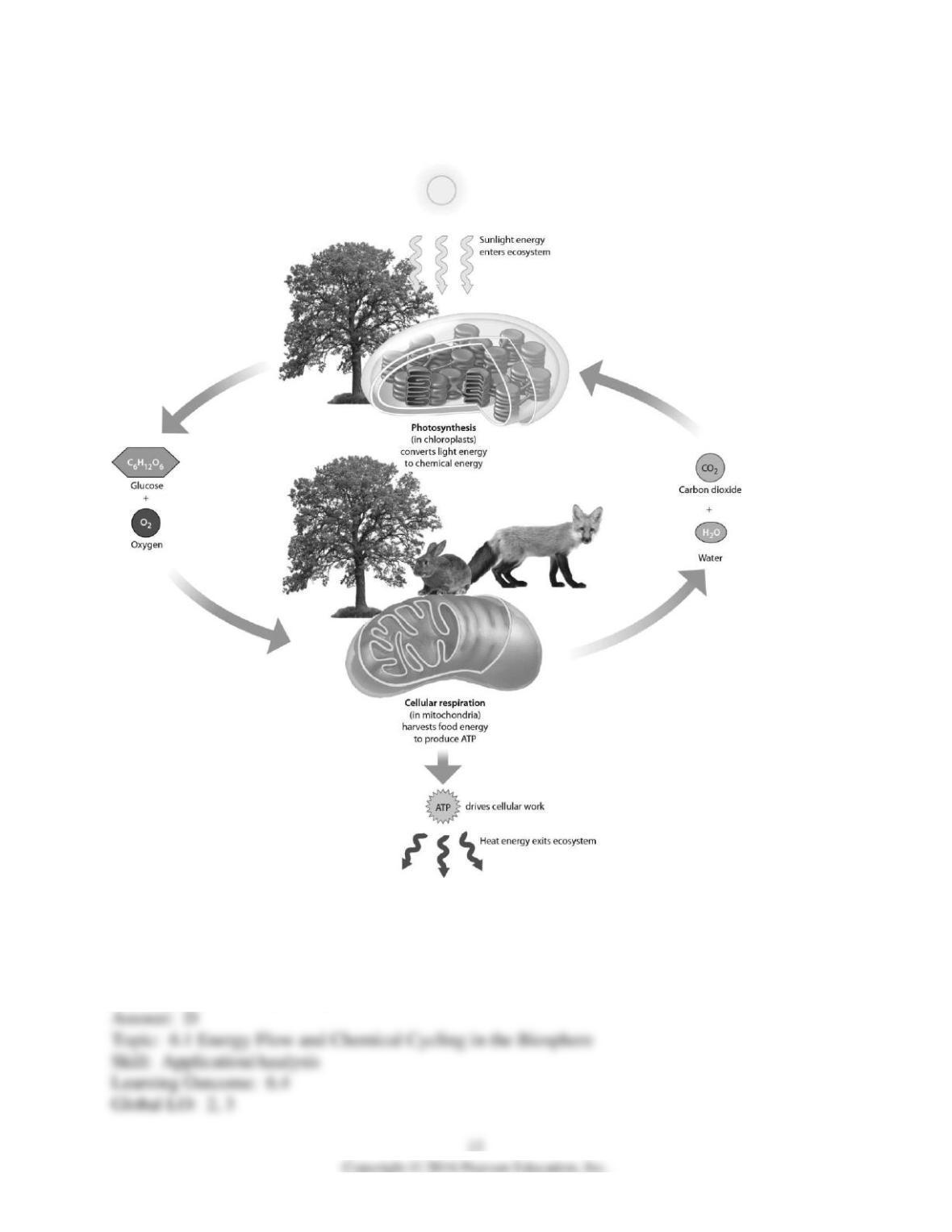
6.2 Art Questions
1) Examine the figure above. Which of the following reactant(s) primarily come(s) from the air?
A) water
B) glucose
C) carbon dioxide
D) oxygen and carbon dioxide
2) Examine the figure above. Most of the mass of the tree shown in the figure comes from
________.
A) water
B) glucose
C) the air
D) the soil
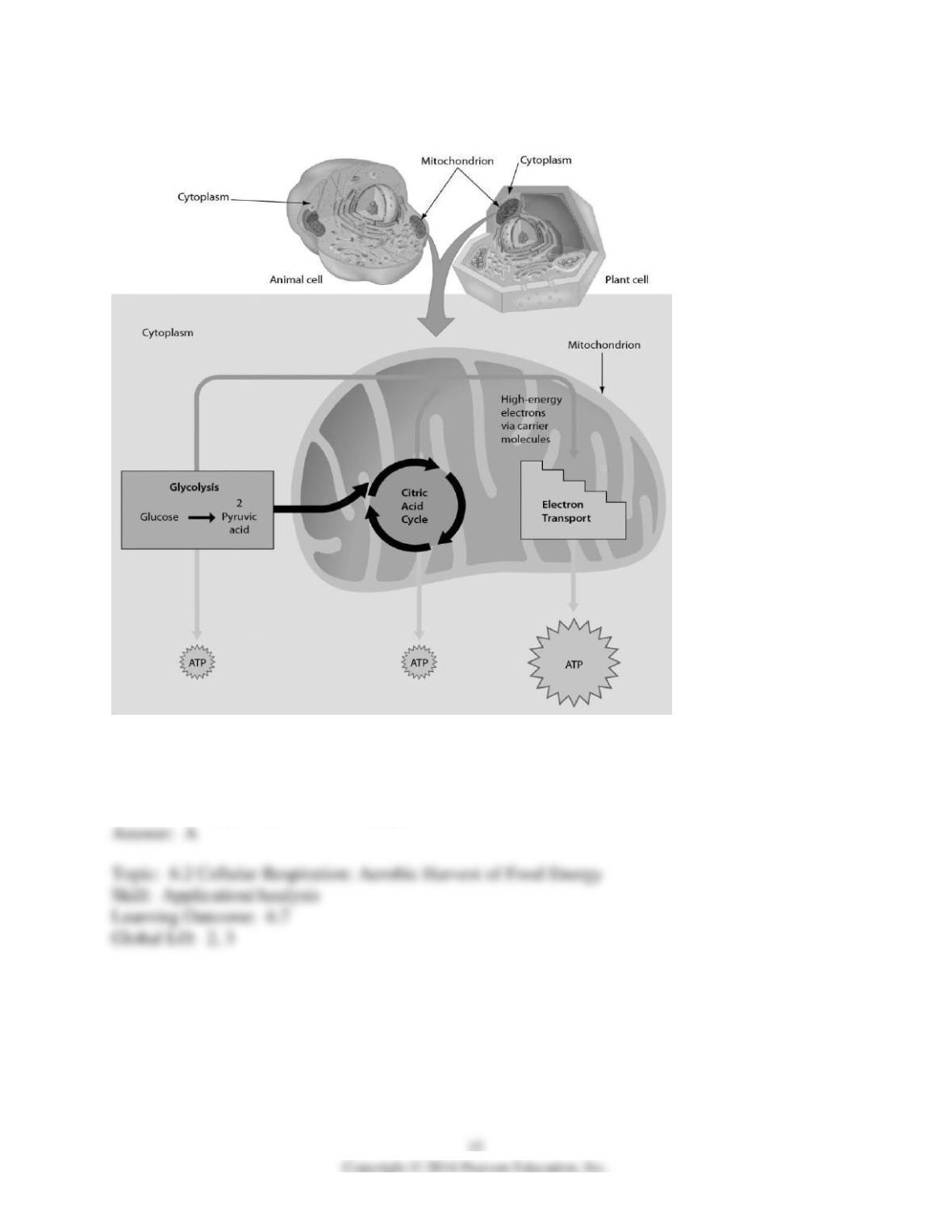
3) Examine the following figure. Which of these stages occur(s) in the cytoplasm?
A) glycolysis
B) citric acid cycle
C) glycolysis and citric acid cycle
D) citric acid cycle and electron transport
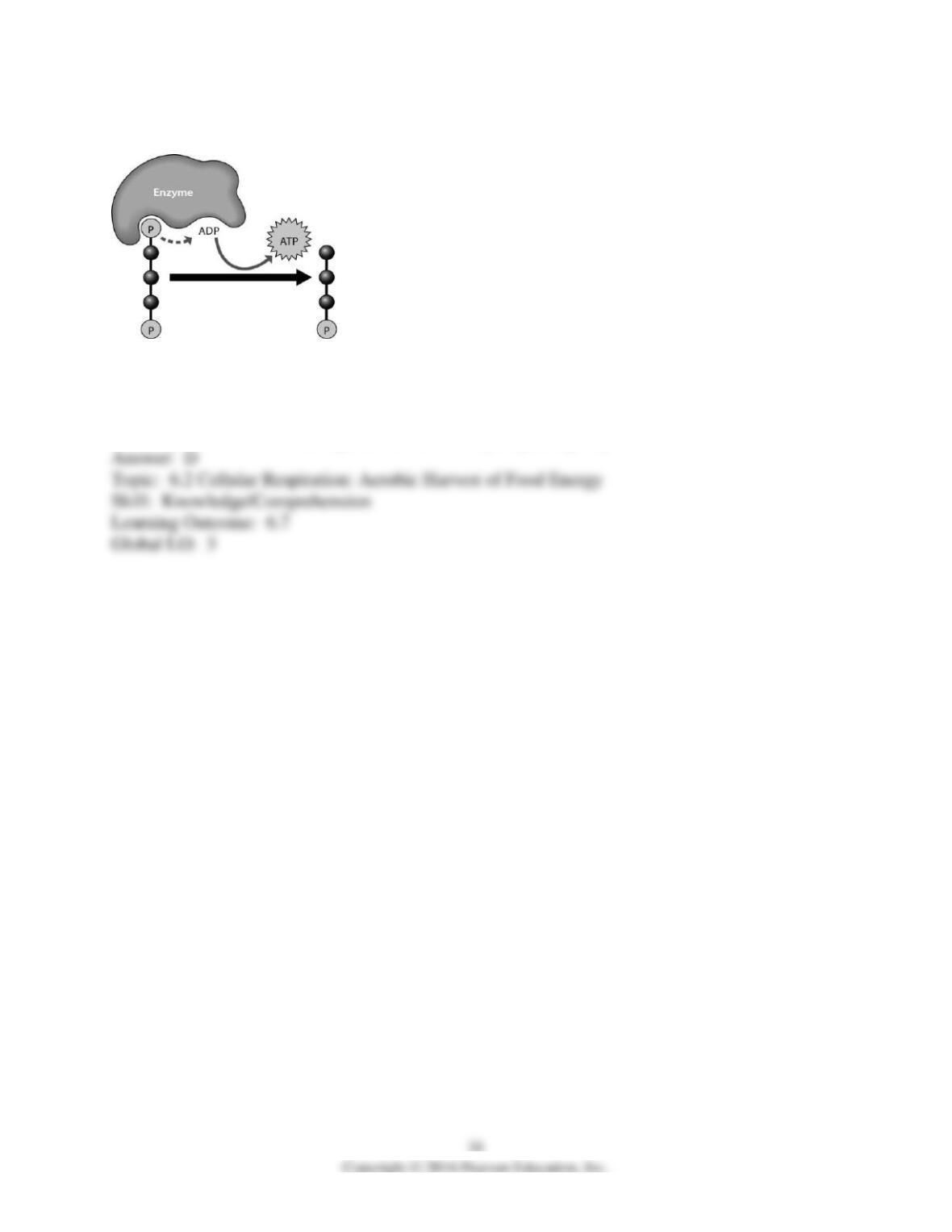
4) What does the figure below show?
A) the synthesis of ADP
B) the breakdown of ATP to perform cellular work
C) the removal of a phosphate group from ADP
D) the synthesis of ATP through the addition of a phosphate group
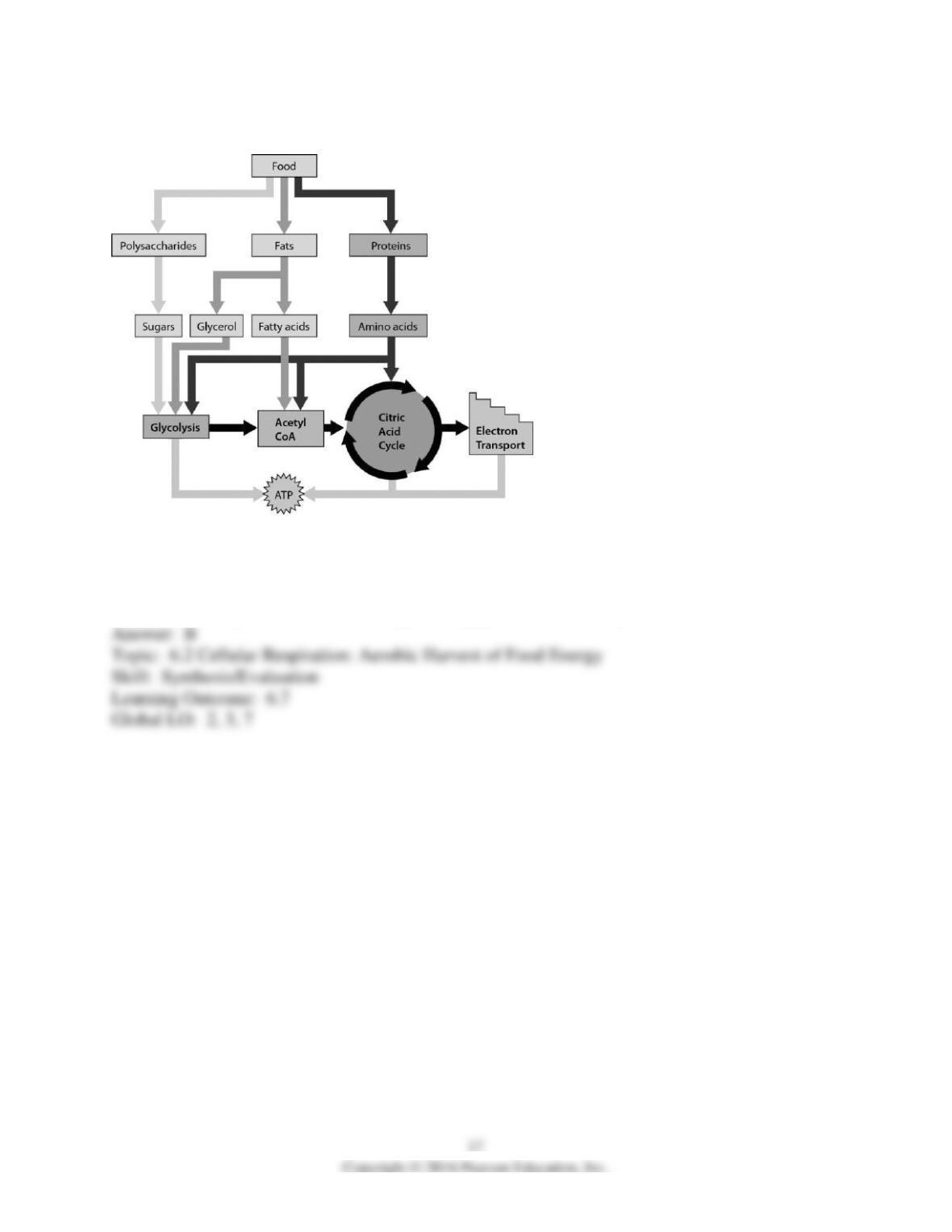
5) The figure below shows that ________.
A) amino acids can move directly into the electron transport chain
B) our cells can use sugars, fatty acids, and amino acids to produce ATP
C) our cells can produce ATP only from glucose
D) our cells can produce ATP from sugars and glycerol, but not fatty acids
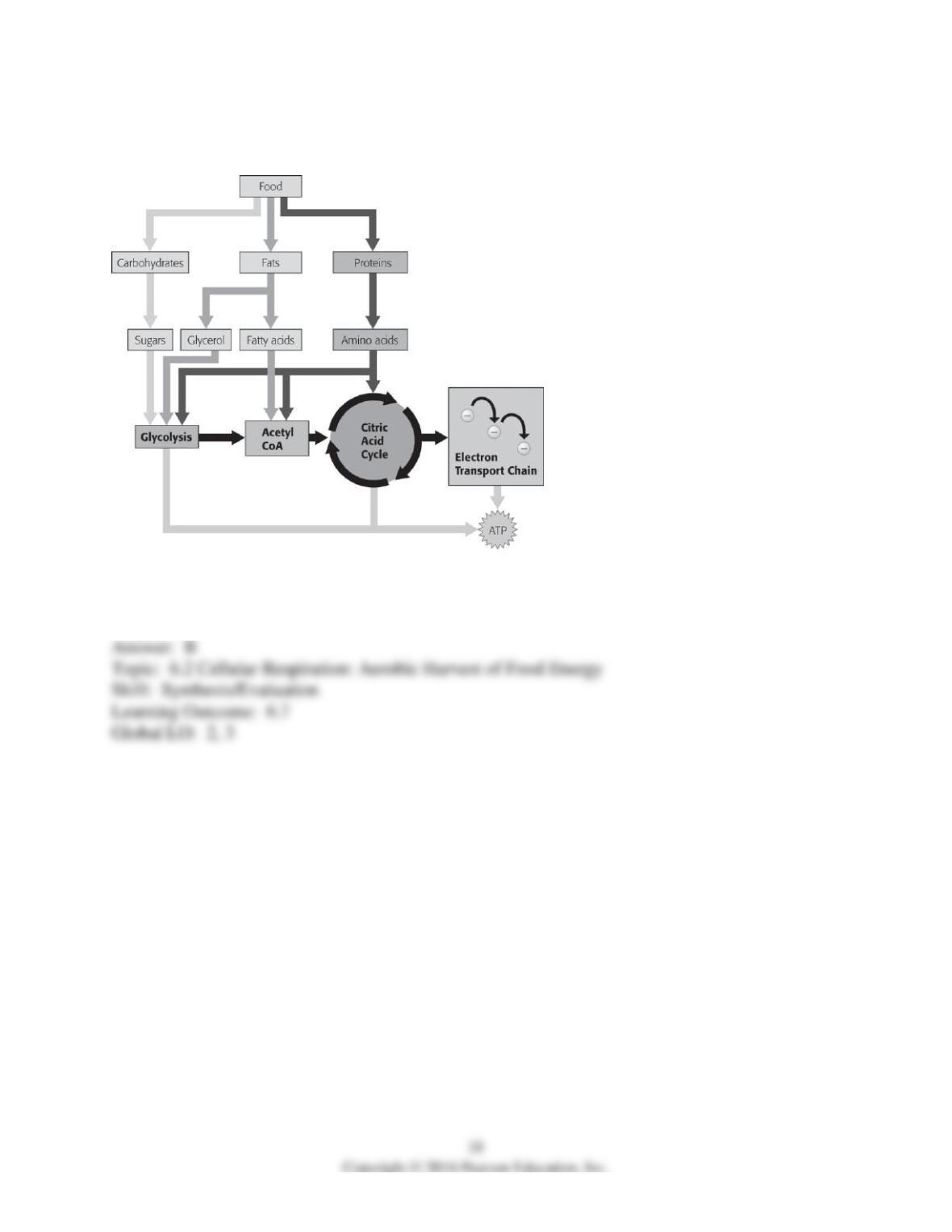
6) Which of these shown in the figure below does NOT begin cellular respiration in the
cytoplasm?
A) amino acids
B) fatty acids
C) glucose
D) glycerol
6.3 Scenario Questions
Read the following scenario to answer the following questions.
An abundant and continual supply of ATP is necessary for all living cells. Active muscle cells
require an extraordinary amount of ATP to permit strenuous exercise for prolonged periods.
Toxins, reduced blood flow, and a compromised respiratory system can interfere with the
transport of oxygen to active cells. A runner in a marathon faces multiple obstacles to continue to
produce sufficient ATP to remain competitive.
1) Breathing faster when we exercise is necessary to expel ________.
A) carbon dioxide and bring in more oxygen to support aerobic metabolism
B) oxygen and bring in more carbon dioxide to support aerobic metabolism
C) carbon dioxide and bring in more oxygen to support anaerobic metabolism
D) oxygen and bring in more carbon dioxide to support anaerobic metabolism
2) When oxygen delivery becomes insufficient to support a runner’s aerobic metabolism, cells
switch to an emergency mode in which ________.
A) ATP is generated less efficiently by harvesting the heat energy in a cell
B) ATP is inefficiently produced and lactic acid is generated as a by-product
C) lactic acid is broken down to produce smaller amounts of ATP
D) carbon dioxide is joined with water to generate much smaller amounts of ATP
The table below shows experimental data from poultry scientists. Examine the table to answer
the following questions.
Oviposition time, egg weight, chicken hatch weight and hatch weight/egg weight from young
and mid-age broiler breeder flocks.
Flock
age Oviposition
time (h) n Egg
weight (g) Chicken hatch
weight (g) Chicken hatch weight/
egg weight (%)
Young Early 168 59.3±0.2a 38.8±0.2a 65.4
Middle 168 58.2±0.3b 37.8±0.3b 65.0
Late 168 58.7±0.1b 38.1±0.2b 64.9
Total 504 58.9±0.1 38.3±0.1 65.0
Mid Early 252 66.8±0.2a 45.8±0.2a 68.6
Middle 252 65.5±0.2b 44.0±0.3b 67.2
Late 252 66.0±0.2b 43.2±0.2c 65.5
Total 756 66.1±0.1 44.1±0.1 66.7
3) Which hypothesis were the poultry scientists likely testing?
A) The time of egg laying (oviposition) has an impact on egg weight.
B) Bigger eggs result in larger mature chickens.
C) Young hens have a harder time laying eggs than do older hens.
D) Egg weight is related to the weight of the hatchling (newly hatched chick).
4) What are (is) the main factor(s) causing differences between the chick hatch weight and the
weight of the egg when it is laid?
A) The only factor that causes the chick to weigh less than the egg when it is laid is the removal
of the shell.
B) Not only does the hatchling have no shell, but it has lost some of its mass (weight) to the air
during development.
C) During development, the chick gains new parts so the weight increases.
D) Egg weight at oviposition includes a lot of water that evaporates during development.

5) If the egg was weighed halfway between being laid and hatching, how would you expect that
weight to compare to the weight of the newly hatched chick?
A) The egg would weigh more at this midpoint than when newly hatched because, during
development, the chick gains new parts.
B) The egg would weigh more at this midpoint than when newly hatched because it is taking in
oxygen.
C) The egg would weigh less at this midpoint than when newly hatched because the shell wears
away over time.
D) The egg would weigh less at this midpoint than when newly hatched because some of the
mass of the egg would be released through cell respiration.