
Which of these techniques could tell you how gene expression differs between
individuals with and without cystic fibrosis?
A) therapeutic cloning
B) DNA microarray
C) reproductive cloning
D) karyotyping
The type of reproductive barrier that occurs when two species mate but produce sterile
hybrids is referred to as ________.
A) mechanical isolation
B) temporal isolation
C) a postzygotic barrier
D) a prezygotic barrier
Hypophosphatemia (vitamin Dresistant rickets) is inherited as a sex-linked dominant
trait. The relevant gene is found on the X chromosome. What is the expected outcome
of a cross between a homozygous recessive woman and a man with hypophosphatemia?
A) All of their daughters and none of their sons exhibit hypophosphatemia.

B) Fifty percent of their daughters and fifty percent of their sons exhibit
hypophosphatemia.
C) All of their sons and none of their daughters exhibit hypophosphatemia.
D) Twenty-five percent of their offspring exhibit hypophosphatemia.
Thermoreceptors detect ________.
A) motion
B) sound
C) pressure
D) temperature
________ convert nitrogen from nitrates to N2.
A) Nitrifying bacteria
B) Nitrogen-fixing bacteria living in the soil
C) Denitrifying bacteria
D) Nitrogen-fixing bacteria living in the root nodules of legumes
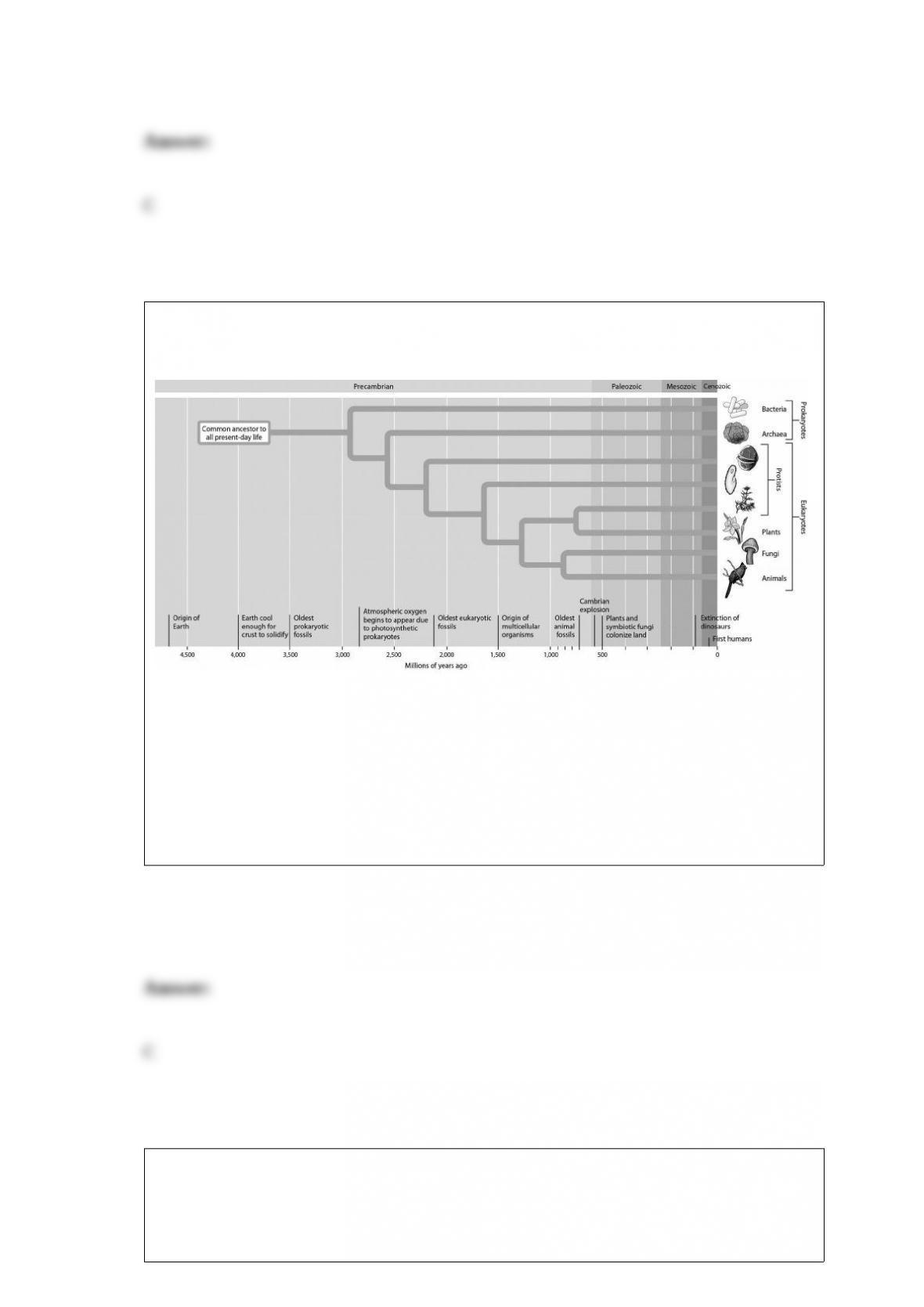
According to this evolutionary tree, the archaea and eukaryotes last shared a common
ancestor ________.
A) 1.0 billion years ago
B) 1.75 billion years ago
C) 2.5 billion years ago
D) 3.5 billion years ago
In the nervous system, integration ________.
A) occurs at the axon

B) inevitably results in the attainment of a threshold potential
C) is the analysis and interpretation of sensory signals and the formulation of
appropriate responses
D) is the assimilation of memories
What is energy?
A) the capacity to cause movement
B) the capacity to cause change
C) a measure of calories
D) a measure of disorder
Homeostasis ________.
A) is the maintenance of an unchanging internal state
B) is a pathological condition
C) is the maintenance of a relatively stable internal environment
D) is the way the internal environment influences the external environment

The secondary response in the B cell response occurs when memory cells bind to
________.
A) antibodies
B) antigens
C) histamine
D) defensive proteins
Examine the pH scale below. How does household bleach compare to household
ammonia?
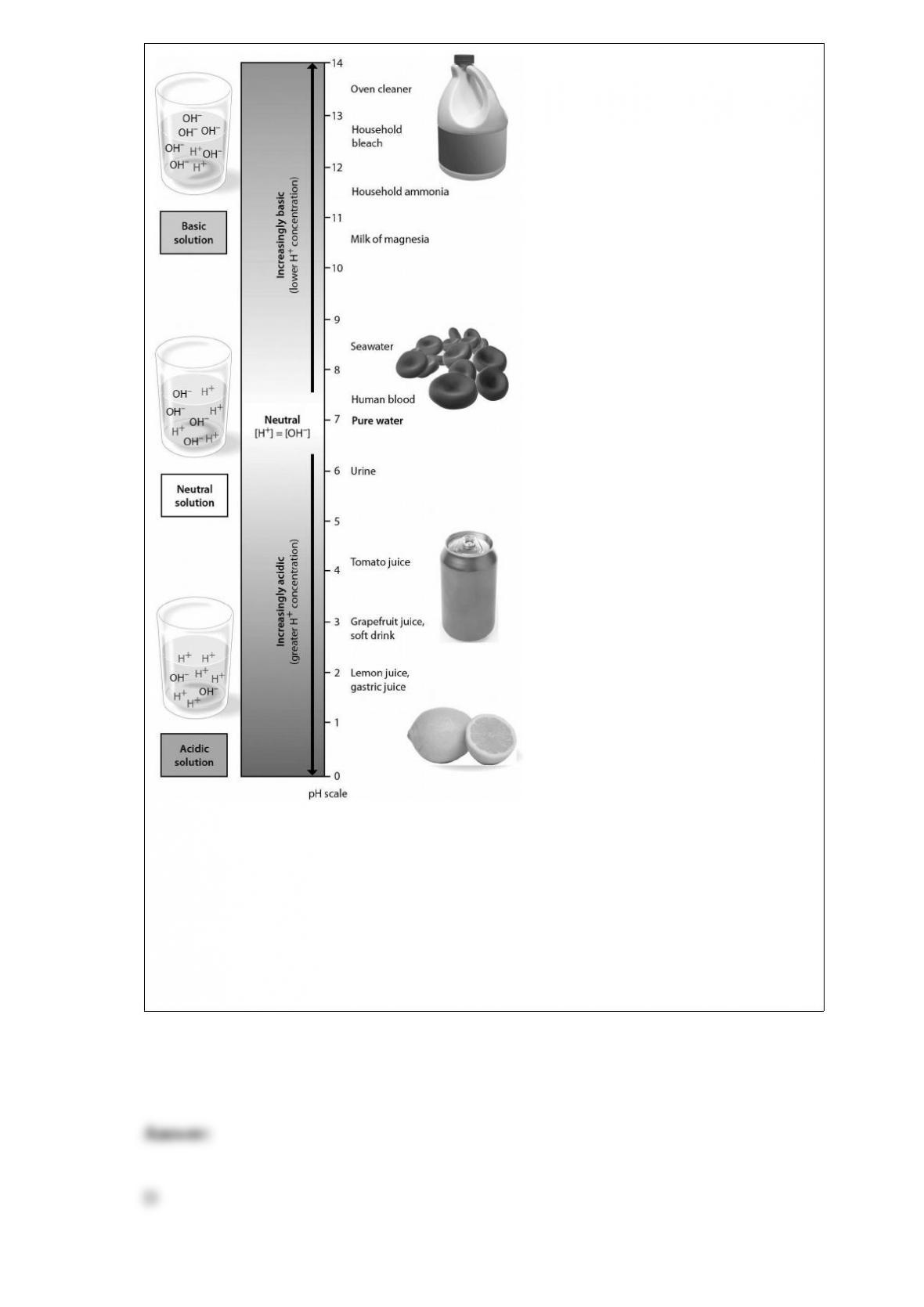
A) Household ammonia has 100 times higher H+ concentration than household bleach.
B) Household bleach has 10 times higher H+ concentration than household ammonia.
C) Household bleach has 100 times higher H+ concentration than household ammonia.
D) Household ammonia has 10 times higher H+ concentration than household bleach.

Mesoderm gives rise to the ________.
A) heart and kidneys
B) brain and skin
C) nervous system and thyroid
D) liver and pancreas
The function of a mushroom is to ________.
A) produce seeds
B) store nutrients
C) produce spores
D) photosynthesize
To study the effect of ambient (environmental) temperature on the metabolic rate of
animals, a scientist takes a small animal and puts it in a sealed chamber with oxygen.
The scientist measures the amount of oxygen used by the animal at different
temperatures. The temperatures selected are those that the animal normally encounters
in nature. The data from this experiment are in the table below.
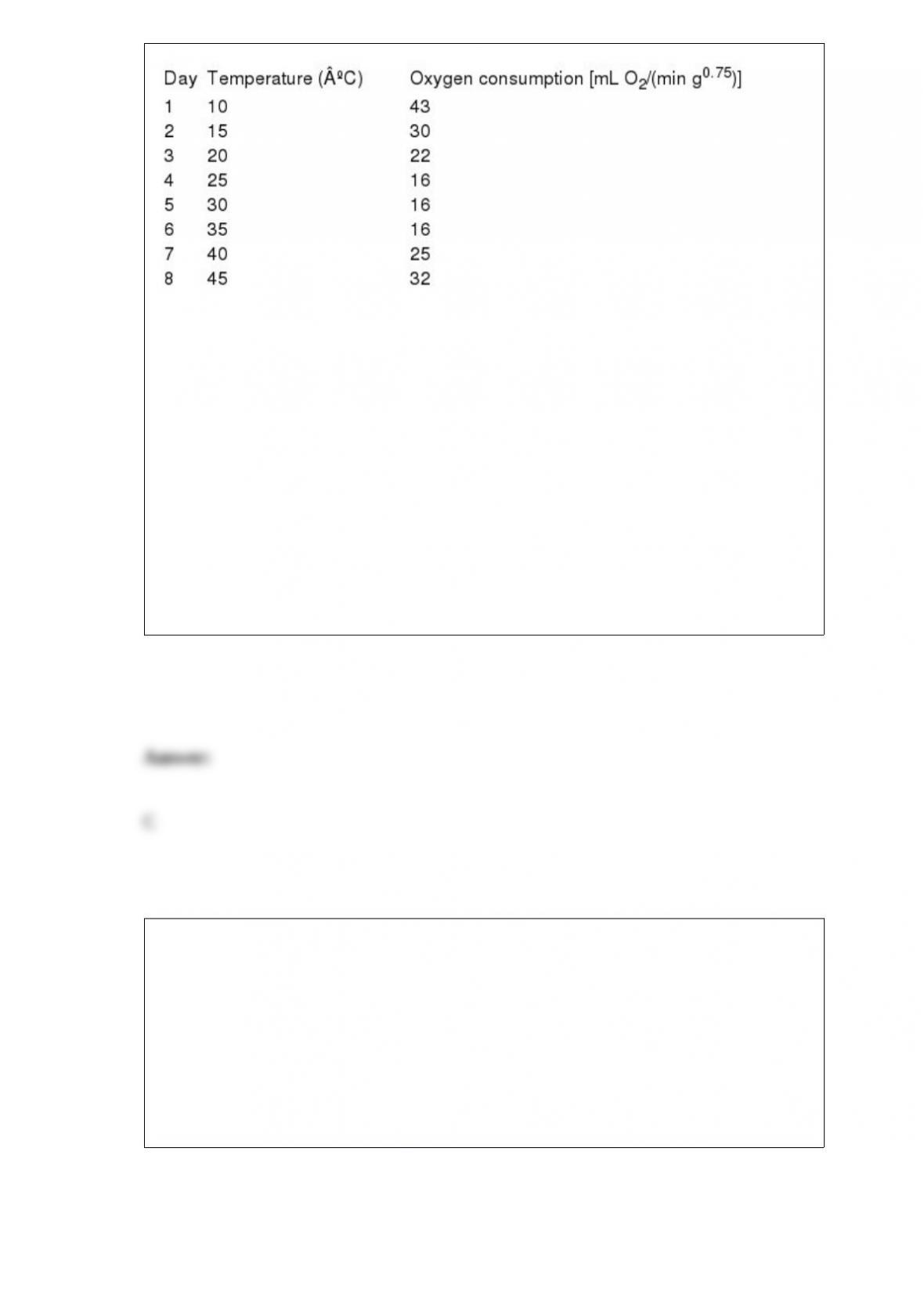
To communicate the results of the experiment best, how should the scientist graph the
data?
A) Use a bar graph with oxygen consumption on the x-axis and temperature on the
y-axis.
B) Use a line graph with day on the x-axis and temperature on the y-axis.
C) Use a line graph with temperature on the x-axis and oxygen consumption on the
y-axis.
D) Use a bar graph with temperature on the x-axis and oxygen consumption on the
y-axis.
The study of the full protein sets that genomes encode is ________.
A) proteomics
B) genomics
C) metagenomics
D) systems biology

A substance that can elicit an immune response from a lymphocyte is called a(n)
________.
A) defensive protein
B) pathogen
C) antibody
D) antigen
“Sticky ends” are produced as a result of the action of ________.
A) PCR
B) DNA ligase
C) restriction enzymes
D) bacterial plasmids
Lysosomes are responsible for ________.
A) lipid synthesis
B) cellular respiration
C) digestion of organic matter inside the cell
D) protein synthesis
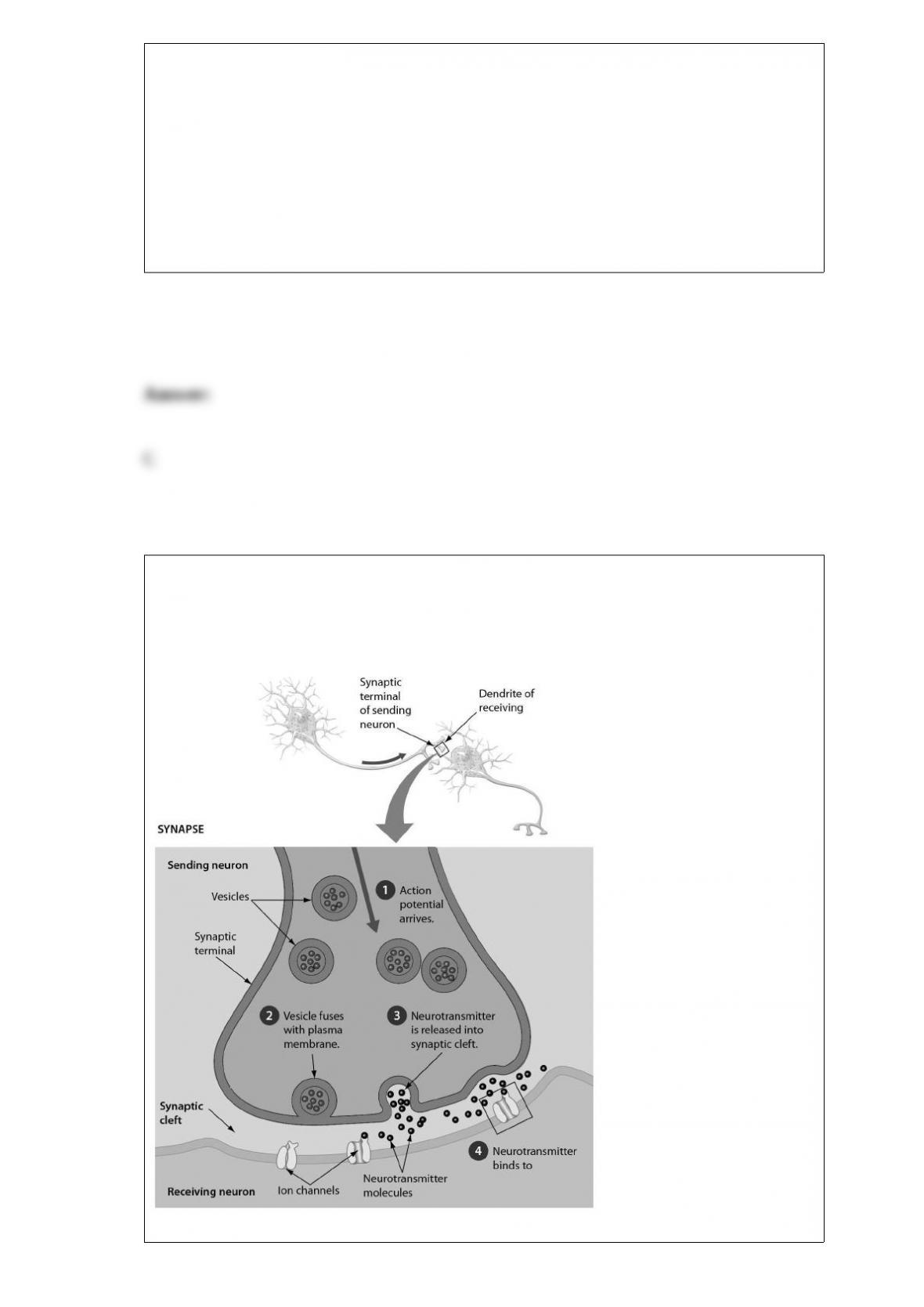
Examine the neurotransmitters in the synapse in the accompanying figure. What might
happen to these neurotransmitters after step 4 is complete? The neurotransmitters
________.

A) are transported back to the sending neuron
B) are transported into the receiving neuron
C) remain in the synaptic cleft
D) trigger an action potential in the sending neuron
Transpiration pulls water up a plant because of two mechanisms: ________ describes
water molecules sticking together and ________ describes water molecules sticking to
the walls of the xylem.
A) cohesion… adhesion
B) adhesion… cohesion
C) adhesion… gravity
D) gravity… cohesion
The movement of an action potential along a neuron is most like ________.
A) the ripples created by dropping a pebble into a pond, gradually decreasing in size as
the waves spread apart
B) a crowd at a sporting event doing the wave around a stadium

C) a radio tower emitting a signal that reaches only a small region
D) the sound of your voice spreading out as you yell loudly to your friend while at a
park
Researchers have found a general relationship between testicular cancer and exercise.
Increased exercise is associated with a decrease in incidence of testicular cancer.
However, a positive relationship (increased incidence of testicular cancer) was found
between testicular cancer and riding bikes or horses. Several factors might be
hypothesized to bring about this result. All but one of the following statements are
reasonable hypotheses that researchers might follow to seek the cause for this
relationship. Choose the exception.
A) Riding bikes or horses causes trauma to the testes.
B) The seat on bikes and the saddle on horses are made of material containing
chemicals that damage testicular cells.
C) Riding bikes or horses increases scrotal temperature, which damages testicular cells.
D) Mutations that lead to testicular cancer make men more likely to ride bikes or
horses.
Which of the following examples results from disruptive selection?
A) The birth weight at which newborn humans are most likely to survive and the
average weight of newborn humans are about the same.

B) There is an increase in antibiotic-resistant strains of bacteria.
C) There is an increase in the number of different breeds of dog.
D) Garter snakes with different coloration patterns behave differently when threatened.
When the wall of the stomach fails to protect itself from erosion by gastric juice, the
result is ________.
A) heartburn
B) obesity
C) GERD
D) a gastric ulcer
In photosynthesis, redox reactions ultimately transfer electrons from ________ to
________.
A) O2… CO2
B) C6H12O6… O2
C) H2O… C6H12O6
D) H2O… CO2
The first organisms to colonize land were
A) plants, protists, and insects
B) plants, fungi, and insects
C) bacteria, plants, and fungi
D) protists, bacteria, and fungi
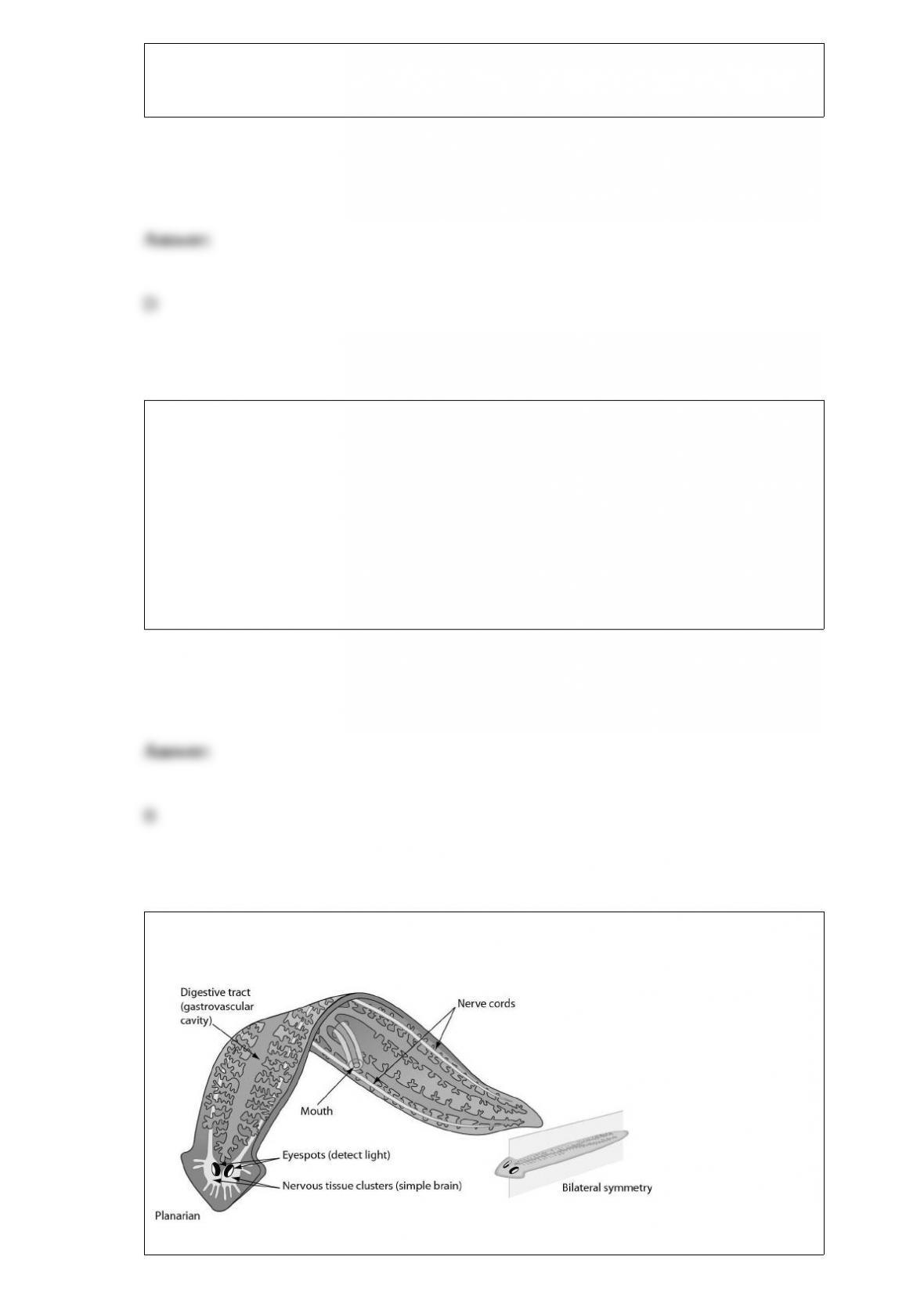
The figure below shows a simple worm. Bilateral symmetry and a highly branched
gastrovascular cavity all suggest that the worm is a(n) ________.

A) annelid
B) mollusk
C) chordate
D) flatworm
A child is born with a rare disease in which mitochondria are missing from certain
skeletal muscle cells. Physicians find that the muscle cells function. Not surprisingly,
they also find that ________.
A) the muscles contain large amounts of lactic acid following even mild physical
exercise
B) the muscles contain large amounts of carbon dioxide following even mild physical
exercise
C) the muscles require extremely high levels of oxygen to function
D) the muscle cells cannot split glucose to pyruvic acid
Molecular systematics might examine all of the following types of data EXCEPT
________.
A) proteins

B) DNA sequences
C) amino acid sequences
D) anatomical features
The waste products of cellular respiration include ________.
A) water only
B) carbon dioxide only
C) water and carbon dioxide
D) water and glucose
Which of the following plant types complete their life cycle in 2 years?
A) annuals only
B) annuals and perennials
C) biennials only
D) perennials only
Please read the following scenario to answer the following questions.
While radioactive isotopes are used in medicine to identify tumors and other diseases,
they can also be used to treat diseases such as cancer. One method to treat cancerous
tumors is to expose them to radiation, which can kill the cancerous cells and the tumor.
In 2013, the U.S. Food and Drug Administration approved a new cancer treatment
based on the radioactive isotope radium-223; this isotope has a half-life of 11.4 days.
The radioactive drug, known as Xofigo, is injected into the patient’s bloodstream and
travels to certain regions of the body. Because it emits high-energy radiation over short
distances, it can kill cancerous cells in the sites where it localizes.
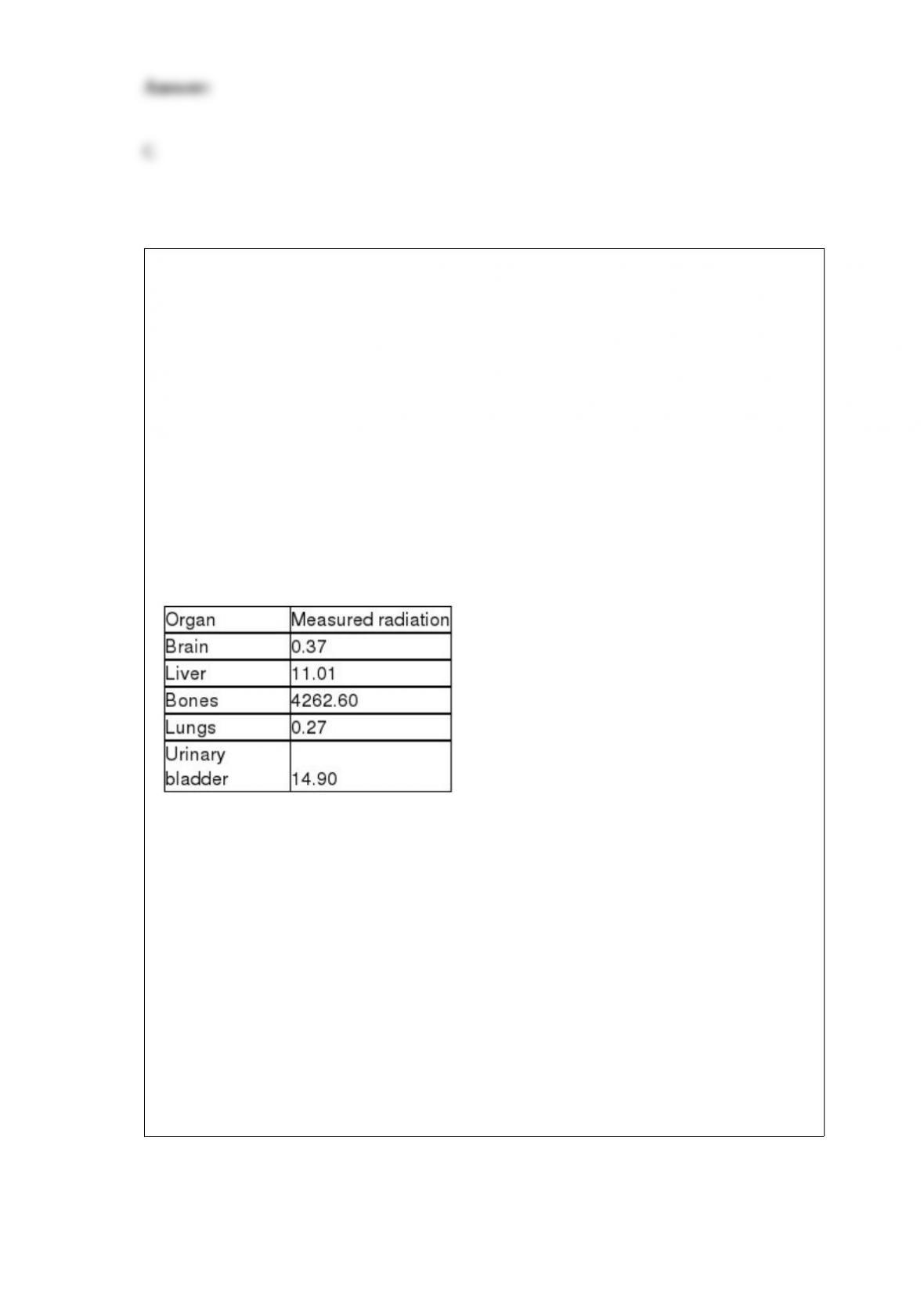
After the drug was injected into a person, the following data were collected regarding
the amount of radiation measured in different organs in the person’s body.
Which of the following would be the best experiment to determine whether this drug is
an effective treatment option for cancer patients?
A) Give the drug to a single cancer patient and ask him how he feels several months
later.
B) Give the drug to a group of mice that have artificially induced tumors and measure
whether their tumors are destroyed.
C) Give the drug to a group of cancer patients and measure whether their tumors are
destroyed.
D) Give the drug to a single cancer patient and measure whether her tumor is destroyed.

You are riding on your bike and stop pedaling, coasting along the road. Eventually, your
bike slows down and stops. What happened to the energy of your motion when your
bike stopped?
A) It was returned to the bicycle.
B) It was converted back to chemical energy.
C) It was released as heat.
D) It was used to chemically break down the tires.
Altogether, the body secretes about 7 liters of water into the alimentary canal each day.
About what percentage of this water gets reabsorbed?
A) 30%
B) 50%
C) 60%
D) 90%