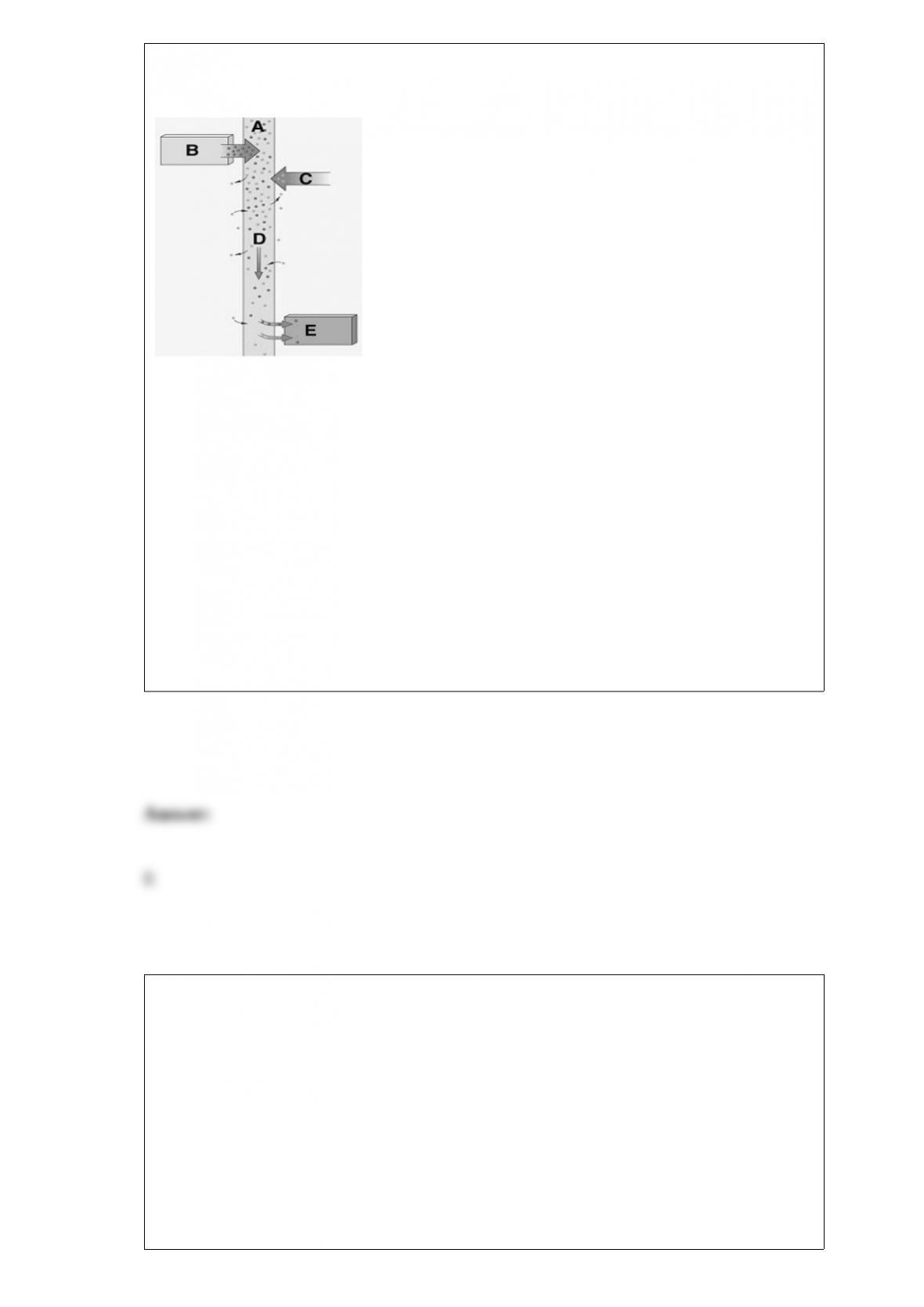
The following questions refer to the figure above illustrating transport in phloem.
____ can indicate a fruit or developing root cells.
a. A
b. B
c. C
d. D
e. E
Answer the following questions with reference to the bones listed below.
a. clavicle
b. lumbar vertebra
c. tibia
d. metatarsal
e. metacarpal

This bone is easily broken.
Match the following descriptions with the most appropriate group listed below.
a. Bacteria
b. Protista
c. Plantae
d. Fungi
e. Animalia
unicellular eukaryotic producers
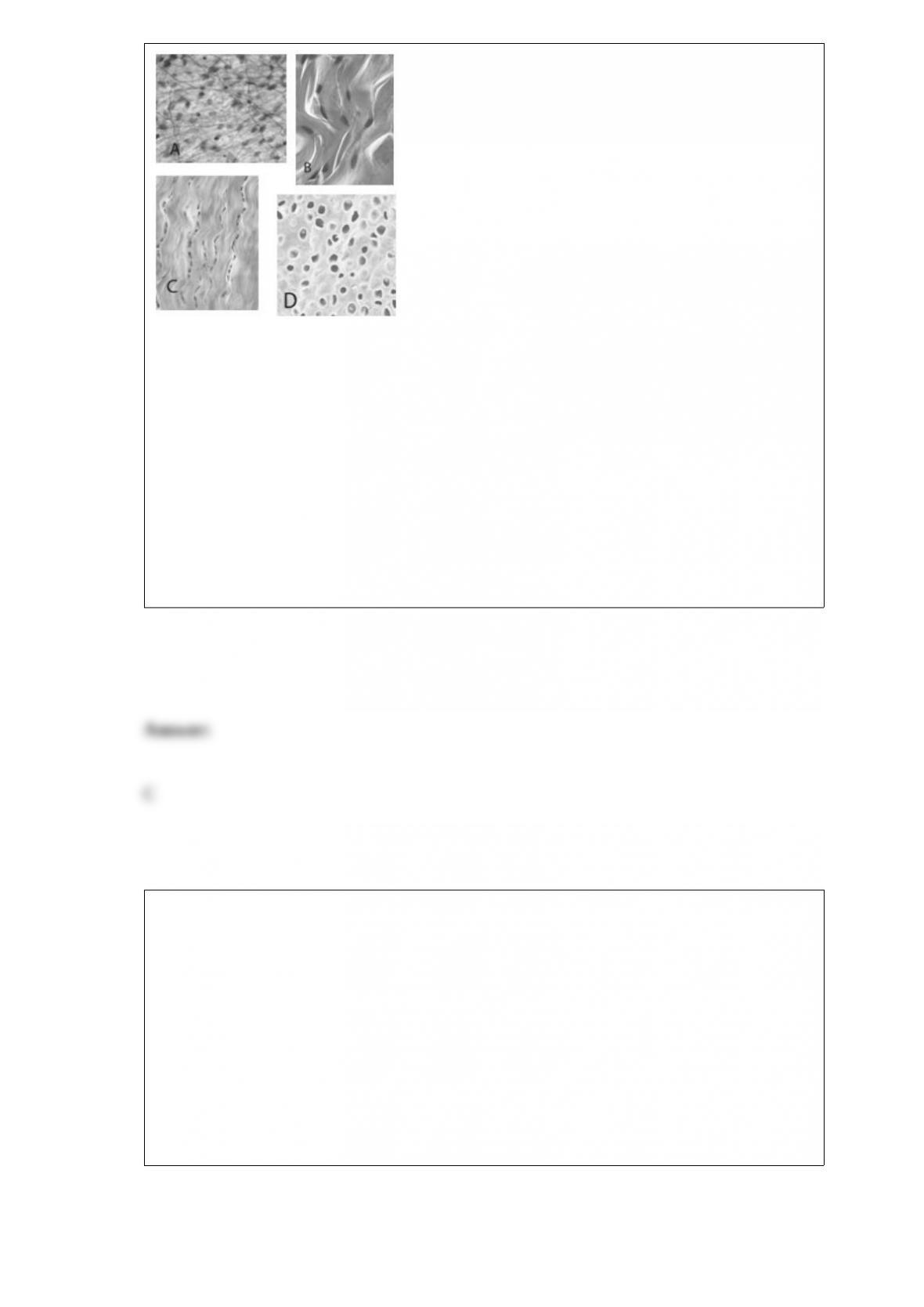
Which of the above would provide a stretchable attachment between body parts?
a. A
b. B
c. C
d. D
e. none of the above
One or more neural effect(s) of MDMA include(s)
a. temporary psychosis.
b. panic attacks.
c. depletion of natural serotonin reserves.
d. memory loss.
e. all of these.

Answer the following questions with reference to the bones listed below.
a. clavicle
b. lumbar vertebra
c. tibia
d. metatarsal
e. metacarpal
This bone connects to the femur.
Stigma
Choose the one most appropriate answer for each.
a. male spores of anthers
b. site where pollen tube usually penetrates the ovule
c. develops into a fruit at maturity
d. a 2n cell that will help form nutrients for the developing plant embryo
e. cluster of matured ovaries attached to a common receptacle
f. modified leaf with pigments and fragrance-producing cells

g. immature male gametophyte
h. female reproductive organ
i. landing platform for pollen
j. pollen-bearing structure
k. female spores of ovule
l. outermost whorl of leaf parts on a receptacle; generally green, but sometimes
pigmented
m. female gametophyte
n. matured ovaries of several flowers fused together into a single mass (for example,
pineapple, fig)
o. forms a seed at maturity
radiation
Choose the one most appropriate answer for each.
a. do not maintain the same body temperature at all times; are capable of internal heat
production
b. heat energy is released to the air when liquid water converts to gaseous form
c. bulk flow of protein-free plasma from capillaries into Bowman’s capsule
d. animals with more or less constant body temperature
e. emission of heat from body surface when environmental temperature is lower than
the body temperature
f. movement of ions from peritubular capillaries into nephron tubules
g. loss of too much body heat

h. heat next to the body’s surface undergoes mass transport by air or water currents
i. active and passive transport of solutes from peritubular capillaries into the glomerular
capillaries
j. a long, slender, tubular unit in the vertebrate kidney that forms urine
k. body temperatures rise and fall with environmental changes
l. secreted by adrenal glands; influences sodium reabsorption
m. passive transport of water; active and passive transport of solutes out of the nephron
into peritubular capillaries
n. heat energy is transferred from high to low temperature regions due to collisions
between adjacent molecules
o. released from the posterior lobe of the pituitary in response to hypothalamic signals
p. toxic substances are extracted from blood circulating in cellophane tubes suspended
in a warm-water bath
q. erection of hairs and feathers by smooth muscles in the skin
Body appendages as diverse as crab legs, beetle legs, sea star arms, butterfly wings, fish
fins, and mouse feet start out as
a. clusters of cells in the limb buds.
b. cerebral cells.
c. cardiac cells.
d. offshoots of the sperm cell.
e. offshoots of the egg.

Phytochemicals in low quantities in a person’s diet may lead to
a. high blood pressure.
b. increased incidence of athletes foot.
c. macular degeneration.
d. halitosis.
e. none of these.
The five reactions listed below occur during the noncyclic pathway of ATP formation.
Use them to respond to the following statements.
a. reduction of NADP+
b. phosphorylation of ADP
c. photolysis of water
d. oxidation of chlorophyll
e. reduction of chlorophyll
The final step that occurs during noncyclic ATP formation is this.
What percent of implanted clone embryos survive to be born alive?
a. 2.
b. 5.
c. 10.
d. 25.
e. 50.
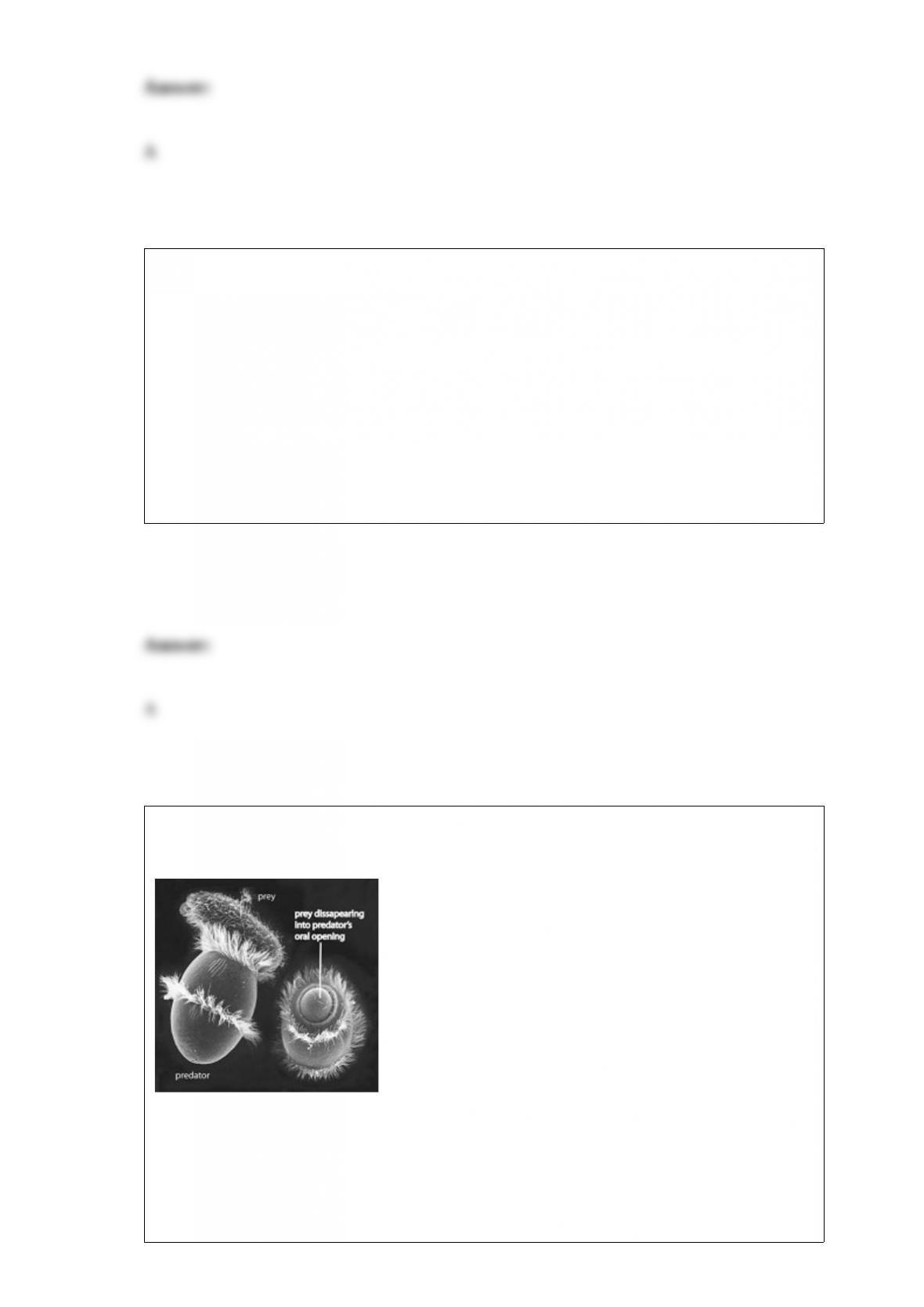
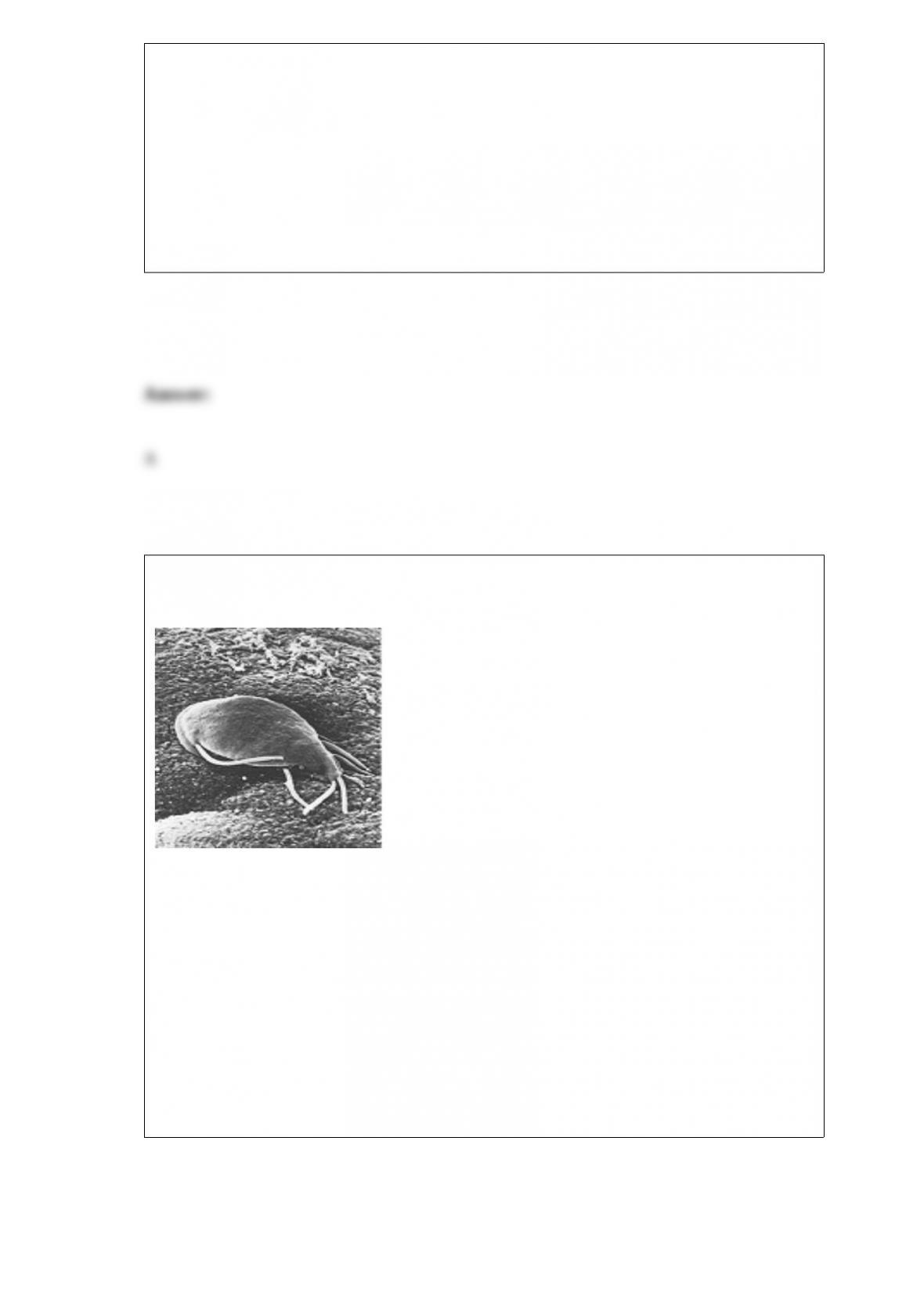
To which of the following groups does the organism in the above figure belong?
a. diplomonads, parabasalids, trypanosomes, and euglenoids
b. ciliates, dinoflagellates, and apicomplexans

c. water molds, diatoms, and brown algae
d. chlorophyte and charophyte algae
e. amoebas and slime molds
Promoter
Choose the one most appropriate answer for each.
a. a condensed X chromosome
b. protein that combines with DNA all along its length
c. attaches or detaches from operator to regulate transcription
d. portion of the operon that binds RNA polymerase
e. gene capable of inducing cancerous transformations
f. genes controlling the development of the body plan
g. the mutated form is associated with breast cancer
h. binding sites on DNA where certain regulatory proteins increase transcription rates

The first child conceived by in vitro fertilization was born in:
a. 1978.
b. 1984.
c. 1991.
d. 2007.
e. 2009.
Which of the following carries amino acids to ribosomes, where amino acids are linked
into the primary structure of a polypeptide?
a. mRNA
b. tRNA
c. hnRNA
d. rRNA
e. all of these
Which of the following does NOT describe the Casparian strip?

a. waxy
b. component of the endodermis
c. permeable
d. barrier
e. waterproof
The part of the brain that controls the basic responses necessary to maintain life (such
as breathing and heartbeat) is the
a. medulla oblongata.
b. corpus callosum.
c. pineal gland.
d. cerebellum.
e. cerebral cortex.
Extracts of pathogenic bacteria can transform harmless bacteria to harmful bacteria
unless ____ enzymes are added to the extract.
a. protein-digesting

b. mRNA-digesting
c. tRNA-digesting
d. DNA-digesting
e. any of these
Selection pressures acting on a population may favor
a. individuals at the left end of the range of variation.
b. individuals at the right end of the range.
c. extreme individuals at both ends of the range.
d. the intermediate individuals within the range.
e. all of these.
Zero population growth is achieved
a. when a population reaches the carrying capacity of the environment.
b. when emigration and immigration are balanced, and the number of births equals the
number of deaths.
c. anytime that births exceed deaths.
d. anytime that deaths exceed births.
e. when emigration and immigration are prevented.
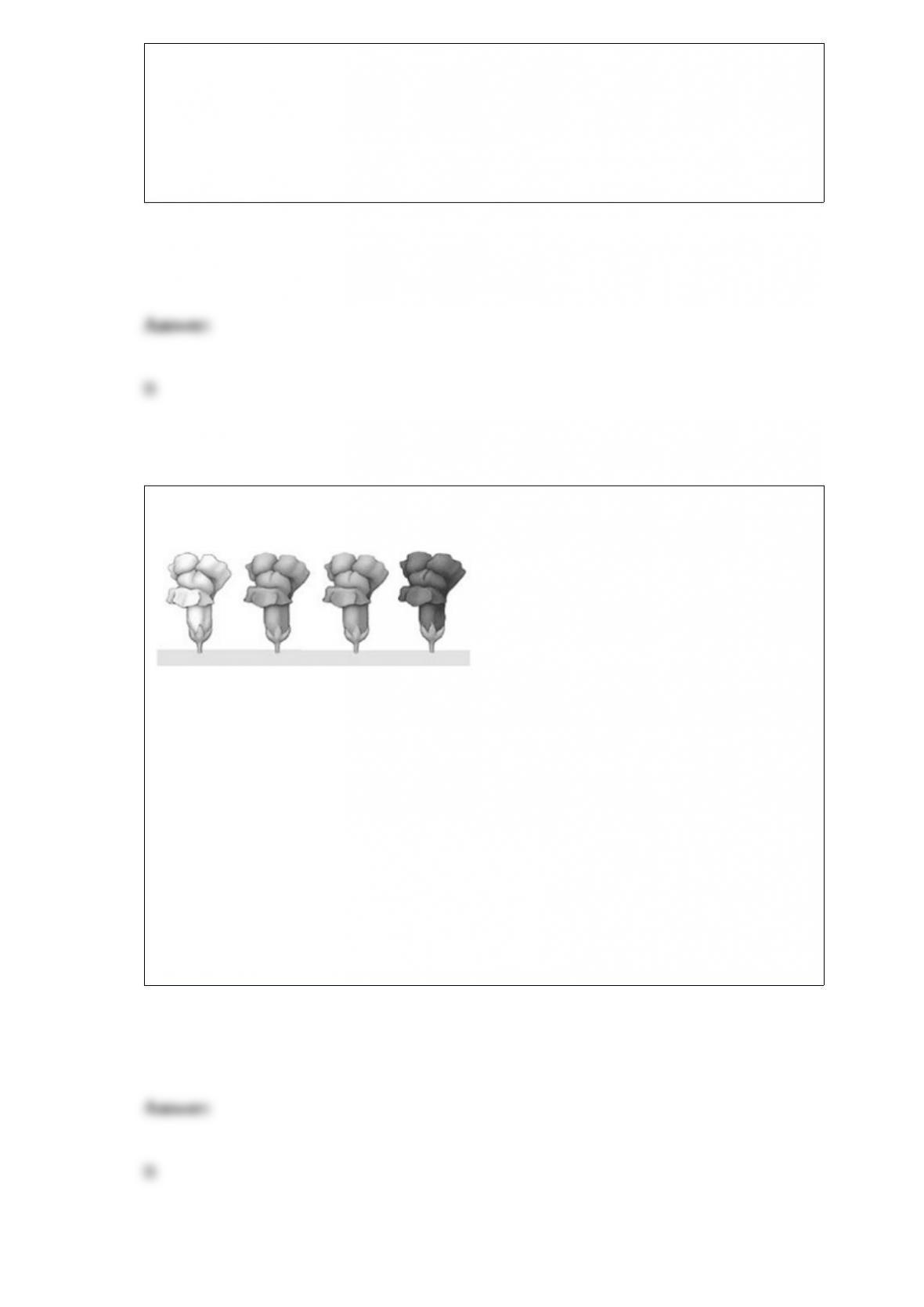
The illustration above shows the F2 phenotypes from a monohybrid cross in
snapdragons. What type of inheritance produces such an outcome?
a. complete dominance
b. incomplete dominance
c. multiple alleles
d. continuous variation
e. epistasis

Smooth muscles
a. are not striated.
b. have spindle-shaped cells.
c. are found in the walls of hollow structures such as blood vessels and the stomach.
d. are involuntary.
e. include all of these descriptions.
The conclusion that early hominins were bipedal is based in part on examination of
a. their S-shaped backbone.
b. the position of the foramen magnum.
c. footprints.
d. positions of the foramen magnum, S-shaped backbone, and footprints.
e. length of the femur.
During the first major divergence of life the atmosphere was
a. high oxygen, high carbon dioxide.

b. high hydrogen, low oxygen.
c. changing from anaerobic to aerobic.
d. firmly in the age of aerobes.
e. all of these.
Plate tectonic theory is based on
a. a thermal convection model in which cool material in the earth’s mantle rises and
spreads laterally beneath the crustal plates.
b. the idea that the earth’s crust is fragmented into rigid crusts that are sinking slowly
beneath crustal plates.
c. the idea that coacervate formation causes continents to drift apart slowly on their
crustal plates.
d. observations that the sea floor is slowly spreading away from oceanic ridges due to
thermal convection in the mantle.
e. all of these.
Which of the following is NOT accurate concerning ionization?

a. When one atom loses electrons, another must gain electrons.
b. When an atom loses an electron, it becomes negatively charged.
c. Ionic bonds form between ionized atoms.
d. In the compound NaCl, Na loses an electron to become positive.
e. In an ion, the number of protons and electrons is unequal.
Respond to the following statements in reference to the five stages or structures
involved in the development of the human egg.
a. oogonium
b. primary oocyte
c. secondary oocyte
d. polar body
e. corpus luteum
This structure contains the first sex cell stage to be in the haploid state.
Crossing over is one of the most important events in meiosis because
a. it produces new combinations of alleles on chromosomes.
b. homologous chromosomes must be separated into different daughter cells.
c. the number of chromosomes allotted to each daughter cell must be halved.
d. homologous chromatids must be separated into different daughter cells.
e. all of these reasons are true.
To which of the following groups does the organism in the above figure belong?
a. diplomonads, parabasalids, trypanosomes, and euglenoids
b. ciliates, dinoflagellates, and apicomplexans
c. water molds, diatoms, and brown algae
d. chlorophyte and charophyte algae
e. amoebas and slime molds

Which of the following does NOT occur in prophase I of meiosis?
a. cytokinesis
b. pairing of homologues
c. formation of a bipolar spindle
d. crossing over
e. condensation of chromosomes
How do archaea differ from bacteria?
__________ relay signals between neurons.
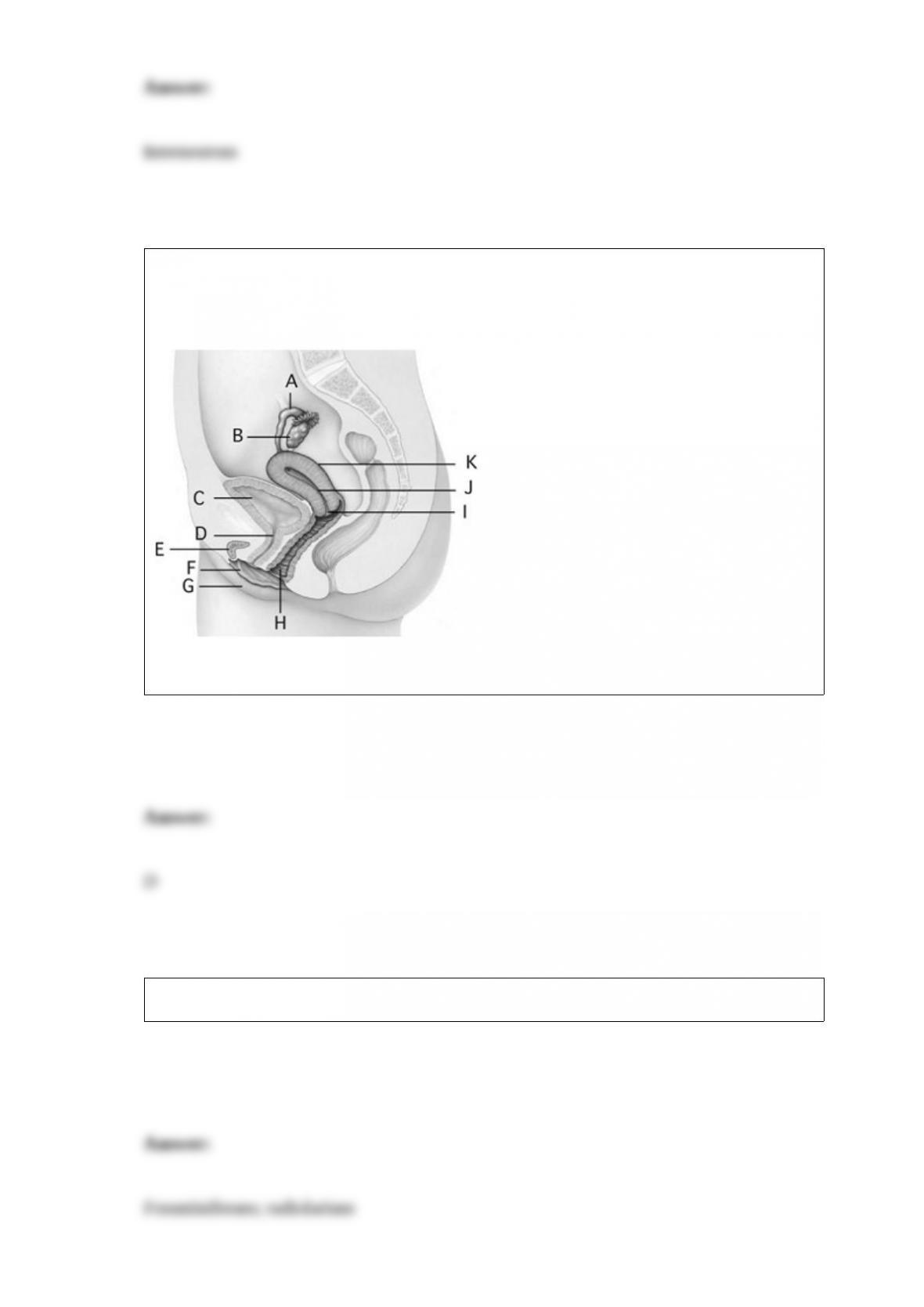
Labeling.
urethra
__________ and __________ are single-celled heterotrophs with a secreted shell.

The dinosaurs are thought to have gone extinct due to an asteroid strike. How would
this impact on population growth be described?
At low population density, __________ is favored, quickly producing as many
offspring as possible.
Antigen receptors are capable of producing large diversity due to the fact that there are
__________ cassettes (versions) of each __________.
Chart the path of blood through the heart, including the valves passed.

A number of ____________ cover the rough ER.
__________ such as reptiles control core temperature mainly by behavior.
__________ are heterotrophs that grow as a mesh of absorptive filaments. Some are
plant pathogens.
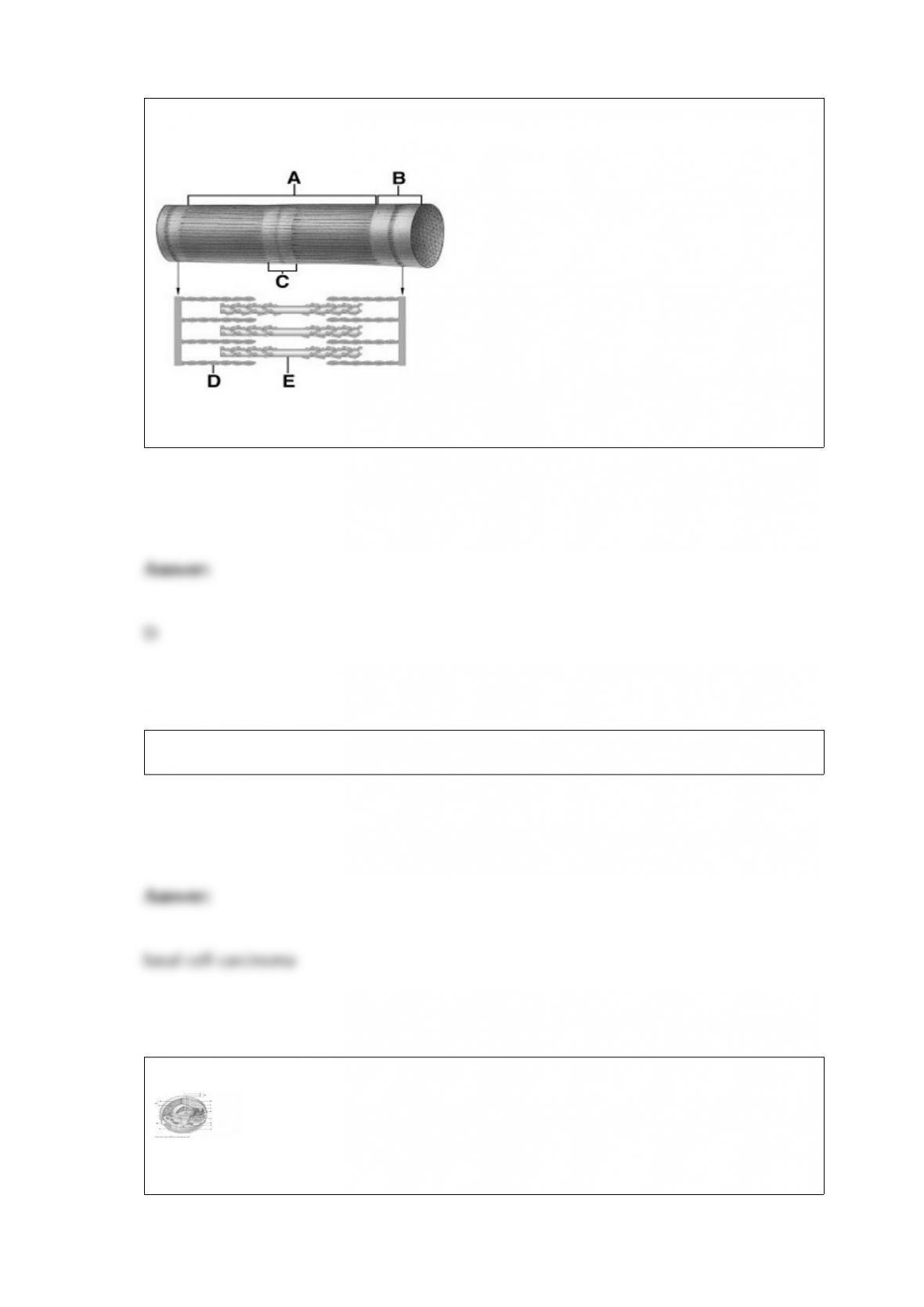
Labeling.
is where troponin is located.
The most common type of skin cancer is __________.
mitochondrion
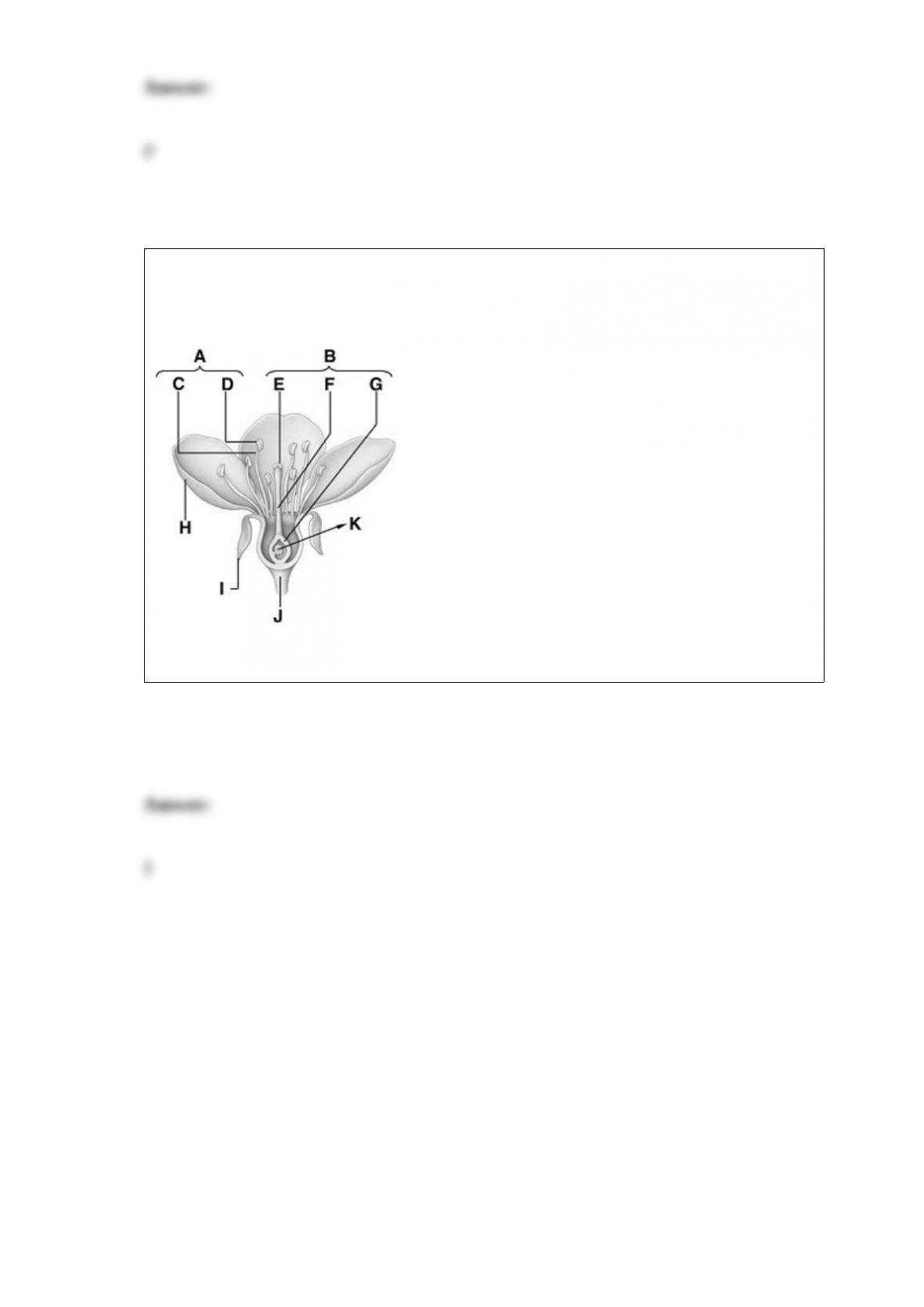
Labeling.
Receptacle