Which of the following molecules is capable of tension-sensing by exposing binding
sites for other proteins when mechanically stretched?
A. -Catenin
B.Talin
C.Fibronectin
D.All of the above
Which of the following drugs is toxic for our cells?
A.Cytochalasin B, which caps the plus end of actin filaments and prevents actin
polymerization.
B.Phalloidin, which binds along actin filaments and stabilizes them.
C.Nocodazole, which binds to tubulin subunits and prevents microtubule
polymerization.
D.Colchicine, which caps microtubule ends and leads to their depolymerization.
E.All of the above.
Unlike a myosin head, a kinesin head is tightly bound to its cytoskeletal track when
bound to …
A.ATP.
B.ADP.
C.no nucleotide.
D.GTP.
E.GDP.
Which of the following changes is more likely to further confine a membrane protein
within a corral established by the cortical cytoskeletal network?
A.Increased temperature
B.Protease cleavage of the extracellular domain of the protein
C.Binding to an extracellular ligand
D.Protease cleavage of the cytosolic domain of the protein
E.Binding of the protein to other transmembrane proteins
Out of nearly 5000 protein-coding gene families, there is a set of nearly 300 conserved
gene families that are found in species from all domains of life. When one looks at the
general functions assigned to these gene families, it is found that ___
A.the majority of them function in cell-to-cell signaling.
B.the majority of them are poorly characterized.
C.more than one-third of them are involved in translation or amino acid transport and
metabolism.
D.more than one-half of the shared families are involved in DNA replication and
transcription.
E.Nearly all of them are involved in energy production and carbohydrate metabolism.
Consider two mammalian cells, one in G1 and the other in G0 (stationary) phase. If they
are stimulated to pass the restriction point by the addition of an extracellular
proliferation signal, but the signal is then immediately removed, what would you expect
to happen?
A.Both cells will replicate their DNA.
B.Only the G1 cell will replicate its DNA.
C.Only the G0 cell will replicate its DNA.
D.Only the G1 cell will start to replicate its DNA, but will stop halfway through the
replication and will not reach G2.
E.Neither of the cells will replicate their DNA.
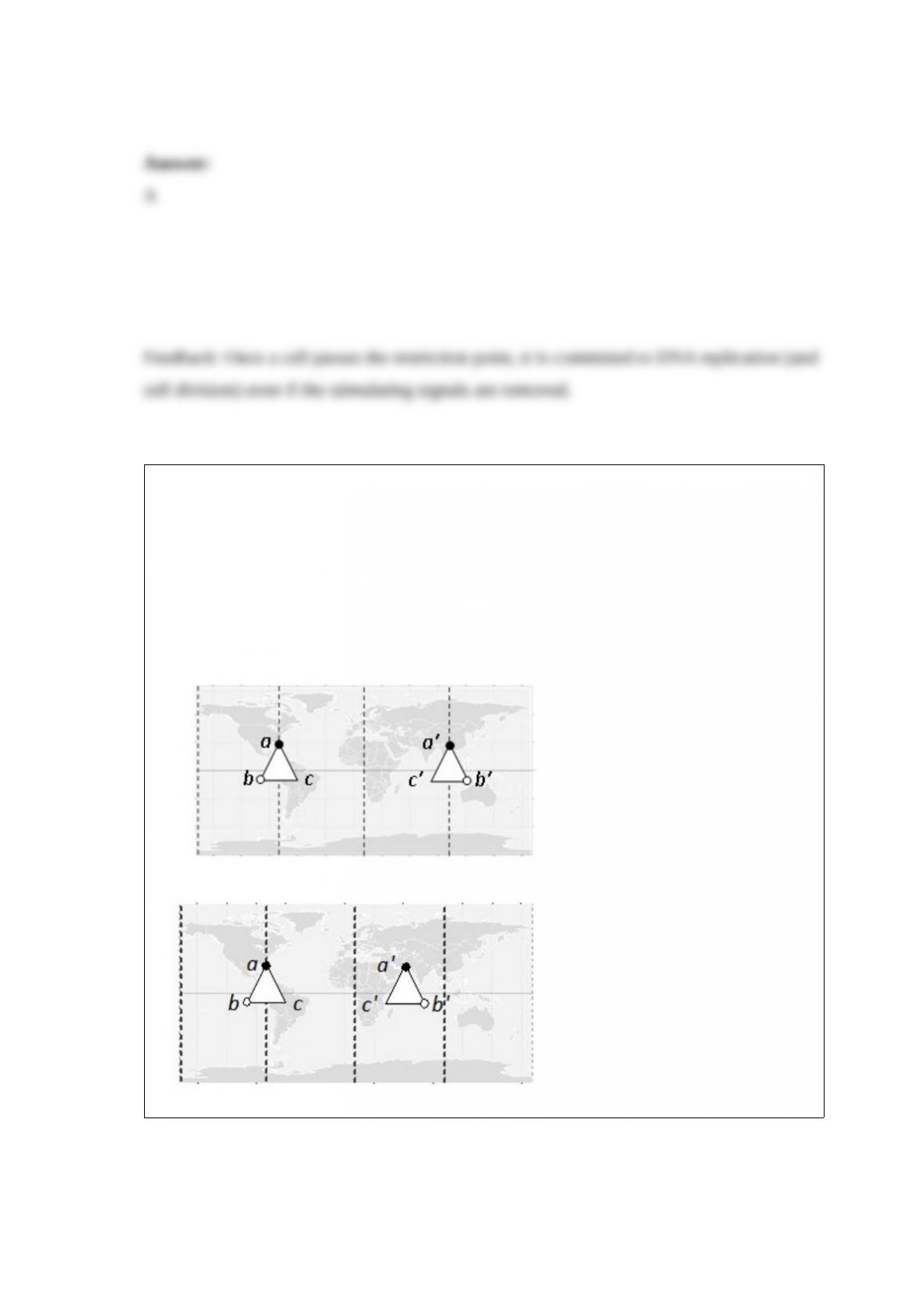
We can try to map the surface of a globular protein in two dimensions just like we
depict the surface of the Earth in a world map. On such a map, the binding site of a
molecule for other molecules of the same protein (for assembly into a multisubunit
complex) can be marked. In the following “maps,” two molecules of the protein can
bind if the points a, b, and c on the surface of one molecule can align to points a’, b’, and
c’ in the other molecule, respectively. Which map corresponds to a protein whose
assembly gives rise to a helix? Hint: the other maps correspond to a dimer, a ring, and a
linear filament.
A.
B.
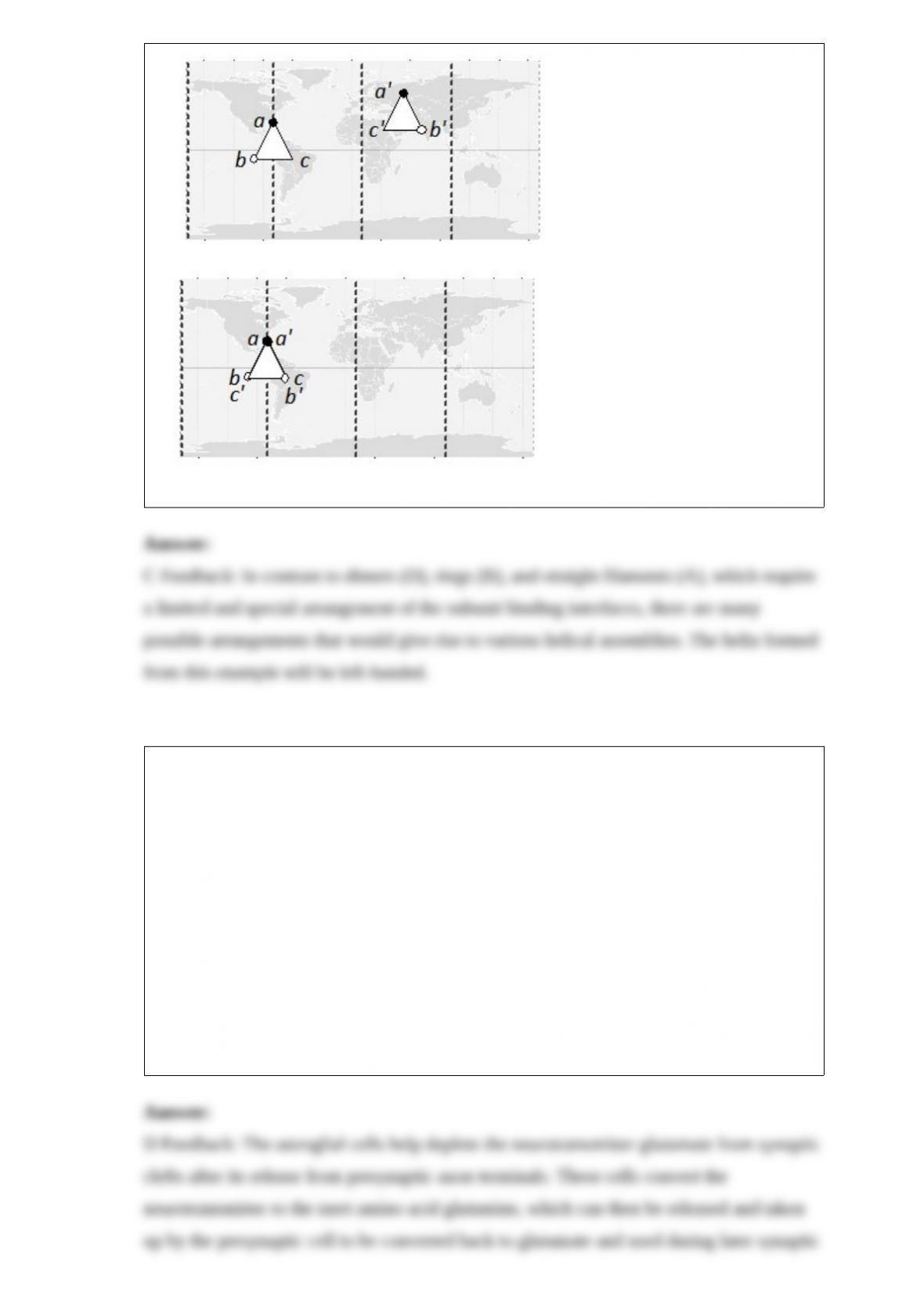
C.
D.
World map from Wikipedia.com, Public Domain
Astroglial cells in the brain can actively import the amino acid glutamate from the
synaptic cleft, convert it to the amino acid glutamine, and release the glutamine into the
cleft to be subsequently taken up by the presynaptic neurons. The neurons then convert
it back to glutamate. Why is this function of glial cells important?
A.Because it competes with and replaces the direct uptake of glutamate by the neurons
and thus regulates neuronal function.
B.Because neurons cannot produce the amino acids glutamine and glutamate and rely
on the glial cells for their supply.
C.Because glutamate cannot be taken up directly by the neurons.
D.Because glutamate is an excitatory neurotransmitter and should be cleared from the
synaptic cleft rapidly after its release.
E.Because glutamate import through glutamate-Na+ symporters in the glial cells is
required for the maintenance of Na+ concentration in the synaptic cleft.
After the first and before the second chemical step of RNA splicing, the intron of the
pre-mRNA___
A.is still covalently connected to the 3′ exon and has an internal branch in the shape of a
lariat.
B.is still covalently connected to the 3′ exon and is linear.
C.is still covalently connected to the 5′ exon and has an internal branch in the shape of a
lariat.
D.is still covalently connected to the 5′ exon and is linear.
E.is still covalently connected to both of its flanking exons and is linear.
DNA glycosylases constitute an enzyme family found in all three domains of life. They
can ___
A.add sugar moieties to DNA.
B.remove sugar moieties from DNA.
C.add a purine or pyrimidine base to DNA.
D.remove a purine or pyrimidine base from DNA.
E.remove a nucleotide from DNA.
Loss-of-function mutations in either imp or yfgL genes in Escherichia coli result in an
increased permeability of the outer membrane to small molecules and therefore confer
antibiotic sensitivity, as the antibiotics can enter the cell more readily. Interestingly,
double mutants, in which both genes are defective, are resistant to antibiotics. Similar to
the wild-type strain, but unlike the single mutants, they can grow on media containing
antibiotics. This is an example of ___
A.synthetic lethality.
B.complementation.
C.synergy.
D.a recessive mutation.
E.None of the above.
Which of the following cytoskeletal filaments are abundant in an animal cell nucleus?
A.Microfilaments
B.Microtubules
C.Septins
D.Intermediate filaments
E.Spectrin filaments
In neurons, the synaptotagmin-1 protein is localized to presynaptic axon terminals.
When activated, it facilitates the fusion of neurotransmitter-containing synaptic vesicles
to the plasma membrane, leading to neurotransmitter release into the synaptic cleft.
Which of the following would you expect to directly activate synaptotagmin-1 for this
function?
A.Binding to Mg2+
B.Binding to Ca2+
C.Binding to phosphatidylcholine
D.Binding to K+
E.Binding to the K+ leak channels
Imagine a transcription regulatory protein (X) that is known to shuttle back and forth
between nucleus and cytosol in an oscillatory pattern. Protein Y is a nuclear protein that
can bind to X to create a dimer that binds to DNA. You have fused protein X to green
fluorescent protein (GFP) and protein Y to blue fluorescent protein (BFP), and have
measured fluorescence resonance energy transfer (FRET) and non-FRET signals in the
nucleus at different time points, as indicated in the following simplified plot. At which
time period (1 or 2) do you think protein X is in the nucleus? BFP can be excited at 440
nm, and emits maximally at 470 nm. GFP is excited at 470 nm and emits maximally at
500 nm.
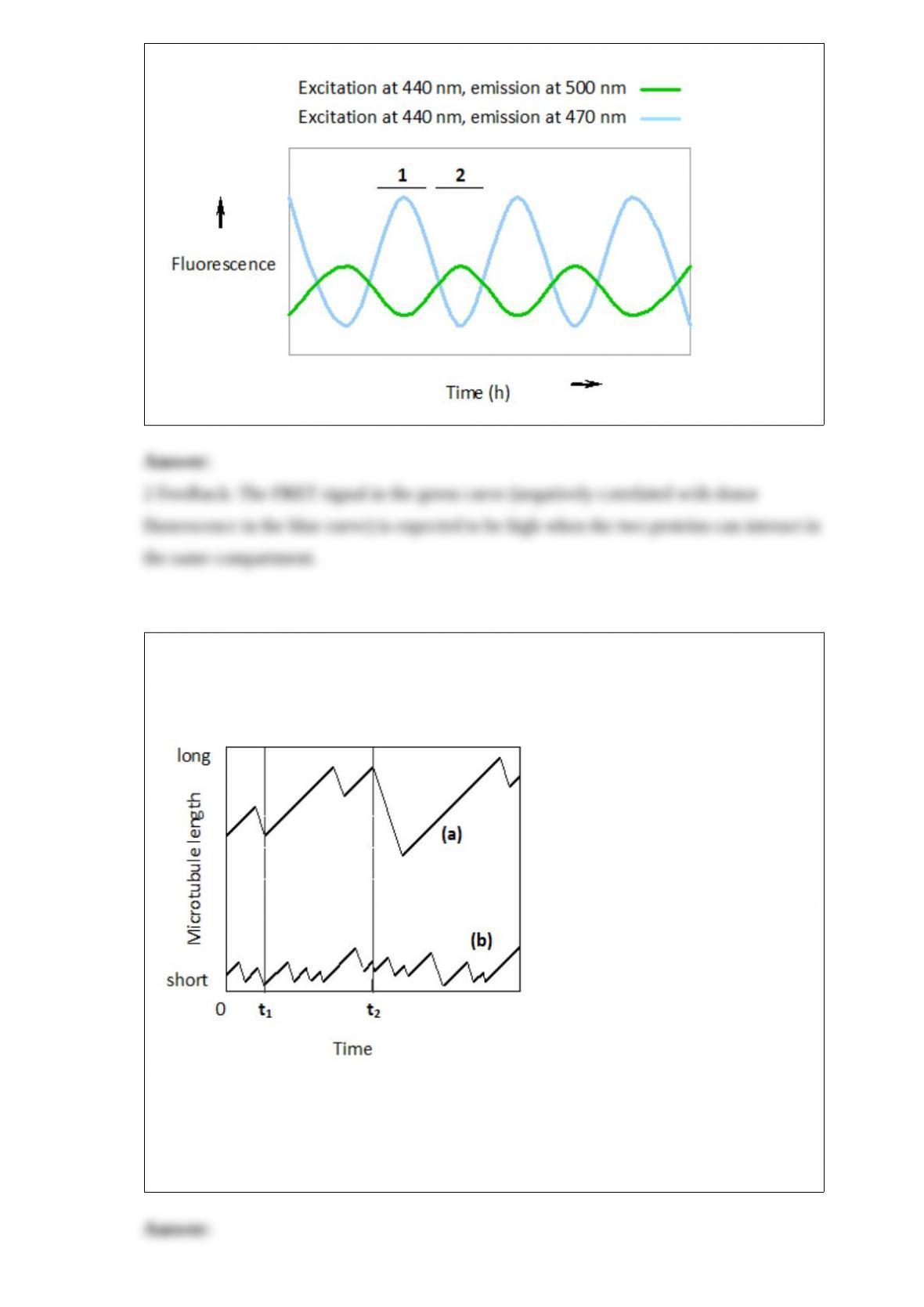
In the following graph that shows changes in the lengths of two microtubules over time,
which time point corresponds to a catastrophe for both microtubules? Which trace
corresponds to a microtubule with greater dynamic instability?
A.t1; trace (a)
B.t1; trace (b)
C.t2; trace (a)
D.t2; trace (b)
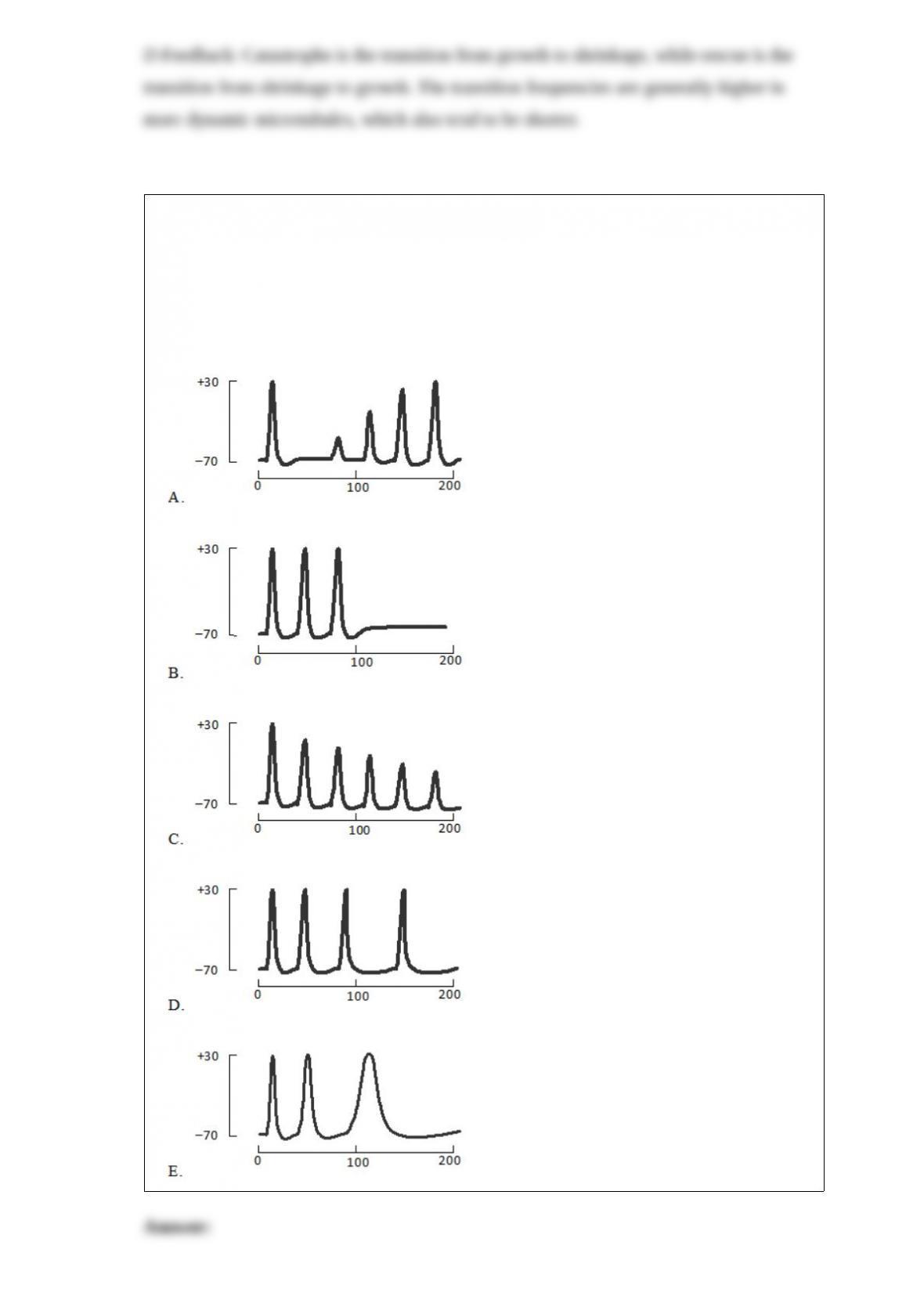
Which of the following better represents the process of adaptation mediated by the
voltage-gated Ca2+ channels and Ca2+-activated K+ channels? The vertical axis in each
graph is the membrane potential in the postsynaptic neuron (in millivolts), while the
horizontal axis is the time of constant stimulation (in milliseconds).
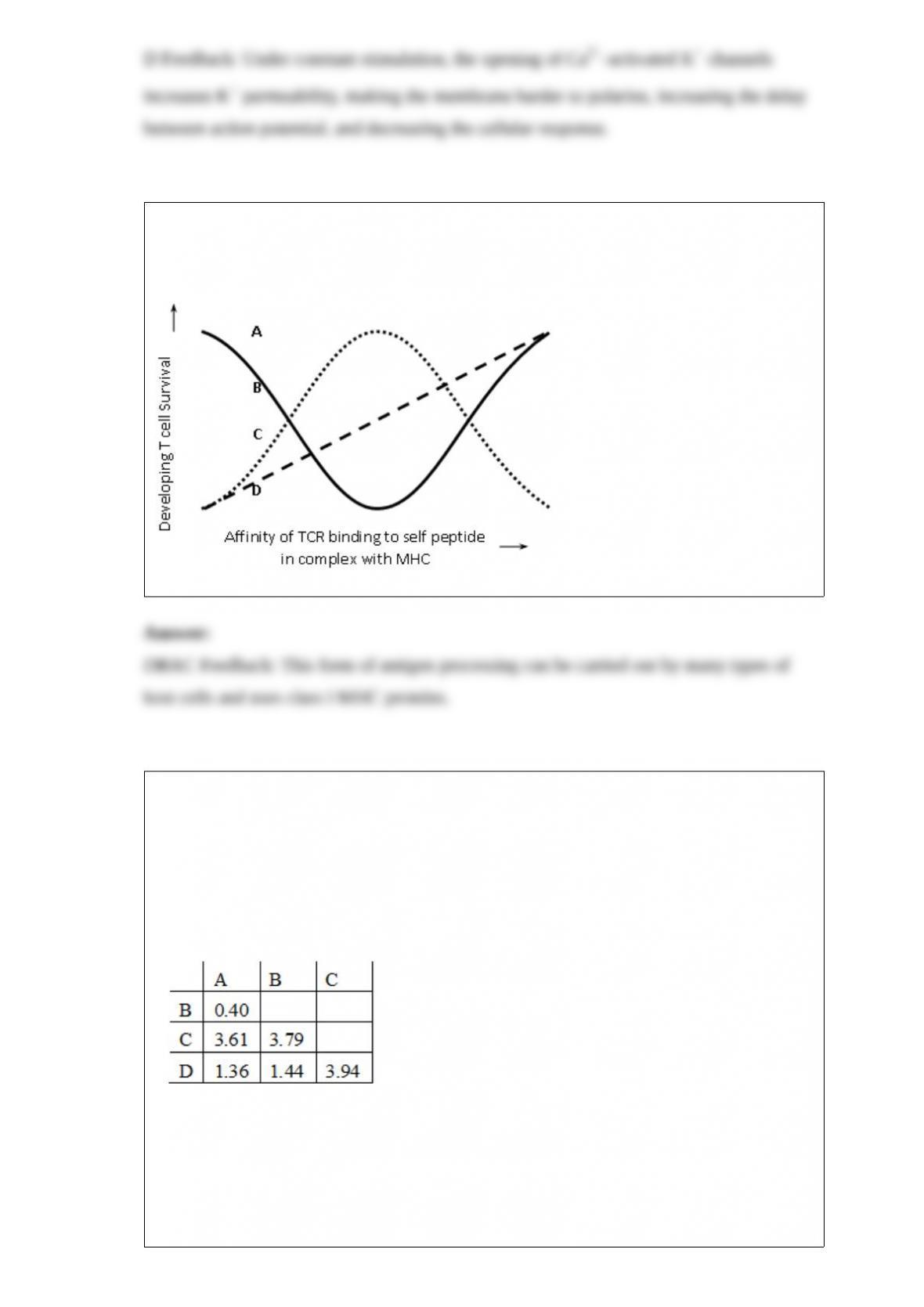
In the following schematic diagram, which curve (A to D) do you think better shows the
qualitative relationship between the affinity of a developing T cell’s TCR for
self-peptide-MHC complexes in the thymus and the survival chance of the cell?
Phylogenetic trees based on nucleotide or amino acid sequences can be constructed
using various algorithms. One simple algorithm is based on a matrix of pairwise genetic
distances (divergences) calculated after multiple alignment of the sequences. Imagine
you have aligned a particular gene from different hominids (humans and the great apes),
and have estimated the normalized number of nucleotide substitutions that have
occurred in this gene in each pair of organisms since their divergence from their last
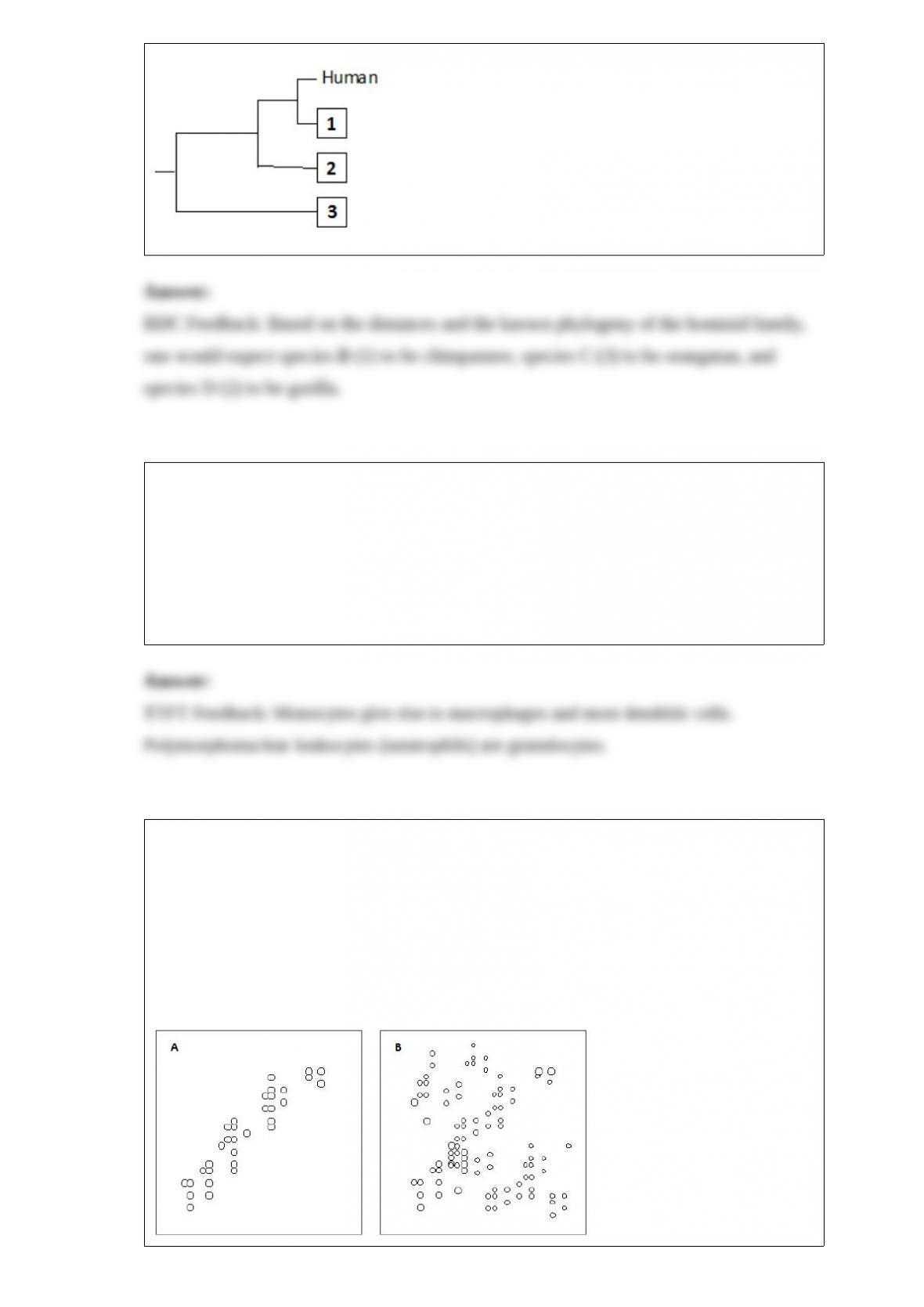
common ancestor. You have obtained the following distance matrix.
The following tree can be constructed from these distances assuming a constant
molecular clock, meaning that the length of each horizontal branch corresponds to
evolutionary time as well as to the relative genetic distance from the common ancestor
that gave rise to that branch. Indicate which one of the species in the matrix (B to D)
corresponds to branches 1 to 3, respectively. Your answer would be a three-letter string
composed of letters B, C, and D only, e.g. DCB.
Indicate true (T) and false (F) statements below regarding blood leukocytes. Your
answer would be a four-letter string composed of letters T and F only, e.g. TTTT.
( )Most white blood cells use blood merely as a transportation medium, and function in
other tissues.
( )Some granulocytes are professional phagocytes.
( )Monocytes typically give rise to macrophages and polymorphonuclear leukocytes.
( )Natural killer cells have a lymphoid origin.
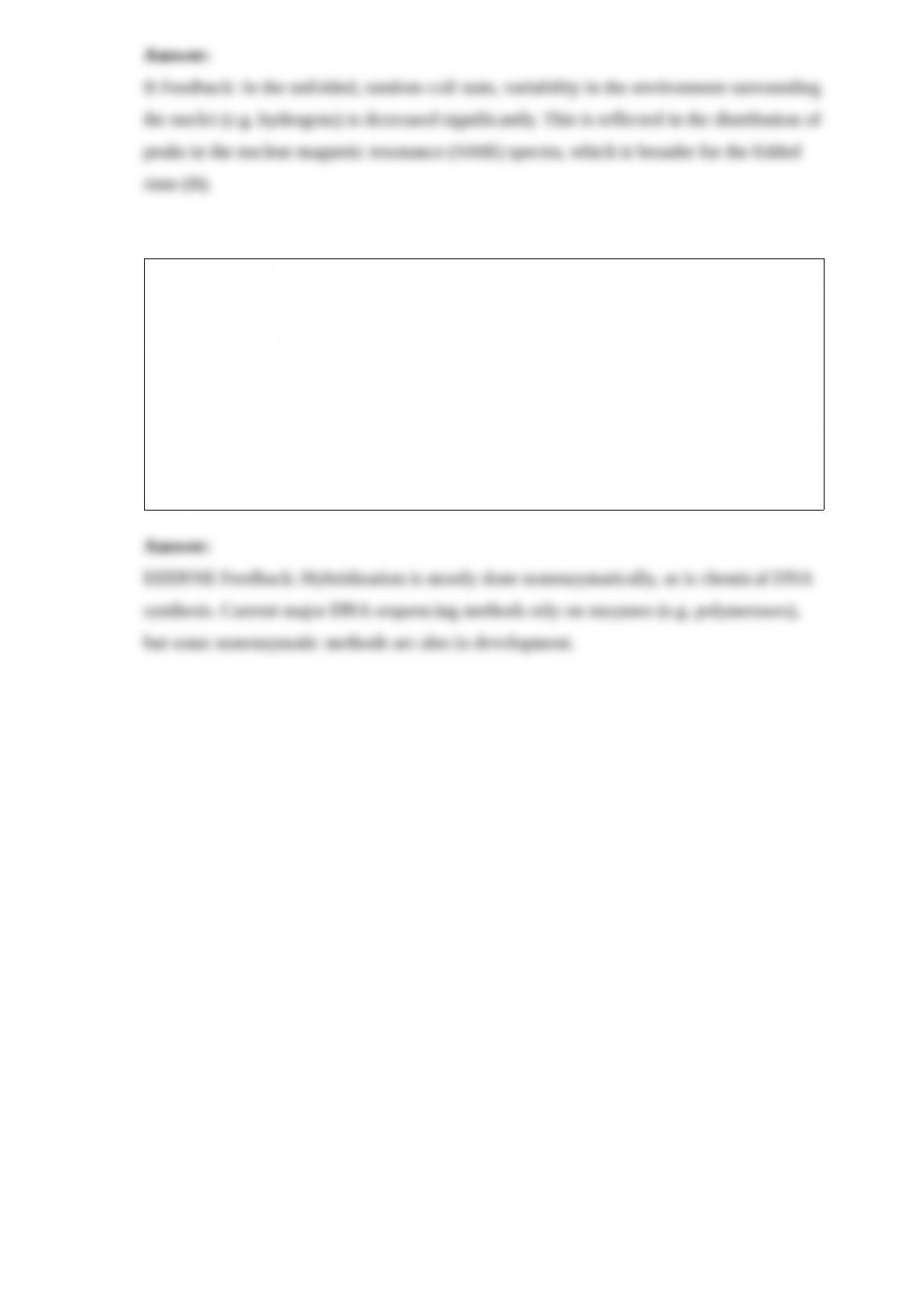
In an unfolded (random coil) protein, amino acid residues are exposed to the solvent
and share more or less the same environment, whereas each residue in a folded protein
has its own unique neighborhood. This fact can be exploited in using NMR to study
protein folding. The two schematic diagrams below represent two-dimensional NMR
spectra for the same protein in either its folded (native) or unfolded state. The chemical
shifts, which depend on the local neighborhood of each atom, are plotted in these
diagrams. Which diagram (A or B) do you think corresponds to the folded protein?
Write down A or B as your answer.
Indicate whether each of the following manipulations or procedures used in current
recombinant DNA technology commonly rely on an enzyme (E) or are done
nonenzymatically (N). Your answer would be a six-letter string composed of letters E
and N only, e.g. EEEEEE.
( )Cleavage of DNA at specific sites
( )DNA ligation
( )DNA cloning
( )Nucleic acid hybridization
( )Synthesis of DNA of any desired specific sequence
( )DNA sequencing