What name is given to the sheet of muscle that helps move air in and out of the lungs?
A) trachea
B) alveolus
C) diaphragm
D) bronchus
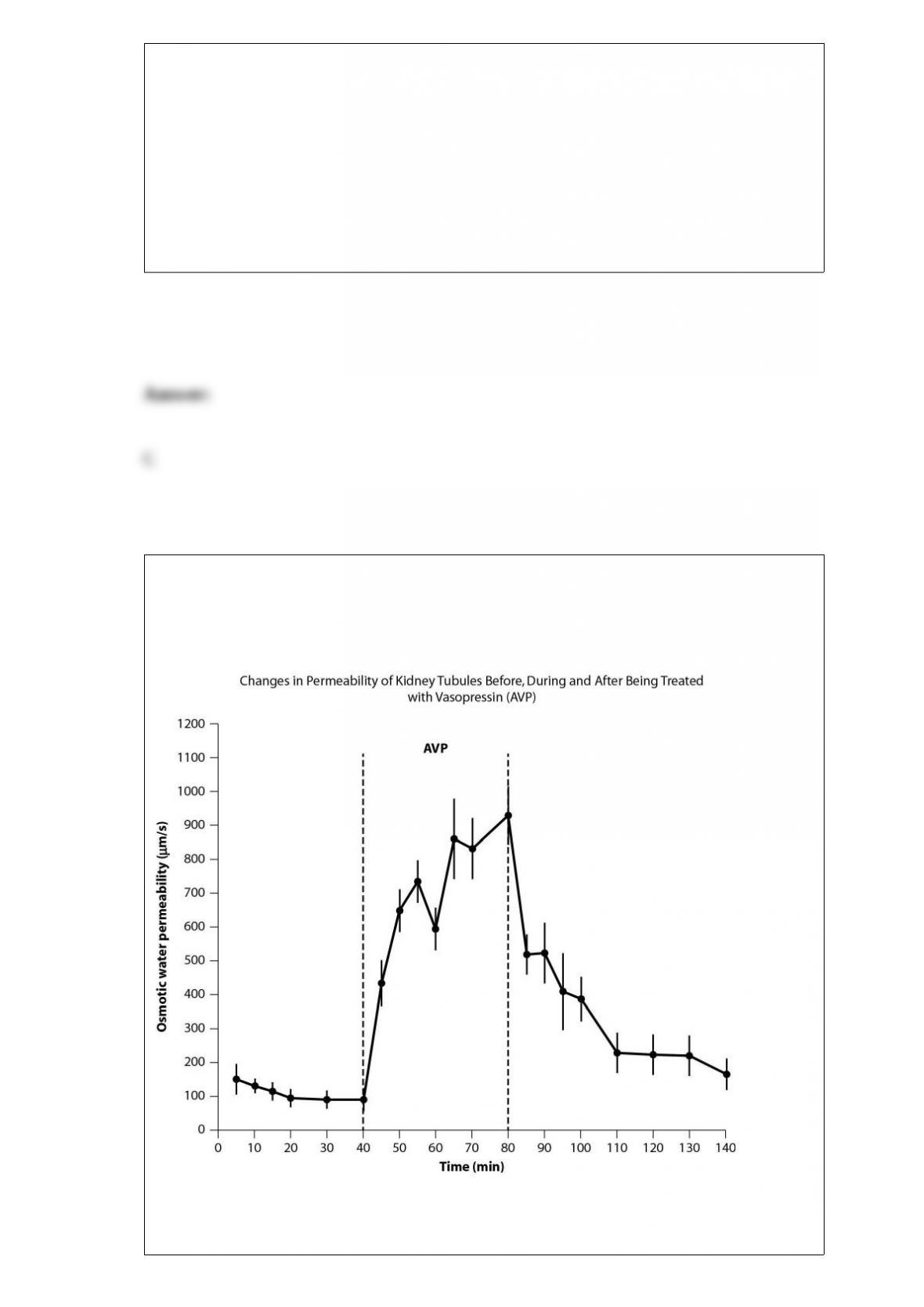
Figure A. Changes in permeability of tubules in the kidney in response to the hormone
vasopressin (AVP), which aids in osmoregulation.
Figure B. Density of aquaporins in kidney tubule cells before, during, and after
administration of vasopressin.
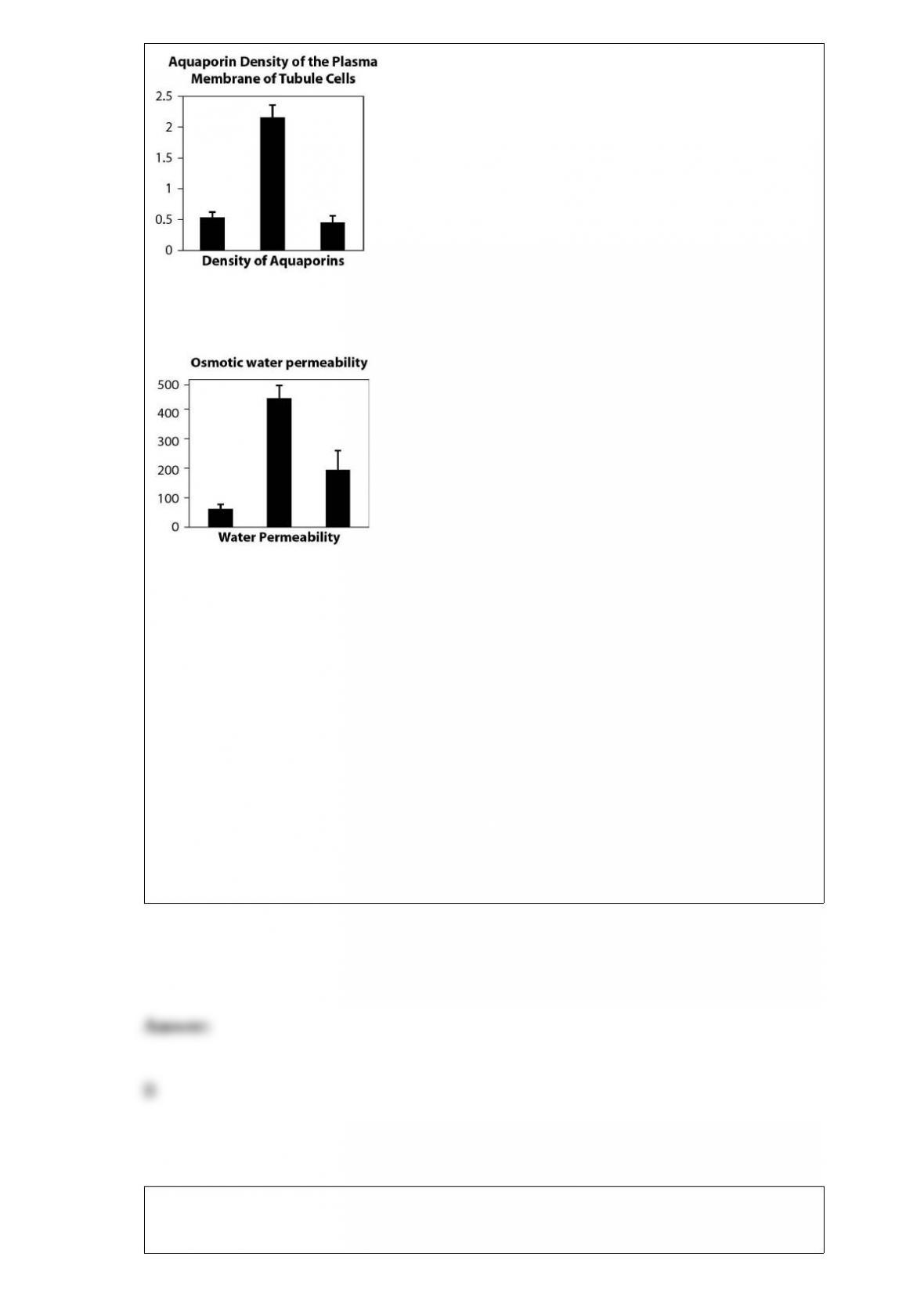
Figure C. Permeability of tissues to water before, during, and after administration of
vasopressin.
The following questions relate to these data indicating how the tubules in the kidney
respond to the administration of the hormone vasopressin.
How do the data in Figure A relate to the data in Figures B and C?
A) Figure B shows the method used to obtain the data in Figure A.
B) Figure C is essentially a summary of the data in Figure A.
C) Figure A is about water movement, and Figures B and C are about presence of
aquaporins.
D) Figure A has data for more than 2 hours, and Figures B and C show data all collected
at the same time.
If a population has a birth rate of 40 individuals per 1,000 per year and a death rate of
30 individuals per 1,000 per year, how will the population change each year? (Assume

that the population is below carrying capacity and that there is no immigration or
emigration.)
A) It will decrease by 70%.
B) It will increase by 1%.
C) It will increase by 5%.
D) It will increase by 100%.
Aquaporins
A) allow water to cross the plasma membrane via facilitated diffusion.
B) allow water to cross the plasma membrane against its concentration gradient.
C) allow for the active transport of water.
D) are found in all cells.
Which of the following statements regarding thermodynamics is false?
A) Thermodynamics is the study of energy transformations that occur in a collection of
matter.
B) A single cell or the planet Earth could be a thermodynamic system.

C) An open system exchanges both energy and matter with its surroundings.
D) An automobile engine is a closed system because it does not exchange energy and
matter with its surroundings.
You are interested in designing an experiment to test the hypothesis that frogs use the
same genetic code as humans. Which of the following experiments would not give you
useful data to test this hypothesis?
A) Purify tRNAs from frog cells and human cells and compare their structures.
B) Insert a human gene into a frog cell and see if the correct protein is produced.
C) Insert a frog gene into a human cell and see if the correct protein is produced.
D) Compare nucleotide sequences of promoters from similar frog and human genes.
Honeybees are able to discriminate between different flowers using
A) color vision.
B) a single lens.
C) eye cups.
D) basilar membranes.

Which of the following statements about nondisjunction is false?
A) Nondisjunction in meiosis can affect autosomes and sex chromosomes.
B) In mammals, extra copies of the Y chromosome are typically inactivated.
C) In general, a single Y chromosome is enough to produce “maleness.”
D) Women with a single X chromosome have Turner syndrome and are sterile.
When a chemical signal from a group of embryonic cells causes a different, nearby
group of cells to embark on a particular developmental course (say, differentiating into
a leg), the interaction between the two groups of cells is called
A) induction.
B) coordinated differentiation.
C) implantation.
D) potentiation.
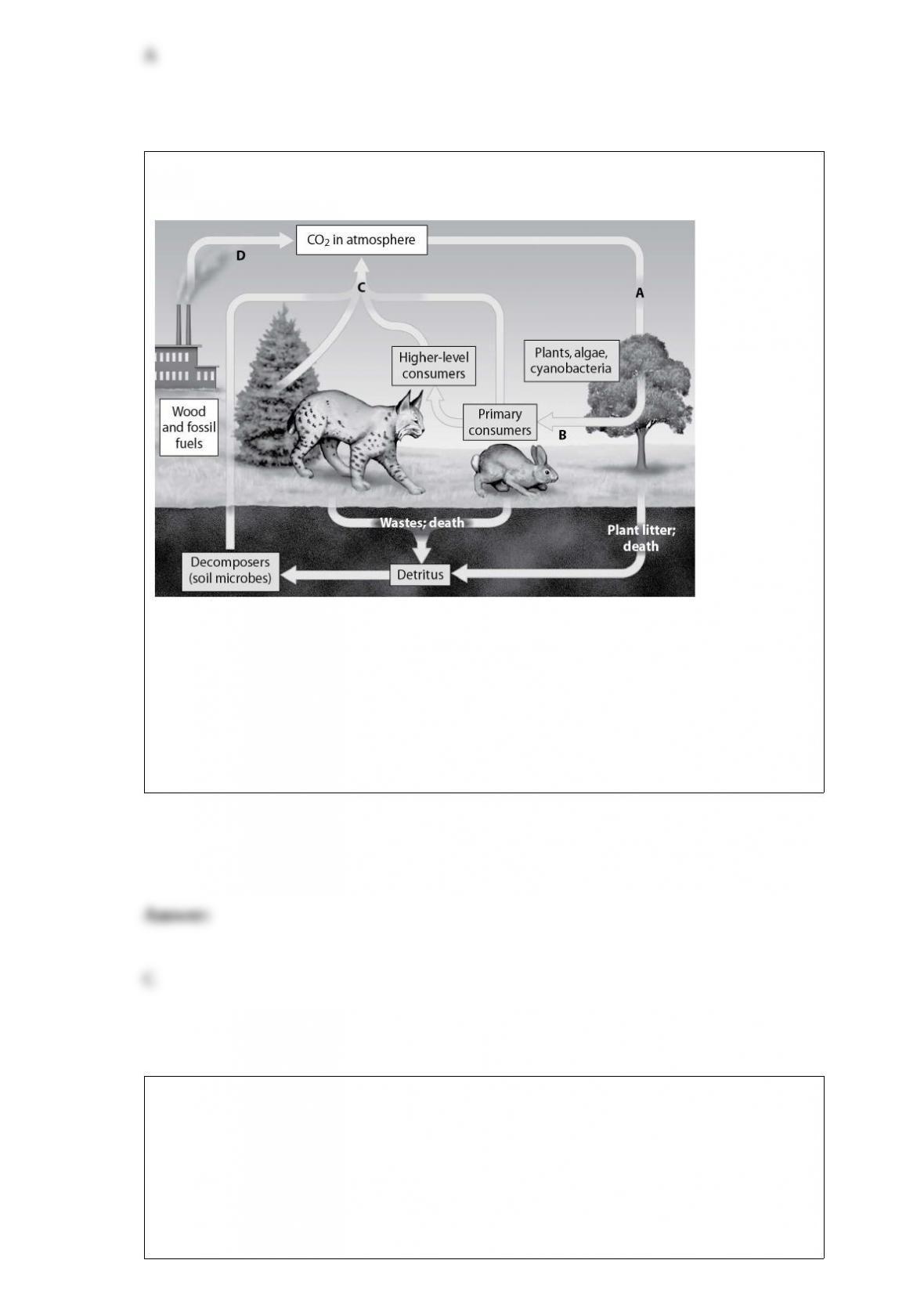
Which arrow shows CO2 released as a product of cellular respiration?
A) arrow A
B) arrow B
C) arrow C
D) arrow D
You hang a microscope slide from a submerged, L-shaped PVC pipe in lake water that
is 2 feet deep. The slide hangs 6 inches below the surface of the water and remains there
for eight weeks. When you remove it and bring it to your lab for observation, you see
that algae, bacteria, and even some fungi have colonized the slide. You determine that
you are looking at a/an
A) biofilm.

B) community of eukaryotes.
C) biological weapon.
D) endotoxin.
Most _________ are located at specific areas where bacteria microbes tend to attack so
that they can readily engulf and destroy the invading bacteria.
A) erythrocytes
B) leukocytes
C) macrophages
D) interferons
Which of the following statements is true?
A) Cnidarians have no true tissues and are filter feeders, while flatworms have true
tissues and a gastrovascular cavity.
B) Nematodes have no true tissues and are filter feeders, while chordates have true
tissues and a gastrovascular cavity.
C) Molluscs have no true tissues and are filter feeders, while cnidarians have true

tissues and a gastrovascular cavity.
D) Sponges have no true tissues and are filter feeders, while cnidarians have true tissues
and a gastrovascular cavity.
Which of the following act(s) mainly to regulate salt and water balance?
A) mineralocorticoids
B) glucocorticoids
C) androgens
D) oxytocin
Which of the following molecules is least likely to be able to pass through a capillary
wall?
A) an enzyme
B) a sodium ion
C) glucose
D) oxygen

Amphibians were diverse and abundant in the lush swamp forests of the ________,
which is sometimes referred to as the age of the amphibians.
A) Cambrian period
B) Pleistocene epoch
C) Mesozoic era
D) Carboniferous period
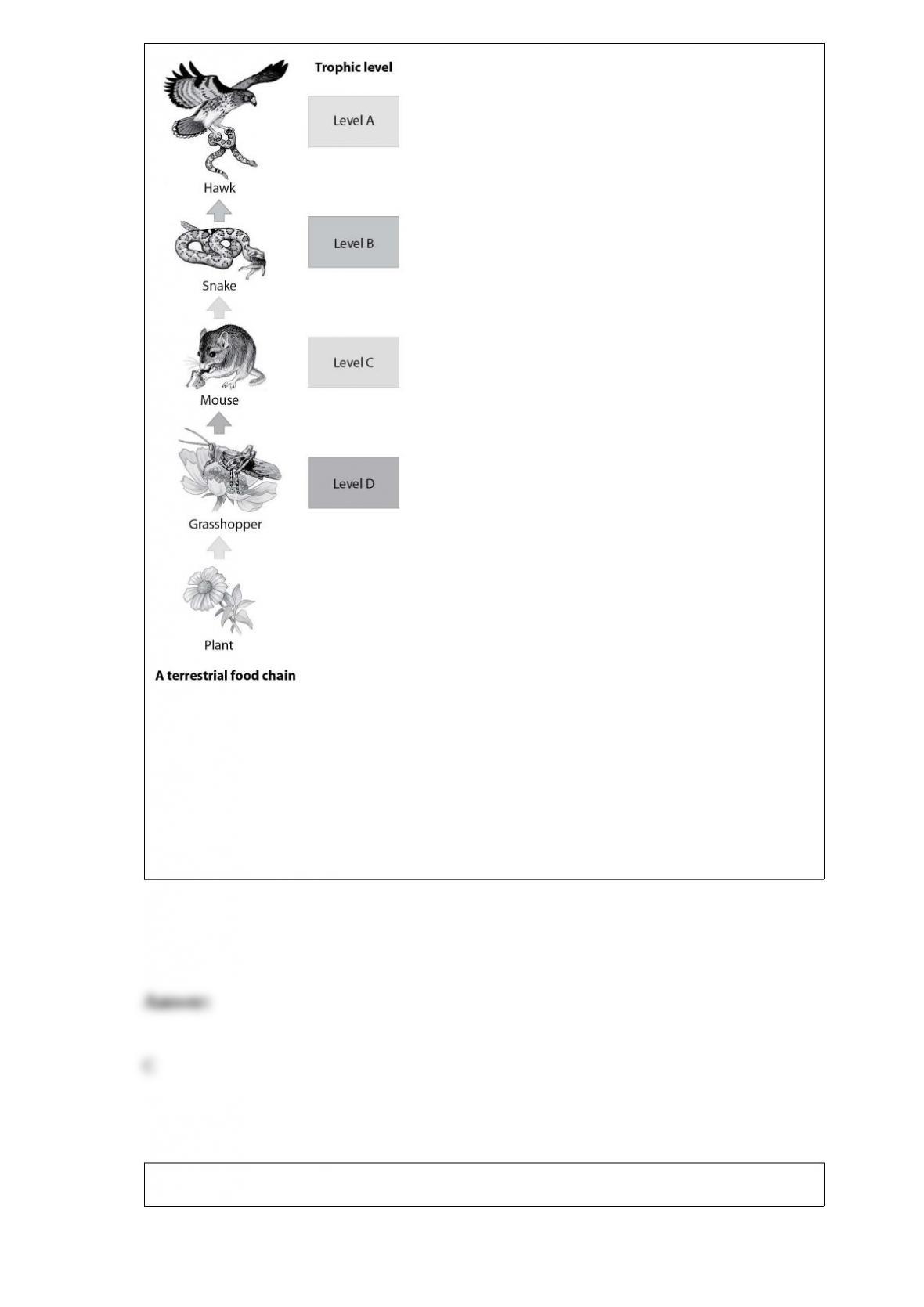
Which trophic level in this food chain represents the secondary consumer?
A) trophic level A
B) trophic level B
C) trophic level C
D) trophic level D
In this drawing of a chloroplast, which structure represents the thylakoid membrane?
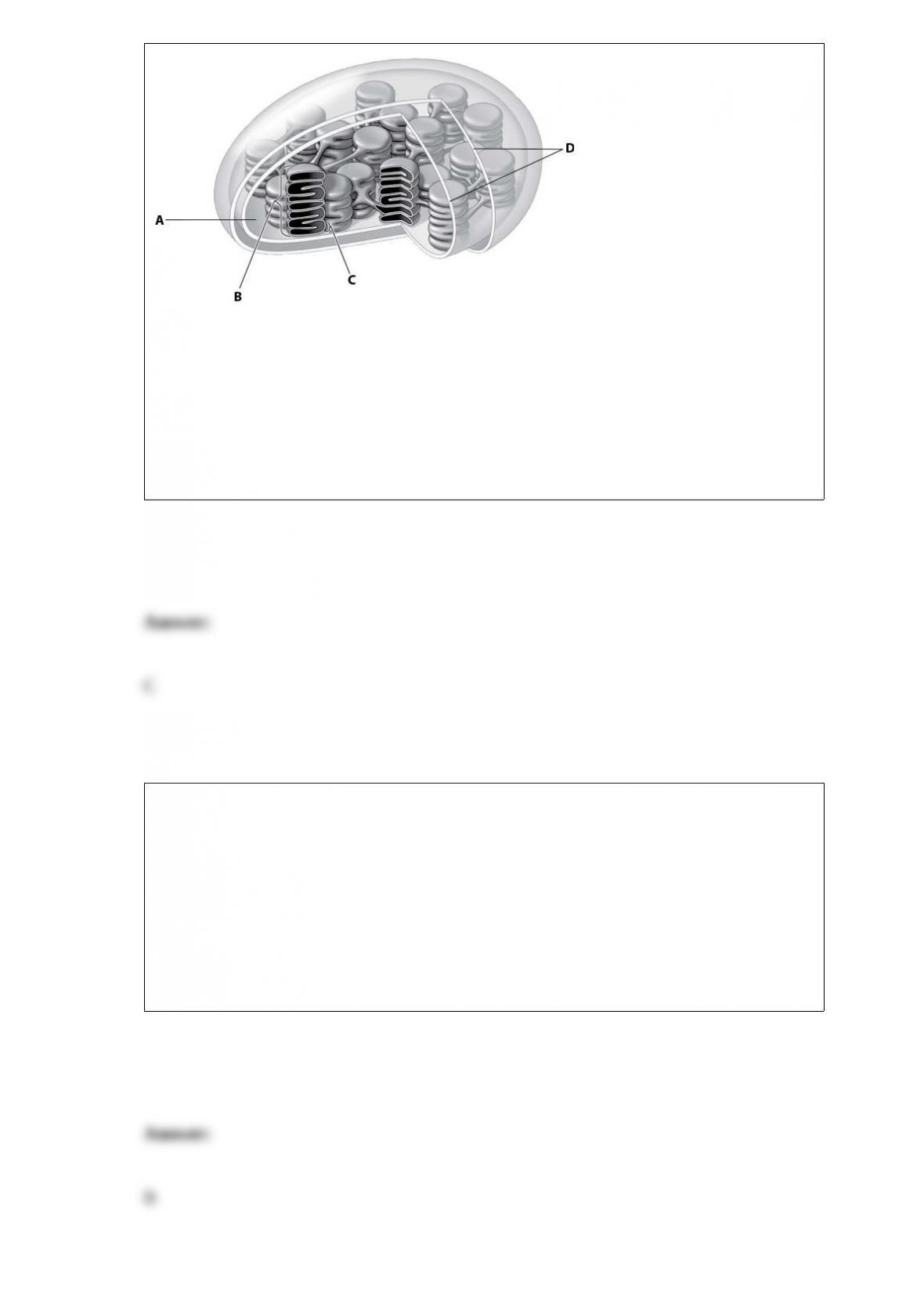
A) structure A
B) structure B
C) structure C
D) structure D
Through digestion, polysaccharides are broken down into
A) fatty acids.
B) monosaccharides.
C) glycerols.
D) amino acids.

By the year 1980, a wolf species (Canis rufus) once common to the southeastern region
of the United States disappeared from all areas except for one small part of eastern
Texas. This is an example of
A) extirpation.
B) extinction.
C) an invasive species.
D) genetic diversity.
Marathon runners are long-distance runners (marathons are races that are 26.2 miles
long). Studies have shown that the muscles of marathon runners contain an abundance
of slow-twitch fibers. Which of the following statements about these fibers is true?
A) Slow-twitch fibers have lots of mitochondria to make ATP aerobically.
B) Slow-twitch fibers have lots of mitochondria to make ATP through fermentation.
C) Slow-twitch fibers have few mitochondria and make ATP aerobically.
D) Slow-twitch fibers have few mitochondria and make ATP through fermentation.
Any gene located on a sex chromosome
A) is called a recessive gene.

B) is called a sex-linked gene.
C) will exhibit pleiotropy.
D) will exhibit codominance.
Strictly speaking, the phrase “like begets like” refers to
A) all forms of reproduction.
B) sexual reproduction only.
C) asexual reproduction only.
D) production of gametes from a premeiotic cell.
Which of the following hormones is released by neurosecretory cells extending from
the hypothalamus?
A) estrogen
B) growth hormone
C) oxytocin
D) calcitonin

During exercise, your cardiac output can increase dramatically in order to meet the
metabolic demands of your tissues. If your heart rate increased to 150 beats per minute
and the volume of blood pumped per beat is 75 mL, what is your cardiac output?
A) 5 L/min
B) 11.25 L/min
C) 11,250 L/min
D) 50,000 L/min
Facelifts are a type of cosmetic surgery that are meant to tighten the skin. In addition to
the skin, what else would you predict is also involved in this type of surgery?
A) loose connective tissue
B) smooth muscle
C) bone
D) simple cuboidal epithelium

After reading the paragraph below, answer the questions that follow.
Fred is a 24-year-old college student whose father was just diagnosed with
cardiovascular disease. Since he knows that these problems often run in families, Fred
has asked his doctor to recommend a plan so that he can minimize his risk of
developing similar problems. The following are a few of the doctor’s recommendations:
quit smoking, exercise for at least 30 minutes per day, reduce saturated fats and trans
fats in his diet, and increase the number of fruits and vegetables in his diet.
Fred explained to his family how the doctor’s advice would help prevent cardiovascular
disease, but he made a mistake in his explanation. Which of the following statements is
false?
A) A diet high in saturated fats is associated with a higher risk of heart disease.
B) A diet high in saturated fats tends to increase LDL levels.
C) Exercise increases the body’s production of LDL.
D) Smoking will increase the body’s production of LDL.
________ cells in leaves are specialized for photosynthesis.
A) Companion
B) Mesophyll
C) Sclerenchyma
D) Tracheid

The term for a close association between organisms of two or more species is
A) symbiosis.
B) interdependence.
C) associative living.
D) colonialism.
Which of the following statements correctly describes the alternation of generations in a
plant life cycle?
A) Diploid sporophytes that produce spores by meiosis alternate with haploid
gametophytes that produce gametes by mitosis.
B) Diploid sporophytes that produce gametes by meiosis alternate with haploid
sporophytes that produce gametes by mitosis.
C) Diploid gametophytes that produce spores by mitosis alternate with haploid
sporophytes that produce gametes by meiosis.
D) Diploid gametophytes that produce gametes by meiosis alternate with haploid
sporophytes that produce spores by mitosis.

After reading the paragraph below, answer the questions that follow.
While DNA microarrays can be used to determine whether or not a gene is expressed in
a cell, quantitative polymerase chain reaction (qPCR) can be used to measure the extent
of gene expression in cells and tissues. To perform qPCR, mRNA is extracted from cells
and reverse transcribed to complementary DNA (cDNA). Using fluorescent DNA
molecules that recognize specific gene sequences and DNA polymerase, copies of the
gene sequence of interest are made. After the copies are made, a fluorescent detector
measures the intensity of the fluorescent signal, which is proportional to the number of
mRNA transcripts in the cell and corresponds to the level of gene expression in the cell.
In a muscle cell, the contractile protein myosin is present in larger quantities than the
structural protein actin. Which of the following qPCR results would support this
observation?
A) The fluorescent signal for myosin is higher than that of actin.
B) The fluorescent signal for actin is higher than that of myosin.
C) The fluorescent signals for myosin and actin are equal.
D) The fluorescent signal for myosin is large and is zero for actin.
Plants have specific temperatures (or temperature ranges) that allow for maximum
growth. A process by which heat from ________ is transferred from the sun to leaves
helps give plants these ideal temperatures.
A) convection
B) evaporation
C) conduction

D) radiation
You are looking at an unknown cell under a microscope that has 22 chromosomes plus
two X chromosomes. Which of the following is the most likely identity of this cell?
A) a skin cell from a human female
B) an egg from a human female
C) an epithelial cell from a male chicken
D) an eye cell from a female grasshopper
A child dies following a series of chronic bacterial infections. At the autopsy, the
physicians are startled to see that the child’s white blood cells are loaded with vacuoles
containing intact bacteria. Which of the following explanations could account for this
finding?
A) A defect in the Golgi apparatus prevented the cells from processing and excreting
the bacteria.
B) A defect in the rough endoplasmic reticulum prevented the synthesis of the
antibodies (defensive proteins) that would have inactivated the bacteria.
C) A defect in the cell walls of the white blood cells permitted bacteria to enter the
cells.

D) A defect in the lysosomes of the white blood cells prevented the cells from
destroying engulfed bacteria.
Which of the following is a coenzyme?
A) zinc
B) vitamin B6
C) iron
D) iodine