In contrast to a primary immune response, a secondary immune response generally …
A.has a longer lag period.
B.is stronger.
C.involves induction of effector cells to become memory cells.
D.takes longer to develop.
E.All of the above.
The compound GDPNP is a GTP analog that can bind to GTPases in the same way as
GTP. However, unlike GTP, it cannot undergo the hydrolysis reaction that normally
releases Pi. Therefore, ___
A.GDPNP and GDP bind to the same conformation of a GTPase.
B.a GDPNP-bound Ras is constitutively active.
C.a GDPNP-bound EF-Tu cannot bind to tRNA molecules.
D.binding of GDPNP to EF-Tu allows multiple cycles of tRNA binding and release
without the use of free energy.
E.None of the above.
In the presence of ATP in a flagellum, an axonemal dynein that is interacting through its
tail with the A microtubule of a peripheral doublet can push this doublet toward the …
(1) of the flagellum, but due to the presence of linking proteins such as …(2), this force
is converted into a bending motion.
A.(1) tip; (2) nexin
B.(1) base; (2) nexin
C.(1) tip; (2) nebulin
D.(1) base; (2) nebulin
E.(1) tip; (2) tau
Which of the following pathways does NOT directly deliver materials to lysosomes?
A.Endocytosis
B.Exocytosis
C.Phagocytosis
D.Autophagy
E.Macropinocytosis
How are natural killer (NK) cells different from cytotoxic T (TC) cells?
A.NK cells induce apoptosis in their target cells, whereas TC cells are professional
phagocytes.
B.NK cells kill virus-infected cells, whereas TC cells kill cancerous cells.
C.NK cells kill cells with a high level of class I MHC protein expression, whereas
killing by TC cells requires low expression levels.
D.NK cells respond quickly to a virus infection, whereas the activation of TC cells to
become cytotoxic is a slow process.
E.NK cells are normally abundant in the tissue even before infection, whereas TC cells
are mostly in the bloodstream.
Indicate whether each of the following, when active, tends to activate (A) or inactivate
(I) M-Cdks. Your answer would be a four-letter string composed of letters A and I only,
e.g. IIAI.
( )M-Cdk
( )Cdc20-APC/C
( )Cdh1-APC/C
( )Sic1
Aquaporin has a pair of key asparagine residues located on the wall almost halfway
through its pore. These residues simultaneously bind to the oxygen atom of a passing
water molecule, rendering it unavailable for hydrogen-bonding. As a result, ___
A.the channel can conduct negatively charged (but not positively charged) ions.
B.the channel can conduct glycerol as well as water.
C.the channel cannot conduct glycerol.
D.the channel cannot conduct protons.
E.the channel cannot conduct chloride ions.
How do multienzyme complexes in the cell, such as the fatty acid synthase, enhance
reaction rates?
A.By increasing the diffusion rate of their substrate in the cell
B.By allowing the channeling of pathway intermediates from one enzyme to the next
C.By limiting the diffusion of the substrates in membrane-bound compartments
D.By increasing the intrinsic rate of catalysis for individual enzymes
E.All of the above
Radial glial cells are stem cell-like neural progenitors in the adult mammalian brain and
can give rise to a number of differentiated neural cell types. Knowing that quiescent
radial glial cells uniquely express the cytoskeletal protein nestin, a researcher
performed clonal analysis in mice to study the characteristics of radial glial cells and
their descendants. She created transgenic mice expressing Cre recombinase under the
control of the nestin regulatory sequences. She also created transgenic mice that carry
the gene encoding the green fluorescent protein (GFP) under the control of a ubiquitous
promoter. The GFP-encoding gene, however, is inactive unless recombination by Cre
removes a blocking sequence between the promoter and the gene. After mating these
mice, she obtains adult mice carrying both transgenes and injects them with a low dose
of tamoxifen to activate Cre sporadically. After a month, she uses microscopy to study
the cells of the brain hippocampus. She discovers that most neural cell types in the
tissue, including neurons, develop from the radial glial cells. Oligodendrocytes,
however, appear to derive from another stem-cell population. Based on her conclusions,
which cells do you think expressed GFP after a month: neurons (N) or oligodendrocytes
(O)? If a single isolated GFP-expressing cell is observed in the tissue, would you expect
it to be a differentiated cell (D) or a radial glial cell (R)? If a larger clone is observed to
be entirely made of radial glial cells, would a symmetric (S) or asymmetric (A) model
be favored for the strategy of cell divisions in these cells? Write down your answer as a
three-letter string, e.g. NDA.
Which of the following is correct regarding the electrical properties of cellular
membranes?
A.Setting up (or changing) the membrane potential requires changing the bulk
concentrations of the ions on the two sides of the membrane.
B.The resting potential in most animal cells is between 20 mV and 120 mV (positive
inside).
C.If the membrane is impermeable to an ion, the membrane potential approaches the
equilibrium potential for that ion.
D.The resting potential decays immediately following the inhibition of the Na+-K+
pump by a drug.
E.None of the above.
Which of the following nucleotides is hydrolyzed in both transcription and in
translation elongation?
A.ATP
B.GTP
C.TTP
D.UTP
E.CTP
Which of the following would most reliably suggest that a genomic sequence is
functionally important?
A.The presence of a long open reading frame in the sequence
B.Multispecies conservation of the sequence
C.Low copy number variation of the sequence
D.The presence of active chromatin marks over the sequence
Which of the following features is common between the bacterial and eukaryotic
ribosomes in translation initiation?
A.They both use an initiator tRNA that carries formylmethionine.
B.They both bind to the 5′ end of the mRNA and move forward to find the start codon.
C.They both recognize the start codon by interacting with the Shine-Dalgarno sequence.
D.They both interact with various translation initiation factors.
E.All of the above.
All nuclear receptors …
A.are cytosolic proteins that enter the nucleus upon ligand binding.
B.have ligand-binding and DNA-binding domains, and can directly bind to DNA.
C.are transcriptional activators when bound to their ligand.
D.bind to steroid hormones.
E.are transcriptional repressors in the absence of their ligand.
You have found a strain of Escherichia coli that has an unusually short doubling time of
only 15 minutes, despite the fact that its complete DNA replication should take almost
35 minutes. You also find that there is only one replication origin on its chromosome
from which two forks originate, just like the normal process described for E. coli.
However, you discover that the origin of replication in this strain has a significantly
shorter “refractory period,” resulting in the reactivation of the origin before the previous
round of replication is over. Based on this model, if you examine the chromosomes of
this strain (under conditions of fast growth), how many replication forks would you
expect to observe per chromosome on average?
A.Two, just like the wild-type strain
B.Four
C.Six
D.Eight
E.Ten
When a promoter p is not saturated with bound regulatory protein A, doubling the total
concentration of A would ___
A.increase steady-state [A:p] exactly twofold.
B.increase steady-state [A:p] over twofold.
C.increase steady-state [A:p] less than twofold.
D.decrease steady-state [A:p] approximately twofold.
E. decrease steady-state [A:p] over twofold.
Comparing the bacterial CRISPR system and the eukaryotic RNAi mediated by
siRNAs, indicate whether each of the following CRISPR components is most analogous
to Argonaute (A), siRNA (S), or target mRNA (T) in the RNAi pathway. Your answer
would be a three-letter string composed of letter A, S, and T only.
( )Cas
( )Viral DNA
( )crRNA
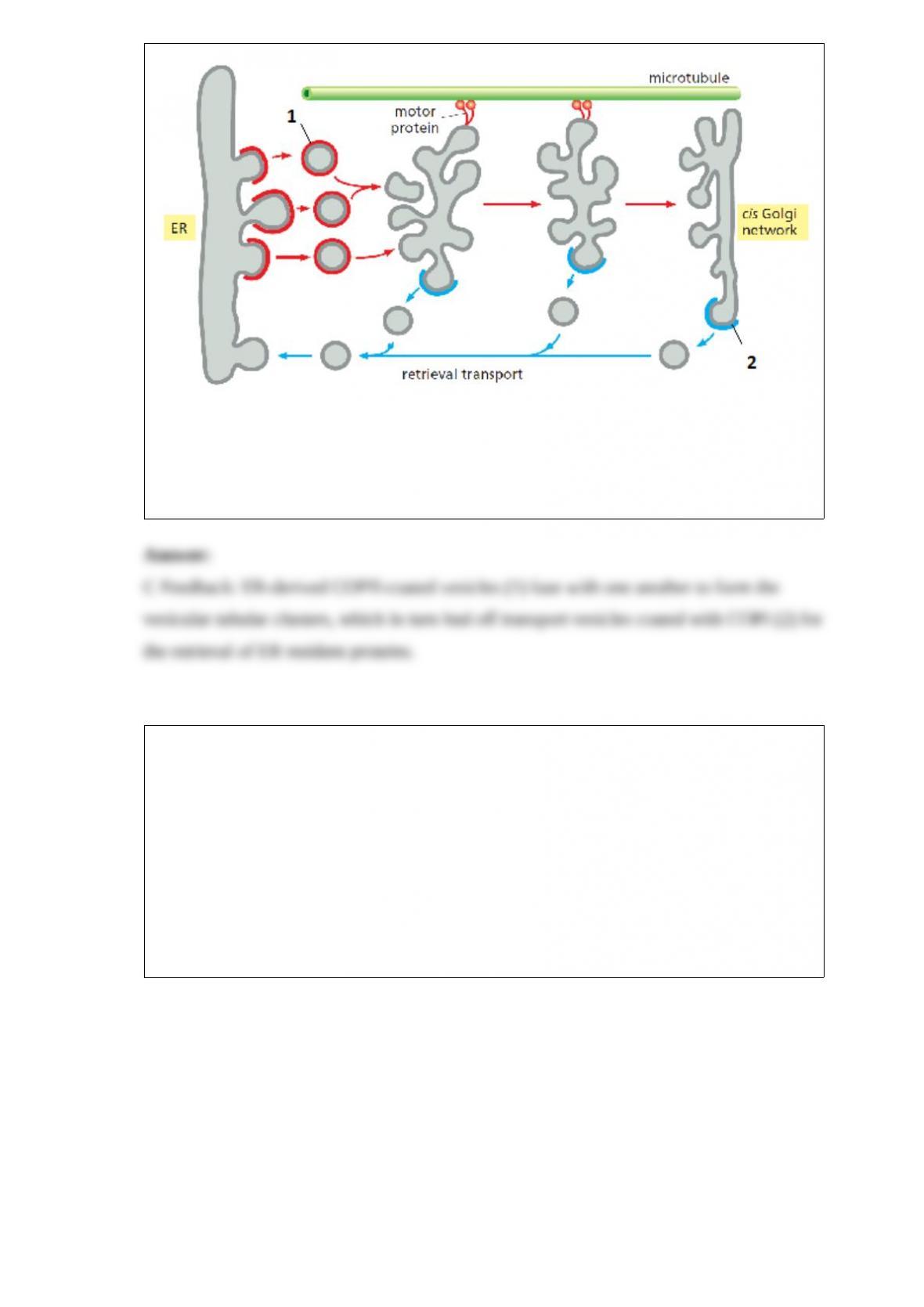
In the following schematic diagram depicting the formation of vesicular tubular clusters
between the ER and the CGN, what major coat proteins are indicated by 1 and 2,
respectively?
A.COPI; COPII
B.COPI; clathrin
C.COPII; COPI
D.COPII; clathrin
E.Clathrin; COPII
A researcher has coated the wells in a multiwell plate with human plasma fibronectin.
She introduces integrin-expressing cells into these wells in the presence of different
concentrations of a synthetic peptide. She then washes the wells to remove unbound
cells and counts the number of cells that remain attached to each well. The results of her
experiment are presented in the following schematic graph. The synthetic peptide
sequences used in these experiments were GRGDSPC (1) or GGDRSLN (2). Which
one of these peptides (1 or 2) would you expect to correspond to curve a in the graph?
Which curve (a or b) would you expect if a synthetic peptide with the sequence
GDGRSPC was used? C is cysteine, D is aspartic acid, G is glycine, L is leucine, N is
asparagine, P is proline, R is arginine, and S is serine.
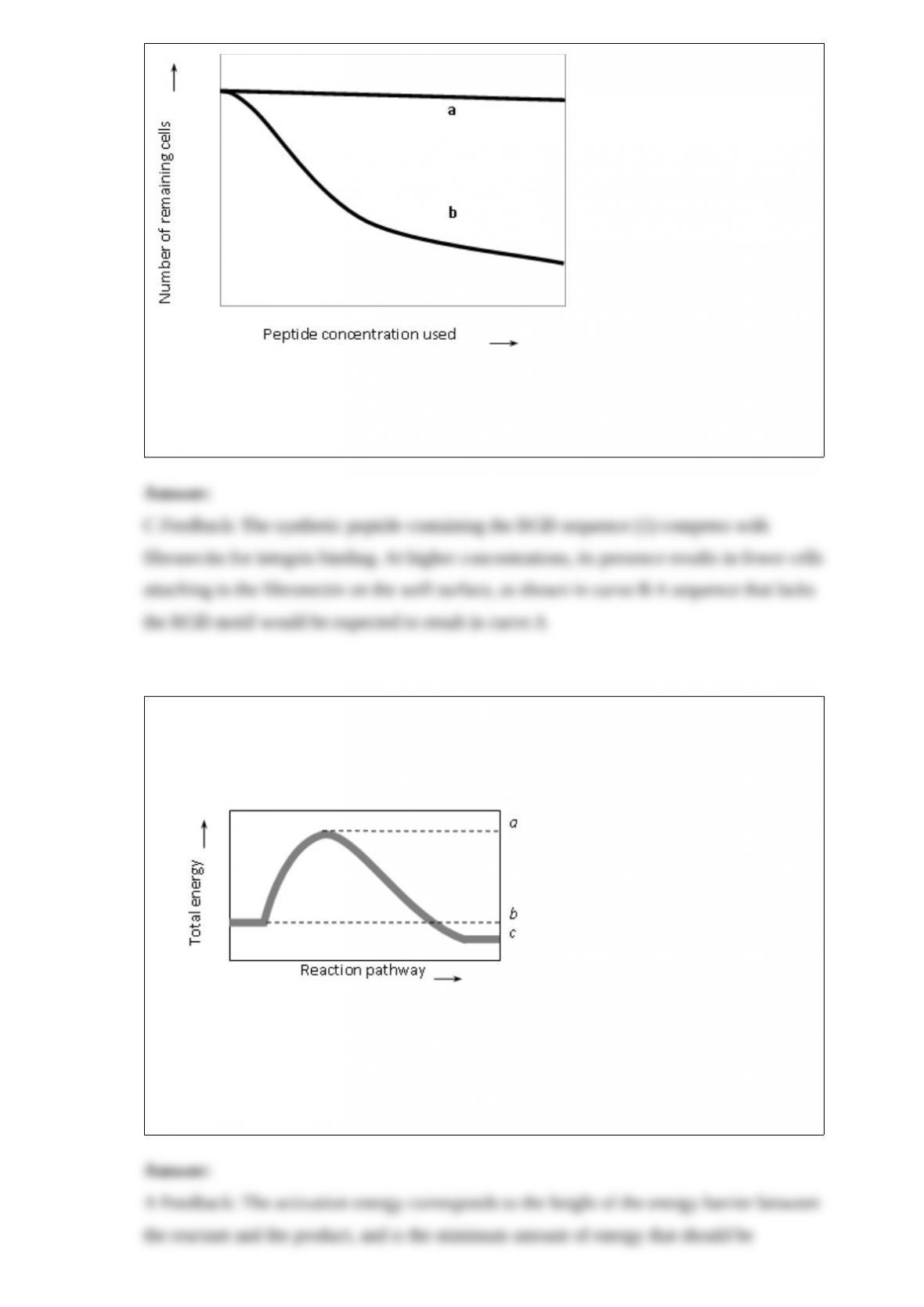
A.1; a
B.1; b
C.2; a
D.2; b
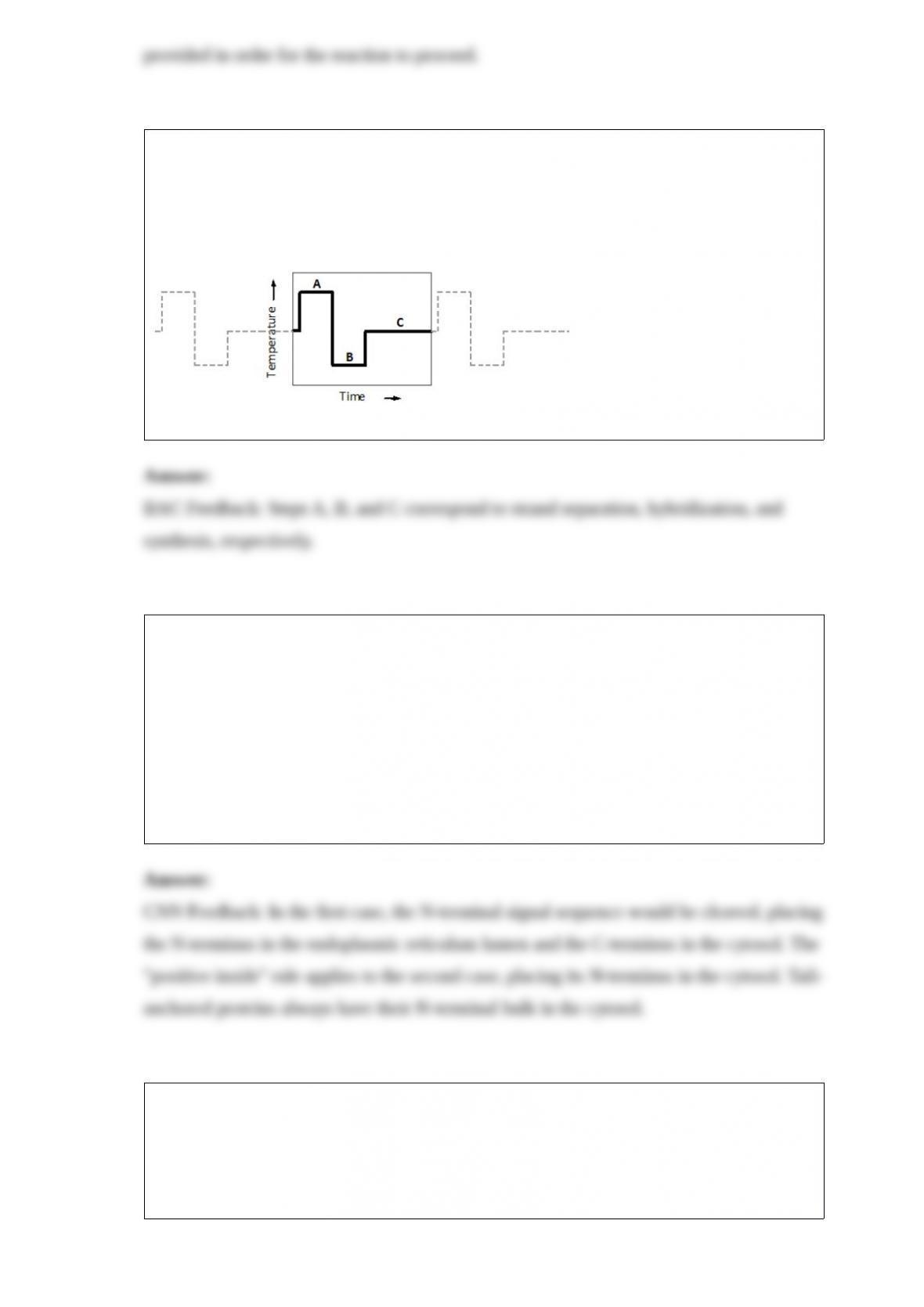
In the following diagram showing the reaction pathway for a simple single-substrate
enzymatic reaction, which of the quantities corresponds to the activation energy of the
forward reaction?
A.(a – b)
B.(a + b)
C.(a – c)
D.(a + c)
E.(b – c)
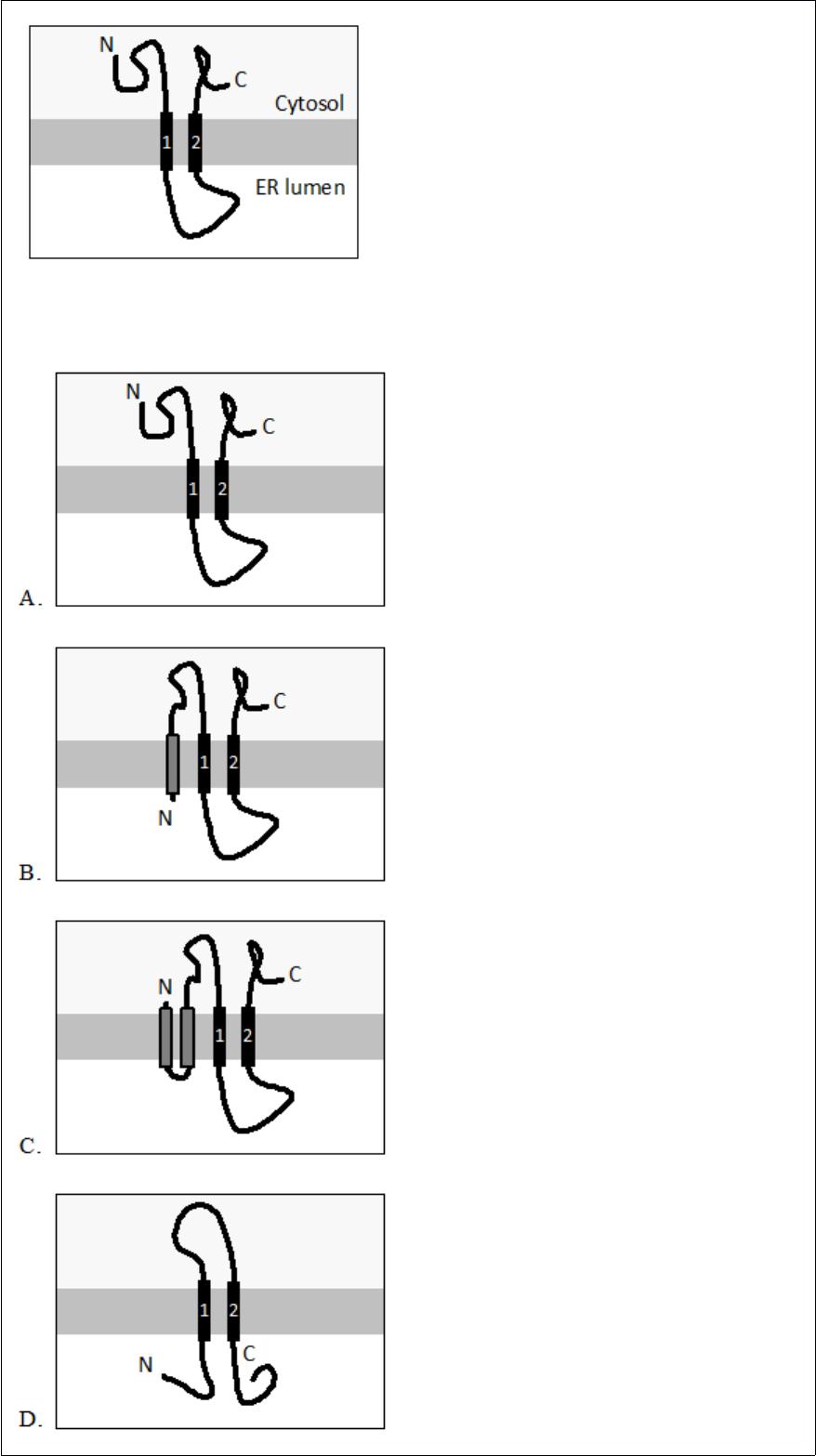
The following schematic graph shows temperature change over time in a cycle of a
PCR assay. Which steps (A to C) in the cycle correspond to hybridization (annealing),
strand separation (denaturation), and DNA synthesis (extension), respectively? Your
answer would be a three-letter string composed of letters A to C, e.g. ACB.
Indicate whether the C-terminus (C) or the N-terminus (N) of each of the following
proteins is expected to be located in the cytosol upon membrane integration of the
protein. Your answer would be a three-letter string composed of letters C and N only,
e.g. CCC.
( )A single-pass transmembrane protein that has one N-terminal signal sequence and
one internal stop-transfer signal
( )A single-pass transmembrane protein that has one internal signal sequence that is
preceded by a patch of positively charged residues
( )An ER tail-anchored protein
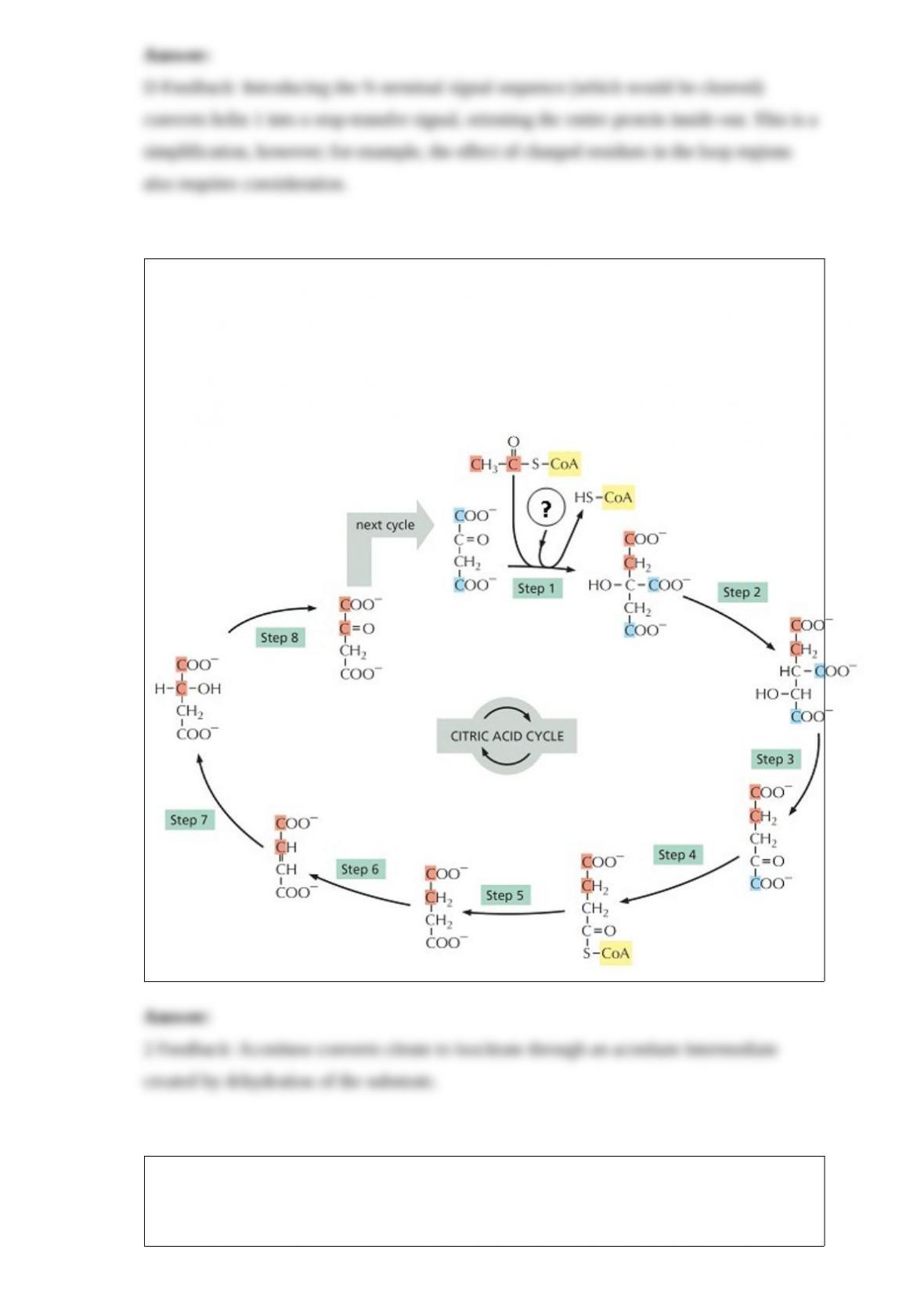
Consider a transmembrane protein with the following topology that has an internal
signal sequence (helix 1). If you fuse a canonical ER signal sequence at the N-terminus
of this protein, how would you expect the topology to change? The ER lumen is at the
bottom in all drawings. For simplicity, assume that the effect of charged residues
flanking the transmembrane helices is negligible in this case.
Aconitase catalyzes an isomerization reaction in the citric acid cycle shown above, in
which H2O is first removed and then added back to the substrate. Which step is
catalyzed by this enzyme? Write down the step number as your answer, e.g. 5
The citric acid cycle is summarized in the following figure. Answer the following
question(s) about this cycle.
Indicate true (T) and false (F) statements below regarding bacterial, viral, and
eukaryotic pathogens. Your answer would be a four-letter string composed of letters T
and F only, e.g. TTTT.
( )Compared to bacteria and viruses, eukaryotic parasites have simpler life cycles.
( )Most important pathogenic fungi show dimorphism, growing as either yeast or mold.
( )Protozoan parasites often require more than one host to complete their life cycle.
( )Plasmodium falciparum can invade human liver and red blood cells, as well as cells
lining the gut in female Anopheles mosquitoes.
Reference: Chromosome Movement in Anaphase
To study chromosome movement during anaphase in mammals, you have injected
fluorescently labeled tubulin subunits into cells such that microtubules can be seen
under a fluorescence microscope. You then use a relatively strong laser beam to bleach
the fluorescent dyes in a limited area of a metaphase cell, as indicated in the schematic
diagram below, and follow the progression of mitosis under the microscope by
time-lapse imaging. You then use the images to measure the change in distance between
various components, and plot the results in the graph below. Answer the following
question(s) based on these results.
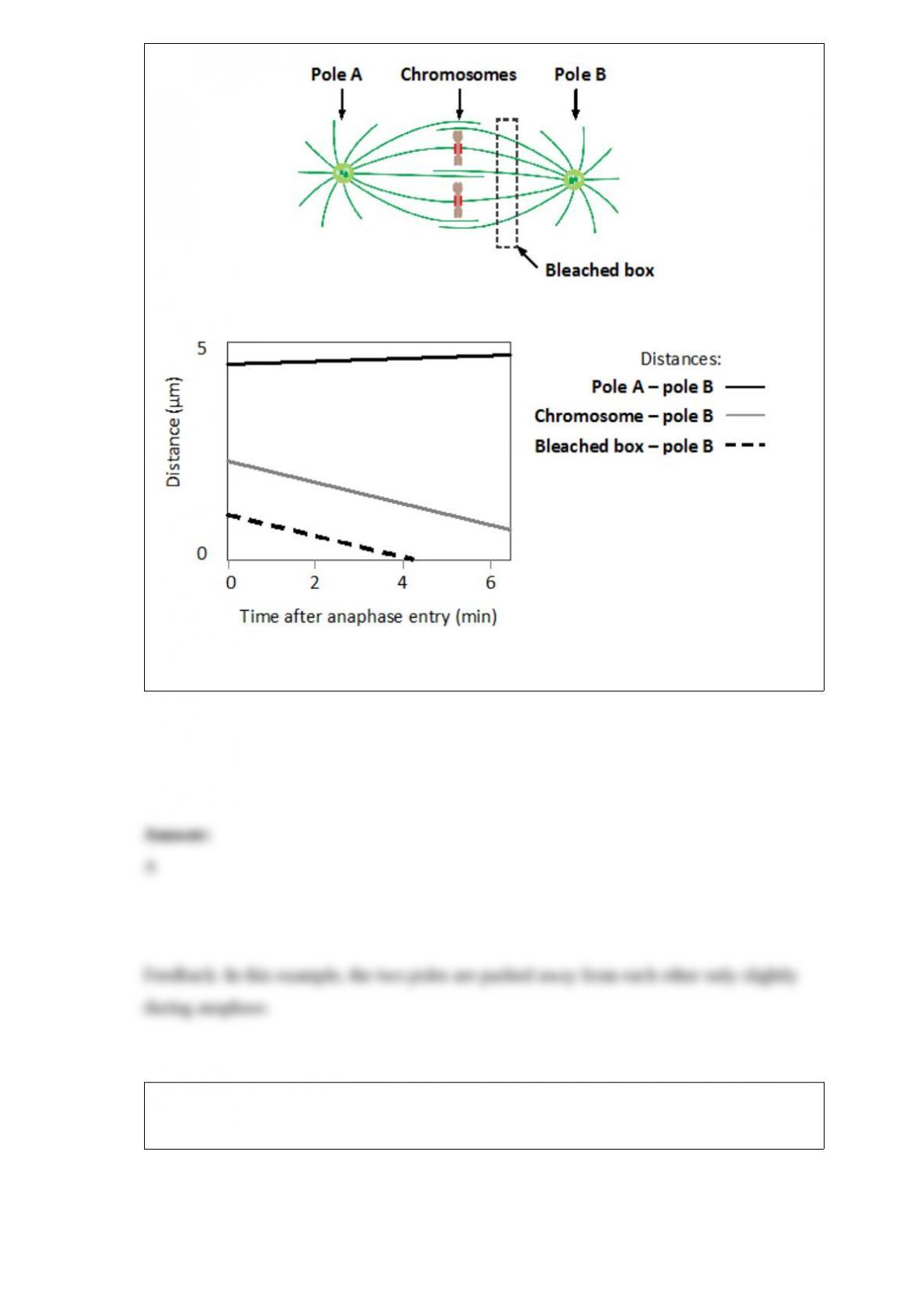
Based on the results from the experiment, which is dominant in this cell: anaphase A or
anaphase B? Write down A or B as your answer.
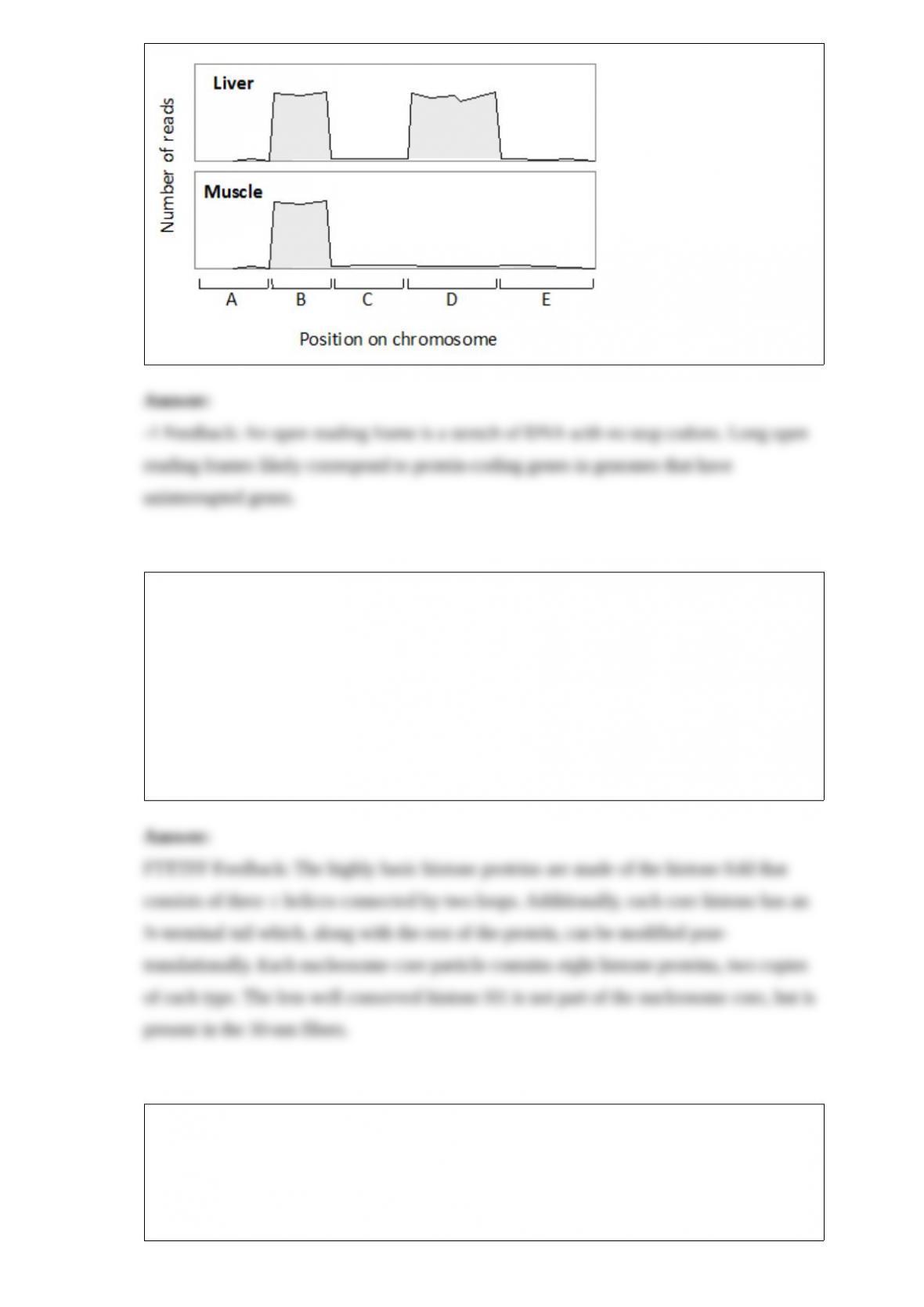
A portion of RNA-seq data obtained from two tissue samples is plotted in the following
schematic diagram. Which region (A to E) corresponds to an alternative exon?
Indicate true (T) and false (F) statements below regarding histones. Your answer would
be a six-letter string composed of letters T and F only, e.g. TTFFFF.
( )The histones are highly acidic proteins.
( )The histone fold consists of three ± helices.
( )The core histones are much more conserved than the H1 histone.
( )The N-terminal tails of the core histones undergo a variety of reversible
post-translational modifications.
( )Every nucleosome core is made up of three polypeptide chains.
( )The H1 histone is absent in the 30-nm fibers.
Indicate true (T) and false (F) statements below regarding human genetic variations.
Your answer would be a four-letter string composed of letters T and F only, e.g. TFTF.
( )The genomes of two randomly chosen humans are expected to be identical with
respect to at least 99.99% of the nucleotides.
( ) Copy number variations can contain genes.
( )If the frequency of a point mutation in a population is only 0.1%, with no mutation at
this site in the rest of the population, then the variation is NOT considered to constitute
a single-nucleotide polymorphism.
( )Most of the common genetic variants in the current human population could have
been present in a human ancestral population of only about 10,000 individuals.