
Which of the following is the final stage of the prenatal period?
a. zygote.
b. blastocyst.
c. embryo.
d. fetus.
e. infant.
As a result of experimentation,
a. more hypotheses may be developed.
b. more questions may be asked.
c. a new biological principle could emerge.
d. entire theories may be modified.
e. all of these can occur.
Bacteriorhodopsin is a light-sensitive pigment found in ____ archaeans and used to
supply energy for ____ production.

a. halophilic; ATP
b. thermophilic; carbohydrate
c. methanogenic; methane
d. halophilic; carbohydrate
e. thermophilic; ATP
p2
Choose the most appropriate letter for each.
a. a reference point that implies stability of gene frequencies through generations
b. encompasses all of those actually or potentially interbreeding populations that are
reproductively isolated from other such groups
c. the genes of an entire population
d. the frequency of homozygous dominants in a population
e. the frequencies of dominant and recessive alleles in a population
f. the frequency of heterozygotes in a population
g. the frequency of homozygous recessives in a population
h. heterozygote advantage in regions where malaria is found
i. pesticide-resistant pests

Cyanidium caldarium
Choose the most appropriate letter.
a. contain DNA, but may be too small to be alive
b. simple transitional forms between early organic compounds and the first living cells
c. red alga resident of hot springs
d. first organisms with the noncyclic pathway of photosynthesis
e. source of the heat-resistant enzyme used in PCR
f. offered support for endosymbiosis
g. dome-shaped fossil remains of photoautotrophic bacteria (some nonfossil structures
also form).
h. protist with photosynthetic organelles that resemble cyanobacteria
i. earliest known organism that can be assigned to a modern group
littoral zone
Choose the one most appropriate answer for each.
a. northern coniferous forest
b. increases oceanic productivity
c. mosaics of tall, coarse grasses, shrubs, and low trees; even, humid forests; high

rainfall
d. stratified on rocky coasts
e. includes sediments and rocks on the ocean bottom
f. stratified communities with vines, orchids, and monkeys, and nutrient-poor soil
g. chemoautotrophs are the primary producers
h. dwarf willows, mosses, lichens, caribou, and permafrost
i. nurseries of the oceans
j. a large region characterized by its large array of dominant primary producers
The results of the treatment of 20 boys with SCID-X1 showed that
a. SCID-X1 can be cured through genetic engineering.
b. most of the treated boys were cured of the disease.
c. a transplanted normal IL2RG gene can cure SCID-X1.
d. our understanding of the human genome lags behind our ability to modify it.
e. all of these are true.

thyroid gland
Choose the one most appropriate answer for each.
a. secretes one hormone that increases the metabolic rate and another that inhibits
calcium release from bone storage sites
b. secrete insulin and glucagon
c. secretes hormones that prepare accessory reproductive structures for reproduction
d. involved in lymphocyte maturation
e. secretes tropic hormones, growth hormone, and prolactin
f. secretes mineralocorticoids and glucocorticoids
g. in many vertebrates, helps to determine the amount and distribution of dark pigments
in the skin
h. secrete enzymes that help to form angiotensin
i. participates in reproductive physiology and responds to photoperiod change
j. releases oxytocin and antidiuretic hormone into bloodstream
k. secretes a hormone that promotes calcium release from bone storage sites
l. produces oxytocin and antidiuretic hormone
m. secretes cholecystokinin, secretin, and gastrin
n. secretes epinephrine and norepinephrine
o. secrete pheromones, milk, tears, sweat, and mucus
In the classic argument of “nature vs. nurture”, nature would most correspond with:
a. genes.

b. environment.
c. divine intervention.
d. environment and genes.
e. genes, environment, and genes.
The calyx is composed of
a. petals.
b. sepals.
c. stigmas.
d. ovules.
e. anthers.

The above figure represents
a. membrane attack complex; pores in bacterial cell
b. macrophage attack complex; fluids released from pores
c. pores for mucus secretion ciliated lung tissue
d. macrophages; muscle tissue
e. none of these
Of the following four islands at the same latitude, the one possessing the fewest species
is
a. 1,000 square kilometers in area and 300 km from the mainland.
b. 3,000 square kilometers in area and 100 km from the mainland.
c. 100 square kilometers in area and 3,000 km from the mainland.
d. 300 square kilometers in area and 1,000 km from the mainland.
e. none of these.

Which of the following is dense connective tissue that joins two bones?
a. sutures
b. ligaments
c. muscles
d. tendons
e. fascia
Nitrogen-fixing bacteria convert ____ to ____.
a. gaseous nitrogen; ammonia
b. ammonia; gaseous nitrogen
c. gaseous nitrogen; nitrates
d. gaseous nitrogen; nitrites
e. ammonia; nitrates

Which organ takes glucose out of the blood and stores it as glycogen?
a. pancreas
b. spleen
c. liver
d. skin
e. kidney
Which of the following can impact methylation patterns?
a. drugs.
b. exercise.
c. stress.
d. diet.
e. all of these.
Which of the following is not true of mitochondria?

a. They have DNA.
b. Their DNA can experience mutations.
c. In animals the mitochondria come from the mother.
d. They undergo genetic recombination during fertilization.
e. All these are true
parasitism
Choose the most appropriate answer for each.
a. blending in and being hidden by the background
b. where an organism is generally located in a community
c. one organism benefits at another organism’s expense
d. traditionally a self-sustaining array of interacting organisms that is best suited for a
particular environment
e. lichens on newly hardened, newly cooled lava
f. robins and human populations
g. the yucca moth and the yucca
h. one species is eliminated from an area of niche overlap
i. tasty species resembles repugnant one
j. the process that leads from a pioneer community to a mature community
k. natural reforestation of burned-over forest
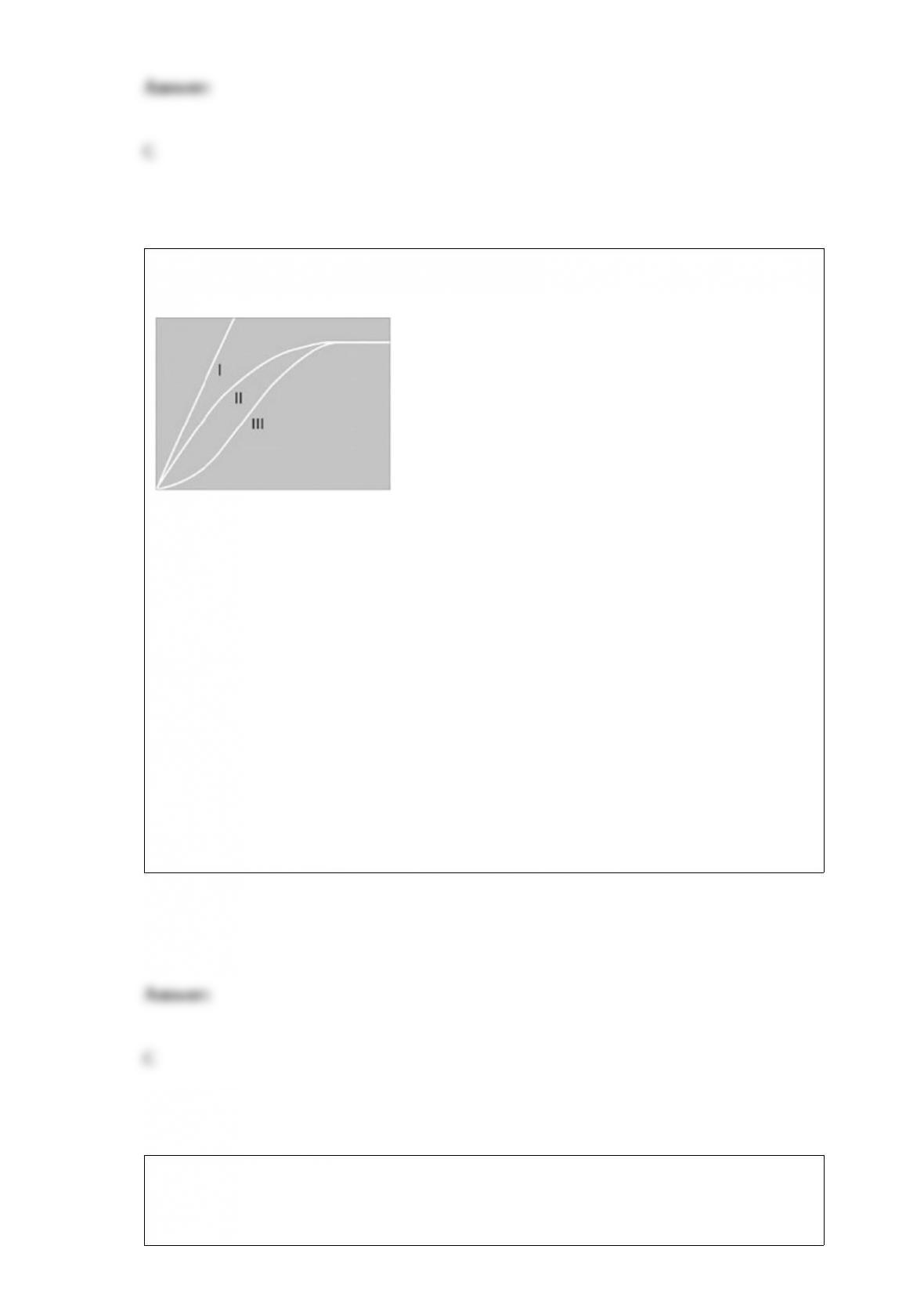
Use the figure above showing three models for predator response to prey density to
answer the following questions.
Predators can switch to alternative prey when a prey species is low in abundance as is
shown in
a. type I response.
b. type II response.
c. type III response.
d. types I and II.
e. none of these.
Answer the following questions in reference to the five plant tissues listed below.
a. parenchyma
b. collenchyma
c. sclerenchyma
d. xylem
e. phloem
Ground tissue of plants, sometimes containing lignin that strengthens the adult plant.
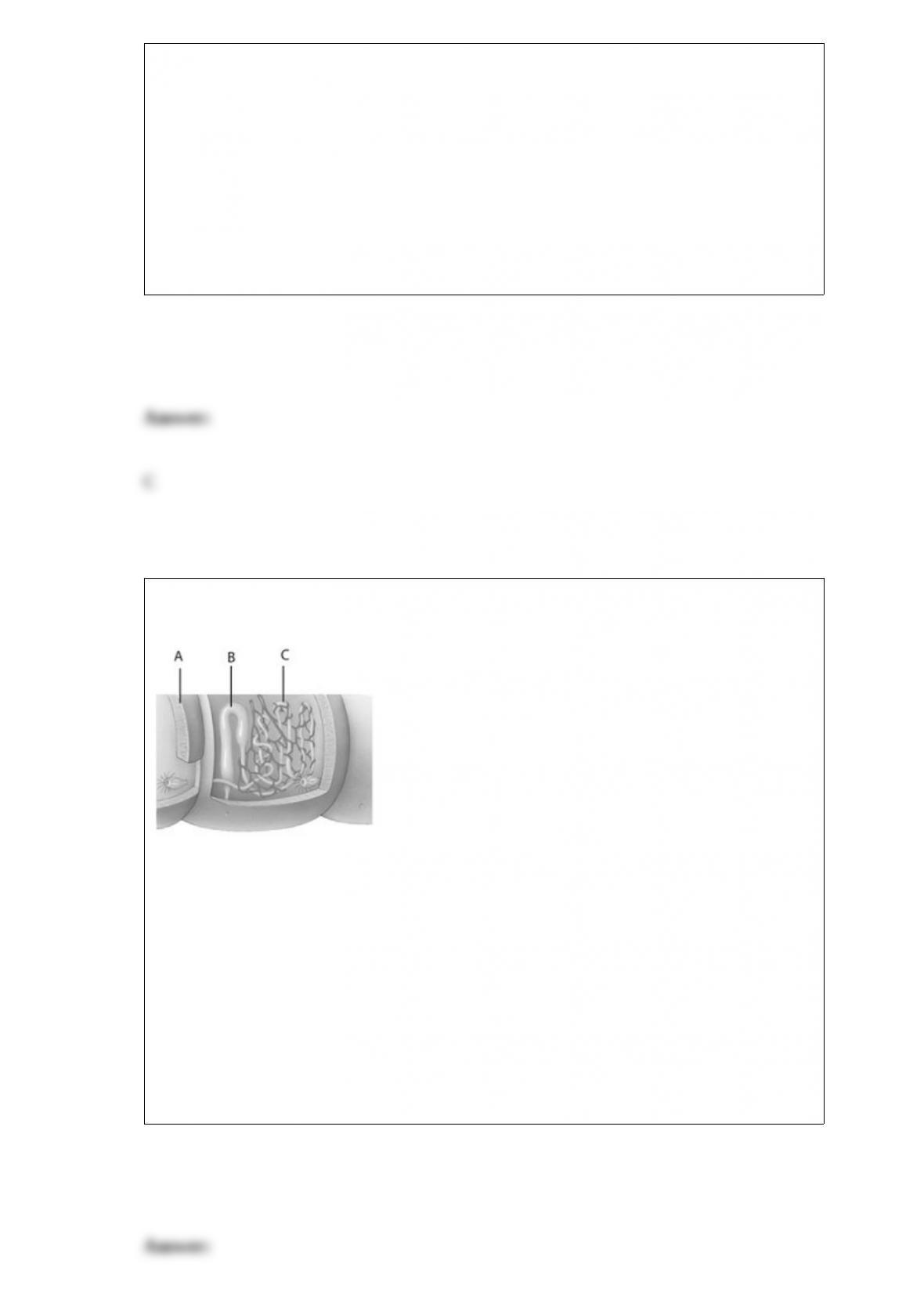
The letter “C” from above represents which of the following?
a. the excretory pore
b. loops where blood vessels take up solutes from the blood
c. sexual reproductive organ of the planarian
d. cilia which flick to draw fluid into the planarian
e. none of these

Which of the following is not a product of the light-independent reactions?
a. ADP.
b. NADP+.
c. oxygen.
d. glucose.
e. all these are products.
Some of the stages of meiosis are listed below. For the following statements, select the
best choice of these stages.
a. prophase I
b. metaphase II
c. anaphase I
d. anaphase II
e. telophase I
Recombination via crossing over occurs during this stage.

Answer the following questions with reference to the muscles listed below.
a. pectoralis major
b. trapezius
c. quadriceps femoris
d. triceps
e. gastrocnemius
This muscle opposes the biceps.
Which of the following requires oxygen to function?
a. aerobic respiration
b. anaerobic respiration
c. alcoholic fermentation
d. lactate fermentation
e. all require oxygen
The failure of chromosomes to separate during mitosis or meiosis is called
a. genetic displacement.
b. trisomy.
c. crossing over.
d. nondisjunction.
e. disjunction.
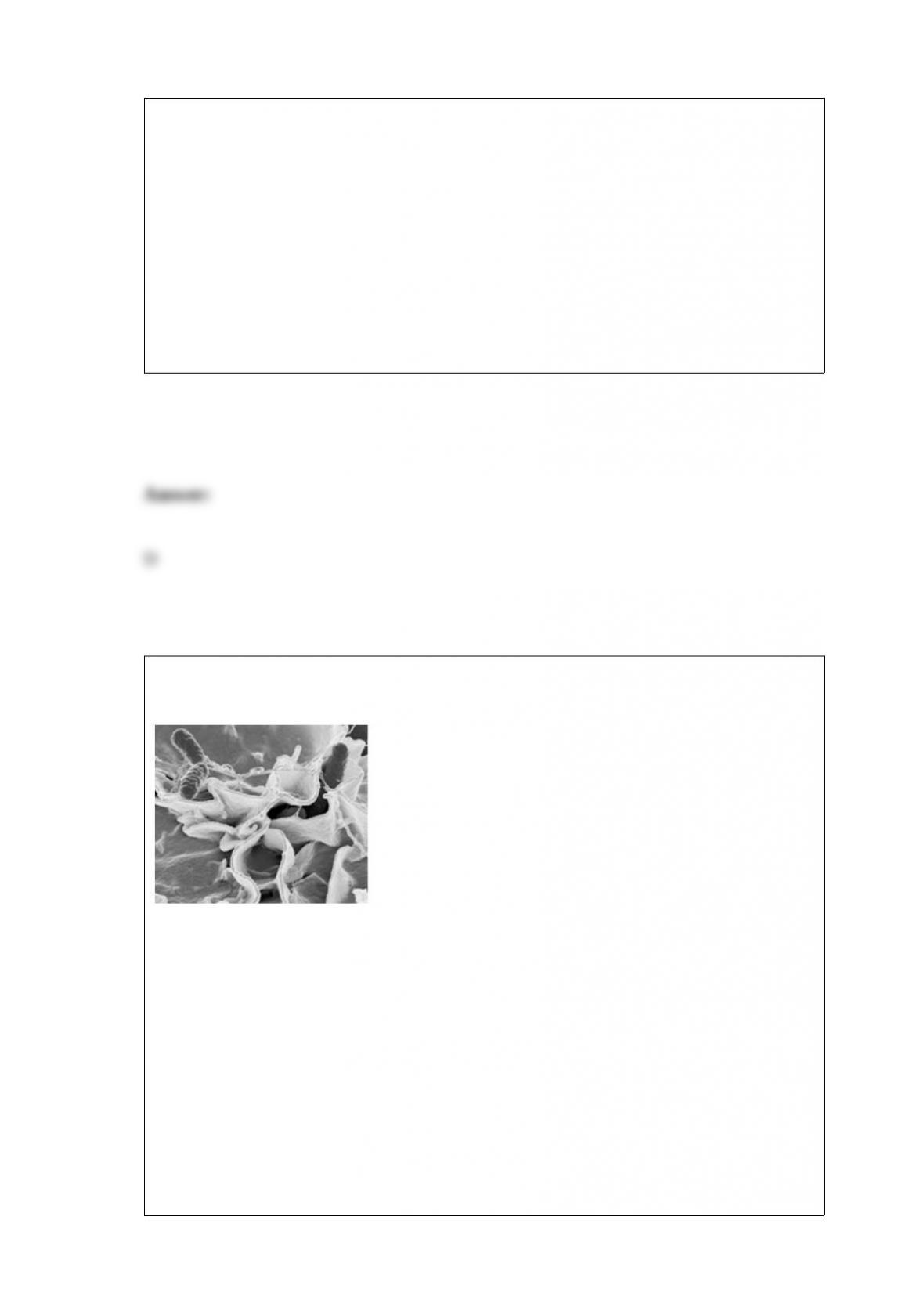
The tube-like structures extending from these bacterial cells in the picture above to the
underlying cells in the above figure are used for
a. attachment.
b. locomotion.
c. whipping up proteins.
d. breathing.
e. communication.

Auxins are secreted by
a. most tissues undergoing ripening.
b. apical meristems of shoots.
c. vascular tissues of stems and leaves.
d. root caps.
e. root cells in response to water stress.
Altitude sickness
a. results from hypoxia.
b. is characterized by hyperventilation.
c. is characterized by nausea.
d. is characterized by an accelerated heart rate.
e. includes all of these.

You will need a genetic code table to answer the following. The following statements
refer to the five RNA codons listed below; match them appropriately.
a. AUG
b. UAA
c. UUU
d. UUA
e. AAA
This codon codes for an amino acid and indicates the beginning of a coding region.
In the selfish herd, there is an advantage to
a. being on the outside.
b. being near the front.
c. being in the middle.
d. being isolated.
e. none of these; position is of no advantage.

Respond to the following statements in reference to the four kinds of reception listed
below that are used by social animals.
a. tactile
b. auditory
c. visual
d. chemical
The primary signal sent out by receptive female primates is likely to be this.
The exchange of gases in the human lungs occurs through the
a. bronchi.
b. alveoli.
c. bronchioles.
d. tracheas.
e. glottis.

The plural for genus is
a. genus.
b. geni.
c. genera.
d. gena.
e. genae.
__________ sensations arise from receptors near organs in body cavities.
With __________, offspring inherit the same number and kinds of genes from one
parent.

__________ cover the body surface, and line its internal spaces.
__________, such as jellyfishes, corals, and sea anemones, are radially symmetrical.
The prospect of inhibiting myostatin and growing larger muscles may be tempting to a
great many people. Is there any danger to increasing muscle mass?
Behavior refers to coordinated responses that an animal makes to a __________.
Diffusion of morphogens–products of master genes–creates gradients that cause the
differential expression of other genes such as __________, which govern the formation
of specific body parts.
There is concern that transgenic genes have been found in unrelated crops. Could such
genetic transformation occur with traditional breeding programs?
Contractions of the dome-shaped __________ and the intercostal muscles between the
ribs alter the volume of the thoracic cavity during breathing.
Euglenoids live in freshwater; a __________ rids them of excess water.
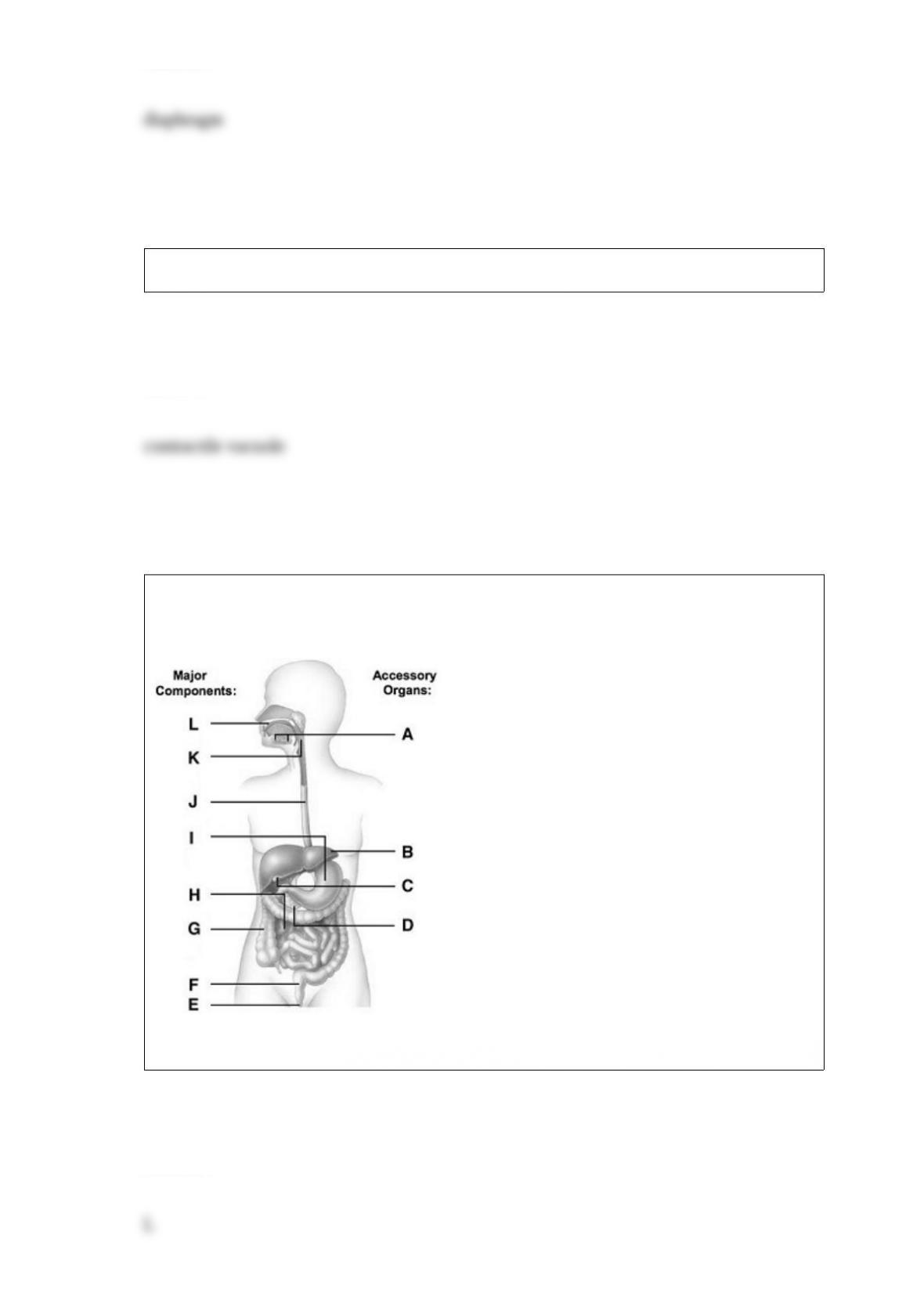
Labeling.
oral cavity

Vast __________ form in the interior of midlatitude continents.
If you were following the inheritance patterns of two different sets of multiple alleles
located on different chromosomes, how many different possible gametes could be
produced if locus 1 had five possible alleles and locus 2 had six alleles?
With sexual reproduction, two genes for the same trait that are slightly different are
called __________.
The __________ asteroid hypothesis proposes that an asteroid impact led to the
extinction of dinosaurs.
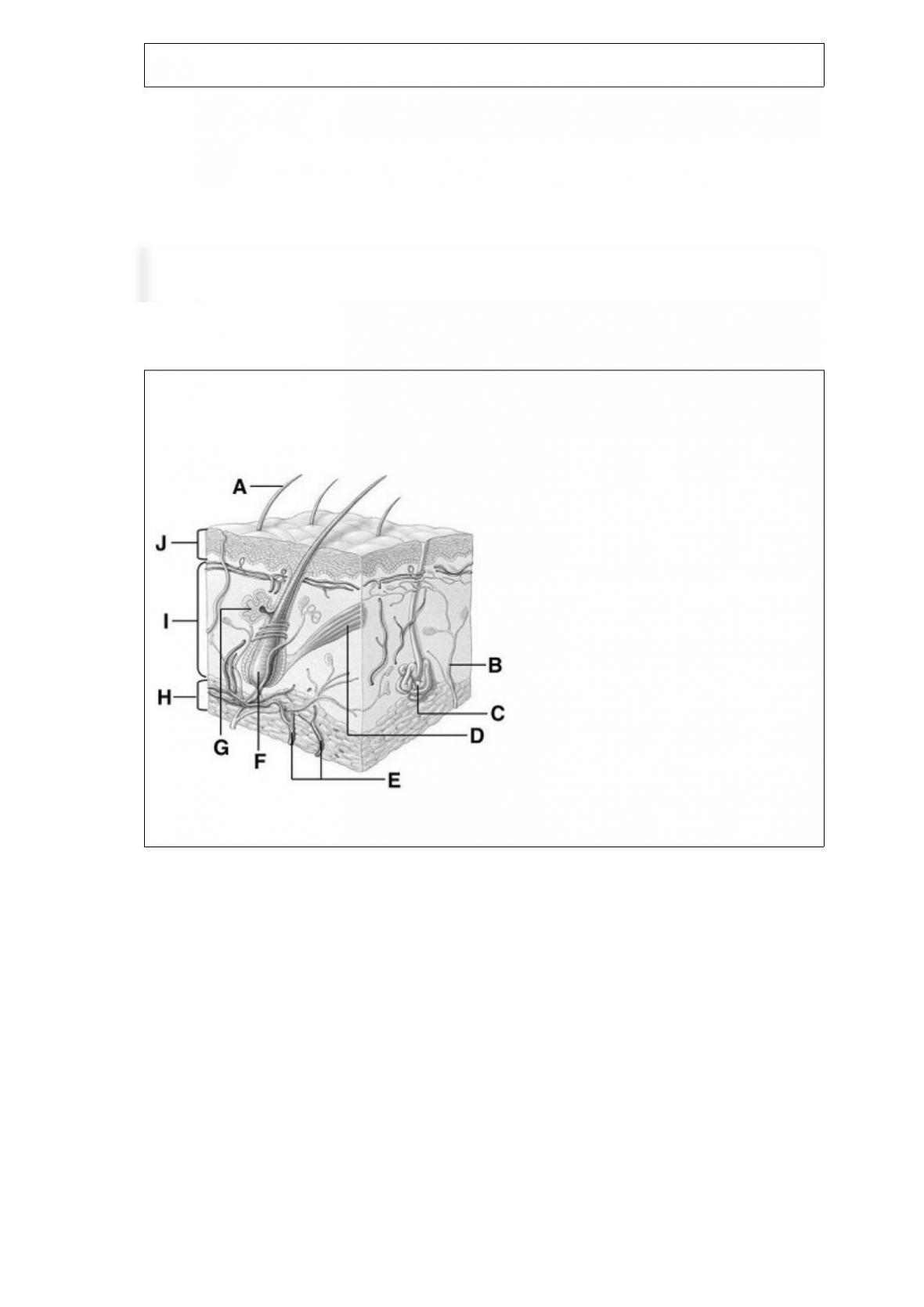
Labeling.
Blood vessels