
In a hypothetical environment, fishes called pike-cichlids are visual predators of large,
adult algae-eating fish (in other words, they locate their prey by sight). The population
of algae-eaters experiences predatory pressure from pike-cichlids. Which of the
following is least likely to result in the algae-eater population in future generations?
A) selection for drab coloration of the algae-eaters
B) selection for nocturnal algae-eaters (active only at night)
C) selection for larger female algae-eaters, bearing broods composed of more, and
larger, young
D) selection for algae-eaters that become sexually mature at smaller overall body sizes
Arrange in the correct sequence these components of the mammalian immune system as
it first responds to a pathogen.
I) Pathogen is destroyed.
II) Lymphocytes secrete antibodies.
III) Antigenic determinants from pathogen bind to antigen receptors on lymphocytes.
IV) Lymphocytes specific to antigenic determinants from pathogen become numerous.
V) Only memory cells remain.
A) I → III → II → IV → V
B) II → I → IV → III → V
C) IV → II → III → I → V
D) III → IV → II → I → V
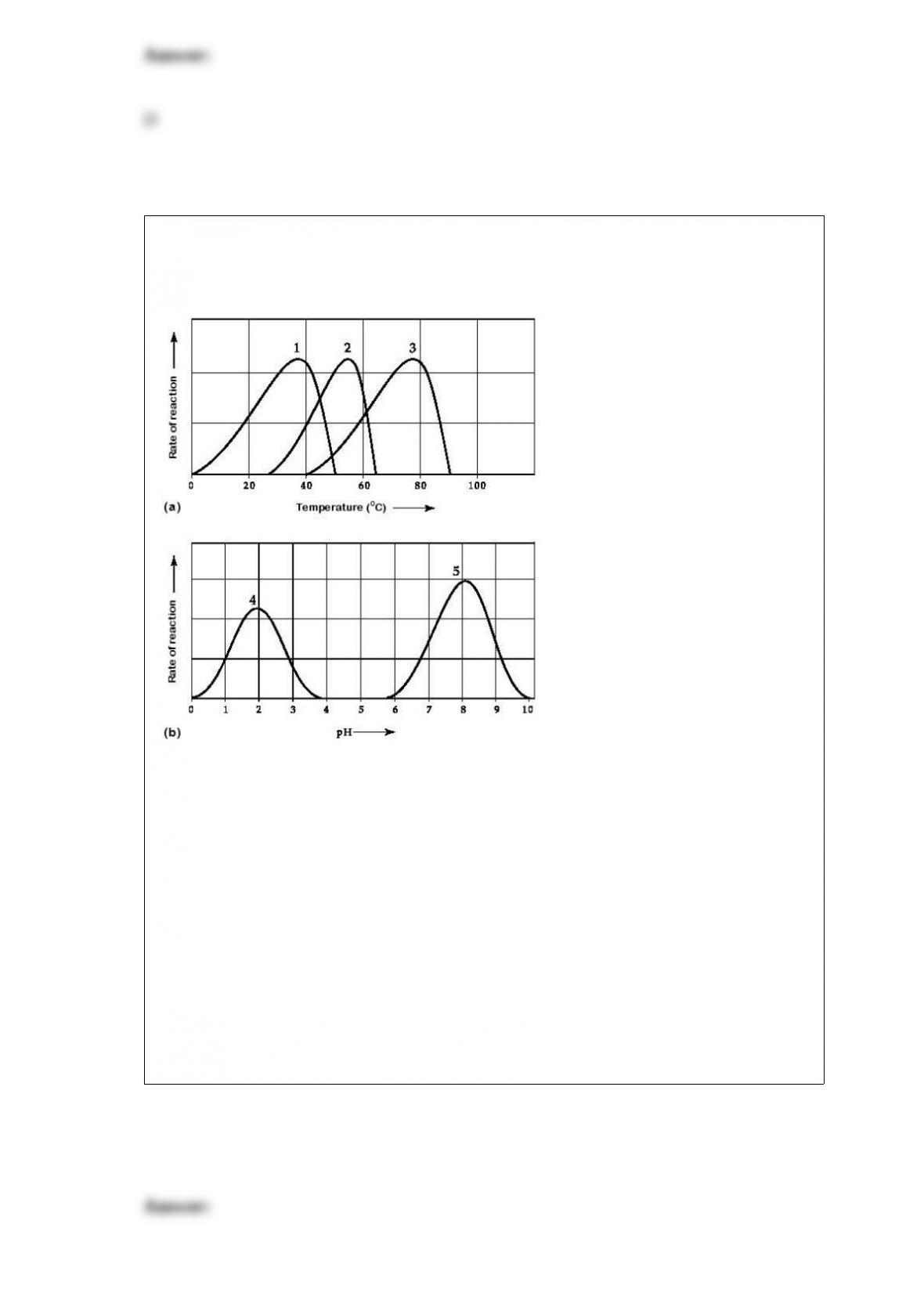
Activity of various enzymes at various temperatures (a) and at various pH (b).
Which curves on the graphs may represent the temperature and pH profiles of an
enzyme taken from a bacterium that lives in a mildly alkaline hot springs at
temperatures of 70oC or higher?
A) curves 1 and 5
B) curves 2 and 5
C) curves 3 and 4
D) curves 3 and 5
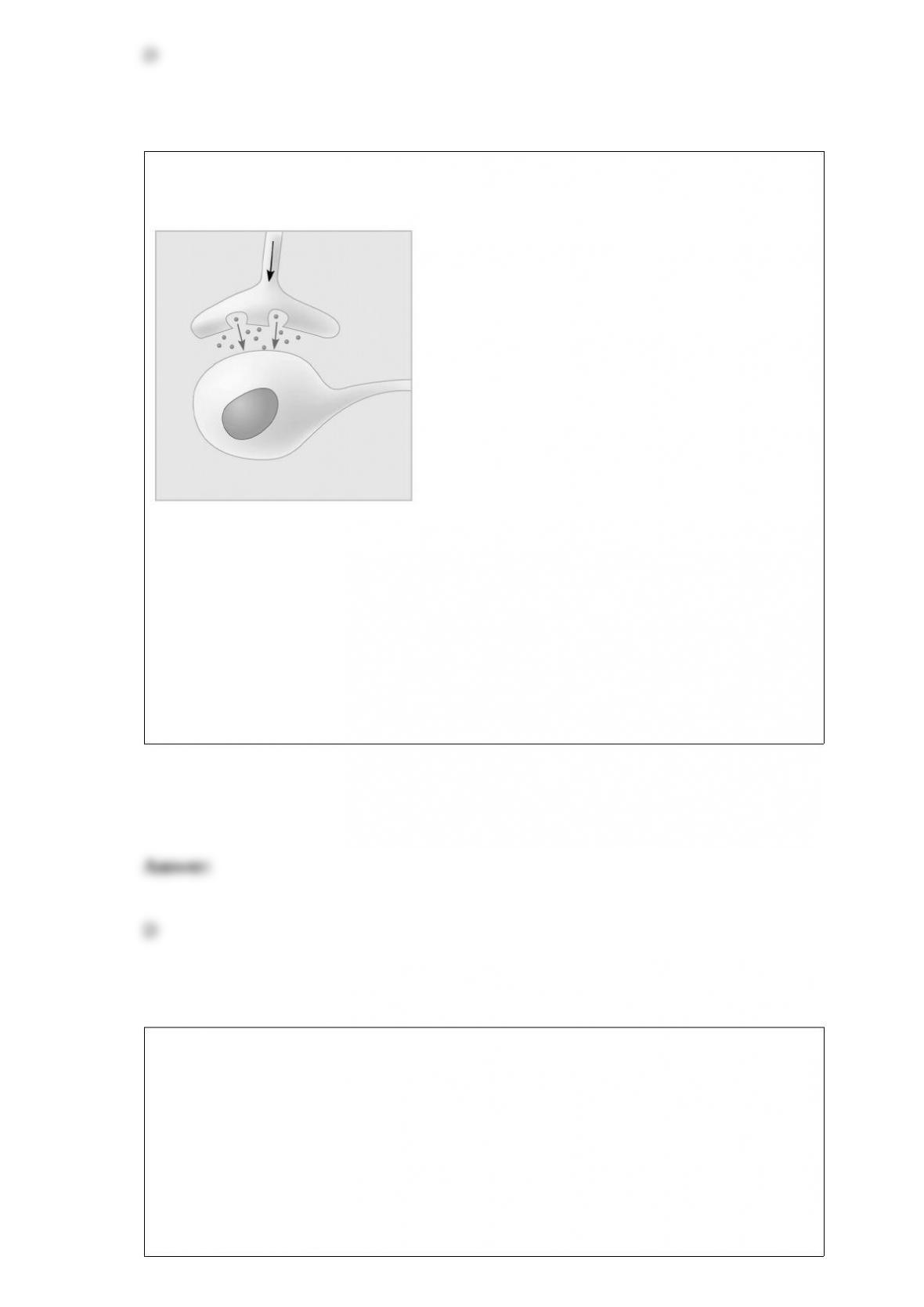
Which of the following types of signaling is represented in the figure?
A) autocrine
B) paracrine
C) hormonal
D) synaptic
The first step in ecosystem restoration is to _____.
A) restore the physical structure
B) restore native species that have been extirpated due to disturbance
C) remove competitive invasive species
D) remove toxic pollutants

In meiosis, homologous chromosomes are separated during _____.
A) anaphase II
B) prophase I
C) mitosis
D) anaphase I
BRCA1 and BRCA2 are considered to be tumor-suppressor genes because _____.
A) their normal products participate in repair of DNA damage
B) the mutant forms of either one of these prevent breast cancer
C) the normal genes make estrogen receptors
D) they block penetration of breast cells by chemical carcinogens

What is the reason that a modern transmission electron microscope (TEM) can resolve
biological images to the subnanometer level, as opposed to tens of nanometers
achievable for the best super-resolution light microscope?
A) The focal length of the electron microscope is significantly longer.
B) Contrast is enhanced by staining with atoms of heavy metal.
C) Electron beams have much shorter wavelengths than visible light.
D) The electron microscope has a much greater ratio of image size to real size.
Which of the following statements is FALSE? Saturated fats _____.
A) are more common in animals than in plants
B) have many double bonds in the carbon chains of their fatty acids
C) usually solidify at room temperature
D) contain more hydrogen than unsaturated fats that consist of the same number of
carbon atoms
You have a planar bilayer with equal amounts of saturated and unsaturated
phospholipids. After testing the permeability of this membrane to glucose, you increase

the proportion of unsaturated phospholipids in the bilayer. What will happen to the
membrane’s permeability to glucose?
A) Permeability to glucose will increase.
B) Permeability to glucose will decrease.
C) Permeability to glucose will stay the same.
D) You cannot predict the outcome. You simply have to make the measurement.
Which of the following is the first event to take place in translation in eukaryotes?
A) base pairing of activated methionine-tRNA to AUG of the messenger RNA
B) binding of the larger ribosomal subunit to smaller ribosomal subunits
C) covalent bonding between the first two amino acids
D) the small subunit of the ribosome recognizes and attaches to the cap of mRNA
Which of the following statements is true about protein synthesis in prokaryotes?
A) Extensive RNA processing is required before prokaryotic transcripts can be
translated.
B) Translation can begin while transcription is still in progress.

C) Prokaryotic cells have complicated mechanisms for targeting proteins to the
appropriate cellular organelles.
D) Unlike eukaryotes, prokaryotes require no initiation or elongation factors.
Suppose a cell has the following molecules and structures: enzymes, DNA, ribosomes,
plasma membrane, and mitochondria. It could be a cell from _____.
A) a bacterium
B) an animal but not a plant
C) nearly any eukaryotic organism
D) a plant but not an animal
Trichoplax adhaerens (Tp) is the only living species in the phylum Placozoa.
Individuals are about 1 mm wide and only 27 μm high, are irregularly shaped, and
consist of a total of about 2000 cells, which are diploid (2n = 12). There are four types
of cells, none of which are nerve or muscle cells, and none of which have cell walls.
They move using cilia, and any “edge” can lead. Tp feeds on marine microbes, mostly
unicellular green algae, by crawling atop the algae and trapping it between its ventral
surface and the substrate. Enzymes are then secreted onto the algae, and the resulting
nutrients are absorbed. Tp sperm cells have never been observed, nor have embryos
past the 64-cell (blastula) stage.

On the basis of information in the paragraph above, which of these should be able to be
observed in Tp?
A) the act of fertilization
B) the process of gastrulation
C) eggs
D) All three of the listed responses are correct.
The type of muscle tissue surrounding the intestines and blood vessels is _____.
A) skeletal muscle
B) cardiac muscle
C) intercalated cells
D) smooth muscle
A region of the canary forebrain shrinks during the nonbreeding season and enlarges
when breeding season begins. This change is probably associated with the annual
_____.
A) addition of new syllables to a canary’s song repertoire

B) crystallization of subsong into adult songs
C) renewal of mating and nest-building behaviors
D) elimination of the memorized template for songs sung the previous year
The element present in all organic molecules is _____.
A) hydrogen
B) oxygen
C) carbon
D) nitrogen

In the figure above, MPF reaches its highest concentration during this stage.
A) I
B) II
C) III
D) IV
A virus consisting of a single strand of RNA, which is transcribed into complementary
DNA, is a _____.
A) protease
B) retrovirus
C) RNA replicase virus
D) nonenveloped virus

Which of the following is most similar in structure to ATP?
A) a pentose sugar
B) a DNA nucleotide
C) an RNA nucleotide
D) an amino acid with three phosphate groups attached
Which of the following is a protein produced by a regulatory gene?
A) operon
B) inducer
C) promoter
D) repressor
Mendel accounted for the observation that traits that had disappeared in the F1
generation reappeared in the F2 generation by proposing that _____.
A) new mutations were frequently generated in the F2 progeny, “reinventing” traits that

had been lost in the F1
B) the mechanism controlling the appearance of traits was different between the F1 and
the F2 plants
C) traits can be dominant or recessive, and the recessive traits were obscured by the
dominant ones in the F1
D) members of the F1 generation had only one allele for each trait, but members of the
F2 had two alleles for each trait
In a developing frog embryo, most of the yolk is _____.
A) located near the animal pole
B) located near the vegetal pole
C) found within the cleavage furrow
D) distributed equally throughout the embryo
Why are mycorrhizal fungi superior to plants at acquiring mineral nutrition from the
soil?
A) Hyphae are one hundred to one thousand times larger than plant roots.

B) Hyphae have a smaller surface-area-to-volume ratio than do the hairs on a plant root.
C) Mycelia are able to grow in the direction of food.
D) Fungi secrete extracellular enzymes that can break down large molecules.
The primary role of oxygen in cellular respiration is to _____.
A) yield energy in the form of ATP as it is passed down the respiratory chain
B) act as an acceptor for electrons and hydrogen, forming water
C) combine with carbon, forming CO2
D) combine with lactate, forming pyruvate
Which of the following scientists argued that variation among individuals allows
evolution to occur?
A) Aristotle
B) Lamarck
C) Linnaeus
D) Wallace

What is the primary limiting factor that determines why no female animal can produce
a very large number of very large eggs?
A) Time is limited.
B) There are energy constraints.
C) Temperature constraints will prevent females from carrying too many eggs.
D) There will be an increase in predation pressure if the females carry too many large
eggs.
When electrons move closer to a more electronegative atom, what happens? The more
electronegative atom is _____.
A) reduced, and energy is released
B) reduced, and energy is consumed
C) oxidized, and energy is consumed
D) oxidized, and energy is released

The extracellular matrix is thought to participate in the regulation of animal cell
behavior by communicating information from the outside to the inside of the cell via
which of the following?
A) gap junctions
B) the nucleus
C) DNA and RNA
D) integrins
In sea urchins, the “fast block” and the longer lasting ‘slow block” to polyspermy,
respectively, are _____.
A) the acrosomal reaction and the formation of egg white
B) the cortical reaction and the formation of yolk protein
C) the jelly coat of the egg and the vitelline membrane
D) membrane depolarization and the cortical reaction