
A scientist suspects that the food in an ecosystem may have been contaminated with
radioactive nitrogen over a period of months. Which of the following substances could
be examined for radioactivity to test the hypothesis?
A) the cell walls of plants growing in the ecosystem
B) the hair produced by humans living in the ecosystem
C) the sugars produced during photosynthesis by plants growing in the ecosystem
D) the cholesterol in the cell membranes of organisms living in the ecosystem
At the end of gastrulation, the ectoderm makes up the
A) lining of the embryonic digestive tract.
B) embryonic nervous system.
C) outer layer of the gastrula.
D) inner layer of the gastrula.
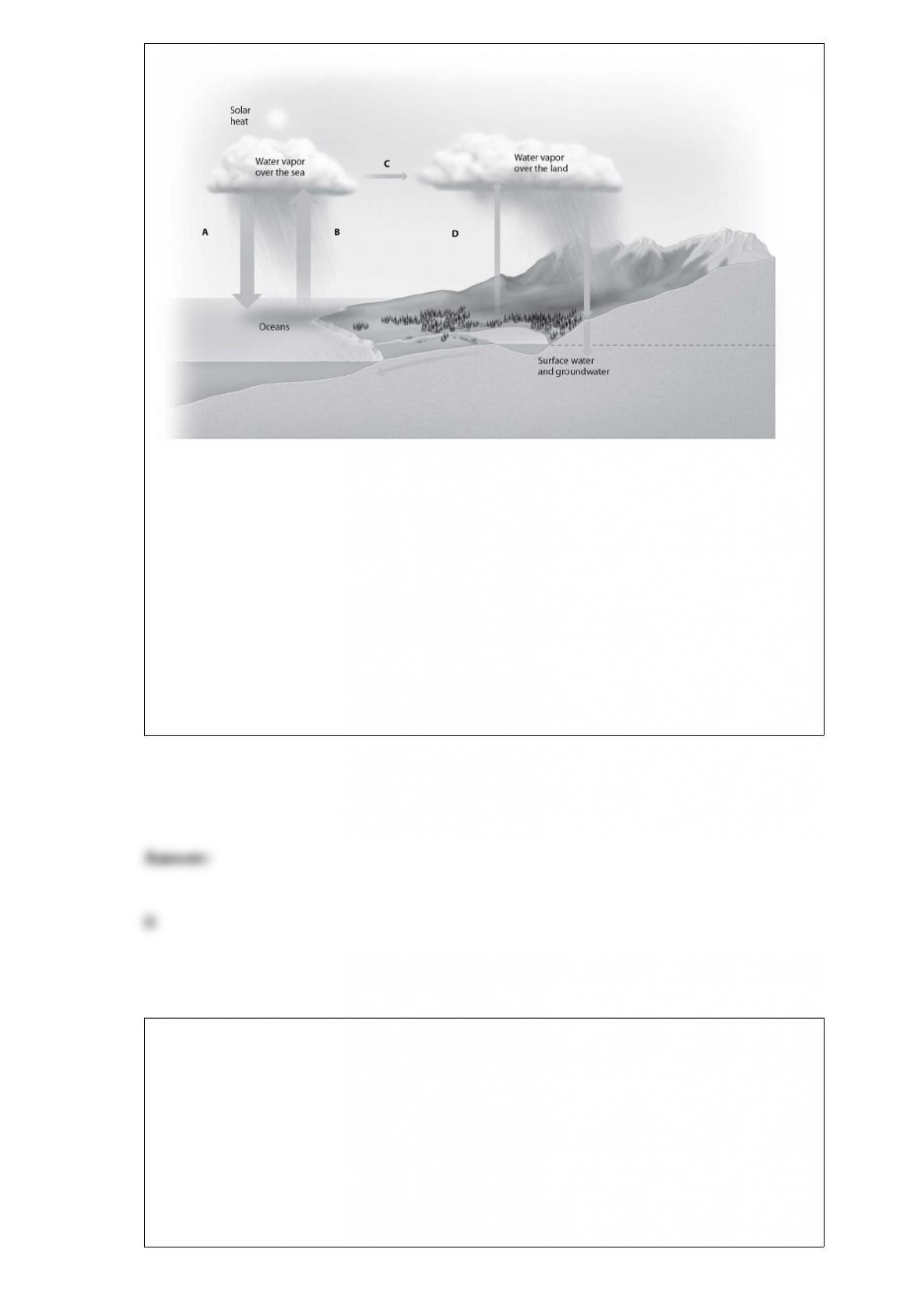
If ocean waters in one area are radioactively contaminated, which processes would
cause that radioactivity to show up in plant crops at some distance from the
contamination?
A) processes A and B
B) processes B and C
C) processes C and D
D) processes D and A
The respiratory system includes all of the following structures except the
A) esophagus.
B) trachea.
C) larynx.
D) lung.
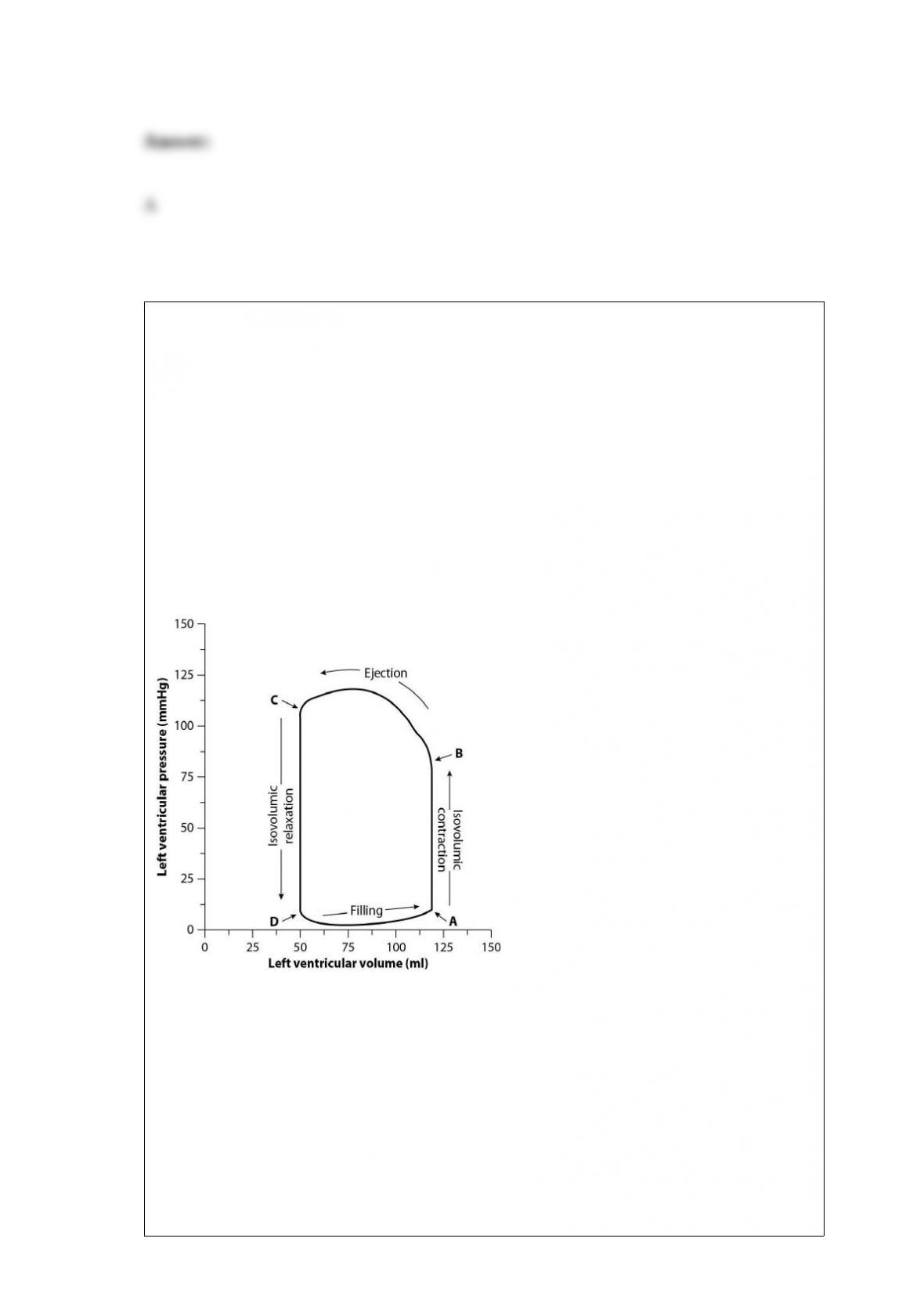
To evaluate cardiac function, scientists and physicians measure both the pressure and
the volume inside the heart. When both pressure and volume data are plotted on the
same graph, the resulting graph is called a pressure-volume loop. To create a
pressure-volume loop, a catheter (a thin tube) is inserted into the vessels of the heart,
and measurements of both left ventricular pressure and left ventricular volume are
taken. The data are plotted on a graph, and cardiac function can then be evaluated from
the distribution of the data and the shape of the loop.
The figure below shows a typical left ventricle pressure-volume loop for a healthy
young adult. The cardiac cycle proceeds counterclockwise. Each complete turn around
the loop (for example, starting at point A and ending back at point A) represents one
complete cardiac cycle.
At what point on the diagram does the aortic valve (the semilunar valve that separates
the left ventricle and the aorta) open?
A) point A
B) point B
C) point C
D) point D

Which of the following hypotheses would be supported if liquid water were found on
Mars and contained evidence of bacteria-like organisms?
A) Life must evolve in the presence of oxygen.
B) The chemical evolution of life is possible.
C) Life on Earth must have originated on Mars.
D) Life is guided by intelligent design.
Carbon mainly cycles between the biotic and abiotic worlds through the processes of
A) cellular respiration and transpiration.
B) transpiration and photosynthesis.
C) evaporation and photosynthesis.
D) cellular respiration and photosynthesis.

When a New England farm is abandoned, its formerly plowed fields first become
weedy meadows, then shrubby areas, and finally forest. This sequence of plant
communities is an example of
A) evolution.
B) a trophic chain.
C) secondary succession.
D) primary succession.
Most familiar types of mushrooms, along with puffballs and shelf fungi, are
A) chytrids.
B) ascomycetes.
C) zygomycetes.
D) basidiomycetes.
When body temperature is too high, which of the following occurs?
A) The brain sends out distress signals.

B) Blood vessels in the skin dilate.
C) Capillaries contract.
D) The internal lining of the intestine increases in surface area.
Which of the following animals has a single circuit of blood flow and two heart
chambers?
A) salamander
B) salmon
C) snake
D) squirrel
Secretory proteins are
A) produced by ribosomes on the smooth endoplasmic reticulum.
B) chemically modified in the nucleus.
C) produced by the cell for internal use.
D) released from the cell through the plasma membrane.

While cleaning out the attic, you find a packet of seeds that your grandmother gathered
from her garden. You plant them outside, and some of them sprout. What was the
condition of these germinating seeds while they were in the attic?
A) The endosperm cells were dead; the embryo cells were alive but inactive.
B) They were dead, but the embryo cells revived in response to water.
C) They were alive and very metabolically active.
D) They were alive but dormant.
You identify a molecule in a pizza that is a polymer; has oxygen, hydrogen, and sulfur
atoms; and is hydrophilic. What kind of molecule is it?
A) protein
B) carbohydrate
C) nucleic acid
D) lipid

The “Ironman” is a version of the triathlon, a race that includes three events: swimming,
bicycling, and running. In an Ironman, an athlete must swim 2.4 miles, bike 112 miles,
and run 26.2 miles, in that order, without a break. The annual Ironman World
Championship is held in Hawaii every year. The men’s course record was set in 2011 by
Australia’s Craig Alexander with a time of 8 hours, 18 minutes, and 37 seconds, and the
women’s course record was set in 2009 by England’s Chrissie Wellington with a time of
8 hours, 54 minutes, and 2 seconds.
What type of muscle fibers would likely be found in the legs of athletes who attempt to
complete this race?
A) fast, fatigue-resistant fibers
B) fast, fatigue-susceptible fibers
C) slow, fatigue-resistant fibers
D) slow, fatigue-susceptible fibers
Oxytocin is a hormone produced by the posterior pituitary gland that causes female
uterine muscles to contract during childbirth and female mammary glands to eject milk
during nursing. Oxytocin also occurs naturally in males and is involved in movement of
sperm and production of testosterone. It has been given the common name of “the love
hormone” because oxytocin is linked to human behaviors including sexual arousal and
trust.
In 2012, The Atlantic (a popular news source) published a brief online news summary
that explained that when scientists in Germany gave men who were in a monogamous
relationship with a woman a nasal spray containing oxytocin, the men were less
attracted to an attractive female stranger than men who were given a nasal spray with
no oxytocin. While The Atlantic provided a link to the original scientific study, they
drew conclusions and stated implications of it that included the following:

1. In men, oxytocin promotes monogamous relationships because it keeps them from
communicating with women who are attractive to them.
2. If a man is unable to obtain a nasal spray with oxytocin, there are other means by
which oxytocin release can be stimulated during a monogamous relationship: sexual
intercourse, hand-holding, and touching.
What is the main evidence that you would use to decide whether the conclusions and
implications that The Atlantic published were valid?
A) the online news story from The Atlantic
B) the original scientific study
C) a different online summary of the original scientific study
D) a different original scientific study on a hormone that is biologically similar to
oxytocin
Which of the following animals displays radial symmetry?
A) a worm
B) a sea anemone
C) a fish
D) a lobster

The main ingredient of crude oil is
A) diatoms.
B) dinoflagellates.
C) bacteria.
D) algae.
How is sex determined in most ants and bees?
A) by the X-Y system
B) by the Z-W system
C) by the number of chromosomes
D) by the size of the sex chromosome
________ and ________ mean the same thing.
A) Clade; parsimony
B) Parsimony; analogy
C) Clade; monophyletic taxon

D) Derived; ancestral
Which of the following options most accurately lists the sequence of events in
translation?
A) codon recognition → translocation → peptide bond formation → termination
B) peptide bond formation → codon recognition → translocation → termination
C) codon recognition → peptide bond formation → translocation → termination
D) codon recognition → peptide bond formation → termination → translocation
All cells are enclosed by a plasma membrane that is similar in ________ and ________.
A) thickness; composition
B) permeability; content
C) lucidity; texture
D) structure; function

How many chromosomes are there in a maize egg cell nucleus as compared to a maize
pollen cell nucleus?
A) half as many
B) twice as many
C) the same number
D) half as many or the same number, depending on whether the pollen cell has divided
to produce sperm or not
Smooth muscle is responsible for
A) voluntary body activities.
B) the pumping action of the heart.
C) an athlete’s ability to run a 100-meter dash.
D) involuntary body activities.

Fresh water and seawater mix in a(n)
A) estuary.
B) benthic zone.
C) deep water zone.
D) continental shelf zone.
Which of the following statements regarding Ulva is true?
A) Ulva, a green algae, resembles land plants because it produces diploid gametes.
B) Ulva, a brown algae, has a complex life cycle with diploid body cells and haploid
gametes.
C) Ulva, a green algae, has a complex life cycle with diploid body cells and haploid
gametes.
D) Ulva, a green algae, has a complex life cycle with alternation between multicellular
diploid and haploid generations.
A typical sponge is best described as
A) a slow-moving suspension feeder with a true coelom.

B) a sessile suspension feeder with bilateral symmetry.
C) a slow-moving carnivore with no true tissues or symmetry.
D) a sessile suspension feeder with no true tissues or body symmetry.
Which of the following statements about dehydration synthesis is false?
A) One monomer loses a hydrogen atom, and the other loses a hydroxyl group.
B) H2O is formed as the monomers are joined.
C) Covalent bonds are formed between the monomers.
D) Animal digestive systems utilize this process to break down food.
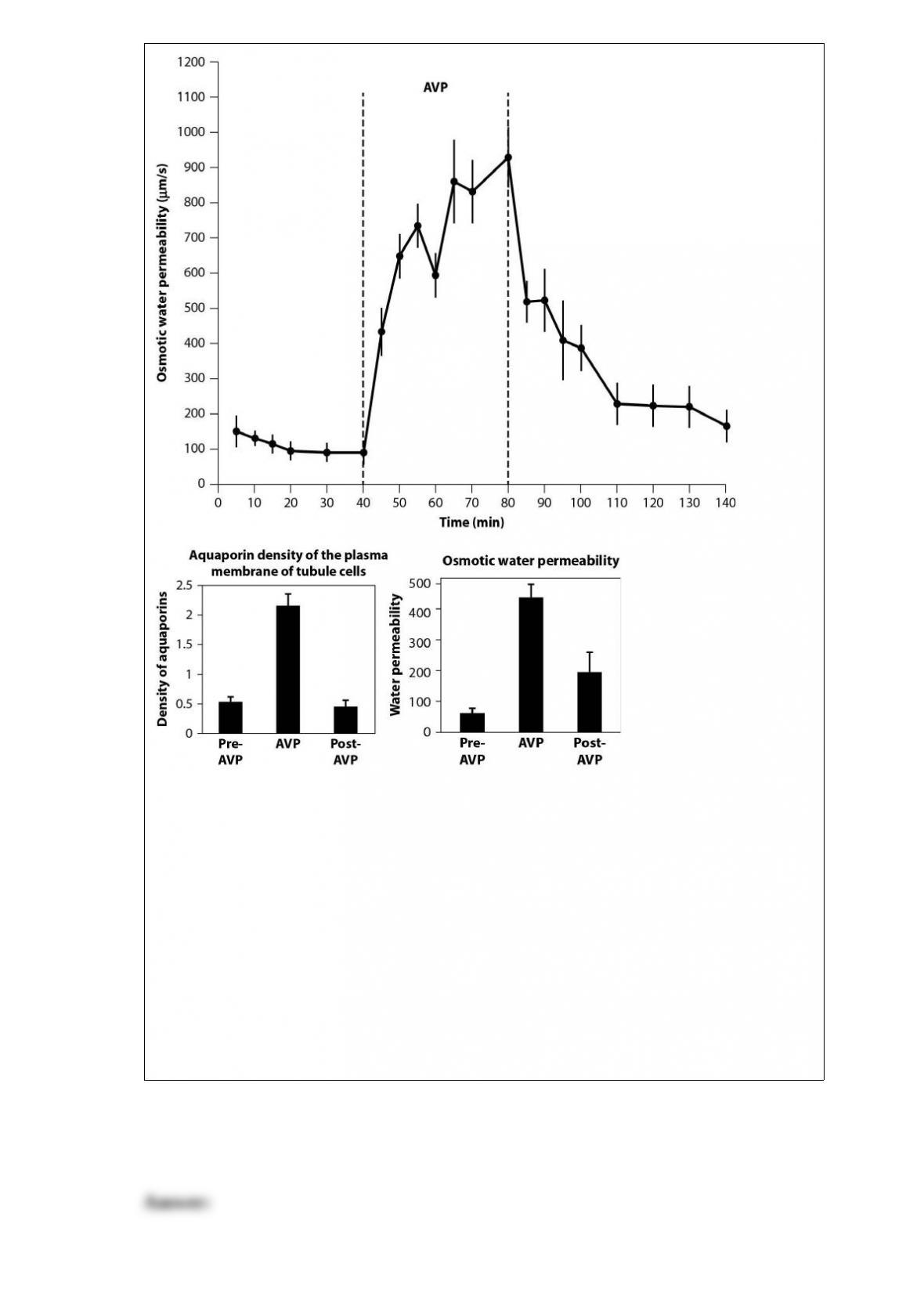
The following questions relate to the three figures above, which indicate how the
tubules in the kidney respond to the administration of the hormone vasopressin.
The hypothesis that scientists who collected these data were most likely testing is that
A) the permeability of collecting changes over time.
B) collecting tubules have aquaporins.
C) permeability change is linked to the number of aquaporins.
D) aquaporins allow water into kidney tubules.

The tongue does all of the following except
A) taste food.
B) shape food into a ball called a bolus.
C) secrete saliva.
D) push food into the pharynx.