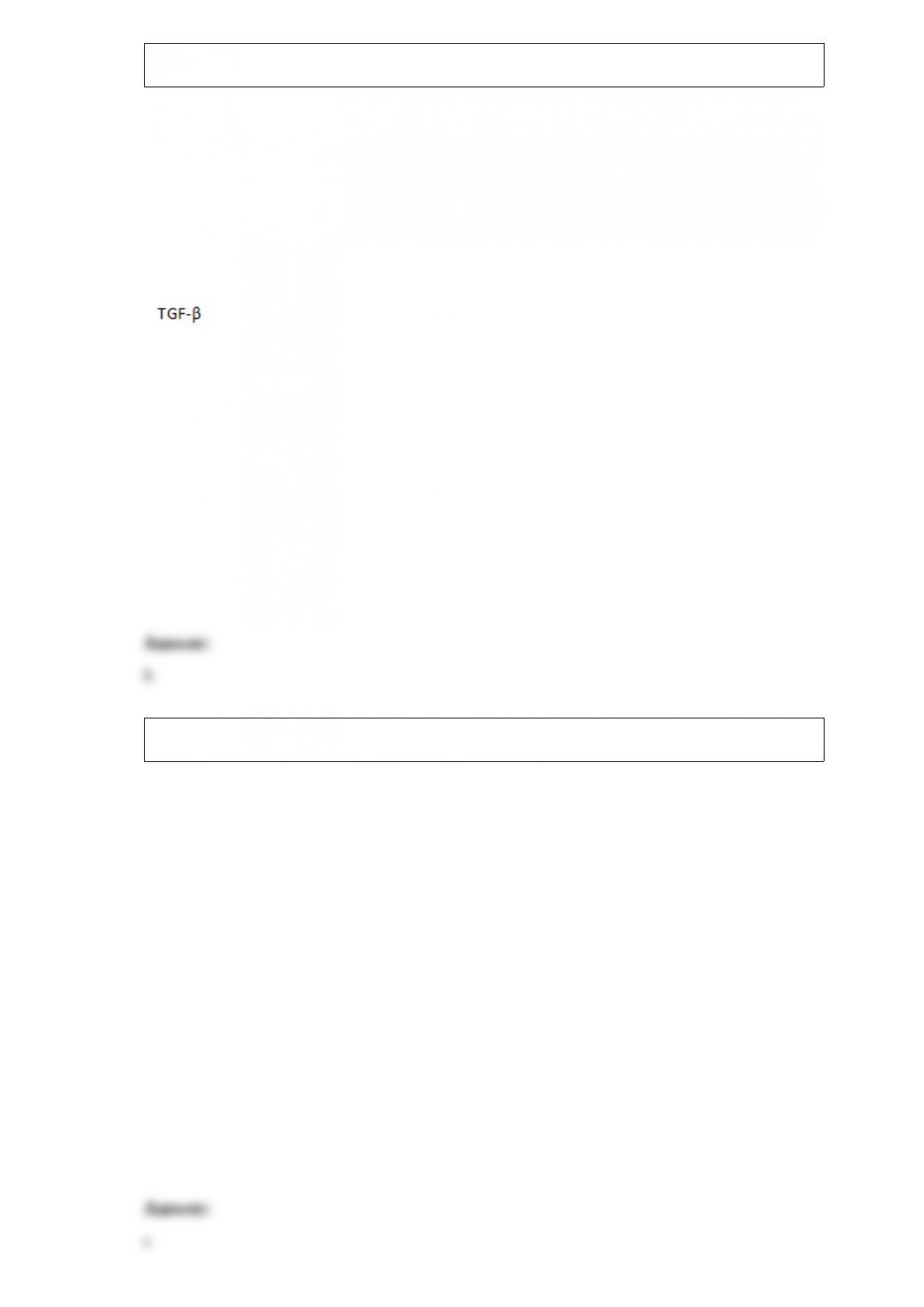
All of the following soluble factors enhance isotype switching from IgM to IgA in B cells
except _____.
a.retinoic acid
b.IL-9
c.
d.IL-4
e.IL-10
f.B-cell activating factor (BAFF)
g.APRIL.
Which one of the following features renders all IgG antibodies less susceptible to
proteolysis than the other antibody classes?
a.length of the hinge region
b.ability to exchange chains with other IgG antibodies
c.presence of additional disulfide bonds
d.capacity to activate complement
e.degree of accessibility for binding to C1.
A.Review the differences between the three pathways of complement (alternative, lectin,
and classical) in terms of how they are activated.
B.Distinguish which pathway(s) are considered part of an adaptive immune response and
which are considered part of innate immunity, and say why.
All of the following are linked to the development of rheumatoid arthritis or are associated
with its treatment except _____. (Select all that apply.)
a.anti-immunoglobulin autoantibodies
b.adalumumab

c.leukocyte infiltration in synovial tissue
d.joint inflammation
e.pulmonary hemorrhage
f.rituximab
g.increased susceptibility if the person possesses the HLA-DRB1*04:01 or 04:04
allotypes.
h.peptidyl arginine deiminases
i.smoking
j.rheumatic fever.
The ligands of endosomal Toll-like receptors are _____.
a.lipids of Gram-negative bacteria
b.flagellin proteins of bacteria
c.lipids of Gram-positive bacteria
d.zymosan of fungi
e.nucleic acids of viruses and bacteria.
George Cunningham was diagnosed with Crohn’s disease when 23 years old. He was
experiencing acute abdominal pain, diarrhea, rectal bleeding, anemia and weight loss. He
did not respond to conventional immunosuppressive therapies and was given a course of
infliximab, an anti-TNF monoclonal antibody that suppresses inflammation by blocking
TNF activity. On day 12 after receiving his first infusion, he developed a mild fever,
generalized vasculitis, swollen lymph glands, swollen joints and joint pain. Traces of blood
and protein were detected in his urine. Which of the following is the most likely cause of
these recent symptoms?
a.Type I hypersensitivity involving anaphylaxis.
b.Type II hypersensitivity leading to hemolytic anemia.
c.Type III hypersensitivity caused by immune complex deposition in blood vessels.
d.Type IV hypersensitivity involving CD8 T-cell cytotoxicity.
e.Type II hypersensitivity leading to thrombocytopenia.
Anders Anderson, was seen by his pediatrician at 24 months old after a recent bout of
diarrhea and vomiting. He had lost his appetite and complained that his stomach hurt.
Anders was in the 5% centile for weight, had slender limbs, wasted buttocks, and a
protuberant abdomen. Jejunal biopsy revealed abnormal surface epithelium, and villous
atrophy with hyperplasia of the crypts. Which of the following would be a likely clinical
finding in this patient?
a.glomerulonephritis
b.urticarial rash
c.anti-gliadin IgA antibodies
d.chronic wheezing
e.low blood pressure.
A.Explain how erythrocytes become coated with complement component C3b during an
allergic reaction to penicillin.
B.Why is this important to the mechanism by which IgE antibodies are produced?
Herpes simplex virus favors neurons for latency because of the low level of _____, which
reduces the likelihood of killing by CD8 T cells.
a.LFA-3
b.Toll-like receptors (TLRs)
c.transporter associated with antigen processing (TAP)
d.MHC class I
e.MHC class II.

The degradation of pathogen proteins into smaller fragments called peptides is a process
commonly referred to as
a.endocytosis
b.promiscuous processing
c.antigen processing
d.antigen presentation
e.peptide loading.
Directional selection is best described as
a.all polymorphic alleles preserved in a population
b.T-cell receptor interaction with peptide:MHC complexes directed to a planar interface
c.a mechanism in T cells that is analogous to affinity maturation of immunoglobulins
d.selected alleles increase in frequency in a population
e.selection of most appropriate transplant donor directed at the identification of identical or
similar combinations of HLA alleles compared with the transplant recipient.
Explain the origin of the secretory component and its significance after the release of
dimeric IgA from the apical face of the gut epithelium.

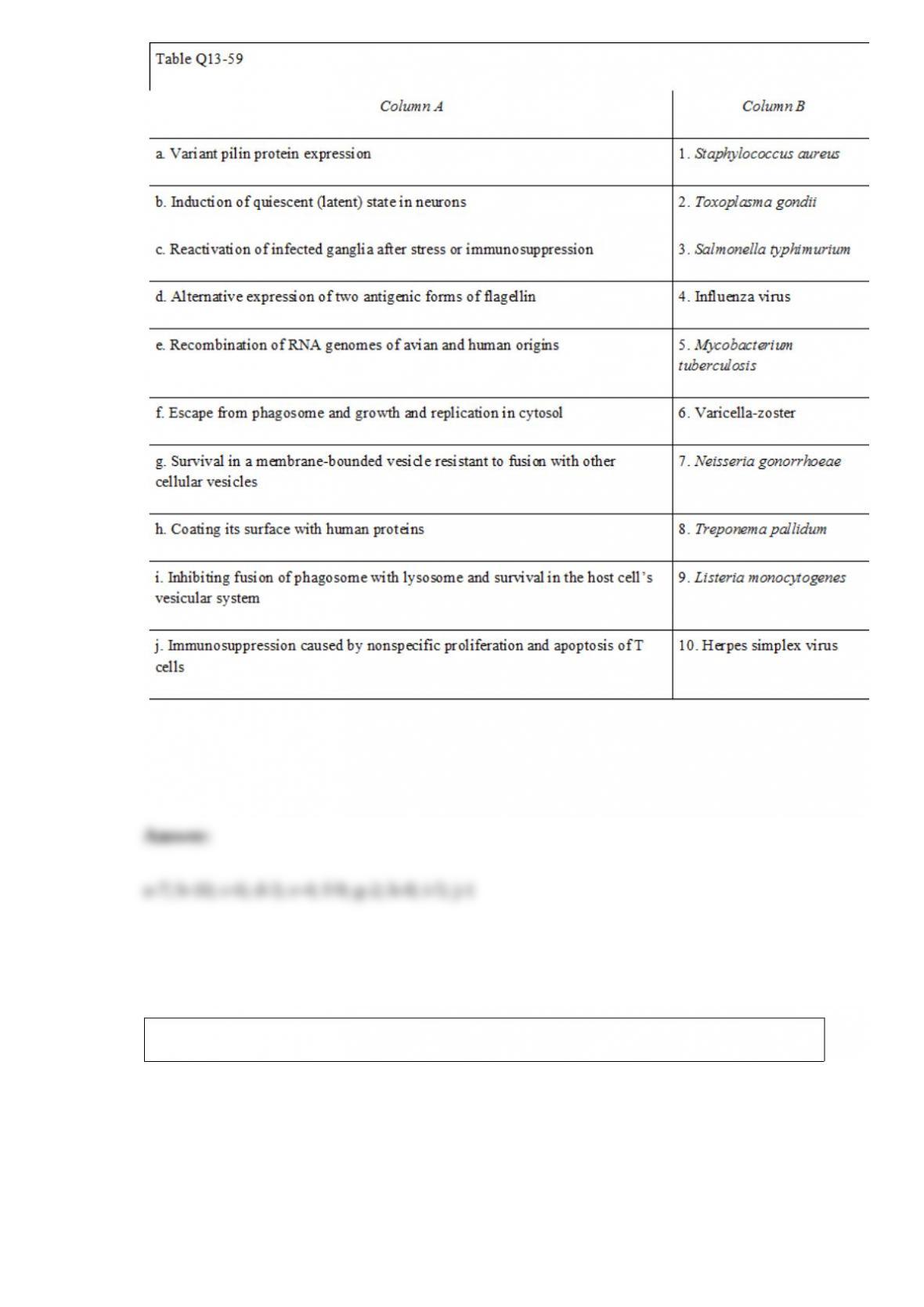
Using Table Q13-59, match the mechanism of evasion and subversion of the immune
system in column A with the pathogen in column B.
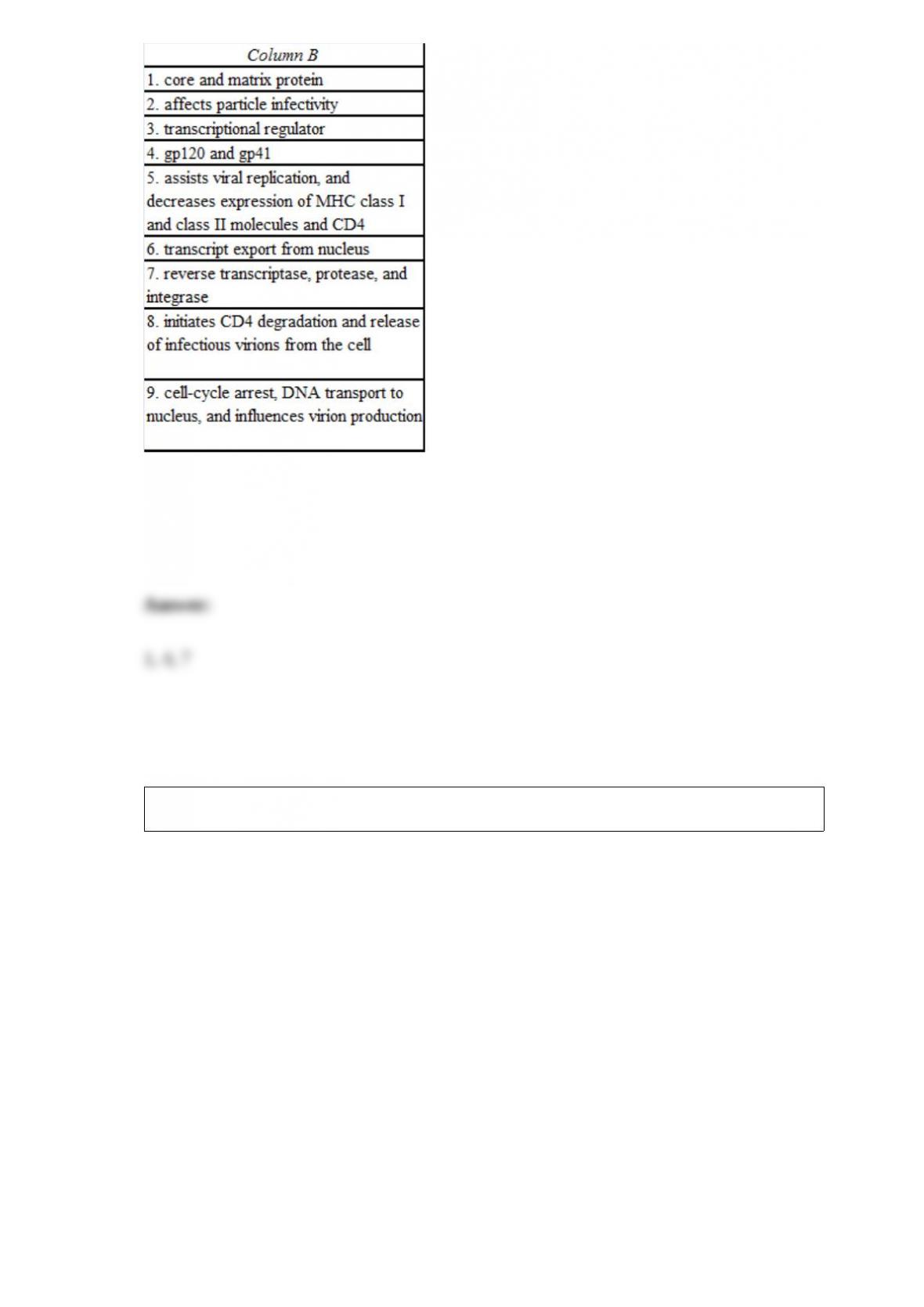
Which of the protein products are present in the virion? (Select all that apply.)
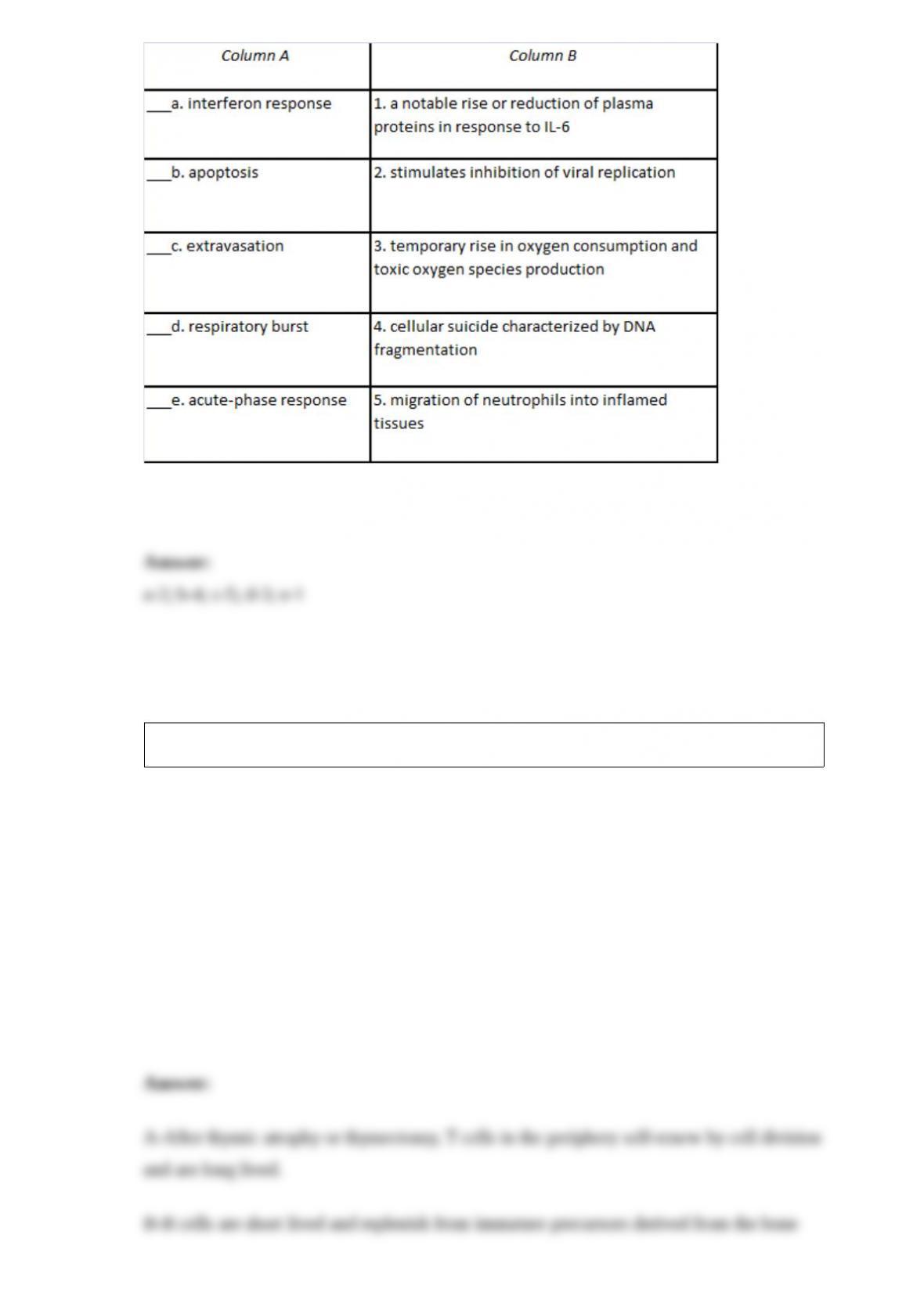
Match the term in column A with its description in column B.
As we age, our thymus shrinks, or atrophies, by a process called involution, yet T-cell
immunity is still functional in old age.
A-Explain how T-cell numbers in the periphery remain constant in the absence of continual
replenishment from the thymus.
B-How does this differ from the maintenance of the B-cell repertoire?
Describe three types of unwanted and potentially harmful immune response.
A-Explain why catalytic antibodies are attracting attention in the medical field.
B-Provide two potential examples.
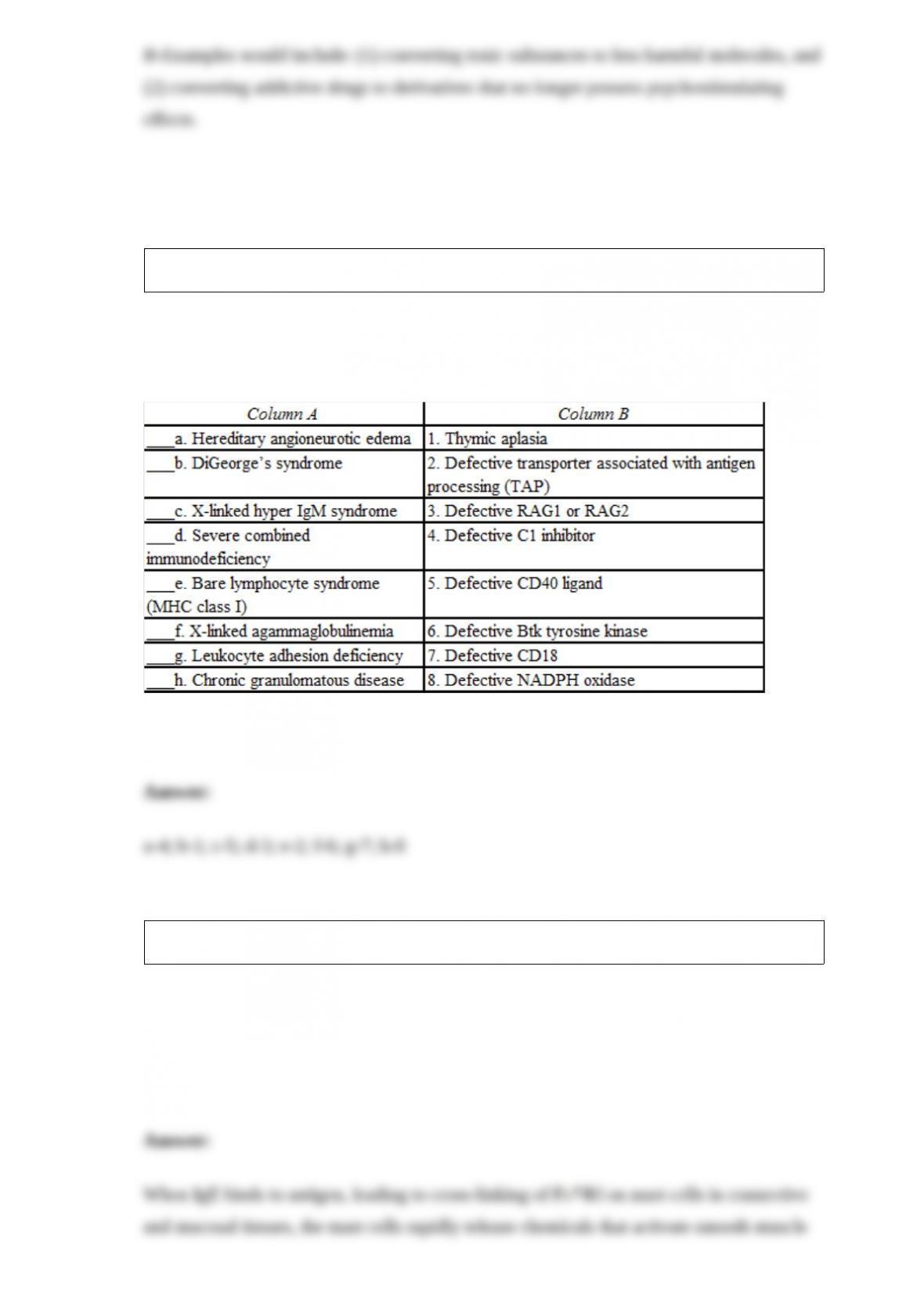
Using the table below, match the deficiency disease in column A with its specific
abnormality in column B.
How does IgE induce the forcible ejection of parasites and toxic substances from the
respiratory and gastrointestinal tracts?