
The suprachiasmatic nuclei are found in the _____.
A) hypothalamus
B) epithalamus
C) amygdala
D) Broca’s area
The symplastic route can transport _____.
A) sugars, mRNA, and mitochondria
B) mRNA, mitochondria, and proteins
C) mitochondria, mRNA, and viruses
D) viruses, sugars, and mRNA
Compared to a cell with few aquaporins in its membrane, a cell containing many
aquaporins will _____.
A) have a faster rate of osmosis
B) have a lower water potential

C) have a higher water potential
D) have a faster rate of active transport
Which of the following is a defining characteristic that all protocells had in common?
A) the ability to synthesize enzymes
B) a surrounding membrane or membrane-like structure
C) RNA genes
D) the ability to replicate RNA
About 3 million years ago, the Isthmus of Panama (a narrow strip of land connecting
North and South America) formed, dividing marine organisms into Pacific and
Caribbean populations. Researchers have examined species of snapping shrimp on both
sides of the isthmus. Based on the morphological species concept, there appeared to be
seven pairs of species, with one species of each pair in the Pacific and the other in the
Caribbean. The different species pairs live at somewhat different depths in the ocean.
Using mitochondrial DNA sequences, the researchers estimated phylogenies and found
that each of these species pairs, separated by the isthmus, were indeed each other’s
closest relatives. The researchers investigated mating in the lab and found that many
species pairs were not very interested in courting with each other, and any that did mate
almost never produced fertile offspring. (N. Knowlton, L. A. Weigt, L. A. Solorzano, D.
K. Mills, and E. Bermingham. 1993. Divergence in proteins, mitochondrial DNA, and
reproductive incompatibility across the Isthmus of Panama. Science 260:1629-32.)

Refer to the paragraph about the formation of the Isthmus of Panama. The sister
populations on opposite sides of the isthmus are true species under which species
concept?
A) the morphological species concept
B) the biological species concept
C) the phylogenetic species concept
D) the morpholoogical species, biological species, and phylogenetic species concepts
The “motor unit” in vertebrate skeletal muscle refers to _____.
A) one actin binding site and its myosin partner
B) one sarcomere and all of its actin and myosin filaments
C) one myofibril and all of its sarcomeres
D) one motor neuron and all of the muscle fibers on which it has synapses
The following table depicts characteristics of five prokaryotic species (A-E). Use the
information in the table to answer the question(s) below
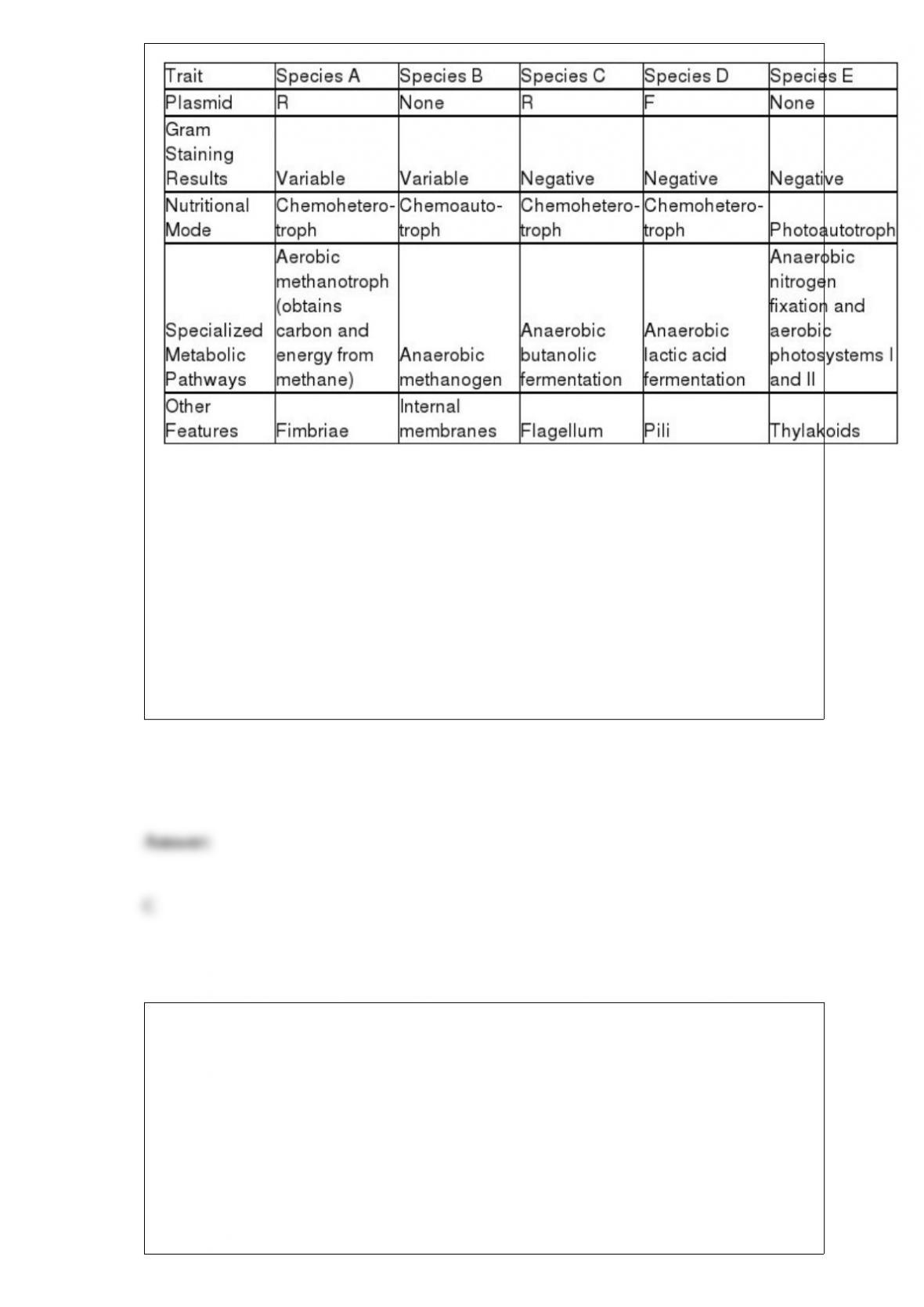
Which two species should have much more phospholipid, in the form of bilayers, in
their cytoplasms than most other bacteria?
A) species A and B
B) species A and C
C) species B and E
D) species C and D
If an ovary contains 50 ovules, what is the minimum number of pollen grains that must
land to form 50 mature seeds?
A) 25
B) 50
C) 100
D) 500

Animals that consume Brazil nuts derive nutrition mostly from tissue whose nuclei
have how many chromosomes?
A) 17
B) 34
C) 51
D) 68
After suffering a stroke, a patient can see objects anywhere in front of him, but pays
attention only to objects in his right field of vision. When asked to describe these
objects, he has difficulty judging their size and distance. What part of the brain was
likely damaged by the stroke?
A) the left frontal lobe
B) the right frontal lobe
C) the left parietal lobe
D) the right parietal lobe
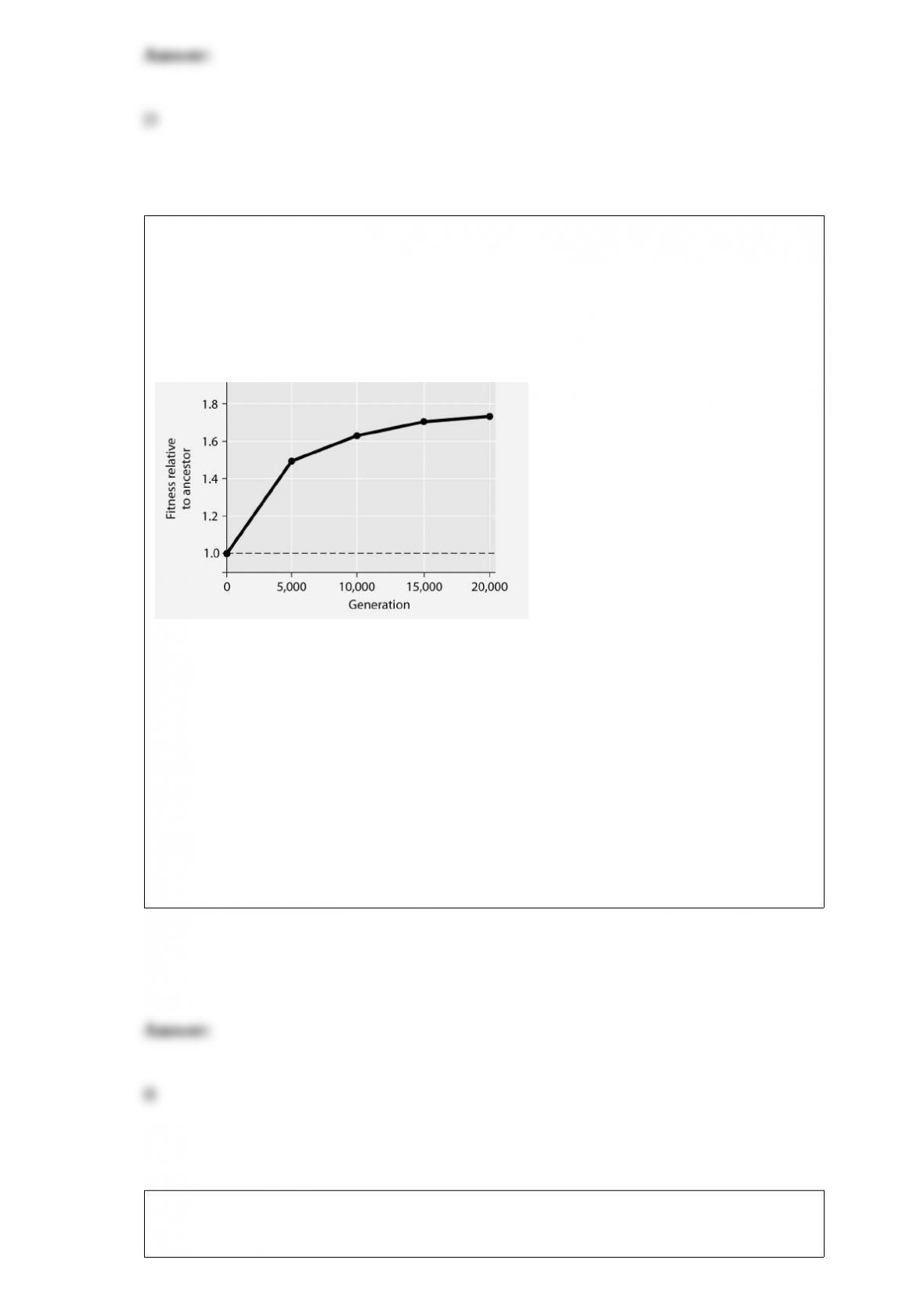
In this eight-year experiment, twelve populations of E. coli, each begun from a single
cell, were grown in low-glucose conditions for 20,000 generations. Each culture was
introduced to fresh growth medium every twenty-four hours. Occasionally, samples
were removed from the populations, and their fitness in low-glucose conditions was
tested against that of members sampled from the ancestral (common ancestor) E. coli
population.
If new genetic variation in the experimental populations arose solely by spontaneous
mutations, then the most effective process for subsequently increasing the prevalence of
the beneficial mutations in the population over the course of generations is _____.
A) transduction
B) binary fission
C) conjugation
D) transformation
Where is primary growth occurring in an old tree?

A) Nowhere; trees more than a year old have only secondary growth.
B) closest to ground level at the base of the tree
C) in young branches where leaves are forming
D) where the vascular cambium and cork cambium are located
Which of the following is a characteristic of all chordates at some point during their life
cycle?
A) jaws
B) post-anal tail
C) four-chambered heart
D) vertebrae
What is the definition of one map unit?
A) the physical distance between two linked genes
B) a 1% frequency of recombination between two genes
C) 1 nanometer of distance between two genes
D) the recombination frequency between two genes assorting independently
Sexual reproduction _____.
A) allows animals to conserve resources and reproduce only during optimal conditions
B) can produce diverse phenotypes that may enhance survival of a population in a
changing environment
C) enables males and females to remain isolated from each other while rapidly
colonizing habitats
D) guarantees that both parents will provide care for each offspring
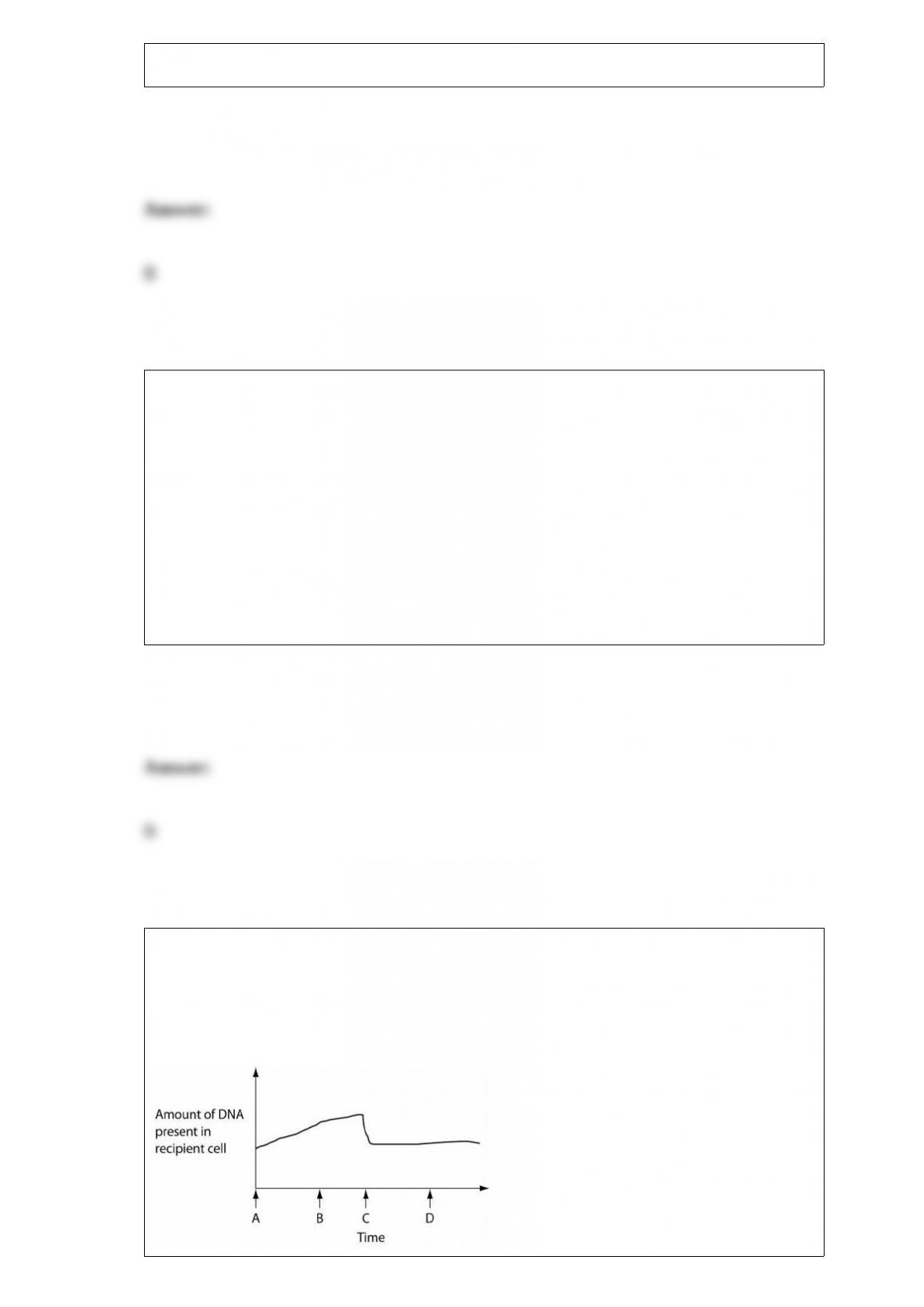
The figure below depicts changes to the amount of DNA present in a recipient cell that
is engaged in conjugation with an Hfr cell. Hfr cell DNA begins entering the recipient
cell at Time A. Assume that reciprocal crossing over occurs (in other words, a fragment
of the recipient’s chromosome is exchanged for a homologous fragment from the Hfr
cell’s DNA).

During which two times can the recipient accurately be described as “recombinant” due
to the sequence of events portrayed in the figure?
A) during Times C and D
B) during Times A and C
C) during Times A and B
D) during Times B and D
Which of the following statements is true of histones?
A) Each nucleosome consists of two molecules of histone H1.
B) Histone H1 is not present in the nucleosome bead; instead, it draws the nucleosomes
together.
C) The carboxyl end of each histone extends outward from the nucleosome and is called
a “histone tail.”
D) Histones are found in mammals, but not in other animals or in plants or fungi.
Ions diffuse across membranes through specific ion channels down _____.
A) their chemical gradients

B) their concentration gradients
C) the electrical gradients
D) their electrochemical gradients
Starting with one molecule of glucose, the energy-containing products of glycolysis are
_____.
A) 2 NAD+, 2 pyruvate, and 2 ATP
B) 2 NADH, 2 pyruvate, and 2 ATP
C) 2 FADH2, 2 pyruvate, and 4 ATP
D) 6 CO2, 2 pyruvate, and 2 ATP
In lettuce seeds, blue light initiates germination. If you measured hormone levels within
the seed, which hormone would be produced upon exposure to blue light?
A) gibberellin
B) ethylene
C) abscisic acid

D) cytokinins
Parasitic species tend to have simple morphologies. Which of the following statements
best explains this observation?
A) Parasites are lower organisms, and this is why they have simple morphologies.
B) Parasites do not live long enough to inherit acquired characteristics.
C) Simple morphologies convey some advantage in most parasites.
D) Parasites have not yet had time to progress, because they are young evolutionarily.
Cytochalasin D is a drug that prevents actin polymerization. A cell treated with
cytochalasin D will still be able to _____.
A) divide in two
B) contract muscle fibers
C) extend pseudopodia
D) move vesicles within a cell
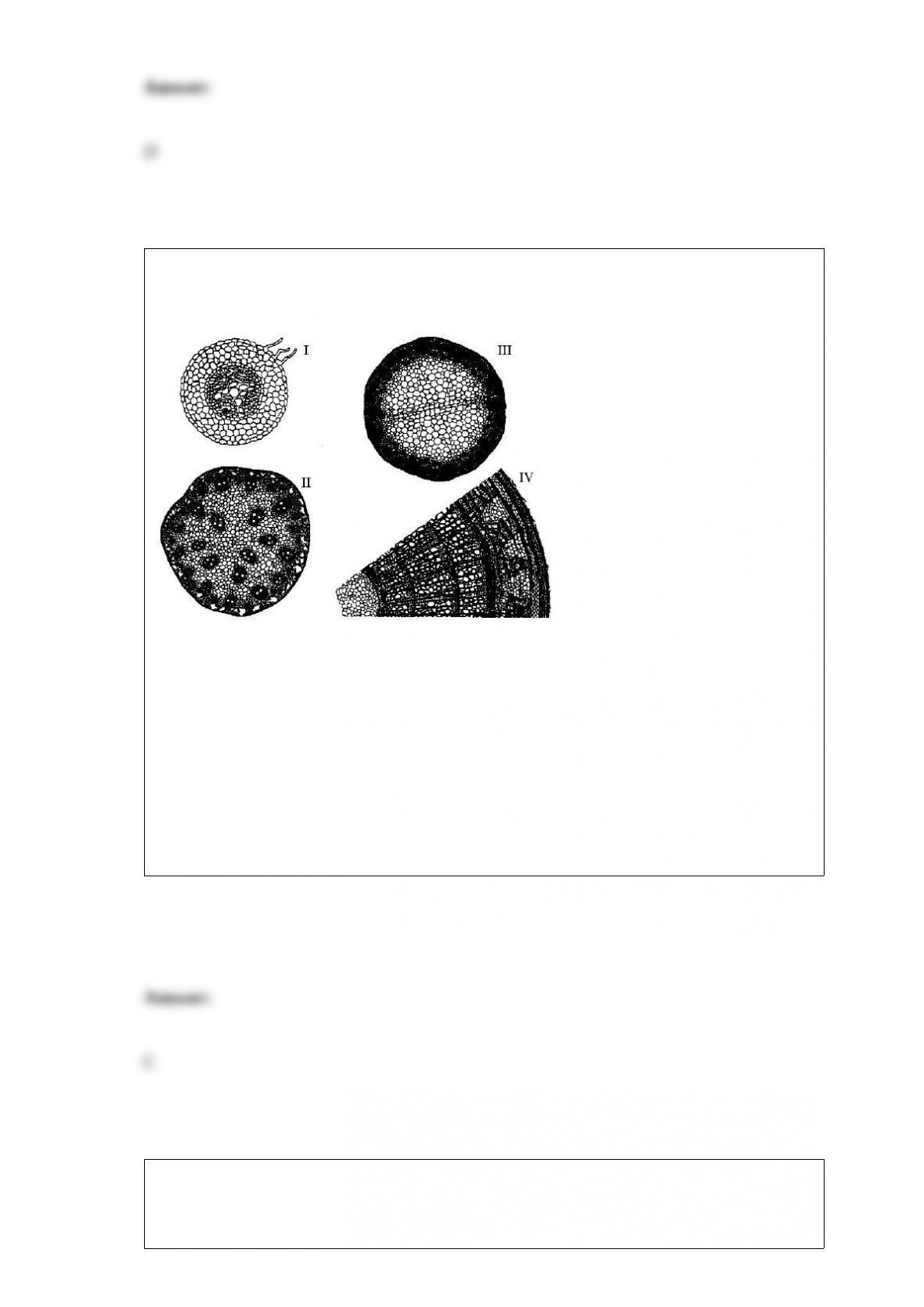
The following questions are based on the drawings of root or stem cross sections shown
in the figure.
Refer to the figure above. A woody eudicot is represented by _____.
A) II only
B) III only
C) IV only
D) I and III
Which of the following is a net sugar source for a deciduous angiosperm tree?
A) new leaves in early spring

B) fruits in summer
C) roots in early spring
D) roots in early autumn
Which of the following solutions would require the addition of the greatest amount of
base to bring the solution to neutral pH?
A) gastric juice at pH 2
B) vinegar at pH 3
C) black coffee at pH 5
D) household bleach at pH 12
One idea to mitigate the effects of burning fossil fuels on atmospheric CO2
concentrations is to pipe liquid CO2 into the ocean at depths of 2500 feet or greater. At
the high pressures at such depths, CO2 is heavier than water. What potential effects
might result from implementing such a scheme?
A) increased carbonate concentrations in the deep waters
B) increased growth of corals from a change in the carbonate”bicarbonate equilibrium

C) no effect because carbon dioxide is not soluble in water
D) increased acidity and decreased carbonate concentrations in the deep waters
Which bond or interaction would be difficult to disrupt when compounds are put into
water?
A) covalent bonds between carbon atoms
B) hydrogen bonds
C) ionic bonds
D) ionic and hydrogen bonds
Plant hormones produce their effects by_____.
I) altering the expression of genes
II) modifying the permeability of the plasma membrane
III) modifying the structure of the nuclear envelope membrane
A) only I
B) only II
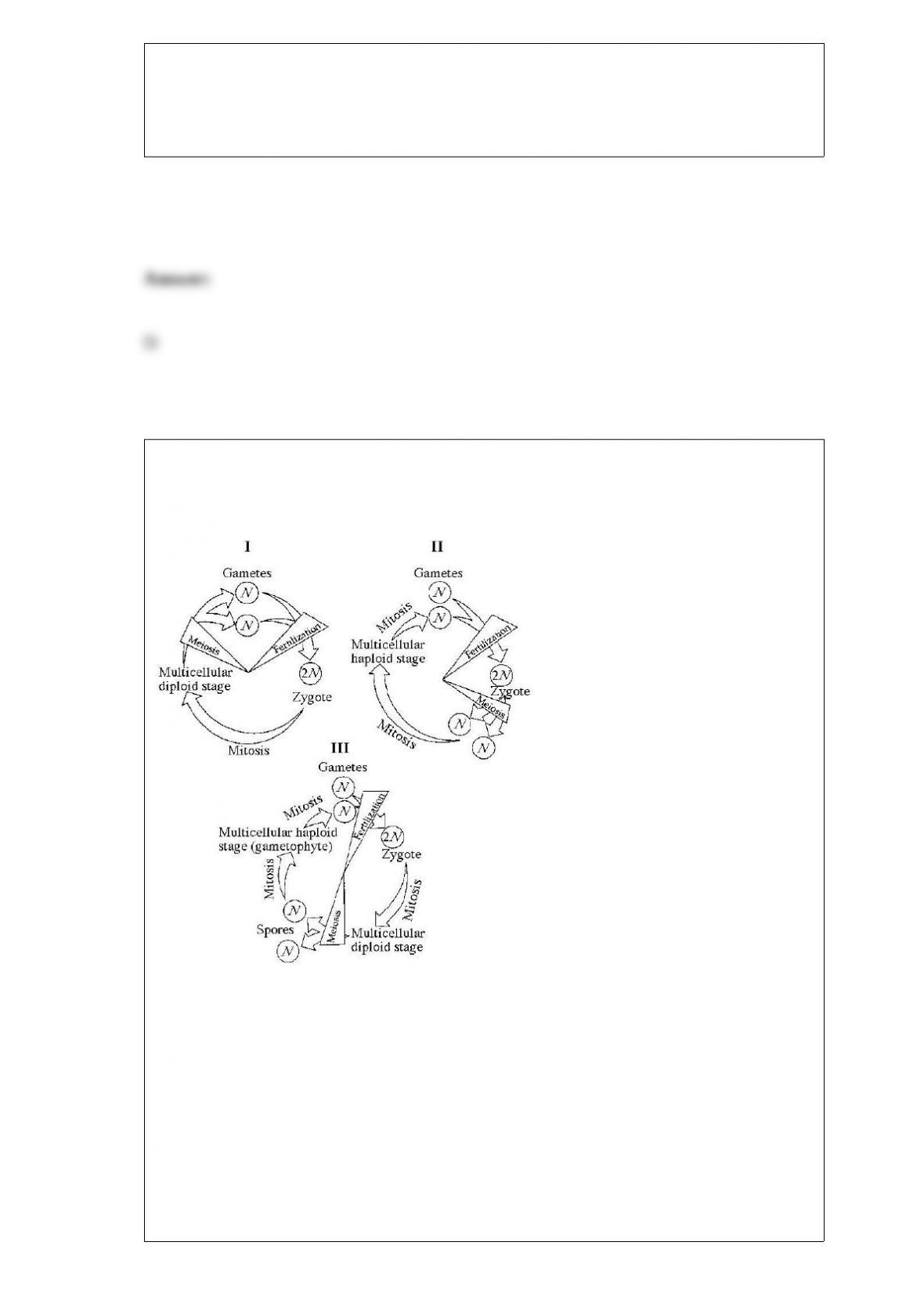
C) only III
D) only I and II
In a life cycle such as that shown in part III of the figure above, if the zygote’s
chromosome number is 10, which of the following will be true?
A) The sporophyte’s chromosome number per cell is 10 and the gametophyte’s is 5.
B) The sporophyte’s chromosome number per cell is 5 and the gametophyte’s is 10.
C) The sporophyte and gametophyte each have 10 chromosomes per cell.
D) The sporophyte and gametophyte each have 5 chromosomes per cell.

Changes in cell position occur extensively during _____.
A) organogenesis, but not during gastrulation or cleavage
B) cleavage, but not during gastrulation or organogenesis
C) gastrulation and cleavage
D) gastrulation
Why did scientists originally hypothesize that proteolytic enzymes such as pepsin and
trypsin are secreted in inactive form?
A) These proteolytic enzymes, in active form, would digest the very tissues that
synthesize them.
B) They identified the hormone that activates pepsin and trypsin.
C) The stomach is too acidic to maintain these enzymes in their active form.
D) Pepsin and trypsin have never been isolated in their fully activated form.

Which of the following statements is true about a phylogeny, as represented by a
phylogenetic tree?
I) Descendant groups (branches) from the same node do not necessarily share any
derived characters.
II) A monophyletic group can be properly based on convergent features.
III) The ancestral group often has all the synapomorphies of the descendant species.
A) only I
B) only II
C) only III
D) None. Not I, II, or III.