
Which of the following would likely be the most difficult to kill if you were you to can
your own food?
A) streptococci
B) endospores
C) biofilms
D) staphylococci
The Antarctic icefishes are the only known vertebrates to lack hemoglobin. Which of
the following would be LEAST likely to alter gas transport from the environment to an
icefish’s cells?
A) higher oceanic temperatures from global warming
B) higher concentrations of carbon monoxide in the water from pollution
C) higher concentrations of carbon dioxide in the water from pollution
D) an injury that reduces the surface area of gills
In plant cells, ________ may contain organic nutrients, pigments, and poisons.
A) mitochondria

B) chloroplasts
C) lysosomes
D) central vacuoles
During his trip on the Beagle, Darwin found that ________.
A) plants and animals living in temperate regions were most similar to each other,
regardless of the continent on which they were found
B) plants and animals living on a continent seemed more closely related to each other
than to plants and animals living in similar regions on other continents
C) fossils found on a particular continent were clearly not related to the plants and
animals living on that continent today
D) plants and animals were similar on every continent and in every type of region
What molecules are scientists currently trying to use to power nanotechnology devices,
such as microscopic robots?
A) DNA
B) Enzymes
C) Lipids

D) Cell membranes
Read the following scenario to answer the following questions.
In the late 1800s, Charles Darwin and his son Francis conducted the first experiments
on phototropism. Several years later, their work was furthered by Peter Boysen-Jensen,
Arpad Paal, and Frits Went. Peter Boysen-Jensen separated the tip of grass shoots from
the rest of the plant using either tiny blocks of agar (a gelatin) or a mica wafer (an
impervious rock). Like the Darwins, Boysen-Jensen noticed that the grass did not grow
toward a light without its tips. However, when he separated the tip from the rest of the
plant using agar, the grass would grow toward a light. The grass would not grow toward
a light if the tip of the shoot was separated using a mica wafer. Arpad Paal cut off the
tips of grass shoots that were growing in the dark. He placed these cut tips back on the
shoots, but with only part of the tip covering the cut surface, and found that the plants
grew, in the dark, in the opposite direction from the side with the tip covering it. Lastly,
Frits Went removed the tips of many grass shoots and placed them on a large block of
agar for a few hours. Then, he cut up the agar block, and was able to make grass shoots
without any tips at all grow toward a light by putting these agar blocks on the cut
surfaces of the shoots (i.e., no tips were placed back on the shoots, only the agar).
If Paal grew his plants using a light source that was directly overhead, what should he
have observed?
A) The grass shoot would not grow.
B) The grass shoot would grow upward and straight.
C) The grass shoot would grow in the opposite direction from the side with the tip
covering the cut surface.
D) The grass shoot would grow in the same direction as the side with the tip covering
the cut surface.
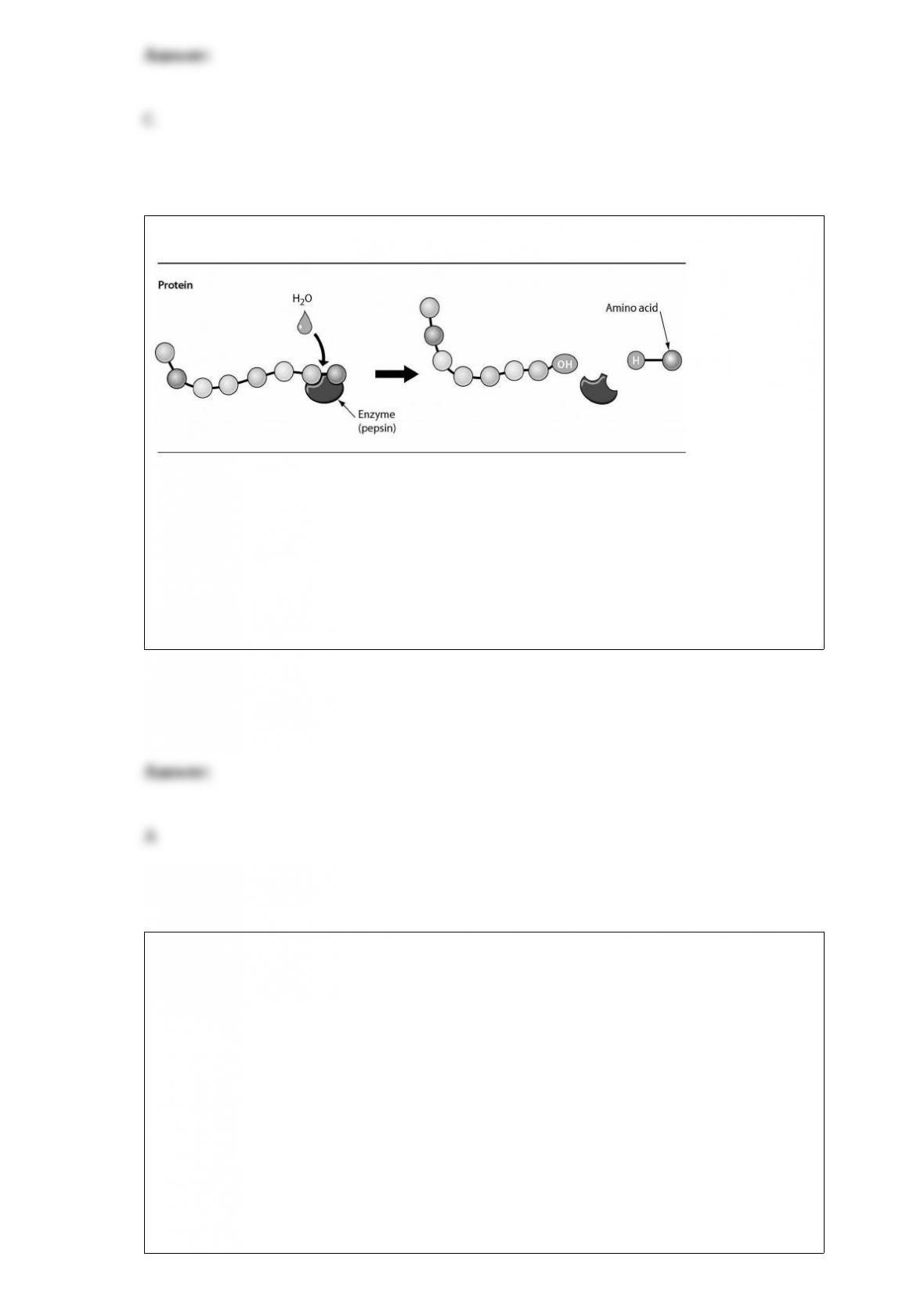
The figure below shows ________.
A) the chemical digestion of a protein
B) the building of a protein by the enzyme pepsin
C) the mechanical digestion of a protein
D) the addition of a water molecule to add an amino acid to a protein
Read the following scenario to answer the following question(s).
Biomedical scientists have recently developed an anticancer drug delivery system that
sneaks the anticancer drug into cancer cells before releasing it. They were able to do
this by using two sets of liposomes. An anticancer drug (Doxorubicin (Dox)) bound to
DNA molecules was added into one set of liposomes (type A), and a high concentration
of ATP molecules were added to the other set of liposomes (type B). The drug is
inactive when bound to DNA molecules. Researchers inject both types of liposomes (A
and B) into cancer cells, and upon doing so their contents are released. The ATP
molecules (from liposome type A) bind to the DNA molecules (from liposome type B)
and activate the drug, thus inducing cell death and decreasing tumor size.

Mice with breast cancer tumors were treated with this liposome system to test the
effectiveness of the drug. The scientists performed three trials one with both types of
liposomes (Dox + ATP), one with just the drug (Dox only), and one with a salt solution
(control). Examine the figure below and answer the following questions.
What statement regarding this data is TRUE?
A) The weight of the tumors will not change if not treated with Dox or Dox + ATP.
B) Tumor weight decreases when you add Dox only to cancer cells.
C) Adding Dox only or Dox + ATP result in similar decreases in tumor weight.
D) Dox is entering the cancer cells via endocytosis to induce cell death.
Read the following scenario to answer the following questions.
An abundant and continual supply of ATP is necessary for all living cells. Active
muscle cells require an extraordinary amount of ATP to permit strenuous exercise for
prolonged periods. Toxins, reduced blood flow, and a compromised respiratory system
can interfere with the transport of oxygen to active cells. A runner in a marathon faces
multiple obstacles to continue to produce sufficient ATP to remain competitive.
When oxygen delivery becomes insufficient to support a runner’s aerobic metabolism,
cells switch to an emergency mode in which ________.
A) ATP is generated less efficiently by harvesting the heat energy in a cell
B) ATP is inefficiently produced and lactic acid is generated as a by-product

C) lactic acid is broken down to produce smaller amounts of ATP
D) carbon dioxide is joined with water to generate much smaller amounts of ATP
If a cell is like a house, which one of the following is most similar to the way that a
steroid hormone works?
A) A postal worker leaves mail for you at your front door.
B) A visitor to your home knocks on your front door.
C) Radio signals are received by a stereo in your bedroom.
D) You walk outside of your home to get a better signal on your cell phone.
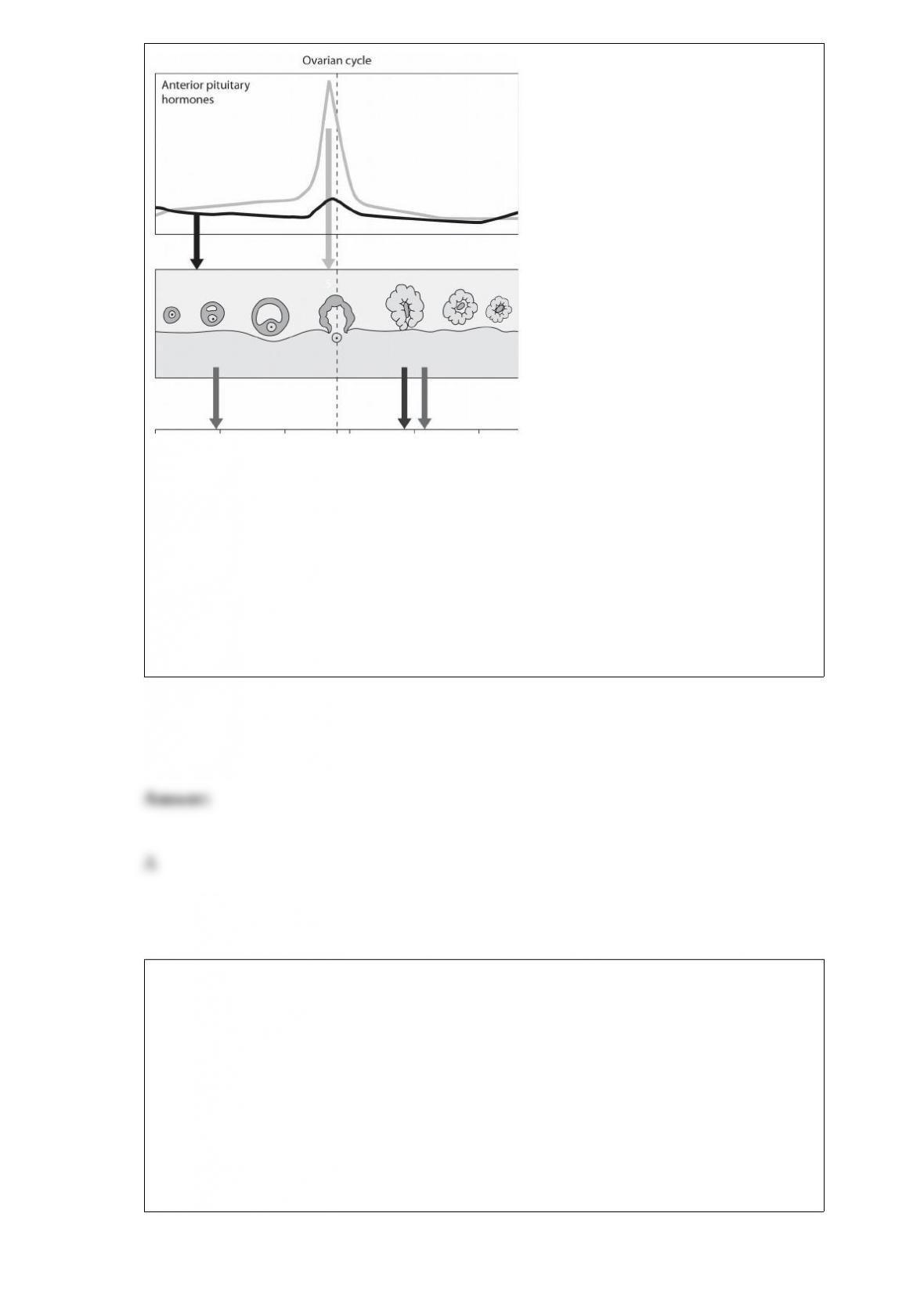
What does the ovarian cycle image above illustrate?
A) The peak of luteinizing hormone occurs slightly before mid-cycle.
B) Ovulation occurs well before mid-cycle.
C) The level of luteinizing hormone does not change much during the cycle.
D) The level of progesterone spikes just before mid-cycle.
Whose experiments demonstrated that, given the conditions on the primitive Earth,
biological monomers could arise spontaneously?
A) Miller and Urey
B) Darwin and Linnaeus
C) Watson and Crick
D) Wallace and Darwin
Which of the following do guard cells act to regulate?
A) stomata
B) cuticle
C) epidermis
D) root hairs
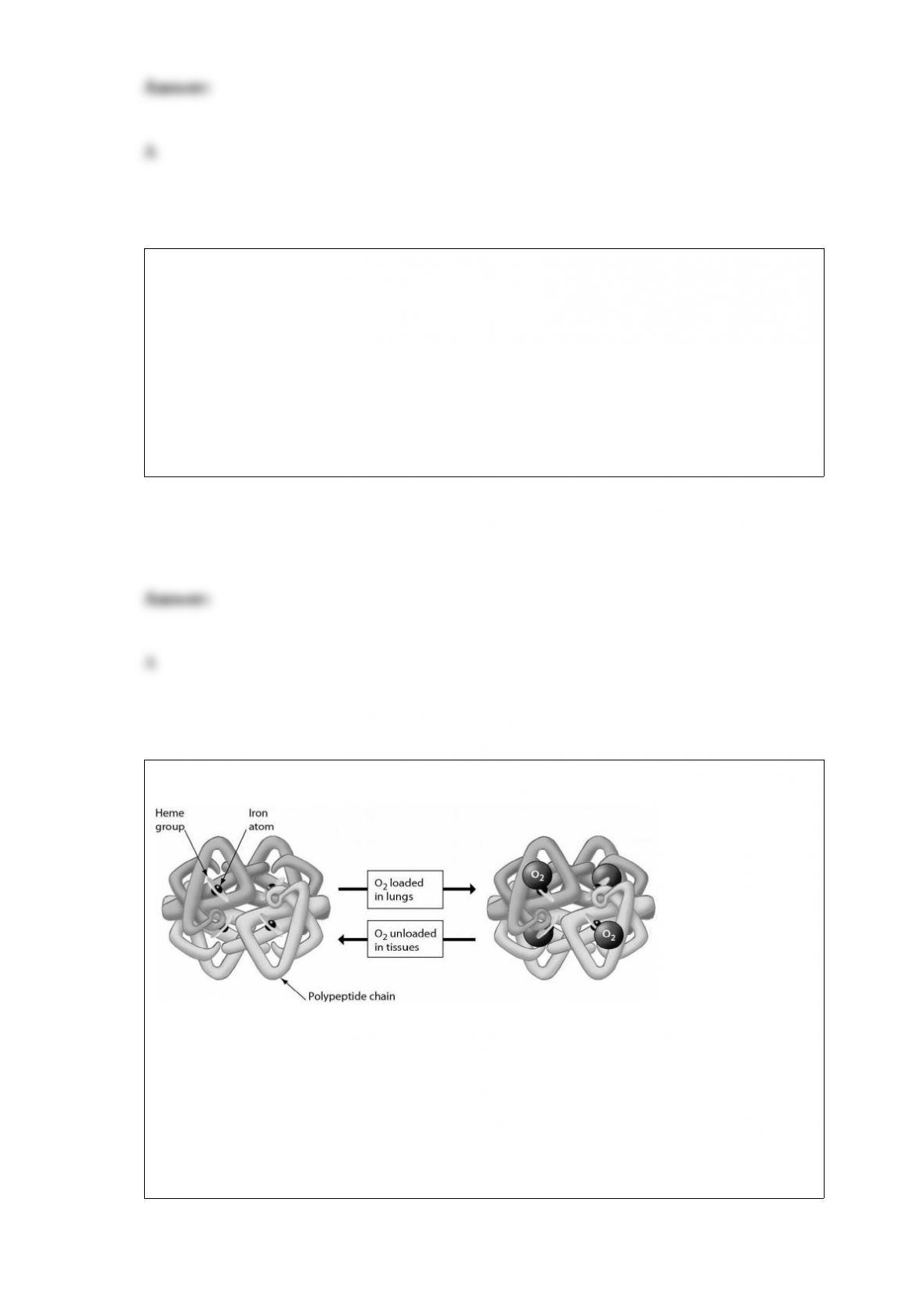
The figure below shows that ________.
A) hemoglobin can bind to either oxygen or carbon dioxide
B) a hemoglobin molecule can bind up to four molecules of oxygen
C) a red blood cell contains four hemoglobin molecules
D) each iron atom can bind four oxygen molecules

________ is a steroid.
A) Butter
B) Sucrose
C) Amino acid
D) Estrogen
Land was first colonized about ________ years ago.
A) 100 million
B) 500 million
C) 1.7 billion
D) 2.5 billion

Which of the following lack vascular tissue?
A) cone-bearing plants
B) grasses
C) ferns
D) mosses
Relative to prokaryotic cells, eukaryotic cells are usually ________.
A) larger and more complex
B) smaller and simpler
C) larger and equally complex
D) smaller and more complex
Please read the following scenario to answer the following questions.
CO2 is not the only greenhouse gas that impacts global climate change. Other
greenhouse gases (GHGs) may be equally or more effective than CO2 at trapping heat
on Earth. Climate scientists determine how much a GHG may impact global warming

based on two factors: the efficiency with which a GHG absorbs energy (i.e. traps heat
on Earth) and the length of time (in years) that the gas remains in the atmosphere. A
unit of measurement called the Global Warming Potential (GWP) is used to describe
how much energy a GHG absorbs over a specific period of time (100 years is a standard
time frame). All GWP values of GHGs are compared to the GWP of CO2, which is
given a value of 1.
has a GWP over 20 times higher than CO2. However, CH4 emitted today lasts for only
about a decade in the atmosphere, while the GWP of CO2 can last for thousands of
years. What is a possible reason that CH4 can have such a high GWP as compared to
CO2?
A) The 100-year time frame is too short of a time frame to compare CH4 and CO2.
B) CH4 absorbs more energy than CO2.
C) CH4 is less efficient at trapping heat on Earth.
D) CH4 is not a proven greenhouse gas.
A single carbon atom can form a maximum of ________ covalent bond(s).
A) 0
B) 1
C) 2
D) 4

Which of the following are isomers?
A) glucose and fructose
B) glucose and sucrose
C) sucrose and glucose
D) lactose and maltose
The cerebral cortex is highly folded. Why might this be an advantage for the functions
of the cerebrum?
A) The increased surface area increases the area for higher-level thinking.
B) The increased surface area permits greater contact between the cerebrum and the
cerebellum.
C) The folds form grooves that let the bones of the skull reach deeply down between
brain regions.
D) The folds increase the areas where sensory receptors can reach the brain’s surface.

A major function of natural killer cells is to ________.
A) attack and kill pathogenic microorganisms
B) attack virus-infected cells
C) tag pathogenic microorganisms with antibodies
D) phagocytize microorganisms that have been tagged with antibodies
Which of the following convert soil ammonium to nitrate?
A) nitrifying bacteria
B) ammonifying bacteria
C) mycorrhizae
D) nitrogen-fixing bacteria
Homology is evidence of ________.
A) convergent evolution
B) polyploidy
C) common ancestry

D) paedomorphosis
What fraction of Earth’s surface has been altered by human use?
A) 25%
B) 50%
C) 75%
D) 95%
Some protozoans have special organelles called contractile vacuoles that continually
eliminate excess water from the cell. The presence of these organelles tells you that the
environment ________.
A) is isotonic to the protozoan
B) is hypotonic to the protozoan
C) is hypertonic to the protozoan
D) contains a higher concentration of solutes than the protozoan

Secretion is the movement of substances from the ________ to the ________.
A) nephron… blood
B) filtrate… blood
C) kidney… urinary bladder
D) blood… filtrate
Read the following scenario to answer the following questions.
In order for cytotoxic T cells to kill infected cells, they must bind to the self protein on
the surface of the infected cell. Other proteins on the surface of the cytotoxic T cells
assist with this binding process. One of these accessory proteins, CD8, has been
implicated in many immunodeficiency disorders, including AIDS. CD8 is required for
cytotoxic T cells to function normally.
Chronic alcohol use is associated with increased rates of pulmonary bacterial and viral
infections. A recent study examined this association by investigating the effects of
alcohol on the immune system in mice. Mice were given either water or alcohol
(ethanol) to drink and then were infected with the influenza virus. The number of
cytotoxic T cells that have the CD8 accessory protein was measured in both groups of
mice. The data collected are shown in the figure below.

Which group of mice would have a stronger cytotoxic C cell response?
A) The mice that drank water.
B) The mice that drank alcohol.
C) Both groups of mice would have the same responses.
D) There is not enough information to make a conclusion.
Multiple sclerosis involves primarily ________.
A) destruction of the medulla oblongata
B) deterioration of the corpus callosum
C) destruction of the myelin sheath
D) deterioration of parts of the spinal cord

Scientists hypothesize that disrupting our ________ communities may increase our
susceptibility to infectious diseases, predispose us to certain cancers, and contribute to
conditions such as asthma and other allergies, irritable bowel syndrome, Crohn’s
disease, and autism.
A) microbial
B) exotoxin
C) protist
D) pathogen
In Yellowstone National Park, hot springs can reach temperatures of 205F (96C).
Despite these high temperatures, Aquifex bacteria flourish. How might you classify
Aquifex bacteria?
A) slime molds
B) extremophiles
C) amoebas
D) algae
Which of the following animals is an ectotherm?

A) human
B) parrot
C) spiny lobster
D) field mouse