
Suppose a plant had a photosynthetic pigment that absorbed far-red wavelengths of
light. In which of the following environments could that plant thrive?
A) on the surface of a lake
B) on the forest floor, beneath a canopy of taller plants
C) on the ocean floor, in very deep waters
D) on mountaintops, closer to the Sun
During an auditory transduction, ion flow varies across the _____.
A) tectorial membrane
B) round-window membrane
C) hair cell membrane
D) basilar membrane
Amino acids are acids because they always possess which functional group?
A) amino
B) carbonyl

C) carboxyl
D) phosphate
Logically, which of these should cast the most doubt on the relationships depicted by an
evolutionary tree?
A) Some of the organisms depicted by the tree had lived in different habitats.
B) The skeletal remains of the organisms depicted by the tree were incomplete (in other
words, some bones were missing).
C) Transitional fossils had not been found.
D) Relationships between DNA sequences among the species did not match
relationships between skeletal patterns.
Where are the proteins of the electron transport chain located?
A) mitochondrial outer membrane
B) mitochondrial inner membrane
C) mitochondrial intermembrane space
D) mitochondrial matrix

Obesity in humans is most clearly linked to _____.
A) type 1 diabetes and prostate cancer
B) type 2 diabetes and muscle hypertrophy
C) type 2 diabetes and cardiovascular disease
D) type 2 diabetes and decreased appetite
Hans Spemann and colleagues developed the concept of the organizer in amphibian
embryos while studying the _____.
A) medial cells between the optic cups
B) anterior terminus of the notochord
C) lateral margins of the neural tube
D) dorsal lip of the blastopore
At which stage of a basidiomycete’s life cycle would reproduction be halted if an
enzyme that prevented the fusion of hyphae was introduced?
A) fertilization
B) karyogamy
C) plasmogamy
D) germination
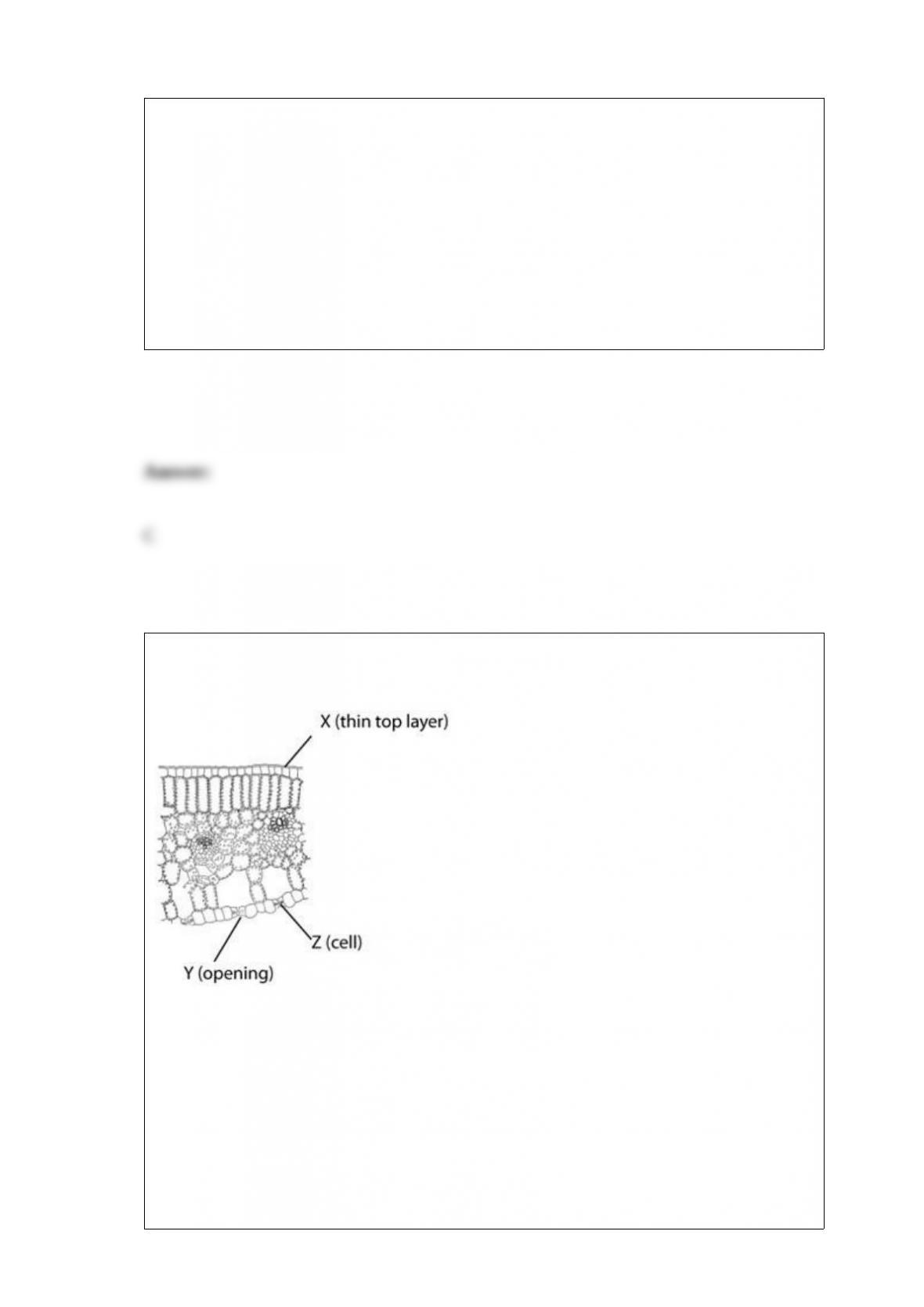
The following diagram is of a cross section of a plant leaf. Use the diagram to answer
the question(s) below.
The main function associated with structure X is _____.
A) absorption of carbon dioxide
B) retention of water
C) collection of light
D) release of carbon dioxide

Over human history, which process has been most important in improving the features
of plants that have long been used by humans as staple foods?
A) genetic engineering
B) artificial selection
C) sexual selection
D) pesticide and herbicide application
Polypeptides can have which of the following types of effects?
I) autocrine
II) paracrine
III) endocrine
A) only I and III
B) only II and III
C) only I and II
D) I, II, and III

Which of the following statements about bulk flow are correct?
I) Bulk flow is driven primarily by pressure potential.
II) Bulk flow depends on a difference in pressure potential at the source and sink.
III) Bulk flow depends on the force of gravity on a column of water.
IV) Bulk flow may be the result of either positive or negative pressure potential.
A) I and III
B) II and III
C) I, II, and IV
D) I, II, III, and IV
The data were obtained from a study of the length of time spent in each phase of the
cell cycle by cells of three eukaryotic organisms designated beta, delta, and gamma.
Minutes Spent in Cell Cycle Phases
The best conclusion concerning delta is that the cells _____.
A) contain no DNA.

B) contain no RNA.
C) are in the G0 phase.
D) divide in the G1 phase.
Which of the following is the most likely explanation for hypothyroidism in a patient
whose iodine level is normal?
A) greater production of T3 than of T4
B) hyposecretion of thyroid-stimulating hormone (TSH)
C) hypersecretion of thyroid-stimulating hormone (TSH)
D) a decrease in the thyroid secretion of calcitonin
Which of the various species concepts distinguishes two species based on the degree of
genetic exchange between their gene pools?
A) phylogenetic
B) ecological
C) biological

D) morphological
All of the following are part of a prokaryotic cell EXCEPT_____.
A) a cell wall
B) a plasma membrane
C) ribosomes
D) an endoplasmic reticulum
If a pharmaceutical company wished to design a drug to maintain low blood sugar
levels, one approach might be to design a compound _____.
A) that activates epinephrine receptors
B) that increases cAMP production in liver cells
C) to block G protein activity in liver cells
D) that increases phosphorylase activity

If you were able to walk into an opening cut into the center of a large redwood tree,
when you exited from the middle of the trunk (stem) outward, you would cross, in
order, _____.
A) the annual rings, new xylem, vascular cambium, phloem, and bark
B) the secondary xylem, cork cambium, phloem, and periderm
C) the vascular cambium, oldest xylem, and newest xylem
D) the secondary xylem, secondary phloem, and vascular cambium
The Brazil nut tree, Bertholletia excels (n = 17), is native to tropical rain forests of
South America. It is a hardwood tree that can grow to over 50 meters tall, is a source of
high-quality lumber, and is a favorite nesting site for harpy eagles. As the rainy season
ends, tough-walled fruits, each containing 8-25 seeds (Brazil nuts), fall to the forest
floor. Brazil nuts are composed primarily of endosperm. About $50 million worth of
nuts are harvested each year. Scientists have discovered that the pale yellow flowers of
Brazil nut trees cannot fertilize themselves and admit only female orchid bees as
pollinators. The agouti (Dasyprocta spp.), a cat-sized rodent, is the only animal with
teeth strong enough to crack the hard wall of Brazil nut fruits. It typically eats some of
the seeds, buries others, and leaves still others inside the fruit, which moisture can now
enter. The uneaten seeds may subsequently germinate.
Entrepreneurs attempted, but failed, to harvest nuts from plantations grown in Southeast
Asia. Attempts to grow Brazil nut trees in South American plantations also failed. In
both cases, the trees grew vigorously, produced healthy flowers in profusion, but set no
fruit. Consequently, what is the likely source of the problem?
A) poor sporophyte fertility
B) failure to produce fertile ovules
C) failure to produce pollen
D) pollination failure
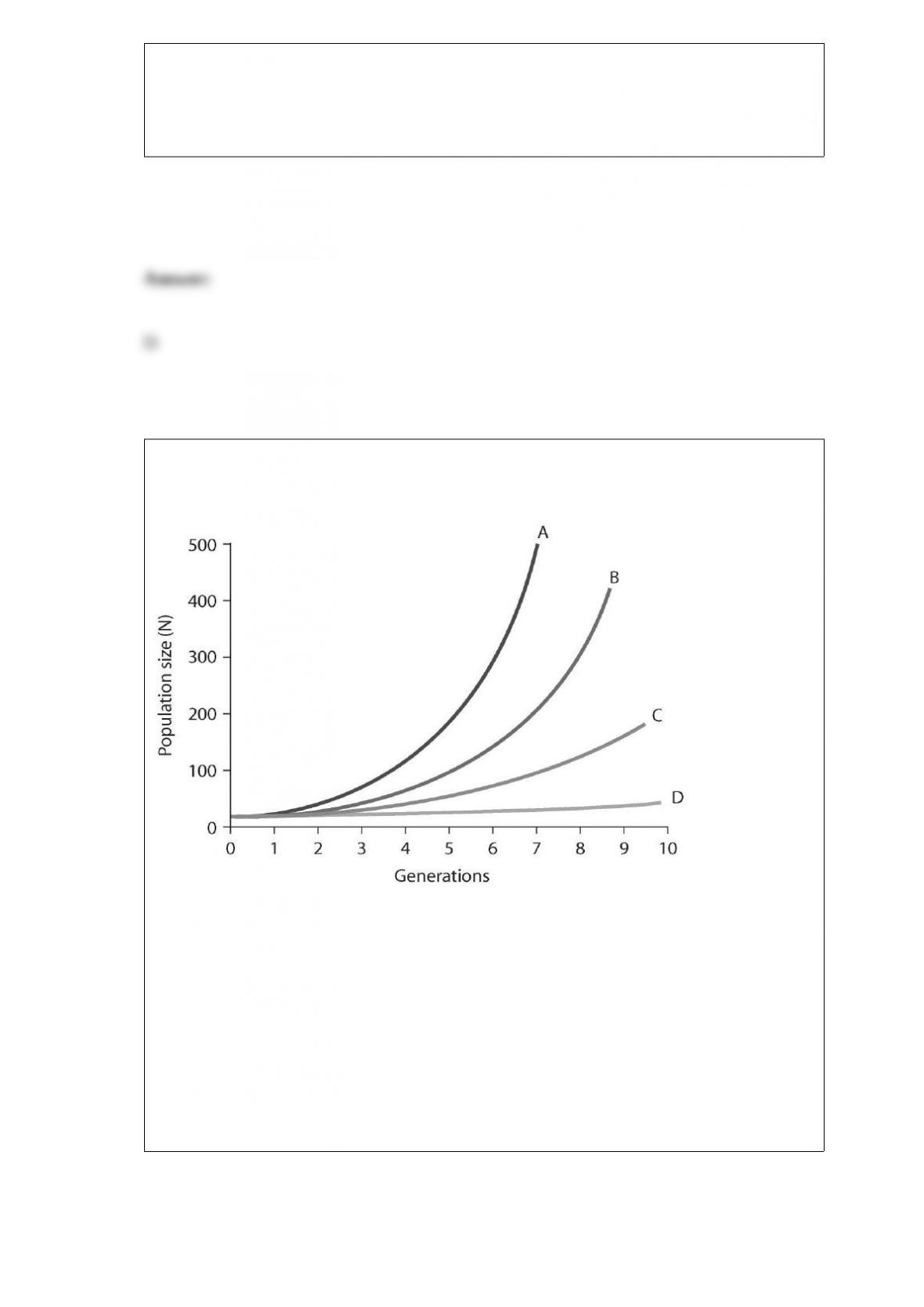
In the figure above, which of the lines represents the highest per-capita rate increase
(r)?
A) line A
B) line B
C) line C
D) line D

Organic molecules with only hydrogens and five carbon atoms cannot _____.
A) have a branching carbon skeleton
B) have different combinations of double bonds between carbon atoms
C) have different positions of double bonds between carbon atoms
D) form enantiomers
Canine phosphofructokinase (PFK) deficiency afflicts Springer spaniels, affecting an
estimated 10% of the breed. Given its critical role in glycolysis, one implication of the
genetic defect resulting in PFK deficiency in dogs is _____.
A) early embryonic mortality
B) elevated blood-glucose levels in the dog’s blood
C) an intolerance for exercise
D) a reduced life span

In vertebrate animals, spermatogenesis and oogenesis differ in that _____.
A) oogenesis begins at the onset of sexual maturity, whereas spermatogenesis begins
during embryonic development
B) oogenesis produces four functional haploid cells, whereas spermatogenesis produces
only one functional spermatozoon
C) cytokinesis is unequal in oogenesis, whereas it is equal in spermatogenesis
D) oogenesis ends at menopause, whereas spermatogenesis is finished before birth
Simard et al. (1997) further hypothesized that if reciprocal transfer did occur, it would
be a source-sink relationship driven by photosynthetic rates. That is, if one seedling is
in full sun and the other in deep shade, there will be a net movement of carbon from the
seedling in full sun to the one in deep shade. If a shade was placed over the birch
seedlings and the cedar, and the Douglas fir was left in full sun, what result could
Simard and colleagues expect?
A) More 13C would be found in the birch than in the Douglas fir.
B) More 13C would be found in the Douglas fir than in the birch.
C) The most 13C would be found in the cedar.
D) The most 14C would be found in the cedar.

Which of the following statements about protected areas that have been established to
preserve biodiversity are correct?
I) About 25 percent of Earth’s land area is now protected.
II) National parks are one of many types of protected areas.
III) Management of a protected area should be coordinated with management of the
land surrounding the area.
IV) It is especially important to protect biodiversity hot spots.
A) only I and III
B) only II and IV
C) only I, II, and IV
D) only II, III, and IV
What problem with red-cockaded woodpecker populations in the southeastern United
States was addressed by habitat intervention?
A) The only habitat that can support their recovery is large tracts of mature oak forest.
B) The mature pine forests in which they live cannot ever be subjected to forest fire.
C) All of the appropriate red-cockaded woodpecker habitat has already been logged or
converted to agricultural land.
D) The social organization of the red-cockaded woodpecker precluded the dispersal of
reproductive individuals.
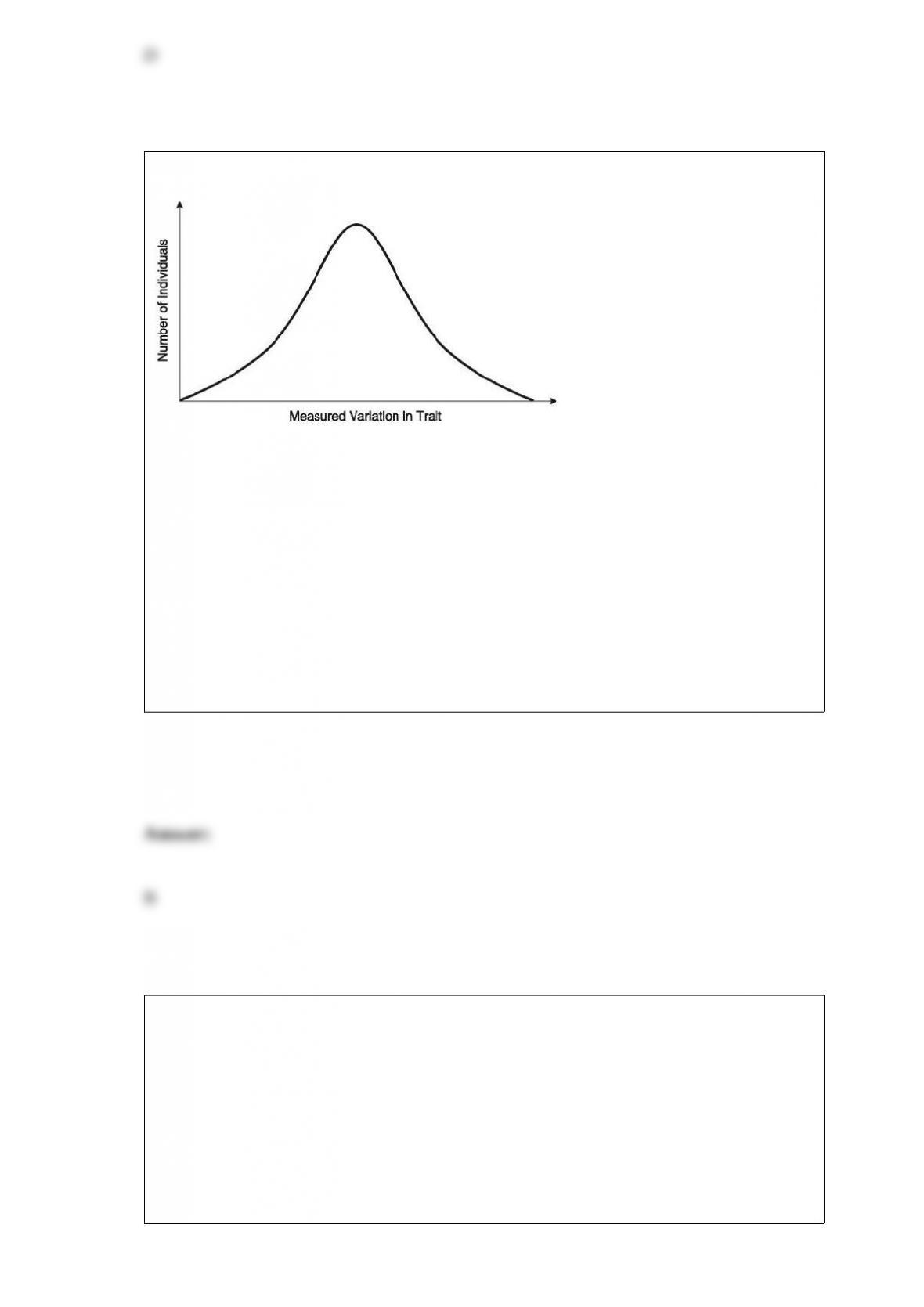
In a very large population, a quantitative trait has the following distribution pattern.
If there is no gene flow, the curve shifts to the left or to the right, and the population
size consequently increases over successive generations, which of the following is most
likely occurring?
A) immigration or emigration
B) directional selection
C) disruptive selection
D) genetic drift
Sponges _____.
A) have larvae which are motile and move via the motion of cilia
B) are the simplest diploblastic animals
C) have a nerve net but not a central nervous system
D) have feeding cells called dinoflagellates

Some viruses can be crystallized and their structures analyzed. One such virus is yellow
mottle virus, which infects beans. This virus has a single-stranded RNA genome
containing about 6300 nucleotides. Its capsid is 25-30 nm in diameter and contains 180
identical capsomeres.
If the yellow mottle virus begins its infection of a cell by using its genome as mRNA,
which of the following would you expect to be able to measure?
A) replication rate
B) transcription rate
C) translation rate
D) formation of new transcription factors
The mathematical expression for the change in free energy of a system is ΔG =ΔH –
TΔS. Which of the following is (are) correct?
A) ΔS is the change in enthalpy, a measure of randomness.
B) ΔH is the change in entropy, the energy available to do work.
C) ΔG is the change in free energy.
D) T is the temperature in degrees Celsius.

Low selectivity of solute movement is a characteristic of _____.
A) H+ pumping to control pH
B) reabsorption mechanisms along the proximal tubule
C) filtration from the glomerular capillaries
D) secretion along the distal tubule