
The principle that energy cannot be created or destroyed is known as ________.
A) cellular respiration
B) conservation of energy
C) conservation of heat
D) entropy
A protist that contains contractile vacuoles most likely lives ________.
A) in a marine environment
B) within the cells of another organism
C) in fresh water
D) in ice
What are the two main processes upon which ecosystems depend?
A) speciation and evolution
B) nutrient recycling and energy flow
C) decomposition and nutrient recycling

D) sunlight and photosynthesis
Read the following scenario to answer the following question(s).
Malaria is a disease caused by parasitic protists in the genusPlasmodium. The parasite is
transmitted to humans by female Anopheles mosquitoes. ThePlasmodium parasite feeds
on human red blood cells, eventually destroying them. Humans infected with malaria
can exhibit many symptoms. Depending on the severity of the infection, these can range
from fever, chills, sweating, and headaches to anemia and kidney failure. Ultimately,
malaria can result in death. However, if time and money permit, once a person is
infected, they can be treated with different antimalarial drugs. Two commonly used
drugs are artemisinin and quinine. In addition, one way to prevent the spread of malaria
is to apply pesticides to treat areas with Anopheles mosquitoes. The National Malaria
Eradication Program began work in 1947 with the goal of eliminating malaria from the
southern United States. In 1947, 15,000 cases of malaria were reported nationwide. By
1950, only 2,000 cases were reported, and by 1951, malaria was considered eradicated
from the United States. Today, the disease is most common in Africa and South
America, two continents that are highly impoverished. About one million people die
from malaria every year, many of them children. In Africa, it is estimated that one in
every five childhood deaths is due to malaria.
A vector is an organism that transfers a pathogen to a host. In the case of malaria, the
vector(s) is (are) ________.
A) humans only
B) humans and Anopheles mosquitoes
C) Anopheles mosquitoes only
D) humans, Plasmodium, and Anopheles mosquitoes

Which one of the following STDs is NOT caused by a virus?
A) AIDS
B) chlamydia
C) genital warts
D) genital herpes
Examples of invasive species include ________.
A) kudzu and red-cockaded woodpeckers
B) cod and Chilean sea bass
C) snowshoe hares and kudzu
D) cheatgrass and Burmese pythons
Why is blood pressure higher during systole than during diastole?

A) The contraction of the heart during systole increases the blood pressure against
arterial walls.
B) The relaxation of the heart during systole increases the blood pressure against
arterial walls.
C) The contraction of the heart during diastole decreases the blood pressure against
arterial walls.
D) More blood flows into the heart during systole than during diastole.
Which of the following parts of a cell is (are) most like the shipping center of a
company?
A) the Golgi apparatus
B) mitochondria
C) chloroplasts
D) the nucleolus
The human genome consists of about ________ chemical letters.
A) 300,000

B) 1 million
C) 3 billion
D) 300 billion
What are eukaryotic genes composed of?
A) RNA
B) organelles
C) RNA and DNA
D) DNA
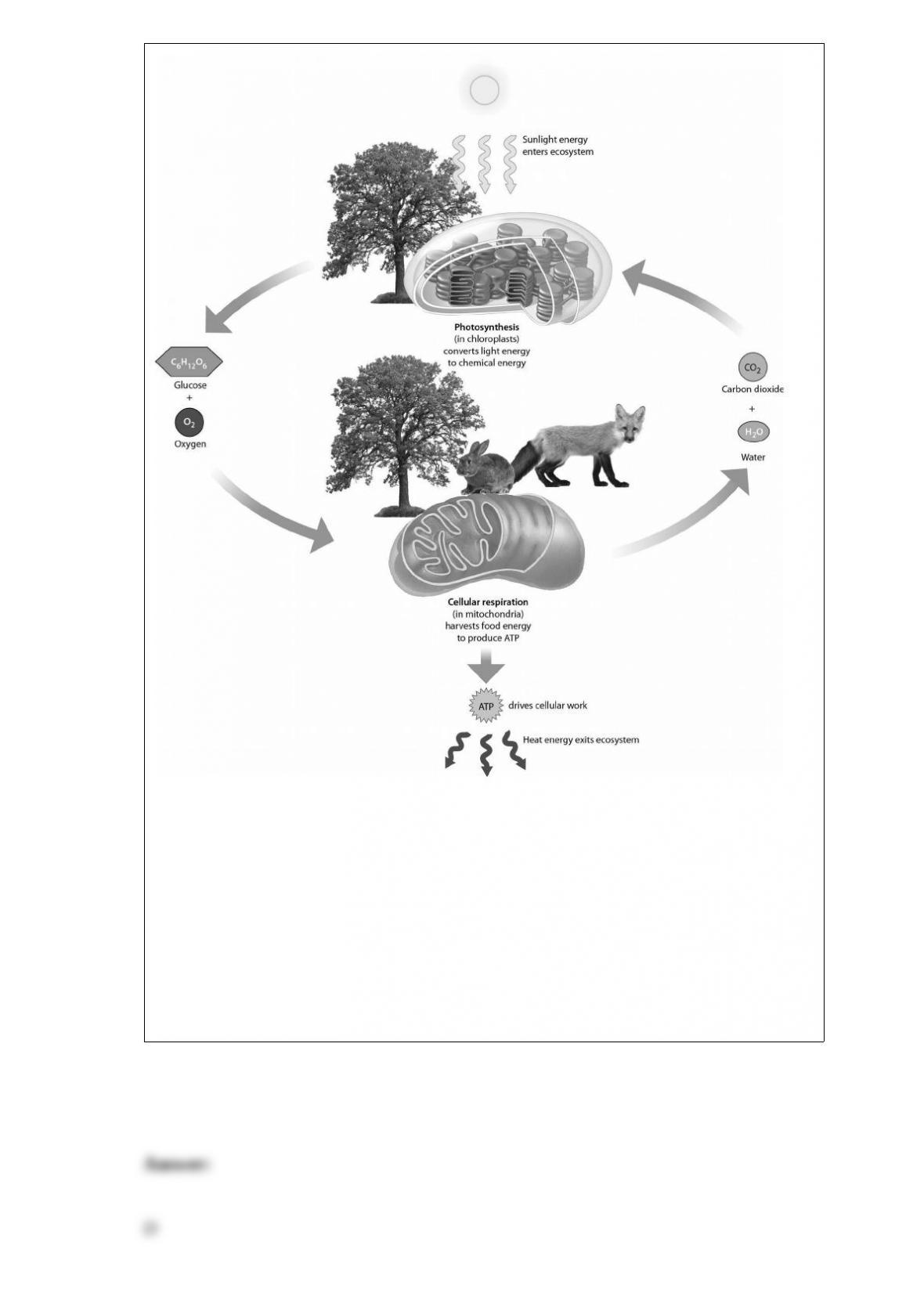
Examine the figure above. Which of the following reactant(s) primarily come(s) from
the air?
A) water
B) glucose
C) carbon dioxide
D) oxygen and carbon dioxide

The science of naming, identifying, and classifying organisms is called ________.
A) biogeography
B) systematics
C) phylogeny
D) taxonomy
In angiosperms, what structures house female gametophytes?
A) stigmas
B) petals
C) ovules
D) sepals
Please read the following scenario and then answer the following questions.
Molecular biologists have perfected DNA fingerprinting so that it is possible to use the
technique to provide evidence to solve crimes and even identify a child’s parents.
Recently, a U.S. immigrant asked the U.S. Citizenship and Immigration Services for
permission to have her young daughter who was living with grandparents in their
homeland join her in the United States. Her request was denied because there was an
apparent mix-up with the child’s birth certificate and it could not be used as proof of
maternity. Other forms of proof are required in cases such as this. The mother requested
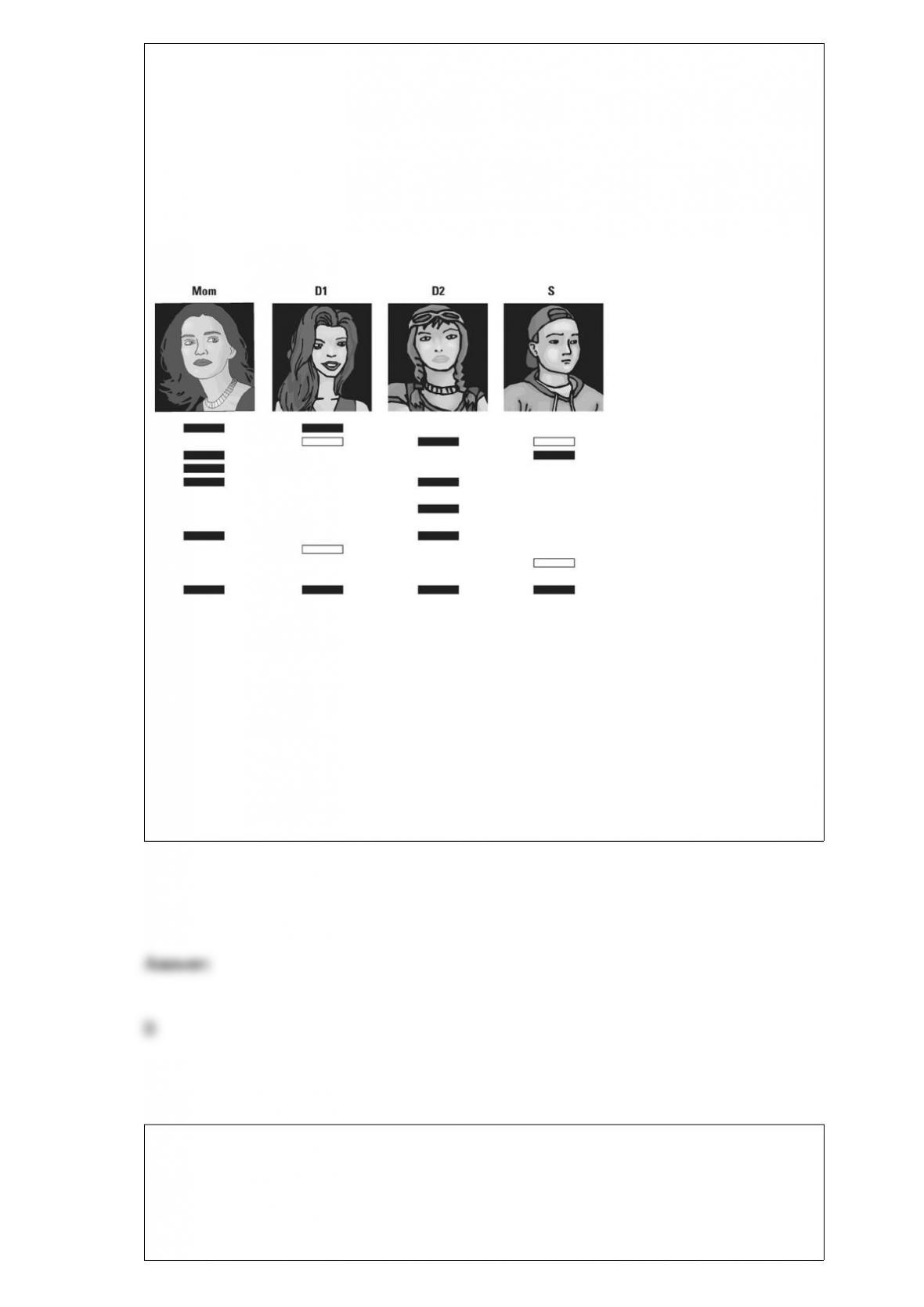
DNA fingerprinting to show that she was the mother of the daughter. Samples of DNA
were taken from the mother (Mom) and the daughter (D) as well as from her son (S)
living in the United States with her. STR analysis was run on the three samples, and the
results are shown below.
The results indicate that ________.
A) she is not the mother of the son
B) she is the mother of daughter D
C) she is not the mother of daughter D
D) the mother could not be the mother of both the daughter and the son
Which of the following is a measure of randomness in a system?
A) entropy
B) kinetic energy

C) potential energy
D) chemical energy
The vertebrate kidney helps to keep the acidity of the body fluids constant by varying
the amount of hydrogen ions (H+) it secretes into the urine. You can confidently predict
that this aspect of kidney function, like other mechanisms of homeostasis, will be
controlled by ________.
A) a negative feedback mechanism
B) nerve impulses from the brain
C) a hormone produced in the brain
D) a hormone produced in the kidney itself
In human females, the ovarian cycle begins when the ________.
A) levels of estrogen reach their maximum
B) hypothalamus stimulates the anterior pituitary to increase its output of FSH and LH
C) level of progesterone drops precipitously
D) levels of FSH and LH drop precipitously

Please use the following information to answer the following question(s).
The collared lizard is a species found in the Desert Southwest. Male collared lizards
show considerable color variation, ranging from brightly colored to a very dull pattern.
Your goal is to determine the function, if any, of male color patterns in collared lizards,
using the scientific method. Your tentative explanation is that male color plays a role in
attracting females for mating purposes. You predict that females will preferentially
choose brightly colored males over dull-colored ones. To test your prediction, you
observed the interactions of female collared lizards with their male counterparts. You
selected males that were the same age and size, and that differed only in their coloration
pattern. You placed equal numbers of the two types of male lizards, bright and dull, in
aquariums, along with one female lizard per aquarium. Out of 350 aquariums observed,
the female chose to mate with the brightly colored male 277 times, and the dull-colored
male 70 times. In three instances, the females did not mate with either type.
Create a bar graph of your data, plotting the type of male (dull or brightly colored) on
the x-axis. On the y-axis, plot the frequency with which each type of male was chosen
by females. Using this graph, answer the following questions.
Which of the following conclusions can be drawn from the data?
A) Dull-colored females are more likely to choose dull-colored males.
B) Dull-colored males are likely to choose dull-colored females.
C) Brightly colored males are stronger and more fertile than dull-colored males
D) Females do not always choose brightly colored males.

Which, if any, of the following types of personal characteristics are based in the
cerebral cortex?
A) reasoning abilities only
B) artistic talents only
C) personality traits only
D) reasoning abilities, artistic talents, and personality traits
Upon completion of telophase I and cytokinesis, there is(are) ________ cell(s).
A) four haploid
B) two diploid
C) two haploid
D) one diploid
Which of the following types of pathogens cause sexually transmitted diseases that are
generally NOT curable?
A) bacteria
B) viruses
C) fungi
D) insects
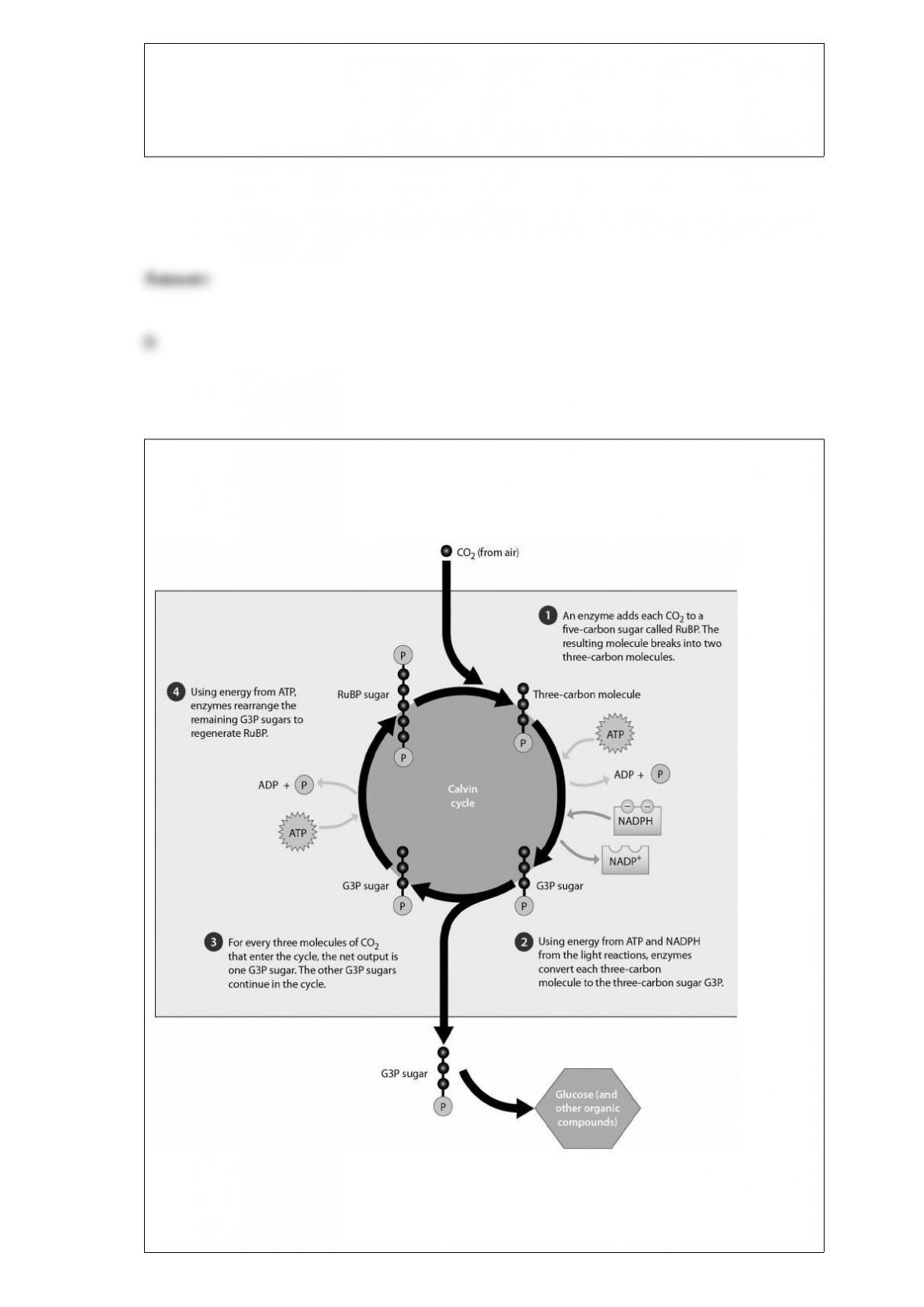
Please refer to the following art to answer the following questions.
The Calvin cycle is sometimes called the “dark reactions.” Could it take place if a plant
were grown in the dark continuously?

A) No, because plants cannot take in CO2 without sunlight.
B) No, because sunlight is needed to split water to provide NADH.
C) Yes, because taking in carbon dioxide, the only outside input to the Calvin cycle,
does not need sunlight.
D) Yes, because plants have stored materials in their roots which can provide what the
Calvin cycle needs.
The receptor potential is the ________.
A) membrane potential produced when a neurotransmitter molecule binds to its receptor
B) membrane potential produced in the receptor cell by sensory transduction
C) membrane potential produced as an all-or-none phenomenon
D) membrane potential produced at a muscle cell
According to Mendel’s law of segregation, ________.
A) two alleles segregate into each gamete
B) more gametes carrying the dominant allele are produced than gametes carrying the
recessive allele

C) gametes have one allele copy for each gene
D) gametes are diploid
An individual who is homozygous ________.
A) expresses the dominant trait
B) carries two different alleles for a gene
C) carries two copies of the same allele for a gene
D) expresses the recessive trait
Which structure stores feces until they can be eliminated?
A) rectum
B) appendix
C) anus
D) colon

Sister chromatids are joined at the ________.
A) centromere
B) spindle
C) centrosome
D) centriole
Excretion is the movement of substances from the ________ to the ________.
A) filtrate… blood
B) kidney… urinary bladder
C) blood… filtrate
D) kidneys… outside

A baseball player leaping for a baseball and a cricket jumping away from a frog are
both using ________.
I) sensory receptors
II) the central nervous system
III) a muscle system
A) I only
B) II only
C) III only
D) I, II, and III
Which of the following is NOT a requirement of natural selection?
A) differential reproductive success
B) overproduction of offspring
C) genetic variation
D) gene flow

Which of the following products used by humans sometimes comes from plants?
A) fuel, only
B) clothing, only
C) food, only
D) fuel, clothing, and food
Restriction enzymes are obtained from ________.
A) archaea
B) eukaryotes
C) viruses
D) bacteria
Which of the following glands secretes hormones that enable the body to respond to
stress?
A) pancreas
B) adrenal

C) pineal
D) parathyroid
Humans are ________.
A) producers
B) producers and consumers
C) consumers
D) producers and decomposers
Ecology is the study of ________.
A) life
B) human effects on the environment
C) interactions between humans and other species
D) interactions between organisms and their environments