
One mole (mol) of glucose (molecular mass = 180 daltons) is _____.
A) 180 x 1023 molecules of glucose
B) 1 kilogram of glucose dissolved in 1 liter of solution
C) 180 kilograms of glucose
D) 180 grams of glucose
Exposing inner mitochondrial membranes to ultrasonic vibrations will disrupt the
membranes. However, the fragments will reseal “inside out.” The little vesicles that
result can still transfer electrons from NADH to oxygen and synthesize ATP.
These inside-out membrane vesicles will _____.
A) become acidic inside the vesicles when NADH is added
B) become alkaline inside the vesicles when NADH is added
C) make ATP from ADP and i if transferred to a pH 4 buffered solution after
incubation in a pH 7 buffered solution
D) hydrolyze ATP to pump protons out of the interior of the vesicle to the exterior
A solution contains 0.0000001 (10-7) moles of hydroxyl ions [OH–] per liter. Which of

the following best describes this solution?
A) acidic: H+ acceptor
B) basic: H+ acceptor
C) acidic: H+ donor
D) neutral
Viruses use the host’s machinery to make copies of themselves. However, some human
viruses require a type of replication that humans do not normally have. For example,
humans normally do not have the ability to convert RNA into DNA. How can these
types of viruses infect humans, when human cells cannot perform a particular role that
the virus requires?
A) The virus causes mutations in the human cells, resulting in the formation of new
enzymes that are capable of performing these roles.
B) The viral genome codes for specialized enzymes not in the host.
C) The virus infects only those cells and species that can perform all the replication
roles necessary.
D) Viruses can stay in a quiescent state until the host cell evolves this ability.
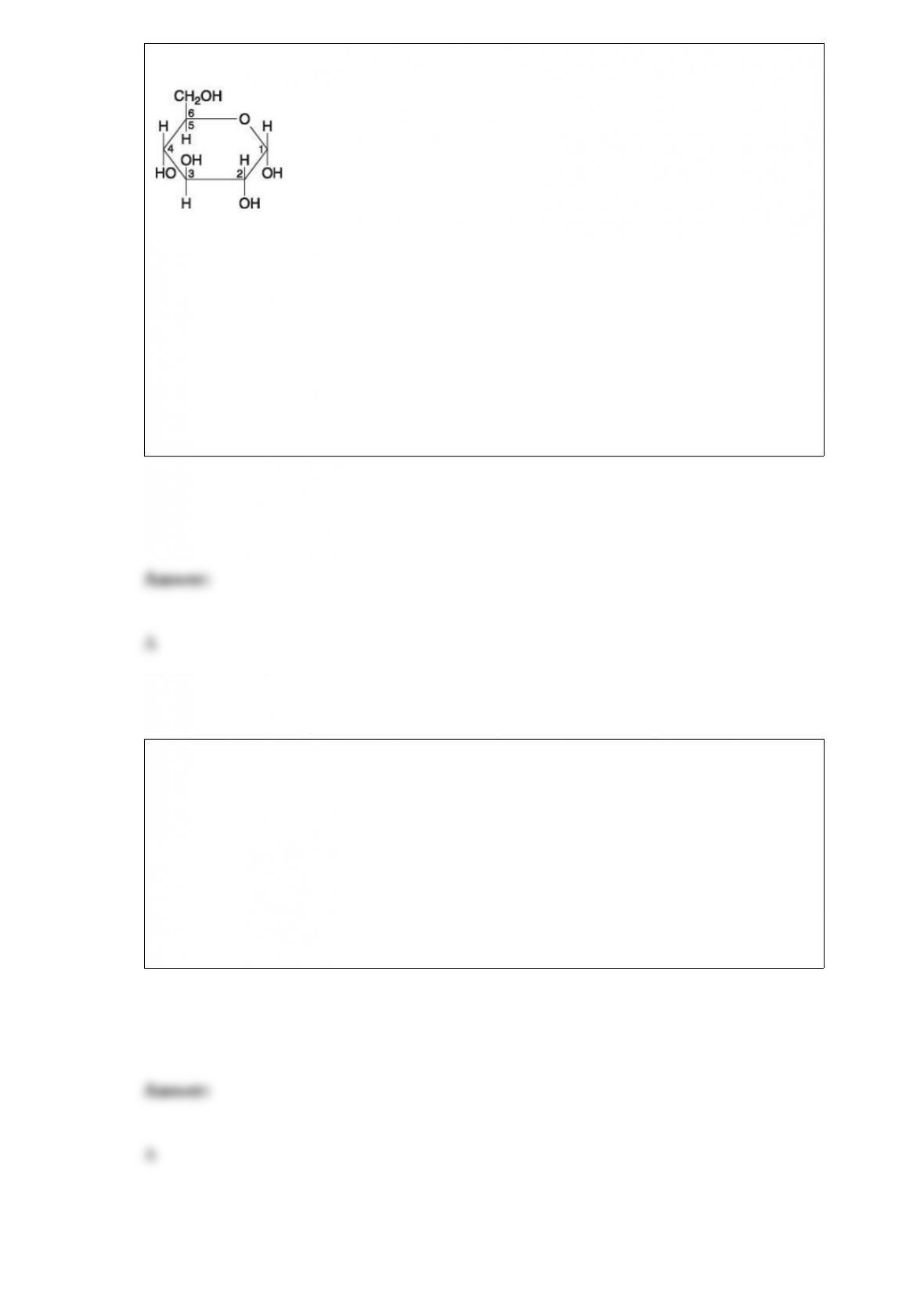
The molecule shown in the accompanying figure is _____.
A) a hexose
B) a pentose
C) fructose
D) maltose
The reason for using Taq polymerase for PCR is that _____.
A) it is heat stable and can withstand the heating step of PCR
B) only minute amounts are needed for each cycle of PCR
C) it binds more readily than other polymerases to the primers
D) it has regions that are complementary to the primers
Which of the following animals is correctly paired with its feeding mechanism?
A) baleen whale fluid feeder
B) aphid suspension feeder
C) clam substrate feeder
D) snake bulk feeder
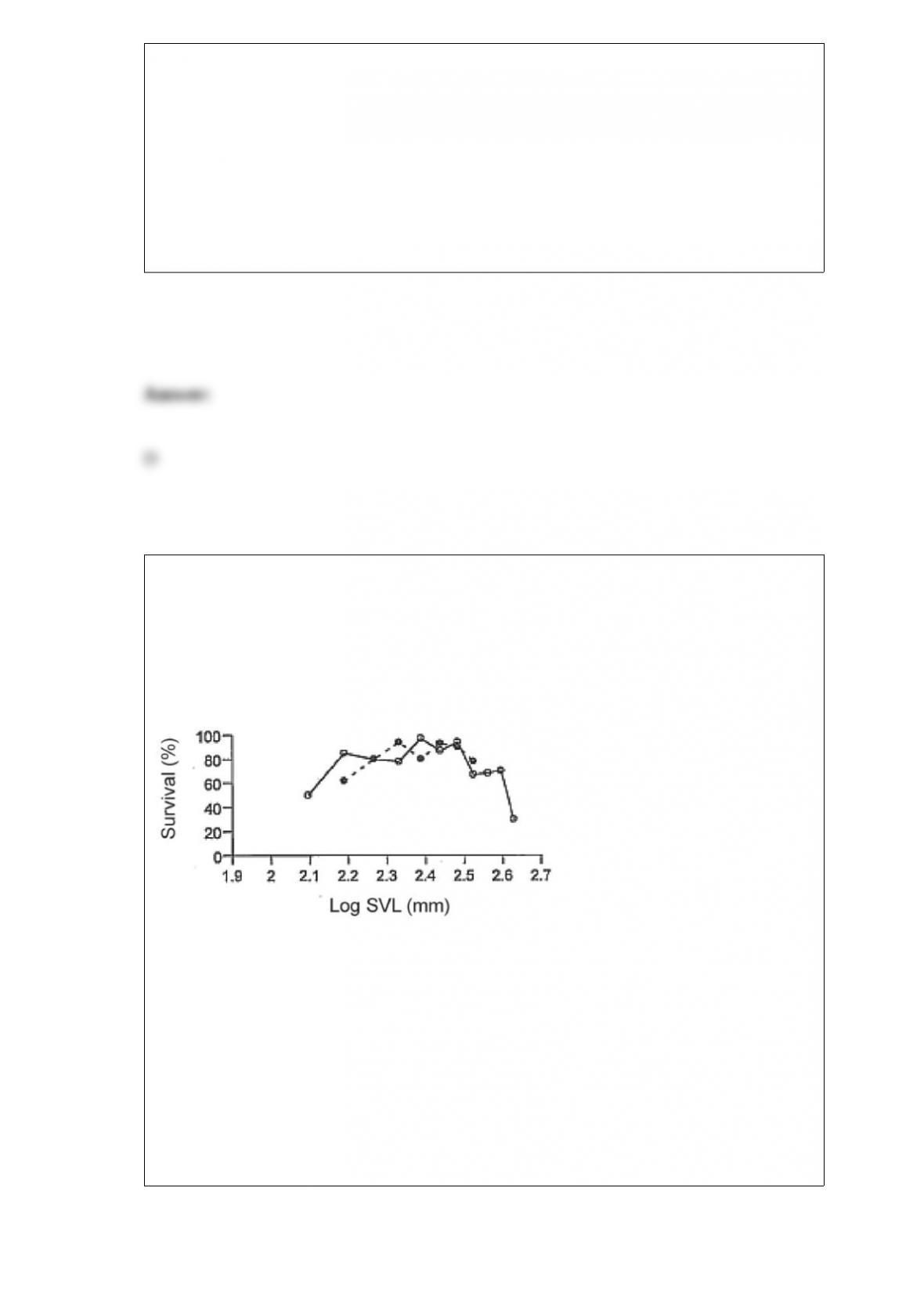
Martin Wikelski and L. Michael Romero (Body size, performance and fitness in
Galpagos marine iguanas, Integrative and Comparative Biology 43 [2003]:376-86)
measured the snout-to-vent (anus) length of Galpagos marine iguanas and observed the
percent survival of different-sized animals, all of the same age. The graph shows the log
snout-vent length (SVL, a measure of overall body size) plotted against the percent
survival of these different size classes for males and females.
Examine the figure above. What type of selection for body size appears to be occurring
in these marine iguanas?
A) directional selection
B) stabilizing selection
C) disruptive selection
D) You cannot determine the type of selection from the above information.

A student encounters an animal embryo at the eight-cell stage. The four smaller cells
that comprise one hemisphere of the embryo seem to be rotated 45 degrees and to lie in
the grooves between larger, underlying cells.
This embryo may potentially develop into a(n) _____.
A) turtle
B) earthworm
C) sea star
D) sea urchin
The operation of the sodium-potassium “pump” moves _____.
A) sodium and potassium ions into the cell
B) sodium and potassium ions out of the cell
C) sodium ions into the cell and potassium ions out of the cell
D) sodium ions out of the cell and potassium ions into the cell

A researcher has developed two stains for use with seed plants. One stains sporophyte
tissue blue; the other stains gametophyte tissue red. If the researcher exposes pollen
grains to both stains, and then rinses away the excess stain, what should occur?
A) The pollen grains will be pure red.
B) The pollen grains will be pure blue.
C) The pollen grains will have red interiors and blue exteriors.
D) The pollen grains will have blue interiors and red exteriors.
You have discovered a previously unidentified plant, and you cultivate it in your lab.
You notice that its flowers close when people are talking, yet are open when the lab is
relatively quiet. You suspect that this plant may have the ability to hear! Which of the
following hypotheses is (are) the most reasonable to explain this phenomenon?
I) There is a cell-surface protein on the epidermal cells that becomes phosphorylated in
response to vibration by sound waves.
II) There are tiny hairs on epidermal cells that bend in response to the vibration of
sound waves, triggering an action potential in epidermal cells.
III) There is a cell-surface receptor on root cells that becomes phosphorylated when the
soil vibrates in response to sound waves.
A) only I
B) only II
C) only III
D) I, II, and III

In those parts of equatorial Africa where the malaria parasite is most common, the
sickle-cell allele constitutes 20% of the β hemoglobin alleles in the human gene pool.
In the United States, the parasite that causes malaria is not present, but
African-Americans whose ancestors were from equatorial Africa are present. What
should be happening to the sickle-cell allele in the United States, and what should be
happening to it in equatorial Africa?
A) stabilizing selection; disruptive selection
B) disruptive selection; stabilizing selection
C) directional selection; disruptive selection
D) directional selection; stabilizing selection
The microtubule-organizing center found in animal cells is an identifiable structure
present during all phases of the cell cycle. Specifically, it is known as the _____.
A) microtubulere
B) centrosome
C) centromere
D) kinetochore
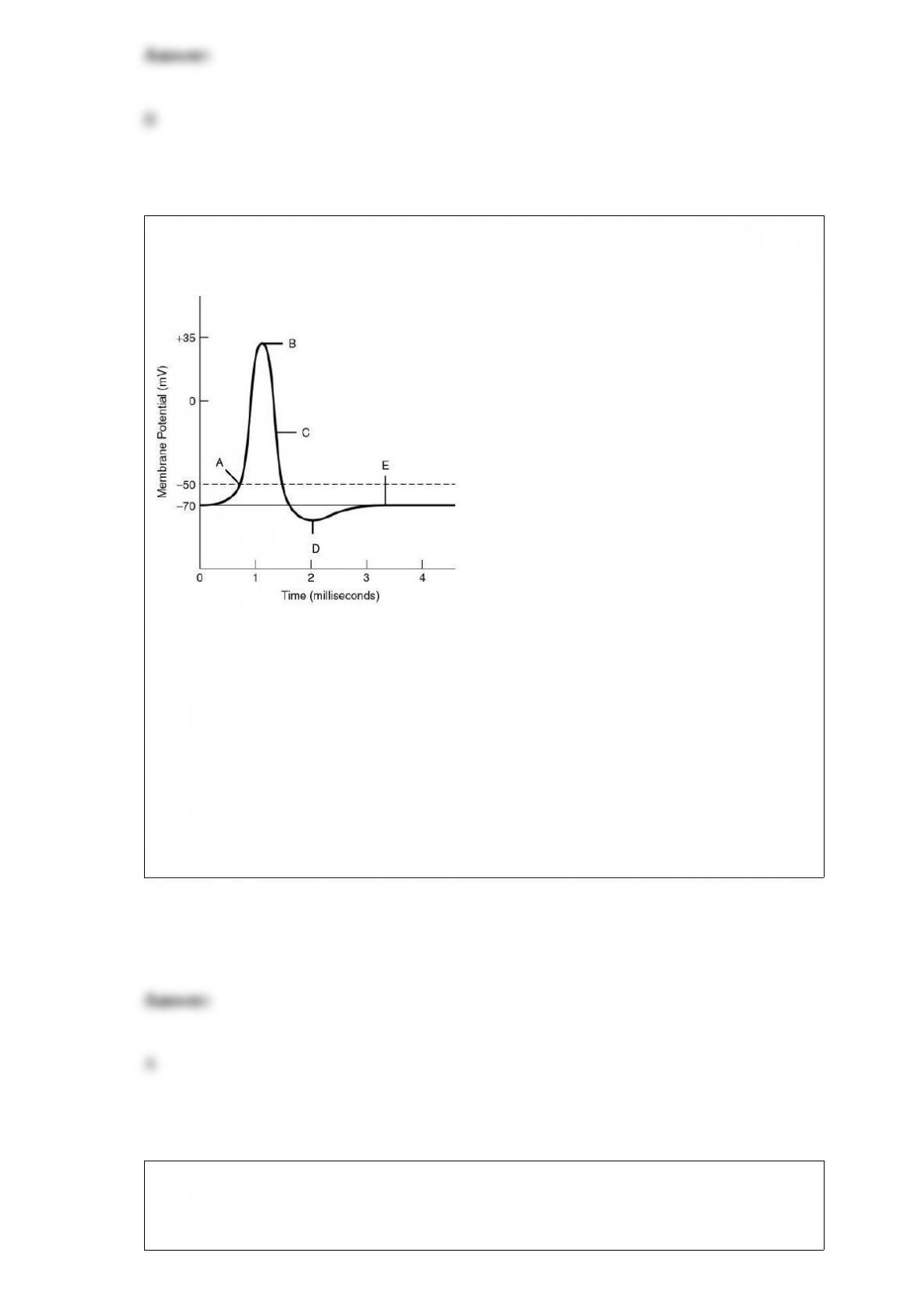
Refer to the following graph of an action potential to answer the question(s) below.
The minimum graded depolarization needed to operate the voltage-gated sodium and
potassium channels is indicated by the label _____.
A) A
B) B
C) D
D) E
The questions below refer to the following paragraph.
HIV’s genome of RNA includes the code for reverse transcriptase (RT), an enzyme that

acts early in infection to synthesize a DNA genome off of an RNA template. The HIV
genome also codes for protease (PR), an enzyme that acts later in infection by cutting
long viral polyproteins into smaller, functional proteins. Both RT and PR represent
potential targets for antiretroviral drugs. Drugs called nucleoside analogs (NA) act
against RT, whereas drugs called protease inhibitors (PI) act against PR.
Which of the following represents the treatment option most likely to avoid the
evolution of drug-resistant HIV (assuming no drug interactions or side effects)?
A) using a series of NAs, one at a time, and changed about once a week
B) using a single PI, but slowly increasing the dosage over the course of a week
C) using high doses of NA and a PI at the same time for a period not to exceed one day
D) using moderate doses of NA and two different PIs at the same time for several
months
Coprophagy is important for the nutritional balance of _____.
A) ruminants such as cows
B) insects and arthropods
C) rabbits and their relatives
D) squirrels and some rodents

The primary difference between the small-population approach (S-PA) and the
declining-population approach (D-PA) to biodiversity recovery is _____.
A) S-PA is interested in bolstering the genetic diversity of a threatened population rather
than the environmental factors that caused the population’s decline
B) S-PA applies for conservation biologists when population numbers fall below 500
C) D-PA would likely involve bringing together individuals from scattered small
populations to interbreed in order to promote genetic diversity
D) S-PA would investigate and eliminate all of the human impacts on the habitat of the
species being studied for recovery
Birds secrete uric acid as their nitrogenous waste because uric acid _____.
A) is readily soluble in water
B) is metabolically less expensive to synthesize than other excretory products
C) requires little water for nitrogenous waste disposal, thus reducing body mass
D) can be reused by birds as a protein source
The nematode Caenorhabditis elegans _____.
A) is composed of about 1000 cells, in which the developmental origin of each cell has
been mapped
B) has only a single chromosome, which has been fully sequenced
C) has about 1000 genes, each of which has been fully sequenced
D) uniquely, among animals, utilizes programmed cell death during normal
development
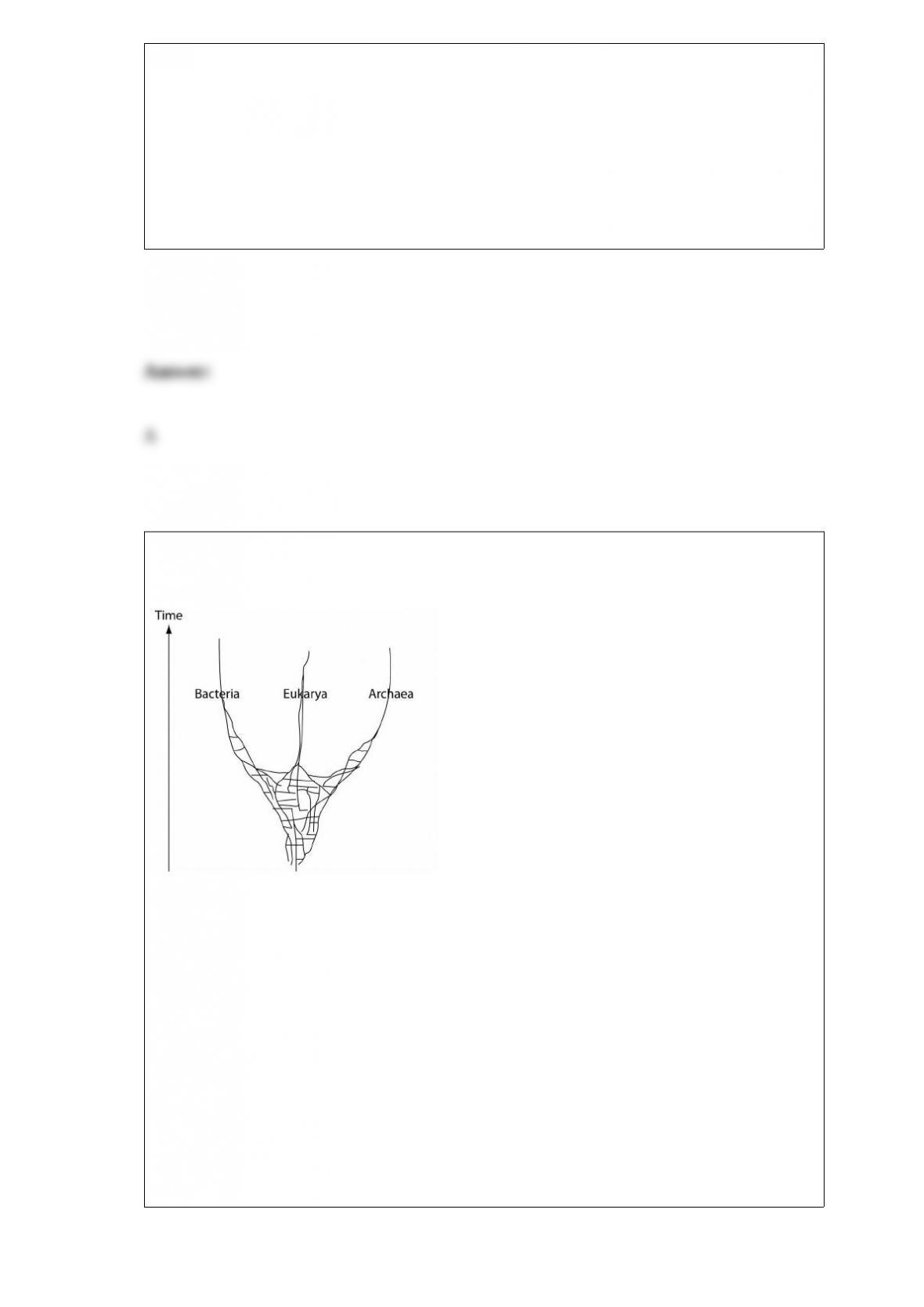
The following questions refer to this phylogenetic tree, depicting the origins of life and
of the three domains. Horizontal lines indicate instances of gene or genome transfer.
A possible phylogenetic tree for the three domains of life.
If the early history of life on Earth is accurately depicted by the figure above, then
which statement is most in agreement with the hypothesis proposed by this tree?
A) The last universal common ancestor of all extant species is one individual species.
B) The origin of the three domains appears as a polytomy.
C) Archaean genomes should not contain genes that originated in bacteria, and vice
versa.
D) Eukaryotes are more closely related to archaeans than to bacteria.

Beetle pollinators of a particular plant are attracted to its flowers’ bright orange color.
The beetles not only pollinate the flowers, but they mate while inside of the flowers. A
mutant version of the plant with red flowers becomes more common with the passage
of time. A particular variant of the beetle prefers the red flowers to the orange flowers.
Over time, these two beetle variants diverge from each other to such an extent that
interbreeding is no longer possible. What kind of speciation has occurred in this
example, and what has driven it?
A) allopatric speciation; ecological isolation
B) sympatric speciation; habitat differentiation
C) allopatric speciation; behavioral isolation
D) sympatric speciation; allopolyploidy
Dinoflagellates _____.
A) possess two flagella
B) are all autotrophic
C) lack mitochondria
D) include species that cause malaria

Which eukaryotic kingdom includes members that are the result of endosymbioses that
included an ancient aerobic bacterium and an ancient cyanobacterium?
A) Plantae
B) Fungi
C) Animalia
D) Protista
In a humoral or antibody-mediated immune response, specific B cells are stimulated by
Helper T cells to transform into plasma cells that secrete antibodies. What would be an
important feature added to B cells In this transition process?
A) Duplication of specific gene sequences for the appropriate antibody.
B) Increased rough endoplasmic reticulum in order to have the surface area needed for
antibody production.
C) Duplication of lysosomes in order to store the antibodies before transport.

The first gap in the cell cycle (G1) corresponds to _____.
A) normal growth and cell function
B) the phase in which DNA is being replicated
C) the beginning of mitosis
D) the phase between DNA replication and the M phase
A 0.01 M solution of a substance has a pH of 2. What can you conclude about this
substance?
A) It is a strong acid that dissociates completely in water.
B) It is a strong base that dissociates completely in water.
C) It is a weak acid.
D) It is a weak base.
Scientists believe that the direction birds go when migrating is guided in part by _____.
I) the stars in the night sky
II) the Sun during the day

III) the magnetic field of the Earth
A) only I
B) only II
C) only III
D) I, II, and III
On the Pacific island of Guam, large herbivorous bats called “flying foxes” commonly
feed on cycad seeds, a potent source of neurotoxins. The flying foxes do not visit male
cones. Consequently, what should be true?
A) The flying foxes are attracted to cycad fruit and eat the enclosed seeds only by
accident.
B) Flying foxes are highly susceptible to the effects of the neurotoxins.
C) The flying foxes assist the beetles as important pollinating agents of the cycads.
D) Flying foxes can be dispersal agents of cycad seeds if the seeds sometimes get
swallowed whole (in other words, without getting chewed).
Which of the following are functions of rhizobacteria?
I) produce hormones that stimulate plant growth

II) produce antibiotics that protect roots from disease
III) absorb toxic metals
IV) carry out nitrogen fixation
A) only II and IV
B) only I, II, and III
C) only III and IV
D) I, II, III, and IV
In colorectal cancer, several genes must be mutated for a cell to develop into a cancer
cell. Which of the following kinds of genes would you expect to be mutated?
A) genes coding for enzymes that act in the colon
B) genes involved in control of the cell cycle
C) genes that are especially susceptible to mutation
D) genes of the bacteria, which are abundant in the colon
If, on average, 46% of the loci in a species’ gene pool are heterozygous, then the

average homozygosity of the species should be _____.
A) 23%
B) 46%
C) 54%
D) 92%
In humans, the transport epithelial cells in the ascending loop of Henle _____.
A) are the largest epithelial cells in the body
B) are not in contact with interstitial fluid
C) have plasma membranes of low permeability to water
D) are not affected by high levels of nitrogenous wastes
Within a normally functioning kidney, blood can be found in _____.
A) the vasa recta
B) Bowman’s capsule
C) the proximal tubule

D) the collecting duct