A neuron’s repetitive firing rate is limited by an absolute refractory period, during
which a new action potential cannot be generated. Which event is chiefly responsible
for this limit?
A.Opening of K+ leak channels.
B.Opening of voltage-gated Na+ channels.
C.Opening of transmitter-gated cation channels.
D.Inactivation of voltage-gated K+ channels.
E.Inactivation of voltage-gated Na+ channels.
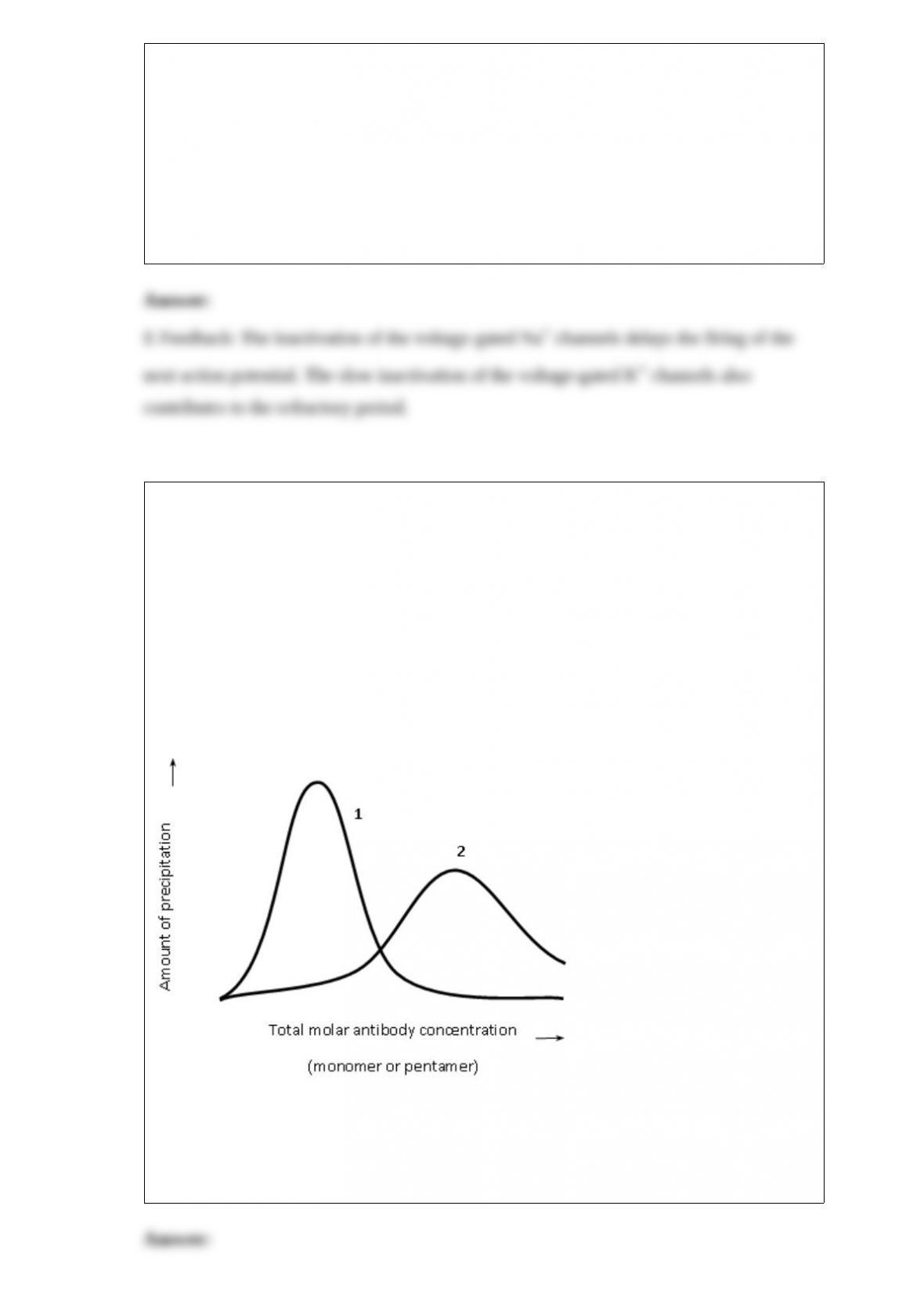
Antigens and antibodies can form large, insoluble, cross-linked aggregates that
precipitate from solution. The maximal amount of precipitant is observed at a certain
antigen/antibody ratio; adding either excess antigen or excess antibody can prevent (or
even reverse) the precipitation. Consider an antigen with multiple identical antigenic
determinants that can be recognized by either bivalent or decavalent (i.e. pentameric)
antibodies with binding sites that recognize the determinants. The amount of
precipitation in the presence of a constant antigen concentration is plotted as a function
of antibody concentration in the following qualitative graph. Which curve (1 or 2) in the
graph do you think corresponds to the bivalent antibody? Would you expect to see such
a bell-shaped curve if the antibodies were monovalent?
A.Curve 1; yes
B.Curve 2; yes
C.Curve 1; no
D.Curve 2; no
E.Curve 2; only if the antigen was also monovalent
Which of the following chemicals do you NOT expect to be readily dissolved in water?
A.Uric acid
B.Hexane
C.Glycerol
D.Ethanol
E.Potassium chloride
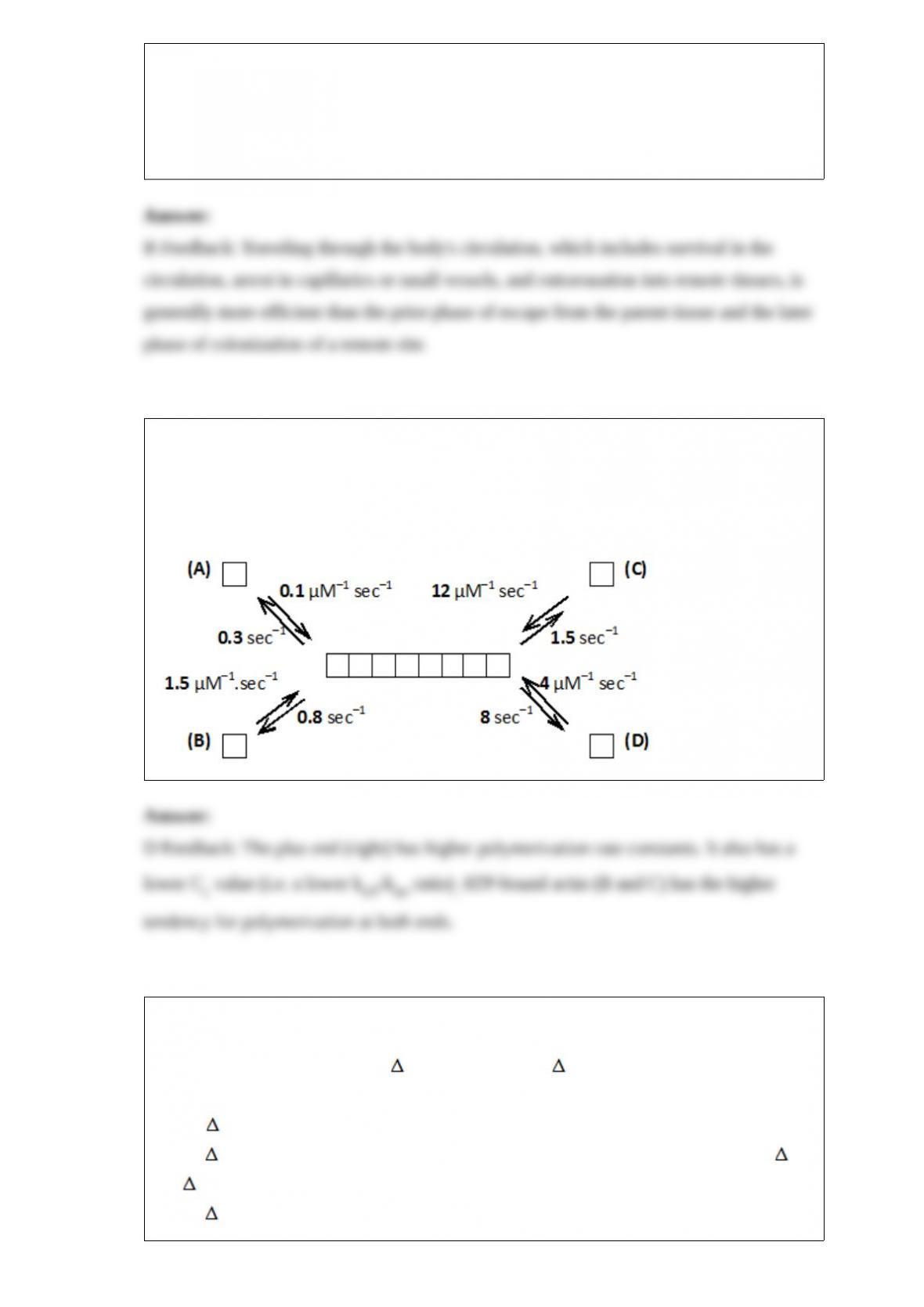
The Bcl2 family is comprised of anti-apoptotic (A), BH3-only (B), and effector (E)
proteins. In the following diagram representing the regulation of the intrinsic pathway
of apoptosis, what class of activated Bcl2 family proteins (A, B, or E) corresponds to
boxes 1 to 3, respectively? Your answer would be a three-letter string composed of
letters A, B, and E only, e.g. ABE.
Which of the following sequential barriers to metastasis is the easiest to overcome for
cancer cells in general?
A.Vessel entry through acquisition of local invasiveness
B.Exit from the blood into a remote tissue or organ
C.Survival of cells in the foreign tissue
D.Initial growth of cells in the foreign tissue
E.Persistence of growth in the remote site
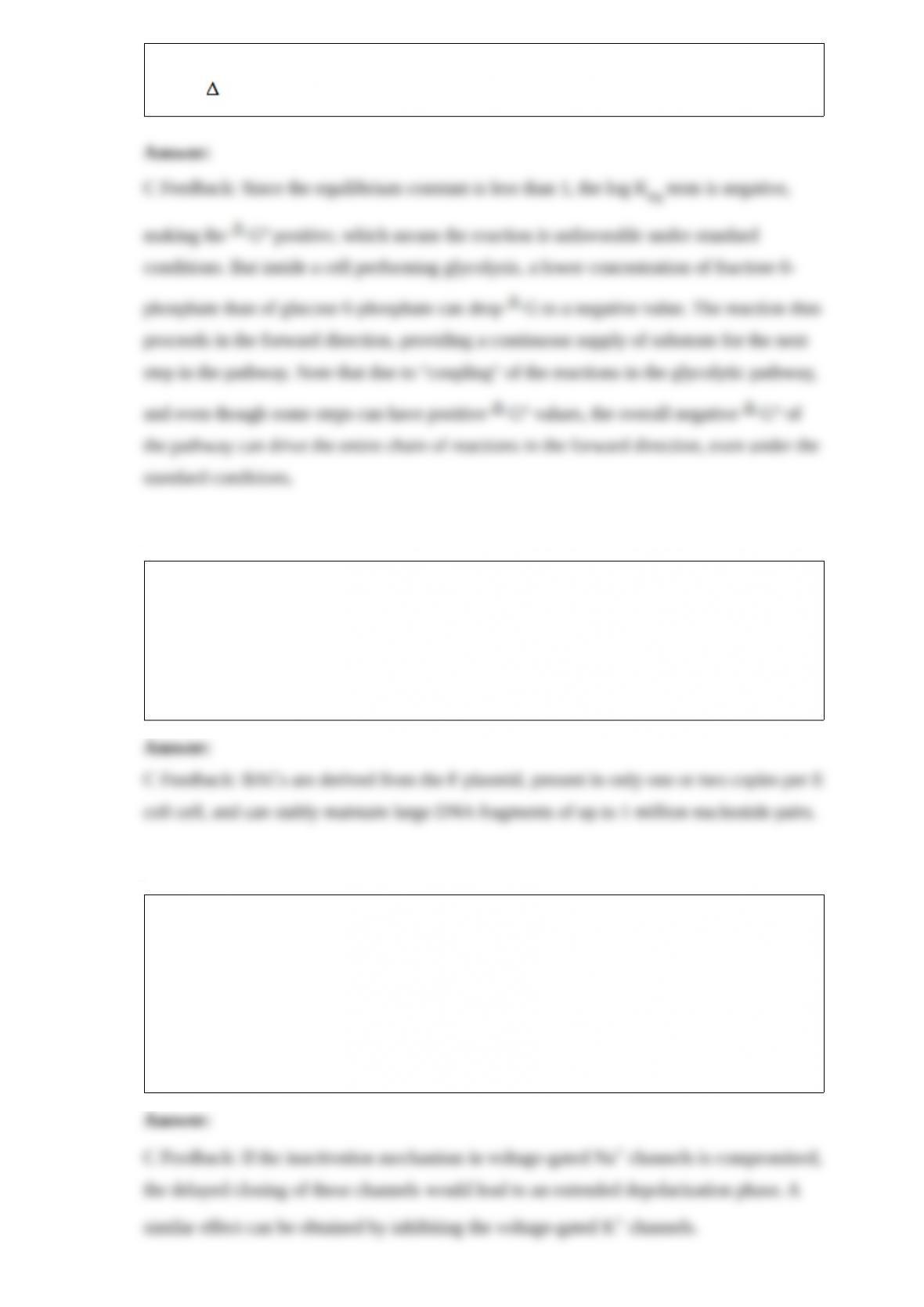
Consider the ATP-bound and ADP-bound forms of actin and the polarized nature of the
actin filaments. In the following diagram that shows the various actin polymerization
rate constants (kon and koff values), which monomer corresponds to an ADP-bound
actin incorporated at the plus end?
The enzyme phosphoglucose isomerase converts glucose 6-phosphate to its isomer
fructose 6-phosphate in the second step of glycolysis. The equilibrium constant for the
reaction is 0.36. Evaluating the G° of the reaction ( G° = -5.9 x log Keq), decide
which of the following conclusions is true.
A.The G° is negative, therefore the reaction proceeds in the forward direction.
B.The G° is negative, but whether or not the reaction proceeds would depend on G,
not G°.
C.The G° is positive, but in a cell that is active in glycolysis, the reaction can still
proceed in the forward direction.
D.The G° is positive, therefore the reaction proceeds in the reverse direction.
Bacterial artificial chromosomes (BACs) ___
A.are derived from the E. coli chromosome.
B.are present in high copy numbers per cell.
C.can maintain DNA sequences of hundreds of thousands of nucleotide pairs.
D.are generally not stable.
E.All of the above.
Which of the following situations in a neuron results in action potentials that have
extended depolarization phases?
A.Inhibiting the voltage-gated Na+ channels.
B.Stimulating the voltage-gated K+ channels.
C.Compromising the inactivation mechanism in voltage-gated Na+ channels.
D.Compromising the inactivation mechanism in voltage-gated K+ channels.
E.None of the above.
An ion channel ___
A.always mediates passive transport.
B.is ion-selective.
C.is typically several orders of magnitude faster than a transporter.
D.is usually gated.
E.All of the above.
Enzymes can catalyze cellular reactions through various mechanisms. Which of the
following statements is NOT true regarding enzymes?
A.They can provide the chemical groups necessary for simultaneous acid and base
catalysis.
B.They have a higher affinity for the transition state of the substrate than for its stable
form.
C.They can form covalent bonds with the substrate during catalysis.
D.They can strain a substrate to force it toward a specific transition state.
E.They accelerate a cellular reaction by destabilizing the transition state.
In the following paragraph, fill in the blanks (indicated by numbers) with either
Archaea (A), Bacteria (B), or Eukaryotes (E). Your answer would be a three-letter string
composed of letters A, B, and E only, e.g. ABE.
“Methanococcus jannaschii is an anaerobic thermophilic microbe that belongs to the
domain … (1) and is found in extreme environments such as hydrothermal vents. It lives
at temperatures near the boiling point of water and at pressures over 200 times higher
than at sea level. Its genome sequence, identified in 1996, revealed that most of its
metabolic processes are similar to those in … (2), while its genetic machinery is more
similar to that of … (3).”
The axons and dendrites of neurons that lack DSCAM1 altogether …
A.avoid other neurons as well as themselves.
B.avoid other neurons but not themselves.
C.avoid themselves but not other neurons.
D.avoid neither themselves nor other neurons.
PARP inhibitors can efficiently kill many breast cancer cells that lack functional Brca1
or Brca2 genes. How do these drugs accomplish this?
A.By increasing the ability of p53 in cancer cells to limit cell proliferation
B.By inhibiting proteins that are normally inhibited by the Brca1 or Brca2 gene
products
C.By increasing the occurrences of homologous recombination
D.By inhibiting a DNA repair pathway
E.By increasing the ability of the cancer cells to repair the mutations in their
cancer-critical genes
You would like to clone a gene by PCR. The sequence of the two ends of the coding
strand for the gene is provided below. Which following pair of primers would direct the
amplification of this gene? All sequences are written from 5′ to 3′.
ATGAAATCTACGTTTCAC______CCCCCAGTACCCCCCTTA
A.ATGAAATCTACGTTTCAC ; CCCCCAGTACCCCCCTTA
B.ATGAAATCTACGTTTCAC ; TAAGGGGGGTACTGGGGG
C.TACTTTAGATGCAAAGTG; ATTCCCCCCATGACCCCC
D.TACTTTAGATGCAAAGTG ; CCCCCAGTACCCCCCTTA
E.GTGAAACGTAGATTTCAT; ATTCCCCCCATGACCCCC
Sort the following events to reflect the order in which they typically occur in viral
replication after a virus enters a cell. Your answer would be a four-letter string
composed of letters A to D only, e.g. BACD.
(A)Replication of the viral genome and transcription of viral genes
(B)Virus particle assembly
(C)Progeny virion release
(D)Virus particle disassembly
Misfolded proteins in the ER may actively undergo any of the following EXCEPT ___
A.binding to chaperones such as BiP to allow unfolding and refolding.
B.binding to chaperones such as calnexin to prevent aggregation.
C.being transported back to the cytosol for degradation.
D.being expelled to the Golgi apparatus for disposal.
E.being glycosylated and binding to lectins.
Cells can adapt to extracellular signal molecules in a variety of ways. Interestingly,
exposure to a signal molecule can sometimes not only desensitize the cell to this
molecule, but also to one or more other signal molecules that are recognized by
different receptors, even if those receptors can still bind to their ligand at the cell
surface and initiate signaling. Which subset of the following adaptation mechanisms
(for the original signal) can in principle account for this type of desensitization? Choose
all that apply. Your answer would be a string composed of letters A to E only, in
alphabetical order; e.g. BDE.
(A)Receptor sequestration
(B)Receptor down-regulation
(C)Receptor inactivation
(D)Inactivity of signaling protein
(E)Production of inhibitory protein
Suppose you are studying tumor heterogeneity in a certain type of melanoma. You have
used fluorescence-activated cell sorting (FACS) to specifically isolate those melanoma
tumor cells that either do (first category) or do not (second category) express a specific
marker present in normal stem cells in the tissue of origin (i.e. the melanocyte stem
cells). You implant the same number of cells from each of these categories into severely
immunodeficient mice and compare the tumor-formation efficiencies after several
weeks, which turn out to be significantly higher for the first category. You then analyze
the new tumors using FACS, and find out that the majority of the cells in the tumors
that originated from the first category of cells harbor the stem-cell marker, whereas the
majority of the cells in the tumors that originated from the second cell category lack the
marker, just like their respective founder cells. Do these observations support the
existence of cancer stem cells? Write down Yes or No as your answer.
Indicate whether each of the following occurs mainly in G1 phase (G), S phase (S), or
G2 phase (H) of the cell cycle. Your answer would be a four-letter string composed of
letters G, S, and H only, e.g. HGSS.
( )DNA helicase activation
( )DNA helicase deposition on DNA at the replication origins
( )ORC phosphorylation
( )Licensing of replication origins
In a double-stranded DNA molecule, one of the chains has the sequence CCCATTCTA
when read from the 5′ to the 3′ end. Indicate true (T) and false (F) statements below
regarding this chain. Your answer would be a four-letter string composed of letters T
and F only, e.g. TTFT.
( )The other chain is heavier, i.e. it has a greater mass.
( )There are no C residues in the other chain.
( )The 5′-terminal residue of the other chain is G.
( )The other chain is pyrimidine-rich.
The folding of proteins can be considered a simple conversion from the unfolded to the
natively folded state. At about 27°C (or 300 K), the free-energy change of folding for a
particular protein is measured to be -40 kJ/mole. If the enthalpy change ( H) of folding
is -640 kJ/mole, what is the entropy change ( S) of folding for this protein? Write
down your answer with the appropriate sign (+ or -) and in kJ/mole/K, e.g. -1000
kJ/mole/K.
The structural formulas for the 20 naturally occurring amino acid residues are shown in
the panel below. Answer the following question(s) with the help of this panel.
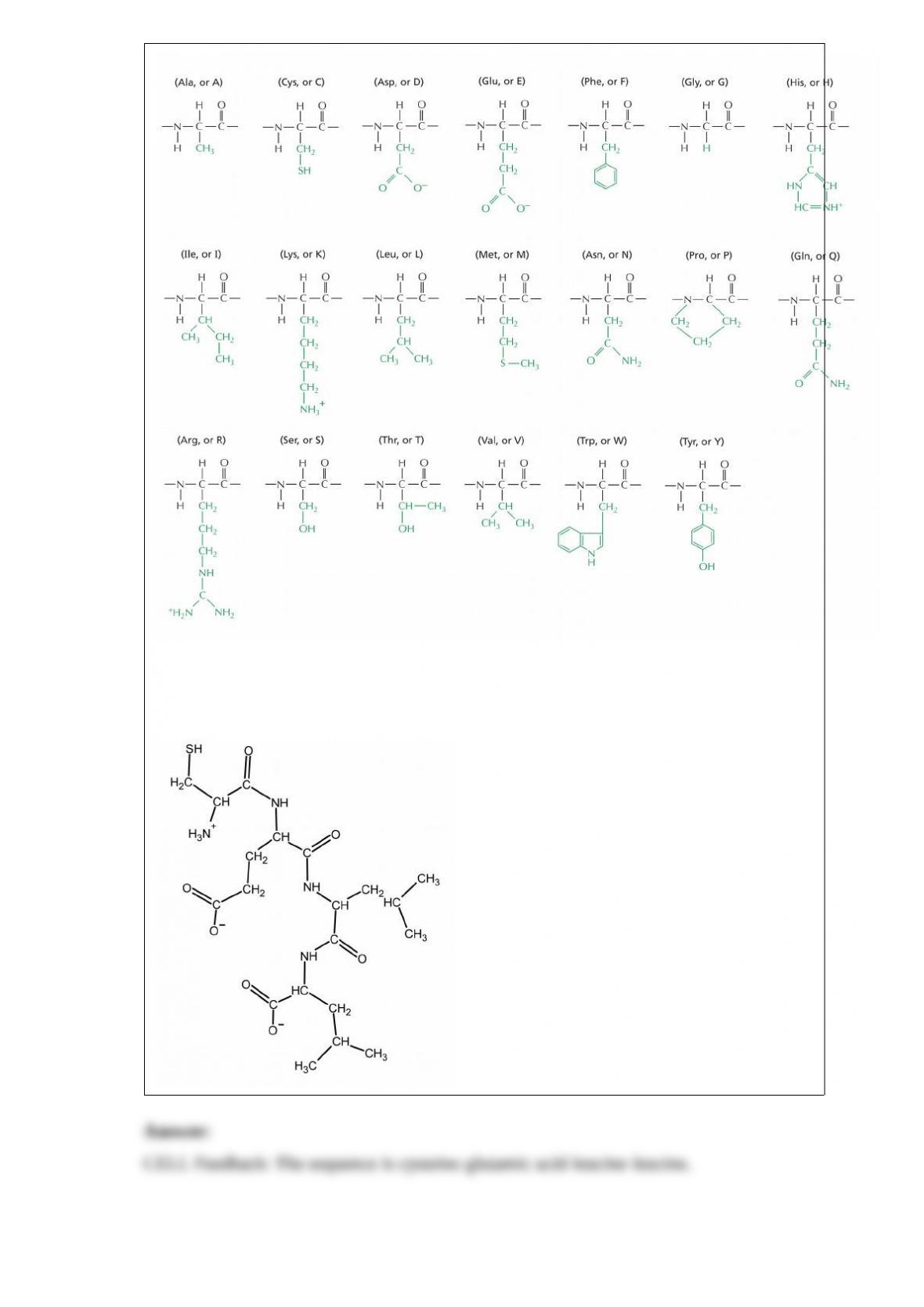
What is the amino acid sequence of the peptide depicted below? Write down the
sequence from the N- to the C-terminus, and use only the one-letter abbreviations, e.g.
AGCNT.
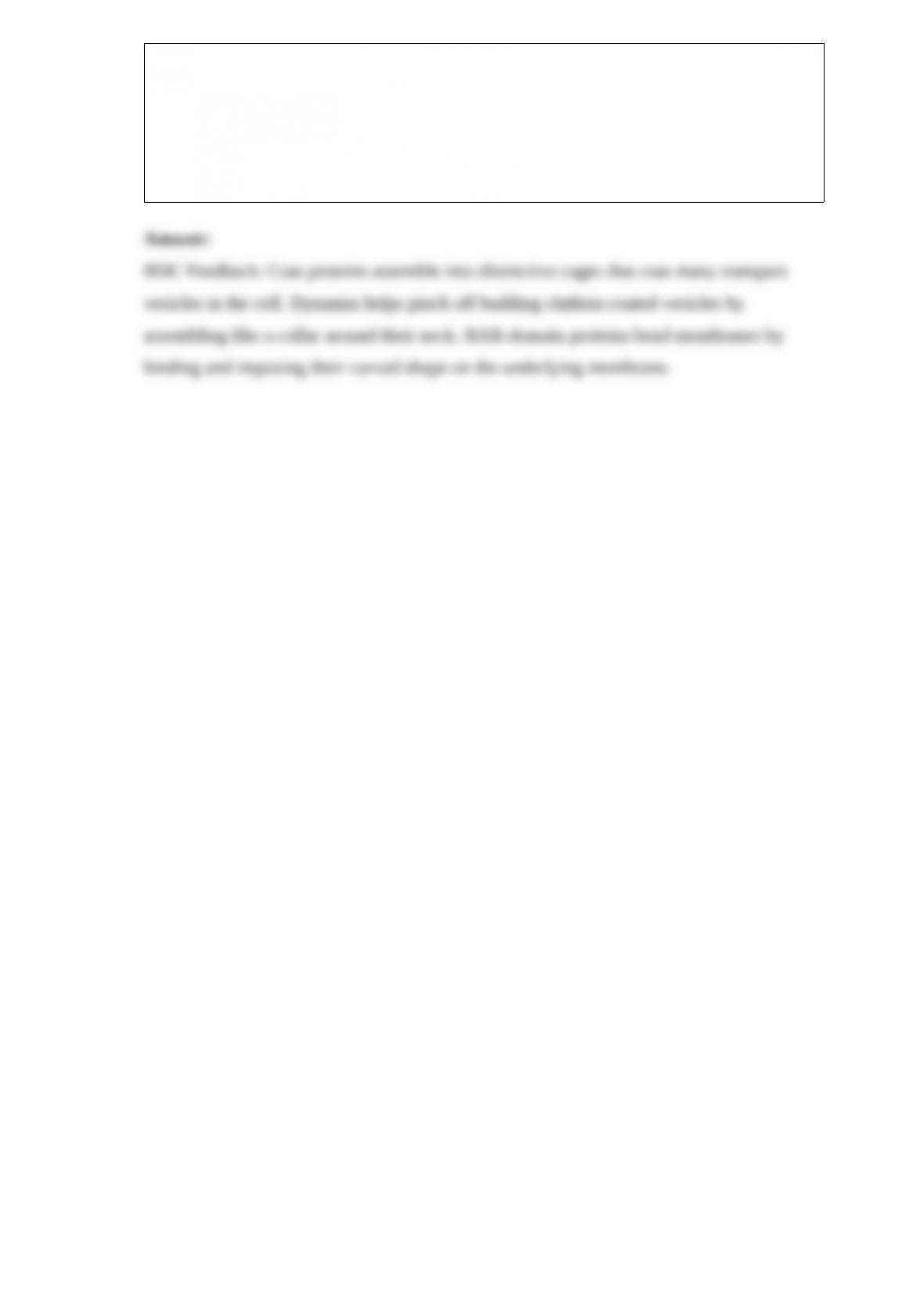
Indicate whether each of the following descriptions better applies to a BAR domain (B),
the outer shell of COPI coatomer (C), or a dynamin oligomer (D). Your answer would
be a three-letter string composed of letters B, C, and D only, e.g. CBD.
( )It resembles a crescent.
( )It resembles a collar.
( )It resembles a cage.