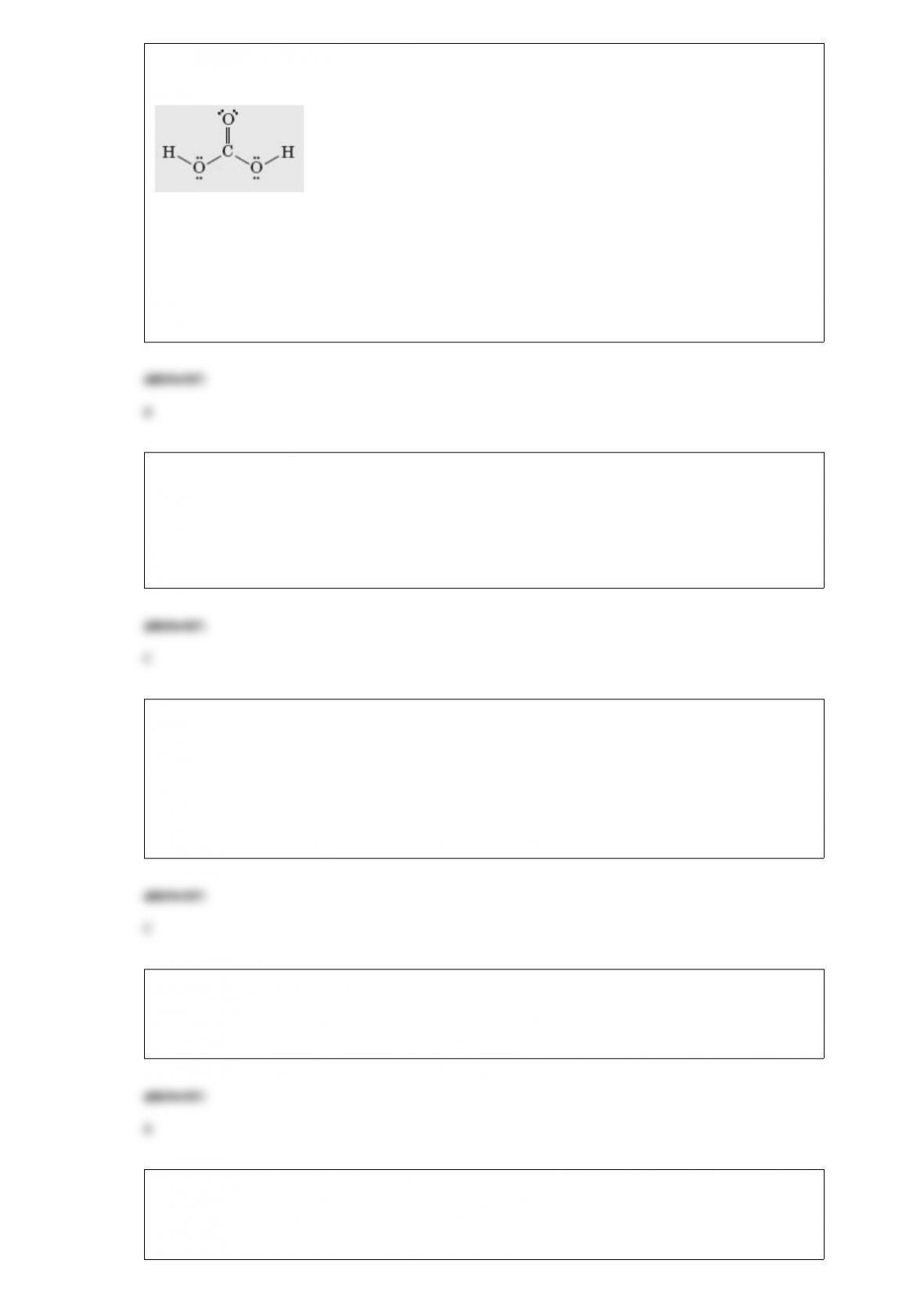
1) the following represents carbonic acid, an important part of the buffer system in
blood.
how many total valence electrons were used in constructing this structure?
a.24
b.12
c.17
d.22
e.none of these
2) atoms of which of the following elements are smallest?
a.rb
b.k
c.na
d.none, they are all the same size.
3) the toxic gas hydrogen cyanide has the formula hcn. how many electrons must be
shown in the lewis structure of hydrogen cyanide?
a.2
b.6
c.10
d.12
4) the bowman’s capsule is part of which of the following?
a.a nephronc.the ureter
b.the urethrad.the vena cava
5) where does co2 bind to hemoglobin?
a.only at the c-termini of the -chains
b.at the c-termini of both the -chains and the -chains
c.only at the n-termini of the -chains
d.at the n-termini of both the -chains and the -chains
6) how many heme units are present in a molecule of hemoglobin?
a.1c.3
b.2d.4
7) if the name of an ion ends in ate what type of ion is it most likely to be?
a.a monatomic anion
b.a monatomic cation
c.a polyatomic anion
d.a polyatomic cation
8) how many unpaired electrons are there in an oxygen atom in its ground state?
a.1
b.2
c.4
d.8
9) osteoporosis is associated with which of the following?
a.an improper na+/k+ balance
b.increased calcium buildup in the bones
c.loss of calcium from the bones
d.none of the above
10) what is the mass number of an atom which is made up of 38 protons, 52 neutrons
and 38 electrons?
a.38

b.52
c.90
d.128