
A covalent bond is likely to be polar when _____.
A) one of the atoms sharing electrons is more electronegative than the other atom
B) the two atoms sharing electrons are equally electronegative
C) carbon is one of the two atoms sharing electrons
D) the two atoms sharing electrons are the same elements
Which of the following statements best describes the termination of transcription in
prokaryotes?
A) RNA polymerase transcribes through the polyadenylation signal, causing proteins to
associate with the transcript and cut it free from the polymerase.
B) RNA polymerase transcribes through the terminator sequence, causing the
polymerase to separate from the DNA and release the transcript.
C) Once transcription has initiated, RNA polymerase transcribes until it reaches the end
of the chromosome.
D) RNA polymerase transcribes through a stop codon, causing the polymerase to stop
advancing through the gene and release the mRNA.
The structure of the Drosophila gene, called Tinman, is similar to a gene in humans that
also _____.

A) promotes ear development
B) specifies the location of the heart
C) determines structures in the eyes
D) specifies limb elongation points
Overharvesting encourages extinction and is most likely to affect _____.
A) animals that occupy a broad ecological niche
B) large animals with low intrinsic reproductive rates
C) most organisms that live in the oceans
D) edge-adapted species
Testosterone functions inside a cell by _____.
A) acting as a signal receptor that activates tyrosine kinases
B) binding with a receptor protein that enters the nucleus and activates specific genes
C) acting as a steroid signal receptor that activates ion channel proteins

D) coordinating a phosphorylation cascade that increases spermatogenesis
Which of the following is an example of negative feedback?
A) During birthing contractions, oxytocin (a hormone) is released and acts to stimulate
further contractions.
B) When a baby is nursing, suckling leads to the production of more milk and a
subsequent increase in the secretion of prolactin (a hormone that stimulates lactation).
C) After a blood vessel is damaged, signals are released by the damaged tissues that
activate platelets in the blood. These activated platelets release chemicals that activate
more platelets.
D) When the level of glucose in the blood increases, the pancreas produces and releases
the hormone insulin. Insulin acts to decrease blood glucose. As blood glucose
decreases, the rate of production and release of insulin decreases as blood glucose
decreases.
Carbon dioxide is split to form oxygen gas and carbon compounds _____.
A) during photosynthesis
B) during respiration
C) during photosynthesis and respiration

D) in neither photosynthesis nor respiration
The product of the p53 gene _____.
A) inhibits the cell cycle
B) slows down the rate of DNA replication by interfering with the binding of DNA
polymerase
C) causes cells to reduce expression of genes involved in DNA repair
D) allows cells to pass on mutations due to DNA damage
Which of the following is known as a Philadelphia chromosome?
A) a human chromosome 22 that has had a specific translocation
B) a human chromosome 9 that is found only in one type of cancer
C) an animal chromosome found primarily in the mid-Atlantic area of the United States
D) a chromosome found only in mitochondria

The symbols +, -, and o are to be used to show the results of interactions between
individuals and groups of individuals in the examples that follow. The symbol + denotes
a positive interaction, – denotes a negative interaction, and o denotes where individuals
are not affected by interacting. The first symbol refers to the first organism mentioned.
What interactions exist between cellulose-digesting organisms in the gut of a termite
and the termite?
A) +/+
B) +/o
C) +/-
D) o/o
The vast number and variety of flower species is probably related to various kinds of
_____.
A) seed dispersal agents
B) pollinators
C) herbivores
D) climatic conditions

Which of the following are present in high densities in both smooth and skeletal muscle
cells?
I) cilia
II) mitochondria
III) nuclei
IV) endoplasmic reticulum
A) only I and II
B) only II and IV
C) only III and IV
D) only I, II, and III
The force driving simple diffusion is _____, while the energy source for active transport
is _____.
A) the concentration gradient; ADP
B) the concentration gradient; ATP
C) transmembrane pumps; electron transport
D) phosphorylated protein carriers; ATP

Which of the following groups would be most likely to exhibit uniform dispersion?
A) red squirrels, who actively defend territories
B) cattails, which grow primarily at edges of lakes and streams
C) dwarf mistletoes, which parasitize particular species of forest tree
D) lake trout, which seek out cold, deep water high in dissolved oxygen
Canadian and Swiss researchers wanted to know if the diversity of arbuscular
mycorrhizal fungi (AMF) was important to the productivity of grasslands (M.G.A. van
der Heijden, J. N. Klironomos, M. Ursic, P. Moutoglis, R. Streitwolf-Engel, T. Boler, A.
Wiemken, and I. R. Sanders. 1998. Mycorrhizal fungal diversity determines plant
biodiversity, ecosystem variability and productivity. Nature 396:69-72). Specifically,
they wanted to know if it mattered which specific AMF species were present, or just
that some type of AMF was present. They grew various plants in combination with one
of four AMF species (A, B, C, & D), no AMF species (O), or all four AMF species
together (A+B+C+D); and they measured plant growth under each set of conditions. All
plant species were grown in each plot, so they always competed with each other with
the only difference being which AMF species were present.
On the graphs below, the x-axis labels indicate the number and identity of AMF species
(bar 0 = no fungi; bars A-D = individual AMF species; bar A+B+C+D = all AMF
species together). The y-axis indicates the amount (grams) of plant biomass for the
species shown in italics above each graph. Graph (e) is the total biomass (grams) of all
11 plant species combined; graph (f) is the biomass of Bromus erectus plants only,
separated from the total.
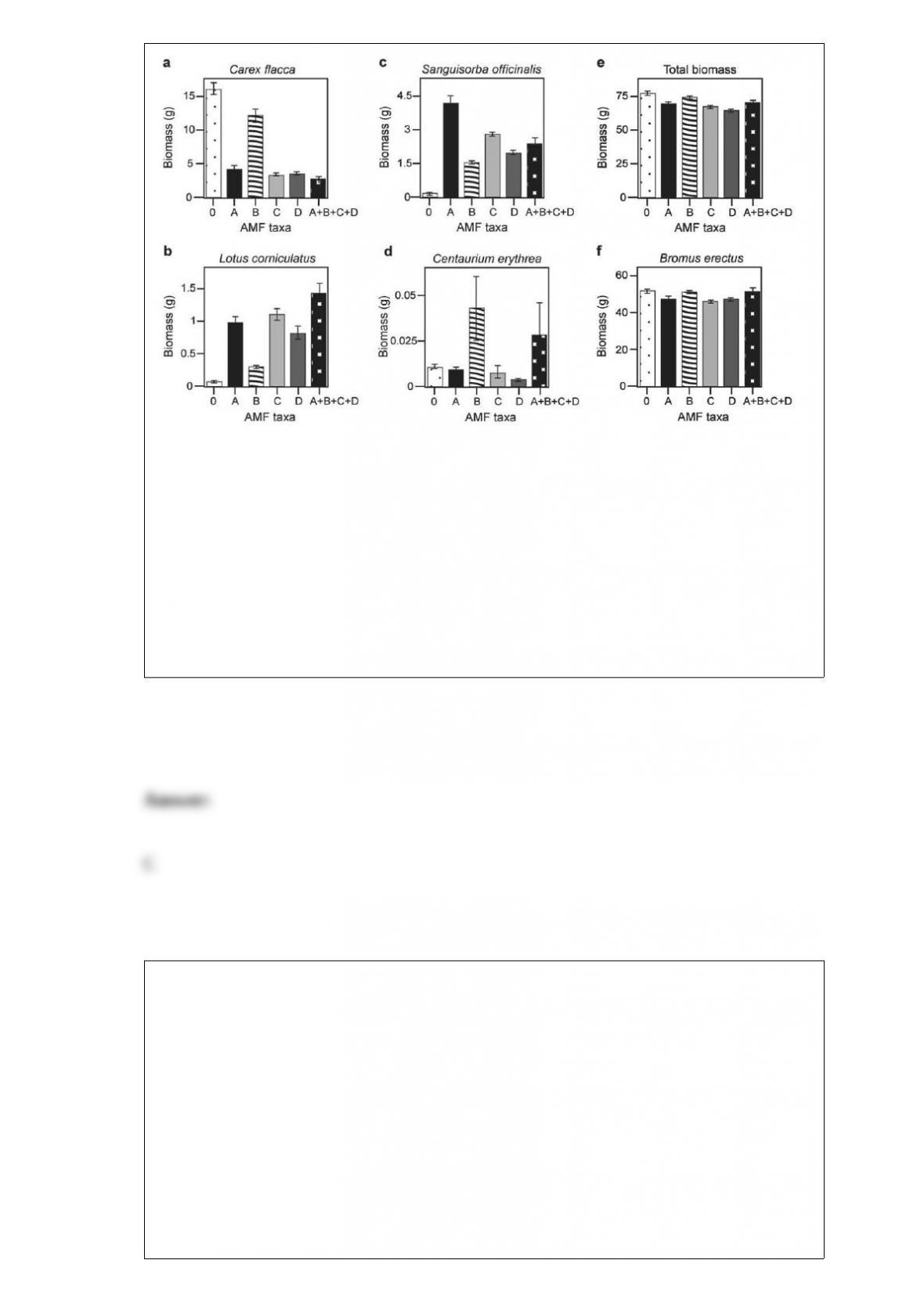
Why does total biomass (graph e in the figure above) not vary with AMF diversity?
A) Plant growth is unaffected by fungal diversity.
B) Most of the plants in this system do not form mycorrhizal associations.
C) Bromus erectus is the dominant plant species.
D) Lotus corniculatus is a rare species.
Which of the following might affect the foraging behavior of an animal in the context
of optimal foraging?
I) risk of predation
II) prey size
III) prey defenses
IV) prey density
A) only I and III
B) only II and IV
C) only I, II, and III
D) I, II, III, and IV
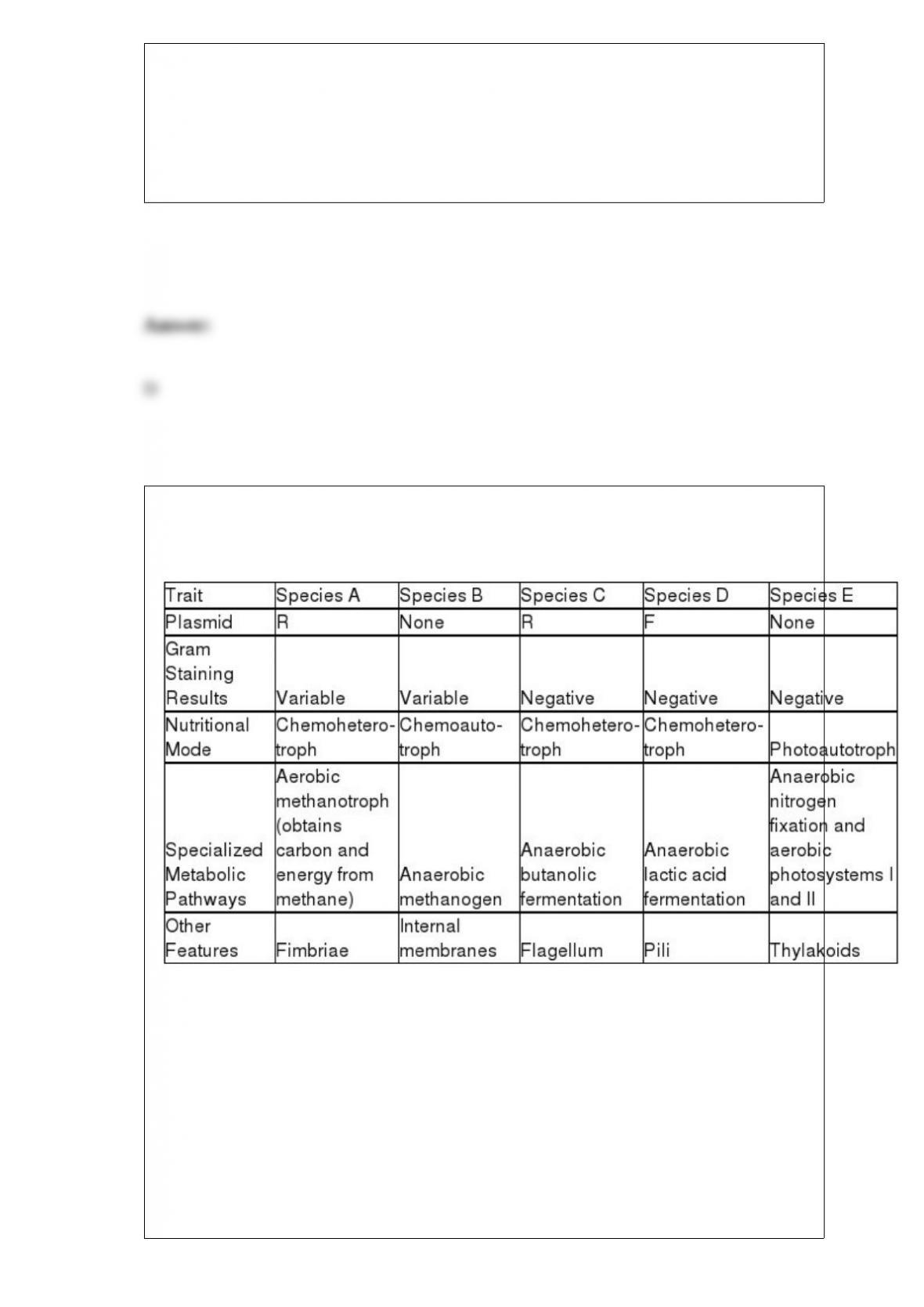
The following table depicts characteristics of five prokaryotic species (A-E). Use the
information in the table to answer the question(s) below
Which two species might be expected to cooperate metabolically, perhaps forming a
biofilm wherein one species surrounds cells of the other species?
A) species A and B
B) species A and C
C) species B and E
D) species C and D
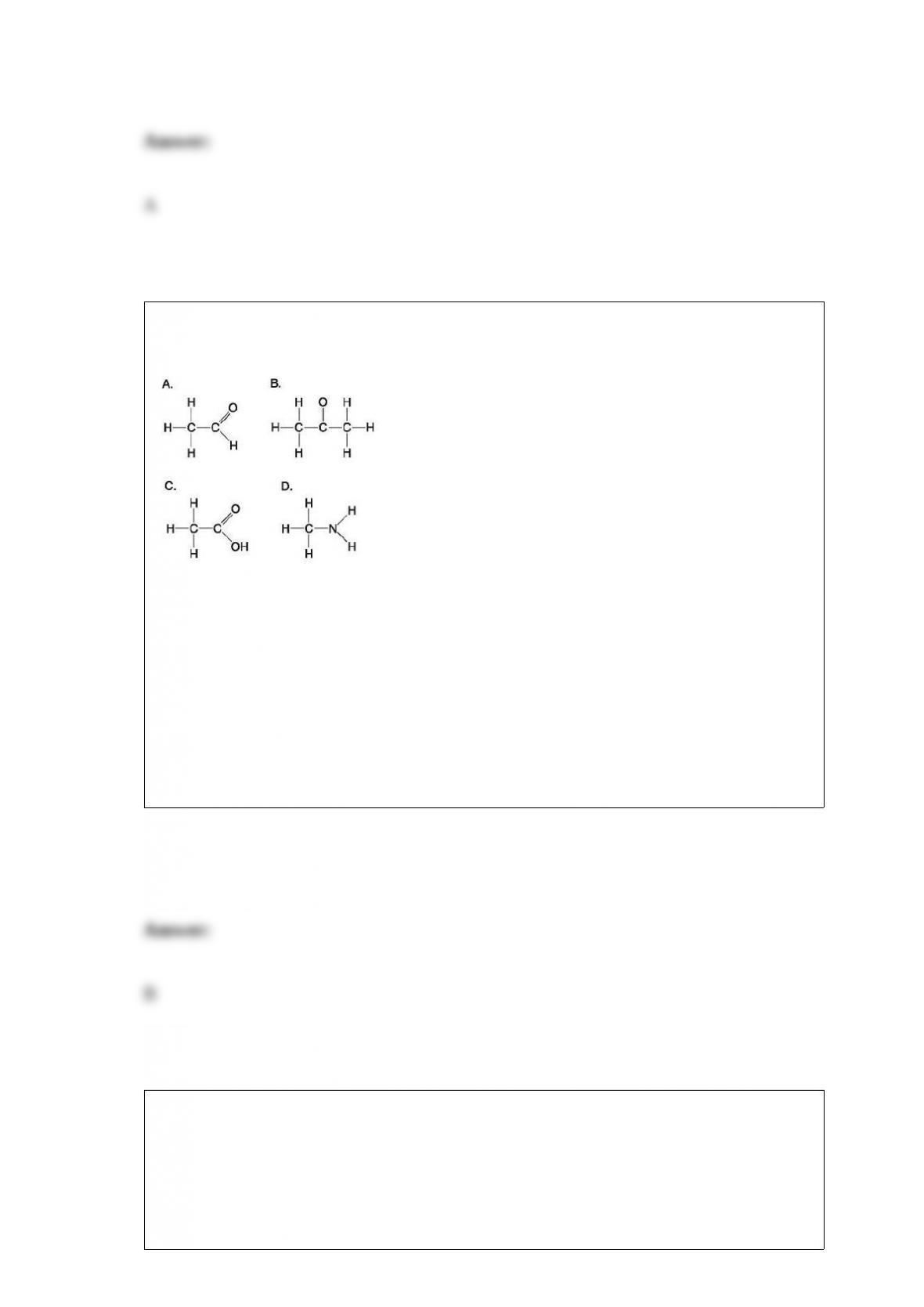
Which molecule shown above has a carbonyl functional group in the form of a ketone?
A) A
B) B
C) C
D) D
A hypothetical bacterium swims among human intestinal contents until it finds a
suitable location on the intestinal lining. It adheres to the intestinal lining using a
feature that also protects it from phagocytes, bacteriophages, and dehydration. Fecal
matter from a human in whose intestine this bacterium lives can spread the bacterium,
even after being mixed with water and boiled. The bacterium is not susceptible to the
penicillin family of antibiotics. It contains no plasmids and relatively little

peptidoglycan.
Adherence to the intestinal lining by this bacterium is due to its possession of _____.
A) fimbriae
B) pili
C) a capsule
D) a flagellum
Among human males, both semen and urine normally travel along the _____.
A) vas deferens
B) seminal vesicle
C) urethra
D) ureter
The protein of the bicoid gene in Drosophila determines the _____ of the embryo.
A) anterior-posterior axis
B) anterior-lateral axis

C) posterior-dorsal axis
D) posterior-ventral axis
What probably explains why coastal and inland garter snakes react differently to banana
slug prey?
A) Ancestors of coastal snakes that could eat the abundant banana slugs had increased
fitness. No such selection occurred inland, where banana slugs were absent.
B) Banana slugs are camouflaged, and inland snakes, which have poorer vision than
coastal snakes, are less able to see them.
C) Garter snakes learn about prey from other garter snakes. Inland garter snakes have
fewer types of prey because they are less social.
D) Inland banana slugs are distasteful, so inland snakes learn to avoid them. Coastal
banana slugs are palatable to garter snakes.
In terms of community ecology, why are pathogens often more virulent now than in the
past?
A) More new pathogens have recently evolved.
B) Host organisms have become more susceptible because of weakened immune
systems.

C) Human activities are transporting pathogens into new habitats (or communities) at
an unprecedented rate.
D) Medicines for treating pathogenic disease are in short supply.
Which of these is an example of inductive reasoning?
A) Hundreds of individuals of a species have been observed and all are photosynthetic;
therefore, the species is photosynthetic.
B) These organisms live in sunny regions. Therefore, they are using photosynthesis.
C) If protists are all single-celled, then they are incapable of aggregating.
D) If two species are members of the same genus, they are more alike than each of them
could be to a different genus.
Bouchard and Brooks studied the effect of insect flight on dispersal and speciation in
rain forest insects. They sampled all of the insects in the study area and found that 60
insect species are flightless and 19 are macropterous (able to fly). What can you
conclude so far about this study?
(P. Bouchard and D. R. Brooks. 2004. Effect of vagility potential on dispersal and
speciation in rainforest insects. Journal of Evolutionary Biology 17:994-1006.)
A) Flightless insects have a greater dispersal potential from this study area.

B) Flightless insects are more numerous in the study area.
C) Flightless insects have a higher richness in the study area.
D) Flightless insects are better suited for the tropics.
How do phospholipids interact with water molecules?
A) The polar heads avoid water; the nonpolar tails attract water (because water is polar
and opposites attract).
B) Phospholipids do not interact with water because water is polar and lipids are
nonpolar.
C) The polar heads interact with water; the nonpolar tails do not.
D) Phospholipids dissolve in water.
Which of the following is the correct sequence of the zones in the primary growth of a
root, moving from the root cap inward?
A) zone of cell division, zone of elongation, zone of differentiation
B) zone of differentiation, zone of elongation, zone of cell division
C) zone of elongation, zone of cell division, zone of differentiation

D) zone of cell division, zone of differentiation, zone of elongation
Diatoms are mostly asexual members of the phytoplankton. Diatoms lack any
organelles that might have the 9 + 2 pattern. They obtain their nutrition from functional
chloroplasts, and each diatom is encased within two porous, glasslike valves. Which
question would be most important for one interested in the day-to-day survival of
individual diatoms?
A) How do diatoms get transported from one location on the water’s surface layers to
another location on the surface?
B) How do diatoms with their glasslike valves keep from sinking into poorly lit waters?
C) How do diatoms with their glasslike valves avoid being shattered by the action of
waves?
D) How do diatom sperm cells locate diatom egg cells?
In a lactating mammal, the two hormones that promote milk synthesis and milk release,
respectively, are _____.
A) prolactin and calcitonin
B) prolactin and oxytocin
C) follicle-stimulating hormone and luteinizing hormone

D) luteinizing hormone and oxytocin
The myelin sheath plays an important role in neuron structure and function. However,
when the myelin sheath is missing or not fully intact, there are consequences. There are
many conditions that cause demyelination of neurons, some are autoimmune disorders,
such as multiple schlerosis, and others are hereditary. The symptoms of these conditions
vary, but often include speech impairment and difficulty coordinating movement.
Which of the following correctly connects the symptoms of demyelination with the
process of nerve impulse transmission?
A) Demyelination prevents the formation of an action potential in sensory neurons that
transmit signals from the environment to the central nervous system.
B) Demyelination slows nerve impulse transmission.
C) Demyelination prevents the uptake of neurotransmitters needed to propagate a
message to the next neuron.
D) Demyelination targets the central nervous system.
What is the function of reverse transcriptase in retroviruses?
A) It uses viral RNA as a template for DNA synthesis.
B) It converts host cell RNA into viral DNA.

C) It translates viral RNA into proteins.
D) It uses viral RNA as a template for making complementary RNA strands.
Additional vascular tissue produced as secondary growth in a root originates from
which cells?
A) vascular cambium
B) apical meristem
C) endodermis
D) xylem