
Which of the following occurs in vascular land plants but not charophytes (stoneworts)?
A) sporopollenin
B) lignin
C) chlorophyll a
D) cellulose
Where are proteins produced other than on ribosomes free in the cytosol or ribosomes
attached to the ER?
A) in the extracellular matrix
B) in the Golgi apparatus
C) in mitochondria
D) in the nucleolus
Cyanide binds with at least one molecule involved in producing ATP. If a cell is
exposed to cyanide, most of the cyanide will be found within the _____.
A) mitochondria
B) peroxisomes
C) lysosomes
D) endoplasmic reticulum
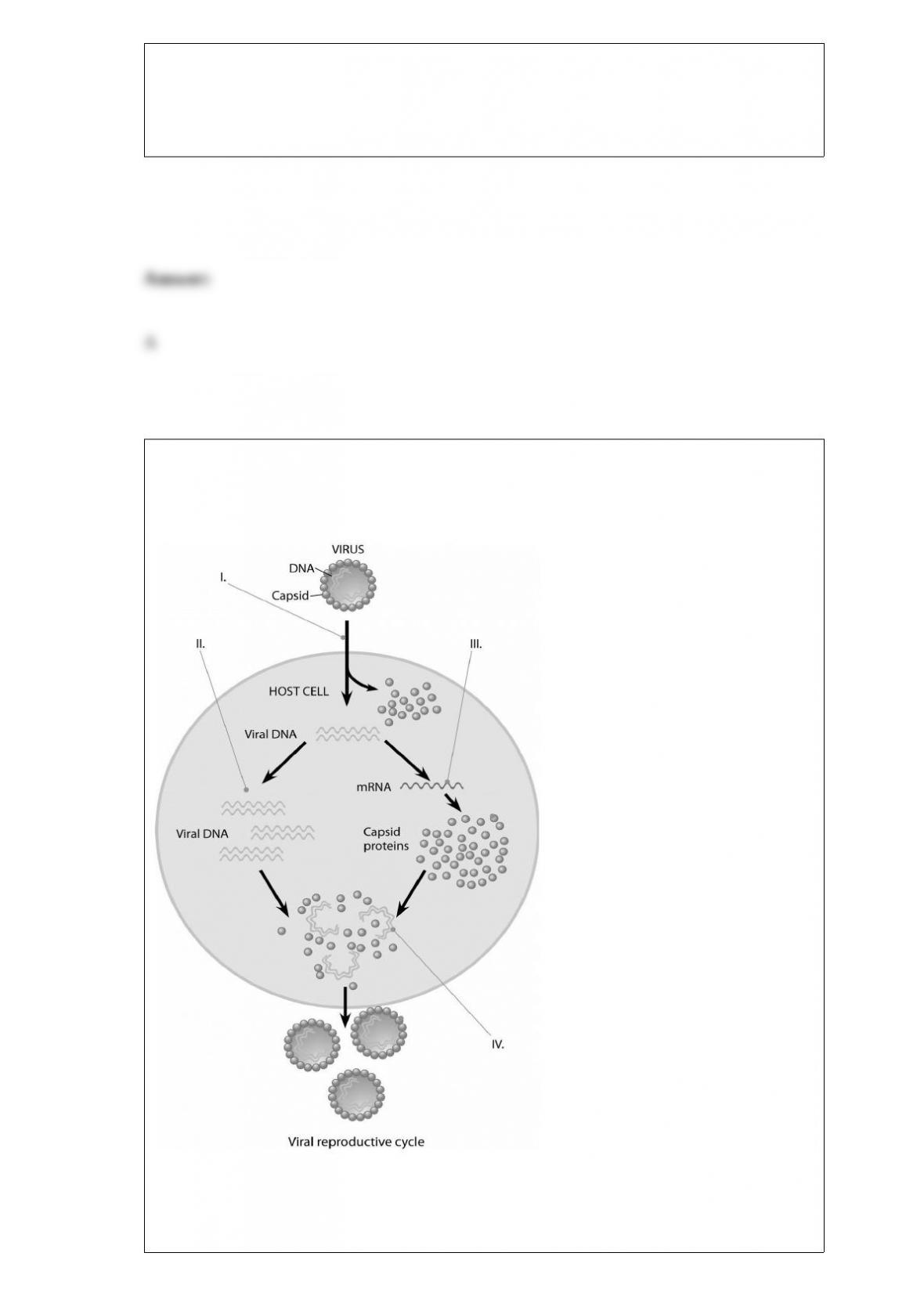
In the figure, at the arrow marked II, what enzyme(s) are being utilized?
A) reverse transcriptase
B) viral DNA polymerase
C) host cell DNA polymerase
D) host cell RNA polymerase
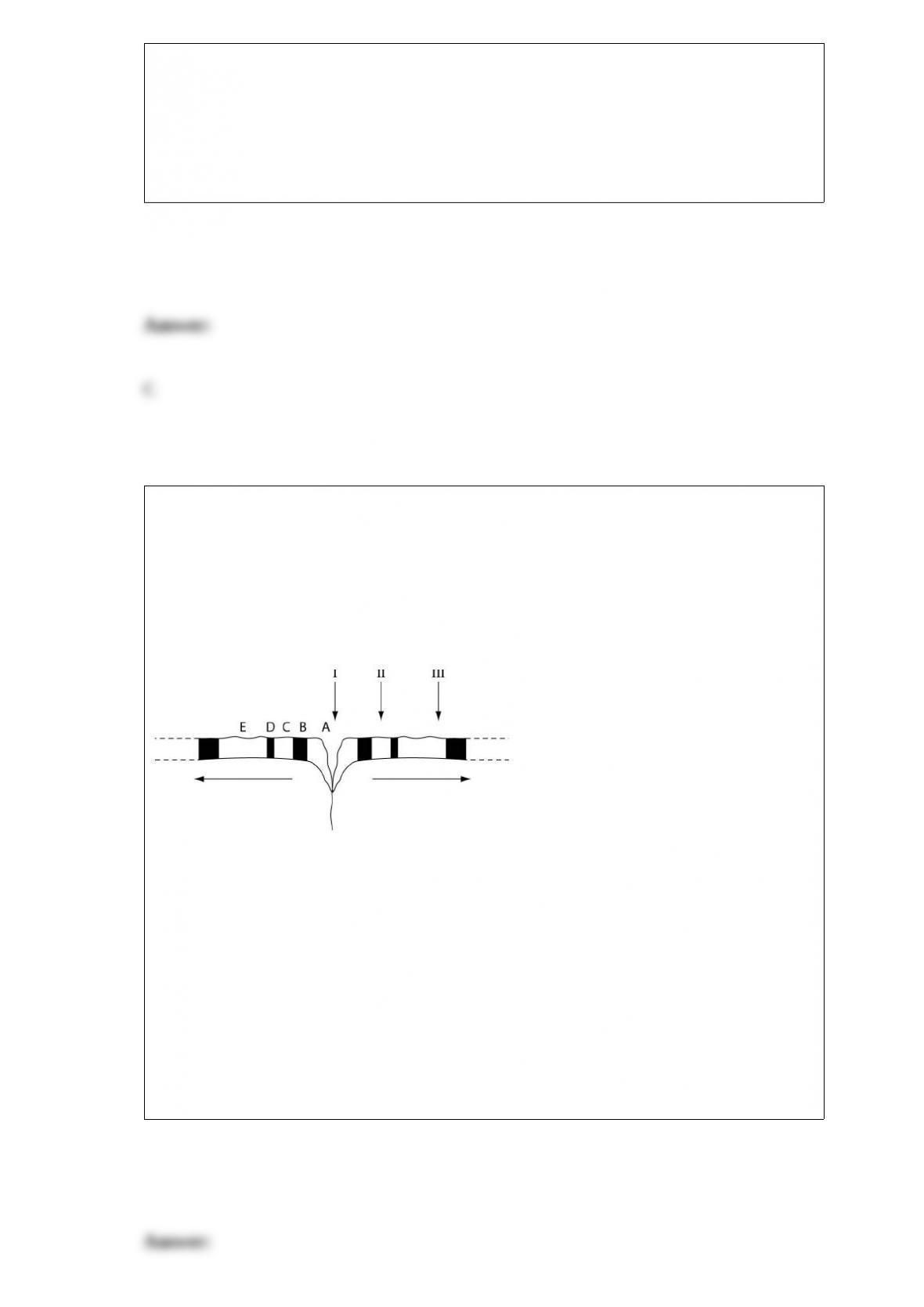
The figure below represents a cross section of the sea floor through a mid-ocean rift
valley, with alternating patches of black and white indicating sea floor with reversed
magnetic polarities. At the arrow labeled “I” (the rift valley), the igneous rock of the sea
floor is so young that it can be accurately dated using carbon-14 dating. At the arrow
labeled “III,” however, the igneous rock is about one million years old, and
potassium-40 dating is typically used to date such rocks. Note: The horizontal arrows
indicate the direction of sea-floor spreading, away from the rift valley.
Assuming that the rate of sea-floor spreading was constant during the one-million-year
period depicted above, on average Earth’s magnetic field has undergone reversal once
every _____.
A) 25,000 years
B) 100,000 years
C) 250,000 years
D) 1,000,000 years
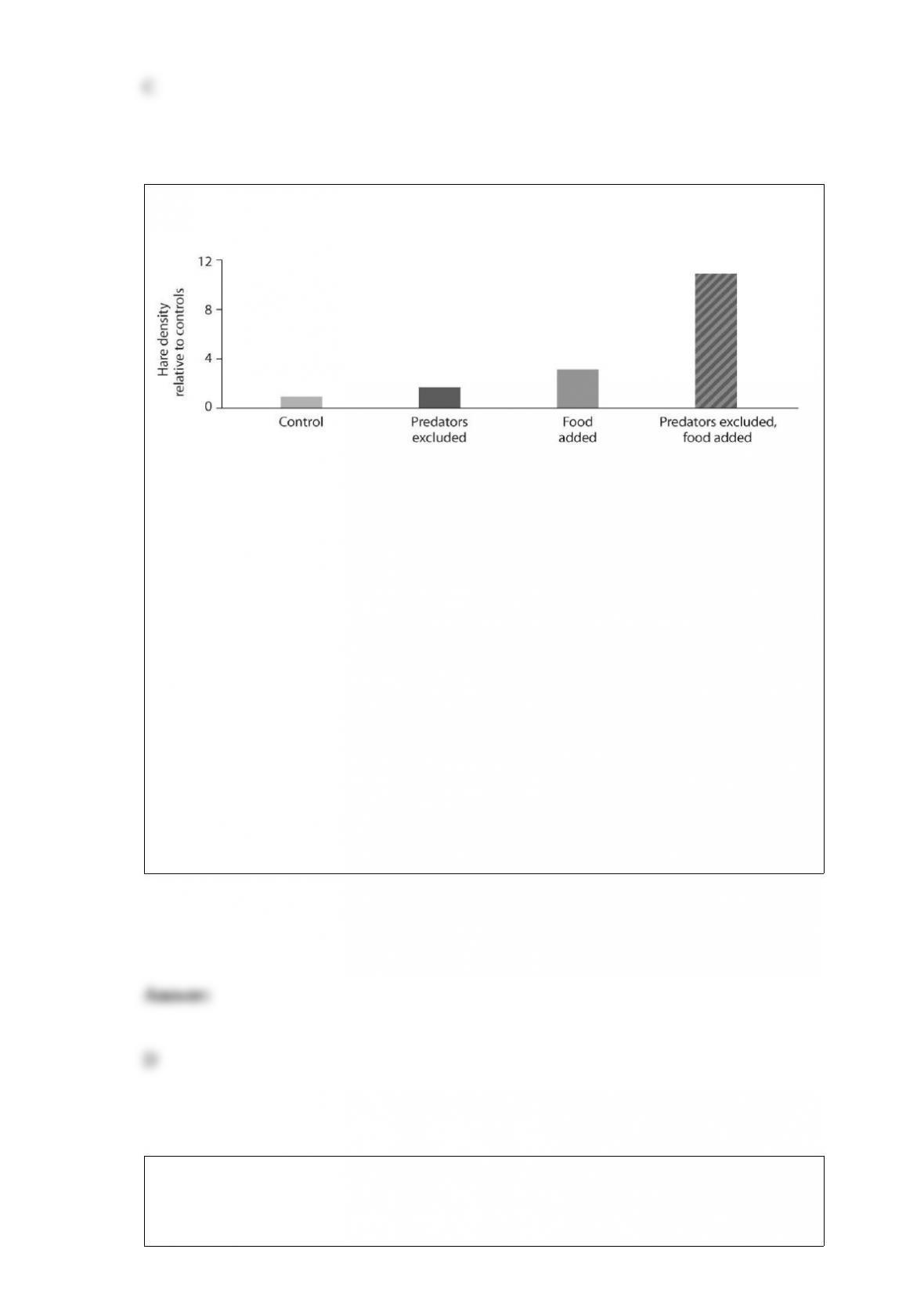
Looking at the data in the figure above from the hare/lynx experiment, what conclusion
can you draw?
I) Food is a factor in controlling hare population size.
II) Excluding lynx is a factor in controlling hare population size.
III) The effect of excluding predators and adding food in the same experiment is greater
than the sum of excluding lynx alone plus adding food alone.
A) only I
B) only II
C) only III
D) I, II, and III
Spores and seeds have basically the same functiondispersalbut are vastly different
because _____.
A) spores have a protective outer covering; seeds do not
B) spores have an embryo; seeds do not
C) spores have stored nutrition; seeds do not
D) spores are unicellular; seeds are not
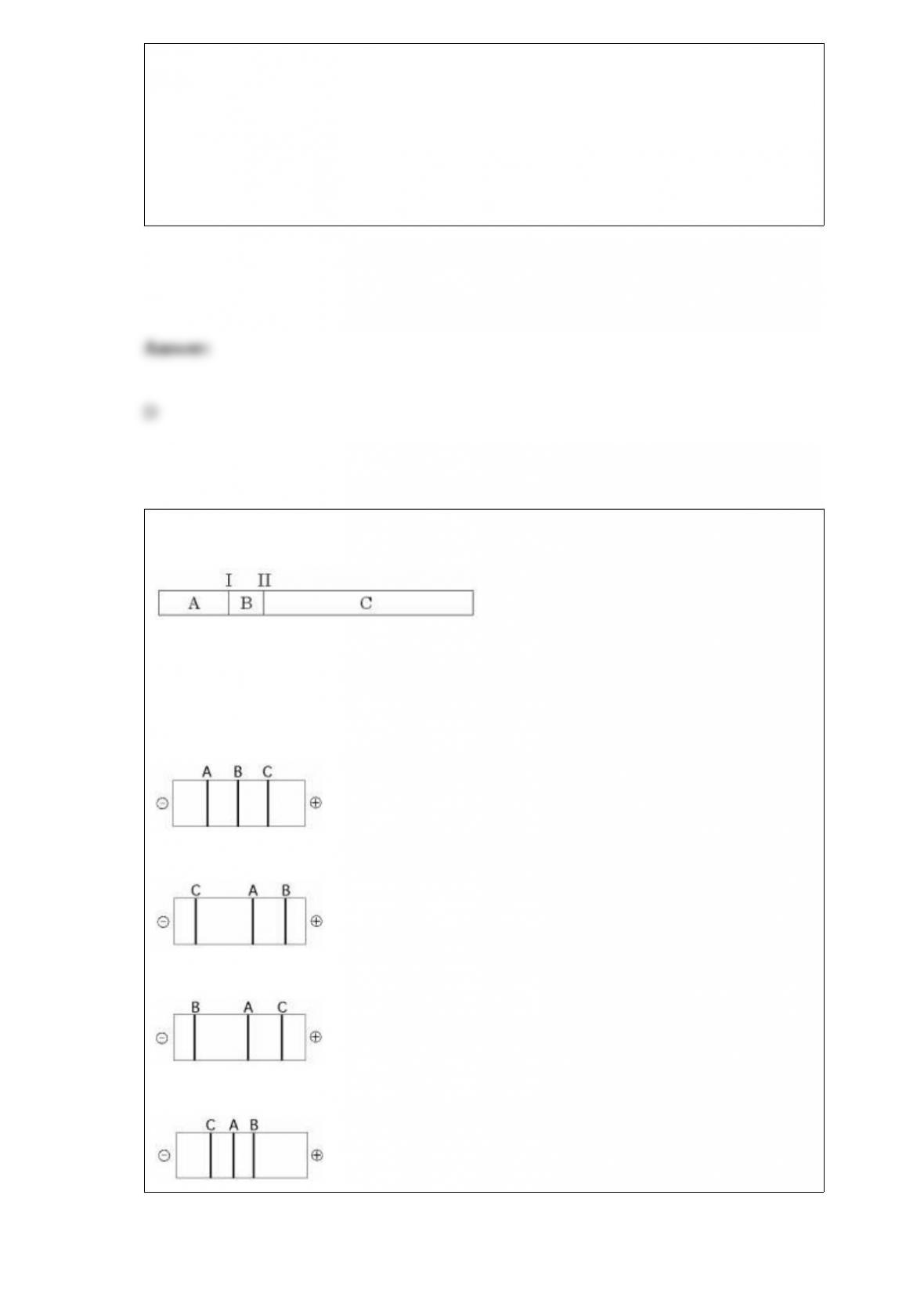
The segment of DNA shown in the figure above has restriction sites I and II, which
create restriction fragments A, B, and C. Which of the gels produced by electrophoresis
shown below best represents the separation and identity of these fragments?
A)
B)
C)
D)

Cyclin-dependent kinase (Cdk) is _____.
A) inactive, or “turned off,” in the presence of cyclin
B) present only during the S phase of the cell cycle
C) the enzyme that catalyzes the attachment of chromosomes to microtubules
D) an enzyme that attaches phosphate groups to other proteins
If the apical ectodermal ridge is surgically removed from an embryo, it will lose _____.
A) positional information for limb-bud pattern formation
B) guidance signals needed for correct gastrulation
C) unequal cytokinesis of blastomeres
D) the developmental substrate for the kidneys

The Brazil nut tree, Bertholletia excels (n = 17), is native to tropical rain forests of
South America. It is a hardwood tree that can grow to over 50 meters tall, is a source of
high-quality lumber, and is a favorite nesting site for harpy eagles. As the rainy season
ends, tough-walled fruits, each containing 8-25 seeds (Brazil nuts), fall to the forest
floor. Brazil nuts are composed primarily of endosperm. About $50 million worth of
nuts are harvested each year. Scientists have discovered that the pale yellow flowers of
Brazil nut trees cannot fertilize themselves and admit only female orchid bees as
pollinators. The agouti (Dasyprocta spp.), a cat-sized rodent, is the only animal with
teeth strong enough to crack the hard wall of Brazil nut fruits. It typically eats some of
the seeds, buries others, and leaves still others inside the fruit, which moisture can now
enter. The uneaten seeds may subsequently germinate.
Native peoples traditionally use Brazil nuts to treat stomach ache, inflammation,
hypersensitivity, and hepatitis. Consequently, a scientist should be interested in
promoting _____.
A) better education for the native peoples so that they will overcome their old ways
B) clear-cutting forests containing Brazil nut trees to make way for crops with proven
medical benefits
C) an increase in the living standards of the native peoples so that they might be able to
purchase modern pharmaceuticals
D) the evaluation of Brazil nut chemicals for use as potential drugs
Some regions of the plasma membrane, called lipid rafts, have a higher concentration of
cholesterol molecules. At higher temperatures, these regions _____.
A) are more fluid than the surrounding membrane
B) are less fluid than the surrounding membrane
C) detach from the plasma membrane and clog arteries
D) have higher rates of lateral diffusion of lipids and proteins into and out of these
regions

If an amphibian zygote is manipulated so that the first cleavage plane fails to divide the
gray crescent, then _____.
A) the daughter cell with the entire gray crescent will die
B) both daughter cells will develop normally, because amphibians are totipotent at this
stage
C) only the daughter cell with the gray crescent will develop normally
D) both daughter cells will develop abnormally
All things being equal, which of these is the most parsimonious explanation for the
change in the number of Hox genes from the last common ancestor of insects and
vertebrates to ancestral vertebrates, as shown in the table above?
A) The occurrence of seven independent duplications of individual Hox genes.
B) The occurrence of two distinct duplications of the entire seven-gene cluster,
followed by the loss of one cluster.
C) The occurrence of a single duplication of the entire seven-gene cluster.
Prior to the work of Lyell and Darwin, the prevailing belief was that Earth is _____.
A) a few thousand years old, and populations are unchanging
B) a few thousand years old, and populations gradually change
C) millions of years old, and populations rapidly change
D) millions of years old, and populations are unchanging
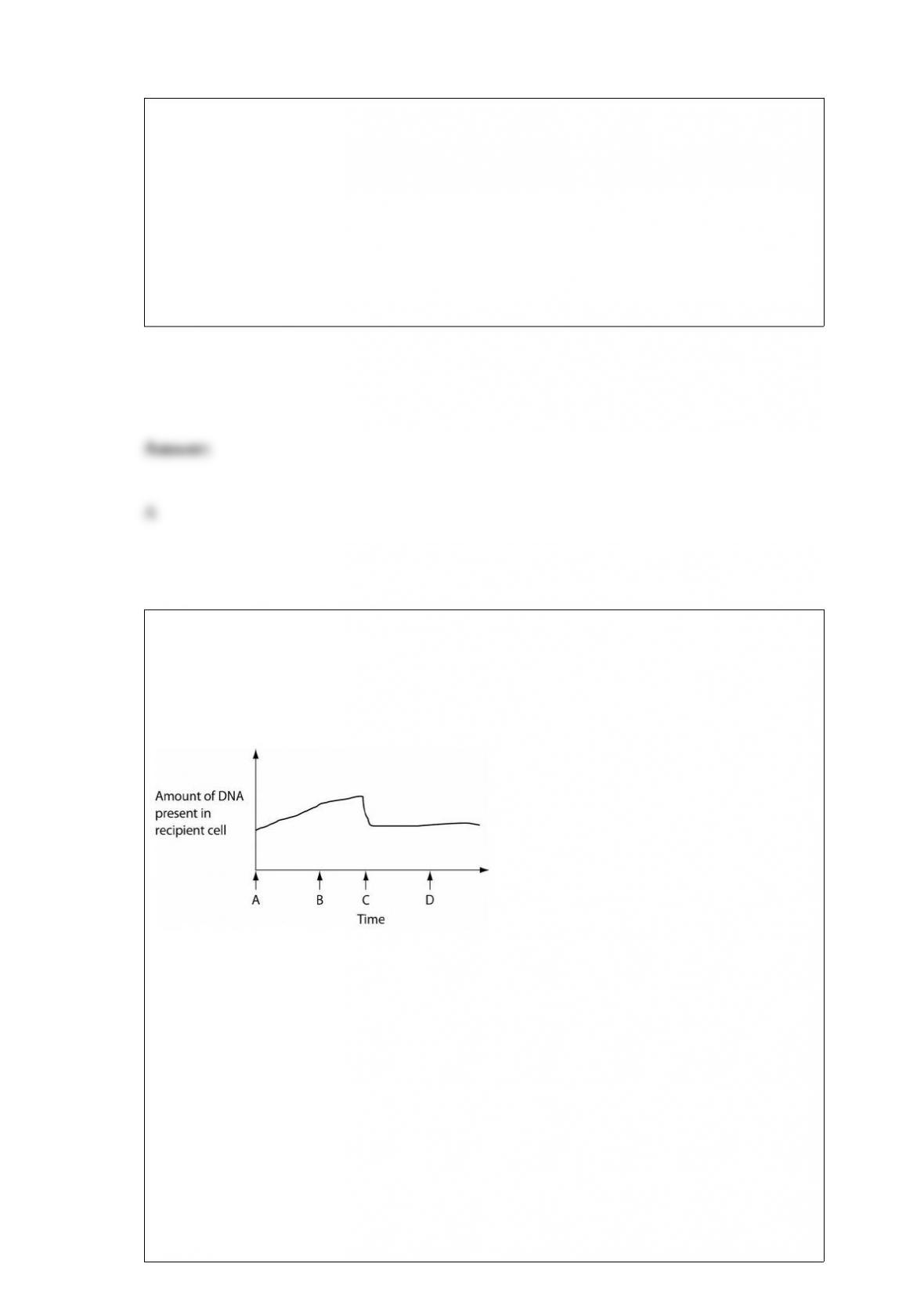
The figure below depicts changes to the amount of DNA present in a recipient cell that
is engaged in conjugation with an Hfr cell. Hfr cell DNA begins entering the recipient
cell at Time A. Assume that reciprocal crossing over occurs (in other words, a fragment
of the recipient’s chromosome is exchanged for a homologous fragment from the Hfr
cell’s DNA).
Which two processes are responsible for the shape of the curve at Time B?
1. transduction
2. entry of single-stranded Hfr DNA
3. rolling circle replication of single-stranded Hfr DNA
4. activation of DNA pumps in plasma membrane
A) 1 and 2
B) 1 and 4

C) 2 and 3
D) 3 and 4
Stomata _____.
A) occur in all land plants and define them as a monophyletic group
B) open to allow gas exchange and close to decrease water loss
C) occur in all land plants and are the same as pores
D) open to increase both water absorption and gas exchange
Theodor W. Engelmann illuminated a filament of algae with light that passed through a
prism, thus exposing different segments of algae to different wavelengths of light. He
added aerobic bacteria and then noted in which areas the bacteria congregated. He
noted that the largest groups were found in the areas illuminated by the red and blue
light.
An outcome of Engelmann’s experiment was to help determine the relationship between
_____.
A) wavelengths of light and the rate of aerobic respiration
B) wavelengths of light and the amount of heat released
C) wavelengths of light and the rate of photosynthesis
D) the concentration of carbon dioxide and the rate of photosynthesis
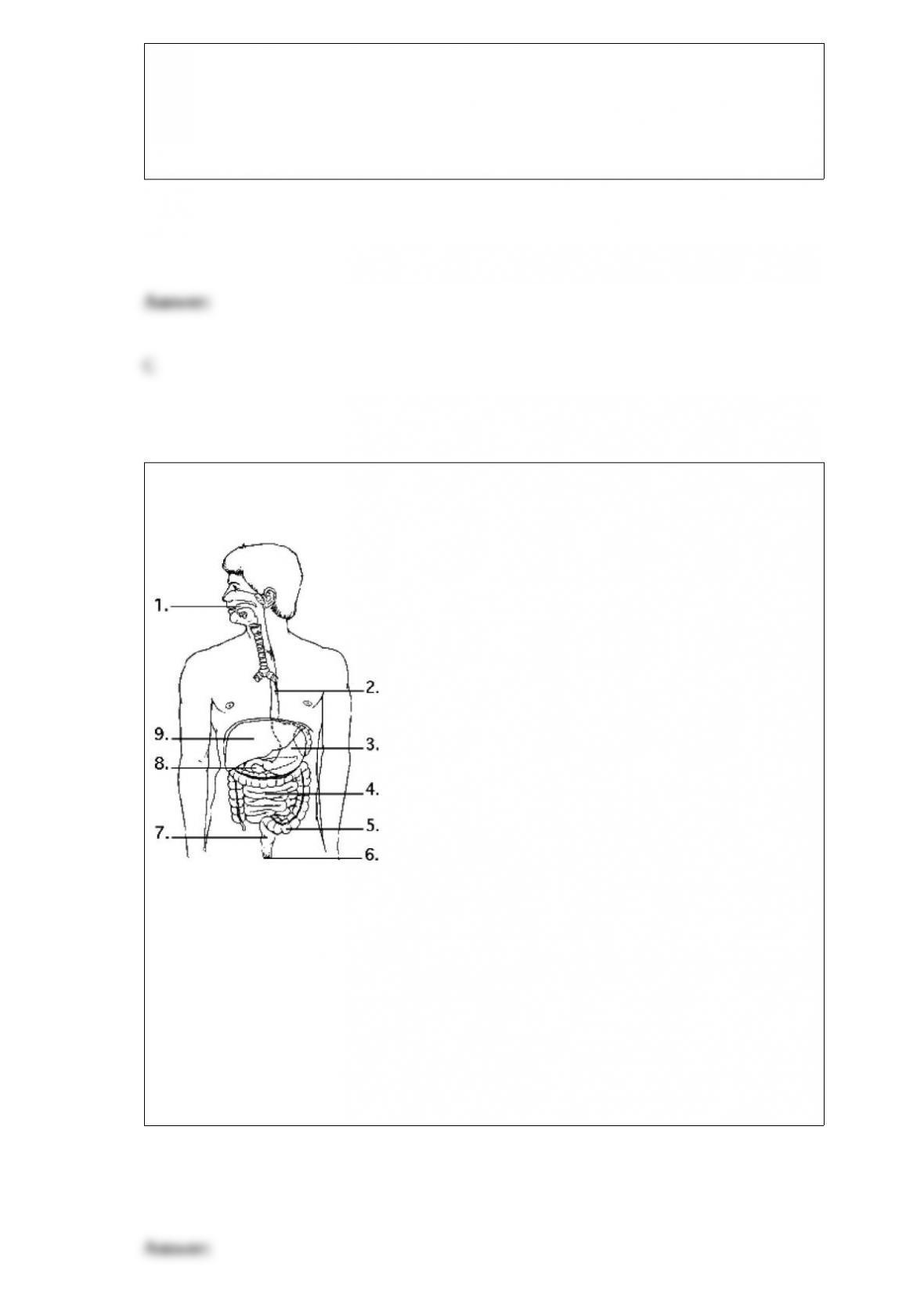
Examine the digestive system structures in the figure above. Most of the digestion of
fats occurs in structure(s) _____.
A) 3 only
B) 4 only
C) 1 and 4
D) 3 and 4

The membrane potential in which there is no net movement of the ion across the
membrane is called the _____.
A) graded potential
B) threshold potential
C) equilibrium potential
D) action potential
Which of the following sensory receptors is correctly paired with its category?
A) hair cell mechanoreceptor
B) muscle spindle electromagnetic receptor
C) taste receptor mechanoreceptor
D) rod chemoreceptor

Which one of these mollusk groups can be classified as suspension feeders?
A) bivalves
B) gastropods
C) chitons
D) cephalopods
There is much discussion in the media about protecting biodiversity. But does
biodiversity really matter? Canadian and Swiss researchers wanted to know if the
diversity of arbuscular mycorrhizal fungi (AMF) was important to the productivity of
grasslands (M.G.A. van der Heijden, J. N. Klironomos, M. Ursic, P. Moutoglis, R.
Streitwolf-Engel, T. Boler, A. Wiemken, and I. R. Sanders. 1998. Mycorrhizal fungal
diversity determines plant biodiversity, ecosystem variability and productivity. Nature
396:69-72). Specifically, they wanted to know if it mattered which specific AMF
species were present, or just that some type of AMF was present. They grew various
plants in combination with one of four AMF species (A, B, C, and D), no AMF species
(O), or all four AMF species together (A+B+C+D); and they measured plant growth
under each set of conditions. All plant species were grown in each plot, so they always
competed with each other with the only difference being which AMF species were
present.
On the graphs below, the x-axis labels indicate the number and identity of AMF species
(bar 0 = no fungi; bars A-D = individual AMF species; bar A+B+C+D = all AMF
species together). The y-axis indicates the amount (grams) of plant biomass for the
species shown in italics above each graph.
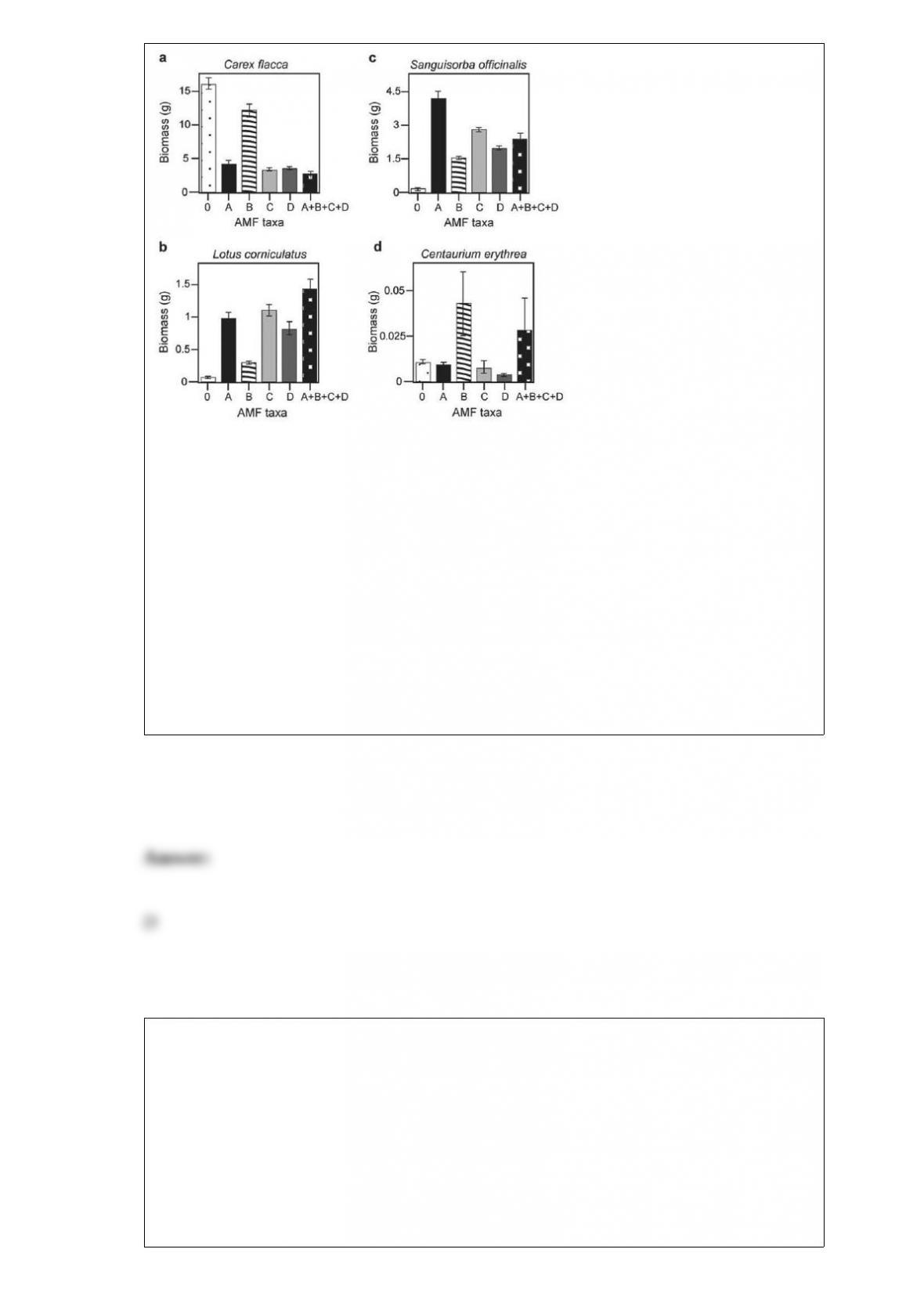
In graph (b) in the figure above, which of the following best explains the data given
about Lotus corniculatus?
A) This plant grows best when AMF taxa A or C are present.
B) Lotus corniculatus does not form mycorrhizal associations.
C) Mycorrhizal fungi parasitize the plant’s roots when they are present, reducing its
growth.
D) This plant forms multiple AMF associations, growing best with increased fungal
diversity.
Phloem transport is described as being from source to sink. Which of the following
would most accurately complete this statement about phloem transport as applied to
most plants in the late spring?
Phloem transports ________ from the ________ source to the ________ sink.
A) amino acids; root; mycorrhizae
B) sugars; leaf; apical meristem

C) proteins; root; leaf
D) sugars; woody stem; root
Most causes of speciation are relatively slow, in that they may take many generations to
see changes, with the exception of _____.
A) polyploidy
B) reinforcement
C) colonization
D) natural selection

Which molecule(s) shown above is (are) ionized in a cell?
A) A
B) B and D
C) C and D
D) D
A plant scientist was hired by a greenhouse operator to devise a way to force iris plants
to bloom in the short days of winter. Iris normally blooms as long-day (short-night)
plants. Which of the following has the best chance of creating iris blooms in winter?
A) Artificially increase the period of darkness in the greenhouse.
B) Increase the temperature to more closely follow summer temperatures.
C) Alternate four hours of darkness with four hours of light repeatedly over each
24-hour period.
D) Interrupt the long winter nights with a brief period of light.
Which of the following defines a genome?
A) the complete set of an organism’s polypeptides

B) the complete set of a species’ polypeptides
C) a karyotype
D) the complete set of an organism’s genes and other DNA sequences
Forming new long-term memories is strikingly disrupted after damage to the _____.
A) thalamus
B) cerebral cortex
C) somatosensory cortex
D) primary motor cortex
To better comprehend the magnitude of current extinctions, it will be necessary to
_____.
A) differentiate between plant extinction and animal extinction numbers
B) focus on identifying more species of mammals and birds
C) identify more of the yet unknown species of organisms on Earth
D) use the average extinction rates of vertebrates as a baseline

Plasmodesmata in plant cells are most similar in function to which of the following
structures in animal cells?
A) desmosomes
B) gap junctions
C) extracellular matrix
D) tight junctions
What are prions?
A) mobile segments of DNA
B) tiny circular molecules of RNA that can infect plants
C) viral DNA that attaches itself to the host genome and causes disease
D) misfolded versions of normal protein that can cause disease

In onions (Allium), cells of the sporophyte have 16 chromosomes within each nucleus.
Match the number of chromosomes present in each of the following onion tissues.
How many chromosomes should be in an embryo nucleus?
A) 8
B) 16
C) 24
D) 32