
A localized group of organisms that belong to the same species is called a _____.
A) community
B) population
C) ecosystem
D) family
A farmer uses triazine herbicide to control pigweed in his field. For the first few years,
the triazine works well and almost all the pigweed dies; but after several years, the
farmer sees more and more pigweed. Which of these explanations best explains what
happened?
A) The herbicide company lost its triazine formula and started selling poor-quality
triazine.
B) Natural selection caused the pigweed to mutate, creating a new triazine-resistant
species.
C) Triazine-resistant pigweed has less-efficient photosynthesis metabolism.
D) Triazine-resistant weeds were more likely to survive and reproduce.
For a particular microarray assay (DNA chip), cDNA has been made from the mRNAs
of a dozen patients’ breast tumor biopsies. The researchers will be looking for _____.

A) a particular gene that is amplified in all or most of the patient samples
B) a pattern of fluorescence that indicates which cells are over proliferating
C) a pattern shared among some or all of the samples that indicates gene expression
differing from control samples
D) a group of cDNAs that match those in non-breast cancer control samples from the
same population
A man who is an achondroplastic dwarf with normal vision marries a color-blind
woman of normal height. The man’s father was six feet tall, and both the woman’s
parents were of average height. Achondroplastic dwarfism is autosomal dominant, and
red-green color blindness is X-linked recessive. How many of their daughters might be
expected to be color-blind dwarfs?
A) none
B) half
C) one out of four
D) three out of four
The primary function of the corpus luteum is to _____.

A) nourish and protect the egg cell
B) maintain progesterone and estrogen synthesis after ovulation has occurred
C) stimulate the development of the mammary glands
D) support pregnancy in the second and third trimesters
Which of the following best reflects what we know about how the flu virus moves
between species?
A) The flu virus in a pig is mutated and replicated in alternate arrangements so that
humans who eat the pig products can be infected.
B) A flu virus from a human epidemic or pandemic infects birds; the birds replicate the
virus differently and then pass it back to humans.
C) An influenza virus gains new sequences of DNA from another virus, such as a
herpesvirus; this enables it to be transmitted to a human host.
D) An animal such as a pig is infected with more than one virus, genetic recombination
occurs, the new virus mutates, the virus is passed to a new species such as a bird, and
the virus mutates again and can now be transmitted to humans.
A neurophysiologist is investigating nerve reflexes in two different animals: a crab and
a fish. Action potentials are found to pass more rapidly along the fish’s neurons. What is
the most likely explanation?

A) The fish’s axons are smaller in diameter; small axons transmit action potentials faster
than large axons do.
B) Unlike the crab, the fish’s axons are wrapped in myelin.
C) There are more ion channels in the axons of the crab compared with fish axons.
D) Unlike the crab, the fish’s axons are wrapped in myelin, and the fish’s axons are
smaller in diameter; small axons transmit action potentials faster than large axons do.
In a plant, the reactions that produce molecular oxygen (O2) take place in _____.
A) the light reactions alone
B) the Calvin cycle alone
C) the light reactions and the Calvin cycle
D) neither the light reactions nor the Calvin cycle
Over-the-counter medications for acid reflux or heartburn block the production of
stomach acid. Which of the following cells are directly affected by this medication?
A) goblet cells
B) chief cells

C) parietal cells
D) smooth muscle cells
In signal transduction, phosphatases _____.
A) move the phosphate group of the transduction pathway to the next molecule of a
series
B) prevent a protein kinase from being reused when there is another extracellular signal
C) amplify the second messengers such as cAMP
D) inactivate protein kinases and turn off the signal transduction
Which level of ecological study focuses the most on abiotic factors?
A) speciation ecology
B) population ecology
C) community ecology
D) ecosystem ecology
Which of these time intervals, based on plant fossils, came last (most recently)?
A) extensive growth of gymnosperm forests
B) colonization of land by early liverworts and mosses
C) rise and diversification of angiosperms
D) carboniferous swamps with giant horsetails and lycophytes
The sea slug Pteraeolidia ianthina (P. ianthina) can harbor living dinoflagellates
(photosynthetic protists) in its skin. These endosymbiotic dinoflagellates reproduce
quickly enough to maintain their populations. Low populations do not affect the sea
slugs very much, but high populations (> 5 x 10⁵ cells/mg of sea slug protein) can
promote sea slug survival.
Percent of sea slug respiratory carbon demand provided by indwelling dinoflagellates.
If we assume that carbon is the sole nutrient needed by sea slugs to drive their cellular
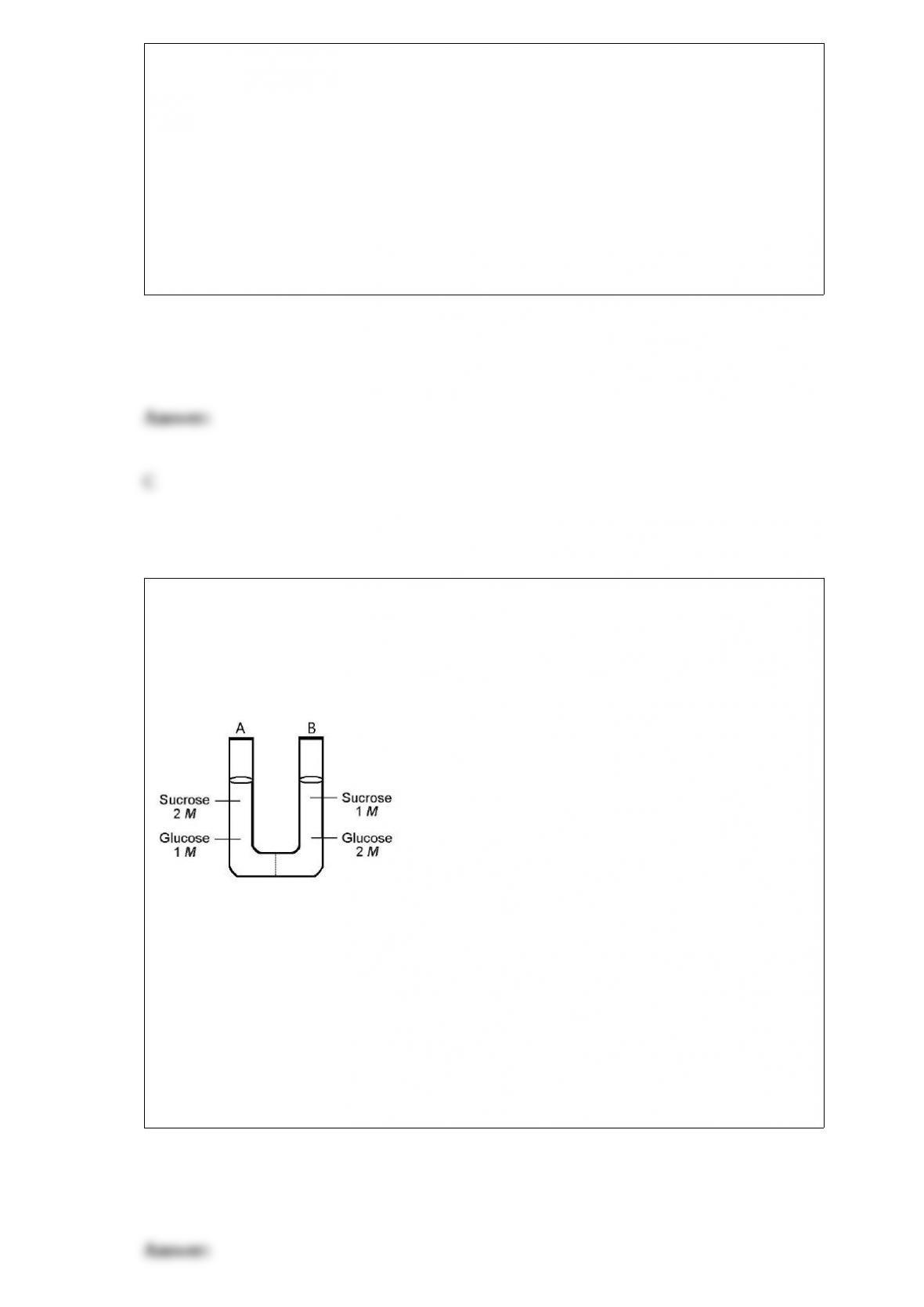
respiration, then based on the graph, during which season(s) is it LEAST necessary for
P. ianthina to act as a chemoheterotroph?
A) winter
B) spring
C) summer
D) fall
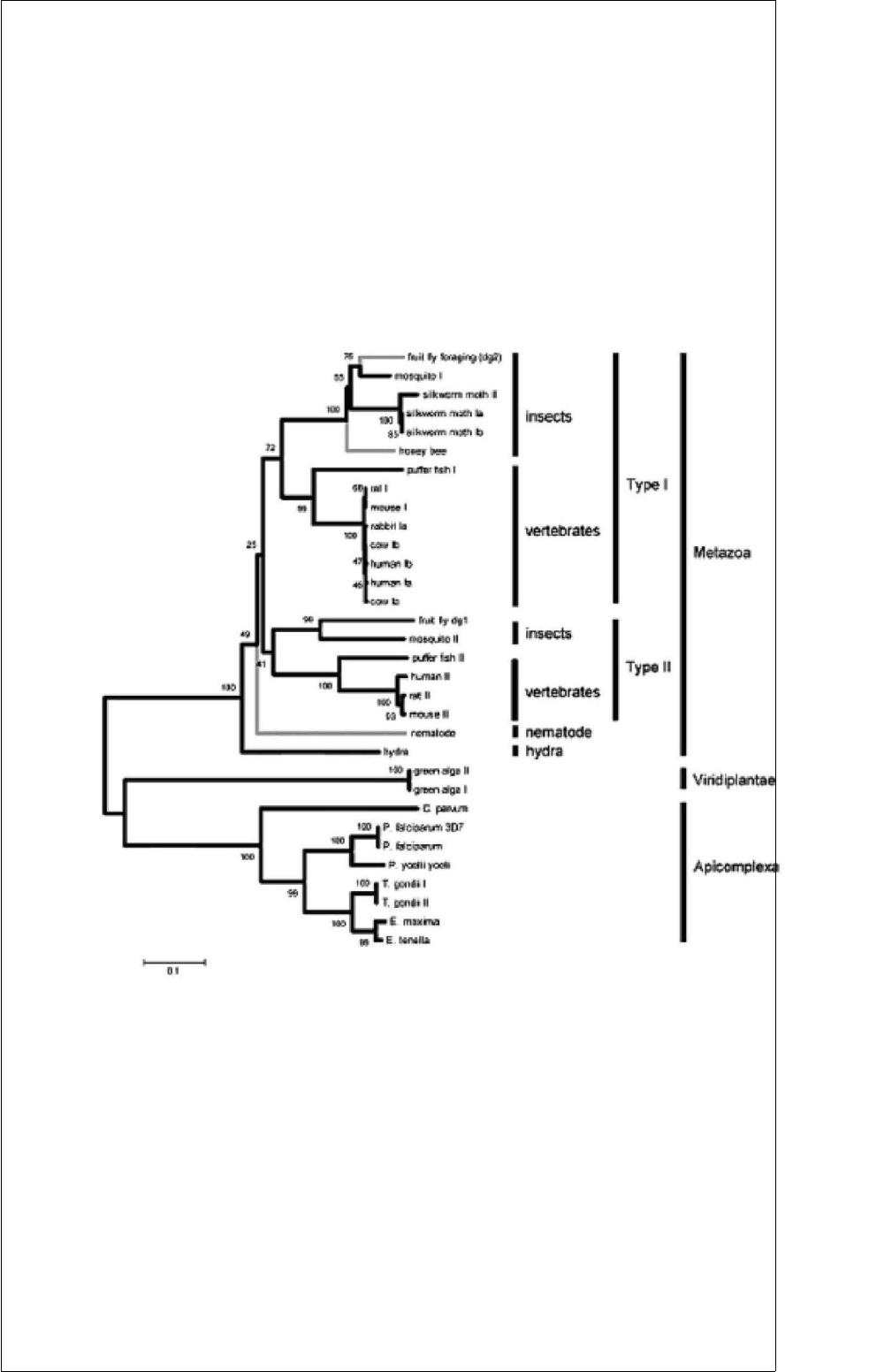
The solutions in the two arms of this U-tube are separated by a membrane that is
permeable to water and glucose but not to sucrose. Side A is half-filled with a solution
of 2 M sucrose and 1 M glucose. Side B is half-filled with 1 M sucrose and 2 M glucose.
Initially, the liquid levels on both sides are equal.
Refer to the figure. After the system reaches equilibrium, what changes are observed?
A) The molarity of sucrose is higher than that of glucose on side A.
B) The water level is higher in side A than in side B.
C) The water level is unchanged.
D) The water level is higher in side B than in side A.

In a resting potential, an example of a cation that is more abundant as a solute in the
cytosol of a neuron than it is in the interstitial fluid outside the neuron is _____.
A) Cl–
B) Ca++
C) Na+
D) K+
Fossils of Lystrosaurus, a dicynodont therapsid, are most common in parts of
modern-day South America, South Africa, Madagascar, India, South Australia, and
Antarctica. The animal apparently lived in arid regions, and was mostly herbivorous. It
originated during the mid-Permian period, survived the Permian extinction, and
dwindled by the late Triassic, though there is evidence of a relict population in Australia
during the Cretaceous period. Some dicynodonts had two large tusks, extending down
from their upper jaws. The tusks were not used for food gathering, and in some species
were limited to males. Food was gathered using an otherwise toothless beak. Judging
from the fossil record in sedimentary rocks, these pig-sized organisms were the most
common mammal-like reptiles of the Permian.
Which of the following is the most likely explanation for the modern-day distribution of
dicynodont fossils? The dicynodonts were_____.
A) carnivores that traveled widely to find prey
B) evenly distributed throughout all of Pangaea
C) most abundantly distributed throughout Gondwanaland
D) amphibious and able to swim long distances

Consider the energy budgets for a human, an elephant, a penguin, a mouse, and a snake.
The _____ would have the highest total annual energy expenditure, and the _____
would have the highest energy expenditure per unit mass.
A) elephant; mouse
B) elephant; human
C) human; penguin
D) mouse; snake
An obstetrician knows that one of her patients is a pregnant woman whose fetus is at
risk for a serious disorder that is detectable biochemically in fetal cells. The obstetrician
would most reasonably offer which of the following procedures to her patient?
A) karyotyping of the woman’s somatic cells
B) X-ray
C) amniocentesis or CVS
D) blood transfusion

Radish flowers may be red, purple, or white. A cross between a red-flowered plant and
a white-flowered plant yields all-purple offspring. The flower color trait in radishes is
an example of which of the following?
A) a multiple allelic system
B) sex linkage
C) codominance
D) incomplete dominance
A fish that has been salt-cured subsequently develops a reddish color. You suspect that
the fish has been contaminated by the extreme halophile Halobacterium. Which of
these features of cells removed from the surface of the fish, if confirmed, would support
your suspicion?
1. the presence of the same photosynthetic pigments found in cyanobacteria
2. cell walls that lack peptidoglycan
3. cells that are isotonic to conditions on the surface of the fish
4. cells unable to survive salt concentrations lower than 9%
5. the presence of very large numbers of ion pumps in its plasma membrane
A) 2 and 5
B) 3 and 4
C) 1, 4, and 5

D) 2, 3, 4, and 5
Arrange the following five events in an order that explains the mass flow of materials in
the phloem.
1. Water diffuses into the sieve tubes.
2. Leaf cells produce sugar by photosynthesis.
3. Solutes are actively transported into sieve tubes.
4. Sugar is transported from cell to cell in the leaf.
5. Sugar moves down the stem.
A) 1, 2, 3, 4, 5
B) 2, 4, 3, 1, 5
C) 4, 2, 1, 3, 5
D) 2, 4, 1, 3, 5
Both animals and fungi are heterotrophic. What distinguishes animal heterotrophy from
fungal heterotrophy is that most animals derive their nutrition by _____.

A) preying on animals
B) ingesting it
C) consuming living, rather than dead, prey
D) using enzymes to digest their food
If a person loses a large amount of water in a short period of time, he or she may die
from dehydration. Antidiuretic hormone (ADH) can help reduce water loss through its
interaction with its target cells in the _____.
A) anterior pituitary
B) posterior pituitary
C) bladder
D) kidney
A nonsense mutation in a gene _____.
A) changes an amino acid in the encoded protein
B) has no effect on the amino acid sequence of the encoded protein
C) introduces a premature stop codon into the mRNA

D) alters the reading frame of the mRNA
The trp repressor blocks transcription of the trp operon when the repressor _____.
A) binds to the inducer
B) binds to tryptophan
C) is not bound to tryptophan
D) is not bound to the operator
The following are an abstract and figure from a paper that explores the evolutionary
relationship between a protein kinase and behavior (M. Fitzpatrick and M. Sokolowski.
2004. In search of food: Exploring the evolutionary link between cGMP-dependent
protein kinase (PKG) and behavior. Integrative and Comparative Biology 44:28-36).
Abstract:
Despite an immense amount of variation in organisms throughout the animal kingdom,
many of their genes show substantial conservation in DNA sequence and protein
function. Here we explore the potential for a conserved evolutionary relationship
between genes and their behavioral phenotypes. We investigate the evolutionary history
of cGMP-dependent protein kinase (PKG) and its possible conserved function in
food-related behaviors. First identified for its role in the foraging behavior of fruit flies,
the PKG encoded by the foraging gene had since been associated with the maturation of
behavior (from nurse to forager) in honey bees and the roaming and dwelling
food-related locomotion in nematodes. These parallels encouraged us to construct
protein phylogenies using 32 PKG sequences that include 19 species. Our analyses
suggest five possible evolutionary histories that can explain the apparent conserved link
between PKG and behavior in fruit flies, honey bees, and nematodes. Three of these
raise the hypothesis that PKG influences the food-related behaviors of a wide variety of
animals including vertebrates. Moreover it appears that the PKG gene was duplicated
some time between the evolution of nematodes and a common ancestor of vertebrates
and insects whereby current evidence suggest only the for-like PKG might be
associated with food-related behavior.
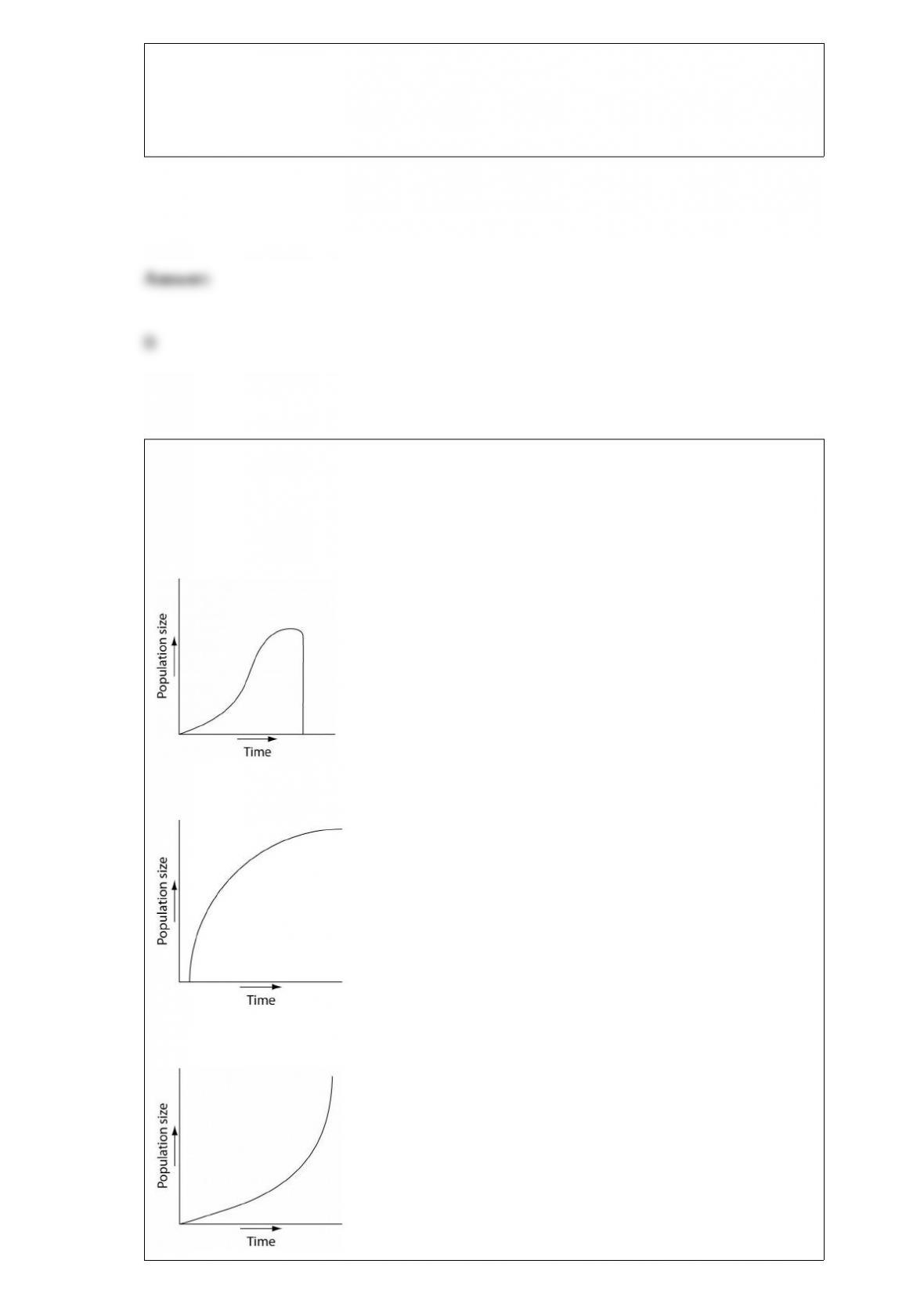
Neighbor joining trees depicting the evolutionary relationships of 32 PKG kinase
domain and C-terminal amino acid sequences spanning 19 species of protozoans and
metazoans. Values at the nodes represent the results of 5000 bootstrap replications.
Lineages with known behavioral links with PKG are indicated by gray branches.
Using the figure above and the accompanying paragraph, and knowing that the PKG
encoded by the foraging gene has recently been associated with the maturation of
out-of-nest behavior in honeybees, what would be a logical explanation for this
relationship? As animals mature, they _____.
A) require more food; therefore, PKG levels must increase.
B) are more likely to forage; therefore, PKG levels must increase.
C) respond to pheromones from the queen, which increases PKG levels.
D) are able to fly, an activity that is connected to the increase in PKG levels.
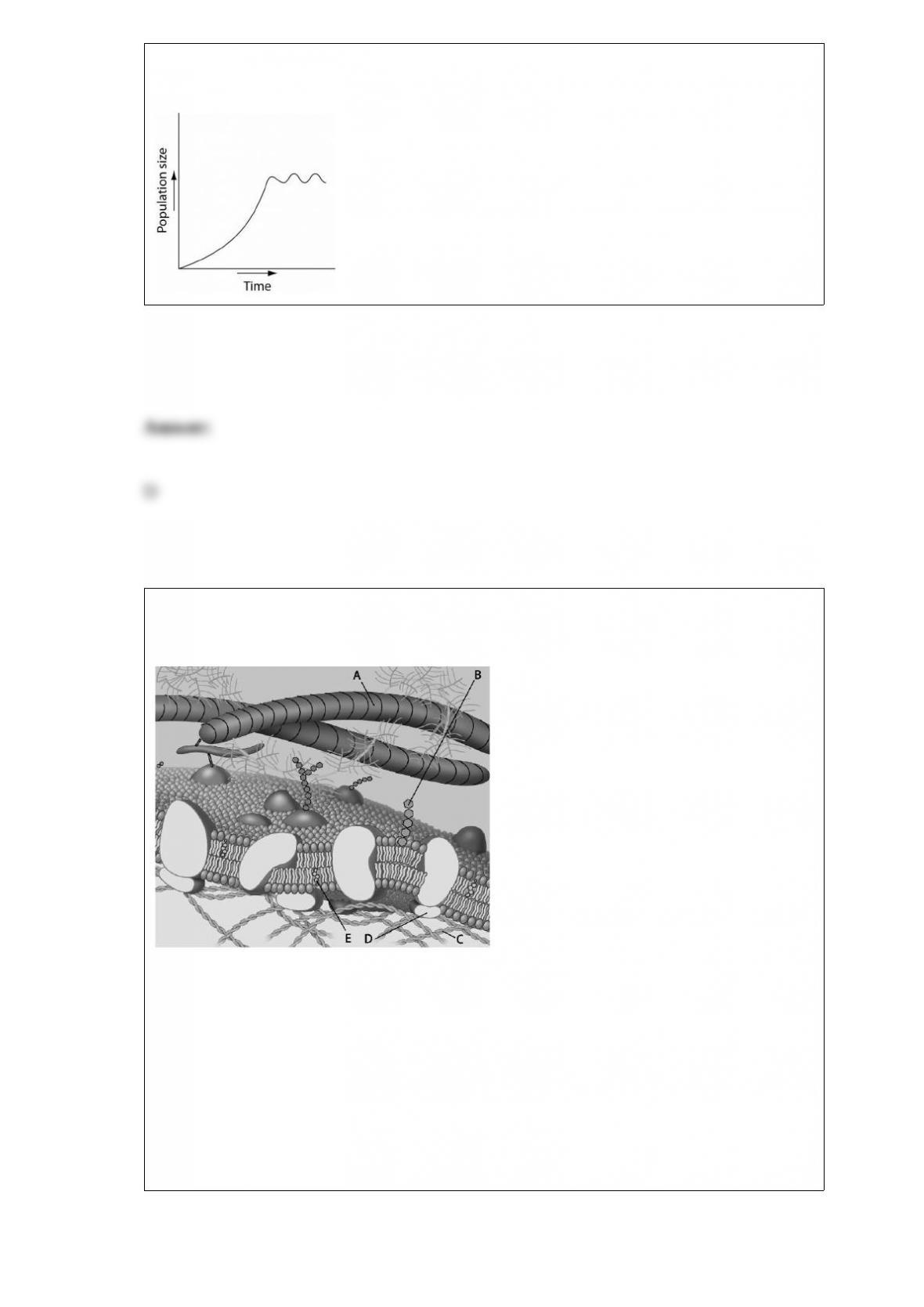
Which of the following graphs illustrates the growth over several seasons of a
population of snowshoe hares that were introduced to an appropriate habitat also
inhabited by predators in northern Canada?
A)
B)
C)
D)
Which component is a peripheral protein?
A) A
B) B
C) C
D) D

In a Hardy-Weinberg population with two alleles, A and a, that are in equilibrium, the
frequency of the allele a is 0.3. What is the frequency of individuals that are
homozygous for this allele?
A) 0.09
B) 0.49
C) 0.9
D) 9.0
If true, which of the following would be most important in determining whether P.
chromatophora‘s chromatophore is still an endosymbiont, or is an organelle, as the term
chromatophore implies?
A) if P. chromatophora is less fit without its chromatophore than with it
B) if the chromatophore is less fit without the host cercozoan than with it
C) if there is ongoing metabolic cooperation between the chromatophore and the host
cercozoan
D) if there has been movement of genes from the chromatophore genome to the nuclear
genome, such that these genes are no longer present in the chromatophore genome

Elephants hear sounds that are too low for humans to hear. This sensitivity is primarily
due to the differences in the _____.
A) arrangement and shape of the ossicles
B) flexibility of the basilar membrane in the cochlea
C) size and flexibility of the tympanic membrane (eardrum)
D) size and shape of the outer ear
Nitrogenase, the enzyme that catalyzes nitrogen fixation, is inhibited whenever free
oxygen (O2) reaches a critical concentration. Consequently, nitrogen fixation cannot
occur in cells wherein photosynthesis produces free O2. Consider the colonial aquatic
cyanobacterium, Anabaena, whose heterocytes are described as having “a thickened
cell wall that restricts entry of O2 produced by neighboring cells. Intracellular
connections allow heterocysts to transport fixed nitrogen to neighboring cells in
exchange for carbohydrates.”
Given that the enzymes that catalyze nitrogen fixation are inhibited by oxygen, what are
two ‘strategies” that nitrogen-fixing prokaryotes might use to protect these enzymes
from oxygen?
1. Couple them with photosystem II (the photosystem that splits water molecules).
2. Package them in membranes that are impermeable to all gases.
3. Be obligate anaerobes.
4. Be strict aerobes.
5. Package these enzymes in specialized cells or compartments that inhibit oxygen

entry.
A) 1 and 4
B) 2 and 4
C) 3 and 4
D) 3 and 5
If one were to propose a new taxon of plants that included all plants that are pollinated
by animals, and only plants that are pollinated by animals, then this new taxon would be
_____.
A) monophyletic
B) paraphyletic
C) polyphyletic
D) identical in composition to the phylum Anthophyta
The bulldog ant has a diploid number of two chromosomes. Therefore, following
meiosis, each daughter cell will have a single chromosome. Diversity in this species
may be generated by mutations and _____.
A) crossing over

B) independent assortment
C) crossing over and independent assortment
D) nothing else